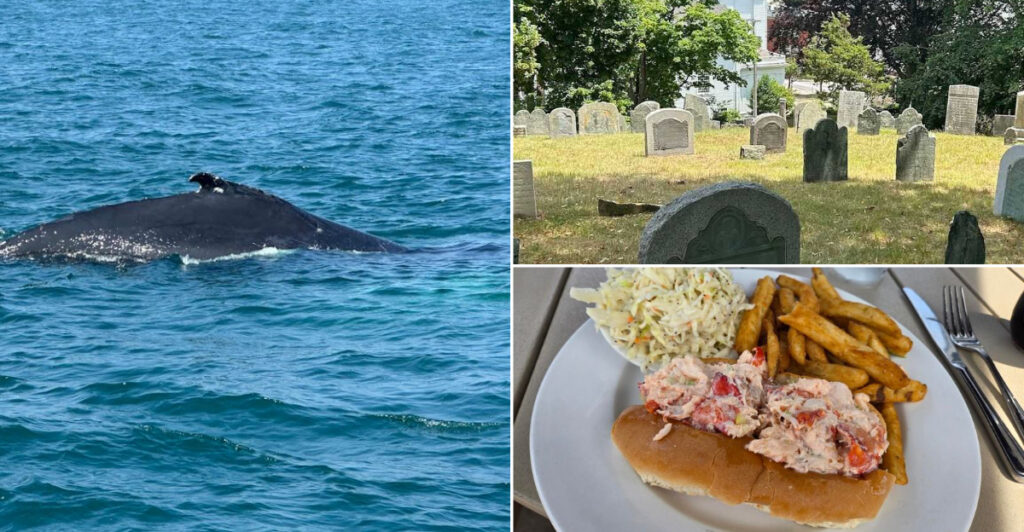
Somewhere between the roar of highway traffic and the glow of too many screens, there exists a small Massachusetts coastal town that quietly holds some of America’s most fascinating stories. Plymouth is the kind of place where you can watch a humpback whale breach the Atlantic horizon in the morning, crack open a fresh lobster by noon, and stand on the same ground where the Pilgrims first stepped ashore in the afternoon.
I stumbled onto Plymouth almost by accident, following a hand-painted sign off Route 3, and within twenty minutes of arriving, I was already wondering why I had waited so long. This town does not shout for your attention.
It earns it slowly, one salt-tinged breeze and one perfectly buttered lobster roll at a time.
Whale Watching on Plymouth Bay
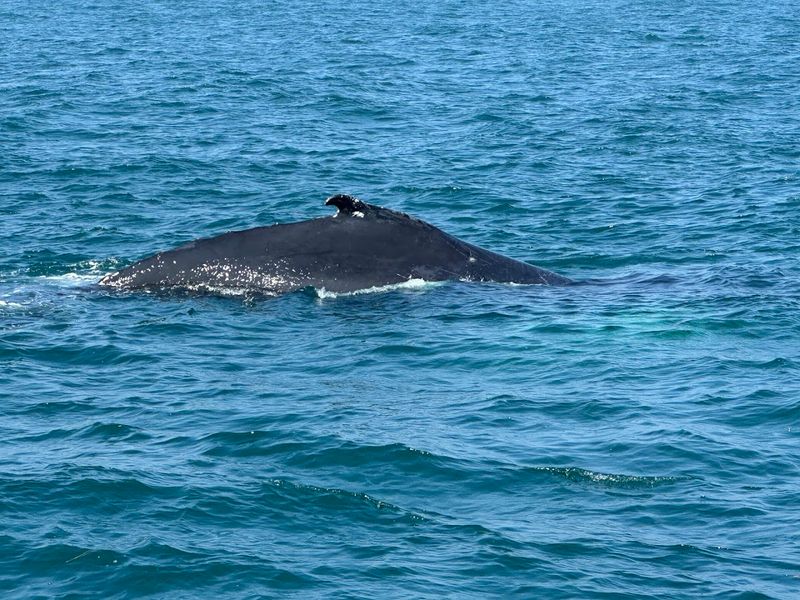
Nothing prepares you for the moment a forty-ton humpback whale launches itself completely out of the Atlantic Ocean about thirty feet from your boat. My knees actually buckled.
I had signed up for a whale watching trip out of Plymouth Harbor on a crisp September morning, half expecting to squint at a distant spout and call it a day.
Instead, the whales put on a show that felt almost theatrical. Humpbacks, finbacks, and the occasional minke gather in the waters off Plymouth and Cape Cod Bay between April and October, drawn by massive schools of sand lance and herring.
Local companies like Captain John Boats have been running these excursions for decades and their naturalist guides know these animals by name.
Watching a creature that weighs more than a school bus leap skyward with effortless grace is genuinely humbling. You leave the boat quieter, smaller, and oddly grateful for the reminder that the world is still wonderfully wild.
Plymouth Rock and Pilgrim Memorial State Park
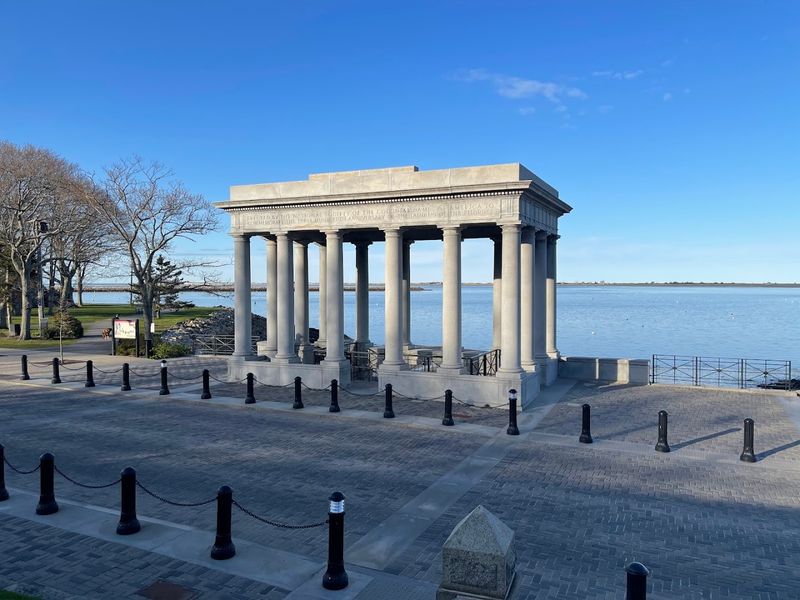
Honestly, Plymouth Rock is smaller than you expect. Standing maybe eighteen inches tall inside its classical granite portico right on the waterfront, it looks less like a national monument and more like something you might trip over in a parking lot.
But here is the thing about Plymouth Rock: the stone itself is almost beside the point.
What matters is where you are standing. In 1620, the Mayflower dropped anchor nearby and 102 exhausted passengers stumbled ashore into a New England winter they were spectacularly unprepared for.
Half of them would not survive that first season. The ones who did changed the course of American history forever.
Pilgrim Memorial State Park surrounds the rock and offers a surprisingly moving waterfront experience. The park is small, free to visit, and always buzzing with visitors from every corner of the world.
Watching a child press their palm against that weathered granite and feel the weight of history is genuinely something special.
The Lobster Roll at Wood’s Seafood on the Waterfront
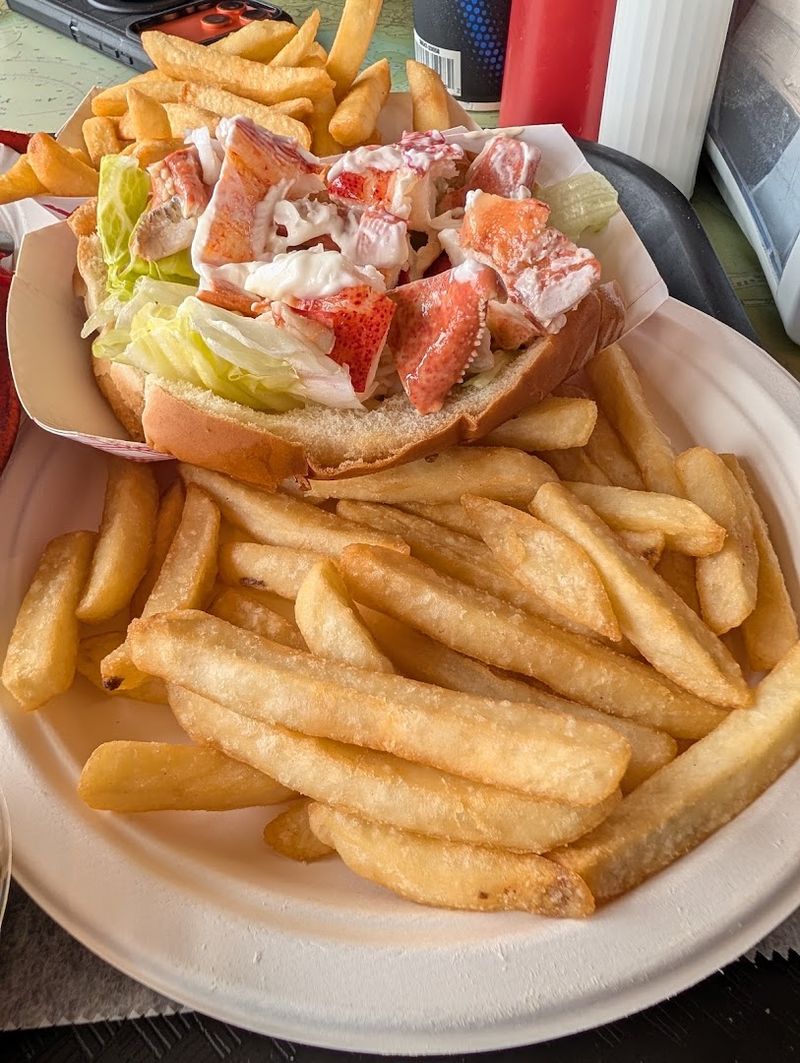
Some meals are just food. And then some meals are events.
The lobster roll I ordered at Wood’s Seafood on Plymouth’s Town Wharf fell firmly into the second category. Chunks of sweet, tender claw and knuckle meat piled into a toasted split-top bun, drizzled with warm drawn butter, eaten while sitting on a dock with seagulls circling overhead like tiny feathered critics judging every bite.
Wood’s Seafood has been a Plymouth institution since 1925, which means they have had roughly a century to perfect what they do. The lobster is pulled fresh from local traps, which you can actually see stacked on the docks nearby.
There is something deeply satisfying about eating seafood within eyesight of where it was caught.
Order the chowder as a starter. It arrives thick, creamy, and loaded with clams in a way that makes you question every other chowder you have ever eaten.
Come hungry. Leave very, very happy.
Plimoth Patuxent Living History Museum
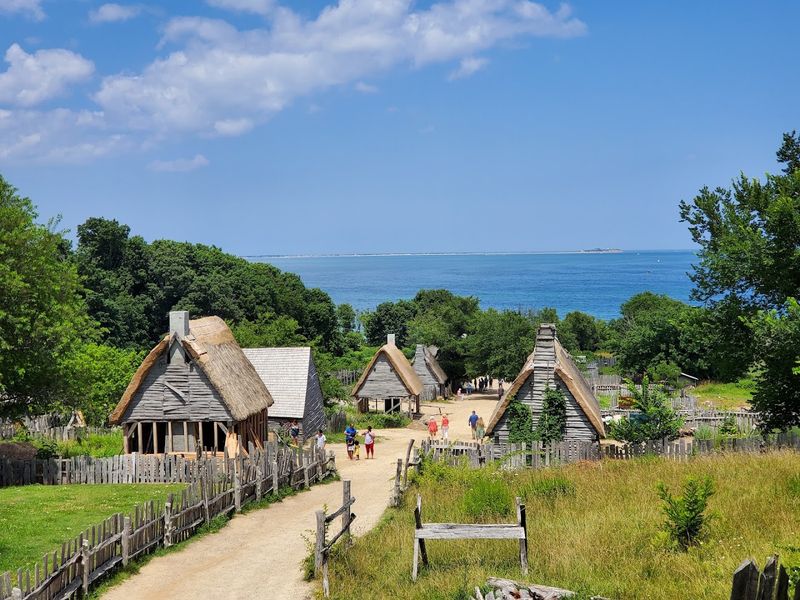
Walking into Plimoth Patuxent feels like stepping through a door that someone forgot to close between 1627 and right now. Costumed interpreters play specific historical Pilgrims and Wampanoag people with such committed detail that it takes about four minutes before you forget you are at a museum.
I watched a woman churn butter near a thatched-roof cottage while explaining, in period-accurate dialect, why the corn harvest had been disappointing that year.
The museum has two distinct areas. The English Village recreates the original Pilgrim settlement with thatched buildings, garden plots, and livestock wandering freely.
The Wampanoag Homesite tells the story of the Indigenous people who had lived on this land for thousands of years before the Mayflower ever appeared on the horizon.
Spending half a day here reframes everything you thought you knew about the first Thanksgiving story. It is complicated, layered, and far more interesting than the simplified version most of us learned in elementary school.
Mayflower II at Plymouth Harbor
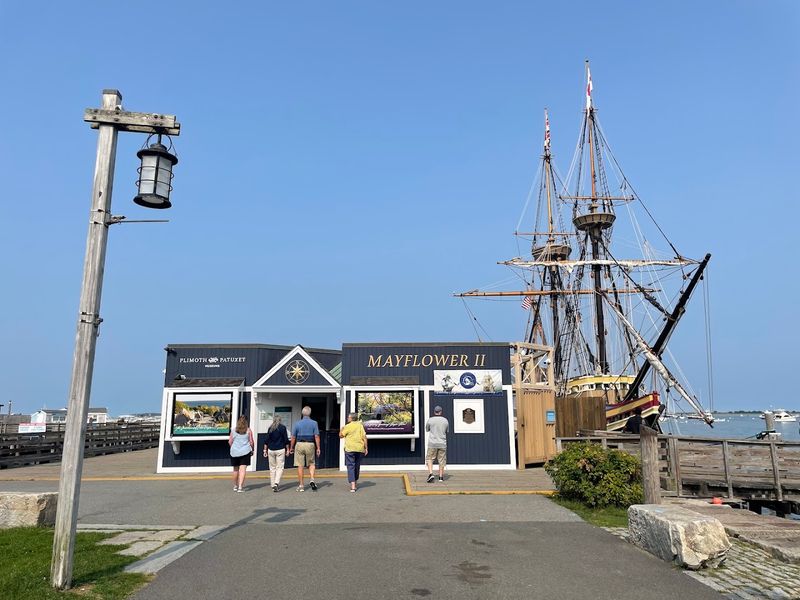
The Mayflower II is a full-scale working replica of the original 1620 vessel, and standing beside it at Plymouth Harbor makes your jaw drop for reasons you do not entirely anticipate. The ship is surprisingly small.
One hundred and two people crossed the entire Atlantic Ocean on this thing, in the middle of autumn, in conditions that would make a modern cruise passenger weep.
Built in England in 1957 and sailed across the Atlantic to Plymouth, the Mayflower II is operated by Plimoth Patuxent and offers guided tours with costumed interpreters on deck. They explain navigation, daily life, and the mechanics of 17th-century seafaring in ways that are genuinely fascinating rather than dry.
Standing on the lower deck, ducking under the beams where passengers huddled for sixty-six days at sea, I felt a particular kind of respect for those travelers. Whatever you think of the historical consequences, the sheer physical courage required for that voyage is undeniable and staggering.
Myles Standish State Forest
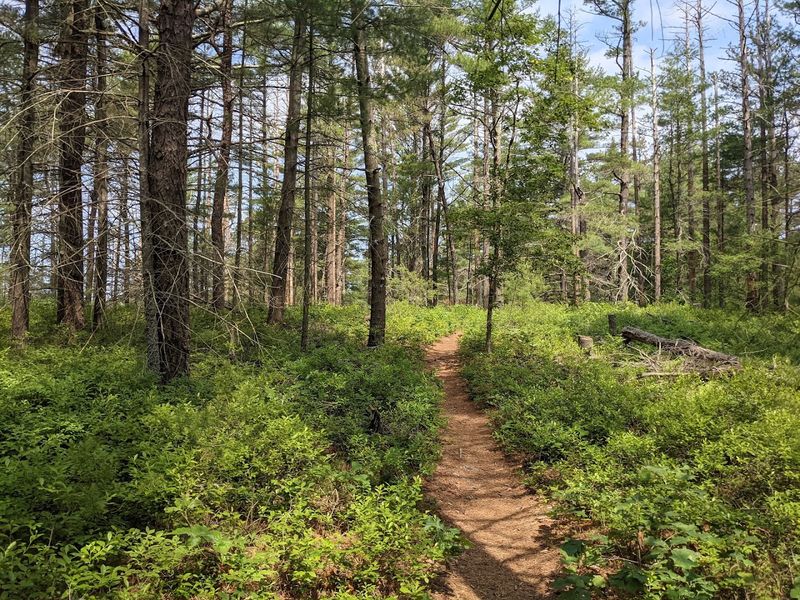
About ten minutes south of downtown Plymouth, the world gets very quiet very quickly. Myles Standish State Forest covers nearly fifteen thousand acres of pitch pine and scrub oak, making it one of the largest state forests in Massachusetts and one of the most underrated green spaces on the entire South Shore.
The forest is threaded with sixteen miles of paved bicycle trails and dozens of hiking paths that wind between kettle ponds left behind by retreating glaciers thousands of years ago. I rented a kayak at Charge Pond and paddled for two hours without seeing another person, which felt like an extraordinary luxury for a place less than an hour from Boston.
In autumn, the forest turns amber and rust in a way that seems almost too beautiful to be real. Birders come specifically for the rare pine barrens species that thrive here, including the whip-poor-will and the prairie warbler.
Bring a picnic and plan to stay longer than you intended.
Plymouth’s Historic Downtown and Burial Hill
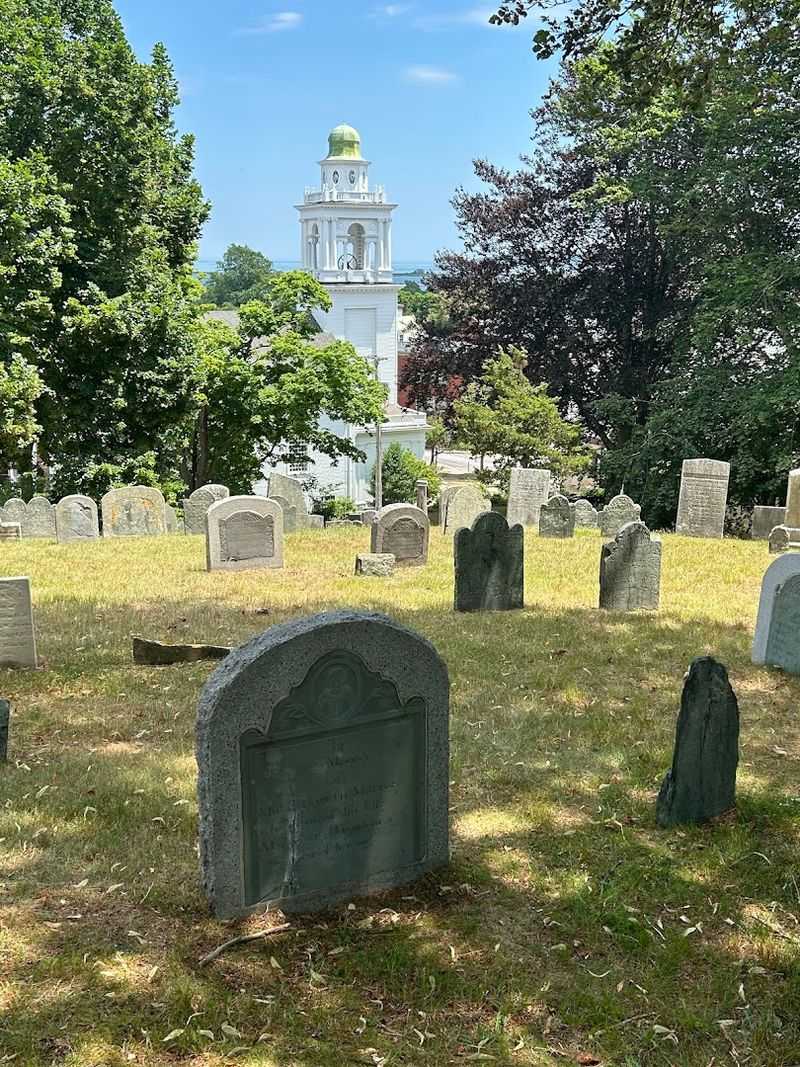
Plymouth’s downtown is the rare kind of main street that has not been hollowed out by chain stores and sameness. Independent shops, art galleries, and local restaurants line the streets leading up from the waterfront, and the whole district has a lived-in warmth that you cannot manufacture with a renovation budget.
Burial Hill sits just above downtown and is absolutely worth the short climb. This hilltop cemetery, established in 1620, holds the graves of original Pilgrim settlers and offers a sweeping view of Plymouth Harbor that is among the most quietly dramatic panoramas on the Massachusetts coast.
The oldest stones are worn nearly smooth by four centuries of Atlantic weather.
I spent an afternoon wandering between the grave markers reading dates from the 1600s and feeling a particular stillness that only very old places seem to carry. Stop into Yankee Candle or one of the local candy shops on the way back down.
History is better with a little sugar.
Fresh Lobster at East Bay Grille
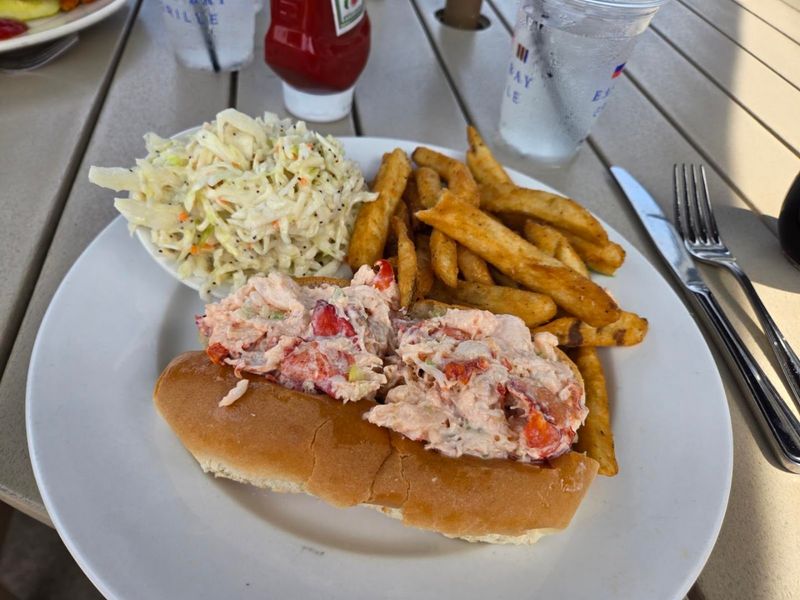
If Wood’s Seafood is Plymouth’s casual dockside institution, East Bay Grille is where you go when you want to sit down, order a glass of cold white wine, and eat your lobster without competing with seagulls for elbow room. Perched right on the waterfront with large windows framing the harbor, this restaurant has been feeding happy visitors for years with a menu that celebrates local seafood without overcomplicating it.
The whole steamed lobster arrives with drawn butter, corn, and coleslaw in a presentation that is beautifully unpretentious. They also do a lobster bisque that is thick, slightly smoky, and dangerously easy to finish entirely before your entree arrives.
The service is warm and unhurried in the best possible way.
I came for a quick dinner and stayed for two hours watching the harbor lights come on as the sun dropped behind the tree line. Some restaurants feed you.
East Bay Grille feeds you and then makes you feel slightly reluctant to leave Massachusetts entirely.
Plymouth Long Beach and Coastal Trails
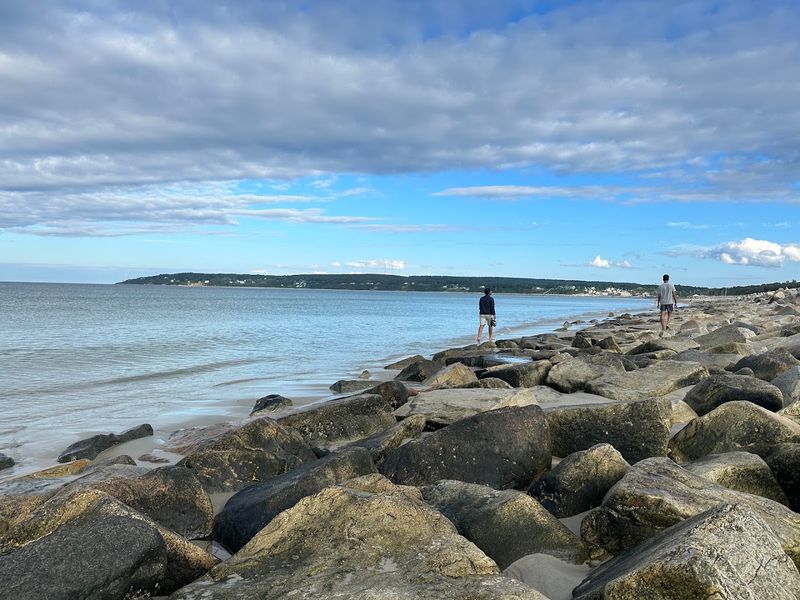
Plymouth Long Beach is a three-mile barrier beach that separates the open Atlantic from a quiet salt pond, and on a weekday morning in early September it feels like one of the most peaceful places on earth. The sand is pale and wide, the waves are gentle enough for children, and the views across Plymouth Bay toward Duxbury are the kind that make you reach for your phone and then put it back in your pocket because no photograph will do them justice.
A walking trail runs along the dune line connecting the beach to Nelson Street Beach and offering views of the salt marsh grasses swaying like slow green dancers in the coastal breeze. Piping plovers nest here in summer and the beach has protected nesting areas that remind visitors that this shoreline belongs to more than just the tourists.
Sunrise at Plymouth Long Beach is something I would recommend to anyone. Bring coffee, arrive early, and watch the sky turn colors over the water.
You will not regret it for a single second.
Cranberry Harvest Season and Plymouth’s Living Traditions
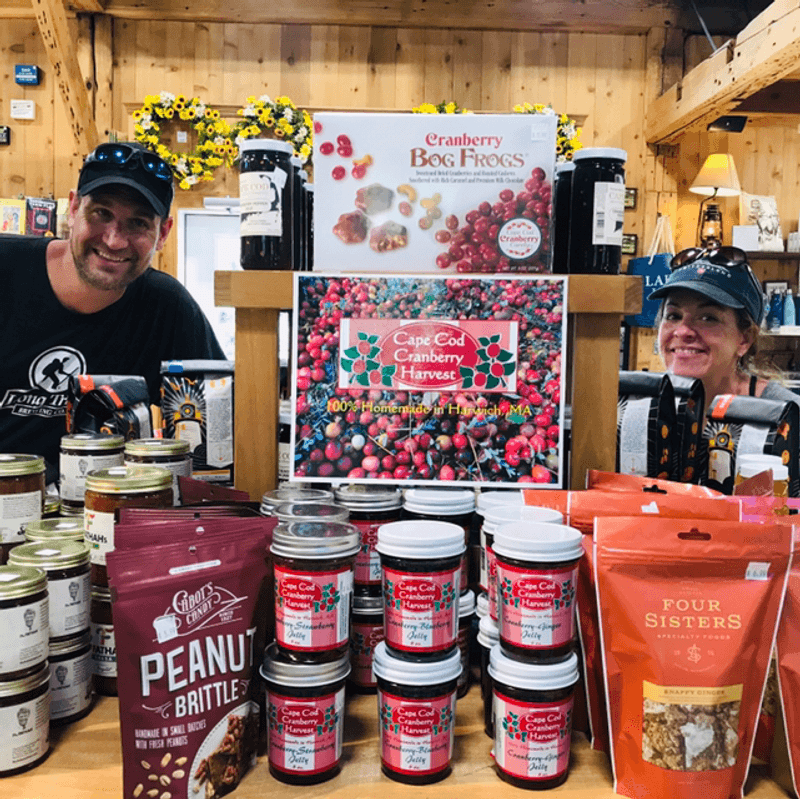
Every October, the bogs around Plymouth County flood with water and turn a shade of red so vivid it looks like the landscape is blushing. Cranberry harvest season is one of New England’s most visually spectacular and least-publicized annual events, and Plymouth sits right in the heart of the largest cranberry-growing region in the United States.
Local farms open their bogs to visitors during harvest, and watching workers in chest-high waders wade through a sea of floating crimson berries while corralling them toward the pump is genuinely mesmerizing. The Edaville Family Theme Park nearby celebrates the cranberry harvest with seasonal events that draw families from across the region every autumn.
Plymouth itself hosts the America’s Hometown Thanksgiving Celebration each November, a weekend festival that fills the streets with colonial re-enactors, local food vendors, and a parade that takes the holiday back to its roots with real warmth and zero irony. This town does not just remember its history.
It celebrates it, year after year, with unmistakable pride and genuine community joy.
Share this story