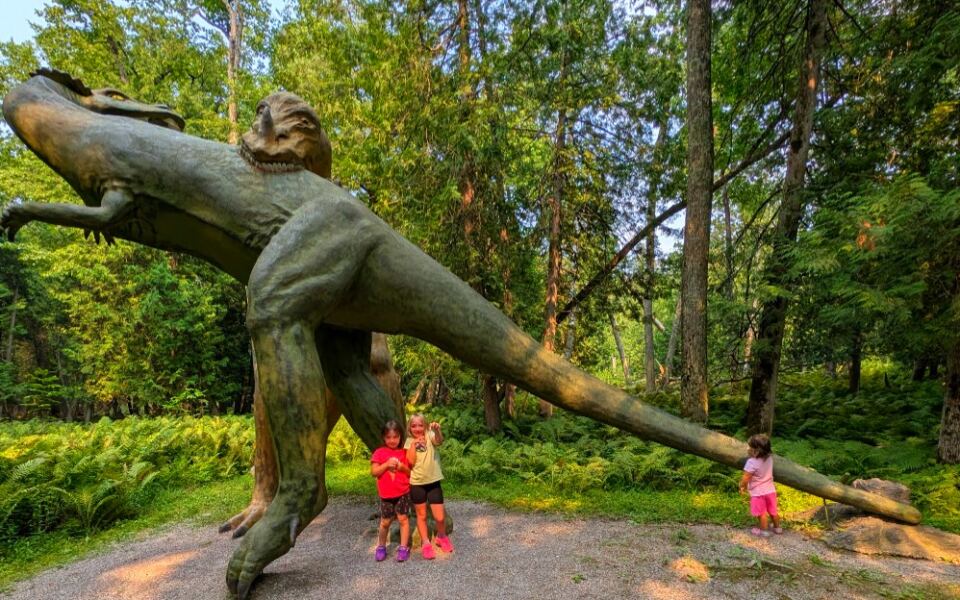
A forty-foot long Brontosaurus is hiding in a Michigan cedar swamp, and you can climb inside its belly. A man spent almost forty years shaping giants out of a secret recipe that has outlasted every storm since.
Along a quiet path, a towering figure waits near the gate with Earth cradled in one hand, and nobody expects what sits behind it. The woods hide over two dozen life-sized creatures, a pterodactyl nest you can peek over, and a sandbox full of buried fossils.
I took the walk myself, notebook in hand, and found a tiny town on Lake Huron that guards one of the sweetest throwbacks in the Great Lakes State. Keep reading and you will learn who built these beasts, what they are made of, how to pick the best time to go, and which snack stop is worth a detour.
Even the mini golf holes have a surprise or two. Ready to meet the giants?
A Prehistoric Zoo Tucked Beside US-23
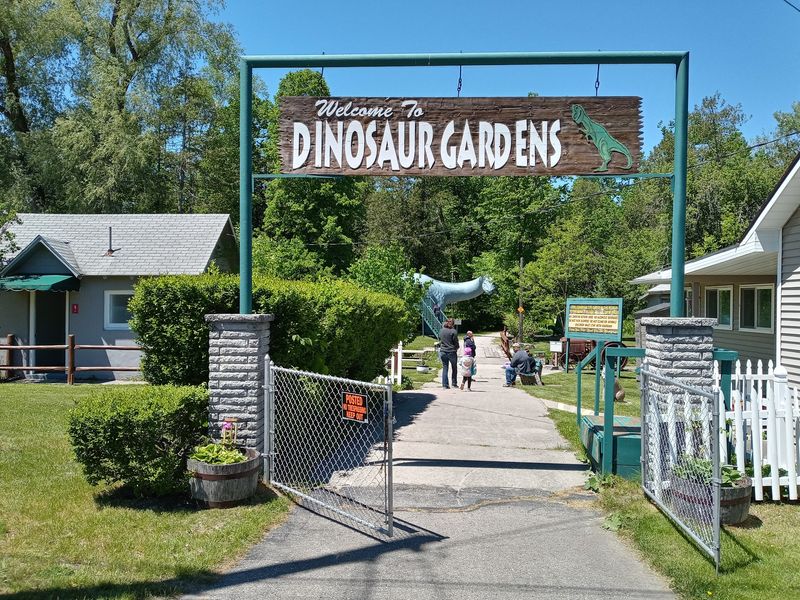
Here is the spot I am talking about: Dinosaur Gardens, found at 11160 U.S. 23, Ossineke, MI 49766, in the United States. The little town sits along the Lake Huron shoreline in Michigan, about ten miles south of Alpena.
US-23 was the main highway before I-75 pulled most of the traffic away. That history explains why the park still feels like a classic roadside stop from another decade.
I pulled into the gravel lot on a bright morning and spotted the first clue right away. A huge statue greets guests at the gate, one hand stretched out and the other holding a tiny planet Earth.
The attraction sits on forty acres of cedar lowland that used to be swamp. Dogs on leashes are welcome on the trail, which made my furry travel buddy very happy.
Behind that gate, a man with a bold plan changed this patch of woods forever, and his story is next.
The Sailor Who Sculpted Giants
Paul Domke started this park in 1935, right in the middle of the Great Depression. He first called it Domke’s Prehistorical Zoo Gardens.
His love of bones and muscles grew during his years in the U.S. Navy, when he visited museums around the world.
Those trips gave him a sharp eye for how animals are built.
He wanted to share that wonder with everyday travelers. He also held deep Christian faith, and he hoped the park would show how science and belief could sit side by side.
A plaque on the grounds explains his view that the world formed over millions of years under a master plan.
Domke spent from 1935 to 1967 shaping the figures by hand. That is more than thirty years of mixing, carving, and smoothing, all for strangers he had never met.
I stood for a while reading his story and thinking about that patience. The materials he used are a story of their own.
Museum Sketchbooks and a Secret Recipe
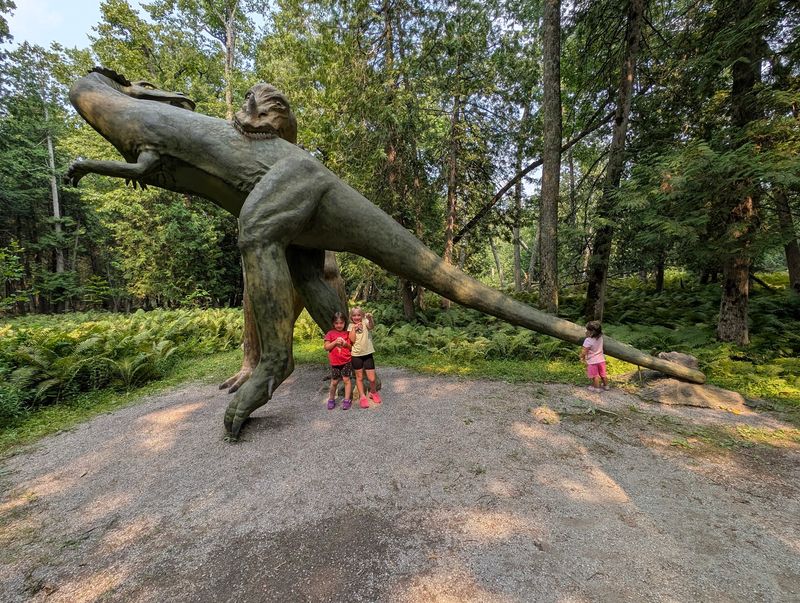
Domke did not guess what dinosaurs looked like. He traveled to the Smithsonian in Washington, D.C., and the Field Museum in Chicago, then filled notebooks with careful sketches.
His first figures were made with plaster over steel frames. The weather chewed them up fast, so he had to rethink everything.
A local chemist helped him craft a custom blend he called cement plastics. It mixed cement, sand, lime, calcium, stearate, and liquid asphalt.
The result held up for decades outdoors. I ran my eyes over the backbones, muscle tone, and skin texture, and the detail is striking.
His nephew once recalled spreading mortar on the steel frames. Domke then carved the finishing touches into the soft material before it set.
That hands-on method gives each creature a folk art charm you will not find in factory models. Speaking of big personalities, one giant on the trail needs its own section.
Inside the Brontosaurus
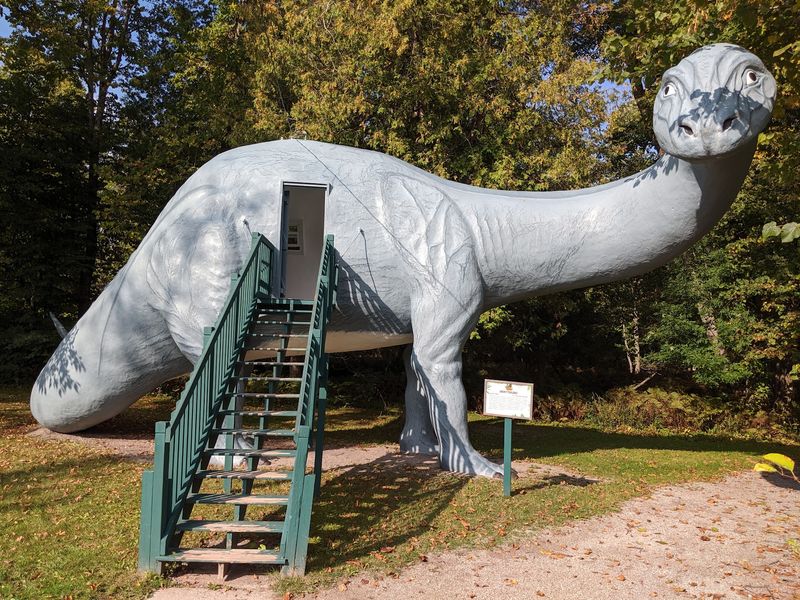
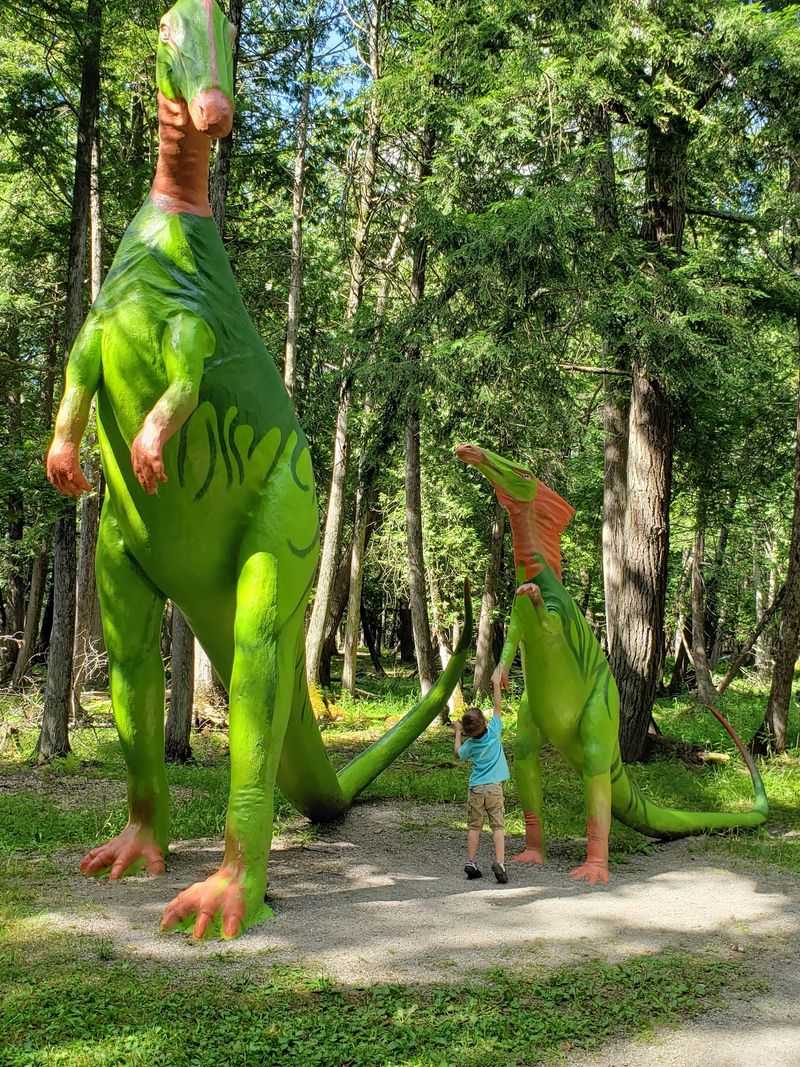
Few roadside stops let you walk into a dinosaur, but this one does. The Brontosaurus is the star of the trail, stretching tens of feet long among the trees.
A short climb takes you inside to a display called The Greatest Heart. It shows a portrait of Jesus beside the dinosaur’s vital organs.
The scene fits Domke’s belief that Christ was the master planner of Earth, dinosaurs included. Whatever your own views, it is a rare piece of folk art history.
I ducked in, looked around, and came out grinning. Kids tend to treat it like a secret fort.
Take a photo from the outside too. The long neck rising above the ferns makes a great backdrop.
The sheer size gives you a feel for how much work went into each figure. Next up is the walk itself, where the forest does half the storytelling.
A Half Mile of Ferns and Fangs
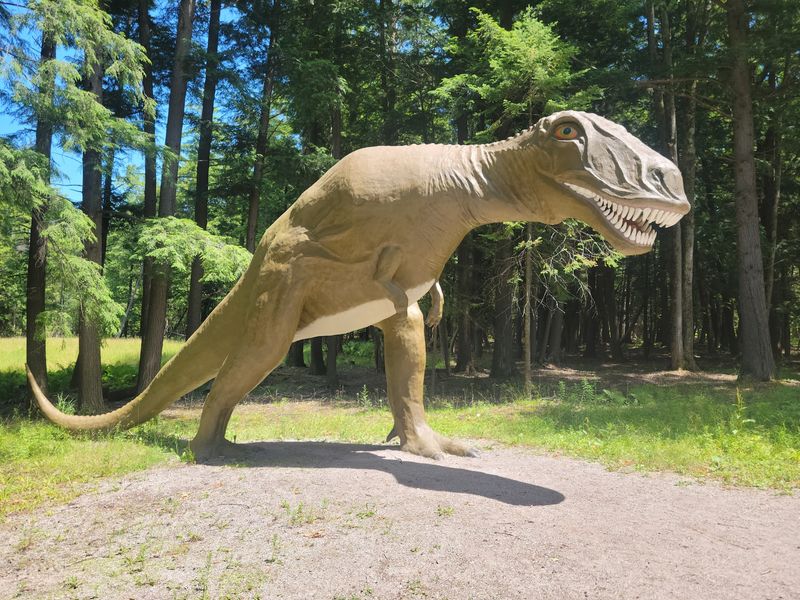
The self-guided trail runs about half a mile through the woods. Paths are groomed and easy to follow, so strollers and little legs manage fine.
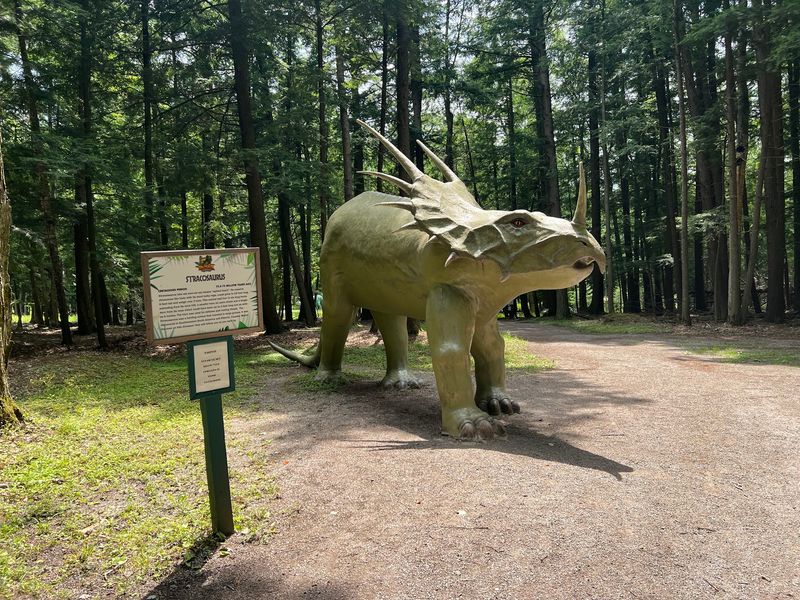
Along the way you meet more than twenty-five life-sized figures. A T-Rex, Stegosaurus, Velociraptor, Iguanodon, Dimetrodon, and Pteranodon all take their turns.
Plaques share facts about each animal. Some also show photos of the sculptures from the 1960s, which was my favorite touch.
Plan on about an hour if you like to read every sign. I took longer because I kept stopping for photos.
Wear closed shoes, since the ground can be damp near the swamp. Bug spray is a smart pack, though I stayed comfortable.
The best surprise comes from the trees themselves, which deserve their own spotlight next.
The Cedar Swamp Stage Set
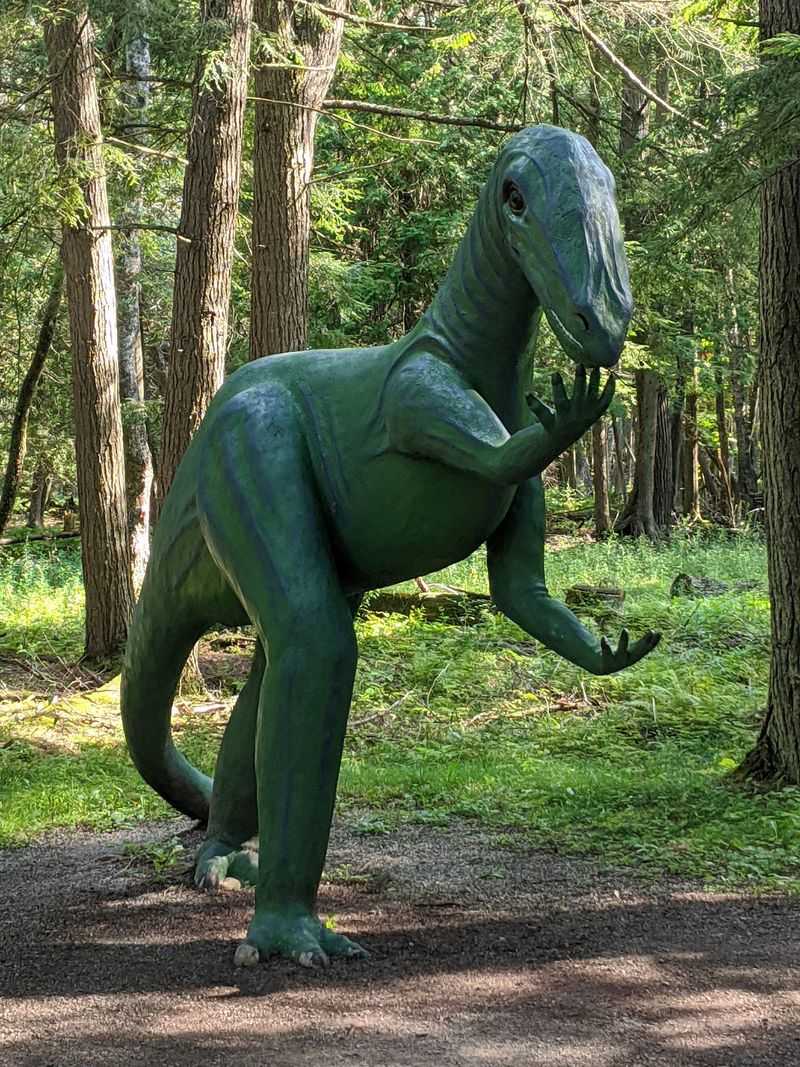
Domke picked this land for a reason. A drained cedar swamp with huge ferns, tall pines, and hemlocks looks a lot like a world from long ago.
The Devil’s River winds through the property, adding a calm, watery backdrop. Sunlight slips through the branches and lands on the sculptures like stage lighting.
I noticed how quiet it got once I stepped past the gate. Birdsong replaced highway hum, and the air smelled of cedar.
Early morning gives you soft light and fewer people. Late afternoon turns the ferns golden, which looks great in photos.
The mix of old trees and old sculptures creates a retro, slightly odd mood that suits the place. It is the sort of setting no designer could fake.
After the woods, the park has a few hands-on stops that keep younger explorers busy.
Digging for Fossils in the Sandbox
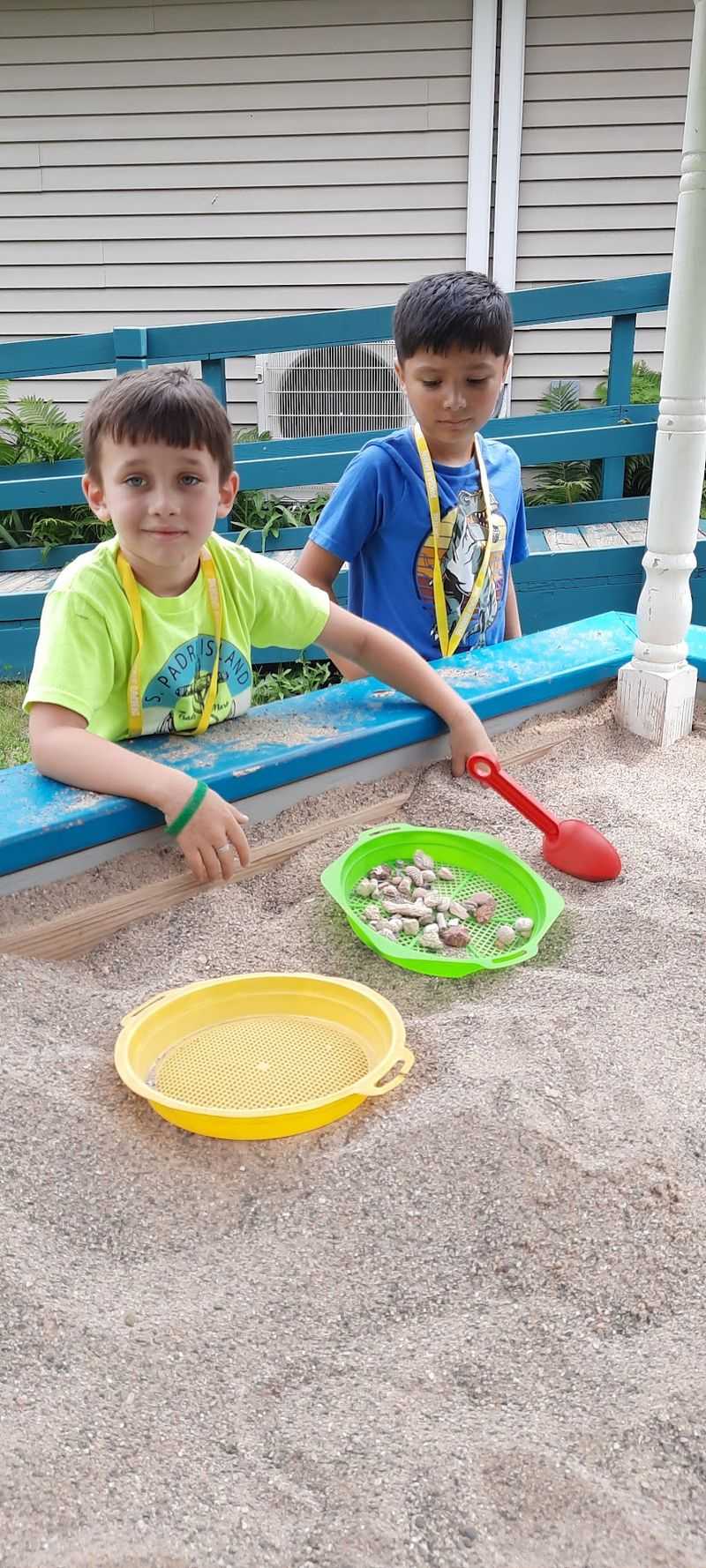
Right after the walk, kids head for the fossil dig. It is a sandbox filled with buried treasures waiting to be uncovered.
Little hands scoop, brush, and shout whenever a find turns up. Some visitors even get a small toy to take home.
I watched a pair of twins focus so hard they forgot snack time. That kind of quiet concentration is rare on vacation.
Bundled packages let families mix the activities and save a bit. Ask at the desk when you buy tickets so you can pick the right combo.
Bring a hat on sunny days, because the dig area can be warm. A water bottle helps, too.
If digging is the quiet game, the next stop is the one with real sparkle.
Sifting Gems at the Miner’s Sluice
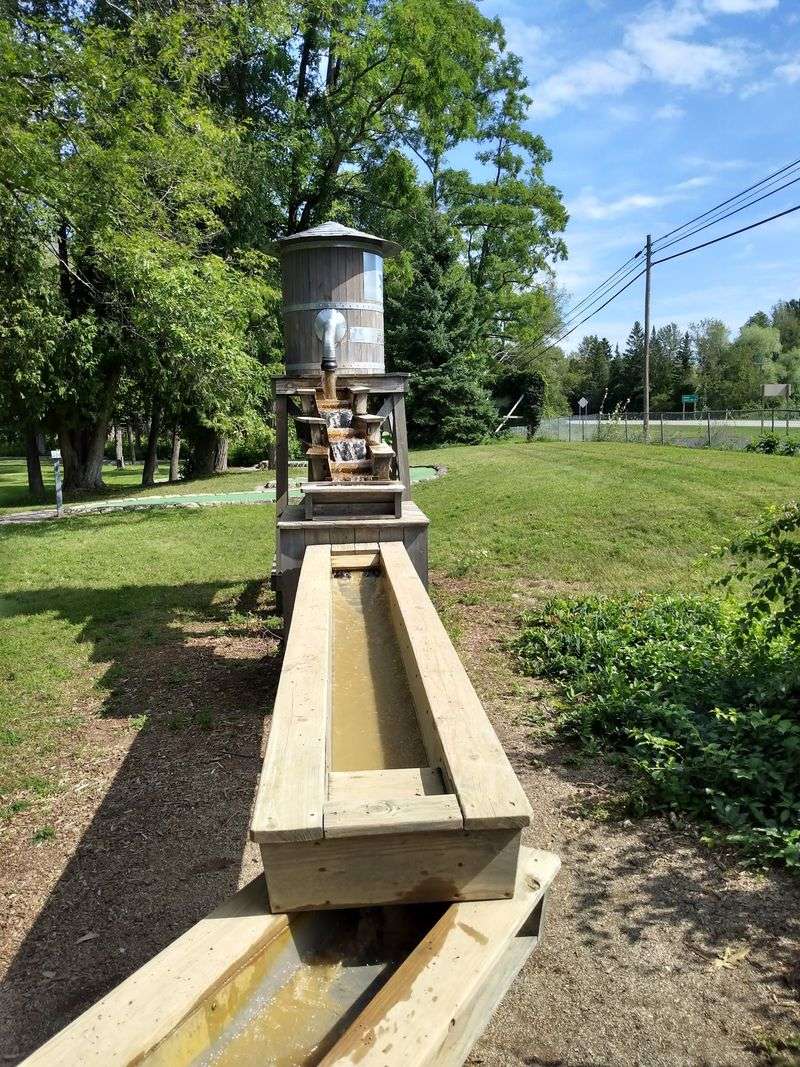
Grab a bag, find a spot at the water trough, and start sifting. The Miner’s Sluice lets guests rinse gravel to reveal minerals, gems, fossils, and sometimes arrowheads.
Bags run from about seven to twenty dollars, depending on what is inside. Everything you find is yours to keep.
I walked away with a pocketful of shiny stones and a very wet sleeve. Rolling up your sleeves before you start is good advice.
Many guests say the bags hold more than expected. A small container or zip bag helps carry the loot home.
Sluice time suits all ages, so grandparents can join in without a problem. It becomes a friendly contest to see who finds the prettiest stone.
Once your hands are dry, there is a course nearby with its own prehistoric twist.
Putting Past the Pterodactyls
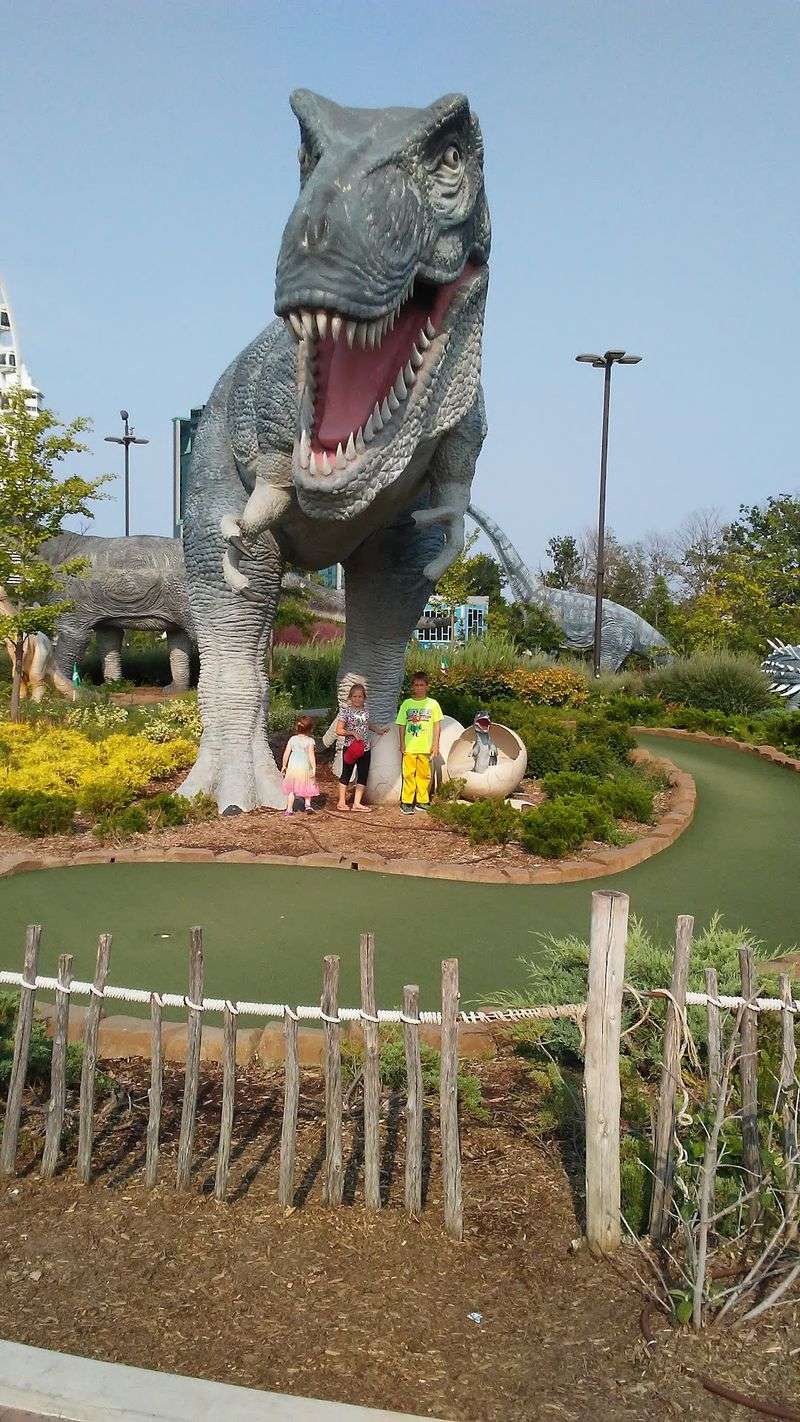
Mini golf is the most mentioned activity here, and it is easy to see why. The eighteen-hole course has a dinosaur theme, and some greens are shaped like the creatures themselves.
Prices are friendly. Ages sixteen to fifty-nine pay six dollars, kids three to fifteen pay four, and seniors and veterans pay five.
Children under two play free, though a toddler with a putter is a bold plan. I counted that as part of the fun.
The course is a good reset after the trail, because everyone can laugh and swing at their own pace. Keep score if you like, or call it a tie and go for snacks.
A fun tip is to play last, when the kids have burned off their first wave of energy. Speaking of snacks, the gift shop has a few cool choices.
Souvenirs, Soft Serve, and Picnic Tables
The gift shop is small but well stocked with dinosaur gear. Toys, souvenirs, and snacks fill the shelves, and prices felt fair to me.
A frozen yogurt bar and soft serve keep sweet cravings in check. Dairy-free options are available, which is a real bonus for some families.
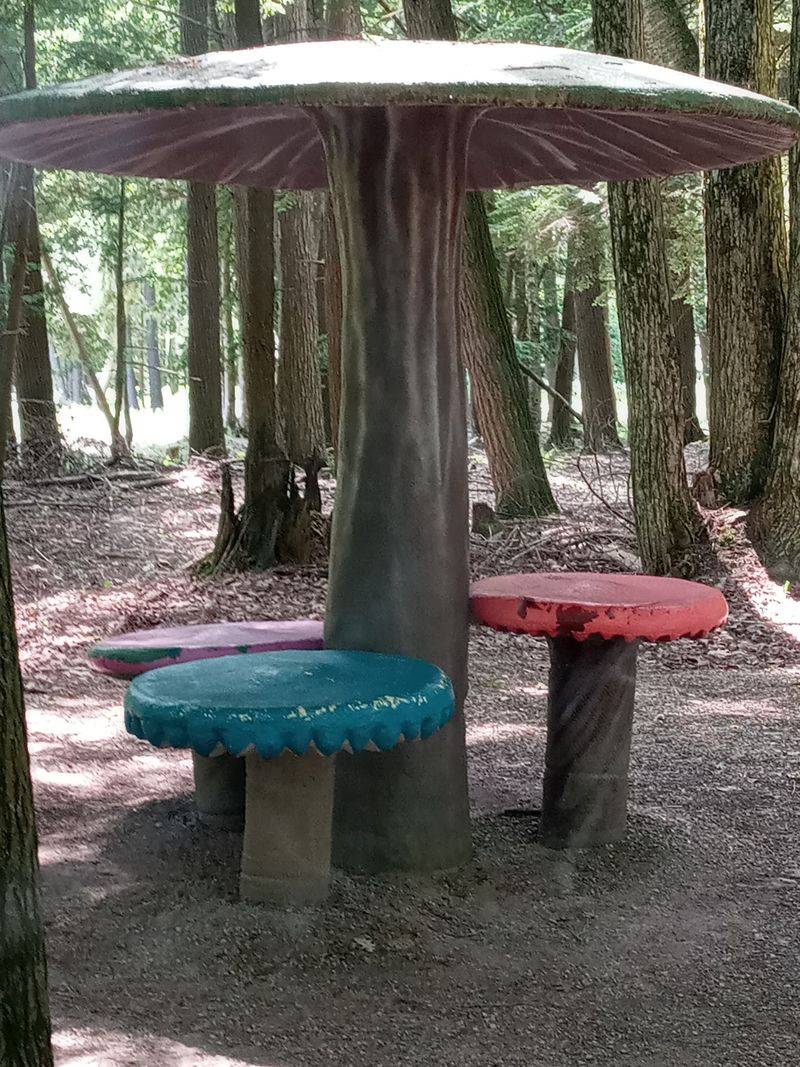
Picnic tables sit out in the shade, and a gazebo works for small gatherings. Pack a lunch and make a relaxed afternoon of it.
Leashed dogs may join you on the trail, but they cannot go inside the shop. Plan for one person to wait outside with the pup while the other browses.
Just down the road, Connie’s Cafe is run by the same owners and is known for big cinnamon rolls. I grabbed one and shared it, which is the only sensible choice.
Now for the practical details that make planning simple.
Planning Your Visit and Nearby Stops
Dinosaur Gardens operates seasonally, so checking current hours before driving to Ossineke is essential. The attraction traditionally runs through the warmer months, with its fullest schedule around summer and more limited operating days as northern Michigan moves toward fall.
Call 989-471-5477 or check the attraction’s current information before leaving.
That is especially important outside peak summer because hours, admission prices, activity packages, food service, and weather-related operations can change.
The address is 11160 U.S. 23 South, Ossineke, Michigan 49766.
Gary and Connie Stephens have owned Dinosaur Gardens since 2013 and have continued maintaining the historic sculptures while adding family activities and updating parts of the property.
Their challenge is unusual.
Too much modernization could erase the handmade roadside character that makes the place special, while too little care would allow nearly century-old outdoor art to deteriorate.
Dinosaur Gardens also pairs easily with other Alpena-area stops.
Lake Huron beaches and parks provide a completely different landscape after the wooded trail, while travelers continuing through northeastern Michigan can build a larger trip around Alpena and the US-23 Heritage Route.
Ocqueoc Falls, farther north, is another popular regional detour.
But do not schedule the dinosaurs too tightly.
The walking trail may be only about half a mile, yet the attraction encourages lingering.
Read the old signs, study the handmade figures, play a round of mini golf, and take the ridiculous family photographs.
Road trips need places like this.
Share this story