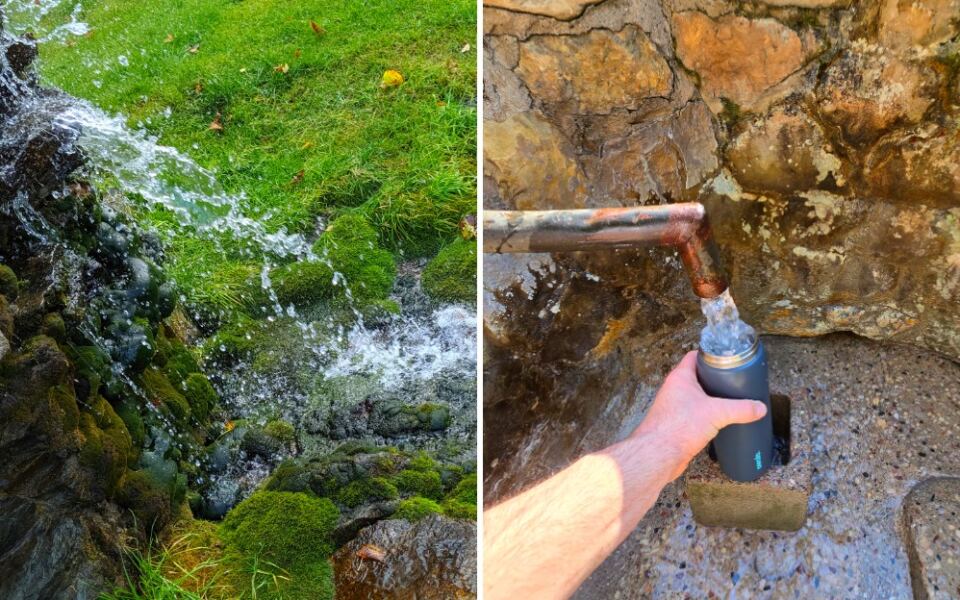
In 1903, a Michigan mining company drilled 1,094 feet into the ground searching for iron ore. Instead, it discovered water that still rises to the surface without a pump.
Today, Norway Spring is a free roadside stop along US-2 in Michigan’s Upper Peninsula. Visitors bring bottles and large jugs to collect water from the historic artesian well, which uses natural underground pressure to keep flowing.
The spring has become a familiar stop for locals and travelers, but its history goes beyond the drilling accident. A sawmill once stood on the same site, and nearby hills hold traces of old iron mines.
There’s even an official Michigan historical marker explaining how an unsuccessful mining search created a roadside landmark that has lasted more than 120 years.
A Free Water Stop Right Off US-2
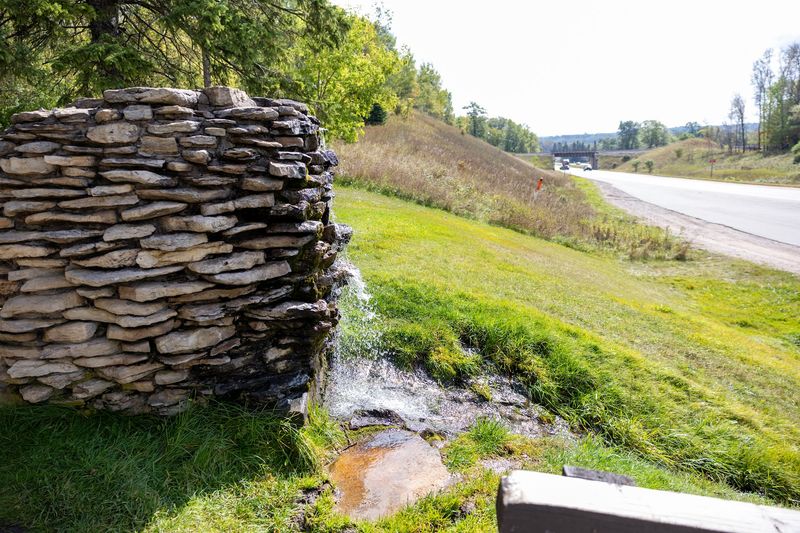
Norway Spring sits along US-2 in Norway, Michigan 49870, in the Upper Peninsula of the United States. It is a public water well, and it flows freely for anyone who stops by.
The setup is simple. Water pours from the spring, and people fill whatever containers they brought along.
Some grab a quick cup, while others load the trunk with several large jugs.
Google Maps lists the spring as open 24 hours, every day of the week. That makes it handy for early risers, late-night drivers, and anyone heading to Iron Mountain or farther west.
I find the location especially smart for travelers. The stop is easy to get on and off from the highway, so you won’t lose much time on a road trip.
There is no admission and no vending machine involved. The water is free, which feels almost rare in a world where a single bottle at a gas station adds up fast.
So why does water keep coming out of the ground here without a pump? The answer goes back more than a century, to a crew searching for something very different.
The Iron Ore Hunt That Struck Water
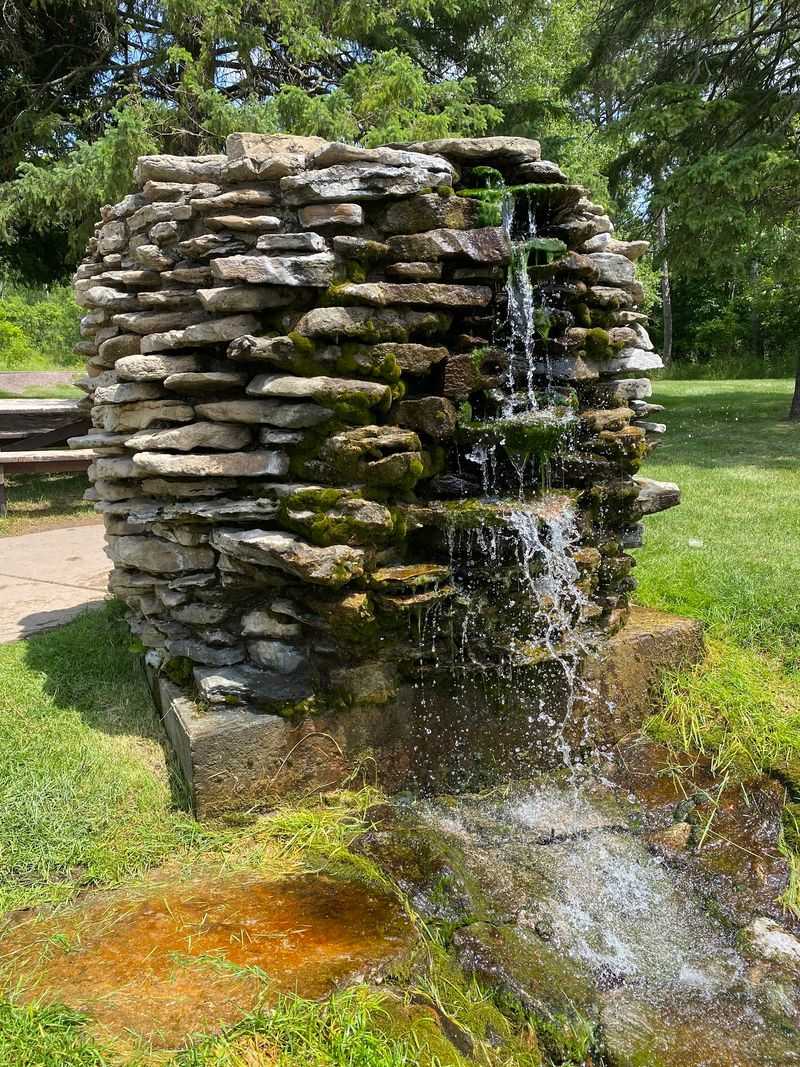
In 1903, the Oliver Mining Company drilled a hole 1,094 feet deep at this site. The crew was hunting for iron ore, which drove much of the economy in this part of Michigan.
They didn’t get the ore they wanted. Instead, the drill opened a path for underground water, and the spring was born.
That detail always makes me smile. A company spent serious effort chasing metal, and the lasting result was a public drinking fountain enjoyed for well over 100 years.
The Menominee Iron Range, where Norway sits, was busy with mining back then. Exploratory drilling was a normal part of figuring out where valuable deposits might be hiding.
Most test holes were simply forgotten. This one kept giving, and people noticed.
The state historical marker at the site explains this story in plain words. Reading it before you fill your bottles adds real meaning to an ordinary pit stop.
Of course, a hole in the ground doesn’t explain why water would rise all the way to the surface by itself. That part involves some clever geology.
How an Artesian Well Works Without a Pump
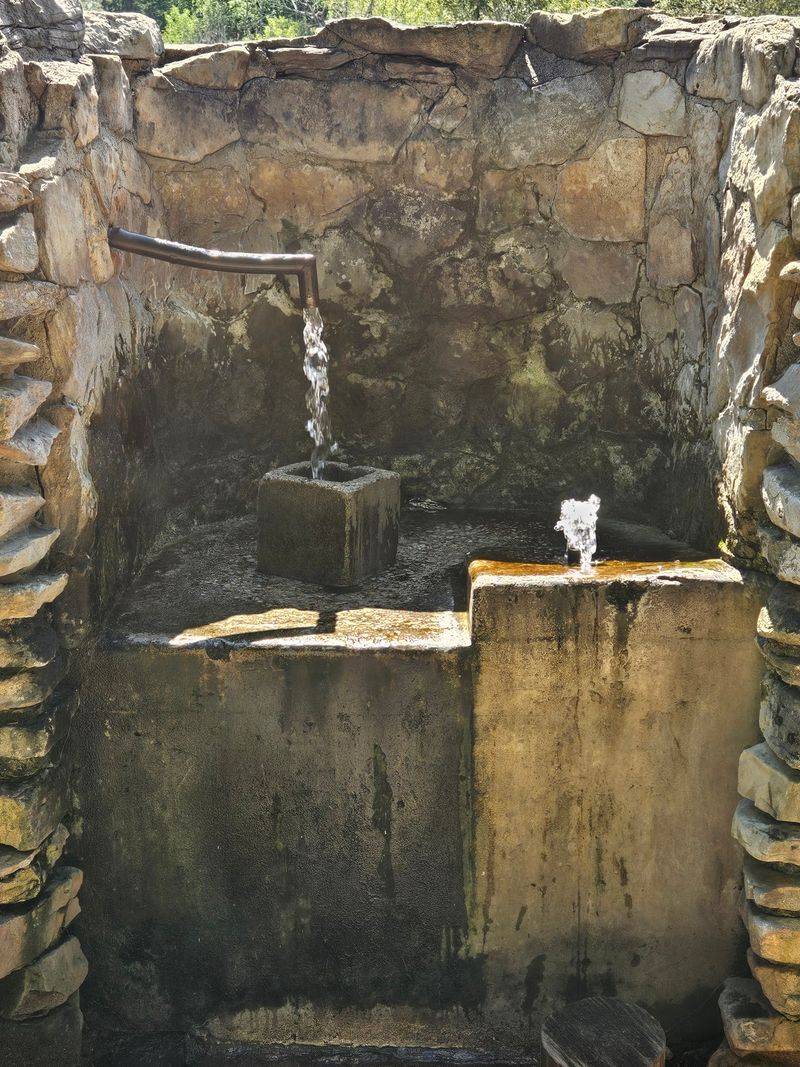
Gravity does all the heavy lifting here. Norway Spring is an artesian well, which means pressure underground pushes the water up naturally.
According to the historical marker, the drilled hole cuts through several steeply tilted layers of porous rock. Those layers trap water that enters at higher ground to the north.
Because the water starts higher up, it builds pressure as it settles downhill inside the rock. When the drill punched through, that pressure finally had a release point.
Think of it as science class you can drink. The marker even says the site demonstrates the principle of the artesian well, so it doubles as a real-world lesson.
Kids who ask how the water gets there can get a solid answer on the spot. Parents might enjoy the explanation too, since most of us never think about where spring water comes from.
I’d recommend pointing out the slope to the north while you stand there. That rise in the land is part of the reason the water keeps flowing.
The same hillside holds another layer of history worth knowing about.
A Sawmill Stood Here Before the Spring
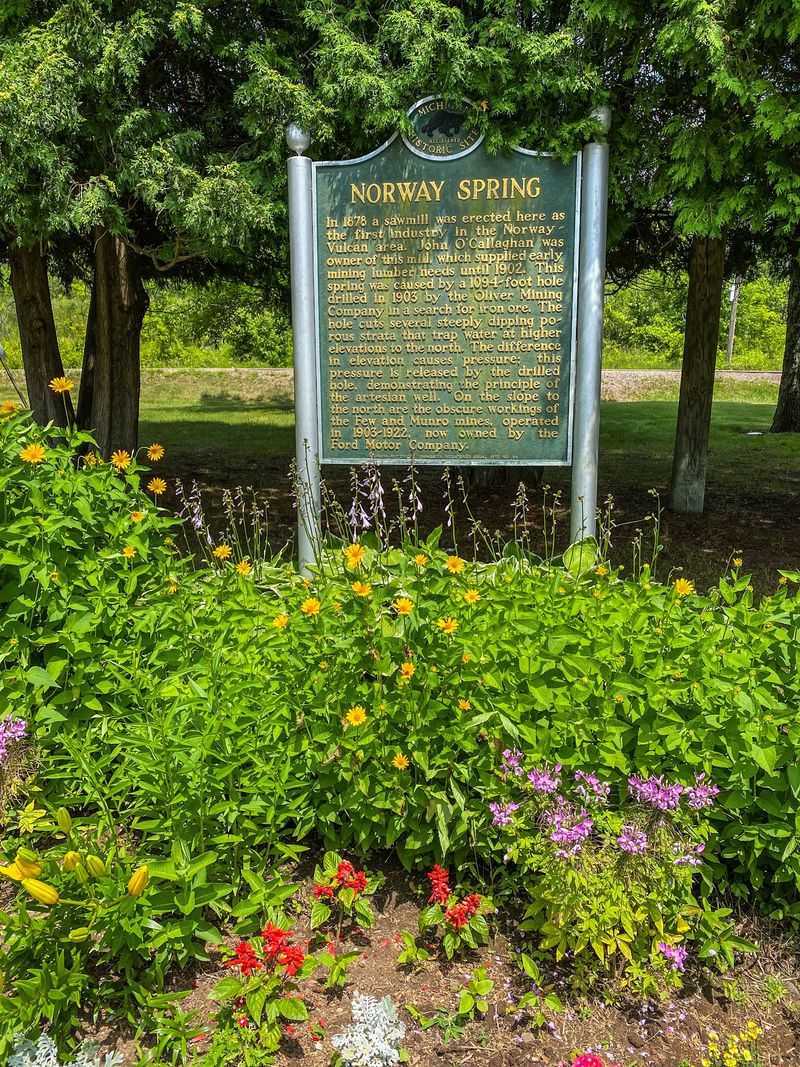
Long before anyone filled a water jug here, the ground buzzed with a different kind of work. In 1878, a sawmill went up on this spot.
The historical marker calls it the first industry in the Norway-Vulcan area. That gives this little roadside park a surprisingly important place in local history.
John O’Callaghan owned the mill. It supplied lumber for the needs of early mining until 1902.
Mines needed huge amounts of wood for support timbers and buildings. A nearby sawmill made the whole mining effort possible in those early years.
Notice how the dates line up. The mill closed in 1902, and the famous drilling happened just one year later in 1903.
I enjoy how one site connects two eras of the region. First came the lumber that helped mines grow, then the mining search that accidentally created the spring.
Nothing of the old mill is described as standing today, so the marker is your best window into that past. Take a minute to read it closely.
And the hills just north of you have their own mining tale.
Recognized by the State in 1966
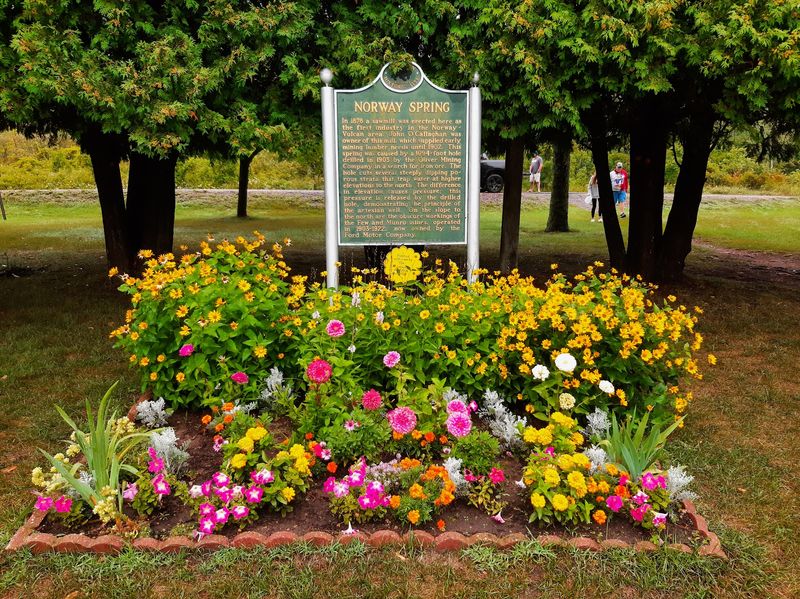
Official history is printed right at the site. Norway Spring is Michigan Historical Commission Registered Local Site No. 66.
The site joined the Michigan registry of historic places in 1966. A state historical marker was put up that same year.
That marker is the source for much of what we know about the spot. It covers the sawmill, the 1903 drilling, the artesian science, and the nearby mines all in one sign.
I’m a fan of markers like this because they turn a quick stop into a small history lesson. You get the story in just a few minutes of reading.
The listing is also included in online collections of Michigan historical markers. That’s handy if you want to read the text before or after your trip.
Bring the kids over to look at it. They might be surprised that a water fountain counts as a historic place.
Recognition aside, the spring’s real importance shows up in how people use it every day. Watching the steady stream of visitors tells that story better than any sign.
Bring Your Biggest Jugs
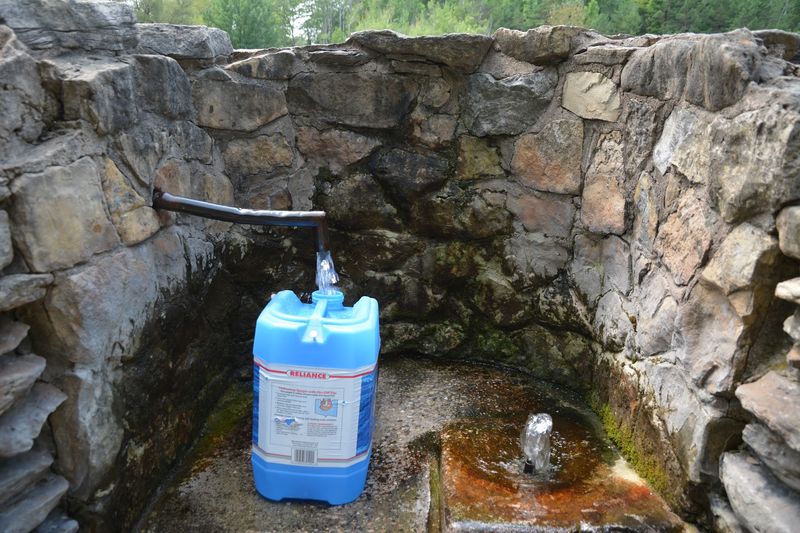
Plastic jugs might be the most important thing to pack for this stop. Many people fill several large containers at once, while others top off a single bottle.
Recent visitors describe locals filling jugs on a regular basis. Some even mention people collecting their weekly supply of drinking water here.
That routine says a lot about the spring’s role in the community. It’s a practical part of life, not just a curiosity for tourists.
A few tips can make your fill-up smoother. Clean your containers before you arrive, and bring caps that seal tightly for the drive.
One recent review mentions a spout in the back, so check around if the front looks busy. Parking is available in front of the spring and on the back part of the lot.
Expect some company during daytime hours. Visitors have noted that it can get crowded, and sometimes there’s a short line.
I’d keep an empty bottle in the car whenever driving US-2 through Norway. You never know when a cold refill might save the afternoon.
Once your containers are full, the park invites you to sit for a bit.
Picnic Tables and Shade for a Short Break
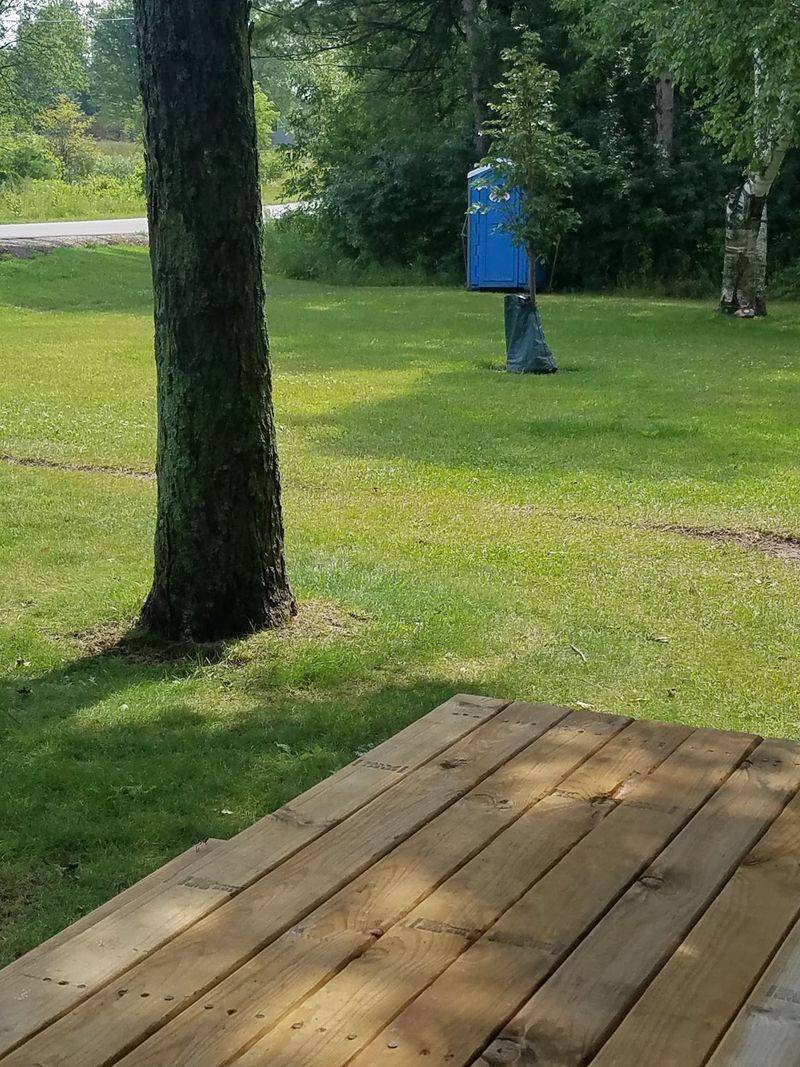
Road trips need breathing room, and this little park gives you some. Visitors mention picnic tables at the spring, with one account counting two.
Shade from the trees also comes up in visitor descriptions. On a warm day, that cover makes a big difference for anyone wanting to rest.
A short lunch here sounds like a smart plan to me. Pack sandwiches, grab fresh water from the spring, and give everyone time to stretch.
Families with young kids may appreciate the break most. One visitor shared that their son enjoyed it so much he asked to stop again the next day.
Restroom details have changed over the years, so don’t count on facilities. One account says a restroom was removed in 2020, while another mentions a portable toilet.
Accessibility has been noted by visitors as well. That helps make the stop easier for a wider range of travelers.
Keep the space tidy so the next group enjoys it too. A small park like this depends on people treating it with care.
Some visitors also mention a water feature nearby worth looking for while you relax.
Cold Water Any Time of Day
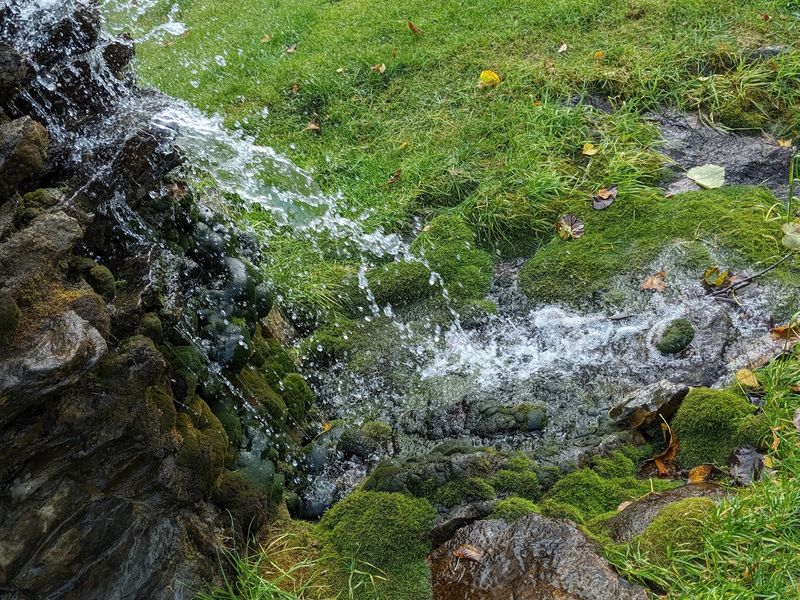
Cold is the word visitors use again and again. Comments about the spring often mention water that feels chilly and refreshing, especially in summer heat.
Because the spot is listed as open around the clock, you can stop whenever your schedule allows. Earlier visitors described traffic from early morning until late evening.
That kind of steady use shows how much people rely on it. Campers, locals, and road trippers all seem to cross paths at the spout.
Hot July drives are a perfect time for a refill. Cooling down with fresh water beats sitting with a warm bottle rolling around the floor of the car.
I’d suggest bringing an insulated bottle so the chill lasts longer down the road. That small step stretches the refreshment for miles.
Late visits can be quieter than midday ones, based on reports of daytime crowds. Still, conditions can vary, so plan with flexibility.
Since the water flows freely from an old drilled well, it isn’t treated like a city tap. That raises a fair question about what to keep in mind before drinking.
Smart Habits for a Good Visit
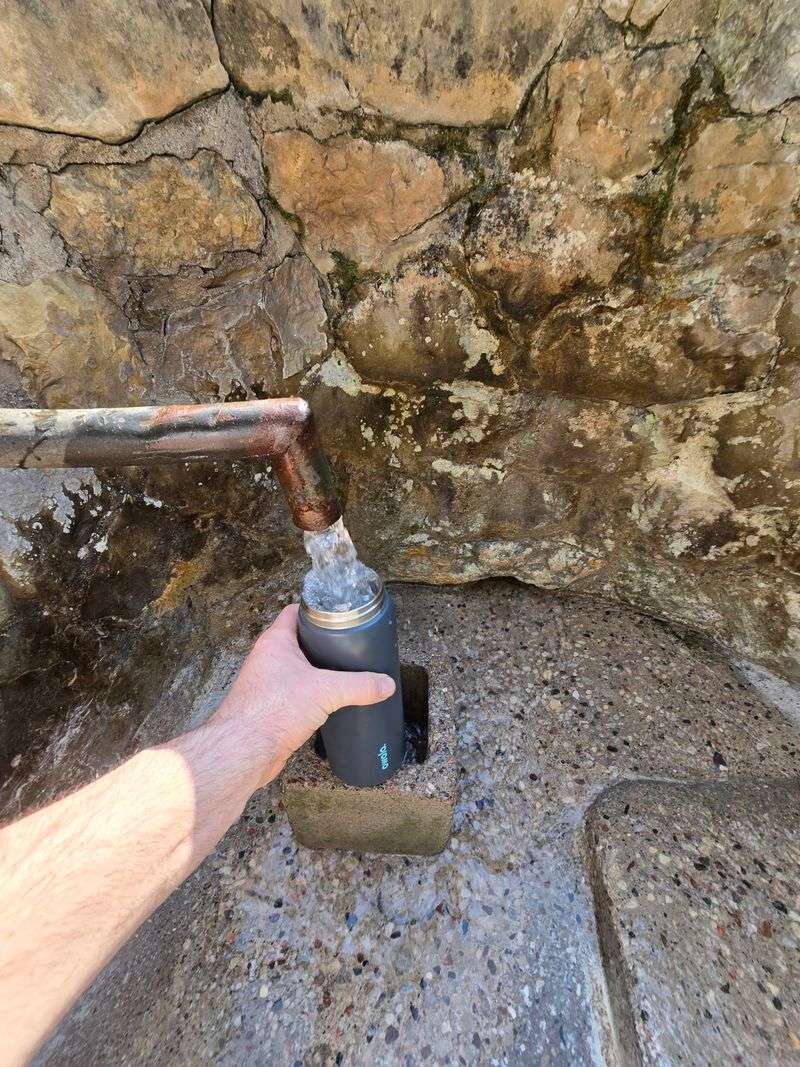
A little preparation goes a long way at a public spring. Start by bringing clean containers, since dirty jugs can spoil fresh water fast.
Natural spring water is not the same as treated tap water. If you have health concerns, check local guidance or consider boiling or filtering before drinking.
Be considerate when there’s a line. Filling a dozen jugs while others wait with one cup can feel awkward, so let quick fillers go ahead.
Parking is available in front and in the back area, according to visitors. Pull in carefully, because traffic on US-2 moves quickly near the entrance.
Leave no trash behind at the tables. Keeping the park clean helps protect a spot that people have enjoyed for generations.
I’d also take a moment to read the historical marker before leaving. Knowing the 1903 story makes every sip feel a bit more interesting.
Finally, pair the stop with a drive through the Upper Peninsula. Norway sits close to Iron Mountain, so the spring fits easily into a wider trip.
Simple habits like these keep the water flowing for everyone who comes next.
Share this story