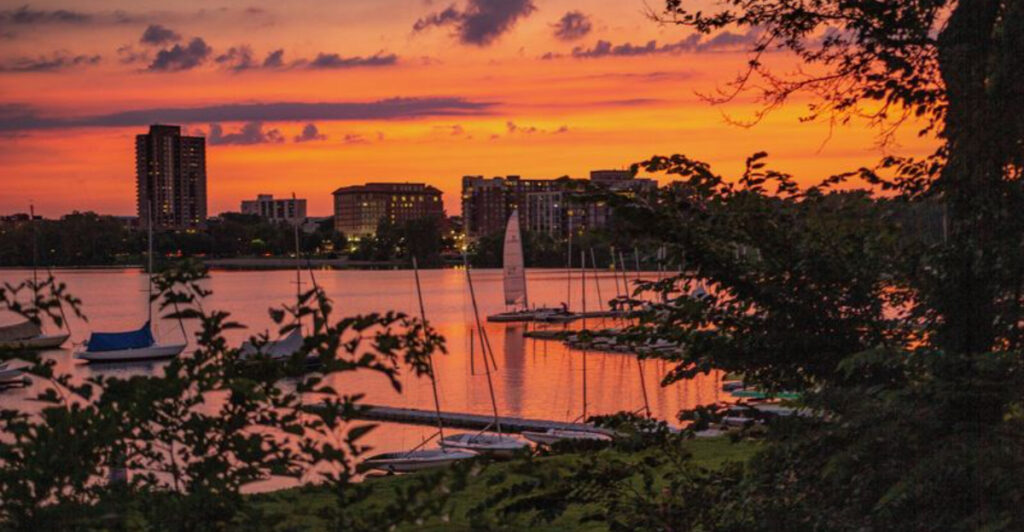
There is a lake right in the middle of Minneapolis where you can swim at a sandy beach in the morning, bike a three-mile trail by afternoon, and watch the downtown skyline glow during sunset without ever leaving city limits. Most people picture urban parks as small patches of grass, but this one feels more like a full outdoor resort sitting quietly between residential neighborhoods and busy city streets.
Three separate beaches, kayak rentals, paddleboards, volleyball courts, and some of the best skyline views in the entire Twin Cities make it a place locals return to again and again. Once you learn what this lake has to offer, you will wonder why you have not been visiting it every single summer.
The Story Behind the Name Bde Maka Ska
Long before it appeared on any city map, this lake carried a Dakota name with deep cultural meaning. Bde Maka Ska translates to “White Earth Lake” in the Dakota language, a name that reflects the light-colored sandy shores and open sky that have defined this place for centuries.
For many decades, the lake was officially called Lake Calhoun, a name that became controversial due to its connection to John C. Calhoun, a historical figure associated with pro-slavery politics.
After years of community discussion, the Minneapolis Park and Recreation Board officially restored the original Dakota name, Bde Maka Ska, in 2018.
The name change was more than symbolic. It represented a meaningful step toward honoring the Indigenous history of the land surrounding the lake.
Today, the name appears on park signs, maps, and city documents throughout Minneapolis, Minnesota.
Where the Lake Sits Inside the City
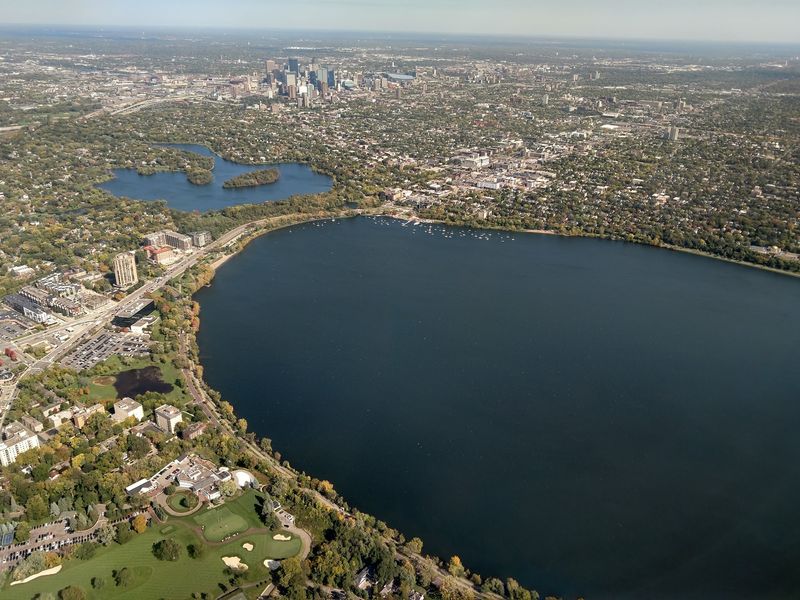
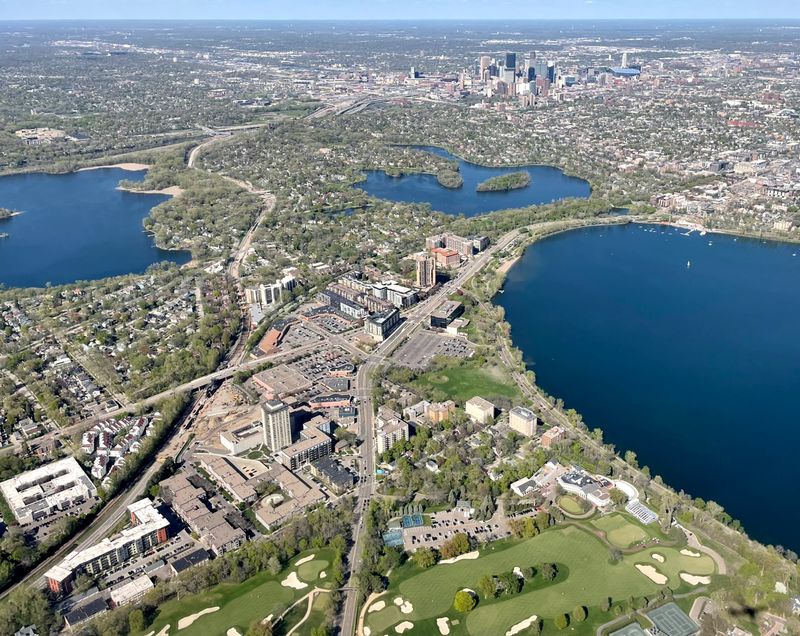
Finding a large natural lake sitting directly inside a major American city is not something you come across every day. Bde Maka Ska is located in Minneapolis, Minnesota, and sits just a few miles southwest of downtown, making it one of the most accessible urban lakes in the country.
The lake is part of the Chain of Lakes regional park, a connected system of lakes and parkways managed by the Minneapolis Park and Recreation Board. Bde Maka Ska itself covers roughly 401 acres, making it the largest lake entirely within Minneapolis city limits.
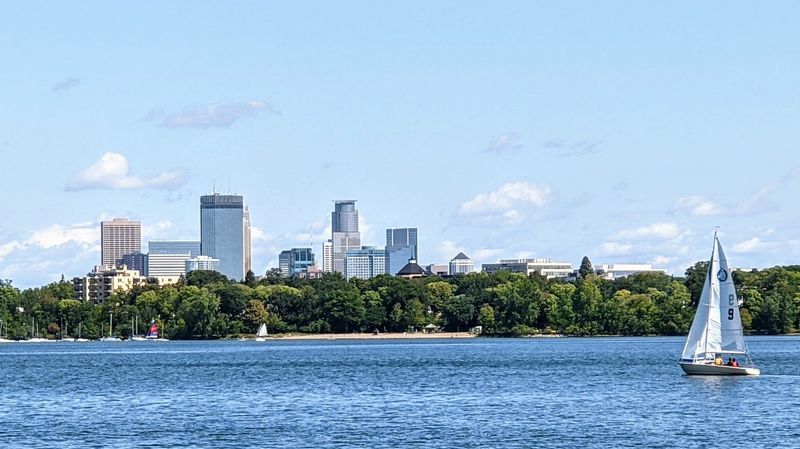
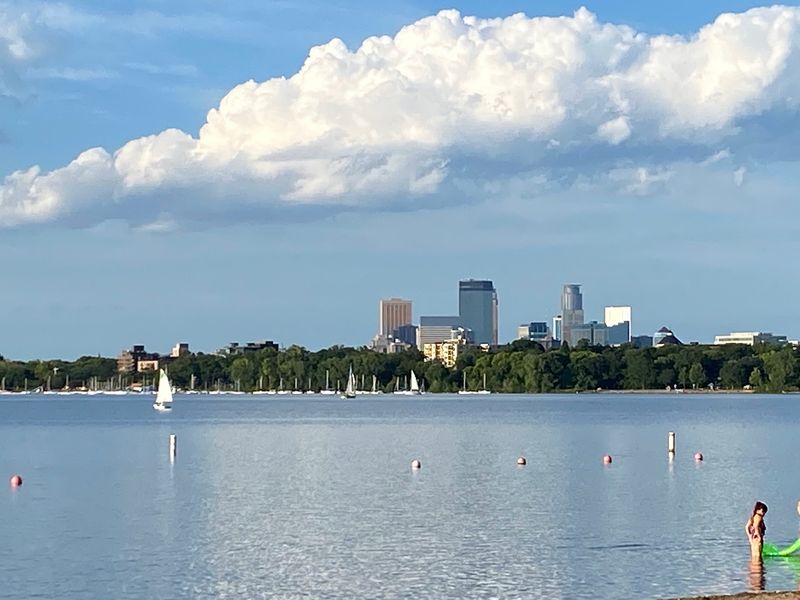
On clear days, the downtown Minneapolis skyline is visible from several points along the lake’s eastern and northern shores, creating a view that feels almost cinematic. The combination of open water, green parkland, and city towers in the background is something that genuinely stops people mid-stride on the trail.
Three Beaches Worth Planning Your Visit Around
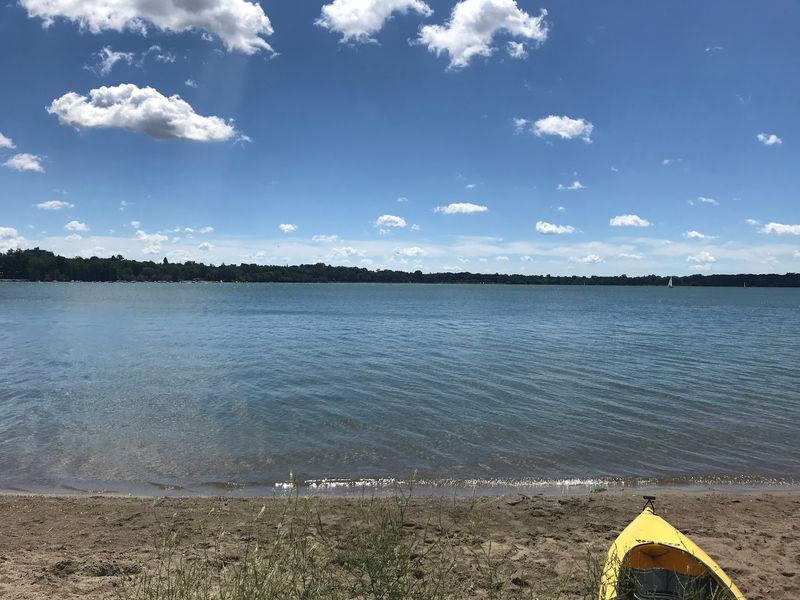
Most city lakes are lucky to have one decent swimming spot. Bde Maka Ska has three separate beaches, each with its own character and crowd level.
That variety alone sets it apart from nearly every other urban lake in the Midwest.
The main beach near the Thomas Beach area tends to draw the largest crowds on warm weekends, with families spreading out on the sand and kids splashing in the shallow water. A second beach near the northeast corner offers a slightly quieter experience, while a third beach area on the south end attracts a more relaxed crowd looking to sunbathe and wade.
All three beach areas are supervised by lifeguards during designated hours in the summer season. The water quality is monitored regularly, and the sandy shores are kept clean.
Arriving early on weekends is a smart move if you want a good spot.
The Three-Mile Trail That Circles the Lake
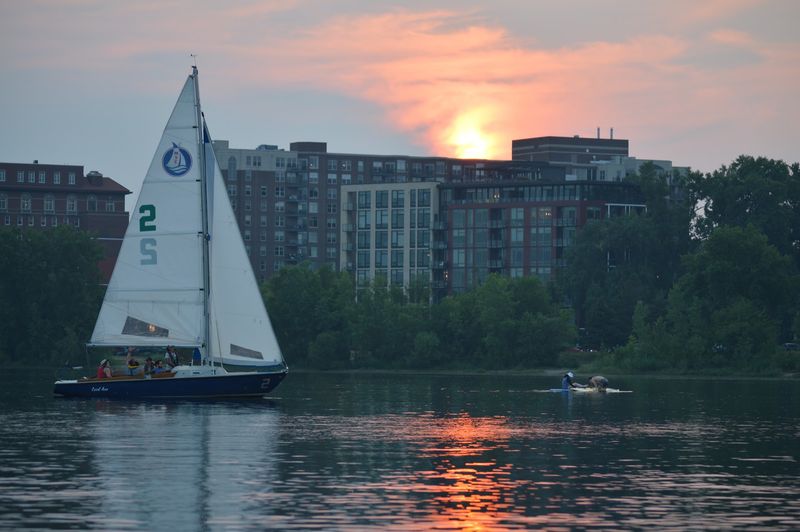
Circling the entire lake on foot takes roughly one hour at a comfortable walking pace. The paved trail runs approximately 3.1 miles around the perimeter of Bde Maka Ska, and the surface is smooth enough for strollers, wheelchairs, inline skates, and road bikes.
The trail is divided into separate lanes for pedestrians and cyclists in many sections, which helps keep things moving without too much friction between different users. On warm weekday mornings, the path has a calm, almost meditative quality.
Weekend afternoons are a different story, with the trail filling up quickly as joggers, families, and cyclists all share the route.
What makes the loop genuinely enjoyable is how the scenery shifts as you move around the lake. The downtown skyline appears and disappears between tree lines, the water changes color with the light, and small park areas along the way invite you to stop and rest whenever the mood strikes.
Kayak, Canoe, and Paddleboard Rentals on the Water
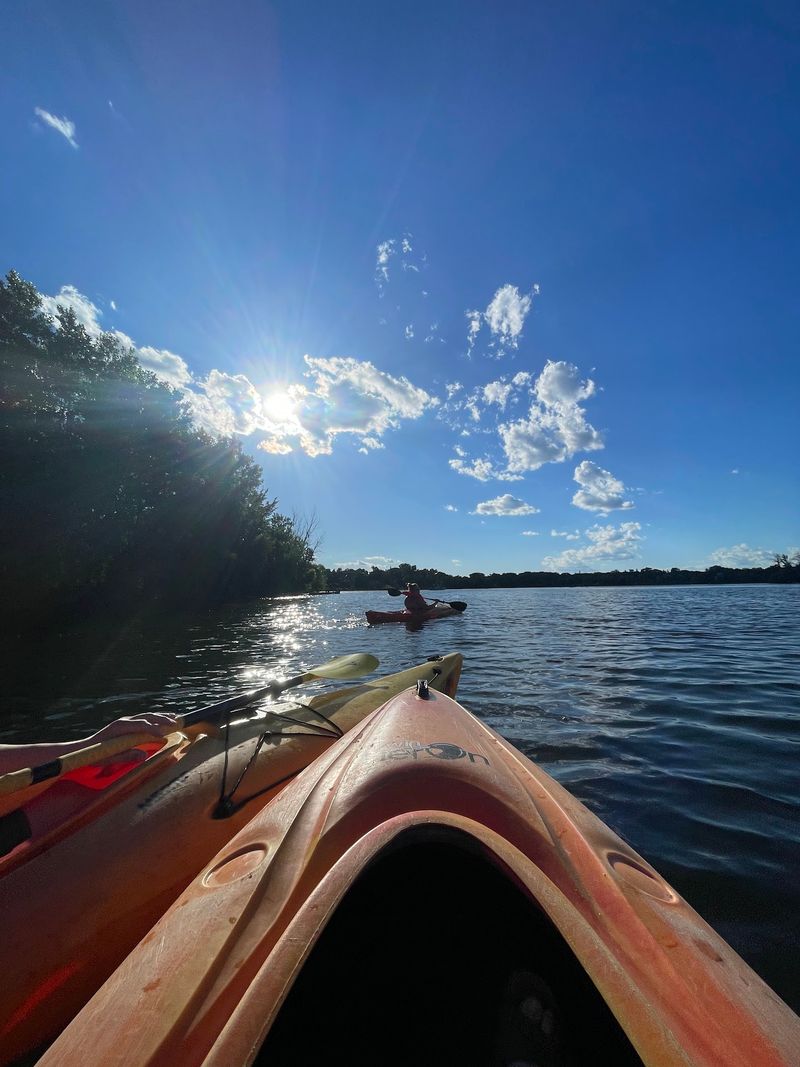
Getting out on the water at Bde Maka Ska does not require bringing your own gear. Wheel Fun Rentals operates a rental station near the lake where visitors can rent kayaks, canoes, paddleboards, and pedal boats by the hour.
It is one of the most popular ways to experience the lake, especially for first-time visitors.
Paddling across the open water gives you a perspective of the surrounding parks and skyline that you simply cannot get from the trail. The lake is large enough to feel like a genuine adventure, but calm enough that beginners feel comfortable within minutes of launching.
Windsurfers and sailors also use the lake regularly, taking advantage of the open fetch that allows wind to build across the water. On breezy summer afternoons, you might spot a dozen sailboats tacking back and forth while kayakers weave around them.
The lake handles the mix of watercraft surprisingly well.
Sunrise and Sunset Views That Draw People Back
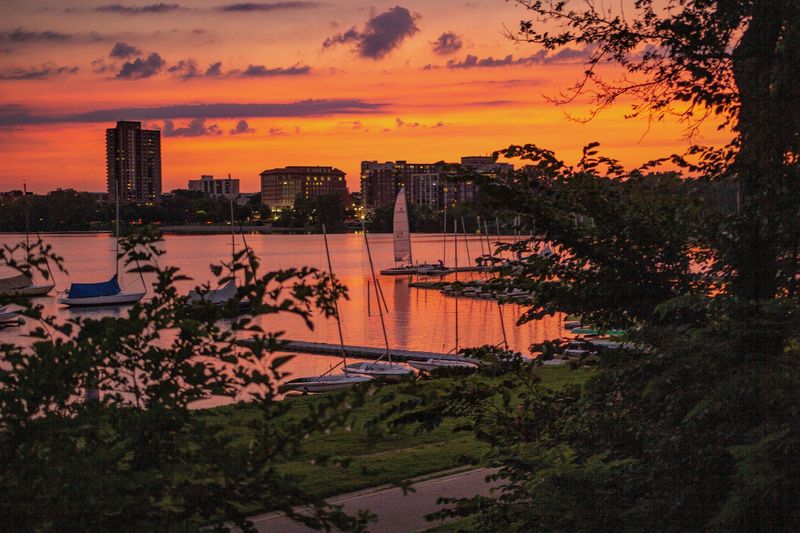
Plenty of places in Minneapolis offer a nice view, but few match what you get standing on the eastern shore of Bde Maka Ska at sunrise or sunset. The combination of open water, sky, and distant city towers creates a scene that photographers and casual visitors alike find worth the trip on its own.
Sunrises come in over the downtown skyline from the east, painting the water in shades of orange and gold before the city fully wakes up. Sunsets on the western side of the lake tend to be more dramatic, especially in late summer when the sky turns deep pink and purple over the water.
Many regulars time their walks specifically around these moments. The benches and open grass areas near the shoreline fill up in the final thirty minutes before sunset, with people sitting quietly and watching the light change.
It is one of those simple experiences that makes urban living feel surprisingly rewarding.
Biking Around the Lake and Beyond
Biking is one of the most popular ways to experience Bde Maka Ska, and the infrastructure around the lake supports it well. The dedicated bike lane running along the perimeter is wide, well-marked, and connects directly to the broader Minneapolis Grand Rounds Scenic Byway, a network of parkways and trails that links multiple lakes throughout the city.
For visitors without their own bikes, Wheel Fun Rentals offers standard bikes, tandem bikes, and electric bikes near the lake. The electric options are pricier by the hour but worth considering if you plan to extend your ride beyond the lake loop and explore nearby Bde Maka Ska connections to Lake of the Isles or Harriet.
The flat, paved surface makes the ride accessible for most fitness levels. Families with younger children often use the trail on weekday mornings when traffic is lighter and the pace is more relaxed.
The 3.1-mile loop around the lake itself takes most cyclists under twenty minutes.
Picnic Spots, Grills, and Volleyball Courts
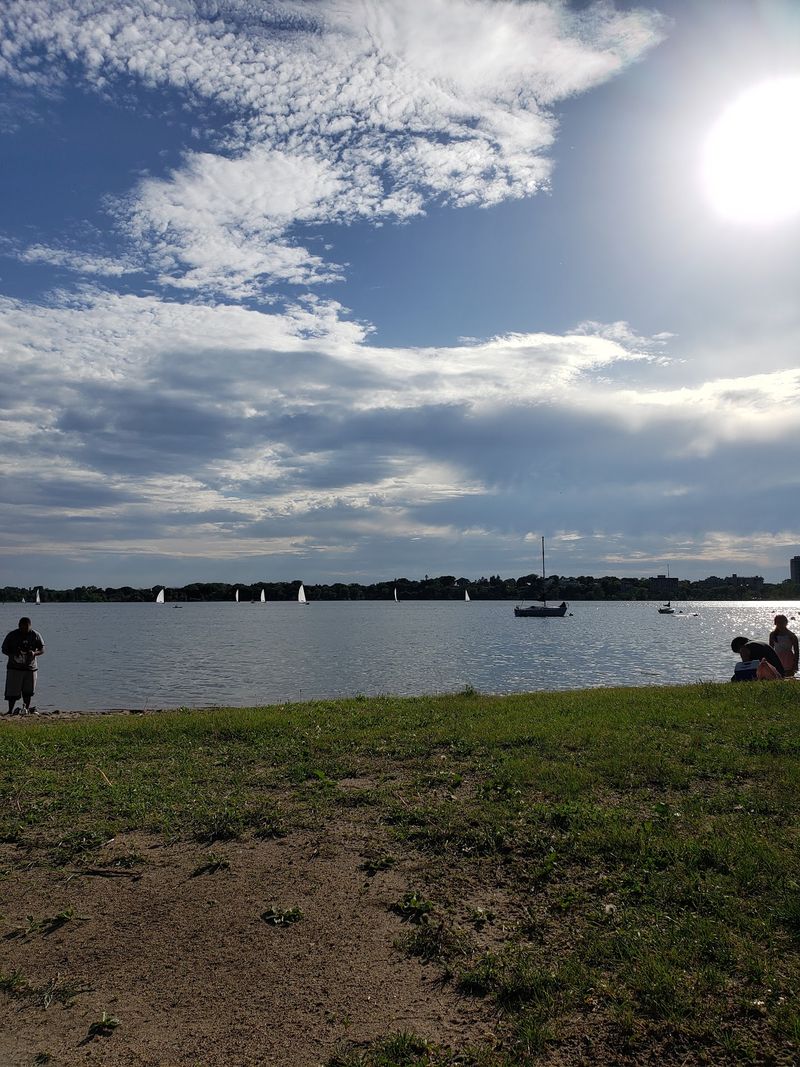
Beyond the water and the trail, Bde Maka Ska offers a solid range of land-based amenities that make it easy to spend an entire day at the lake without feeling like you are missing anything. Picnic areas with benches and open grass are scattered around the perimeter, and several spots include public grills for cookouts.
Volleyball courts near the beach areas are available on a first-come, first-served basis and tend to fill up fast on sunny weekends. Watching an impromptu game while eating lunch on the grass nearby has a distinctly easy, summery quality that is hard to manufacture anywhere else in the city.
The park also has restroom facilities and paved parking lots at multiple access points, though parking fills quickly during peak summer hours. Arriving before 10 a.m. on weekends gives you the best chance of finding a spot without circling the lot more than once.
The Sailing School and Wind Sports Scene
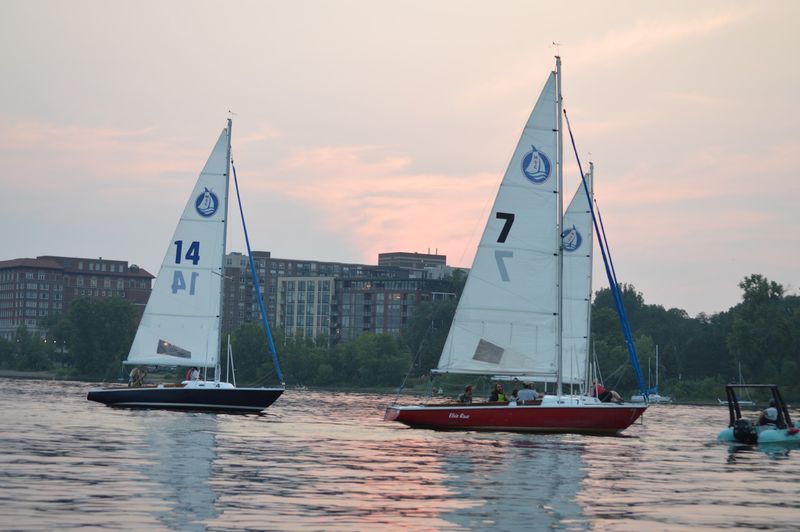
Bde Maka Ska has a long history as one of the best sailing lakes in the Twin Cities, and that reputation holds up today. The lake’s size and consistent summer winds make it well-suited for sailing instruction, recreational sailing, and wind sports like windsurfing and winging.
The Calhoun Yacht Club has operated on the lake for decades, and sailing lessons have been available here for generations of Minneapolis residents. Seeing a group of beginner sailors tacking across the water on a Tuesday afternoon is a completely normal sight at Bde Maka Ska, which says a lot about how seriously the local community takes the sport.
Winter does not shut down the wind sports scene entirely. On cold, clear days with frozen lake conditions, a small but dedicated group of ice sailors and kite skiers use the frozen surface for their own version of the summer sports.
It is a surprising sight if you are not expecting it.
Food Options Near the Shoreline
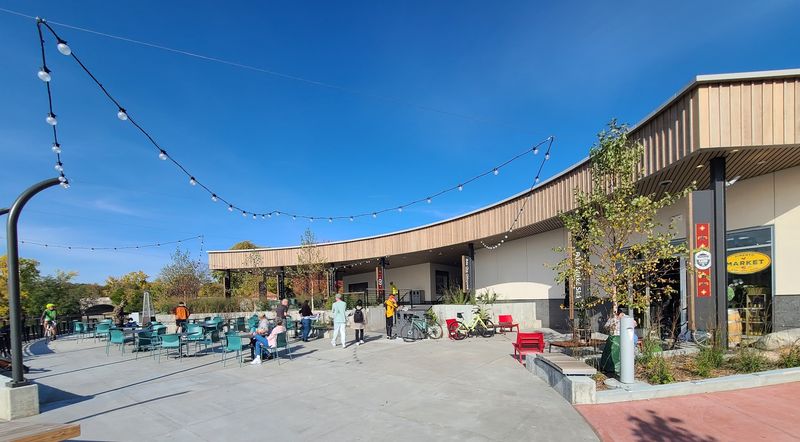
Spending a full day at the lake works better when you do not have to leave to find something to eat. The area around Bde Maka Ska has a few food options that make staying put an easy decision.
Lola on the Lake, located near the northeast beach area, offers sandwiches, snacks, and cold drinks with a direct view of the water.
A Pimento Jamaican Kitchen food presence near the lake has drawn attention for its jerk chicken and Jamaican beef patties, with lines forming quickly on warm weekend afternoons. The food has a bold, spiced quality that pairs well with eating outside in the sun.
Bringing your own food remains a popular and practical option. The picnic tables and open grass areas around the lake make it easy to set up a full spread.
Many regulars pack a cooler and treat the day at the lake as a proper outdoor meal rather than a quick snack stop.
Winter at Bde Maka Ska
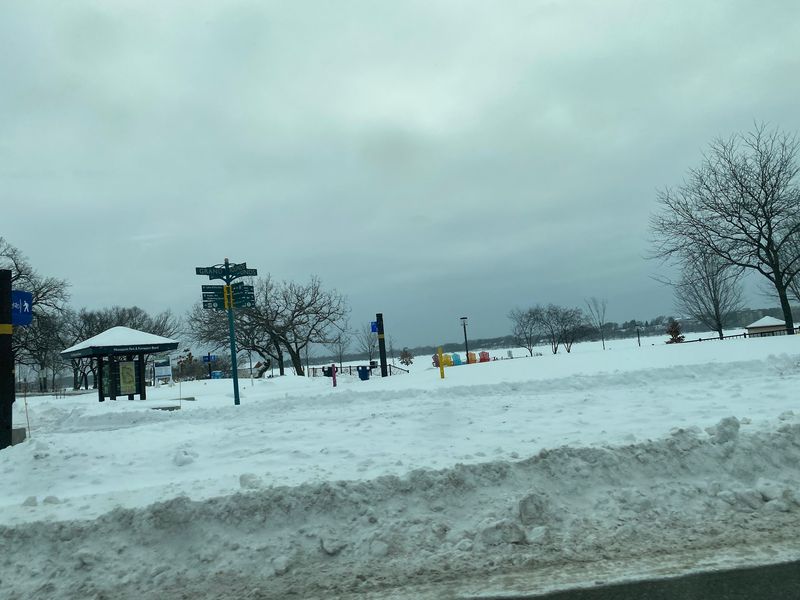
Summer gets most of the attention, but Bde Maka Ska in winter has its own quiet appeal. When temperatures drop far enough, the lake freezes and the surrounding trails take on a completely different character.
The crowd thins out significantly, and the lake feels almost private compared to its summer self.
Ice fishing is a common sight on the frozen surface during deep winter months, with small portable shelters dotting the ice. Cross-country skiers use the snow-covered paths around the perimeter, and some sections of the paved trail are maintained well enough for cold-weather walking and jogging.
The downtown skyline view from the lake in winter has a sharp, clear quality that summer haze sometimes softens. On bright January days with fresh snow on the ground and a blue sky above, the scene around the lake looks almost like a postcard.
Dressing in proper layers makes the experience genuinely enjoyable rather than just something to endure.
Why Locals Keep Coming Back Year After Year
Ask almost anyone who has lived in Minneapolis for more than a year about Bde Maka Ska, and you will get a story. For some people, it is the lake they learned to kayak on.
For others, it is the place they walked every morning for years before work, watching the seasons change around the same stretch of water.
The lake has a rare quality that is hard to define but easy to feel. It is large enough to feel expansive but surrounded closely enough by the city that you never lose the sense of being somewhere alive and connected.
The skyline view, the trail, the beaches, and the open water all contribute to something that feels genuinely complete.
That completeness is probably why the lake draws such a consistent mix of people, from serious athletes training for triathlons to grandparents walking slowly with young children on weekend afternoons. Bde Maka Ska, Minneapolis, Minnesota, manages to be something different for almost everyone who visits.
Share this story