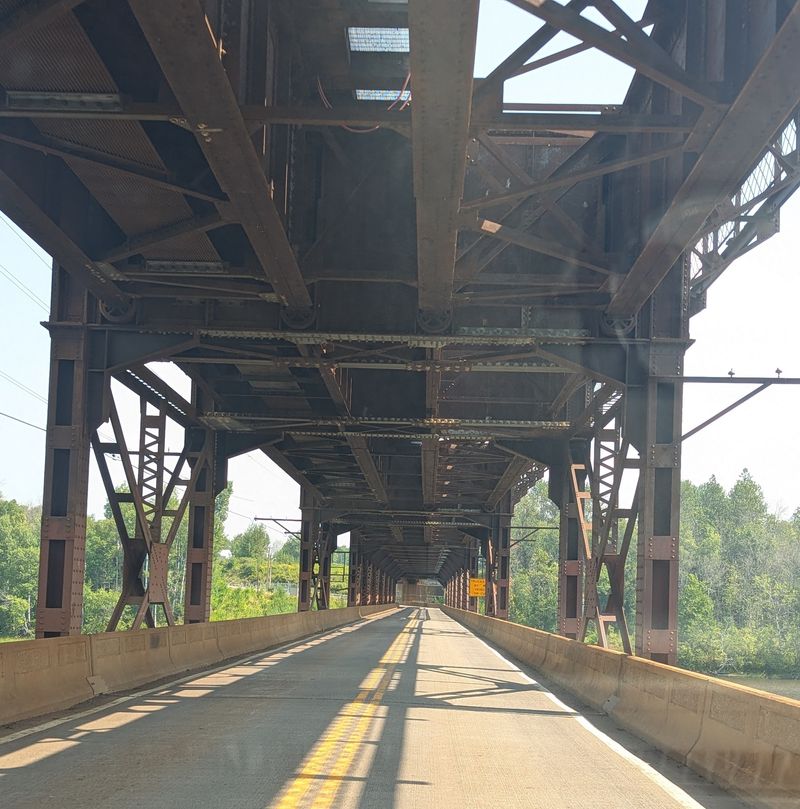
There is a bridge in Minnesota where you can drive your car across the St. Louis River while a fully loaded freight train rumbles directly above your head. The steel frame shakes, the sound fills the air, and for a moment, you feel like you are inside a tunnel made of iron and noise.
Most people have never heard of this place, and that is exactly what makes it worth knowing about. The Oliver Bridge near Duluth is one of the last two-story bridges of its kind in the country, and once you cross it, you will not forget it.
A Bridge That Does Two Jobs at Once
Most bridges do one thing: they carry traffic from point A to point B. The Oliver Bridge decided that was not enough.
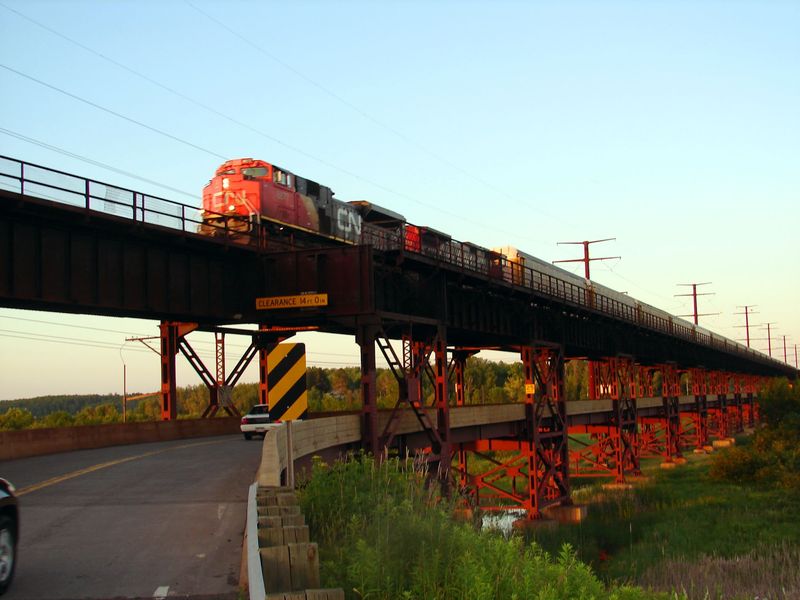
Built as a two-story structure, it carries vehicle traffic on the lower deck and freight rail on the upper deck, making it one of the rarest bridge designs you will find anywhere in the United States.
Sharing space with a freight train overhead is not something most drivers ever experience. At Oliver Bridge, that is just a Tuesday.
The engineering required to stack a railroad line directly above a roadway on a single bridge span is genuinely impressive, and the fact that this structure still stands and still functions makes it even more remarkable.
Few bridges in the country can claim this kind of dual-purpose design. This one does it quietly, tucked along the Minnesota-Wisconsin border, without much fanfare.
Where Exactly You Will Find It
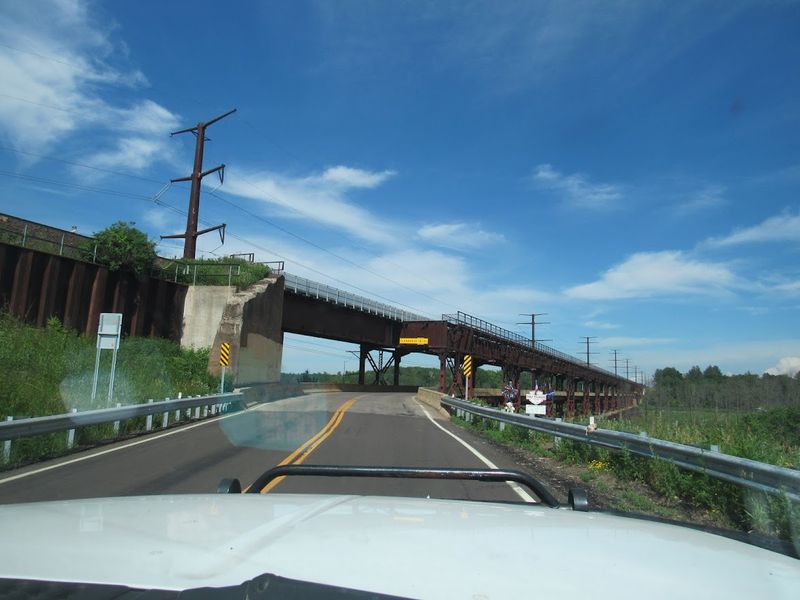
The Oliver Bridge sits on the border between Minnesota and Wisconsin, spanning the St. Louis River near the small community of Oliver, Wisconsin. It connects to the Duluth, Minnesota area on the western end, giving drivers a quieter alternative crossing compared to the busier routes closer to the city center.
The bridge is located at Duluth, MN 55808, placing it on the southwestern edge of the Duluth metro area. Getting there feels like a short escape from the city, with the surrounding landscape shifting toward forested riverbanks and open water views as you approach.
The area around the bridge is calm and largely undeveloped, which adds to the sense that you have found something most travelers drive right past. The St. Louis River itself is wide and scenic at this crossing, and the setting alone makes the short detour worthwhile.
The Sound That Stops You Cold
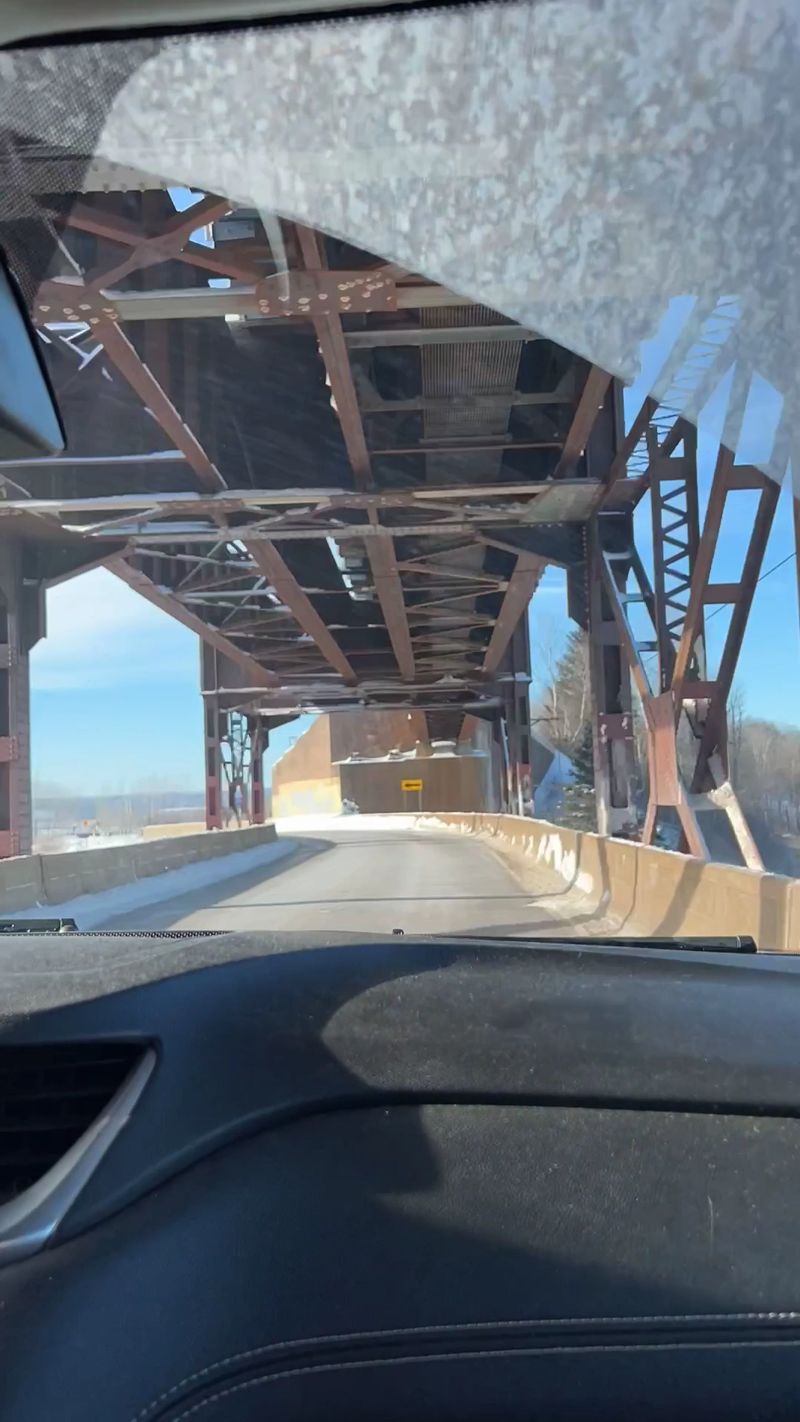
Nothing quite prepares you for the noise. When a freight train crosses the upper deck while you are driving through the lower level, the sound is enormous.
The steel structure amplifies everything, and the rumble travels through the frame of the bridge like a physical force you can feel in your chest.
Some drivers describe it as feeling like a tunnel that suddenly comes alive around you. The overhead beams are close, the train is loud, and the whole experience lasts just long enough to be genuinely memorable.
It is not frightening, but it is absolutely startling the first time it happens.
People who grew up crossing this bridge remember the sound clearly, even decades later. That kind of sensory memory is rare in everyday travel.
The Oliver Bridge delivers it without warning, which is part of what makes the crossing so unforgettable.
A Design That Has Nearly Disappeared
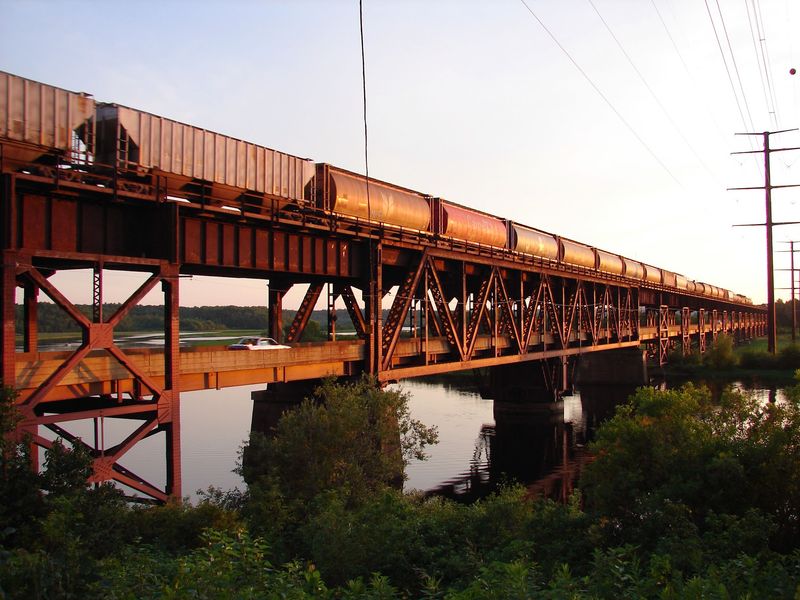
Two-story bridges that carry both road traffic and railroad trains on separate decks are an engineering concept that largely disappeared as infrastructure budgets tightened throughout the twentieth century. Building and maintaining a structure complex enough to handle both uses became harder to justify when separate crossings could be built instead.
The Oliver Bridge is considered a survivor. It represents a style of thinking about shared infrastructure that was once more common, when planners looked for ways to combine functions rather than duplicate them.
That approach produced a structure that is genuinely rare today.
Seeing it in person gives you a different appreciation for older engineering. The bridge does not look flashy or modern.
It looks practical, sturdy, and built with a long lifespan in mind. And the fact that it is still doing both jobs, carrying cars below and trains above, proves that the original design was sound.
What the Road Surface Used to Feel Like
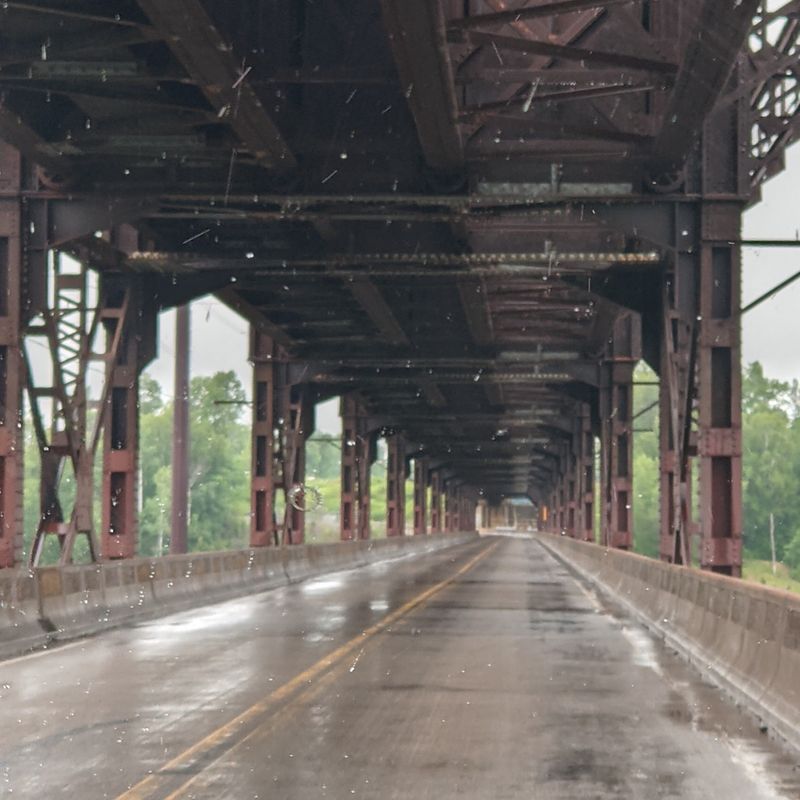
Long-time locals remember when the driving surface of Oliver Bridge was made of wooden planks rather than pavement. Crossing it on a wooden deck gave the whole experience an entirely different texture, both literally and figuratively.
The planks would flex and creak under vehicle weight, and the sound of tires on timber was nothing like modern asphalt.
Several people who crossed the bridge in earlier decades specifically remember that wooden surface as the detail that stuck with them most. One visitor noted it was the only place they had ever driven on a wooden road surface.
That kind of detail is hard to find anywhere in modern transportation infrastructure.
The bridge has since been updated with a paved surface, which makes crossing smoother and quieter. But for those who remember the old wooden deck, the upgrade came with a small trade-off: a little of the original character went with it.
The St. Louis River Below
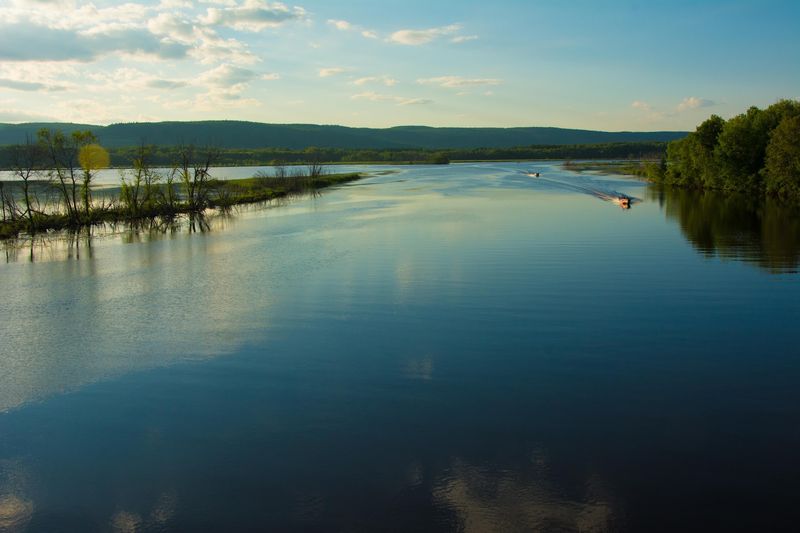
The St. Louis River is the largest river flowing into Lake Superior from the United States side, and it is genuinely impressive at the Oliver Bridge crossing. The water spreads out wide here, with forested banks on both sides and a calm surface that reflects the sky on clear days.
Standing near the bridge or crossing it slowly gives you a solid look at one of the region’s most scenic waterways.
The river floods significantly in summer, spreading out across the low-lying areas near the bridge and creating what looks almost like a shallow lake. In winter, the same area freezes over, transforming the landscape into something completely different.
The bridge sits above all of it, unchanged by the seasons.
Fishing is another draw in this area. The St. Louis River supports a variety of fish species, and the quiet banks near Oliver make it an appealing spot for anyone looking to spend time near the water.
Crossing Between Two States
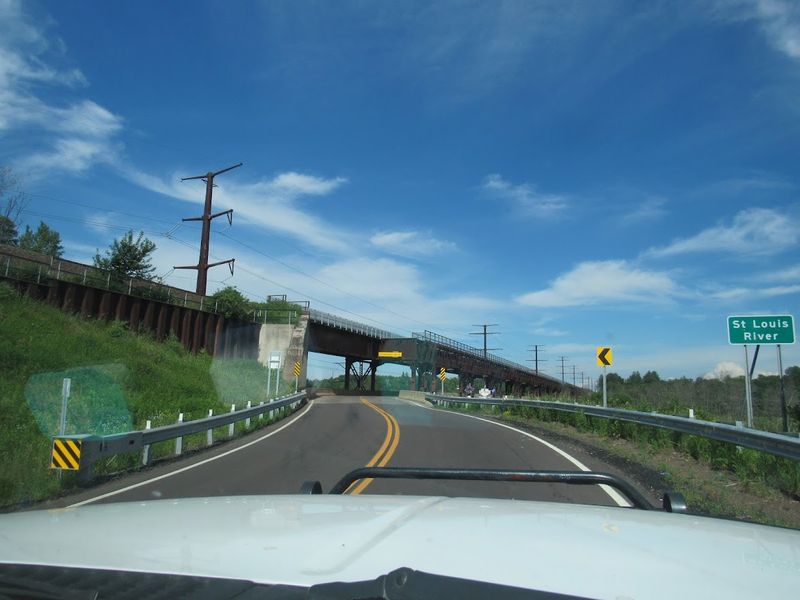
The Oliver Bridge is not just a local crossing. It connects two states, carrying drivers between Minnesota and Wisconsin at a point where the St. Louis River marks the border.
That alone makes it a slightly unusual piece of daily infrastructure for the people who live nearby and use it regularly.
For travelers passing through, the crossing adds a small geographic thrill. You drive into one state and emerge in another, with a freight train potentially thundering overhead at any point during the trip.
Not many border crossings come with that kind of added drama.
The bridge is open around the clock, every day of the week, which makes it a practical option for anyone in the area regardless of the time. Late-night crossings apparently have their own atmosphere, with the steel structure feeling even more enclosed and the river quieter in the dark hours.
The Architecture That Makes It Stand Out
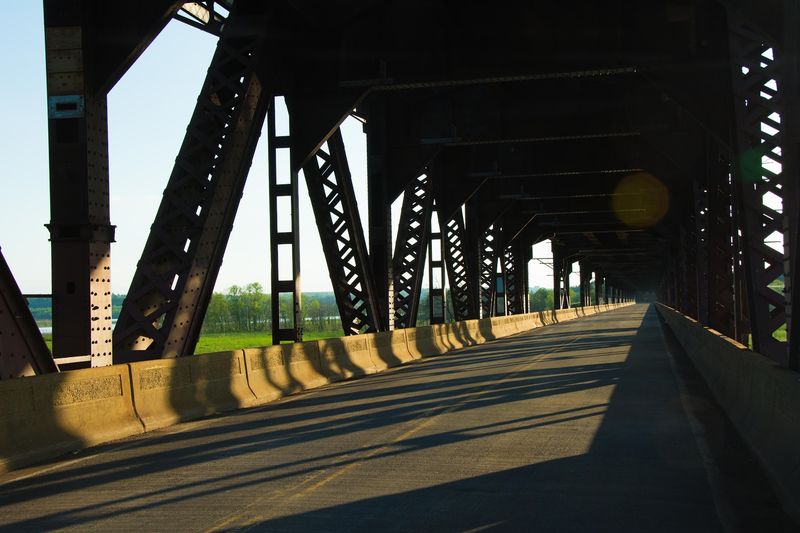
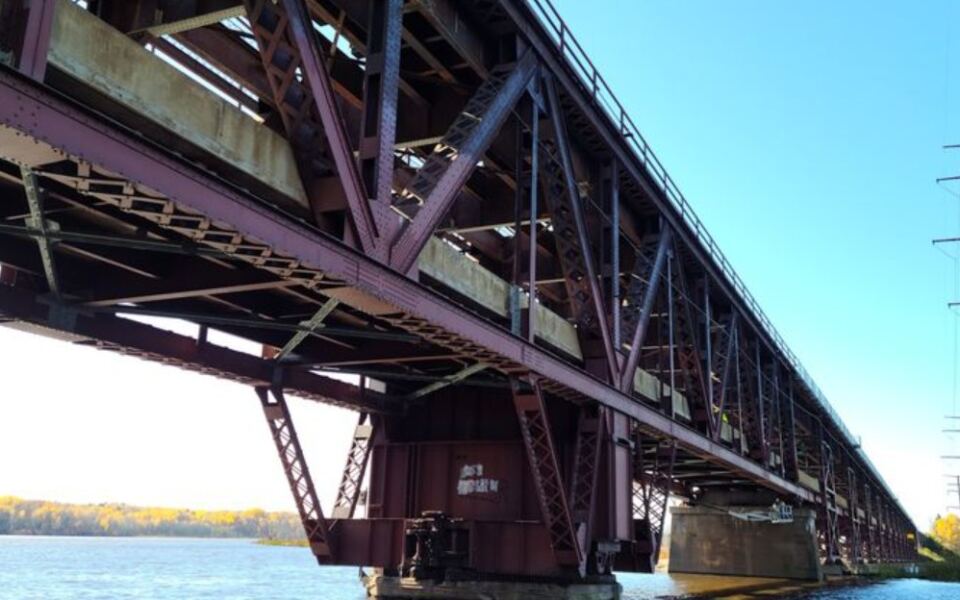
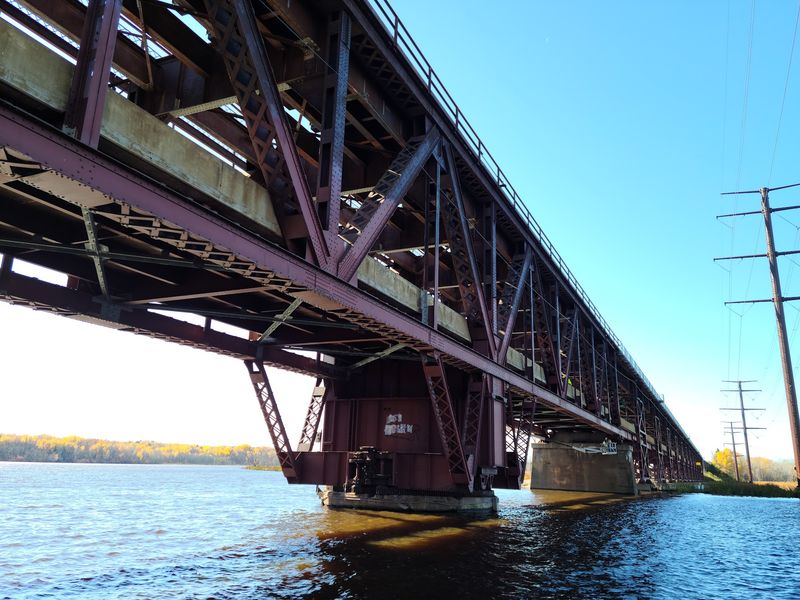
The bridge’s steel truss design is the kind of structure that engineers still study when looking at examples of durable, efficient construction. The framework of beams and supports carries enormous loads from both the road below and the rail line above, distributing weight in ways that have kept the bridge functional for decades.
From a distance, the two-deck layout is clearly visible, and the proportions of the structure are striking. The upper deck sits noticeably higher than a standard bridge railing, giving the whole crossing a taller, more industrial silhouette against the river and trees behind it.
Up close, the riveted steel connections and the overall scale of the framework are worth examining. The bridge does not try to be beautiful in a decorative sense.
Its appeal comes entirely from function made visible, and that kind of honest engineering has a look that grows on you the longer you study it.
How Locals Have Used It for Generations
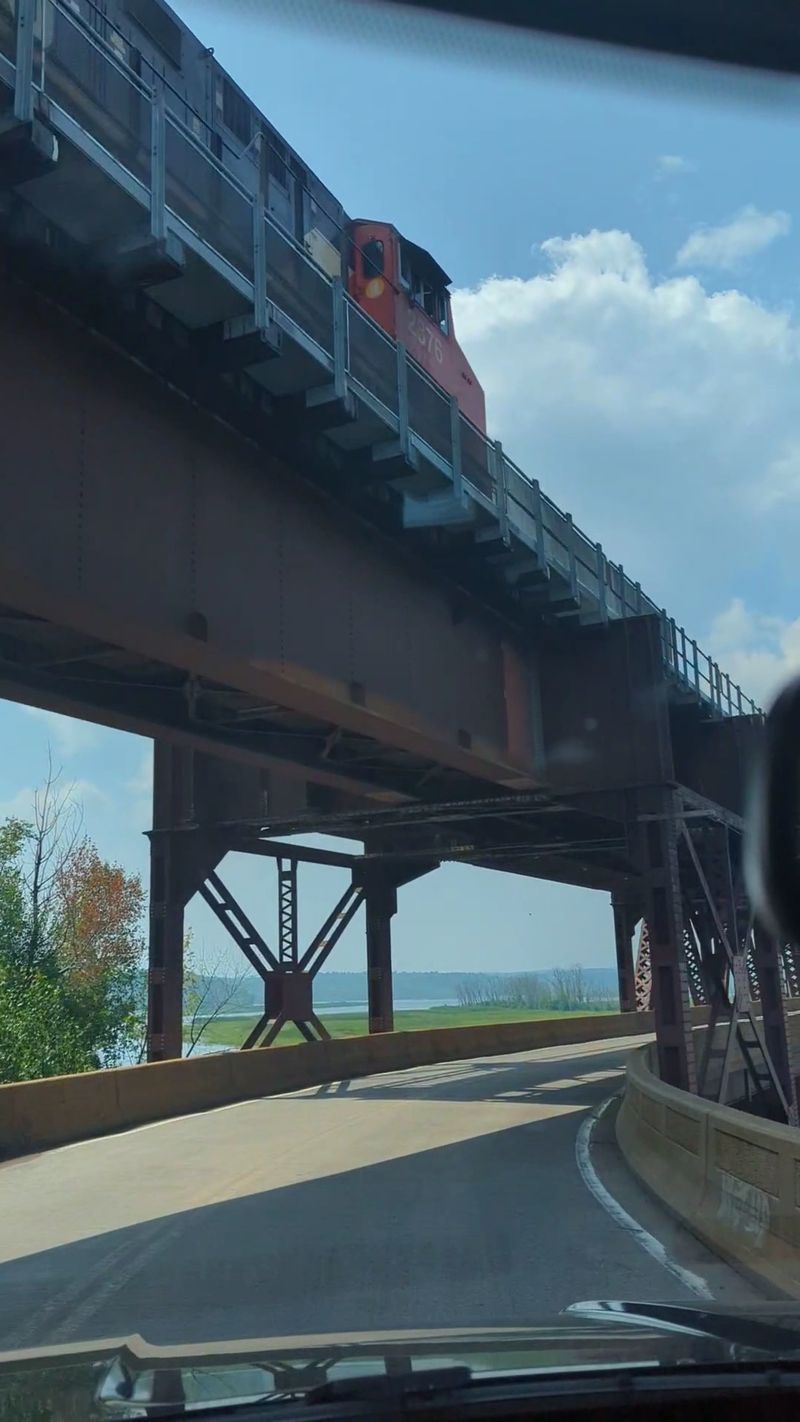
For residents of the western Duluth area and the communities across the river in Wisconsin, the Oliver Bridge has been a practical lifeline for decades. It cuts significant travel time compared to driving to other crossings further north or south, and it has been woven into the daily routines of people who live on both sides of the river.
Stories about the bridge tend to come from people who grew up using it, crossing it with family, or discovering it for the first time as teenagers. The bridge carries a kind of quiet community significance that does not show up on tourist maps but is very real to the people who rely on it.
Some visitors stumble onto the bridge by accident while exploring back roads around Duluth. That accidental discovery tends to produce the most enthusiastic reactions, because nothing about the approach quite prepares you for what you find at the crossing.
What Winter Does to This Crossing
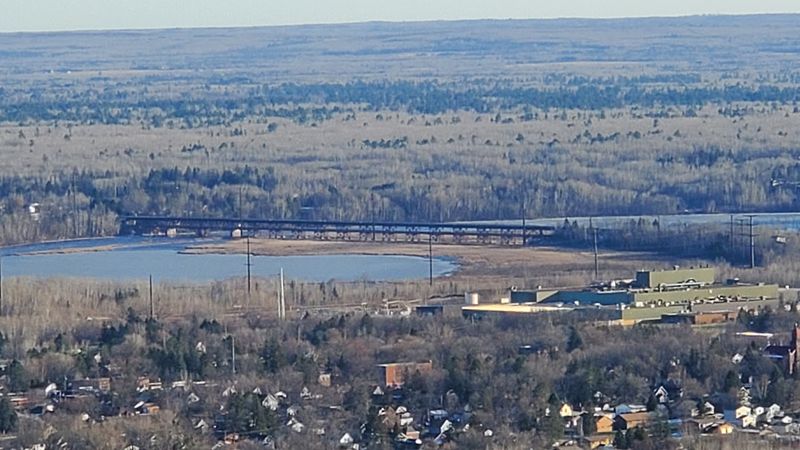
Minnesota winters transform the Oliver Bridge area into something that looks entirely different from the summer version. The St. Louis River freezes over in the coldest months, and the low-lying flood areas nearby turn into flat expanses of ice.
The bridge rises above all of it, its steel frame dusted with frost and the road surface covered in packed snow.
Crossing the bridge in winter has its own character. The river below is silent under ice, the trees on both banks are bare, and the sound of a train overhead carries even further in the cold, still air.
The whole crossing feels more exposed and more dramatic when the temperature drops.
Winter also makes the bridge’s two-story silhouette stand out more clearly against the pale sky. Without summer foliage blocking the view, you can see the full length of the structure from the approach road, which gives you a much better sense of its actual scale.
Summer Flooding and the River’s Seasonal Spread
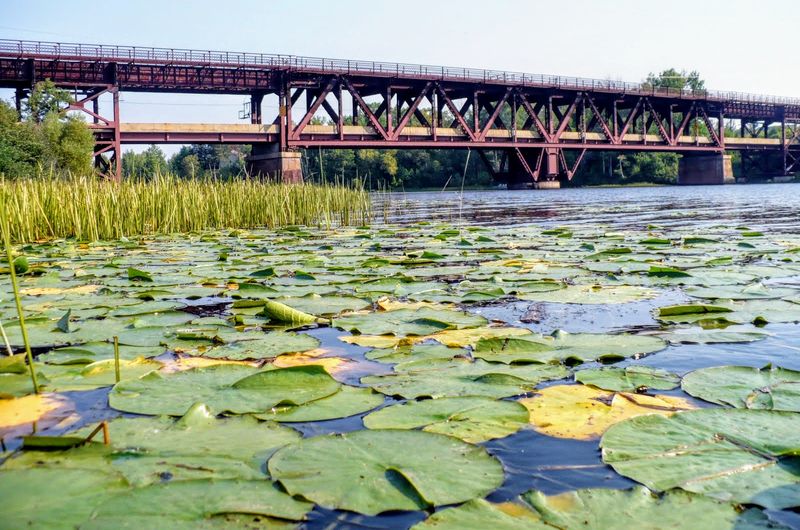
Summer brings a completely different set of visuals to the Oliver Bridge area. The St. Louis River rises and spreads out across the flat land near the crossing, creating wide, shallow water that fills the surrounding landscape like a seasonal lake.
The bridge stands above all of it, its lower deck elevated enough to stay dry while the water spreads below.
The flooded areas attract wildlife, and the combination of open water, forest edge, and the old bridge structure creates a scene that photographers and nature watchers find genuinely appealing. The reflection of the steel framework in still water on a calm morning is the kind of image that sticks with you.
Fishing near the bridge becomes especially productive during certain summer months when the river conditions are right. The area draws anglers who appreciate both the scenery and the relatively uncrowded access to the river compared to spots closer to Duluth proper.
The View That Surprises First-Time Visitors
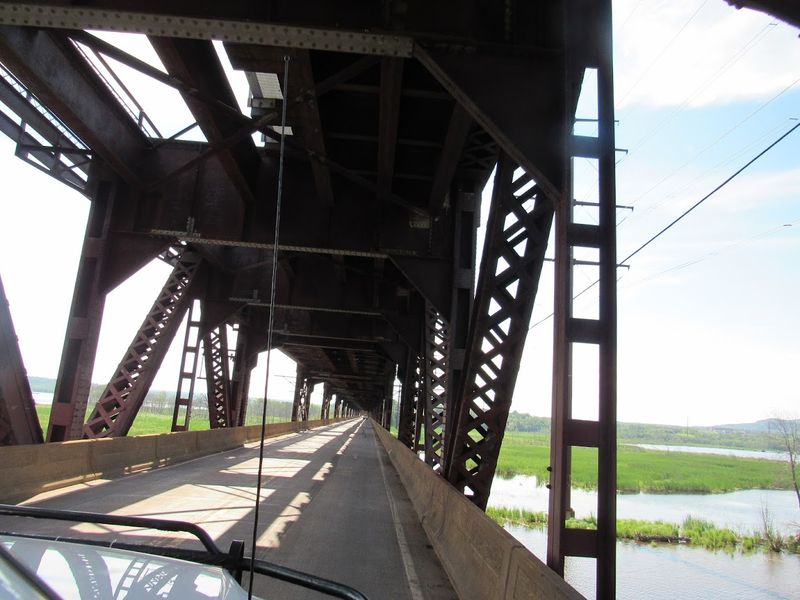
Most people who cross the Oliver Bridge for the first time are focused on the train tracks overhead and the narrow road deck beneath them. Then they glance sideways at the river, and the view catches them completely off guard.
The St. Louis River is wide and open at this crossing, and on a clear day, the view stretches far in both directions along the water.
The combination of the industrial steel structure framing a natural river scene is genuinely striking. You are surrounded by metal and engineering, and then you look out and see open water, tree lines, and sky.
The contrast is sharper than you expect.
At least one visitor mentioned catching a view toward Lake Superior from the bridge on a particularly clear day. The river connects to the lake not far downstream, and when conditions are right, the sense of open water extends much further than the crossing itself.
Why the Bridge Feels Like a Tunnel
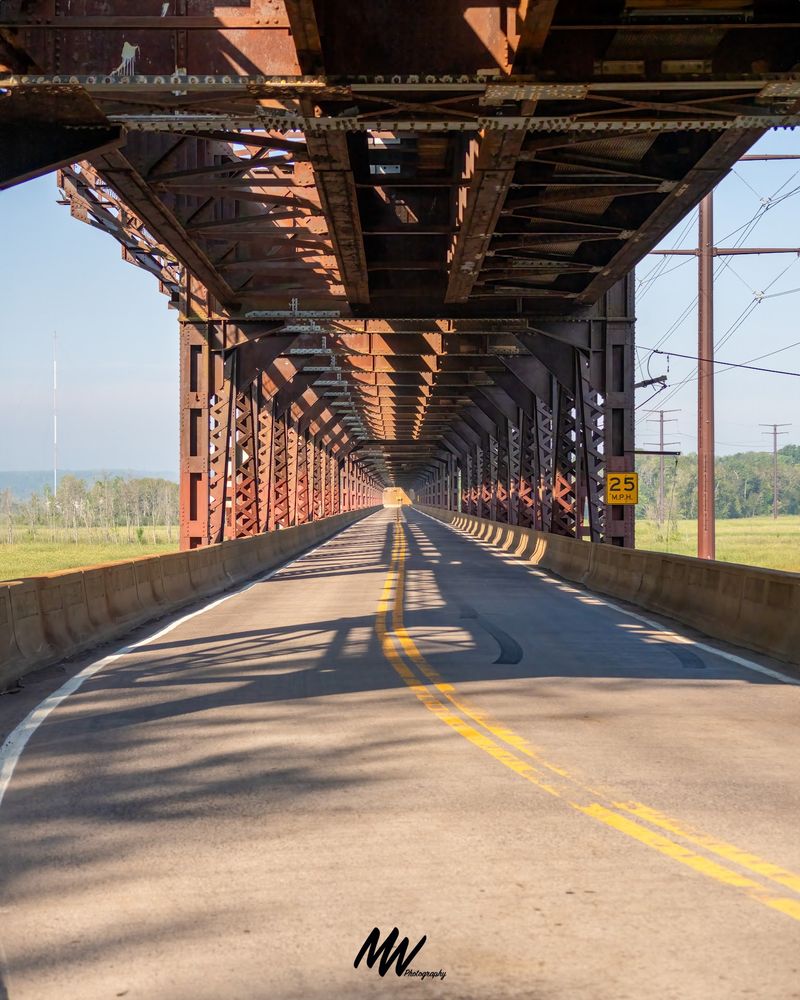
The geometry of the Oliver Bridge creates a genuinely unusual driving experience. Because the railway deck sits directly overhead and the steel truss framework rises on both sides of the road, driving through the lower level feels less like crossing an open bridge and more like passing through a covered structure.
The effect is especially strong in the middle section of the span.
Some drivers find the enclosed feeling slightly unnerving on their first crossing, particularly if they are not expecting it. The steel beams are close, the overhead clearance feels lower than a typical bridge, and the visual effect of moving through a framed tunnel of metal is disorienting in an interesting way.
When a train is passing above at the same moment, the tunnel effect is amplified by the sound and vibration. The whole structure seems to close in around you, and then the train moves on and the bridge opens back up to sky and river on the far side.
Practical Details for Planning Your Visit
The Oliver Bridge is open every day of the week, around the clock, with no fees or restrictions for passenger vehicles. You simply drive up and cross, which makes it one of the most accessible unusual attractions in the Duluth area.
There is no ticket booth, no scheduled tour, and no need to plan far ahead.
The bridge is relatively narrow, so drivers should pay attention while crossing. It handles two-way traffic, but the lanes are tighter than a modern highway bridge, and meeting an oncoming vehicle in the middle requires some care.
The experience is part of the charm, but it does call for attentiveness.
The surrounding area near Oliver, Wisconsin offers quiet parkland and river access that makes a short stop worthwhile after the crossing. Bringing a camera is a good idea, especially if you want to photograph the bridge from the riverbank, where the full two-story structure is visible in one frame.
Why This Bridge Deserves More Attention
The Oliver Bridge does not appear on most lists of Minnesota attractions. It does not have a visitor center, a gift shop, or a designated scenic overlook.
What it has is a genuinely rare engineering design, a dramatic sensory experience, and a setting along one of the most scenic rivers in the upper Midwest.
Bridges that carry both road and rail traffic on separate decks are so uncommon today that most people have never encountered one. The fact that this example is still fully operational, still used daily, and still capable of delivering a freight train overhead while you drive underneath is something worth acknowledging.
The Duluth area is already known for the Aerial Lift Bridge and the dramatic harbor views along the lakefront. The Oliver Bridge offers something different: a quieter, more industrial, and more surprising crossing that rewards the drivers who take the time to find it.
Once you have crossed it with a train overhead, you will understand why people keep talking about it.
Share this story