Back in 1882, a surveying crew made a simple but remarkable mistake. They mapped a patch of northern Minnesota forest as a lake, and because of that error, loggers never came for it.
While nearly every old-growth pine forest in the state was cleared during the great logging era, this small parcel of ancient trees stood completely untouched. Today, those same trees, some over 300 years old, still reach toward the sky in one of the most quietly astonishing places in the entire Midwest.
The Surveying Mistake That Changed Everything
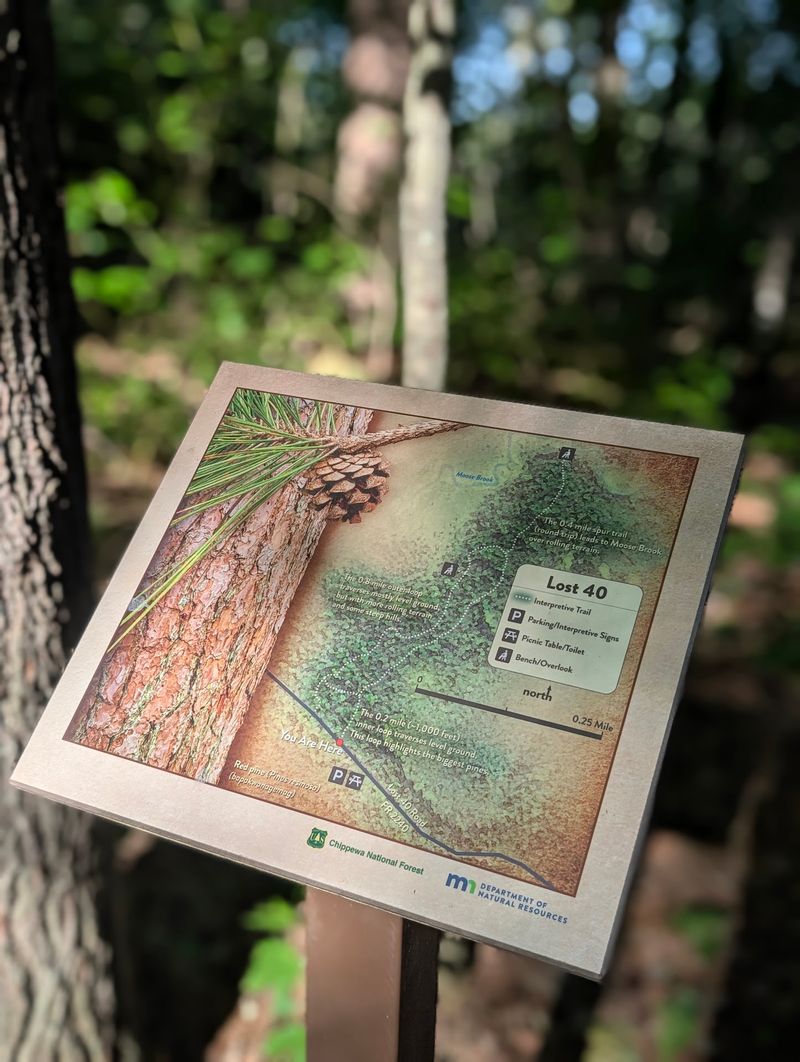
A cartographic blunder in 1882 turned out to be one of the greatest conservation accidents in Minnesota history. When surveyors mapped this section of northern Minnesota, they recorded the forested land as a body of water.
That single error kept loggers away during the most aggressive timber-harvesting period the state ever saw.
Most of Minnesota’s old-growth pine forests were cleared between the 1880s and early 1900s. Lumber companies bought up timber rights across millions of acres.
But because this parcel appeared on maps as a lake, nobody purchased the logging rights for it.
The trees kept growing, quietly and undisturbed, for decades after every surrounding forest had been stripped bare. By the time anyone noticed the mistake, the window for commercial logging had passed.
That accidental oversight became the reason an ancient forest still exists in Minnesota today.
Welcome to the Lost 40 Scientific and Natural Area
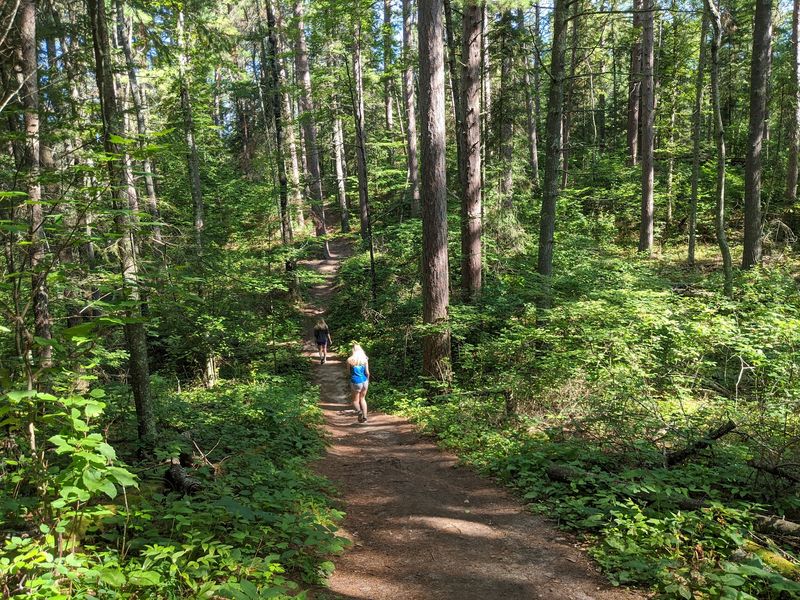
The Lost 40 Scientific and Natural Area sits in Northome, Minnesota, within Chippewa National Forest. Managed by the Minnesota Department of Natural Resources, this 144-acre preserve protects one of the last remaining old-growth pine forests in the entire state.
Getting there requires driving down several miles of quiet dirt road through the surrounding forest. There is no dramatic entrance, no visitor center, and no crowds waiting at the gate.
What greets you instead is a small parking area with a vault toilet, a picnic table, and the sound of wind moving through very tall, very old trees.
The remoteness is part of what makes it feel so genuine. Cell service disappears well before you arrive, so download your maps before leaving town.
The address is Twp, Northome, MN 56661, and the area is open 24 hours every day of the year.
Trees That Were Already Old When America Was Founded
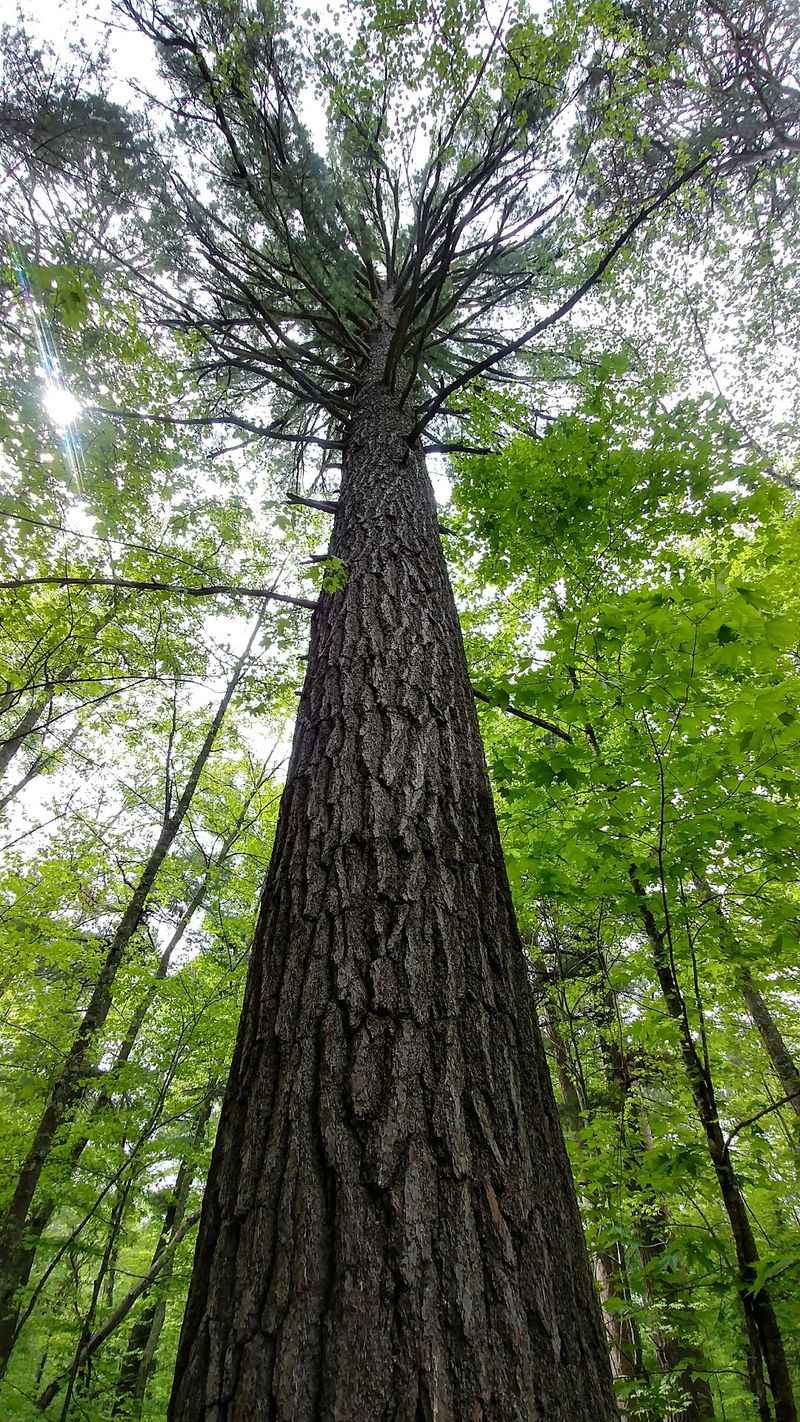
Some of the red and white pine trees standing here today were already growing when European explorers first arrived in North America. Estimates place many of the largest specimens between 300 and 400 years old, which means they were alive long before Minnesota became a state, a territory, or even a recognized region.
The sheer scale of these trees is something photographs cannot fully prepare you for. Their trunks are wider than most people can wrap their arms around, and their crowns disappear high above the forest floor.
Red squirrels chatter from the branches overhead, and the bark carries the deep, plated texture that only comes with extreme age.
Walking among them feels genuinely different from any other forest walk in the state. These are not just big trees.
They represent what all of Minnesota’s north woods once looked like before the logging era arrived.
What Makes This Forest So Scientifically Valuable
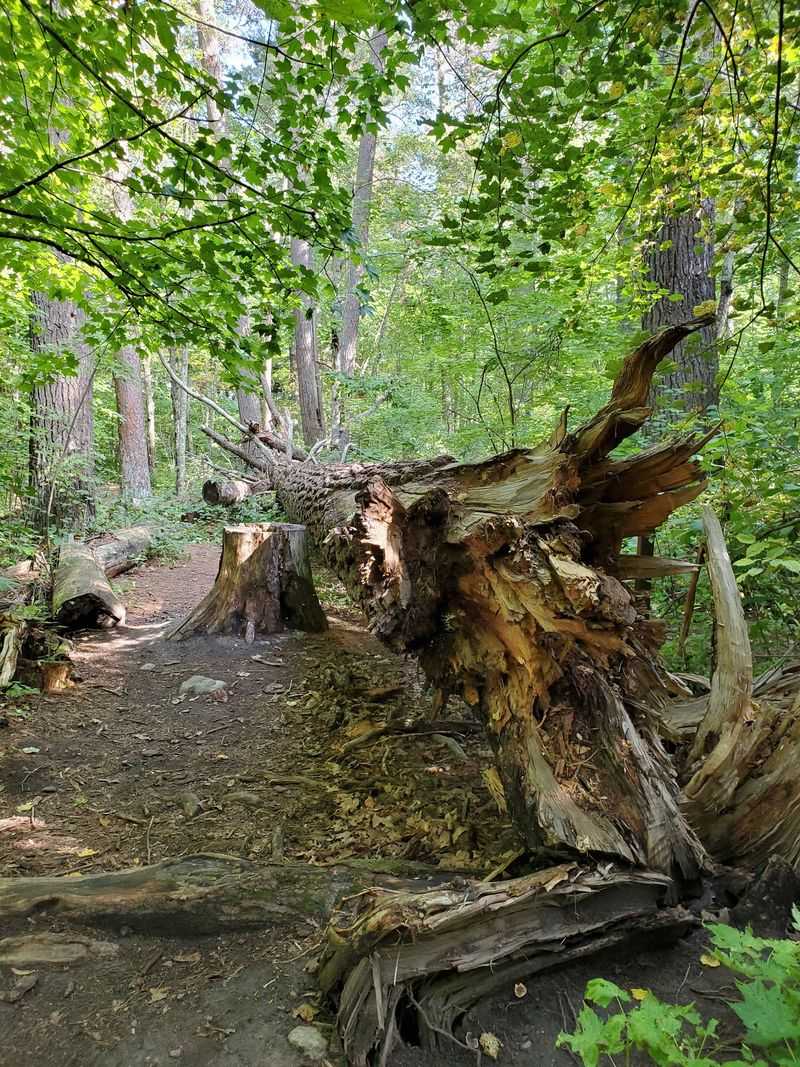
The Scientific and Natural Area designation is not handed out casually by the Minnesota DNR. It marks places with exceptional ecological, scientific, or natural heritage value.
The Lost 40 earned that designation because it represents an ecosystem that has essentially vanished everywhere else in the region.
Old-growth forests function differently from second-growth or managed timber stands. The trees here have had centuries to develop complex root systems, thick bark, and layered canopy structures that support a much wider range of wildlife and native plants.
Fallen logs decompose slowly and feed the soil in ways that younger forests simply cannot replicate.
Researchers and ecologists visit the area to study what a truly undisturbed northern Minnesota forest looks like. That baseline knowledge helps scientists understand how to restore other damaged forest ecosystems across the state.
The Lost 40 is essentially a living reference point for what was once common across the entire region.
The One-Mile Trail That Covers Centuries of History
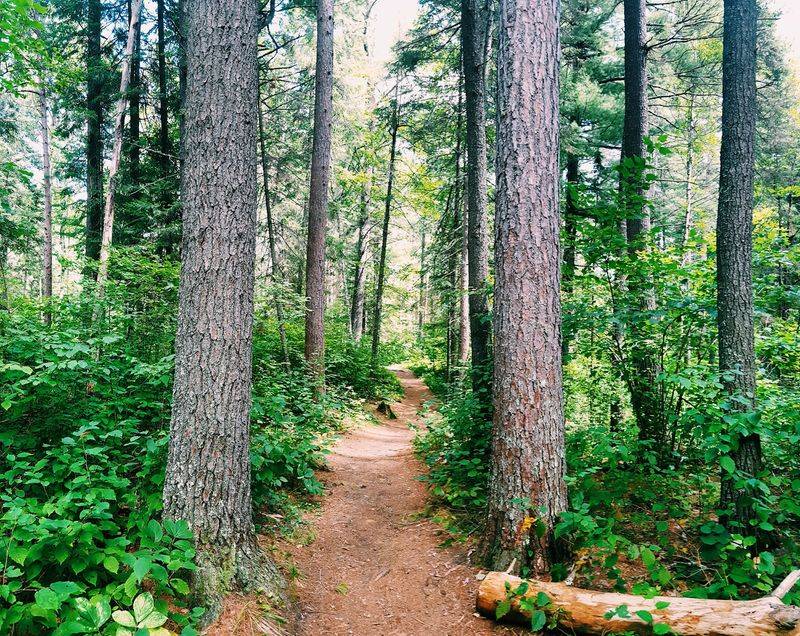
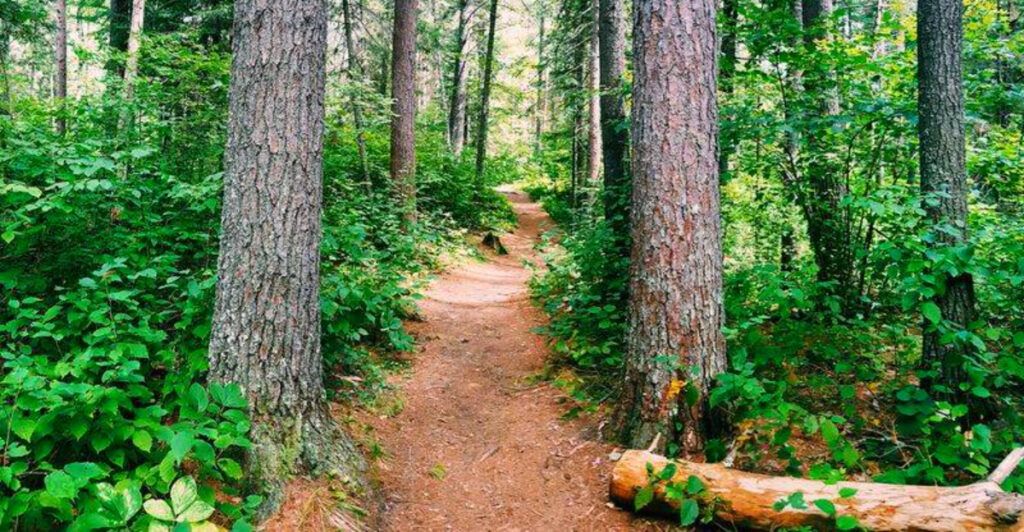
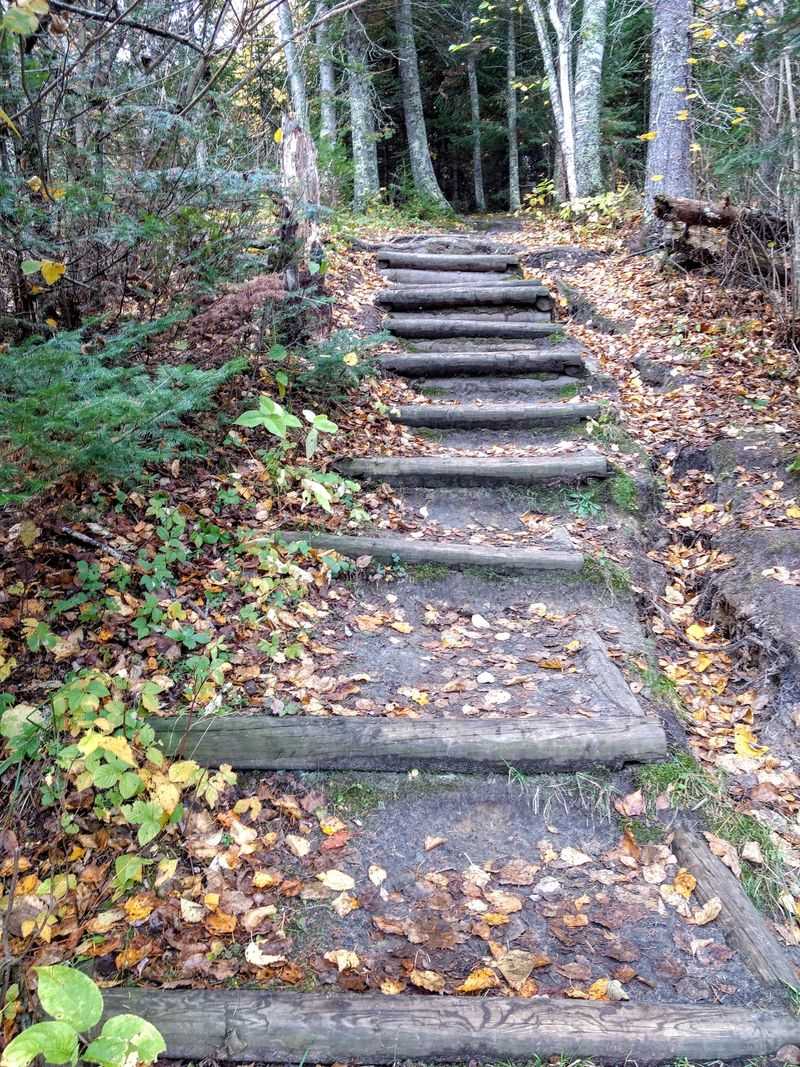
The self-guided trail at the Lost 40 runs just over a mile in a loop through the heart of the preserve. It is rated as easy, with only mild elevation changes along the way.
Most visitors complete the walk in 45 minutes to an hour at a relaxed pace, though some people linger much longer.
Interpretive signs are placed at key points along the route, explaining the history of the surveying mistake, the ecology of old-growth forests, and the different tree species you are walking past. The trail surface is natural, with exposed roots in several spots, so paying attention to your footing is worthwhile.
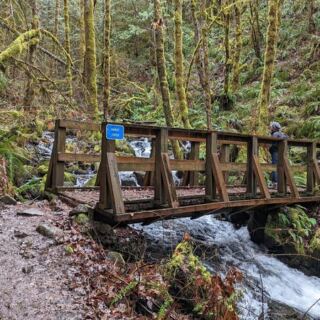
A small stream appears near the far end of the loop, adding a quiet, natural soundtrack to the final stretch of the walk. The trail can be completed in reverse for a slightly different experience, and doing so changes which features catch your attention first.
Red Pines, White Pines, and the Forest in Between
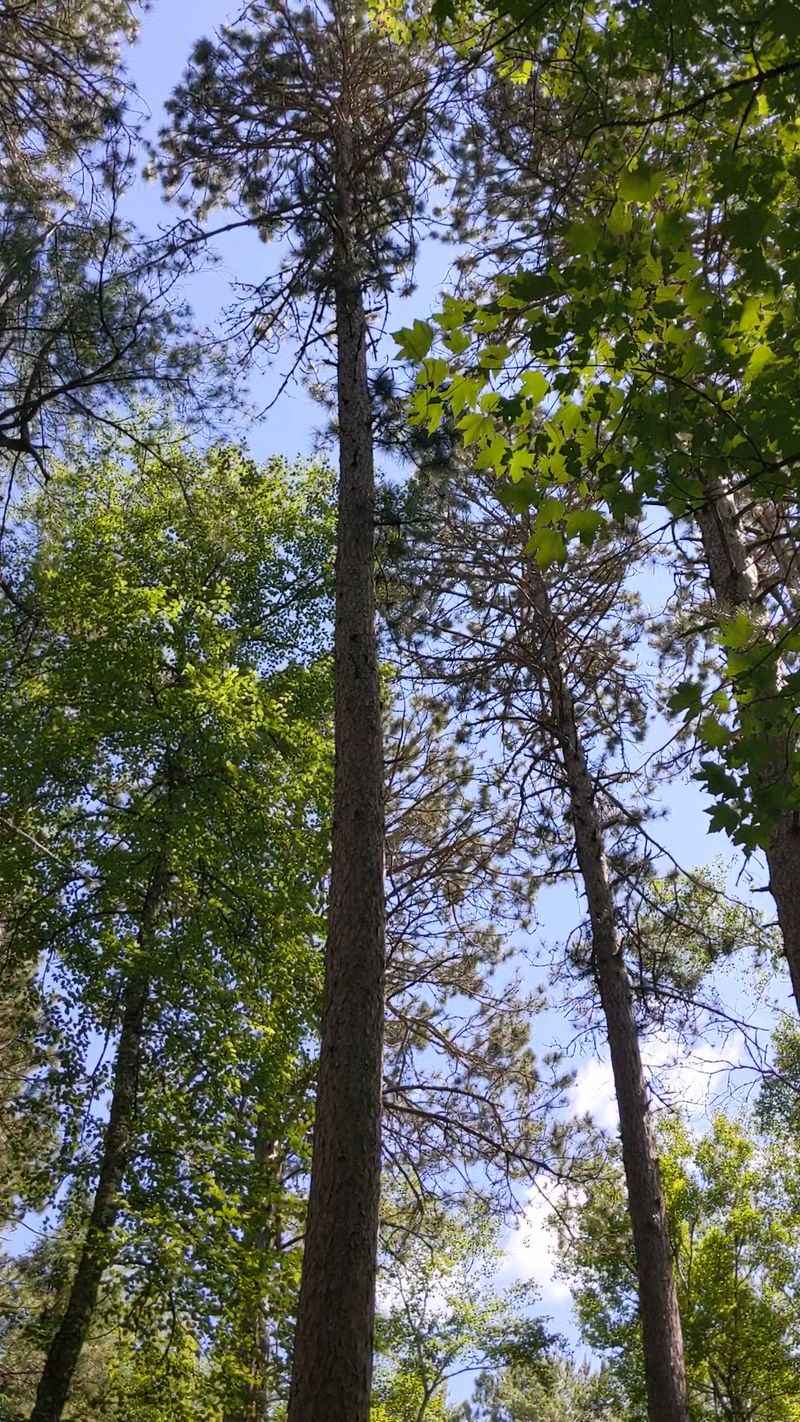
Most visitors come expecting a forest of towering white pines, and while some truly massive white pines do stand here, the majority of the forest is dominated by red pines. These red pines are larger than almost anything you will find elsewhere in Minnesota, with straight, rust-colored trunks rising high before the first branch appears.
Beyond the pines, the forest includes a rich mix of other species. Aspen, spruce, and balsam fir grow in the areas where more light reaches the forest floor.
The variety of tree species creates distinct zones within the preserve, each with its own character and atmosphere.
Moving through these different sections during a single walk is one of the quiet pleasures of the trail. One moment you are under a cathedral of pine, and the next you are passing through a lighter, more open section where younger trees fill the gaps left by fallen giants.
Wildlife That Calls the Old Forest Home
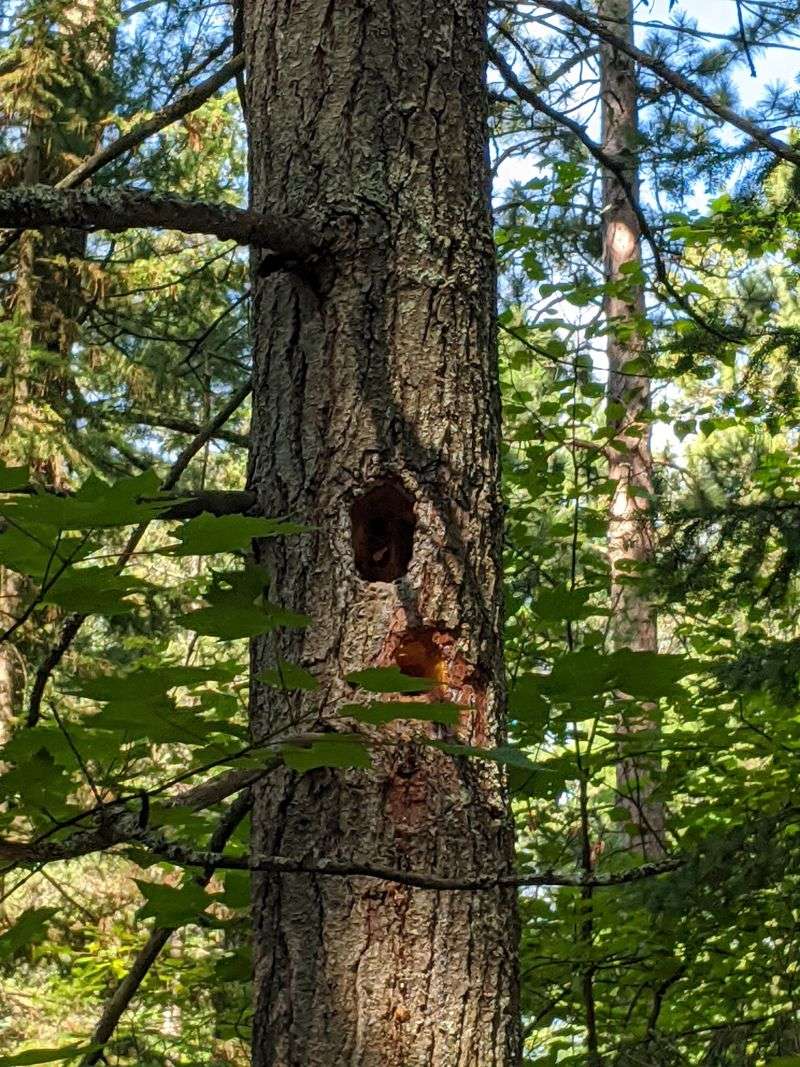
The Lost 40 supports wildlife that depends specifically on mature forest habitat. Red squirrels are among the most visible and vocal residents, chattering energetically from branches as visitors pass below.
Their presence is almost constant throughout the preserve, and they seem entirely unbothered by human company.
Old-growth forests provide nesting cavities, complex understory layers, and fallen wood that younger forests cannot offer. These features attract bird species that need mature timber, including woodpeckers that excavate holes in aging trees and owls that use those same cavities for nesting.
The variety of plant life on the forest floor also supports insects and small mammals that form the base of the food web. Because the Lost 40 has never been logged or chemically treated, its ecosystem has remained intact in a way that is genuinely rare in this part of Minnesota.
Visiting during early morning gives the best chance of observing the widest range of activity.
How the Lost 40 Fits Inside Chippewa National Forest
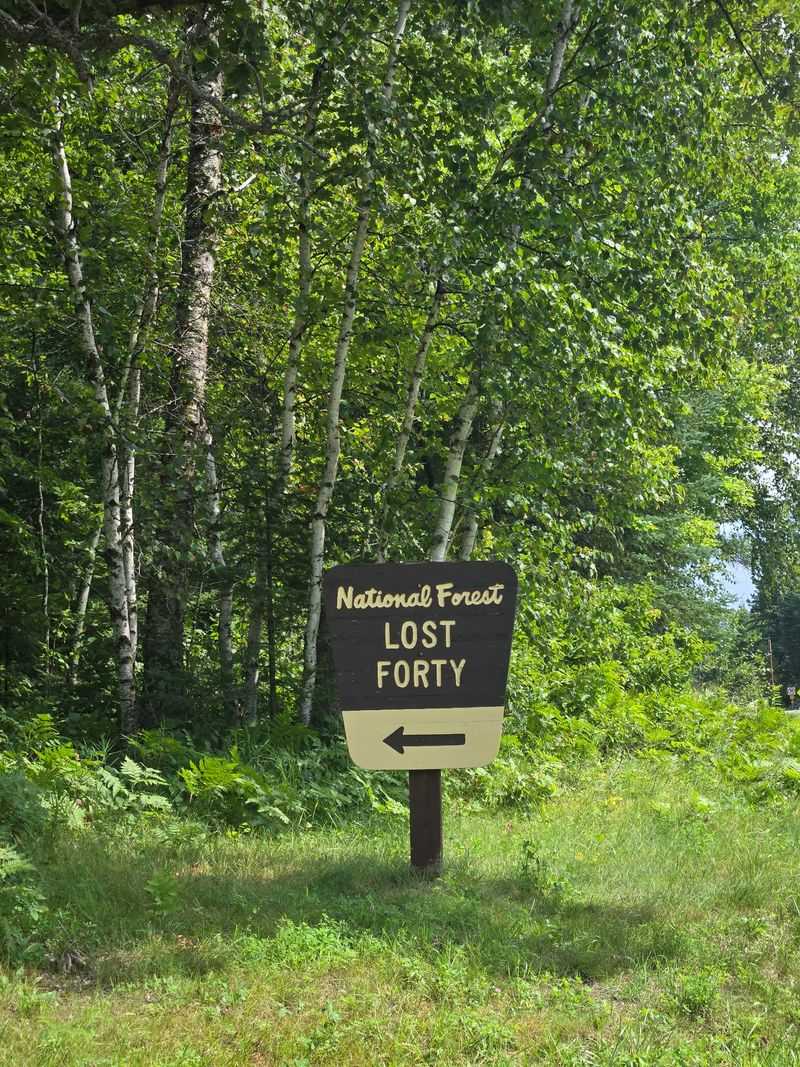
The Lost 40 sits within the boundaries of Chippewa National Forest, one of the largest national forests east of the Rocky Mountains. The surrounding forest is managed for a mix of timber production, recreation, and wildlife habitat, which makes the untouched old-growth preserve inside it all the more striking by comparison.
Driving through the managed sections of Chippewa National Forest on the way to the Lost 40 gives you a clear sense of the difference. The surrounding trees are younger, more uniform in size, and spaced differently.
When you step into the Lost 40, the shift in scale and density is immediately obvious.
The Minnesota DNR and the U.S. Forest Service coordinate management of the area to ensure it remains protected.
The Scientific and Natural Area designation adds a layer of legal protection that limits the types of activities allowed inside the preserve, keeping it as undisturbed as possible for future generations.
What the Logging Era Left Behind Everywhere Else
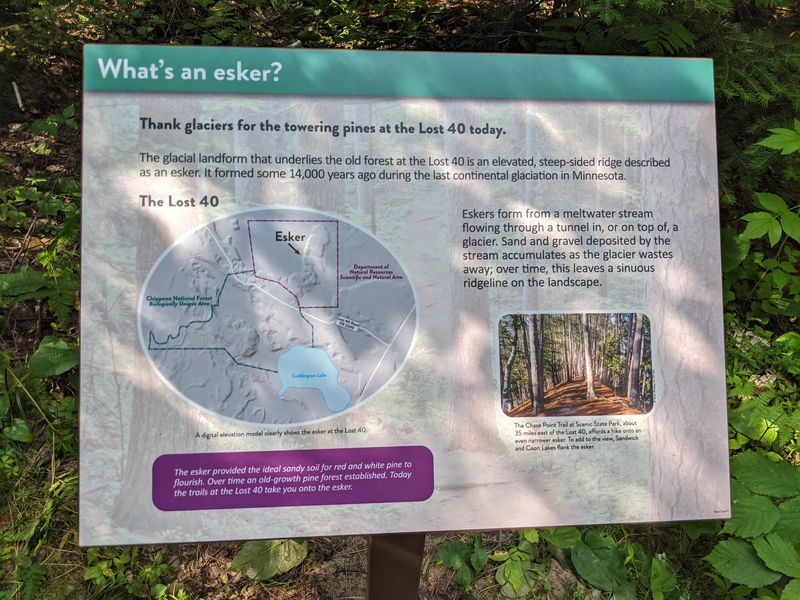
To fully appreciate the Lost 40, it helps to understand what happened to the rest of Minnesota’s forests during the same period. Between roughly 1870 and 1930, logging companies systematically cleared millions of acres of old-growth pine across the northern part of the state.
Towns boomed, sawmills ran constantly, and the timber seemed inexhaustible.
It was not. Within a few decades, the great pine forests that had covered enormous stretches of northern Minnesota were gone.
What grew back in their place was younger, thinner, and ecologically much simpler. The deep forest complexity that takes centuries to develop simply cannot be replicated on a human timeline.
The Lost 40 survived entirely because of that 1882 mapping error. Every other old-growth stand in the surrounding region was cleared.
Knowing that context while standing among these ancient trees adds a weight to the experience that no trail sign can fully capture on its own.
The Sensory Experience of Walking Among Ancient Pines
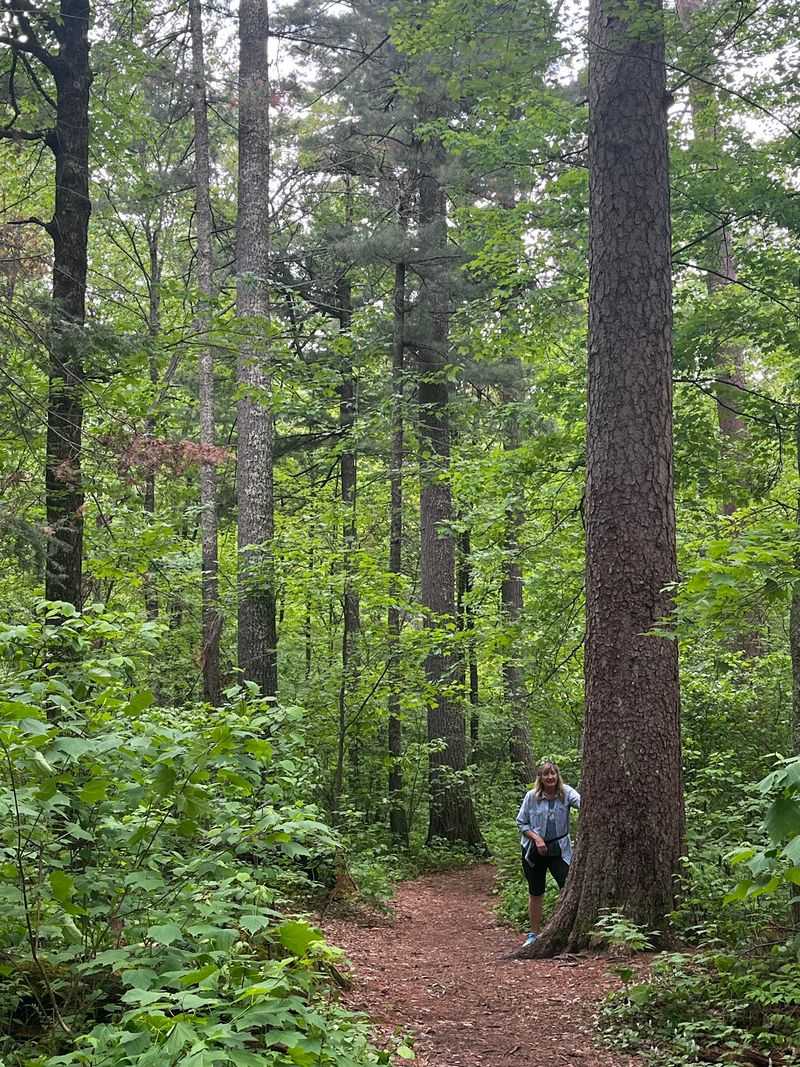
There is a particular quality to the air inside an old-growth pine forest that is difficult to describe but immediately recognizable when you experience it. The resin from hundreds of mature pines creates a clean, sharp scent that carries through the entire preserve.
On warm days, the fragrance becomes almost thick enough to taste.
The sound environment is equally distinct. Wind moving through the high canopy of tall pines produces a deep, layered sound that is nothing like what you hear in a younger forest.
The trees are spaced far enough apart that you can hear individual gusts moving from one section to another overhead.
The light at ground level filters through multiple canopy layers before reaching you, giving the forest floor a soft, diffuse quality even on bright days. That combination of scent, sound, and light creates an atmosphere that visitors consistently describe as deeply calming and unlike anything else in Minnesota.
Practical Tips for Planning Your Visit
The Lost 40 is open every day of the year, around the clock, with no entrance fee. The parking area is small, with room for only about five or six vehicles, so arriving early on weekends during summer months is a smart move.
Weekday visits tend to be much quieter overall.
Cell service is nonexistent in this area, so download offline maps before leaving your last town with reliable coverage. Bring water, wear sturdy footwear with good grip, and watch for exposed roots and patches of poison ivy along the trail edges.
Bug spray is a wise addition to your pack, particularly during summer months when mosquitoes are active.
A vault toilet and picnic table are available at the trailhead, which makes a brief rest before or after the hike easy and comfortable. The drive to reach the preserve involves several miles of dirt road, so check road conditions after heavy rain before heading out.
The Best Seasons to Visit and What Each One Offers
Spring visits offer a forest floor coming back to life beneath the ancient canopy. Wildflowers push up through the leaf litter in April and May, and the bird activity peaks as migratory species return.
One visitor noted that an April visit was bug-free and beautifully fragrant, making it an excellent early-season option.
Summer brings the fullest canopy and the most dramatic sense of enclosure under the tall pines. Mosquitoes are present during warmer, wetter periods, so preparation matters.
The forest stays noticeably cooler than surrounding open areas, which makes it a welcome destination on hot July and August days.
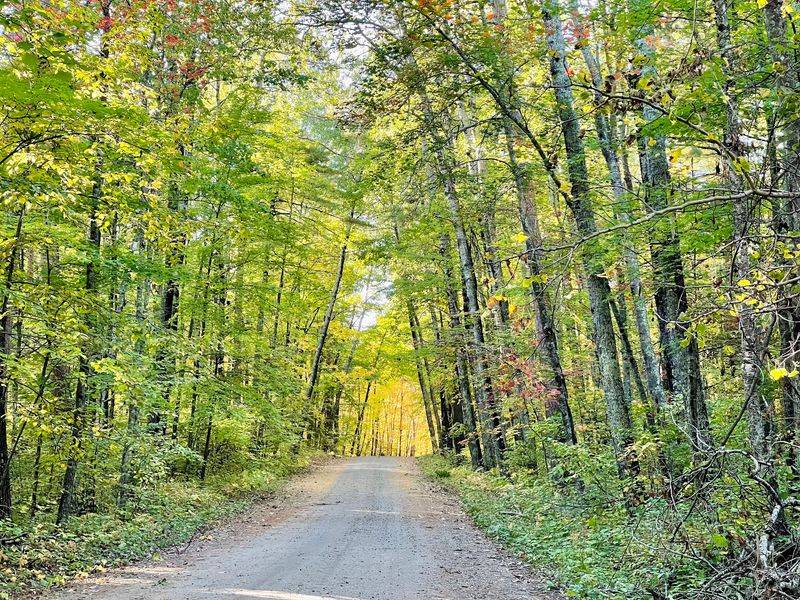
Autumn changes the character of the forest considerably. The pines remain green, but the aspen and other deciduous trees woven through the preserve turn gold and orange, creating a layered color contrast.
Winter visits are quiet and stark, with snow collecting on the broad pine branches and the forest taking on a completely different, more austere personality.
How This Place Compares to Other Minnesota Forest Preserves
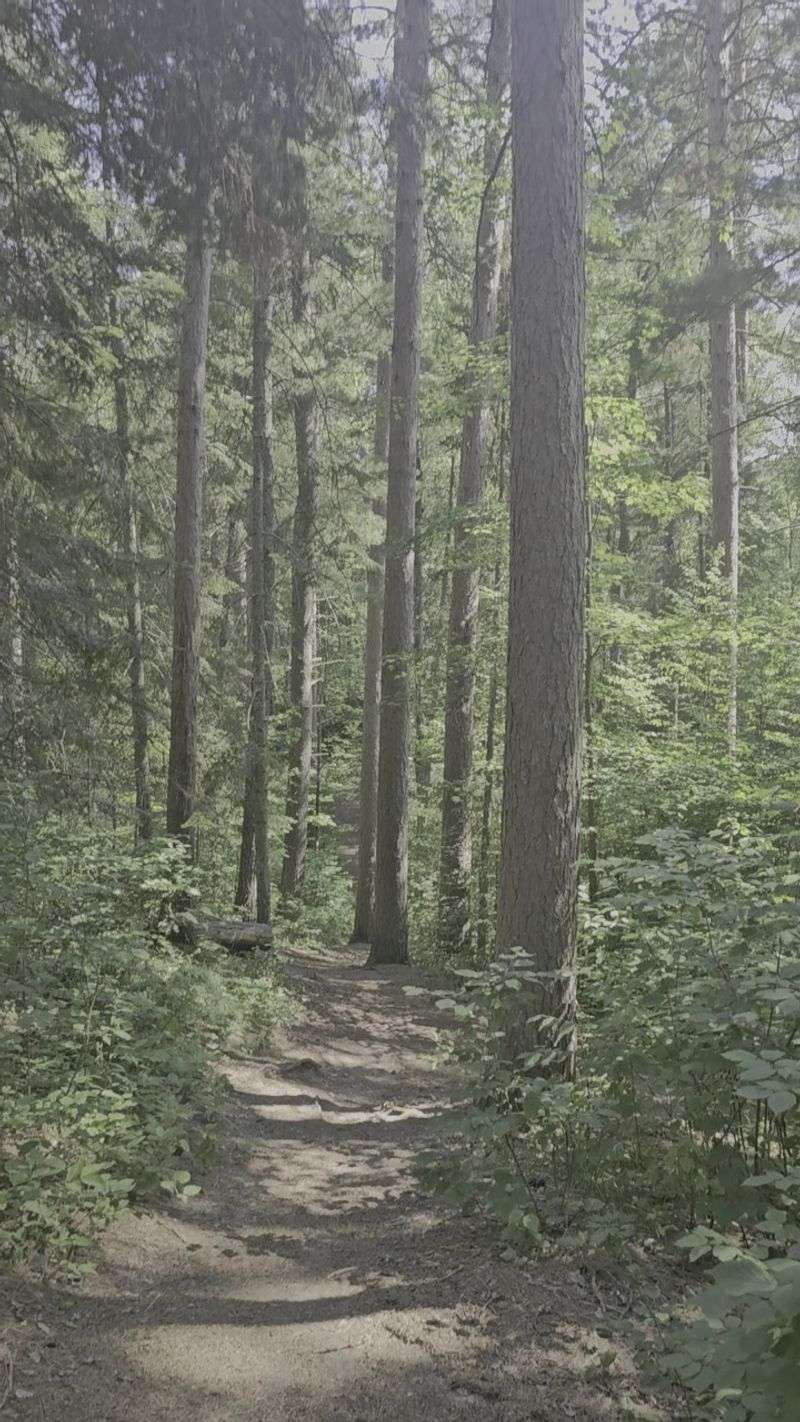
Minnesota has many beautiful state parks and forest preserves worth visiting, and several of them feature impressive pine stands. Itasca State Park, Scenic State Park, and McCarthy Beach State Park all offer pine forests and hiking trails that draw consistent praise from visitors.
What sets the Lost 40 apart is not simply the size of the trees, though they are genuinely exceptional. The difference is the ecological completeness of an undisturbed old-growth system that has never been logged, thinned, or replanted.
The forest structure here developed entirely on its own terms over centuries.
That distinction is subtle but real. Visitors who have explored multiple Minnesota forest destinations often describe the Lost 40 as feeling fundamentally different from managed parks, even beautiful ones.
The absence of human intervention over such a long period creates a forest that operates by its own ancient logic, and that quality is something you sense almost immediately upon entering the preserve.
What Locals and Repeat Visitors Keep Coming Back For
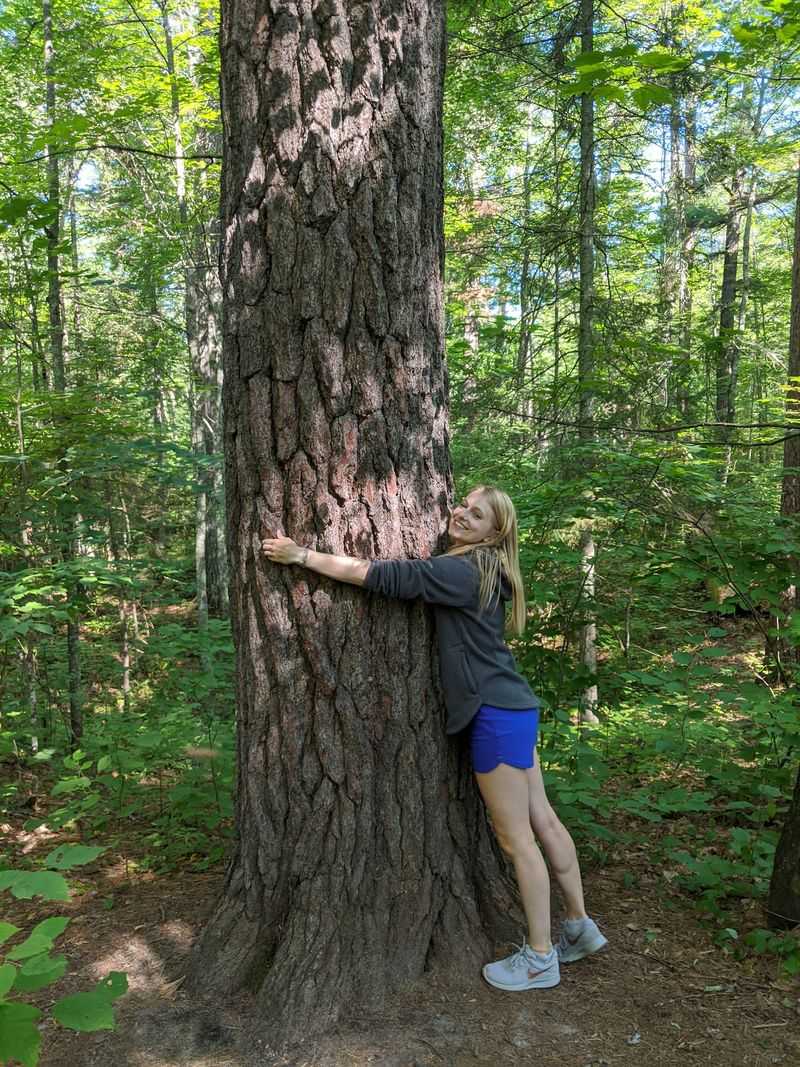
People who visit the Lost 40 more than once often describe a quality that is hard to pin down precisely. The trail is short, the amenities are minimal, and the drive is long for most Minnesotans.
Yet many people return anyway, sometimes more than once in a single season.
Part of the draw is the peacefulness. The preserve rarely gets crowded, the forest absorbs sound in a way that feels almost deliberate, and the absence of development means there is nothing pulling your attention away from the trees themselves.
Some visitors bring a book and sit quietly near the base of a large pine for an hour or more.
Others come specifically to share the experience with someone who has never seen old-growth forest before. Watching a first-time visitor stop and stare upward at the canopy, trying to process the scale of what they are seeing, is something that regular visitors clearly enjoy being part of.
Why This Place Deserves a Spot on Your Minnesota Bucket List
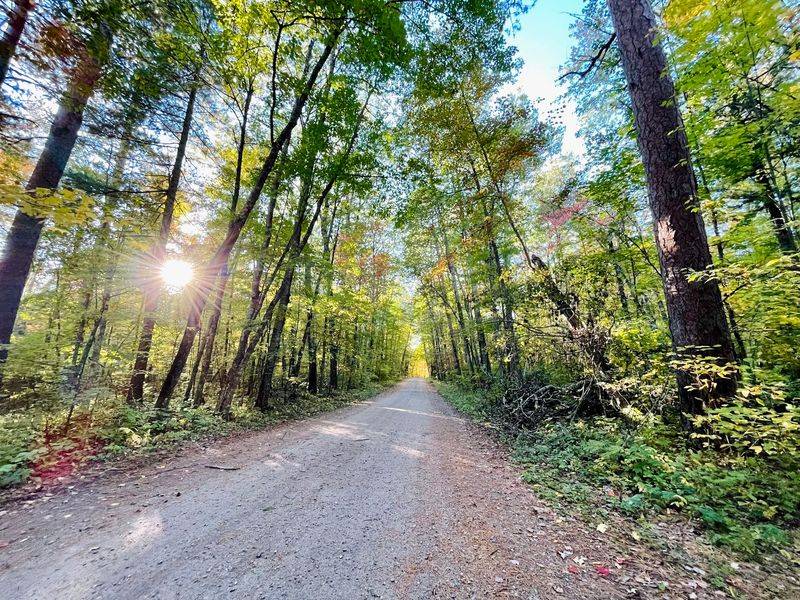
There are very few places left in Minnesota where you can stand in a forest and know with certainty that no logger, no planter, and no land manager has altered what surrounds you. The Lost 40 is one of them, and that fact alone gives it a significance that goes beyond scenic beauty.
The story behind its survival is genuinely surprising. A cartographer’s error in 1882 created a gap in the logging records that protected 144 acres of ancient forest through one of the most intensive resource extraction periods in American history.
That is not a story you encounter often, and it gives the trees here a context that deepens the experience of walking among them.
If you are planning a road trip through northern Minnesota, the Lost 40 Scientific and Natural Area is worth building your route around. The surrounding Chippewa National Forest offers additional hiking and scenery that makes the entire area a rewarding place to spend a full day exploring.
Share this story