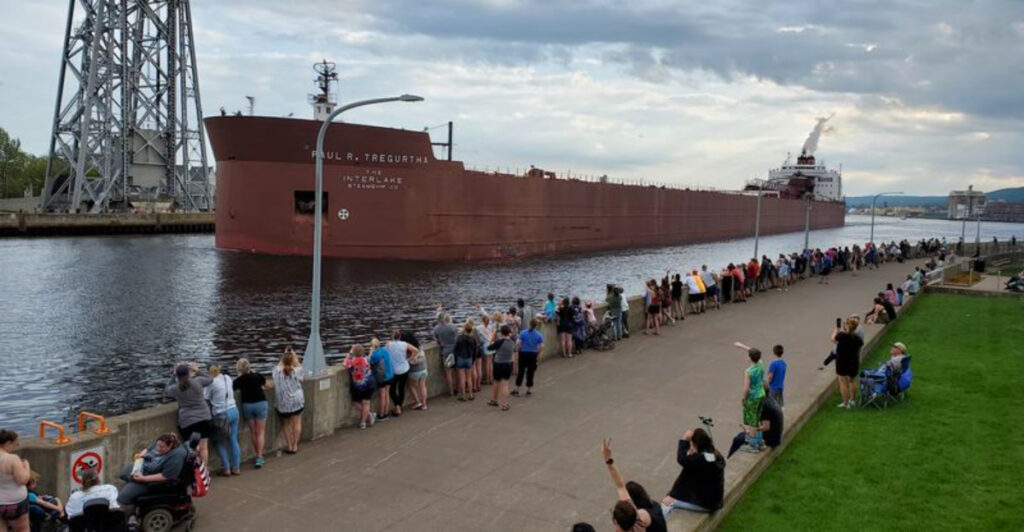
There is a moment that stops first-time visitors completely still. A horn blast shakes the air, a shadow falls across the water, and suddenly a vessel the length of several city blocks glides past at arm’s reach.
Most people never expect to stand this close to a working Great Lakes freighter without being on a dock. That combination of raw industrial scale and open lakeside scenery is what makes this Minnesota walkway one of the most unexpectedly thrilling spots in the entire Upper Midwest.
The Lakewalk and Where It Begins
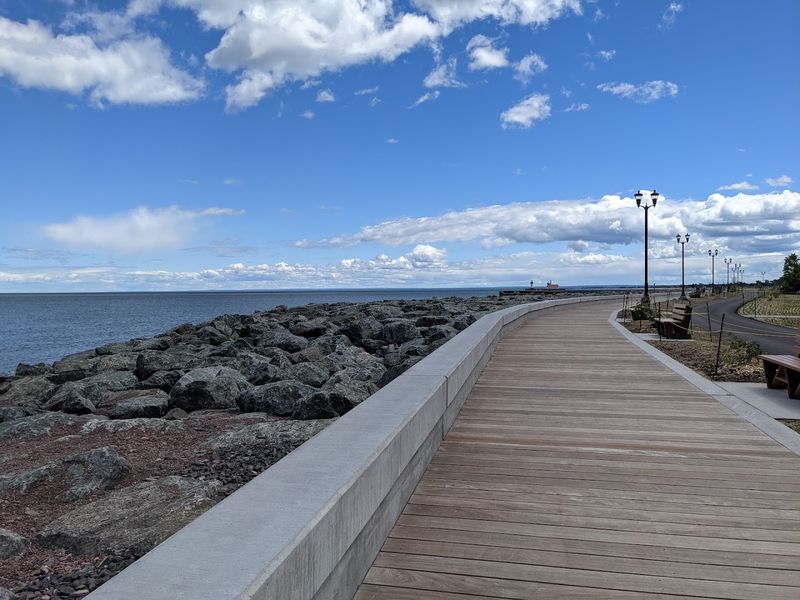
The Duluth Lakewalk runs along the southwestern shore of Lake Superior in Duluth, Minnesota, starting near Canal Park and stretching several miles along the waterfront. The address associated with the walkway is The Lakewalk, Duluth, MN 55802, and it is open every day of the year, around the clock, at no charge.
What greets you right away is the scale of it all. The walkway is wide enough for cyclists, skaters, dog walkers, and strolling families to share the path comfortably without feeling crowded.
Lake Superior stretches to the horizon, and on clear days the water looks more like an ocean than a lake.
The surrounding Canal Park neighborhood adds energy to the experience, with shops and restaurants within easy walking distance. Parking nearby accepts credit cards, and short visits are affordable.
First-timers often end up staying far longer than planned.
Watching Massive Freighters Pass at Close Range
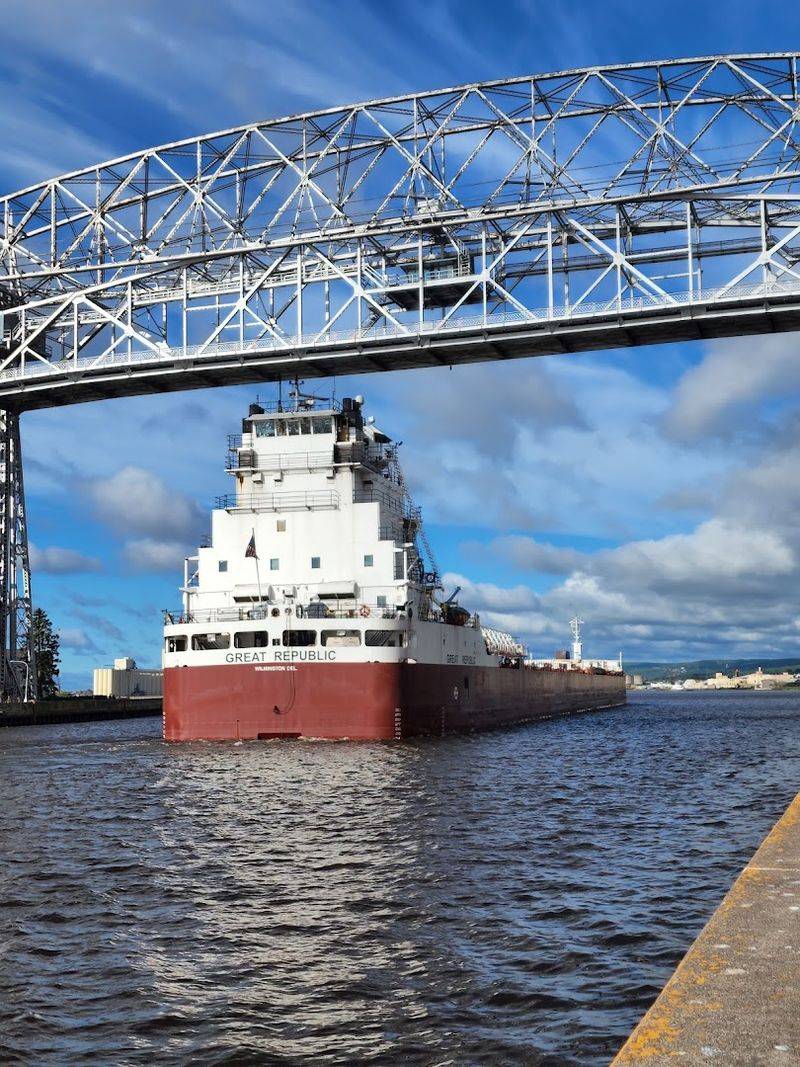
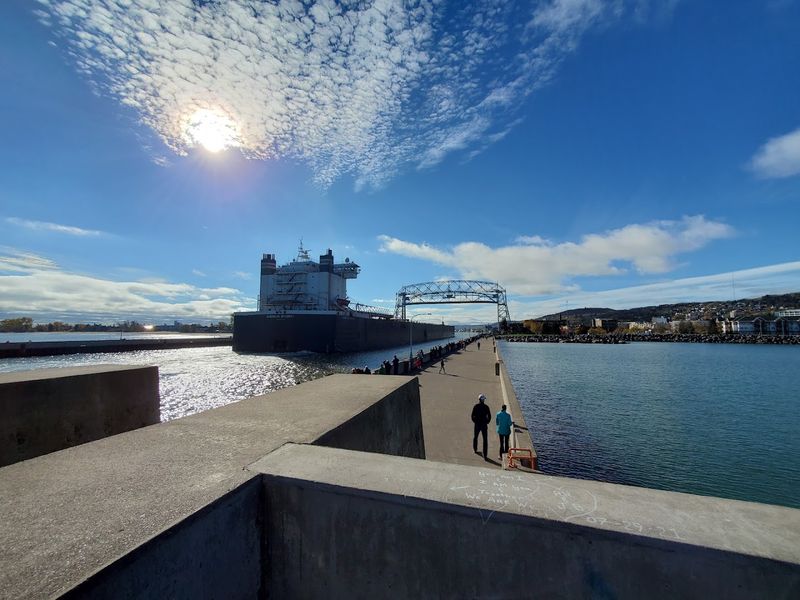
Nothing quite prepares you for the first time a thousand-foot freighter slides through the Duluth Ship Canal just a short distance from where you are standing. The ships that pass through here carry iron ore, coal, limestone, and grain, and some of them rank among the longest vessels operating on the Great Lakes.
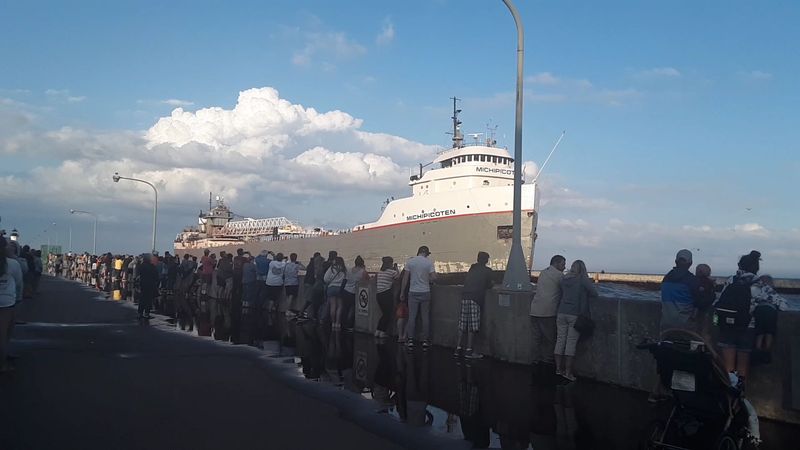
The canal is narrow enough that the ships seem close enough to touch from the pier area. You can see the crew on deck, read the vessel name painted across the hull, and feel the low vibration as the engines push thousands of tons of cargo through the water.
A ship alert app popular with Great Lakes enthusiasts lets visitors track exactly when the next vessel is scheduled to arrive. Locals treat it like a sport.
Tourists quickly get hooked. Watching these giants navigate such a tight channel never gets old, no matter how many times you see it.
The Aerial Lift Bridge and Its Signature Move
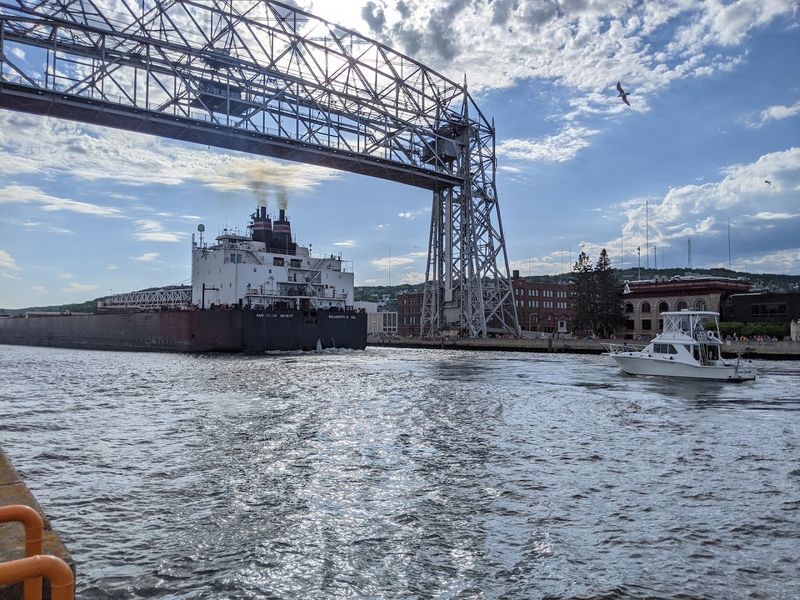
The Duluth Aerial Lift Bridge is one of the most recognized structures in Minnesota, and watching it operate in person is genuinely impressive. When a vessel approaches, warning bells sound, traffic gates lower, and the massive bridge deck rises vertically to create enough clearance for the ship to pass beneath it.
The bridge has been operating since the early twentieth century and remains one of the most-photographed landmarks along the entire Great Lakes shoreline. Its distinctive green steel frame is visible from much of the Canal Park area, making it easy to orient yourself on the lakewalk.
The lift cycle itself takes only a few minutes, but the spectacle draws crowds every time. People line the railings, cameras raised, waiting for that moment when the roadway climbs skyward and a ship the size of a city block slips through the gap below.
The Engineering Built Into the Shoreline
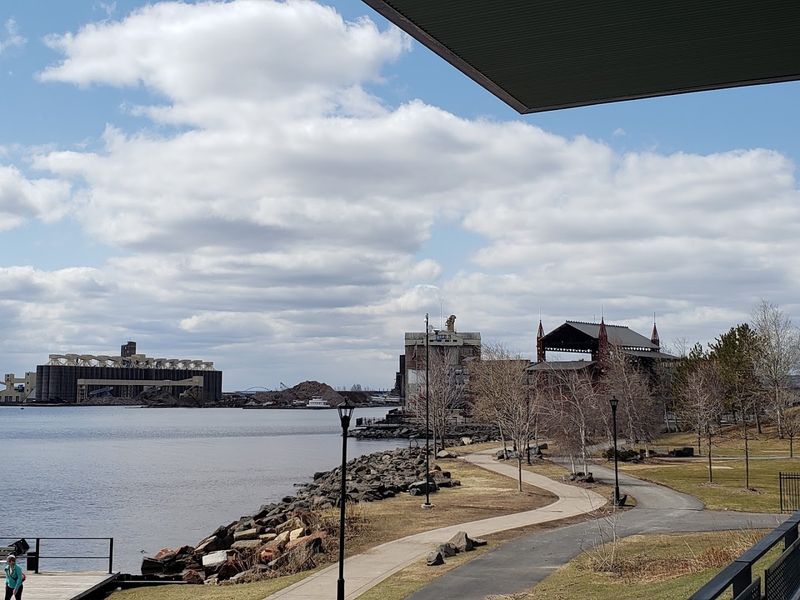
Most visitors walk the lakewalk without realizing how much engineering is buried beneath their feet and just offshore. Large boulders were placed in the lake to break incoming waves before they reach the shore.
Behind those boulders, a thick concrete wall anchored deep into the ground provides a second layer of protection for the entire lakefront.
A drainage system beneath the path handles water from waves that do crest the wall, keeping the walkway safe and usable even during rough weather. The wall is taller than the original shoreline barriers, which some visitors notice right away, but the design is both functional and cleaner-looking than what it replaced.
A severe storm in 2017 caused significant damage to the original lakewalk, and the reconstruction project that followed incorporated all of these protective features. The result is a lakefront built to handle Lake Superior at its most powerful.
Sunrise and Sunset Views Over Lake Superior
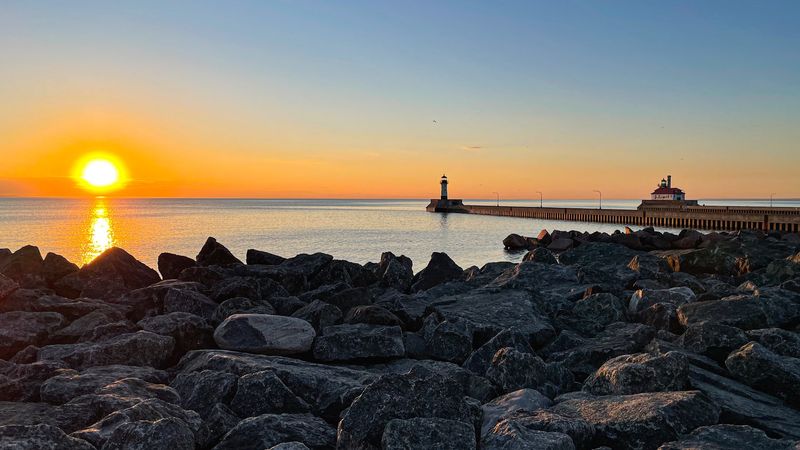
Lake Superior sits to the east and north of Duluth, which creates some of the most dramatic morning light you will find anywhere in the Midwest. Sunrise over the lake turns the water shades of copper and rose, and the stillness of early morning means you often have long stretches of the path almost entirely to yourself.
Evenings bring a different kind of beauty. The setting sun lights up the western sky behind the city while the lake surface catches the color and holds it.
Sunset visits draw a steady crowd near the lift bridge, where the combination of fading light, passing vessels, and the illuminated bridge frame makes for a genuinely memorable scene.
Coming at sunset is a tip locals share freely with anyone who asks. The light changes quickly, so arriving a little early gives you time to find the best vantage point along the waterfront.
A Path That Works in Every Season
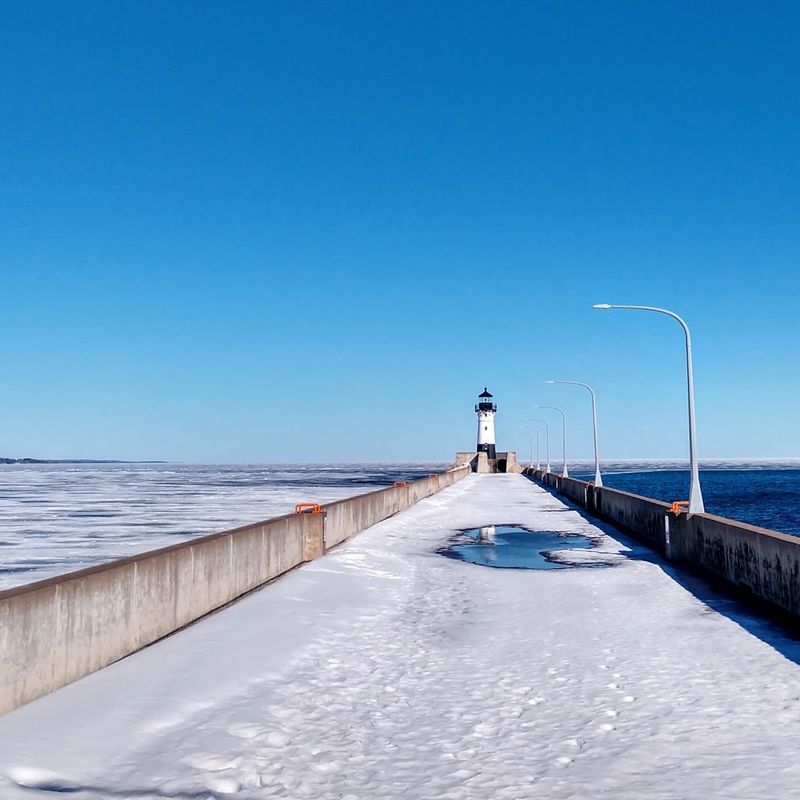
The lakewalk earns its fans year-round, not just during warm weather months. Summer brings long days, warm breezes off the lake, and steady foot traffic from visitors and locals alike.
Fall covers the surrounding hillside in color, and the cooler temperatures make for some of the best walking conditions of the entire year.
Winter is where things get genuinely surprising. Lake Superior rarely freezes completely, and when late-season winds push ice toward shore, the formations that stack up along the waterfront are unlike anything most people have seen.
The walkway stays accessible through much of winter, and the contrast between the frozen shoreline and open water further out on the lake is striking.
Spring brings the ice-out season, when chunks of lake ice break apart and drift. Watching that process from the lakewalk path, with the city waking up around you, feels like a reward for making the trip before the summer crowds arrive.
The Lighthouse at the End of the North Pier
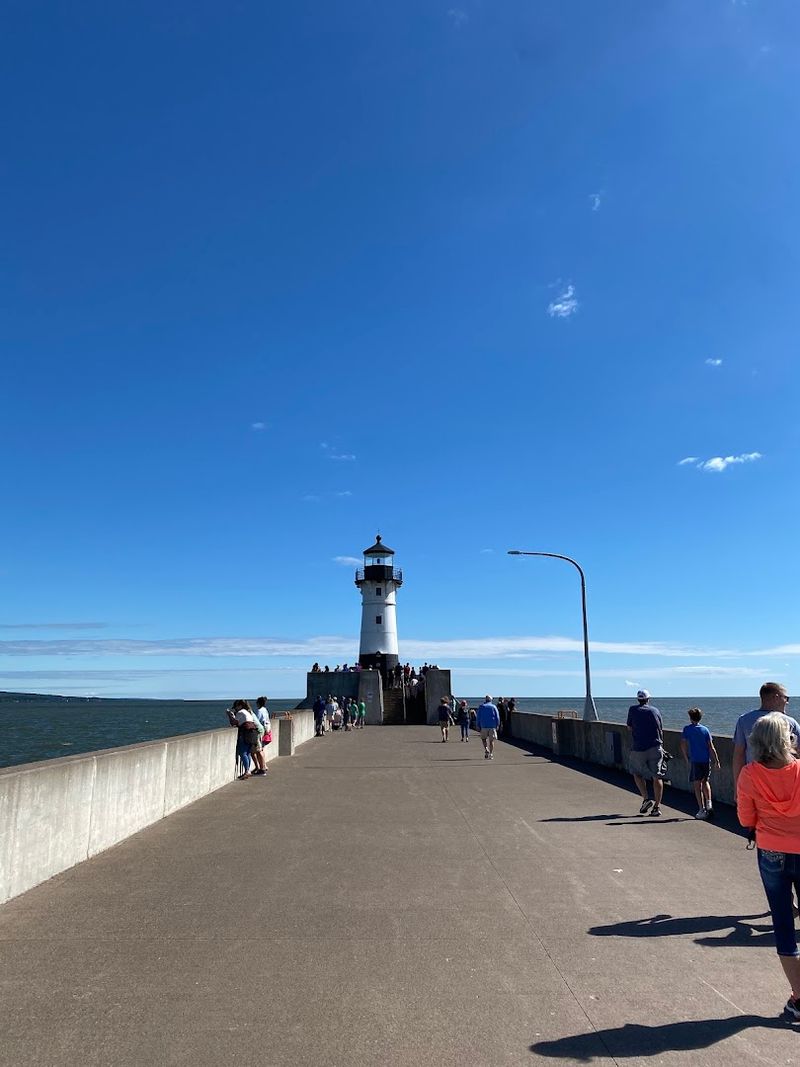
Walking out along the pier to the lighthouse at the end is one of those experiences that earns its own separate mention. The pier extends into Lake Superior far enough that by the time you reach the lighthouse, you are surrounded by open water on three sides.
The view back toward Duluth from that point is completely different from anything you see on the lakewalk itself.
The lighthouse structure is compact and painted in a straightforward utilitarian style, but the location is what makes it memorable. Waves crash against the sides of the pier when the lake is active, and the spray can reach the path on windier days, which adds a certain thrill to the walk out.
On calm days, the pier walk is peaceful and almost meditative. On rough days, it is a reminder of just how powerful Lake Superior can be, even from a well-built concrete walkway.
Ship-Watching With a Little Help From Technology
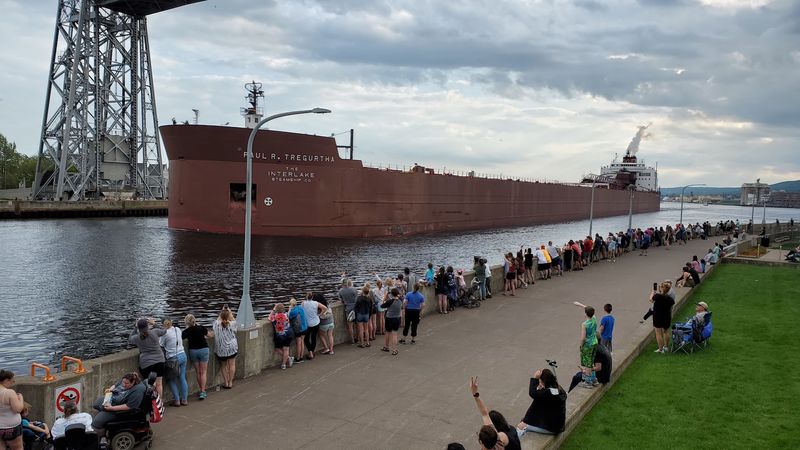
The ship-watching culture around Duluth has developed its own tools and traditions. Apps that track vessel movements on the Great Lakes have become essential for anyone serious about catching a freighter transit.
The apps pull data from maritime tracking systems and show exactly which vessels are approaching, how long they are, and when they are expected to arrive at the canal.
There is also a live webcam focused on the Duluth Ship Canal that can be watched online, which means you can scout conditions before you even leave home. Regulars use it to time their visits perfectly, arriving just as a large vessel is making its approach.
The combination of real-time tracking and the webcam feed has turned casual visitors into dedicated ship-watchers almost overnight. Once you have timed a visit to coincide with a thousand-foot freighter arrival, the random walk-and-hope approach starts to feel like leaving too much to chance.
The Lakewalk as a Multi-Use Recreation Path
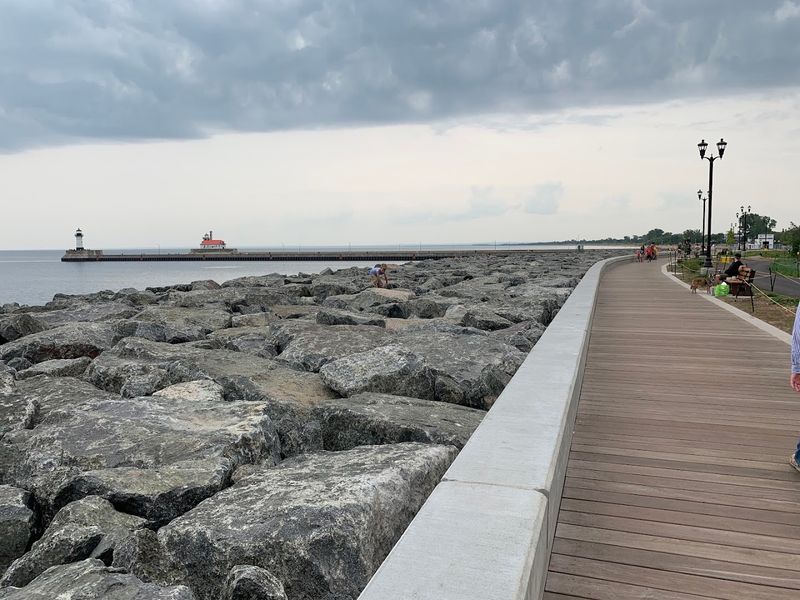
The path itself is wide enough that different kinds of users rarely get in each other’s way. Cyclists move along one side while walkers take the other, and the surface is smooth enough for skateboarders and inline skaters to use comfortably.
Dogs are welcome, and the lakewalk has a reputation as one of the friendliest places in Duluth for people who bring their pets along.
The path connects to a broader trail network in the area, making it possible to extend a lakewalk visit into a longer ride or run along the shoreline. Bike rentals are available nearby for visitors who did not bring their own.
The atmosphere along the path is relaxed and social without feeling crowded during most visits. People stop to take photos, chat with strangers, or simply stand at the railing and watch the lake for a while.
The pace slows down naturally once you are out here.
Public Art Along the Western Shoreline
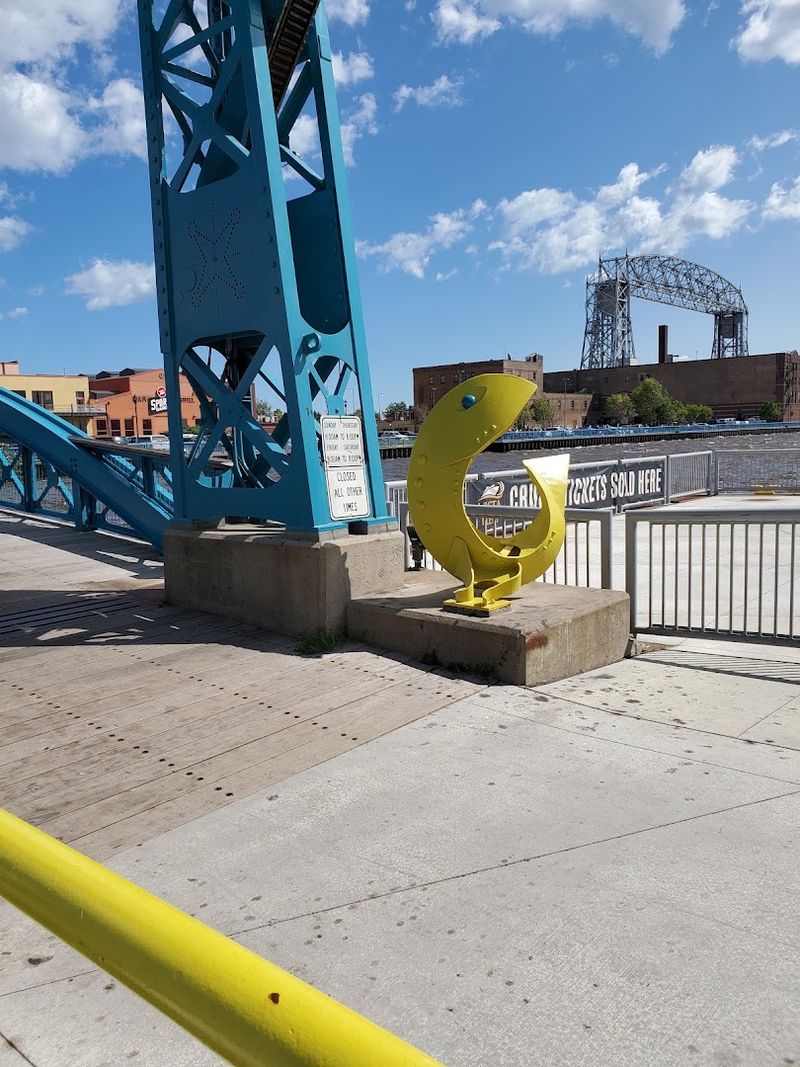
Near the western end of the lakewalk, public artwork adds a layer of visual interest that many visitors discover by wandering rather than planning. The pieces range in style and size, and the setting against the lake gives outdoor art a backdrop that indoor galleries cannot replicate.
The western section of the path is slightly less trafficked than the Canal Park end, which makes it feel like a quieter discovery. The artwork there has been noted by visitors who take the time to walk the full length of the lakewalk rather than turning back at the lift bridge.
Art and water make for an unexpected pairing along this stretch. The pieces change the rhythm of the walk, giving you something new to look at between views of the lake.
It is a small detail that elevates the overall experience and rewards visitors who go the extra distance.
The Historical Context Behind the Canal and Ships
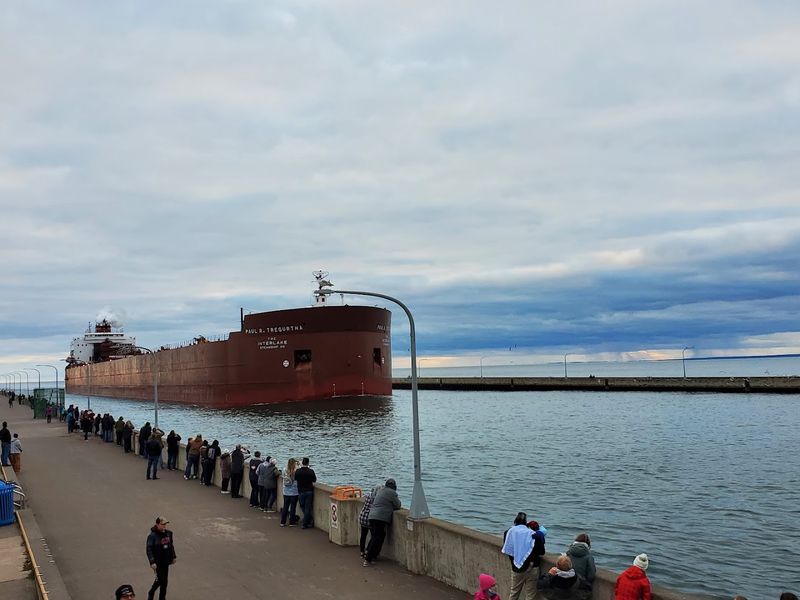
The ships passing through the Duluth Ship Canal are part of a trade route that has shaped the entire Great Lakes region for well over a century. Iron ore from Minnesota’s Iron Range, grain from the northern plains, and other bulk cargo have moved through this canal as a critical link in the industrial supply chain that built much of the American Midwest.
The Canal Park area includes a marine museum where visitors can learn about the history of Great Lakes shipping, the engineering of the canal, and the vessels that have passed through over the decades. The exhibits give context to what you are watching from the lakewalk, turning a sightseeing stop into something more layered.
Understanding the scale of commerce that flows through this narrow channel makes watching a freighter pass feel different. You are not just seeing a big ship.
You are watching a piece of working American industrial history move past in real time.
Night Walks and the Lakefront After Dark
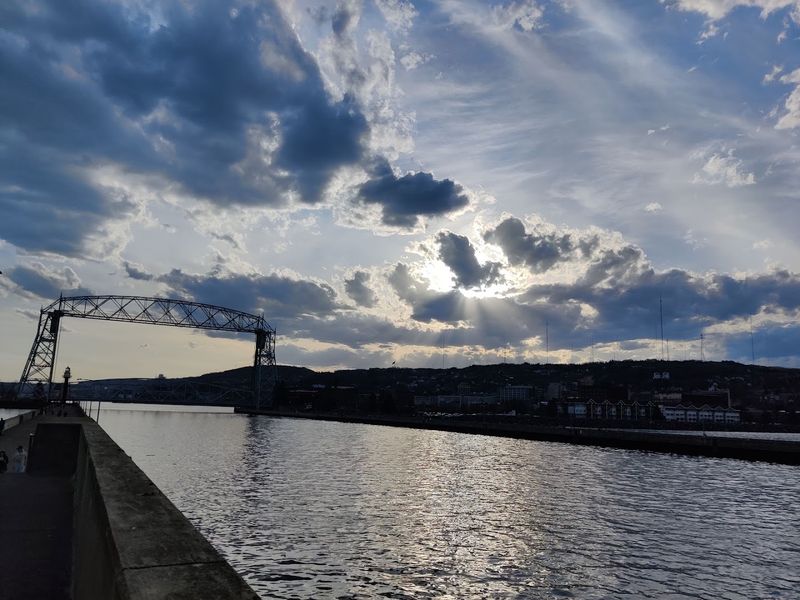
The lakewalk does not close at night, and the evening atmosphere along the waterfront is worth experiencing separately from a daytime visit. City lights reflect off the water, the lift bridge is illuminated, and the Canal Park neighborhood stays active well into the evening with restaurants and shops drawing steady foot traffic.
Night walks along the path have a calmer energy than midday visits. The crowd thins out, the lake sounds louder in the quiet, and the lights of passing vessels create a completely different visual experience than watching ships in daylight.
The horn blasts that signal a bridge lift carry further in the still night air.
One visitor described a rainy evening on the boardwalk where reflected light turned the wet surface into something almost painterly. Rain does not necessarily ruin a lakewalk visit.
Sometimes it makes the whole scene more atmospheric than a clear afternoon ever could.
Picnics, Relaxation, and Slowing Down by the Water
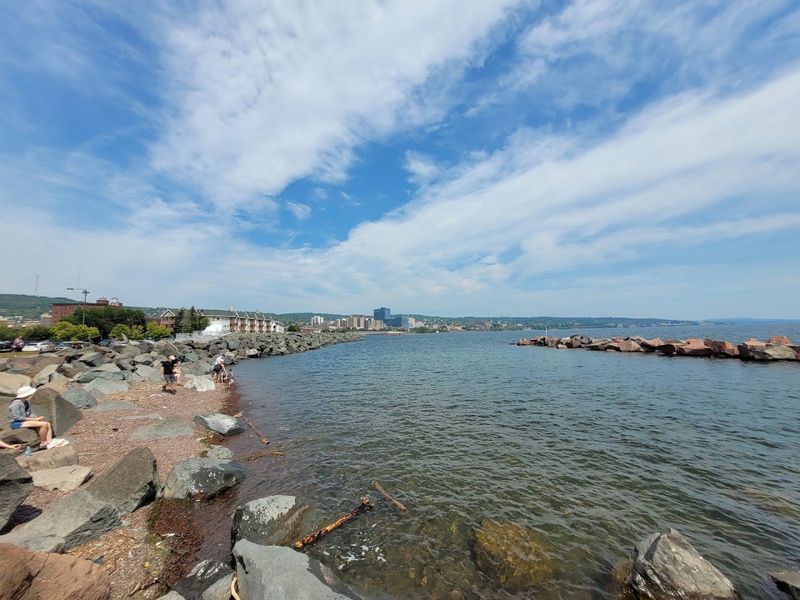
Not every visit to the lakewalk needs to be about activity. Plenty of people come here simply to sit near the water and do very little.
The wide path and adjacent green spaces give visitors room to spread out, and the sound of waves against the shoreline creates a natural soundtrack that is genuinely calming.
Picnics along the lakefront are common, and the proximity to Canal Park restaurants means picking up food before settling in at a waterfront spot is straightforward. Benches are positioned along the path at regular intervals, giving visitors plenty of options for a comfortable resting spot with a lake view.
The combination of fresh air, moving water, and open sky does something to a person’s pace. The to-do list mentality that follows most of us through daily life tends to loosen its grip pretty quickly once you are actually sitting here watching Lake Superior breathe in and out.
What to Know Before You Visit
The lakewalk is free to access and open around the clock every day of the year, which makes planning a visit straightforward. Parking in the Canal Park area is available at paid lots that accept credit cards, and short visits are reasonably priced.
Arriving early in the morning on weekends helps avoid the busiest periods during summer.
Sections of the path have been subject to construction and closures at various points due to ongoing improvements and storm damage repair, so checking current conditions before a visit is worth the extra step. The Friends of the Lakewalk organization maintains a website with updated information about path access and events.
Comfortable walking shoes are all you need for most visits. Layers are smart on any season because the lake generates its own wind patterns that can make the waterfront noticeably cooler than the surrounding city, even on warm days.
Why the Lakewalk Stays on People’s Minds Long After They Leave
There are places that feel impressive in the moment but fade quickly once you are back home. The Duluth Lakewalk is not one of them.
The combination of industrial scale, natural beauty, and open accessibility creates an experience that people describe returning to mentally long after the trip is over.
Part of what makes it stick is the specificity of it. You are not just near a big lake.
You are standing close enough to a working thousand-foot freighter to read the lettering on its hull while a century-old bridge rises overhead to let it through. That sequence of events is hard to shake.
Duluth itself rewards visitors who spend more than an afternoon, and the lakewalk serves as the natural anchor point for exploring the rest of the city. Once it pulls you in, the rest of Canal Park and the surrounding waterfront tend to take care of themselves.
Share this story