Less than one percent of Minnesota’s original tallgrass prairie still exists today. What once covered millions of acres has been almost entirely replaced by farmland, making the few remaining patches feel like something close to a miracle.
Out in the far southwestern corner of the state, a stretch of native prairie sits quietly on a hilltop, offering views so wide and open that the sky seems to wrap all the way around you. This is a place where the wind never stops moving through the grasses, wildflowers bloom in waves through summer, and the silence is deep enough to make you stop and actually listen.
A Landscape on the Verge of Vanishing
Most people drive through southwestern Minnesota without realizing what they are passing. The flat farmfields blend together so completely that it becomes easy to forget what this land looked like before the plow arrived.
Tallgrass prairie once covered an enormous portion of the Midwest, and Minnesota held millions of acres of it.
Over generations of farming, nearly all of it disappeared. What remains today represents a tiny fraction of what once existed, and protecting those remnants has become one of the more urgent conservation efforts in the region.
Touch the Sky Prairie in Hardwick, Minnesota sits right in the middle of that story. Managed by the U.S.
Fish and Wildlife Service, this refuge preserves a genuine piece of native prairie that would otherwise be gone. The name alone gives you a sense of what the experience feels like when you are standing in the middle of it.
Where Exactly You Will Find It
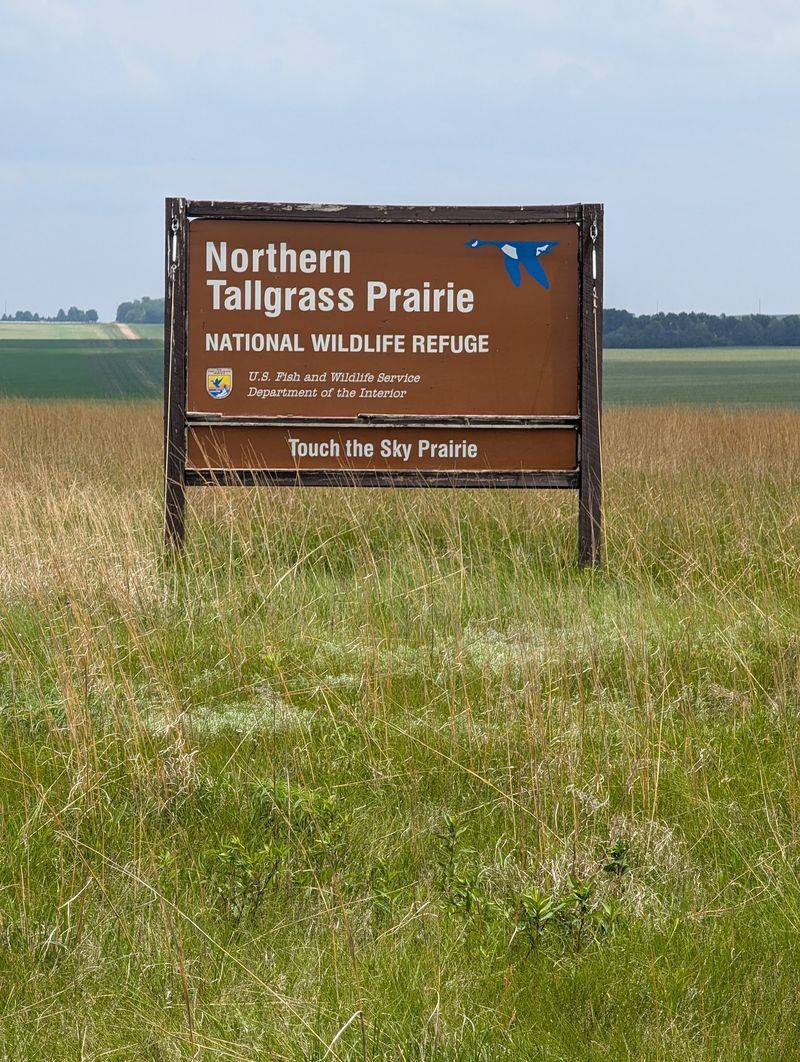
Touch the Sky Prairie is located near Hardwick, Minnesota 56134, in Rock County, right near the southwestern edge of the state where Minnesota meets South Dakota. Getting there requires navigating several miles of gravel roads, which adds to the sense that you are genuinely leaving the modern world behind.
The refuge is managed by the U.S. Fish and Wildlife Service as part of the Minnesota Valley Wetland Management District.
It is open every day, all year, at no cost to visitors. That combination of free access and remote location means you may very well have the entire place to yourself.
Two main parking areas off 171st Street serve as the best starting points for exploring the trails. There are no restrooms at any of the parking spots, so plan accordingly before making the drive out.
The remoteness is part of what makes the visit feel so rewarding.
What Native Prairie Actually Looks Like
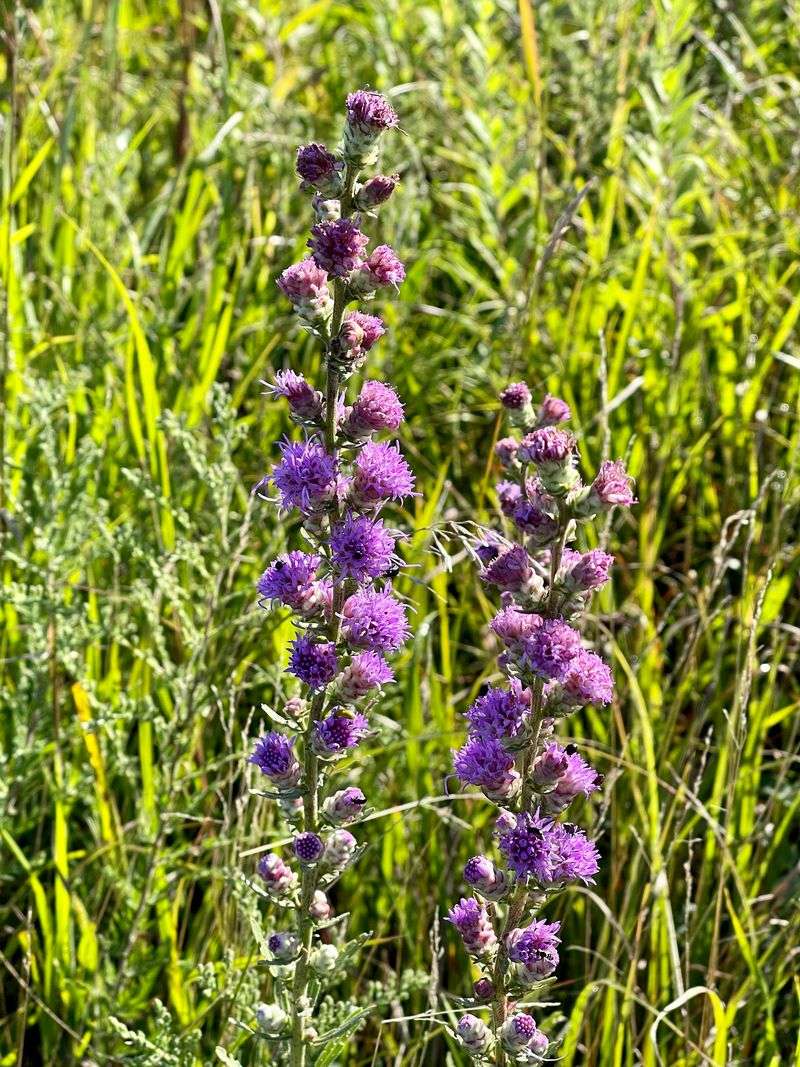
People who have only seen lawns and pastures sometimes expect a prairie to look like an overgrown field. The reality is far more interesting.
Native tallgrass prairie is one of the most biologically rich ecosystems on the continent, packed with dozens of grass species and hundreds of flowering plants that have adapted over thousands of years.
At Touch the Sky Prairie, the vegetation shifts noticeably through the seasons. Spring brings fresh green growth and early bloomers.
By midsummer, the hillside turns into a sea of yellow and purple wildflowers that seem to stretch all the way to the horizon. Late summer and fall bring warm amber tones as the grasses mature and seed heads catch the light.
The root systems of these native plants run incredibly deep into the soil, some reaching ten feet or more below the surface. That depth is part of what makes tallgrass prairie so difficult to restore once it has been broken up by farming.
The Three Trails and What Each One Offers
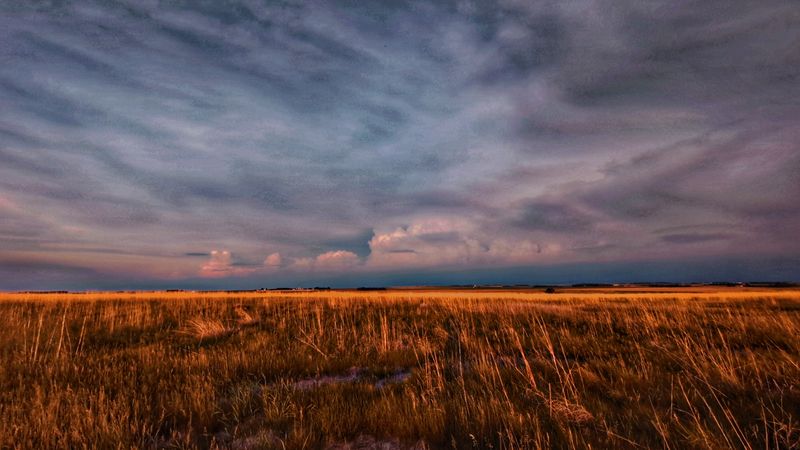
Three separate trails run through the refuge, each covering different terrain and offering a distinct experience. The Ridge Trail and the Bluffs Trail take you across the higher ground of the prairie, where the views open up in every direction and the wind moves through the grasses with a constant, low hum.
The Waterfall Trail is the longest of the three and leads down toward a small creek with a series of low waterfalls tucked into the landscape. It is a surprising find in a region that reads as dry and open from a distance.
The trail is mostly level and well-maintained with a mowed path, making it accessible for most fitness levels.
Each trail is clearly distinct enough that visiting more than one in a single trip feels worthwhile. Most visitors spend between one and two hours exploring, though the waterfall trail adds enough distance that you should budget extra time if you plan to complete it fully.
The Waterfall That Surprises Everyone
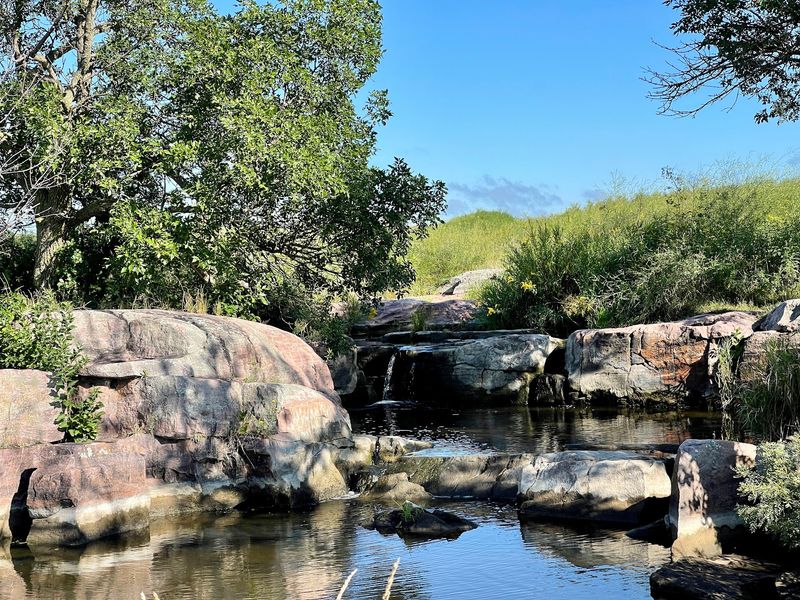
Nobody comes to the flat, open prairie expecting a waterfall. That element of surprise is exactly what makes the Waterfall Trail at Touch the Sky Prairie so memorable.
The creek runs through a quiet section of the refuge and drops over a series of small rock ledges, creating a sequence of low cascades framed by prairie grasses and wildflowers on both sides.
It is not a dramatic plunge by any measure. The falls are modest and quiet.
But the backdrop of open prairie around them gives the whole scene a context that larger, more famous waterfalls simply cannot offer. Water feels genuinely rare and precious out here, which changes how you experience even a small trickle moving over stone.
Flow levels vary depending on rainfall and the season. A wet spring will have the water moving well, while a dry late summer might reduce it to a gentle seep.
Either way, the walk to reach it is worth making.
The Stone Outcroppings Hidden in the Landscape
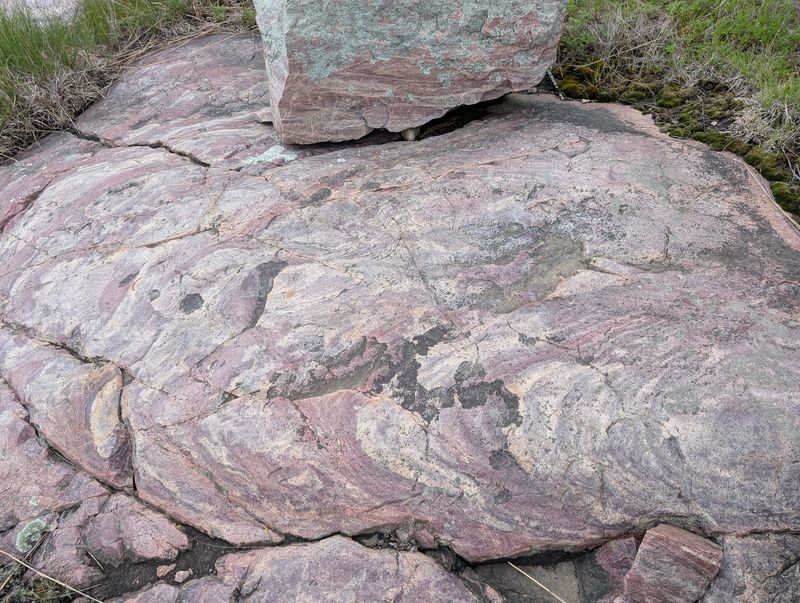
One of the most unexpected features of Touch the Sky Prairie is the rock. The refuge sits in Rock County, named for the Sioux quartzite formations that push up through the soil across this corner of Minnesota.
These outcroppings appear throughout the landscape in shapes and arrangements that feel genuinely ancient.
The stone is a deep pinkish-red color, worn smooth by thousands of years of wind and weather. Seeing it rise out of a sea of waving grasses creates a visual that stays with you long after the visit.
It is a reminder that this land has its own geology and its own story that runs much deeper than the last century of farming.
For anyone visiting the nearby Blue Mounds area, the rock features at Touch the Sky Prairie offer a quieter, less crowded way to experience the same underlying geology. The combination of prairie, wildflowers, and exposed quartzite gives the refuge a layered quality that rewards slow, attentive walking.
Wildflower Season and Why Timing Matters
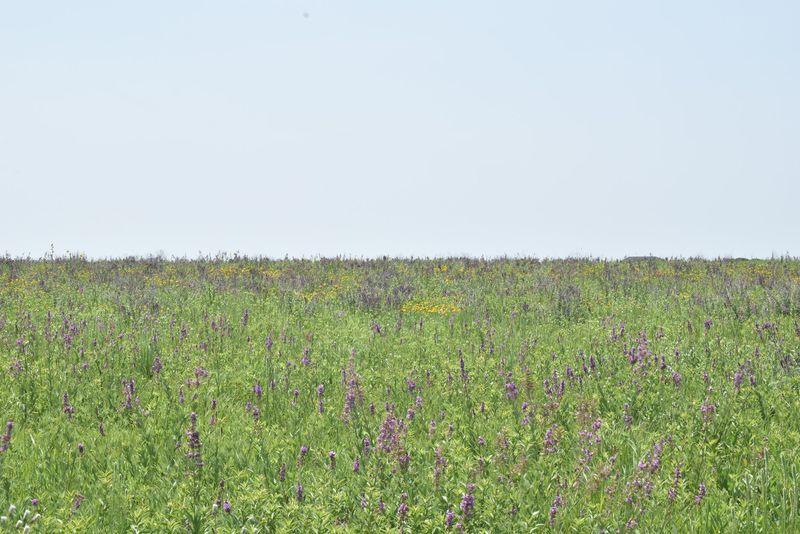
Midsummer is when Touch the Sky Prairie reaches its most visually striking point. By late July, the hillside fills with waves of yellow and purple blooms that extend as far as the eye can follow.
Visitors who time their trip for this window often describe the experience as standing inside a painting.
The yellow flowers that dominate the late-summer palette are particularly dense in the southern section of the prairie, where the mowed trail passes through them at close range. Walking through that stretch feels completely immersive, with flowers at shoulder height in some spots and the horizon visible only through gaps in the color.
Earlier in the season, the bloom palette is cooler and more varied, with different species taking turns through spring and early summer. Fall brings its own appeal as seed heads develop and the grasses shift to copper and gold.
There is genuinely no bad time to visit, but late July through early August offers the most dramatic visual payoff.
The 360-Degree View That Defines the Experience
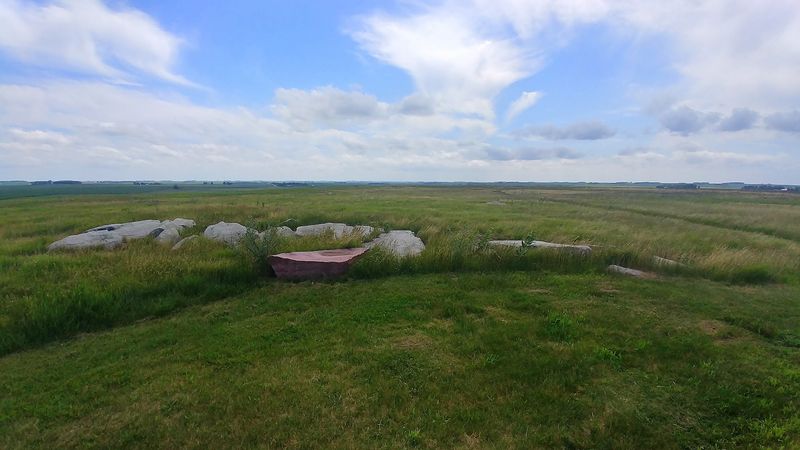
Standing at the highest point of the prairie, you can turn a full circle and see nothing but land and sky in every direction. There are no buildings, no tree lines, and very little to interrupt the sweep of the horizon.
It is the kind of view that makes you understand why early settlers described the prairie as an inland sea.
The sky at this elevation feels enormous. Clouds move visibly across it, casting shadows that roll across the grass below in slow, shifting patterns.
On clear days, the visibility stretches for miles in every direction across the surrounding farmland and into the distance toward South Dakota.
That unobstructed panorama is something you genuinely cannot replicate at a more developed park or trail. It requires open land, minimal human infrastructure, and the kind of quiet that only comes with true remoteness.
Touch the Sky Prairie delivers all three, and the view from the top of the ridge is the single moment most visitors remember longest.
Wind Turbines on the Horizon and What to Expect
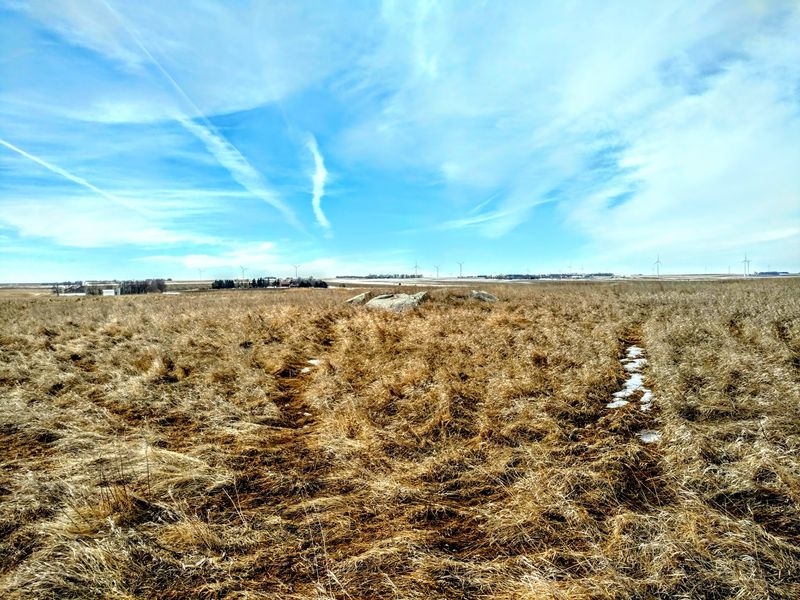
Southwestern Minnesota is wind country, and the evidence is visible from nearly every point at Touch the Sky Prairie. Wind turbines stand on the surrounding landscape and are clearly visible from the trails, particularly from the higher ground of the ridge.
For some visitors, they blend into the scenery without much impact. For others, they are a noticeable presence.
It is worth knowing about before you go, simply so the sight does not catch you off guard. The turbines do not take away from the native prairie itself, the wildflowers, the stone, the grasses, or the trails.
But they do appear in photographs and sit on the edge of the wide-open views that make this place so striking.
The prairie itself remains entirely natural and well-maintained regardless of what sits beyond its borders. Most visitors find that once they focus on what is immediately around them, the distant turbines fade into the background and the landscape takes over completely.
Sunsets Over the Open Prairie
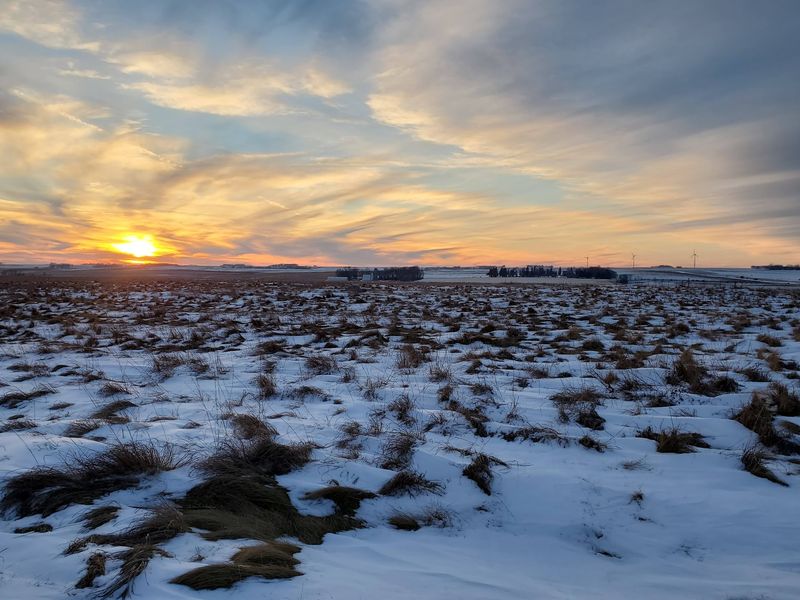
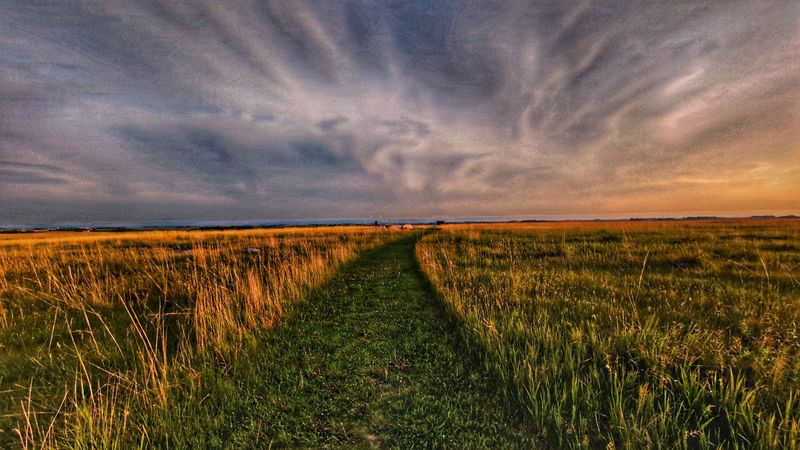
Few places in Minnesota offer a sunset view as unobstructed as the one at Touch the Sky Prairie. With no hills, buildings, or significant tree cover blocking the western horizon, the light spreads across the entire sky in full color.
On clear evenings, the show starts well before the sun actually sets and keeps building for a long time after.
Visitors who time their arrival for late afternoon and stay through dusk describe the colors as genuinely extraordinary. The warm light hits the grasses and wildflowers at a low angle, turning the whole hillside into something that glows.
The sky overhead transitions through shades that shift continuously as the sun drops.
Memorial Day weekend is a popular time for sunset visits, and the open rolling prairie provides a backdrop that amplifies every color the sky produces. The refuge is open 24 hours, so there is no rush to leave before dark.
Staying for the full transition from golden hour to dusk is entirely worth the extra time.
Stargazing Away From City Light Pollution
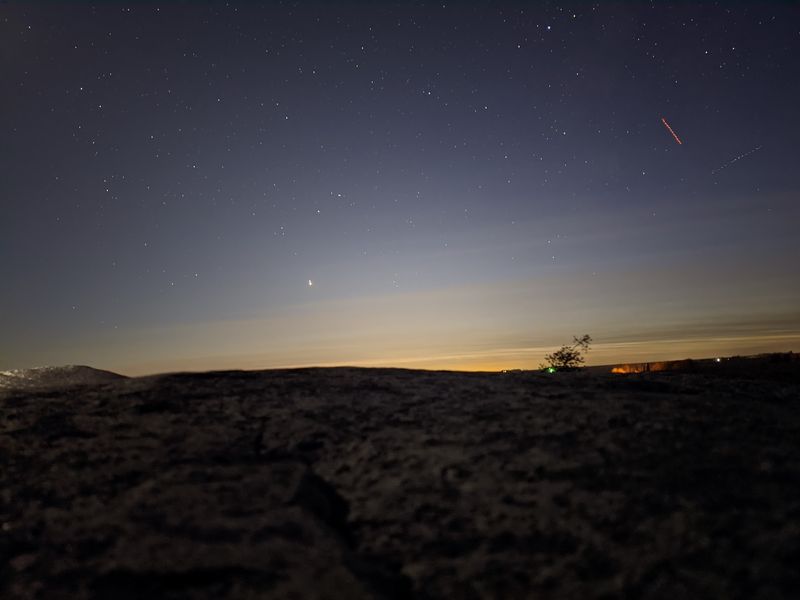
The same remoteness that makes Touch the Sky Prairie feel so peaceful during the day turns it into something extraordinary after dark. Rock County sits far from any major metropolitan area, which means the light pollution is minimal and the night sky opens up in ways that most Minnesota residents rarely experience.
On clear nights, the Milky Way is visible from the prairie with the kind of clarity that genuinely stops people in their tracks. The flat, open terrain means there is nothing to block the view in any direction, so the full arc of the galaxy can be seen from horizon to horizon under the right conditions.
The refuge is open around the clock, making it a legitimate option for evening and nighttime visits. Bringing a blanket and lying in the grass while watching the stars move overhead is one of those experiences that feels both simple and completely unforgettable.
The quiet out here after dark is as deep as the sky above.
The Information Boards and What They Teach
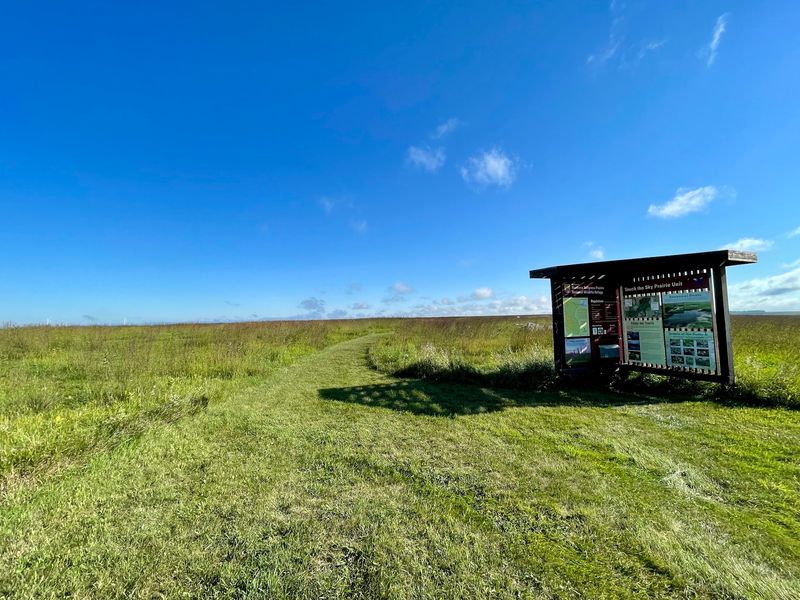
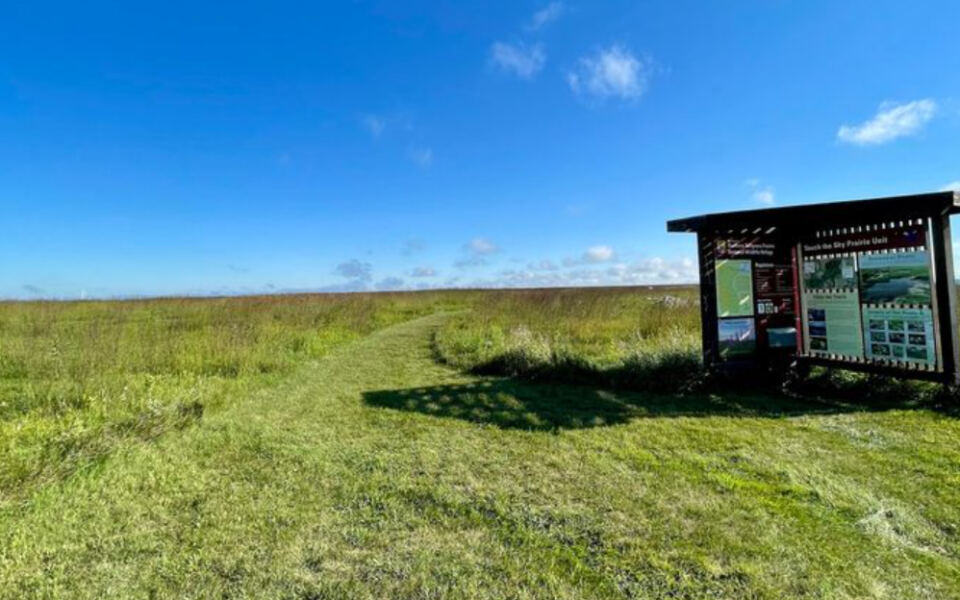
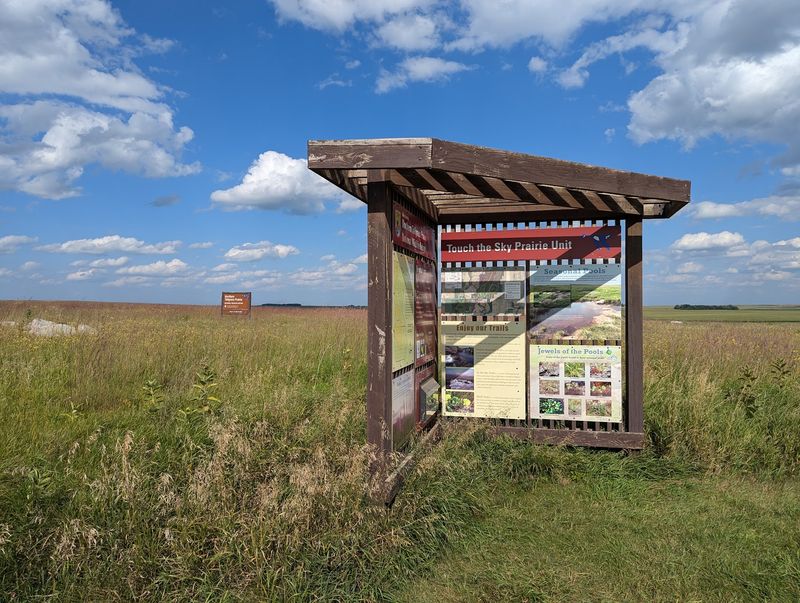
Scattered along the trails, a series of well-designed information boards explain the ecology, history, and conservation story of the prairie. They cover topics ranging from the biology of native grasses to the role of fire in maintaining healthy prairie ecosystems.
The writing is clear and accessible without being overly simplified.
For anyone new to prairie ecology, the boards provide a genuinely useful foundation for understanding what you are walking through. They help connect the visual experience of the landscape to the deeper systems operating beneath the surface.
Reading them while standing in the middle of the prairie makes the information feel immediately relevant rather than abstract.
The boards are spread throughout the refuge rather than concentrated at one entrance point, which means discoveries happen gradually as you move along the trail. That pacing works well.
Each new panel adds a layer to the story of the place, and by the time you complete the loop, the landscape reads very differently than it did at the start.
Visiting With Kids and Dogs
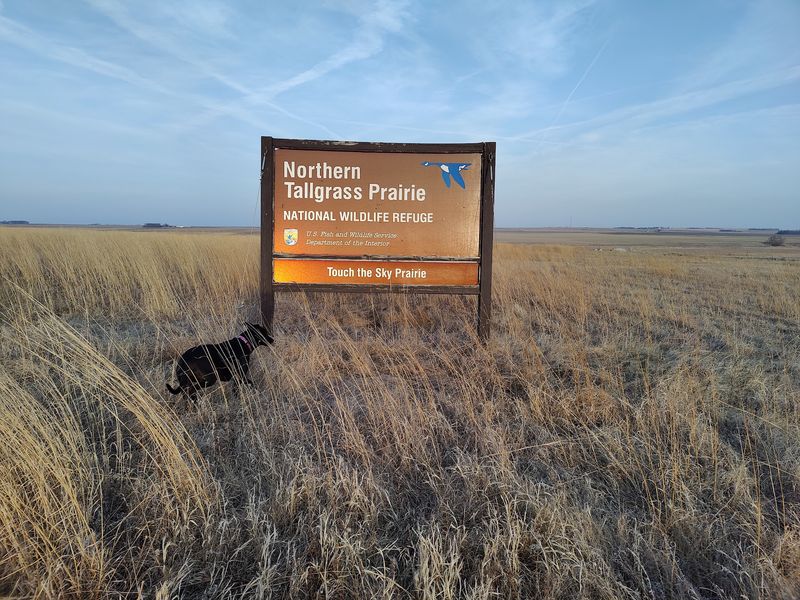
The trails at Touch the Sky Prairie are well-mowed and mostly level, which makes them genuinely manageable for younger children and leashed dogs. The flat terrain means there are no steep climbs or technical sections to navigate, and the wide path gives kids plenty of room to walk alongside adults without feeling cramped.
Dogs seem to respond strongly to the sensory environment here. The smells, the wind, and the open space combine into something that clearly energizes them.
Keeping them on a leash is important for protecting the wildlife and native vegetation that the refuge exists to preserve.
For families, the open sky and the wildflowers provide natural conversation starters about nature and conservation. Children often connect quickly with the visual drama of the landscape, especially during wildflower season when the colors are vivid and immediate.
The lack of restroom facilities is the main practical limitation, so bringing supplies for younger kids is a smart move before heading out.
The Quiet That Makes This Place Different
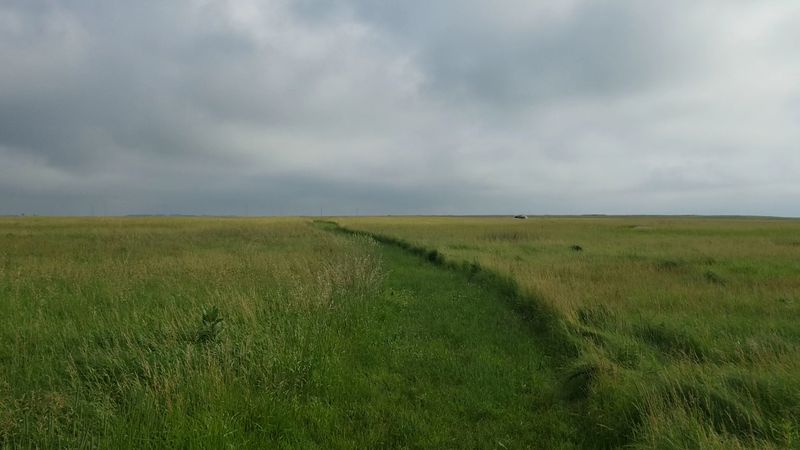
There is a particular quality of silence at Touch the Sky Prairie that is hard to describe until you have experienced it. The only consistent sound is the wind moving through the grasses, a low, continuous rush that fills the air without feeling intrusive.
No traffic, no crowd noise, no background hum of infrastructure.
Many visitors report arriving with a kind of low-level mental noise from daily life and leaving with that noise significantly reduced. The combination of open space, natural sound, and minimal human presence creates conditions that feel genuinely restorative.
Several people have described the prairie as feeling like sacred ground, and that description makes sense once you are standing in the middle of it.
The solitude is not guaranteed, but it is common. Many visitors arrive to find themselves completely alone on the trails.
That kind of uninterrupted quiet in a natural setting has become increasingly rare, which makes Touch the Sky Prairie feel more valuable with every passing year.
Planning Your Visit and What to Bring
Touch the Sky Prairie is open every day of the year with no admission fee, which removes most of the barriers to visiting. The main practical consideration is preparation, since the refuge is remote and offers no facilities on site.
No restrooms, no water sources, and no food vendors are available anywhere near the trails.
Bringing water is essential, especially during summer when temperatures on the open prairie can feel several degrees warmer than in shaded areas. Sunscreen and a hat matter more here than on a forested trail, since there is very little natural shade along most of the route.
Sturdy walking shoes are sufficient for all three trails given their level, mowed surfaces. A camera or phone with a good lens will get heavy use, particularly during wildflower season or at sunset.
The gravel roads leading to the refuge are manageable in a standard vehicle during normal conditions, but calling ahead to verify road conditions after heavy rain is a sensible precaution.
Share this story