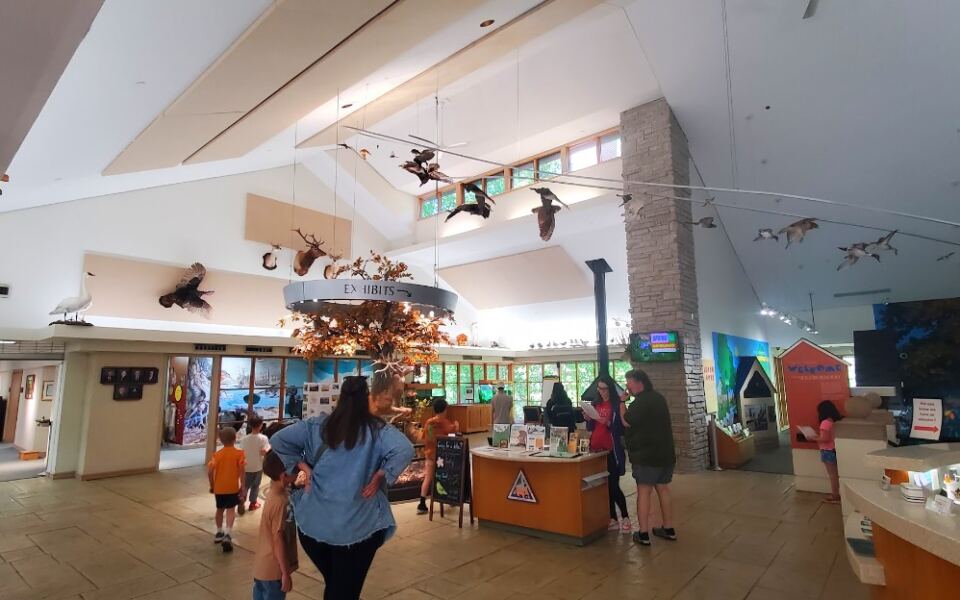
Free admission, live animals, a 3,000-gallon fish tank, an indoor treehouse, and more than two miles of paved forest trails make Powder Valley Conservation Nature Center an easy family outing near St. Louis.
The Missouri Department of Conservation operates the 112-acre site in Kirkwood, where two floors of exhibits introduce visitors to native wildlife and conservation. Inside, you can see fish, turtles, snakes, a working beehive, and displays devoted to animals ranging from black bears to white-tailed deer.
Kids have even more to explore, including an indoor treehouse and hands-on activities. Outside, three paved trails wind through oak-hickory forest, with the shortest route suitable for strollers and wheelchairs.
Best of all, you do not need to budget for admission. The nature center is free to visit, making it an easy place to spend an hour or build into a longer afternoon outdoors.
A Green Escape in Kirkwood
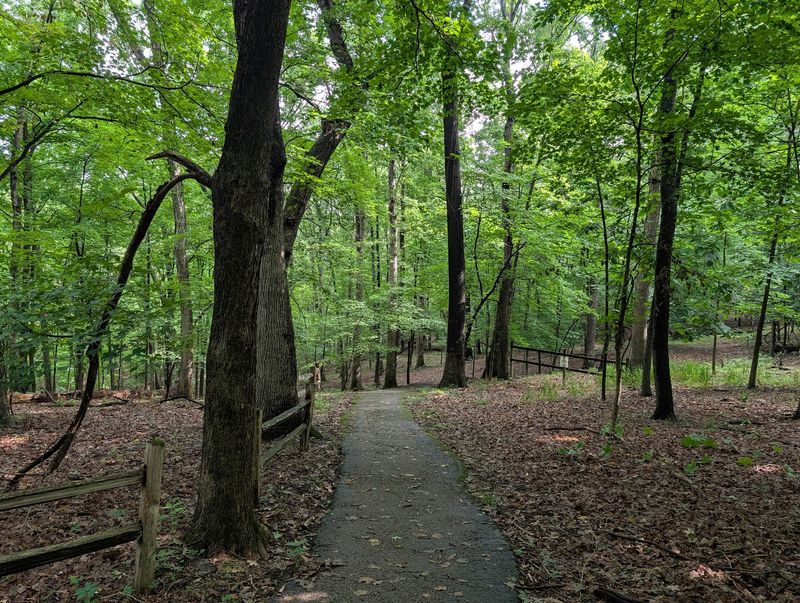
Right off the busy roads of St. Louis County sits a forest that feels far away from everything. The Powder Valley Conservation Nature Center is at 11715 Cragwold Road, Kirkwood, Missouri 63122, in the United States.
The Missouri Department of Conservation runs this 112-acre site. Mature oak and hickory trees fill the grounds, and the parking lot is roomy enough for most days.
I noticed the change in sound almost right away. Traffic faded, and birdsong took over, with leaves rustling softly overhead.
The setting is easy to reach, yet it still feels like a real retreat.
Admission is free, which makes it simple to drop in for an hour or stay for an afternoon. Families, solo walkers, and school groups all share the space without crowding each other.
Before you pick a trail or an exhibit, though, there is a surprising story about the ground beneath your feet.
The Explosive Past Beneath the Trees
Powder Valley’s unusual name is tied to stories of gunpowder and explosives, although some of the most colorful details deserve cautious treatment. The source article says Union forces stored gunpowder in local caves during the Civil War in preparation for destroying Meramec River bridges if Confederate troops advanced toward St. Louis.
It also connects the area to DuPont and explosive-material activity during World War I. Those stories have long circulated as part of Powder Valley’s local history, but the Missouri Department of Conservation’s current visitor page focuses primarily on the site’s natural and educational features rather than providing detailed documentation for every historical claim.
The modern chapter is easier to trace. Powder Valley Conservation Nature Center reached its 35th anniversary in 2026, placing its public opening in 1991.
The anniversary was marked with a special Passport to Powder Valley program encouraging visitors to explore trails, watch birds, meet ambassador animals, attend naturalist programs, and use discovery backpacks.
That transformation is striking regardless of the exact details of the earlier explosive era. A landscape once associated with “powder” is now devoted to wildlife education and conservation.
The loudest sounds most visitors encounter are woodpeckers, children discovering an animal exhibit, and leaves moving in the wind. The history adds mystery, but today’s nature center provides the stronger reason to visit.
And the best introduction waits just inside the building.
Inside the Wildlife Exhibit Hall
Forget dusty glass cases. The exhibits here invite you to touch, peek, and wonder.
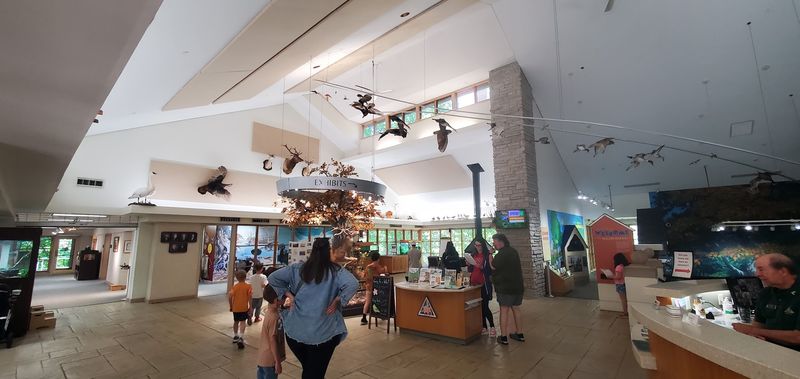
Two floors focus on backyard wildlife and conservation at home. Displays show Missouri animals in lifelike scenes, including a mount of the famous Missouri Monarch, a world-record non-typical white-tailed deer.
Other exhibits explain venomous snakes and black bears in the state. Trackways let you follow animal prints as if you were on a real trail.
Large windows keep the forest in view the whole time, so the indoors and outdoors seem to blend together. A reading room offers a quiet place to flip through nature books.
Staff and volunteers are around to answer questions, and free learning materials are ready to take home. Plan on at least an hour inside, longer with curious kids.
Some of the best residents live in water, and one tank in particular steals the spotlight.
Fish, Turtles, and a Busy Beehive
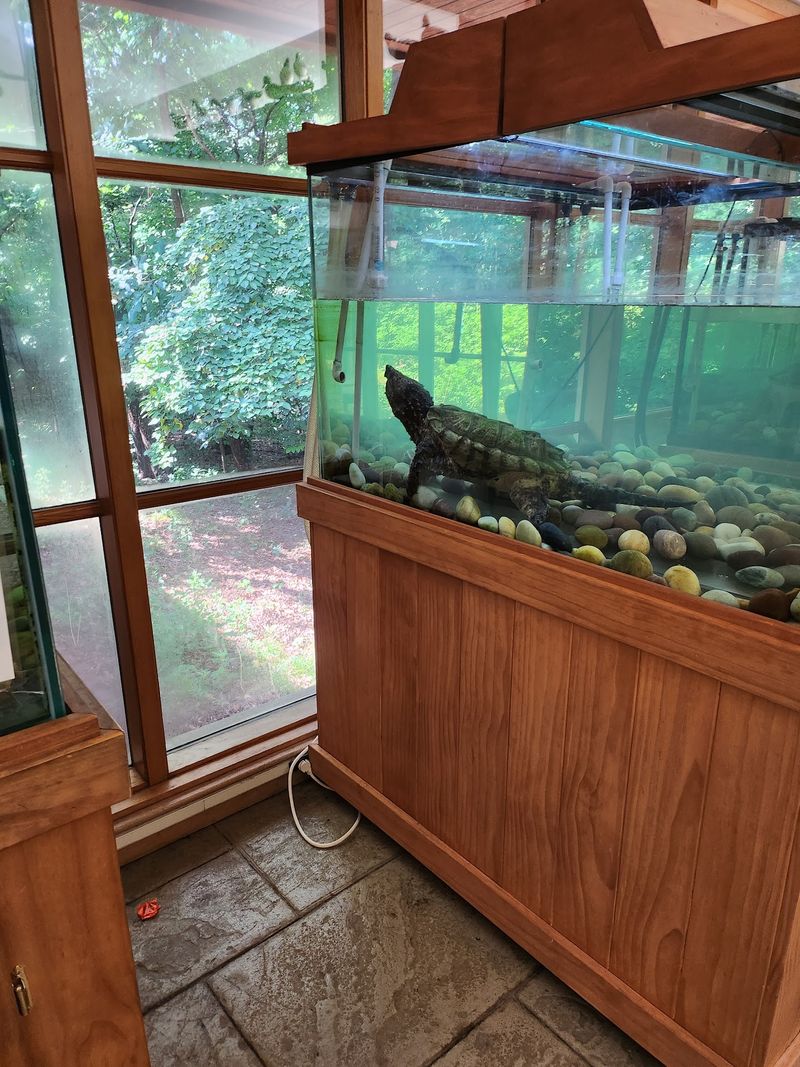
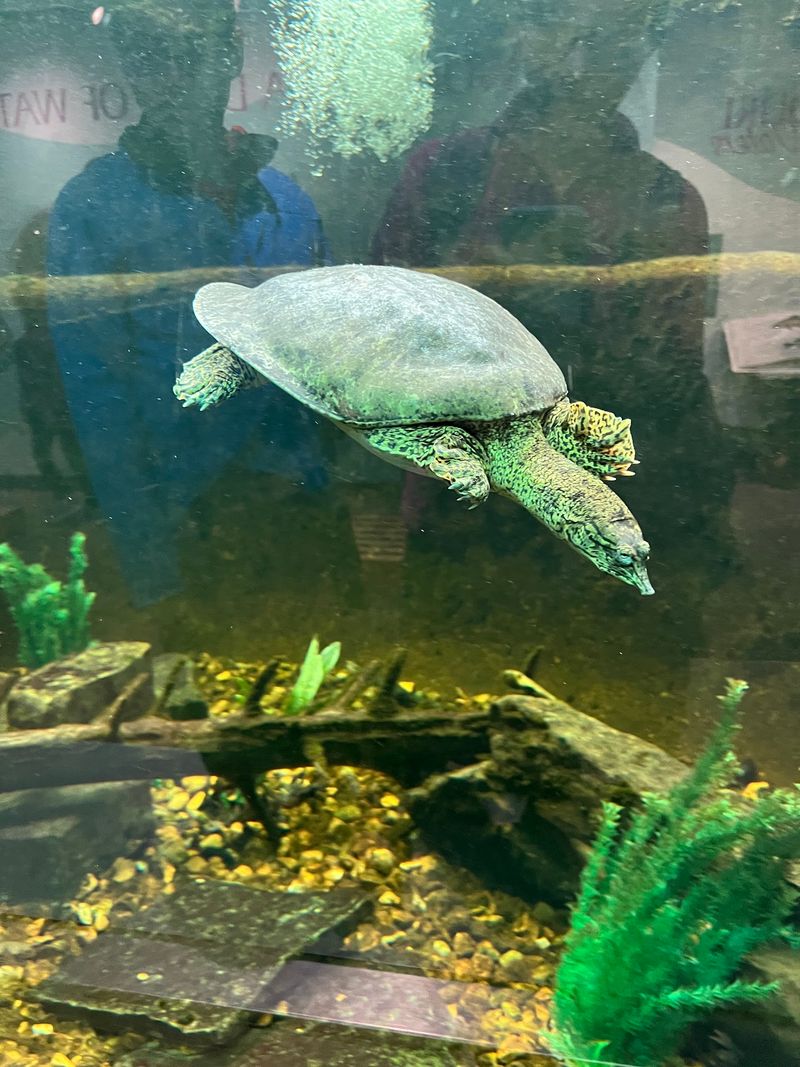
Three thousand gallons of water hold a snapshot of a Missouri stream. Bass, bluegill, and catfish drift around logs and plants while visitors press close to the glass.
I spent longer here than I planned. Watching the catfish patrol the bottom is oddly relaxing.
Nearby, live ambassador animals such as turtles, snakes, and other fish give you a safe, close look at creatures many people only see from far away. A working beehive shows how pollinators go about their daily jobs.
On Sundays, fish feeding has been listed for 1 PM, though the building hours can change, so it is smart to check the schedule before you go.
Kids tend to name their favorite fish within minutes. Grown-ups tend to do the same, and no one admits it.
If watching animals from behind glass is fun, watching wild ones from a cozy window might be even better.
A Window on the Wild Side
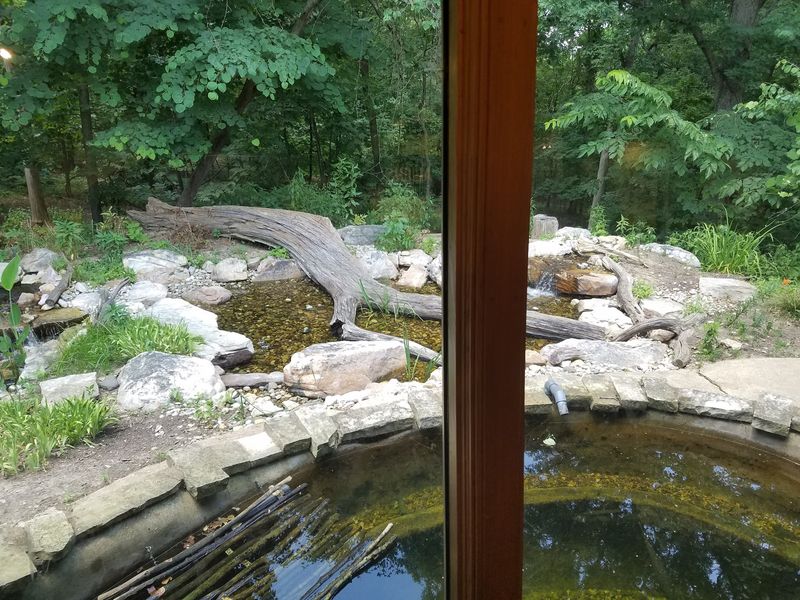
Patience pays off at the wildlife viewing window. Settle onto a seat, keep your voice low, and the feeding area outside starts to come alive.
Songbirds flit in and out, squirrels hustle between snacks, and wild turkeys sometimes stroll through. Deer may wander by too, which delights nearly everyone in the room.
You can borrow binoculars from the center, and they make a big difference. Suddenly you can spot feather patterns and bright eye rings you would otherwise miss.
The animals act naturally because they cannot see you well through the glass. That makes it a calm way to watch their daily routines.
Bring a notebook if you like to keep track of what you see. A quick list of birds can turn into a fun challenge for the whole family.
After all that watching, you may be ready to get outside and walk among the trees yourself.
Three Paved Trails, Three Moods
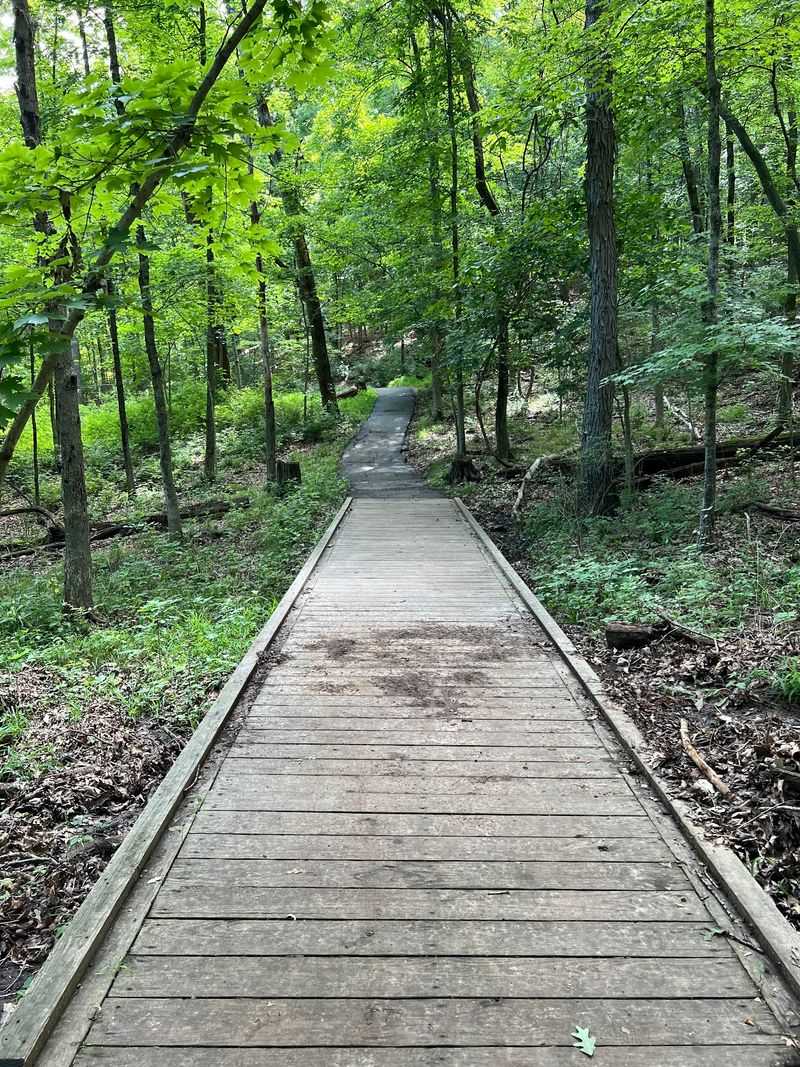
Short on time or energy? The trail system has options for both.
Three paved paths total a little over two miles.
Tanglevine Trail is about a third of a mile, flat, and easy for strollers and wheelchairs. Hickory Ridge Trail runs roughly 1.2 miles, with hills that dip into hollows and creek crossings.
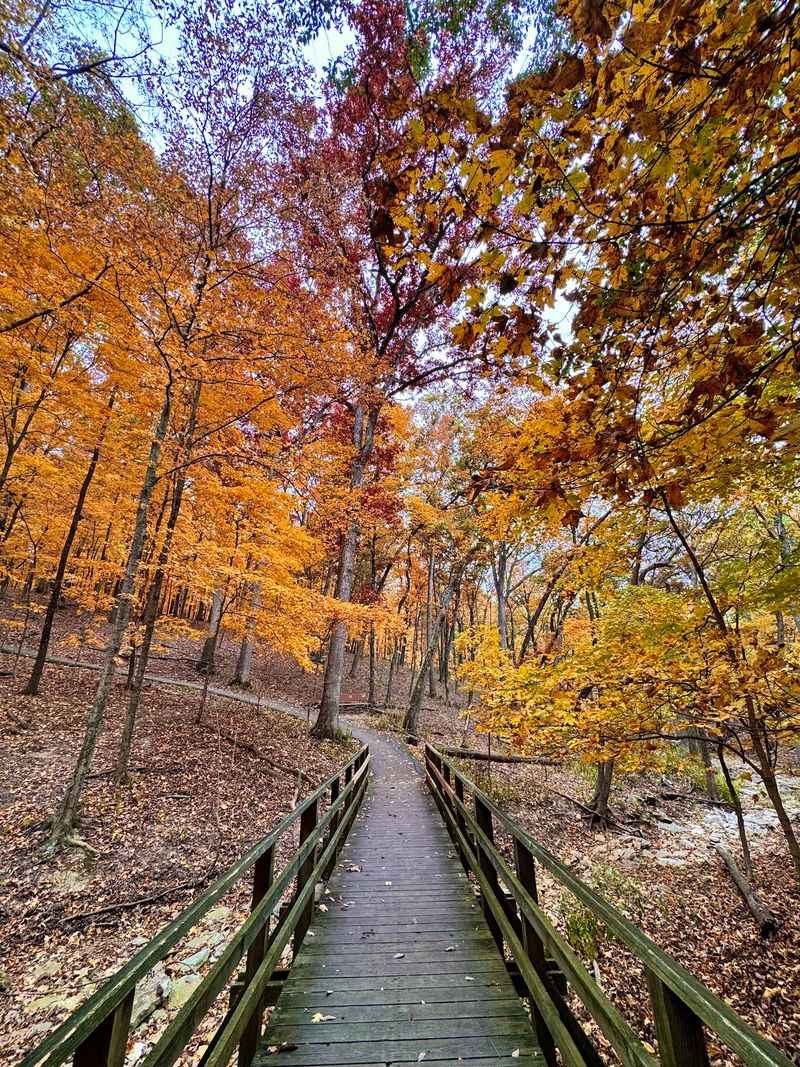
Broken Ridge Trail, about 0.7 miles, climbs modest slopes toward a small valley with two bridges. After heavy rain you might spot tiny waterfalls trickling over rocks.
Wet pavement can get slick, especially where moss grows, so good shoes matter. Benches appear along the way when your legs ask for a break.
Many trees carry tags that name the species, which turns a stroll into a quick lesson. Persimmon and pawpaw trees grow here too.
One of these trails has a storybook twist that families especially enjoy.
Treehouse Fun for Little Explorers
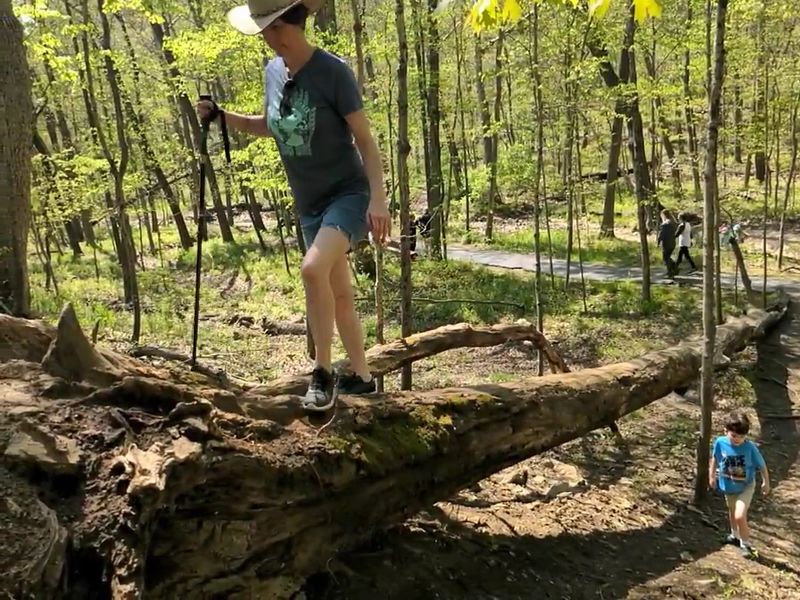
Ask a kid what they remember most, and the answer is often the treehouse. This indoor structure lets children climb and pretend they are high in the forest canopy.
A kid’s corner nearby offers hands-on activities made for small hands. Younger visitors can explore at their own pace while adults stay close.
Out on Tanglevine Trail, the Trail Tales program posts storybook pages along the path. Families read one page at a time, so a short walk turns into a small adventure.
A scavenger hunt is also popular, and it keeps energetic feet moving in the right direction. Toddlers, in particular, seem to find endless things to poke at and point to.
Rainy days work well here, since most of the fun is indoors. Remember that running is discouraged inside, so a gentle reminder at the door helps.
Programs for all ages add even more to do, and the calendar is worth a look.
Programs That Feed Curiosity
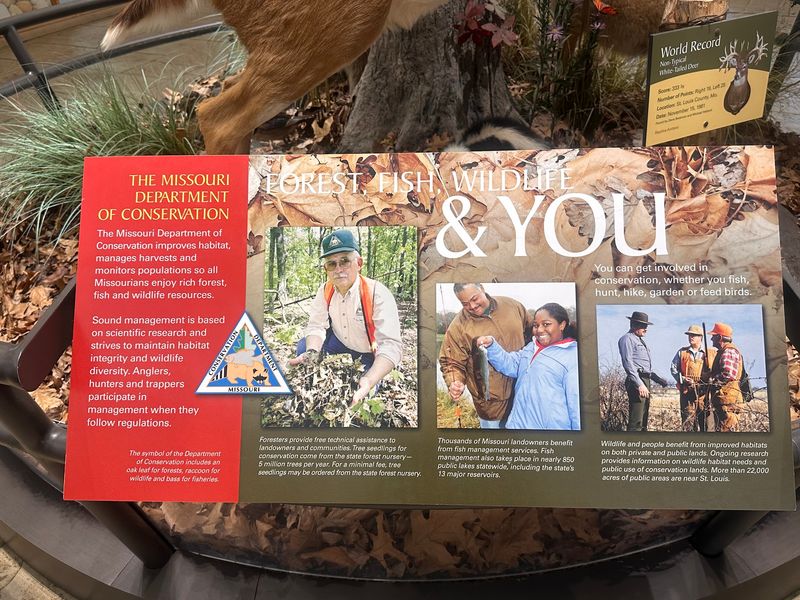
Naturalists from the Missouri Department of Conservation run a steady lineup of programs. Some are for toddlers, like Babes in the Woods, while others suit teens and adults.
Guided bird walks, hands-on talks, and seasonal events fill the calendar. The center also has a 250-seat auditorium for larger presentations.
Schools, scout troops, and civic groups visit often, and groups are asked to contact the center ahead of time. Individual visitors do not need reservations.
The Conservation Connections newsletter lists upcoming events, so a quick look before your trip can help you pick the right day. Many programs are free.
For the 35th anniversary, a Passport to Powder Valley challenge rewarded visitors for birdwatching, meeting animals, joining a program, and hiking a trail. Special events like that pop up from time to time.
Next up is the soothing side of this place, which may be the biggest reason people return.
The Calm of an Oak-Hickory Forest
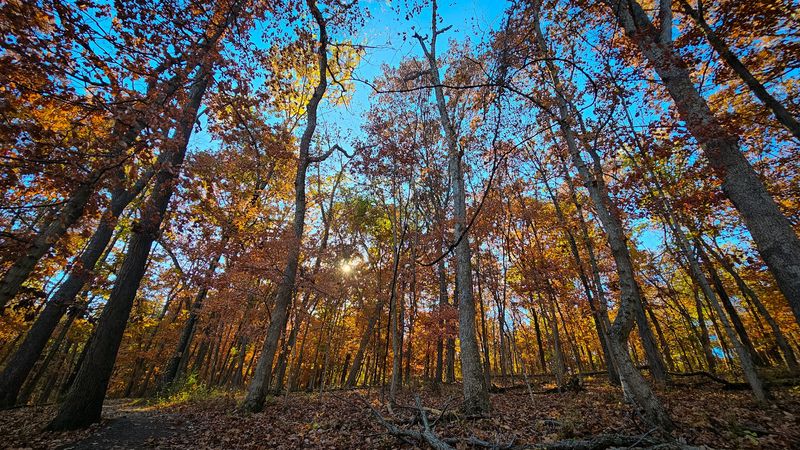
Quiet settles in quickly under these trees. The canopy filters sunlight into soft patches on the pavement, and the air smells like damp leaves and earth.
Seasons change the mood. In April, dogwoods bloom, redbuds linger, and may apples push up along the paths.
Summer brings deep shade, which keeps hot days comfortable. Bug spray is a smart pack, and sunscreen does not hurt.
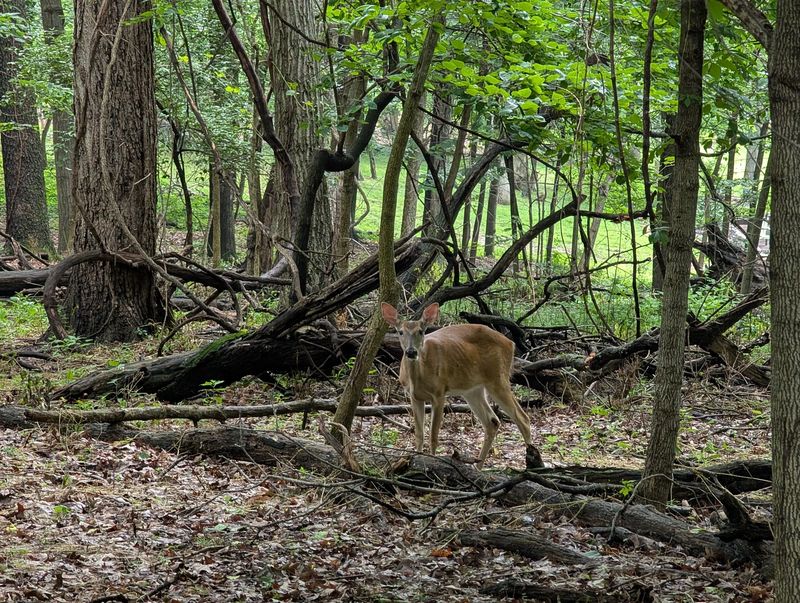
Deer and wild turkeys sometimes appear if you walk quietly. Pets are not allowed on the trails, which helps wildlife feel safe, though service animals are welcome.
You might still catch a faint hum from the interstate in spots. Even so, the birdsong usually wins.
I slowed down without meaning to, noticing bark patterns and tiny wildflowers. That slower pace is a gift in itself.
Of course, a good visit goes more smoothly with a bit of planning.
Conservation in Action
This place teaches as much as it entertains. Every exhibit and sign points back to one idea: protecting nature starts close to home.
The center is run by the Missouri Department of Conservation, which also manages wildlife across the state. Some exhibits explain how urban yards and neighborhoods can support birds, bees, and other animals.
Visitors can also join citizen science efforts, such as photo projects that track how the landscape changes through the seasons. Small contributions add up to useful information.
The gift shop sells Department-made publications and educational items. For paddlers, a Missouri Paddler’s Guide has been available at a small price.
Free copies of conservation magazines and handouts let you keep learning at home. It is an easy way to turn one outing into a new habit.
Ready to go? A few practical details will make your day easier.
Smart Tips for Your Visit
Start with the schedule. The nature center building is open Tuesday through Saturday, 8 AM to 5 PM, and closed Sunday and Monday.
The gift shop closes a little earlier.
Trails are open daily, usually 8 AM to 6 PM, with later hours during Daylight Saving Time. The center closes on major holidays, so a quick call at 314-301-1500 can save a trip.
Wear shoes with good grip, since wet pavement gets slippery. Bring water, sunscreen, and bug spray, because the shade is great but insects exist.
Restrooms are inside the building, with portable ones outside when it is closed. Wi-Fi is available inside, and the site is ADA compliant, though only Tanglevine is the flattest option.
Picnic tables are scarce, so pack snacks for the car. Biking, jogging, and in-line skating are not allowed on the trails.
Bring curiosity, a light jacket, and a little patience for the deer, and you will leave refreshed.
Share this story