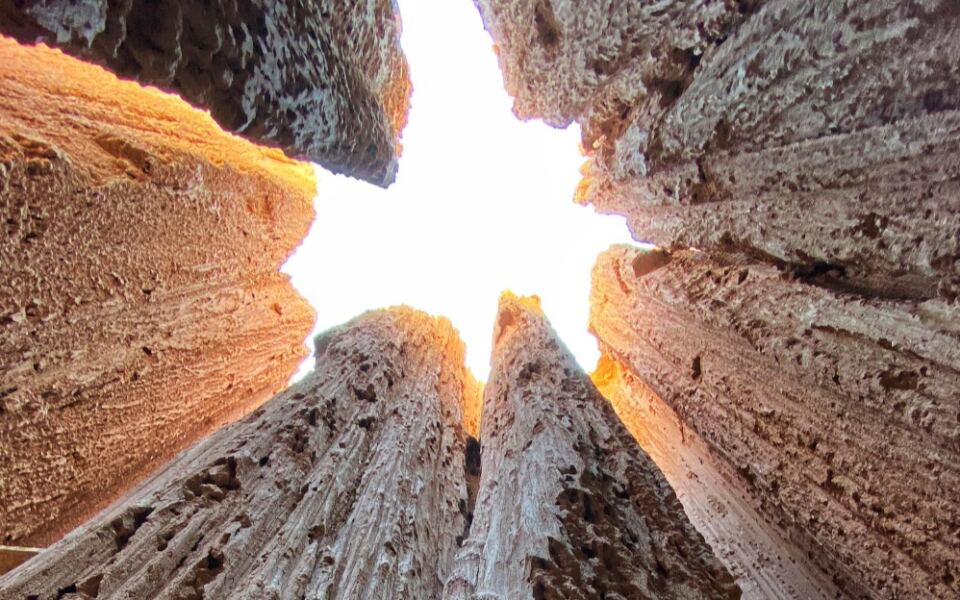
Some of the rock walls here are so narrow that you can nearly touch both sides at once. The spaces twist into quiet little chambers carved from soft clay.
This spot in Nevada covers about 2,000 acres. It has spires, slots, trails, and a campground, all in one small package.
I like that it feels like a different planet without a long trip to get there. I can’t imagine walking past a gap in the cliffs without peeking inside.
So what exactly is waiting around those tight corners?
Moon Caves Are Where The Squeeze Begins
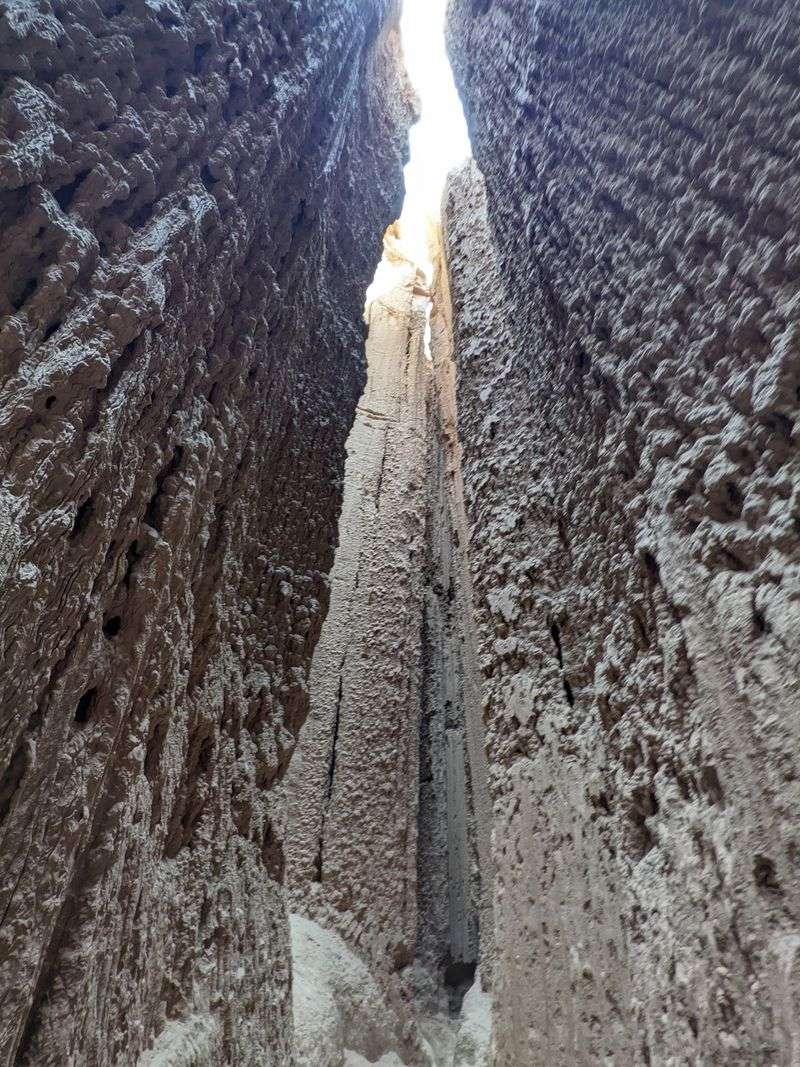
Cathedral Gorge State Park is famous for its slot canyons, and the Moon Caves are a top reason. They aren’t true caves.
They are tight passages in the clay walls that open to the sky.
The walls curve and narrow as you move deeper. Some spots are tight enough that you’ll turn sideways.
That makes the short walk feel like a tiny adventure.
Plan to go slowly here. Keep your hands to yourself instead of pulling on the walls, because the clay is soft and crumbles easily.
Wear shoes with good grip, since the ground can be slick after rain.
The passages don’t run very deep, so you won’t need hours. Still, the twists make every few steps feel new.
Photographers love the soft shapes and the way light slides along the curves.
Visit on a cooler day if you can. Shade is limited in the park, and the heat builds quickly in summer.
A hat and water bottle will help a lot.
Don’t rush to the next stop, either. Moon Caves offer some of the longest slots in the park, so they deserve a slow look.
Cathedral Cave Hides A Quiet Surprise
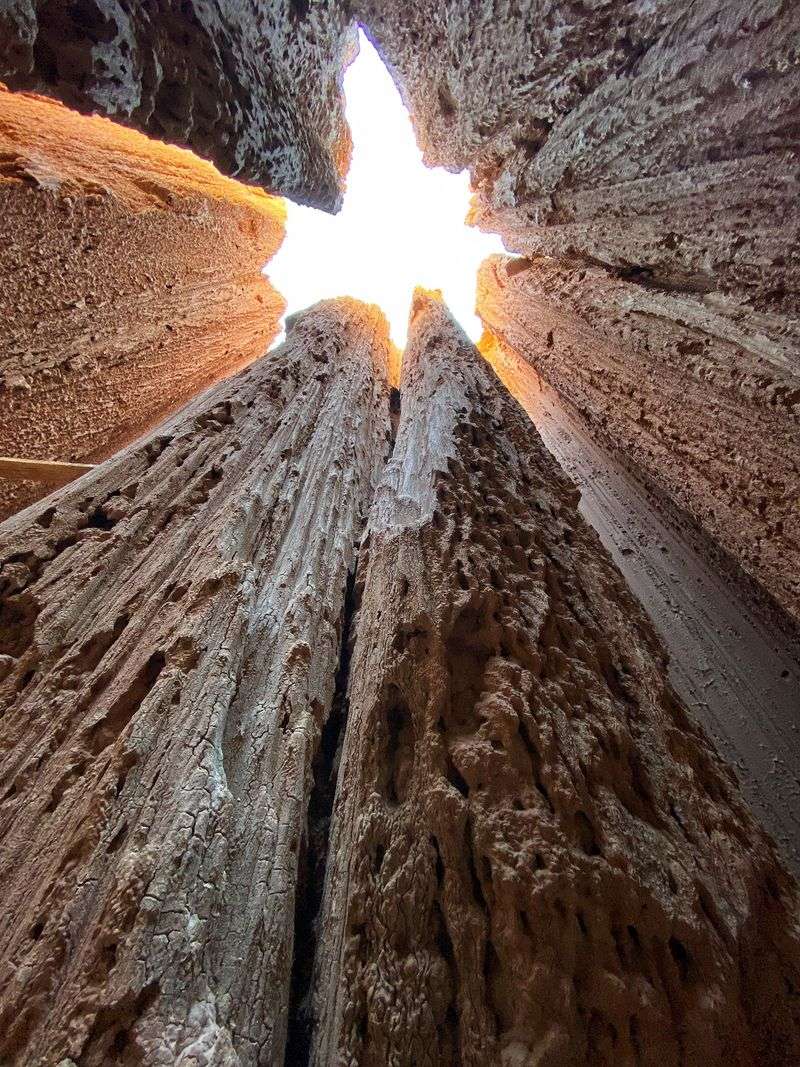
Tucked beside the main viewing area is a slot known as Cathedral Cave. It’s a short stroll from the parking spot, which makes it easy for kids and grandparents alike.
Step inside and the temperature often feels a bit cooler. The walls rise high on both sides, and a thin strip of sky shows overhead.
It’s a neat trick of erosion.
Water and wind carved these shapes from fine clay and silt over a very long time. That’s why the walls look soft and wavy rather than sharp.
It also explains why they should be admired, not climbed.
Many visitors rush through and miss the details. Slow down and look at the ridges that run along the walls.
They look a little like frozen ripples.
Bring a camera or phone, but keep one hand free for balance. The floor can be uneven in spots.
If rain has fallen lately, take extra care.
This stop is brief, yet it’s one of the most memorable in the park. It sets the tone for the rest of your visit.
Where To Find The Park Without Getting Lost
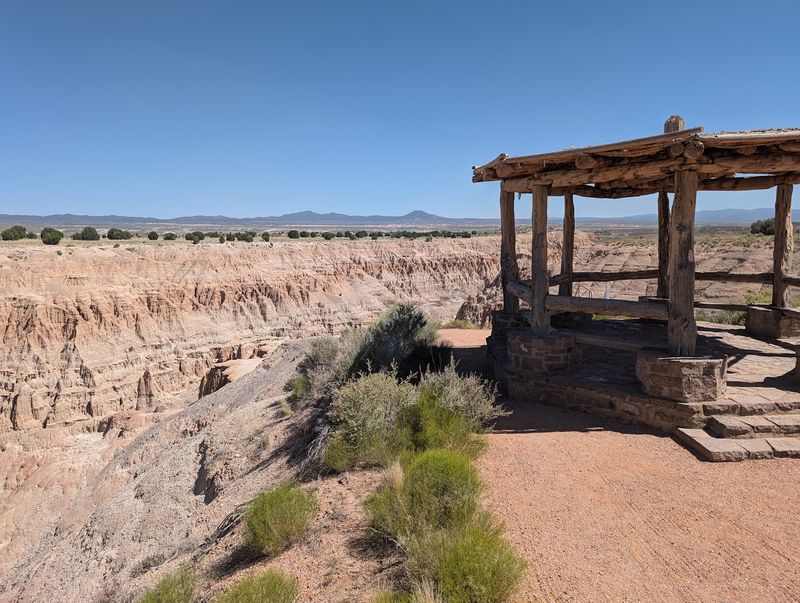
The park sits at 111 Cathedral Gorge State Park Road in Panaca, Nevada. It’s in Lincoln County, in the eastern part of the state.
Expect a long, scenic drive if you start from Las Vegas.
Panaca is the closest town, so it’s a handy anchor point. Services in the area are limited.
Fill your gas tank and pack snacks before you head out.
The drive is part of the fun. Open desert rolls past your window, and the scenery changes as you get closer.
Cell service can be spotty, so download a map ahead of time.
Once you arrive, the entrance road leads straight to the main areas. Parking is easy, and the first views show up quickly.
You don’t have to hunt for the good stuff.
Be careful about driving on soft shoulders and off-road spots. The ground here can be loose, and a regular car can get stuck.
Stick to marked roads and parking areas.
Give yourself plenty of daylight. Arriving early leaves time for several stops and a relaxed pace.
Spires That Look Like A Movie Set
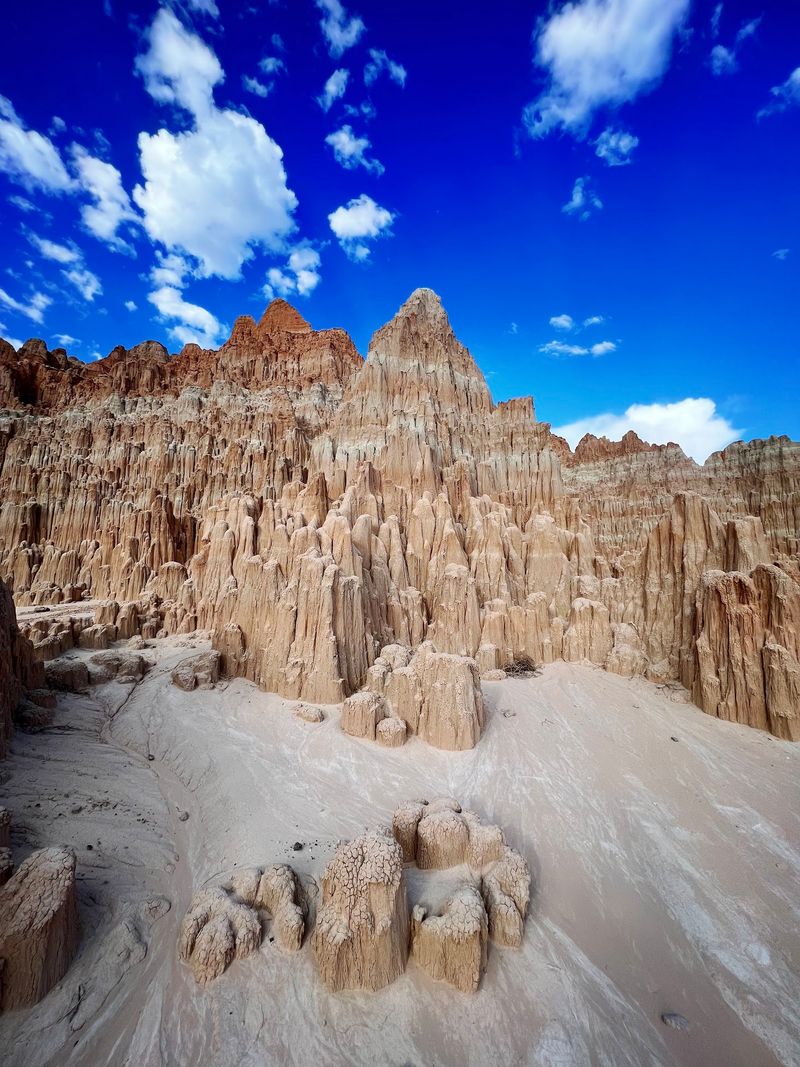
Ever seen a cliff that looks like a pipe organ? The tall, pointed formations here earned the park its name.
They resemble the spires of a grand church.
These shapes were carved from soft clay and silt that settled in an ancient lake bed. Wind and rain then sculpted them over a very long time.
Erosion is still working today.
Light changes everything in this spot. Morning and late afternoon bring warm tones to the pale walls.
That’s when photographers tend to set up their cameras.
The main viewing area near the park entrance gives an easy first look. You don’t need to hike far to see the best known spires.
A short walk puts you right beneath them.
Please stay on paths and avoid climbing. The clay breaks apart easily, and it harms the formations.
It can also be unsafe underfoot.
Take a minute to just stand and look up. The scale is bigger than photos suggest.
It’s easy to see why people say it feels like another planet.
Miller Point Is The Sunset Seat
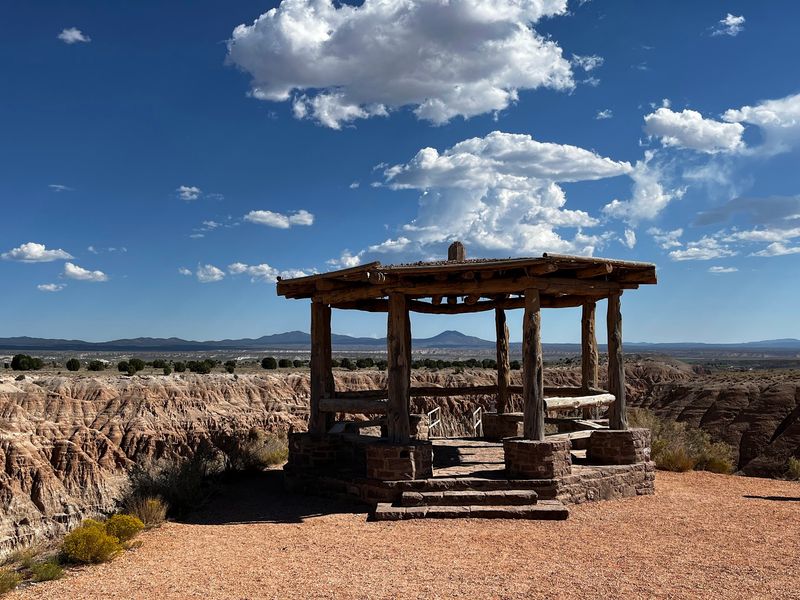
Sunsets get a front-row seat at Miller Point. This overlook sits above the main gorge and offers a wide look across the formations.
You can drive to the top or hike up.
The overlook includes picnic spots, so bringing a light dinner makes sense. Evening light turns the clay walls soft shades of gold and pink.
It’s a calm way to end a day.
Hikers can start at the main area and follow a trail toward the point. The route climbs gradually and rewards you with growing views.
Pack water, because shade is scarce.
If a long hike doesn’t appeal, drive up and walk to the edge. A short staircase leads to a lower viewpoint with even more drama.
Take it slowly on the steps.
Wind can pick up in the evening. A light jacket is smart even after a warm day.
Bring a flashlight if you plan to stay until dusk.
This stop shows how the whole landscape fits together. After exploring tight slots, the wide view feels like a big exhale.
Trails That Fit Any Energy Level
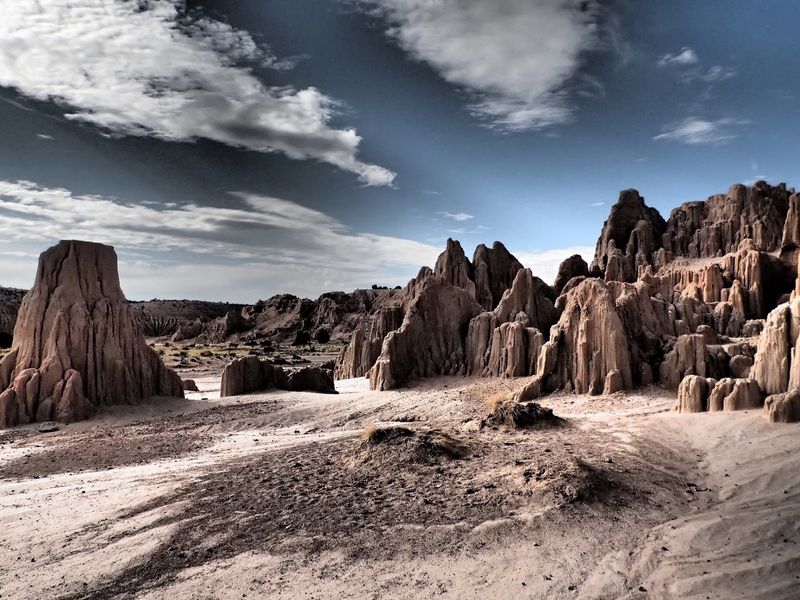
Not everyone wants a big hike, and this park understands that. Short paths lead to the main slots and viewpoints.
Longer routes link the park’s highlights.
One popular option is a loop of roughly four miles that connects Cathedral, Miller Point, and Juniper areas. It passes some of the most interesting features.
Take water and a snack.
The Juniper Loop is a shorter choice at about three miles. It’s a good middle ground for families with steady walkers.
Trails are mostly easy to follow.
Wind your pace to the weather. Summer afternoons are hot, and shade is hard to find.
Spring and fall are more comfortable for longer walks.
Watch for wildlife as you go. Birds flit around the valley floor, including Western Bluebirds.
Quiet steps help you spot them.
Rain makes the clay slick and sticky, so skip muddy days if you can. Good shoes are a must either way.
Check conditions at the visitor center before you set out.
A Water Tower With A Story
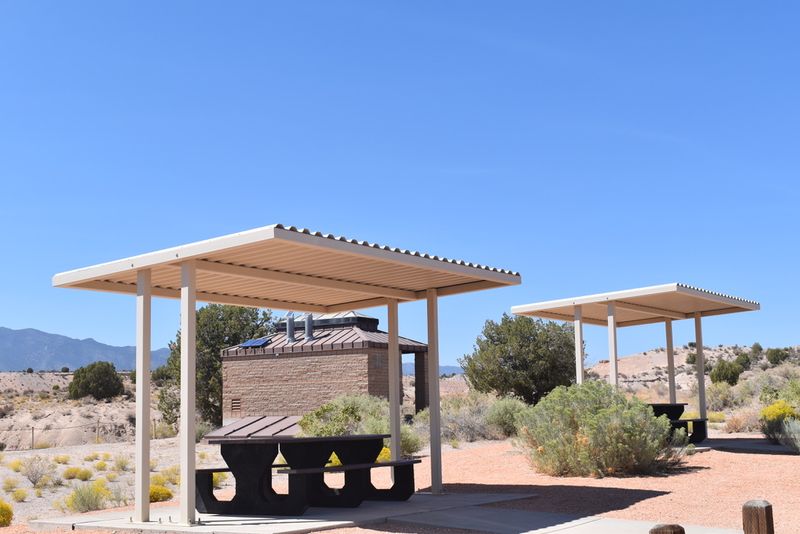
Some history sits right beside the natural wonders. The Civilian Conservation Corps built structures here in the 1930s.
One of them is a stone water tower that still stands.
The CCC was a work program from the Great Depression era. Crews built parks, trails, and buildings across the country.
Their handiwork gives this park a bit of old-time character.
You’ll also notice stonework near picnic areas and facilities. It blends nicely with the landscape.
Look closely and you can see how carefully it was assembled.
A quick stop works well for photos. The tower gives a nice contrast to the soft clay formations nearby.
It shows how people have shaped this place, too.
If you’re curious about more background, the visitor center has displays about the park. Rangers and staff can point you toward other things to see.
Ask questions while you’re there.
History fans will enjoy this small detour. It adds a human story to the geology.
It only takes a few minutes.
Camping Under A Giant Night Sky
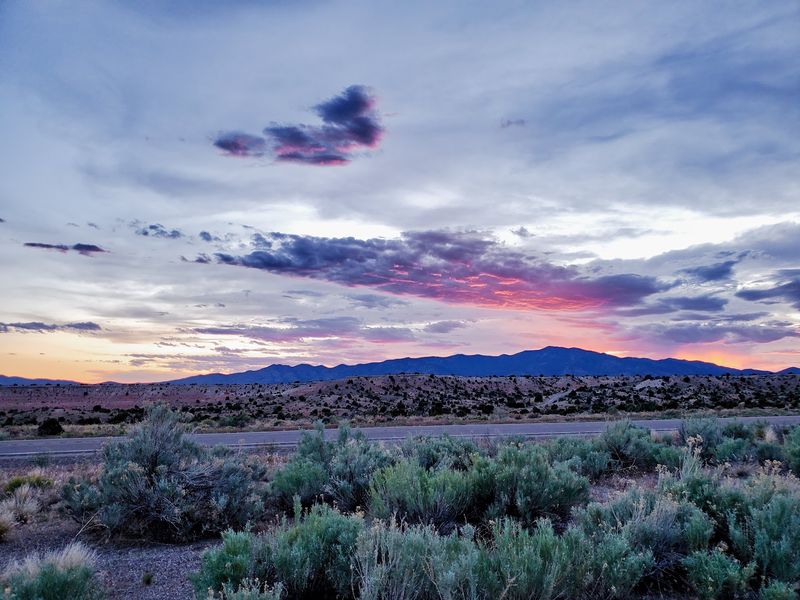
Staying overnight is a smart move here. The park has a campground with picnic tables and nearby restrooms.
Showers are available too.
Sites sit close to the formations, so a short walk takes you to the good stuff. Sunrise and sunset light make the cliffs glow.
You can enjoy both without driving.
The area is remote, which means dark skies. On a clear night, stars stretch from edge to edge.
Bring a blanket and plan some time to just look up.
Reserve ahead during busy seasons. Spring and fall tend to be popular.
Overflow camping is available when main sites fill.
Pack for temperature swings. Desert days can be warm, and nights cool off fast.
Layers make life easier.
Bring supplies from town before you arrive. Stores are limited nearby, and the closest services are in Panaca.
A little planning keeps the trip smooth.
Nearby Stops To Stretch The Trip
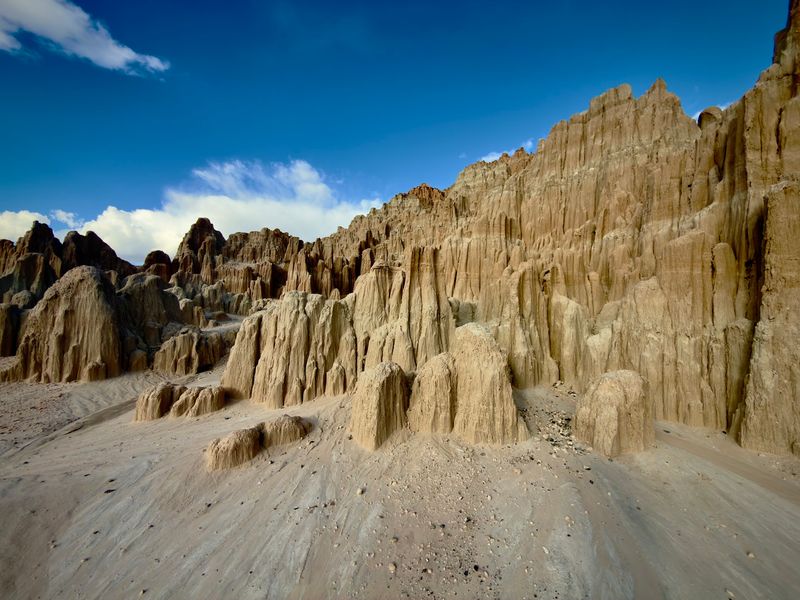
One state park rarely fills a whole weekend here. Nearby places make a great add-on.
Plenty of road trippers build a loop around the area.
Kershaw-Ryan State Park offers a green canyon with trails. Echo Canyon State Park has a reservoir and quiet scenery.
Both are within reasonable driving distance.
In Panaca, you can also check out Hot Tea Pot Arch. It’s a small, quirky stop that fits well into a day of exploring.
The Panaca Charcoal Kilns are another local landmark.
Plan your timing so you don’t rush. Distances are longer than they look on a map.
Fill your gas tank when you can.
Start at the visitor center at Cathedral Gorge State Park for maps and local tips. Staff can suggest routes that fit your schedule.
Ask what’s open before you go.
With a bit of planning, you can see a lot of eastern Nevada. It’s quiet country with big views.
Share this story