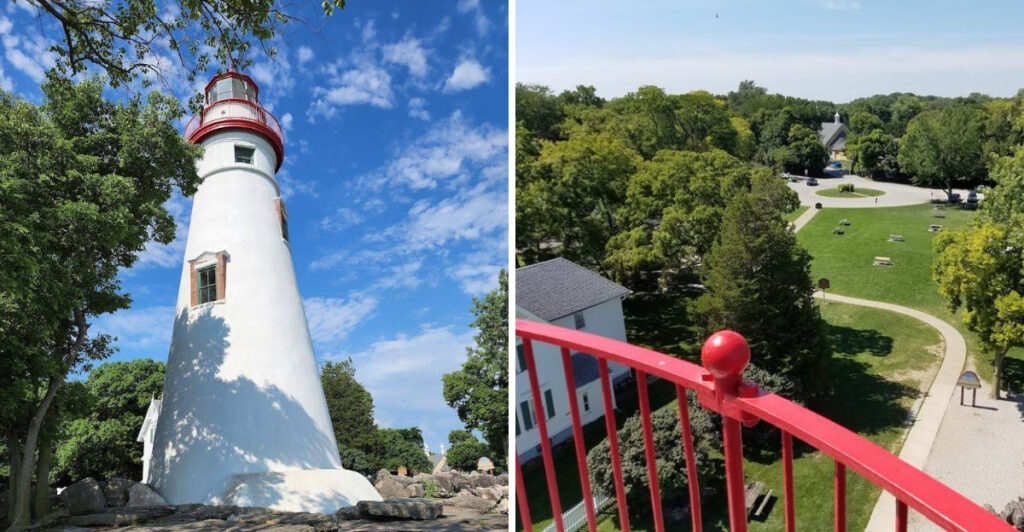
There is a lighthouse standing on the rocky shore of Lake Erie that has been doing its job without a single break since 1822. That makes it the oldest continuously operating lighthouse on the entire Great Lakes.
Standing at the tip of the Marblehead Peninsula, this sturdy limestone tower has watched over sailors, fishermen, and lake travelers for more than two centuries. Once you learn what is inside, around, and at the top of this place, you will wonder how it stayed off your radar for so long.
The Oldest Lighthouse Still Running on the Great Lakes
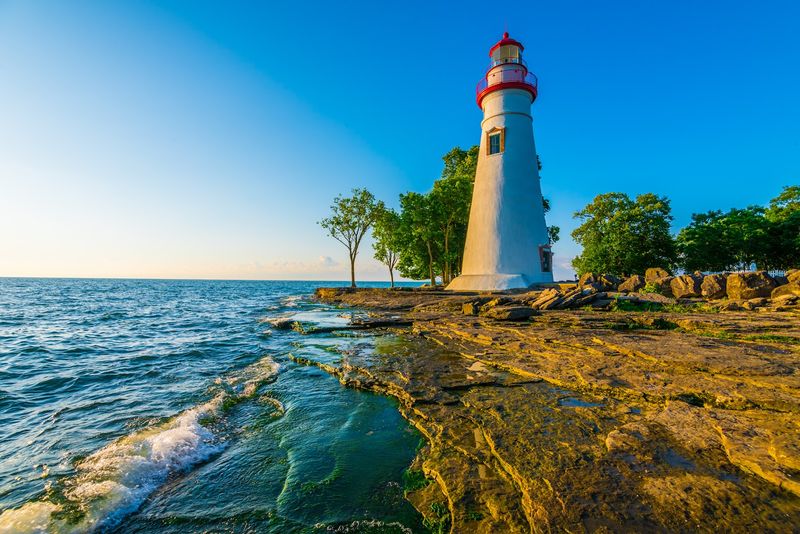
Most lighthouses have a retirement story. This one does not.
The Marblehead Lighthouse in Marblehead, Ohio has been flashing its signal across Lake Erie every single night since 1822, making it the oldest lighthouse in continuous operation on the entire Great Lakes system.
That is not a small title to hold. The Great Lakes stretch across five states and one Canadian province, covering more than 94,000 square miles of water.
Out of every lighthouse ever built on those shores, this one has outlasted them all in terms of unbroken service.
The tower was built using local limestone, which is part of why it has held up so well over two centuries of brutal Ohio winters and powerful lake storms. Visiting it feels less like a tourist stop and more like shaking hands with history that never clocked out.
Where Exactly You Will Find This Landmark
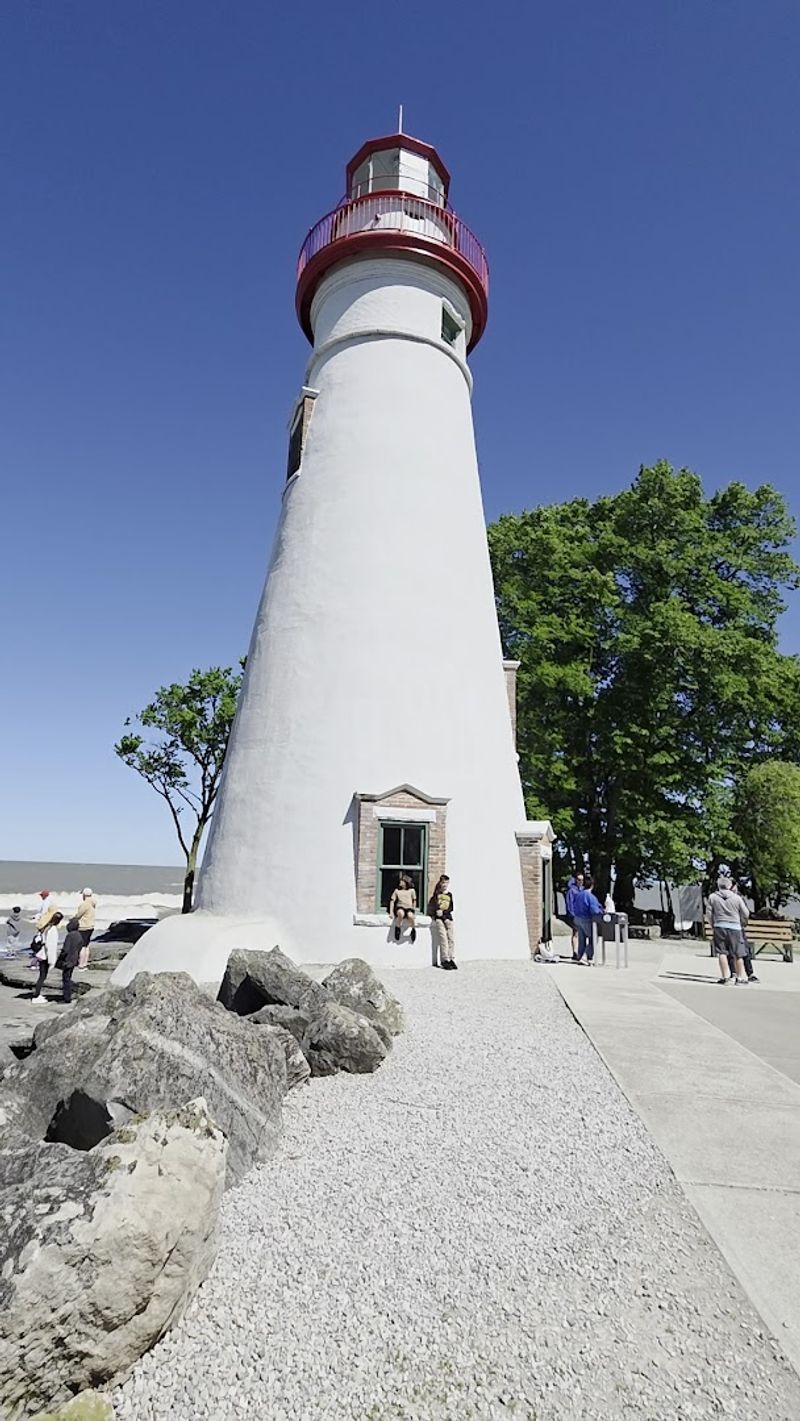
The Marblehead Lighthouse Historical Society sits at 110 Lighthouse Dr, Marblehead, OH 43440, right at the rocky tip of the Marblehead Peninsula along the southern shore of Lake Erie. Getting there is half the fun because the drive along the peninsula gives you water views on both sides of the road.
The park itself is free to enter. Parking is available on site, though it can fill up quickly during summer weekends.
The grounds open before the lighthouse tours begin, so arriving early gives you time to walk the shoreline and get your bearings.
Tours inside the lighthouse run from noon to 4 PM. The surrounding park area is accessible outside those hours as well, so even if you arrive early or late, the lake views and grounds are worth the stop on their own.
Climbing 77 Steps to the Top
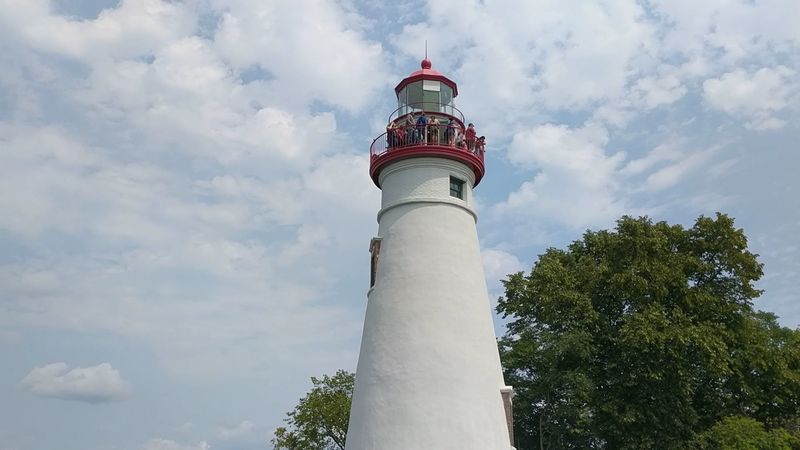
Here is something that surprises most first-time visitors: the staircase inside this lighthouse is narrow, steep, and not for the faint of heart. Seventy-seven steps wind their way up the interior of the limestone tower, and the climb gets tighter as you go higher.
A small fee is charged for the tower tour, which has been reported as low as a few dollars per person. That is genuinely one of the best deals in Ohio for what you get at the top.
The view from the lantern room stretches across Lake Erie in every direction, and on a clear day you can spot Cedar Point amusement park across the water.
The climb is manageable for most visitors, including older kids. Just take it slow, hold the railing, and pace yourself.
The reward at the top makes every step worth the effort.
The View from the Top That Stops You Cold
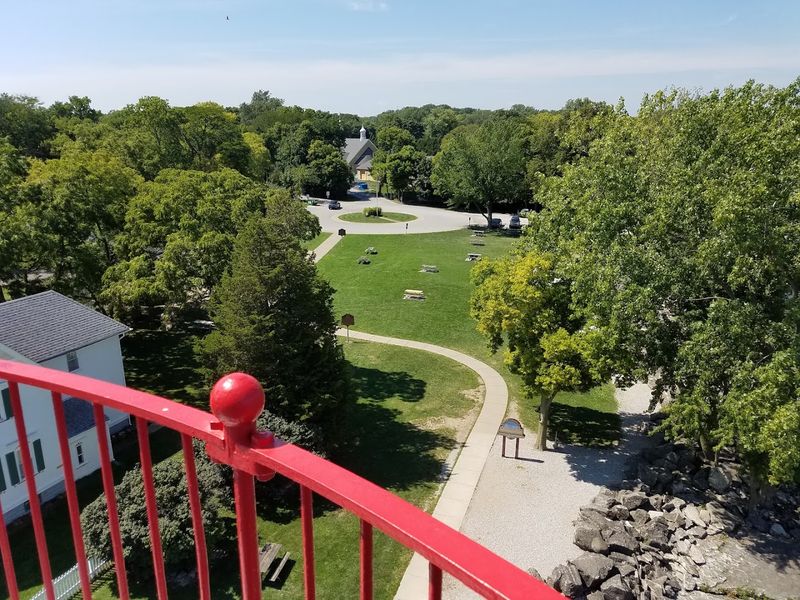
Nothing quite prepares you for the moment you step out near the lantern room and Lake Erie opens up in every direction. The water shifts between deep blue and pale green depending on the light, and the horizon stretches so far it actually looks curved.
On a clear day, Cedar Point is visible across the bay. The roller coasters are tiny from that distance, but they are unmistakably there, which creates one of the more surreal visual combinations in Ohio.
A historic lighthouse in the foreground, a modern amusement park in the background, and two centuries of maritime history underneath your feet.
Early morning visits before the crowds arrive offer the cleanest sightlines. The lake has a stillness in the morning that disappears by afternoon when boat traffic picks up.
Either way, the view is genuinely hard to forget once you have seen it.
The Museum That Tells the Full Story
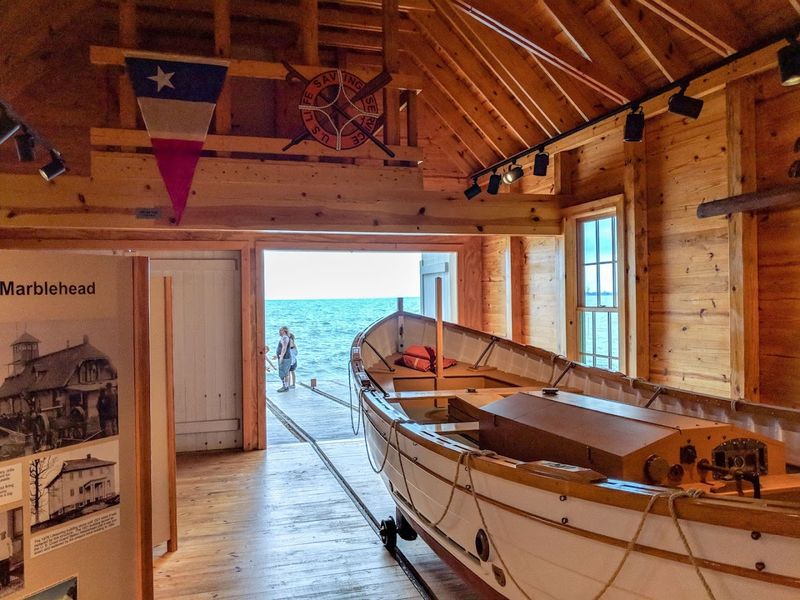
Many people come for the tower climb and leave without realizing the museum on the grounds is where the real depth of the story lives. The exhibits cover the full history of the lighthouse, the keepers who maintained it, and the broader maritime history of Lake Erie.
There are displays that walk you through what life was like for a lighthouse keeper in the 1800s. It was not a glamorous job.
Keepers were responsible for keeping the light burning every single night, maintaining the equipment, and logging weather and ship activity around the clock.
The museum also includes a limestone quarry exhibit and a video theater room where you can watch a presentation about the lighthouse and its place in Great Lakes history. Most visitors spend longer in the museum than they expected to, which is usually the sign of a well-put-together exhibit space.
The Lighthouse Keeper’s Living Quarters
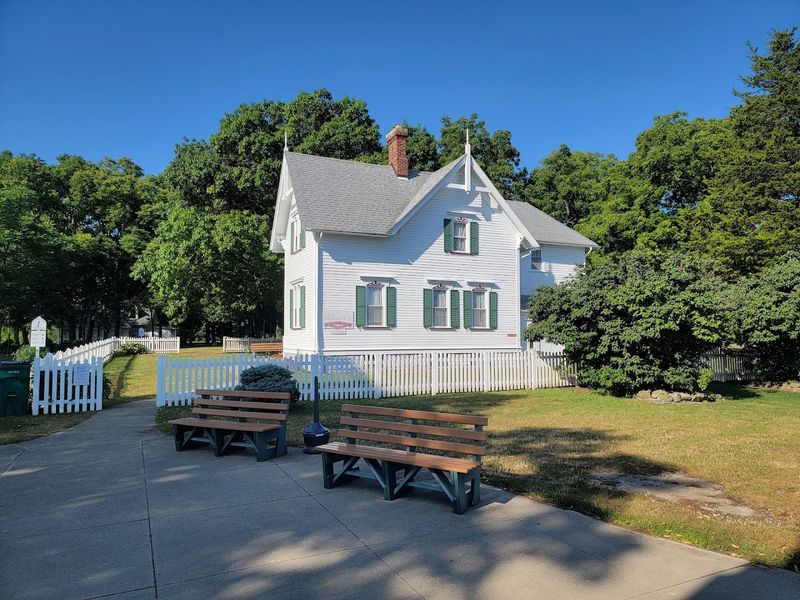
One of the details that many visitors walk right past is the lighthouse keeper’s living quarters, which still stand on the grounds. This building gives you a tangible sense of what daily life looked like for the people who kept this light burning through Ohio winters and summer storms.
Lighthouse keepers were not just caretakers. They were essentially the first responders of the lake.
They tracked weather, assisted vessels in distress, and maintained meticulous logs of everything that passed through the area. The quarters reflect the modest, practical lifestyle that came with that responsibility.
Seeing the actual space where those keepers lived adds a human dimension to the lighthouse that the tower itself cannot fully convey. The building is part of what makes the Marblehead Lighthouse Historical Society feel like a complete story rather than just a single landmark worth photographing.
The Coast Guard Exhibit and Restored Boat
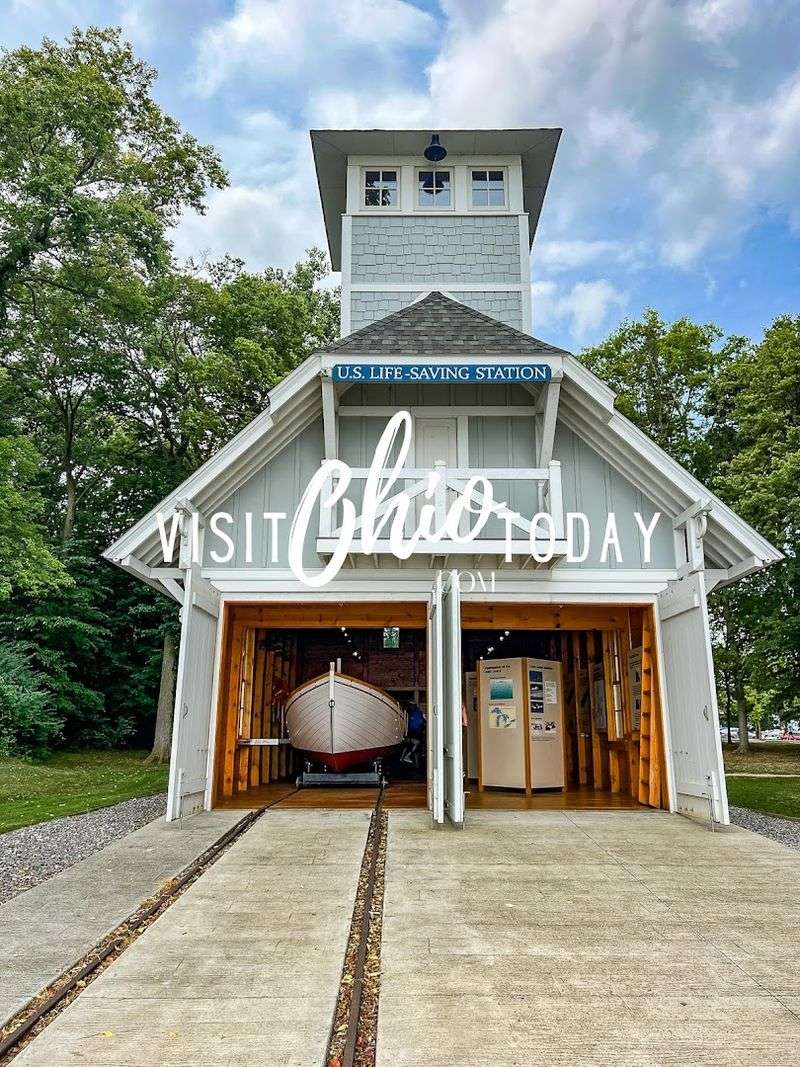
Beyond the lighthouse tower and museum, the grounds include a Coast Guard exhibit that covers the rescue history of Lake Erie. The exhibit features a restored Coast Guard boat that once worked these waters, and seeing it up close gives you a real appreciation for how challenging lake rescues must have been in rough conditions.
Lake Erie has a reputation among the Great Lakes for being the most dangerous in terms of sudden storms. Its relatively shallow depth means waves build fast and hit hard.
The Coast Guard crews stationed near this area over the decades dealt with those conditions regularly.
The restored boat is displayed in a way that lets you get close and examine the details. For anyone interested in maritime history or rescue operations, this part of the grounds is worth spending extra time on.
It is one of those exhibits that tends to generate the most conversation among visitors.
The Rocky Shoreline Right on the Grounds
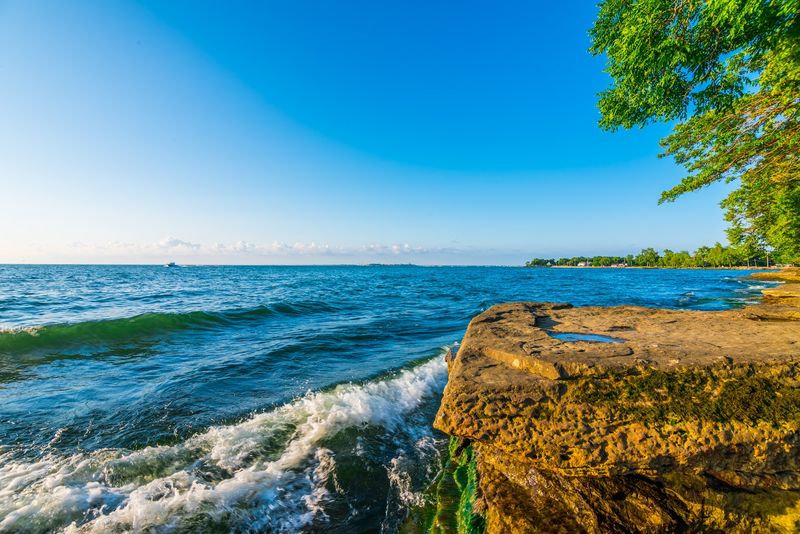
The shoreline at Marblehead Lighthouse is not sandy beach territory. What you get instead are large, flat limestone rocks that extend right to the water’s edge.
They are surprisingly easy to walk on and comfortable enough to sit on for long stretches, which is why so many visitors end up spending more time on the rocks than they planned.
The water clarity along this stretch of Lake Erie is noticeably clean. The lake has improved significantly in water quality over recent decades, and you can see that difference here.
Kids love climbing the rocks and watching the water move through the gaps.
Fishing is allowed from the shoreline, and the flat rocks make it easy to set up and cast. Even if fishing is not your thing, just sitting on those rocks and listening to the waves against the limestone is a genuinely calming experience that is hard to replicate anywhere else nearby.
Sunset and Moonrise Views That Draw Repeat Visitors
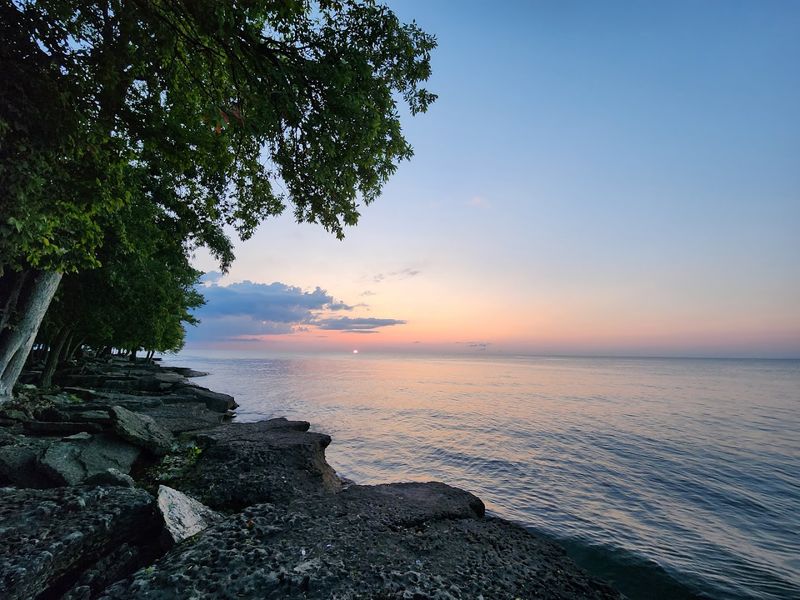
Some people visit Marblehead Lighthouse once and come back every year after that. A big part of what keeps drawing them back is the timing of the light.
Sunset from this spot sends color across the lake in a way that is genuinely hard to photograph well because the real thing is always better than the picture.
Moonrise over Lake Erie from this peninsula is another reason locals return. When a full moon rises over open water with no city lights in the way, the reflection across the lake is something you genuinely do not forget.
The lighthouse grounds stay accessible even after the tours close for the day.
Summer evenings can bring insects, so a light repellent is worth packing. Bring a blanket and something to sit on if you plan to stay for sunset.
The benches and picnic tables on the grounds fill up fast once people realize what is coming.
The Carriage House and Additional Historic Structures
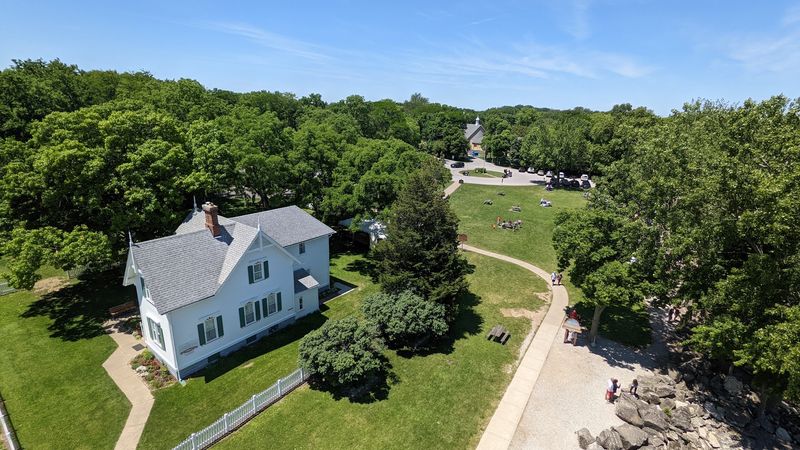
The grounds at Marblehead Lighthouse hold more history than most first-time visitors expect. In addition to the lighthouse tower, keeper’s quarters, and Coast Guard exhibit, there is also a carriage house that adds another layer to the story of how this property functioned over the decades.
These outbuildings were essential to daily operations at a lighthouse in the 1800s and early 1900s. Equipment was stored, maintained, and repaired on site, and the carriage house was a working part of that system.
Seeing it restored and preserved gives context to how much effort went into keeping the light operational year after year.
The Marblehead Lighthouse Historical Society has done careful work maintaining and restoring these structures. Walking the full grounds rather than heading straight to the tower gives you a much richer picture of what this place actually was and how it functioned across two centuries of continuous service.
Practical Tips for Planning Your Visit
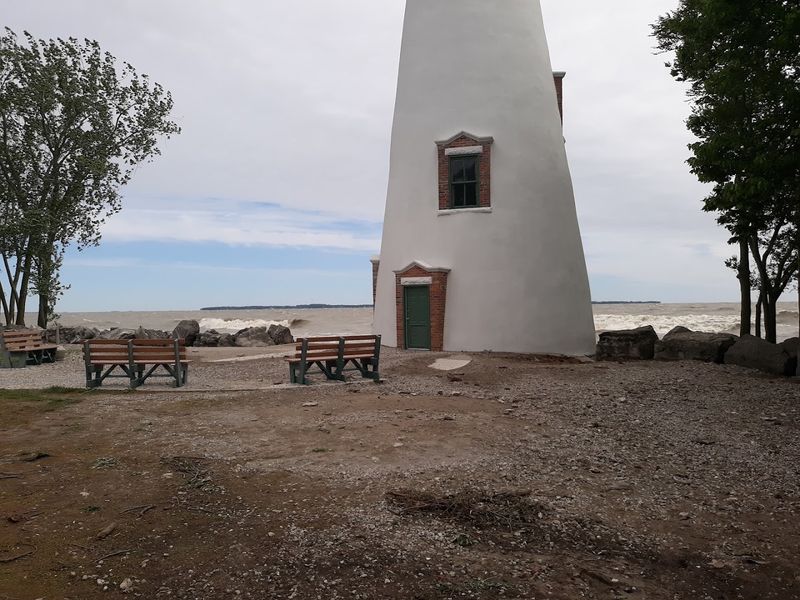
Tours run daily from noon to 4 PM, and the lighthouse is typically open from Memorial Day weekend through Labor Day. The park grounds and restrooms are accessible outside those hours as well, so an early arrival still gives you plenty to enjoy before the tours begin.
Parking is free but limited, and summer weekends fill the lot quickly. Arriving before noon gives you the best chance of finding a spot without circling.
The grounds are wheelchair accessible, dog friendly, and have clean, updated restroom facilities that visitors consistently appreciate.
Bringing a picnic is a genuinely good idea. The picnic tables on the grounds sit close enough to the water that you get the lake breeze while you eat.
There is no food vendor on site, so packing your own snacks and lunch means you can stay longer without needing to leave for a meal break.
How the Limestone Tower Was Built to Last
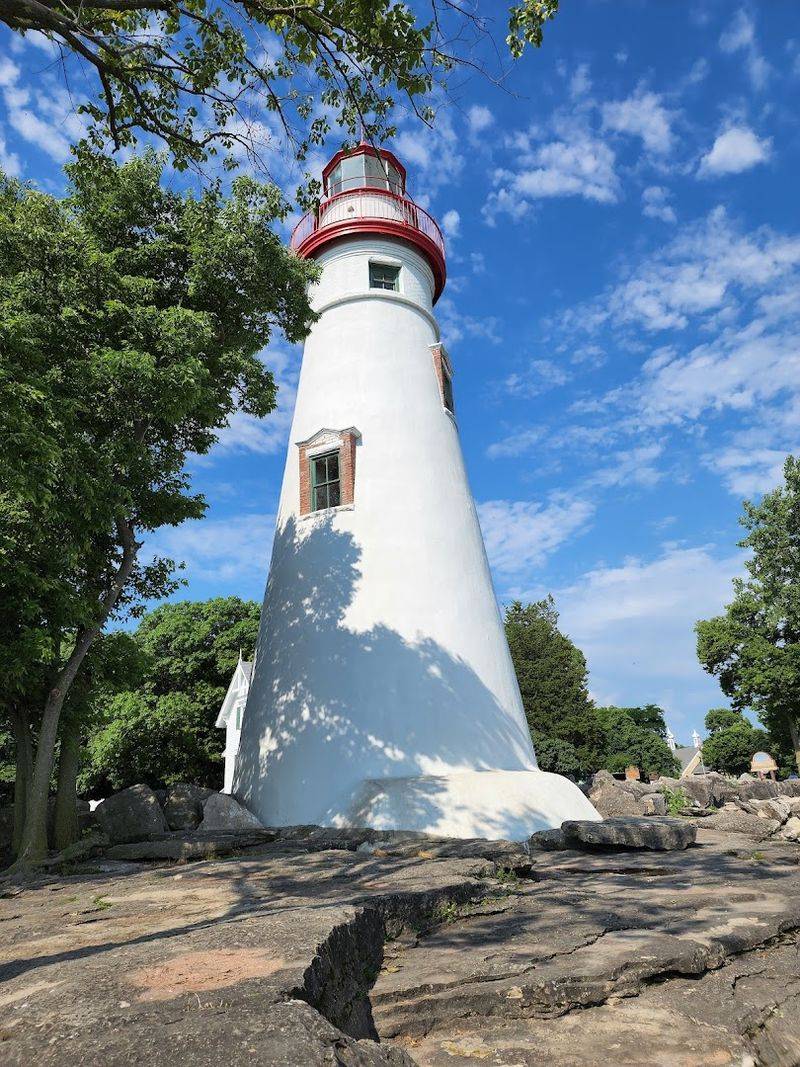
The Marblehead Lighthouse stands 65 feet tall and was constructed from local limestone, which is part of why it has survived more than 200 years of Great Lakes weather without major structural compromise. Limestone from the Marblehead Peninsula was a natural building material choice given how abundantly it was available in the region.
The tower walls are thick enough to provide insulation and structural strength through Ohio’s freeze-thaw cycles, which are brutal on stone buildings. The original construction was completed in 1821, and the light first went into service in 1822.
That combination of material quality and solid craftsmanship is why the tower is still standing and still functional today.
The limestone quarry exhibit in the museum connects this building history directly to the land it sits on. Seeing the raw material in exhibit form and then looking up at the tower makes the construction story feel immediate rather than abstract.
What Makes This Place Different from Other Ohio Lighthouses
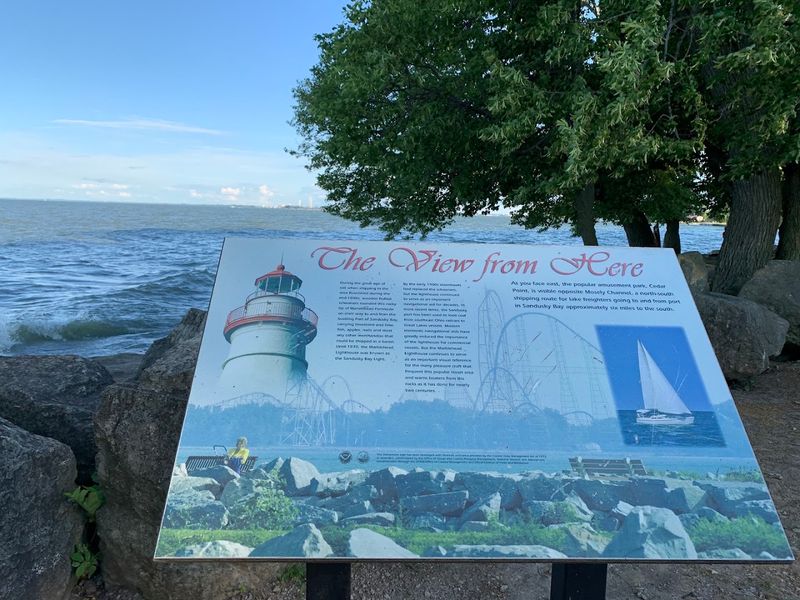
Ohio has several lighthouses along its Lake Erie shoreline, but Marblehead stands apart for a specific reason that goes beyond age. Its position at the tip of the Marblehead Peninsula means it is surrounded by water on three sides, giving it a geographic presence that other Ohio lighthouses simply do not have.
That position is also why it was so critical to navigation. Ships rounding the peninsula needed a reliable signal to avoid the rocky shoals that extend from the point.
The lighthouse was not decorative. It was essential infrastructure for one of the busiest commercial waterways in North America during the 1800s and early 1900s.
Other lighthouses in the region have been decommissioned, moved, or rebuilt. Marblehead has stayed exactly where it was placed and kept doing exactly what it was built to do.
That consistency across two centuries is genuinely rare and worth making a trip to see in person.
Why This Place Keeps Pulling People Back
There is something about Marblehead Lighthouse that gets under your skin in the best way. People who visit once tend to come back, sometimes making it an annual tradition.
Part of it is the views. Part of it is the history.
But a lot of it is the feeling of standing somewhere that has been quietly doing its job since before Ohio was even a well-settled state.
The grounds are peaceful in a way that is hard to manufacture. The sound of water against limestone, the open sky over the lake, and the sight of a tower that has been standing since 1822 create a combination that genuinely slows you down.
If you are planning a trip through northern Ohio or along the Lake Erie shoreline, this is the kind of stop that reshapes the whole day. Bring more time than you think you need.
You will almost certainly want it.
Share this story