Somewhere in southern Illinois, an old railroad line has been quietly transformed into one of the most surprisingly spectacular trails in the state. Most people drive right past without knowing it exists, which honestly makes discovering it feel like stumbling onto a well-kept local secret.
Once you step onto the path, you pass through forested hills, cross bridges over winding creeks, and eventually enter a real tunnel carved straight through a hillside. If you love a good adventure that rewards a bit of curiosity, this trail is absolutely worth the drive.
The Railroad Origins Behind the Trail
Long before hikers and cyclists claimed it, this corridor belonged to trains. The Tunnel Hill State Trail follows the former route of a railroad line that once served southern Illinois communities, carrying freight and passengers through terrain that would challenge any engineer.
Carved through dense hills and wetland-edged bottomlands, the railroad route required real ingenuity, including the construction of a hand-dug tunnel to push the line through solid rock.
When rail traffic eventually faded and the line went quiet, the Illinois Department of Natural Resources stepped in to reimagine the corridor as a recreational trail. The conversion preserved the original railroad bed, which is why the trail runs remarkably flat today.
That gentle grade, barely two percent in most stretches, is a direct inheritance from the engineering demands of steam-era railroading.
Knowing the history underfoot makes every mile feel a little more meaningful.
Where the Trail Lives: Vienna and Johnson County
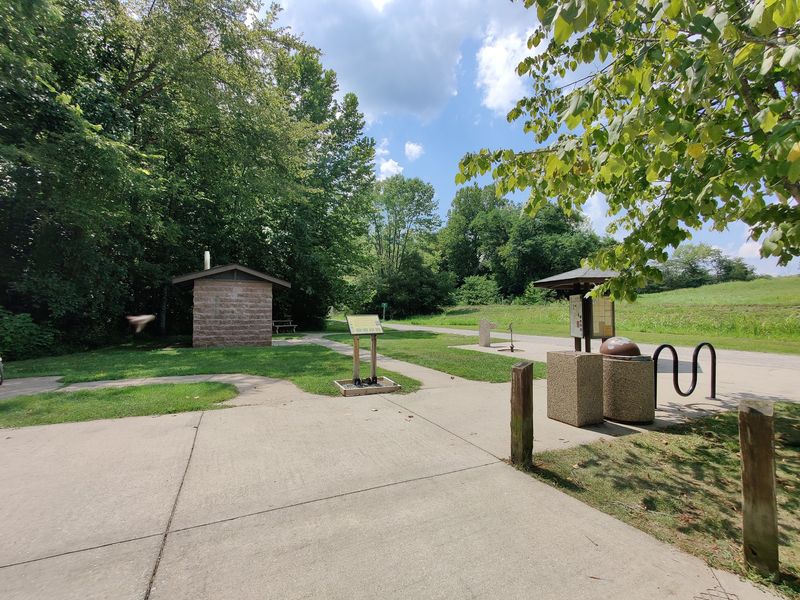
Anchored in Vienna, the Johnson County seat in southern Illinois, the Tunnel Hill State Trail stretches through a part of the state that many visitors overlook entirely. Vienna serves as the main trailhead hub, sitting along the trail’s midsection and offering parking, restrooms, fresh water, and easy access to nearby food options in town.
The surrounding landscape shifts dramatically as you move along the corridor. Open prairie gives way to rolling forested hills, which then open into broad wetland flats before climbing back into rugged terrain.
Southern Illinois has a wilder, more dramatic character than people expect, and this trail showcases that full range across its length.
Visitors traveling from the northern part of the state often express genuine surprise at how scenic and remote the region feels. The trail runs from Eldorado in the north all the way south toward Karnak, covering impressive ground through some of Illinois’s most underrated countryside.
Ninety Miles of Gravel Through Changing Ecosystems
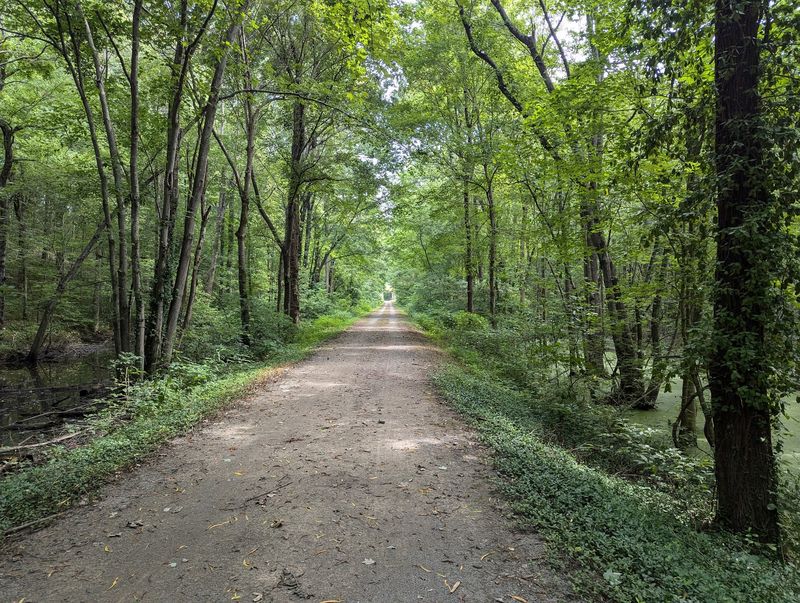
Stretching roughly ninety miles in total length, the Tunnel Hill State Trail ranks among the longer rail-to-trail conversions in the Midwest. The surface is fine gravel throughout, and most of it rides smoothly enough for road bikes, though a handful of patched sections introduce some bumpiness.
Cyclists and hikers alike report that the trail holds up well across most of its length.
What makes the distance feel rewarding rather than monotonous is the constant shift in scenery. Riders move through open prairie, then into rolling farm country, then into dense forested hills, and finally into expansive wetland areas near the southern end.
Each section carries its own mood and visual character, keeping the experience fresh mile after mile.
Trail maintenance has drawn consistent praise from visitors who appreciate that the Illinois Department of Natural Resources actively keeps the corridor in good shape throughout the seasons.
The Tunnel: Star of the Whole Experience
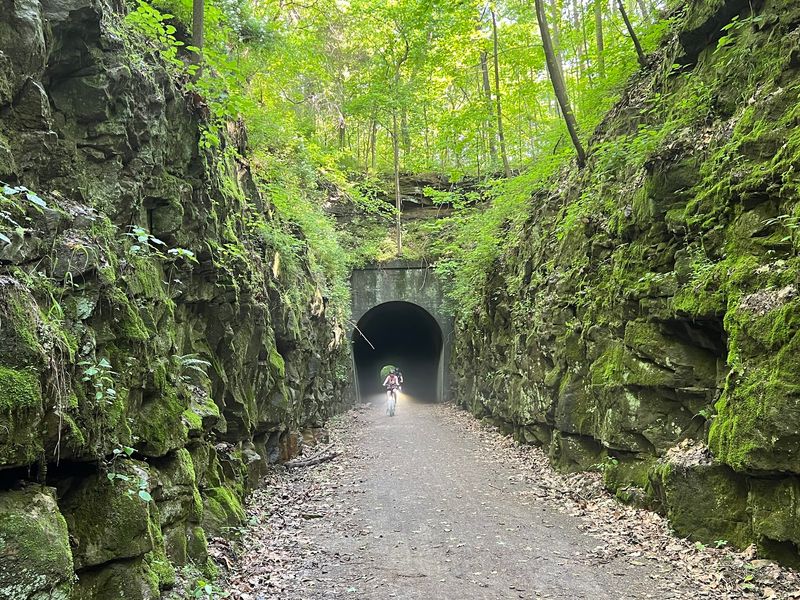
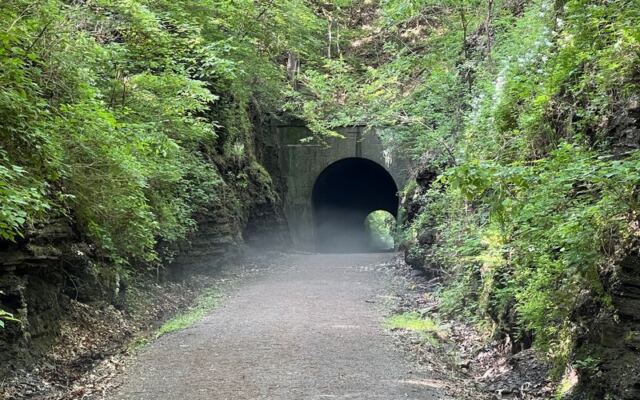
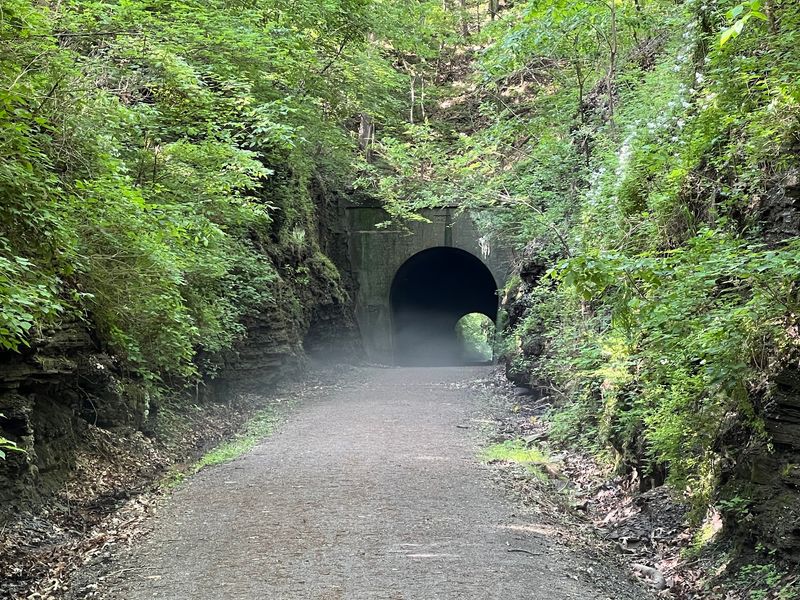
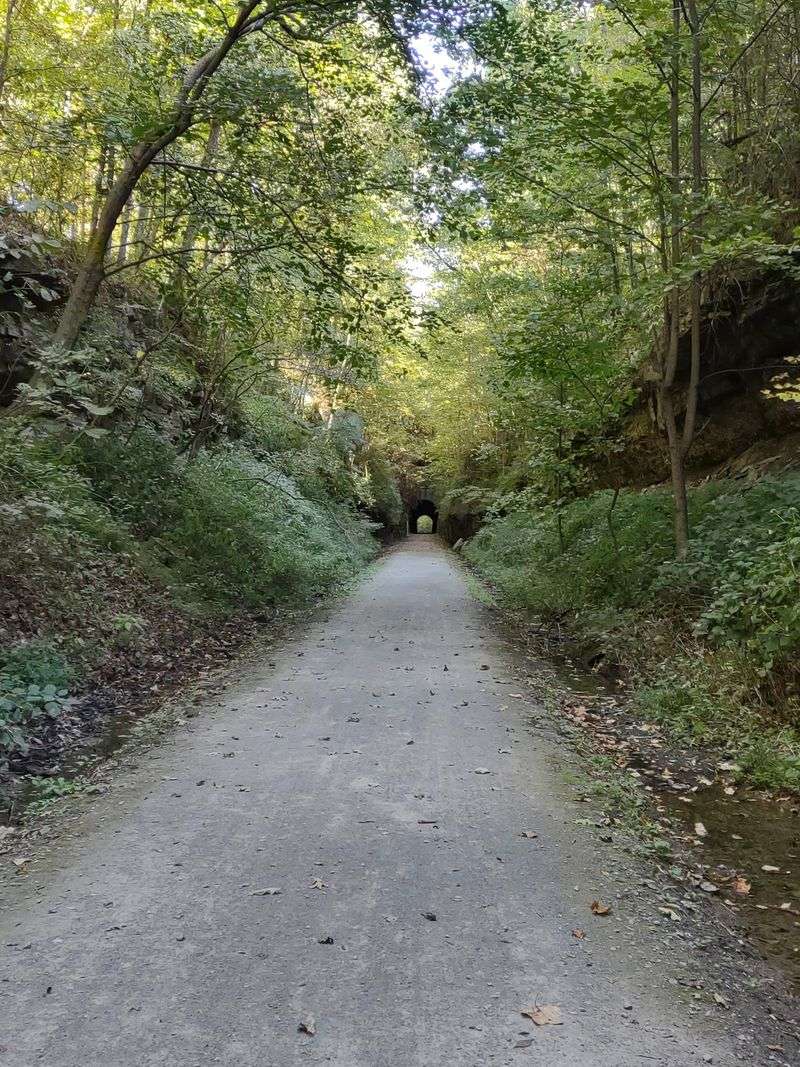
Ask anyone who has ridden or walked the Tunnel Hill Trail what they remember most, and the answer comes back the same every time: the tunnel. Hand-dug through solid rock during the railroad era, the tunnel cuts straight through a hillside and plunges riders into near-total darkness.
Stepping inside is an immediate sensory shift, the temperature drops noticeably, cool air wraps around you, and the outside world disappears.
Visitors consistently describe the tunnel entrance as genuinely beautiful, with stone framing and forest pressing in close on both sides. Inside, the darkness is real enough that people have actually ridden into the tunnel walls without a light source.
Bringing a headlamp or a good bike light is not optional, it is essential.
The tunnel sits roughly nine miles south of the Vienna trailhead, making it a satisfying destination for an out-and-back ride. The slight uphill grade heading south means the return trip flows easily back toward the parking area.
Trestle Bridges Over Creek Valleys
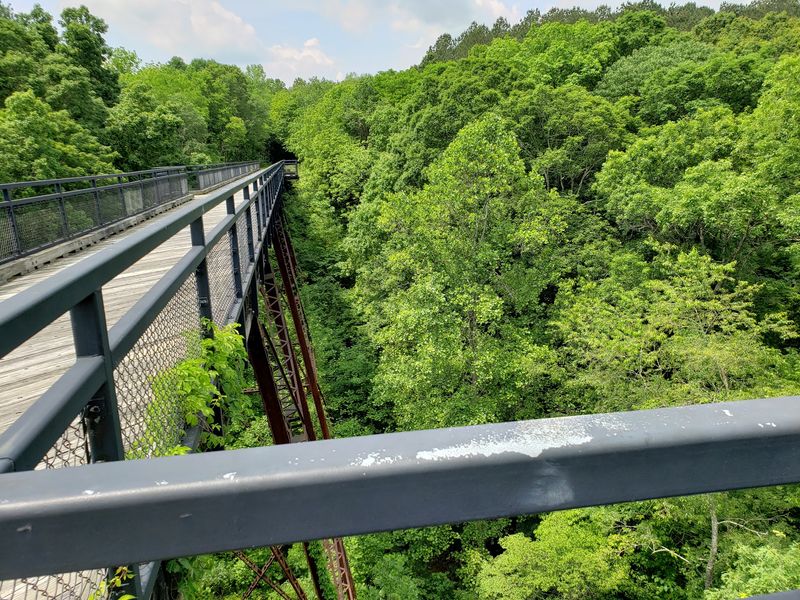
Scattered along the corridor, the trestle bridges rank among the trail’s most-discussed highlights alongside the tunnel itself. These elevated crossings carry the path over creek valleys and low-lying areas, offering open views down to the water and out across the surrounding woodland.
The bridges are a direct legacy of the railroad era, when engineers needed to maintain a consistent grade across uneven terrain.
Pausing on a trestle gives a perspective that walkers on ordinary trails rarely get, looking down at a slow-moving creek framed by overhanging trees while standing well above the forest floor. Visitors mention spotting deer, turkey, and various bird species from these elevated vantage points, making the bridges feel like natural wildlife-watching platforms.
The combination of trestle crossings and creek scenery adds a rhythm to the trail that keeps the journey engaging. Around each bend, there is a good chance another bridge or waterway view is waiting just ahead.
Wildlife Along the Corridor
Wildlife encounters on the Tunnel Hill Trail happen with a frequency that genuinely surprises first-time visitors. White-tailed deer and wild turkey appear regularly, sometimes standing directly on the trail rather than retreating into the brush.
Rabbits, multiple bird species, and the occasional snake round out what amounts to a fairly active natural corridor running through southern Illinois.
The trail’s consistent tree canopy creates sheltered habitat that attracts animals throughout the year. Because the path follows a relatively undisturbed linear corridor through varied ecosystems, it functions almost like a wildlife highway connecting forest patches, wetlands, and creek drainages.
Visitors who move quietly and stay observant tend to see the most.
Birdwatchers find the trail particularly rewarding, given the range of habitat types present along its length. The transition zones between forest and wetland are especially productive for spotting species that favor edge environments.
Keeping eyes and ears open adds a whole extra dimension to any outing here.
Shade, Comfort, and the Forest Canopy
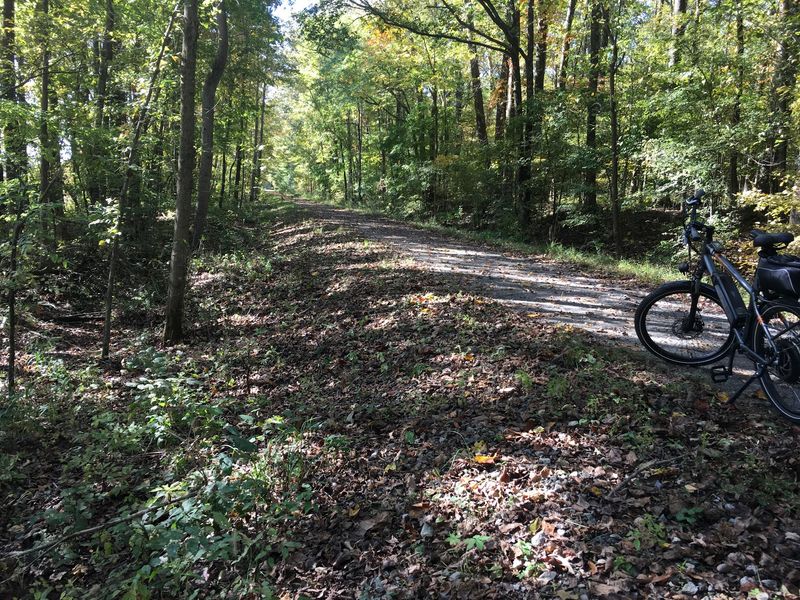
One of the trail’s most practical virtues is how thoroughly shaded it stays along most of its length. A dense tree canopy covers the corridor for the majority of the route, which makes summer outings far more comfortable than they might otherwise be on an exposed path.
Visitors consistently note that even on warm afternoons, the shaded sections feel cool and pleasant under the trees.
The canopy effect is especially pronounced on the stretch between Vienna and the tunnel, where the forest presses close on both sides and overhead branches form a near-continuous green ceiling. That nine-mile segment also carries the highest trail traffic, partly because of the tunnel destination and partly because the scenery is simply at its best in that stretch.
Fall transforms the canopy into a blaze of color, and several visitors specifically recommend mid-October as the single best time to experience the trail. The combination of autumn foliage and cooler temperatures makes that window genuinely special.
Wetlands at the Southern End
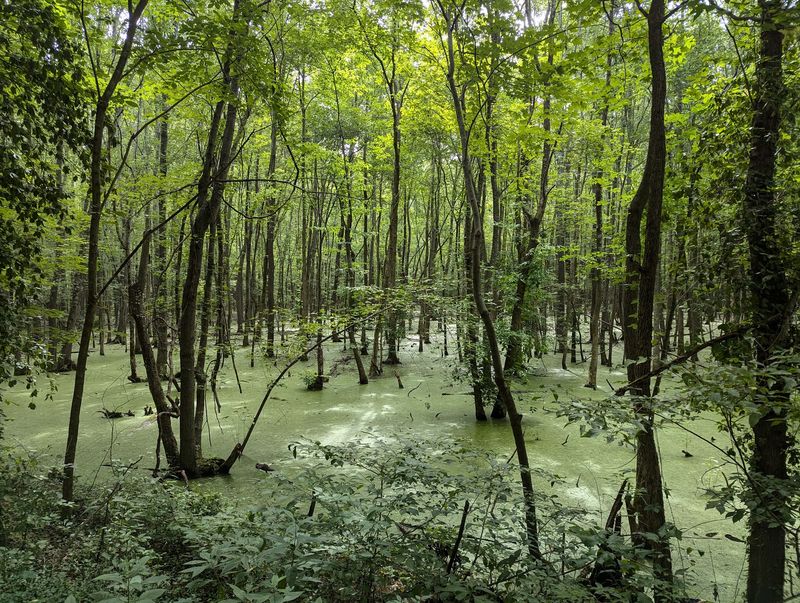
Push south past the tunnel and the landscape opens up into broad wetland country near Karnak, a striking contrast to the forested hill terrain closer to Vienna. The wetland sections feel almost otherworldly, flat and open and filled with the sounds of frogs and birds rather than the rustling of forest leaves.
A wetland nature center sits just a couple of miles beyond the Karnak terminus, adding an educational stop for those who want to learn more about the ecosystem.
The ecological diversity along the full trail length is genuinely impressive. Within a single day’s ride, a visitor can move through prairie, farmland, rugged hill forest, creek bottomlands, and open wetland.
Few trails in Illinois pack that range of habitat types into one continuous corridor.
Camping is available right on the trail near Karnak, making an overnight trip entirely possible for those who want to experience the full southern section without rushing back north by dark.
Flat Grade and Accessibility for All Skill Levels
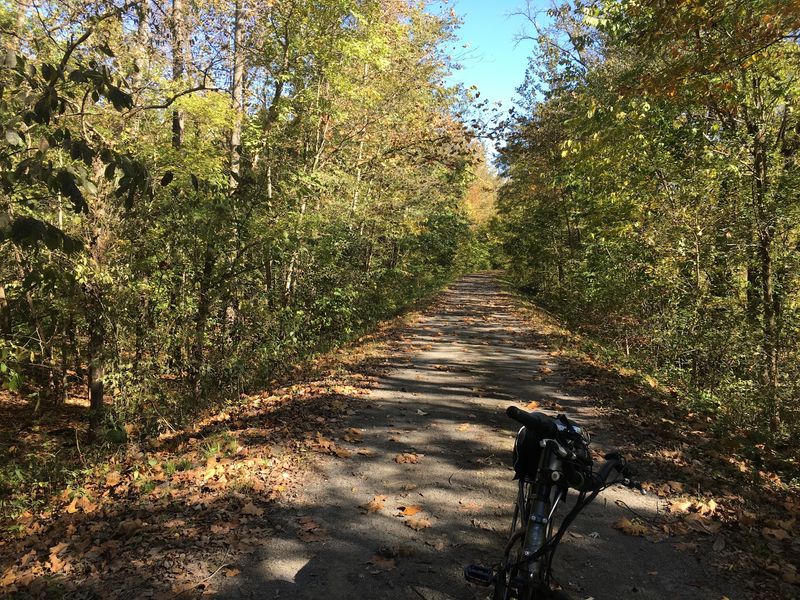
Railroad beds were engineered for heavy trains that could not handle steep grades, which means the trails built on top of them inherit that gentle slope. On the Tunnel Hill Trail, the grade stays around two percent or less for most of the route, making it genuinely accessible to beginners, families with children, casual walkers, and cyclists of all experience levels.
The southbound direction from Vienna to the tunnel involves a slight uphill, while the return north is an easy, relaxed coast.
Visitors frequently point out that the flat character makes longer distances feel achievable even for people who do not consider themselves serious athletes. A round trip from Vienna to the tunnel covers more than eighteen miles, yet many casual riders complete it comfortably in a single afternoon.
The trail welcomes walkers and hikers just as warmly as cyclists. Foot traffic and bike traffic coexist peacefully, and the wide corridor gives everyone plenty of room to move at their own pace.
Trail Amenities and Practical Stops
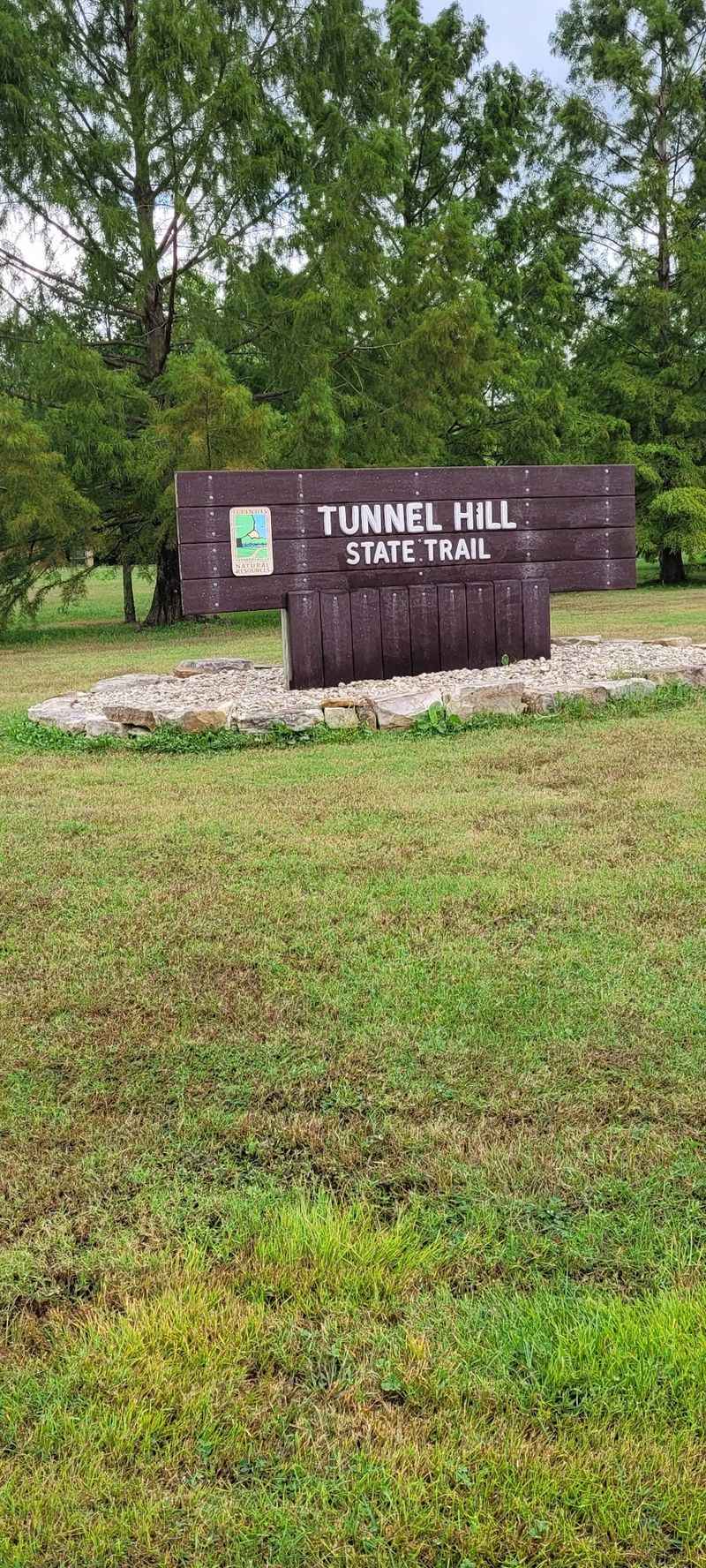
Practical infrastructure along the Tunnel Hill Trail is more developed than many visitors expect from a rural state trail. Water access points appear at multiple locations along the route, and vault toilets are available at regular intervals, reducing the logistical stress of a long-distance outing.
The Vienna trailhead offers parking and serves as a comfortable base for most visitors.
Along the way, the small community of Karnak provides additional amenities near the southern terminus. A campground right on the trail makes overnight trips possible without hauling gear far from the path.
The Sandburn Junction area is mentioned by trail regulars as a spot worth stopping at for ice cream during a long ride.
Vienna itself offers several food options within easy reach of the trailhead. A short trip downtown leads to local dining spots, and a newer bike path connects the trail to several restaurants in town.
The city also hosts a railroad museum that pairs naturally with a visit to the trail.
Who Will Love This Trail Most
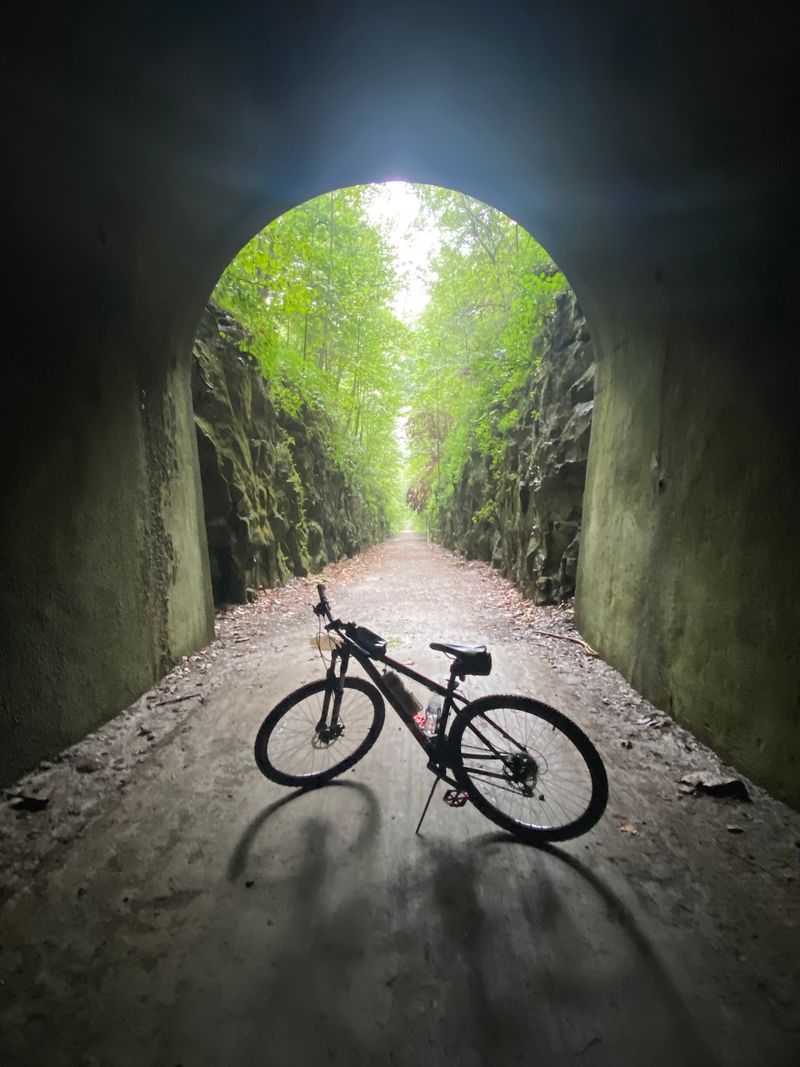
Beginner cyclists looking for a confidence-building route will find the Tunnel Hill Trail almost perfectly suited to their needs. The flat grade, smooth surface on most sections, and regular amenity stops create a forgiving environment for people still building their trail legs.
At the same time, experienced riders who want to cover serious mileage can push the full ninety-mile corridor without running out of terrain.
Nature lovers and wildlife watchers get a trail that delivers genuine ecological variety rather than a single repeated landscape. Hikers who prefer a quieter, car-free experience will appreciate how thoroughly the corridor stays separated from road traffic.
Families with older children who can handle a nine-mile round trip to the tunnel have a built-in adventure destination with a dramatic payoff at the midpoint.
History enthusiasts who appreciate the rail-to-trail story and the physical remnants of the railroad era, from the tunnel to the trestle bridges, find the trail layered with interesting context beyond the scenery alone.
Planning Your Visit: What to Know Before You Go
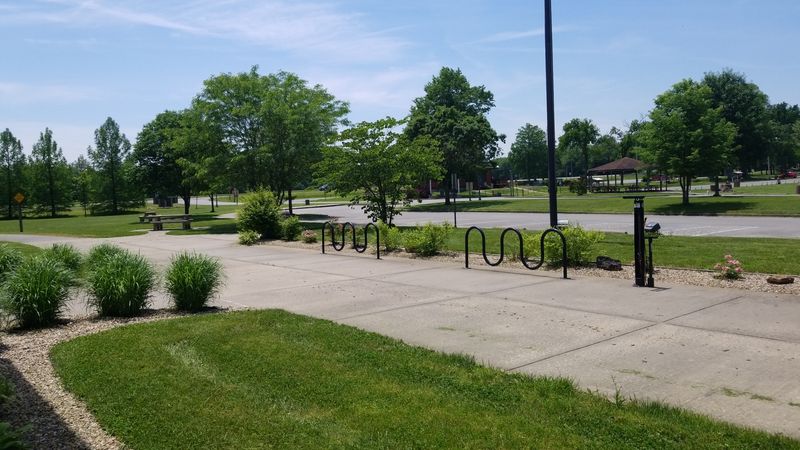
The Tunnel Hill State Trail is managed by the Illinois Department of Natural Resources, and the main trailhead in Vienna is located at 302 E Vine St, Vienna, IL 62995. The trail phone number is 618-658-2168, and additional information is available through the Illinois DNR website.
There is no entry fee to use the trail, keeping it accessible for everyone.
A headlamp or bike light is non-negotiable for the tunnel section. Plenty of water is equally important, especially in warmer months, even though water stops exist along the route.
Bug spray earns a strong recommendation from visitors who have experienced the trail without it, particularly in wooded and wetland sections.
The trail is open year-round, but fall mid-October in particular offers the best combination of color, temperature, and trail conditions. Summer visits are still comfortable thanks to the heavy shade canopy, making the trail a reasonable warm-weather destination for those who plan ahead and start early in the day.
Share this story