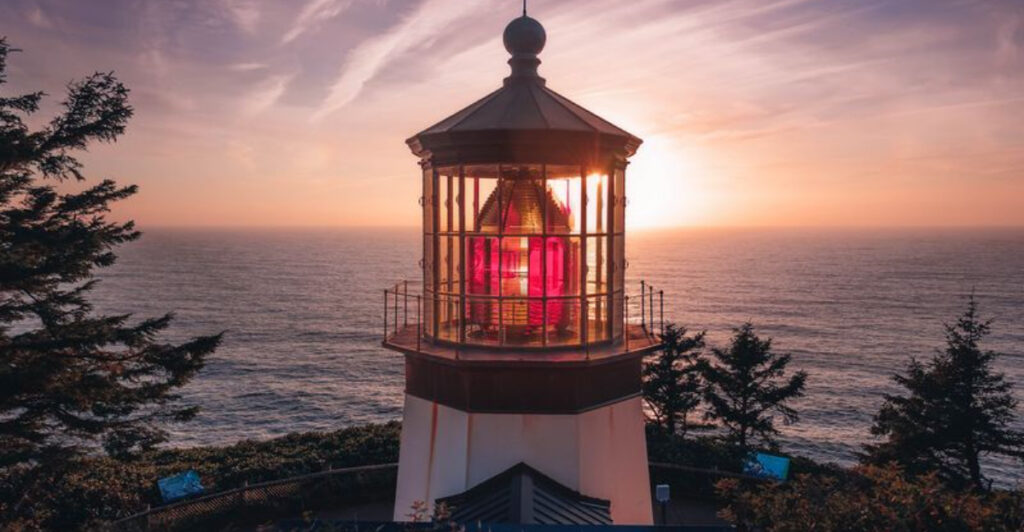
There is a lighthouse on the Oregon coast that has been doing its job since 1890, and it has never once asked for a day off. Perched on a dramatic cliff above the Pacific Ocean, this little beacon has guided countless ships safely past one of the most rugged stretches of coastline in the country.
The best part? You can actually go inside and climb it yourself.
From the ancient Octopus Tree nearby to the whale-watching cliffs and the forest trails that wind through towering Sitka spruce, this place packs a surprising amount of adventure into one compact stop along the coast.
Where to Find It: Address, Location, and Getting There
Cape Meares Lighthouse sits at 3500 Cape Meares Loop, Tillamook, OR 97141, tucked along the northern Oregon coast about 10 miles west of the town of Tillamook. The drive out to the cape follows a winding two-lane road through dense forest, and the scenery along the way is already worth the trip before you even arrive.
The lighthouse is part of Cape Meares State Scenic Viewpoint, managed by Oregon State Parks. Parking costs $10, so bring cash or a card to cover the fee at the lot before you head down the trails.
The site is open daily from 11 AM to 4 PM, which gives you a solid window to explore without feeling rushed. If you are coming from Portland, the drive takes roughly 90 minutes through Tillamook, making it a very doable day trip.
The road up to the park was recently repaved, so the approach is smooth and easy even in a standard passenger car.
The History Behind the Light: 150 Years of Guiding Ships
Built in 1890, Cape Meares Lighthouse is one of the oldest lighthouses still standing on the Oregon coast. The lighthouse was constructed to warn ships away from the rocky headland that juts into the Pacific, a stretch of water that earned a fearsome reputation among mariners in the early days of Pacific Coast shipping.
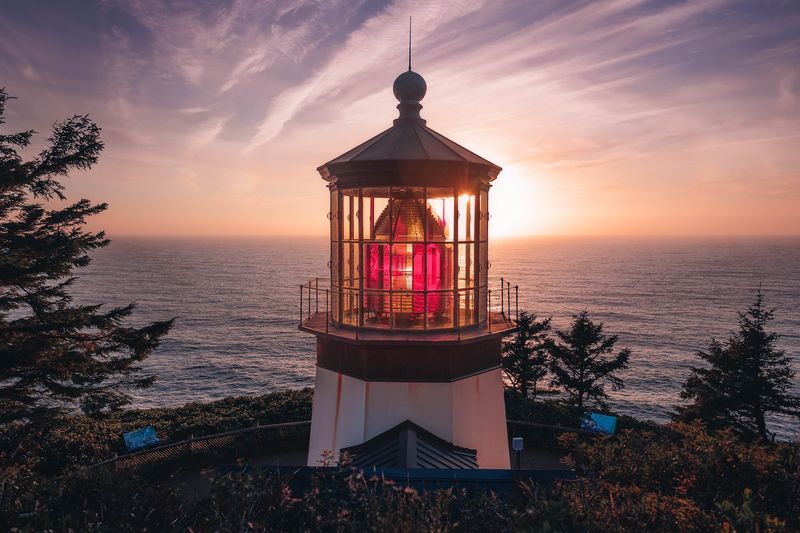
One of the most remarkable things about this lighthouse is its original first-order Fresnel lens, which is still housed inside and is considered one of the finest examples remaining in the United States. The lens was hand-crafted in France and shipped all the way to Oregon, where it was assembled piece by piece inside the tower.
The lighthouse was decommissioned in 1963 when an automated light took over its duties, but the historic structure was preserved and eventually opened to the public. The displays inside the tower walk you through its construction, its keepers, and the maritime history of the Oregon coast in a way that genuinely holds your attention.
Climbing the Tower: What the Experience Is Actually Like
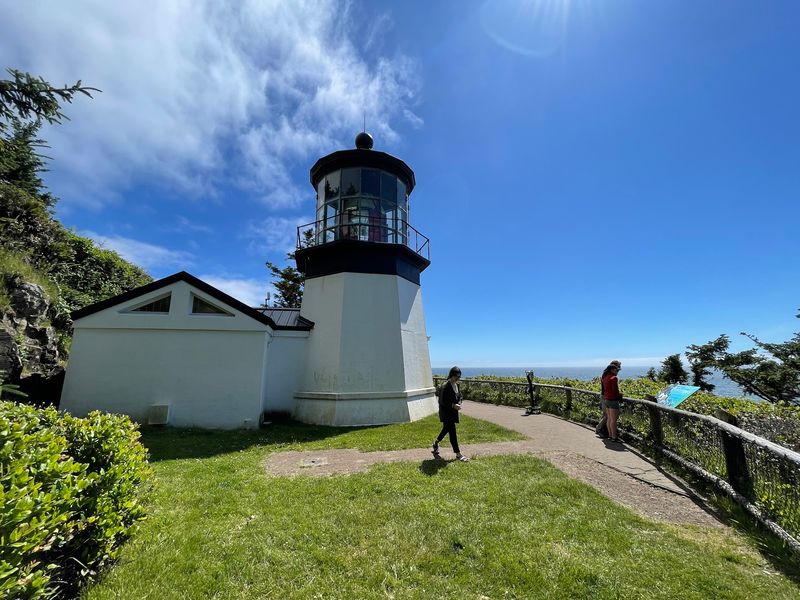
The lighthouse tower at Cape Meares is shorter than most people expect, which is actually by design. Because it sits on a cliff already elevated well above sea level, the structure only needed to be about 38 feet tall to put the light at the right height for passing ships.
Short tower, big impact.
Climbing it involves a small set of steps inside the lantern room, and volunteers are on hand during operating hours to answer questions and share stories about the lighthouse’s past. The guided experience inside the lantern room gives you a close look at the Fresnel lens, which is genuinely jaw-dropping up close with its intricate rings of hand-cut glass.
One practical note: the lighthouse tour runs on a rotation, so if you arrive during peak hours, you may need to wait a short time for your turn. Groups are kept small to protect the lens and the interior.
Children are welcome, but the space at the top is tight and requires everyone to stay calm and careful.
The Views from the Cliff: Ocean Panoramas That Stop You Cold
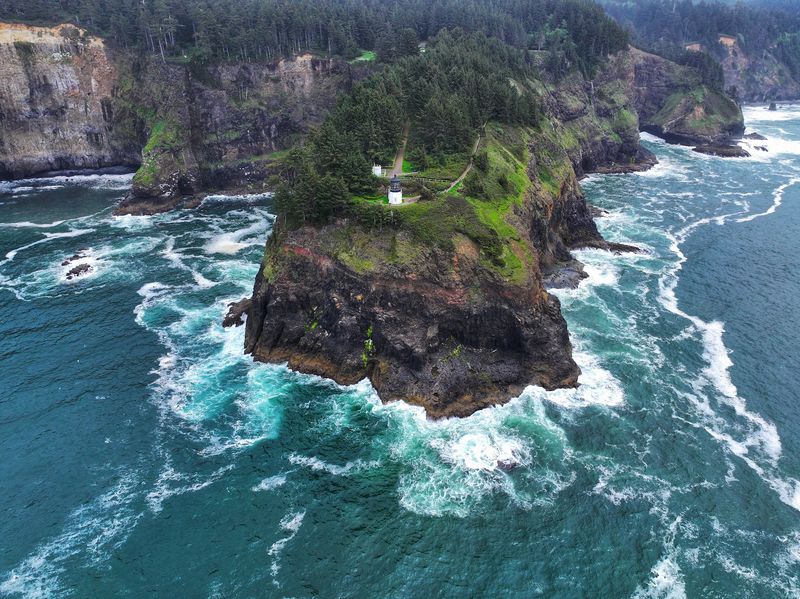
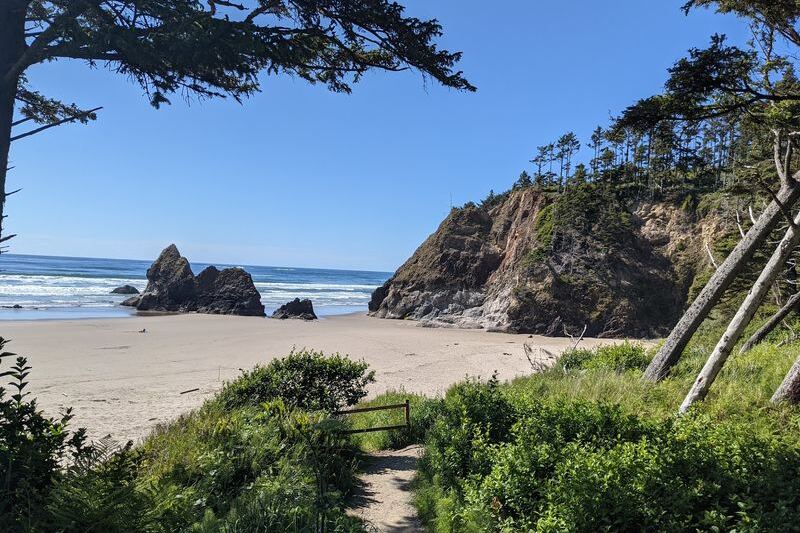
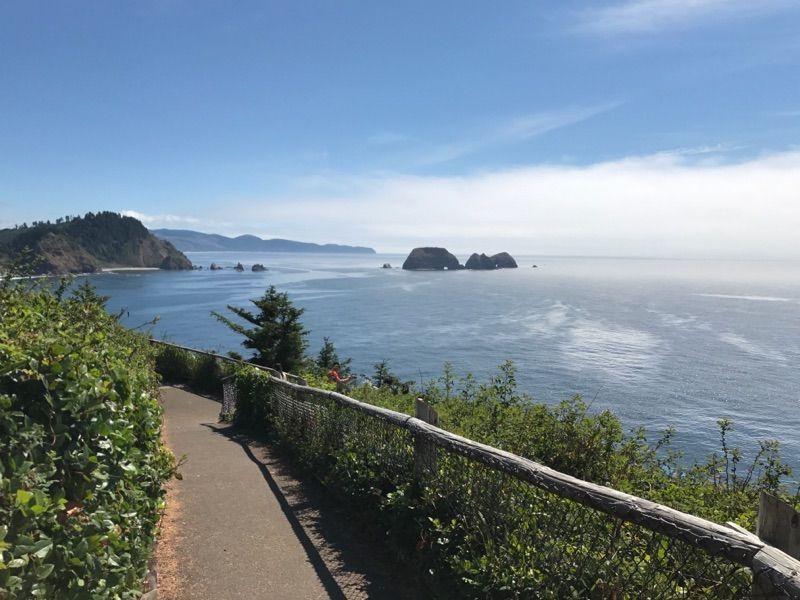
Even if you never set foot inside the lighthouse, the views from the Cape Meares headland alone justify the trip. The cliff drops sharply to the ocean below, and on a clear day you can see for miles in every direction, with sea stacks rising from the water and waves crashing against the rocks far beneath your feet.
The Three Arch Rocks National Wildlife Refuge sits just offshore and is visible from the viewpoint. This small chain of rocky islands is home to one of the largest seabird colonies on the West Coast, and on a quiet morning you can hear the noise of thousands of birds carried on the wind from the cliff edge.
Sunsets from this headland are extraordinary. The sun drops directly into the Pacific from this vantage point, and the way the light plays across the water and the sea stacks in the final hour before closing time makes for some of the most striking photography opportunities on the entire Oregon coast.
The Octopus Tree: A Living Wonder You Cannot Miss
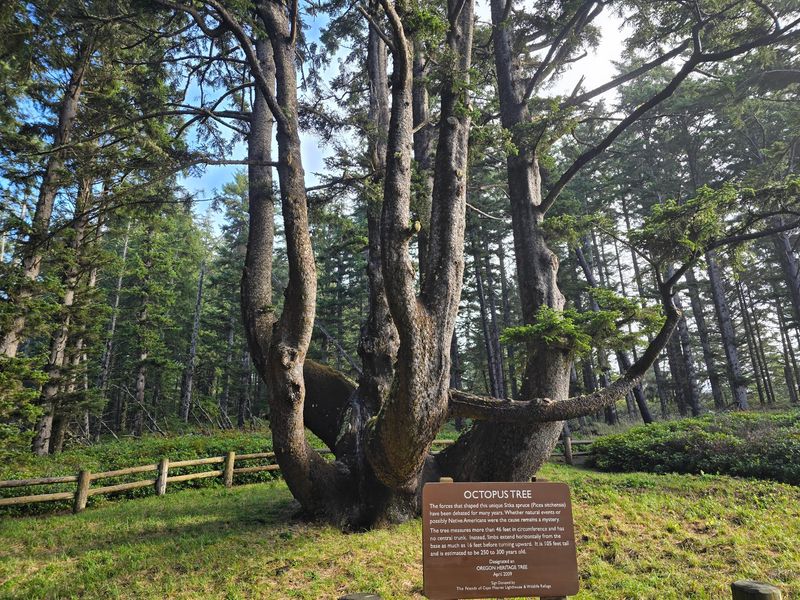
A short, flat walk from the lighthouse parking area leads to one of the most unusual trees on the entire Pacific Coast. The Octopus Tree is a massive Sitka spruce whose base splits into several enormous trunks that spread outward and upward like the arms of an octopus, giving the tree its perfectly descriptive name.
The tree is estimated to be several hundred years old, and its canopy spreads wide enough to shelter a small crowd beneath it. There is no fence or barrier around it, so you can walk right up to the base and look up through the branches, which is a genuinely humbling experience when you realize how long this tree has been growing here.
One theory holds that the tree was intentionally shaped by Indigenous peoples long ago, bent and trained as a young sapling into its distinctive candelabra form for ceremonial purposes. Whether or not that is true, the result is a tree that looks like nothing else in any forest I have ever walked through.
The Trails: Short Hikes With Serious Scenic Payoff
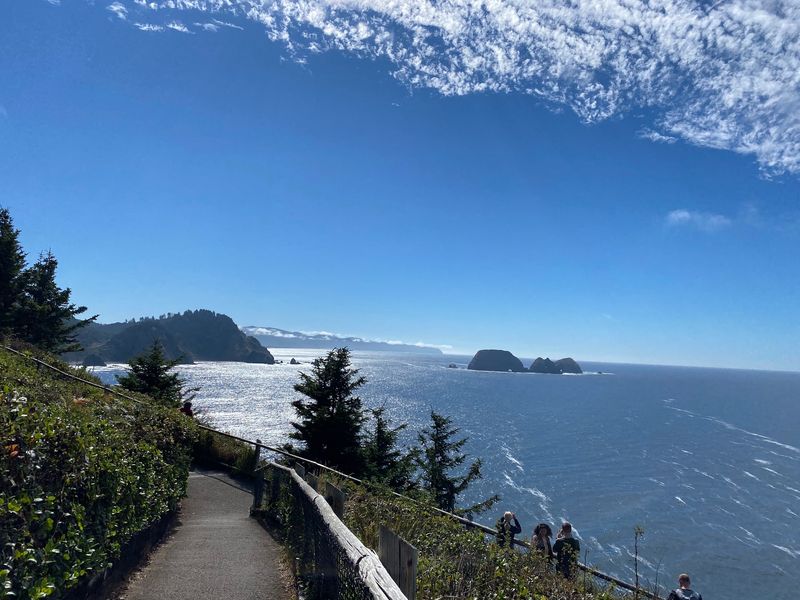
The trail system at Cape Meares is short but genuinely satisfying. The main path from the parking area down to the lighthouse is paved and wide, making it accessible for most visitors, though the downhill grade is noticeable and the return uphill walk requires a bit of effort.
Plan your energy accordingly.
There are two routes connecting the parking area to the lighthouse, and the smarter move is to take the more gradual path on the way down and save the steeper one for the return, or vice versa. The ocean-side trail offers the better views, with open sightlines to the water through gaps in the trees as you descend.
Informational signs are posted along the paths and cover local flora, fauna, geology, and history in a way that keeps the walk educational without feeling like a lecture. The whole loop, including time at the lighthouse and the Octopus Tree, takes most visitors between one and two hours at a relaxed pace.
Wildlife Watching: Birds, Whales, and More
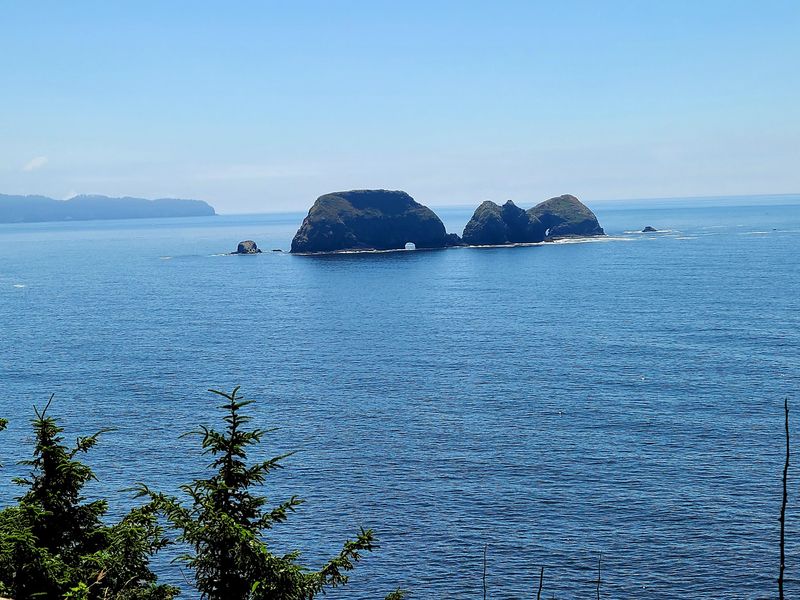
Cape Meares is one of the better spots on the Oregon coast for wildlife watching, and it does not require any special gear or early-morning dedication to get results. The cliff viewpoints offer clear sightlines to the water, and during whale migration season, gray whales pass close enough to the headland that you can spot their spouts and flukes from the trail.
The seabird activity is constant and entertaining. Tufted puffins, common murres, pigeon guillemots, and Brandt’s cormorants are all regular visitors to the Three Arch Rocks just offshore, and a decent pair of binoculars will let you watch their antics from the cliff edge.
On busy summer days, the birds are often the loudest thing in the park.
Black-tailed deer occasionally wander through the forest sections of the trail, and harbor seals haul out on the rocks below the cliff. The combination of elevation, open water views, and protected offshore habitat makes this one of those rare spots where wildlife encounters feel almost guaranteed rather than lucky.
Accessibility and Family Friendliness: What to Know Before You Go
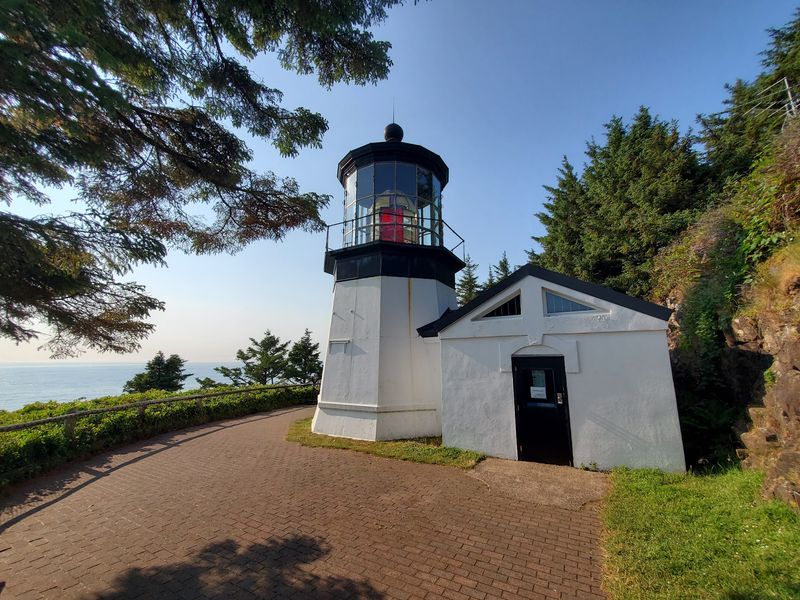
The paved main trail from the parking area down to the lighthouse is one of the more accessible paths at any Oregon coast viewpoint, which makes Cape Meares a reasonable choice for visitors with mobility considerations. The surface is smooth and wide, and the grade, while noticeable on the return trip, is manageable for most people.
The park is dog-friendly, and the wide paths make it comfortable for pets and their people to share the trail without crowding. Most of the dogs I spotted on my visit were very much enjoying the whole experience, which honestly added to the cheerful atmosphere.
Families with young children will find the short distances between the parking area, the Octopus Tree, and the lighthouse very manageable. There are picnic tables near the parking area, making it easy to turn the visit into a full afternoon outing.
One heads-up: the lighthouse interior is a small, contained space, so very young children who need room to move may find the guided tour portion a bit restricting.
Practical Tips: Parking, Hours, and Timing Your Visit
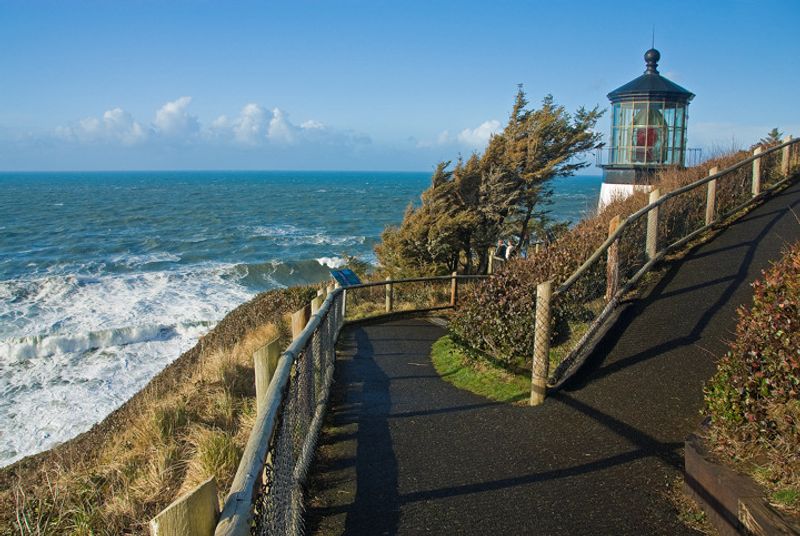
Parking at Cape Meares costs $10, and the lot is not enormous, so arriving earlier in the day during summer weekends is a smart move. The park opens at 11 AM and closes at 4 PM every day of the week, which is a shorter window than some visitors expect.
Factor that timing into your plans so you are not rushing the last stretch of trail.
The lighthouse itself operates on a seasonal schedule for tours, and it has been known to close during winter months, so checking the Oregon State Parks website at oregonstateparks.org before your trip is worth a few minutes of your time. The gift shop inside the lighthouse base is also seasonal and was closed during winter visits according to recent reports.
The weather on the Oregon coast can shift quickly, and Cape Meares sits directly exposed to Pacific winds. A light jacket or windbreaker is genuinely useful even on days that start out warm inland.
Overcast days are actually lovely here, giving the whole headland a moody, atmospheric quality that photographs beautifully.
Why This Lighthouse Deserves a Spot on Your Oregon Coast Itinerary
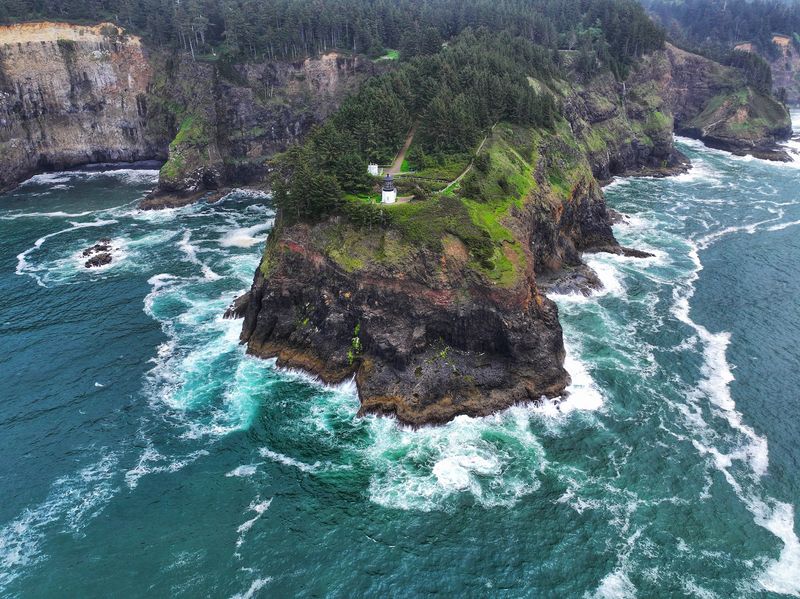
The Oregon coast has no shortage of beautiful stops, but Cape Meares earns its place near the top of the list by offering more than just a single attraction. In one short visit, you get a historic lighthouse with an original French-made Fresnel lens, a cliff viewpoint with some of the most dramatic ocean scenery on the coast, a centuries-old tree that looks like it belongs in a fairy tale, and trails that connect it all without requiring serious hiking fitness.
The 4.8-star rating from over 1,400 visitors is not an accident. The combination of accessibility, natural beauty, and genuine historical interest makes this a rare spot that appeals equally to history lovers, nature fans, photographers, and families looking for a rewarding afternoon without a complicated plan.
Cape Meares is close enough to Tillamook to pair easily with a stop at the Tillamook Creamery on the same day, and the scenic drive out through the forest is a pleasure in its own right. Once you have been here, you will understand why people keep coming back to this particular stretch of the Oregon coast.
Share this story