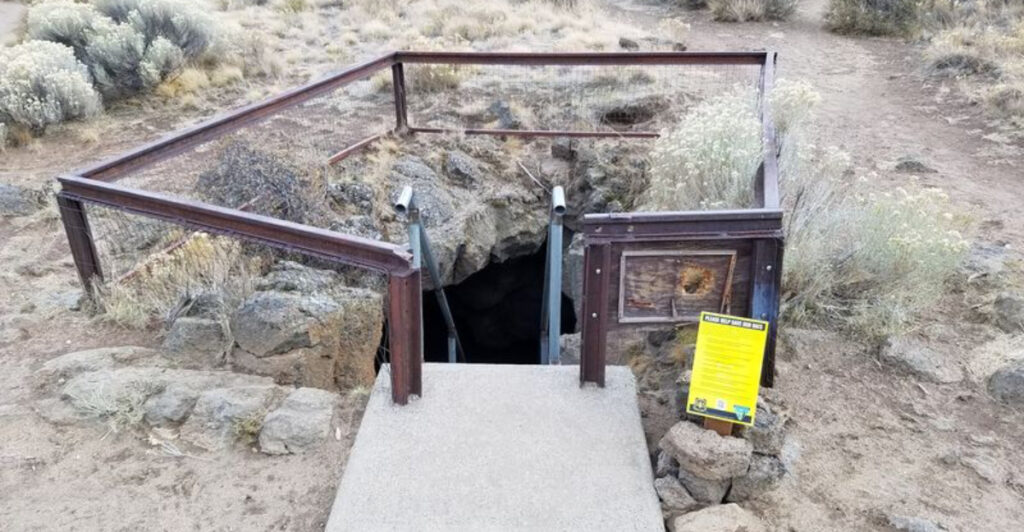
Somewhere outside of Bend, Oregon, a fenced opening in the earth drops you into a tunnel carved by ancient lava flows millions of years ago. The ground above it looks like ordinary high desert, all sagebrush and pine trees, with no hint of what waits beneath your feet.
Once you climb down the metal stairs and the cold air rushes up to meet you, the surface world disappears completely. This is one of Central Oregon’s most underrated adventures, free to visit, open all year, and just wild enough to make your heart beat a little faster.
Where Boyd Cave Actually Is
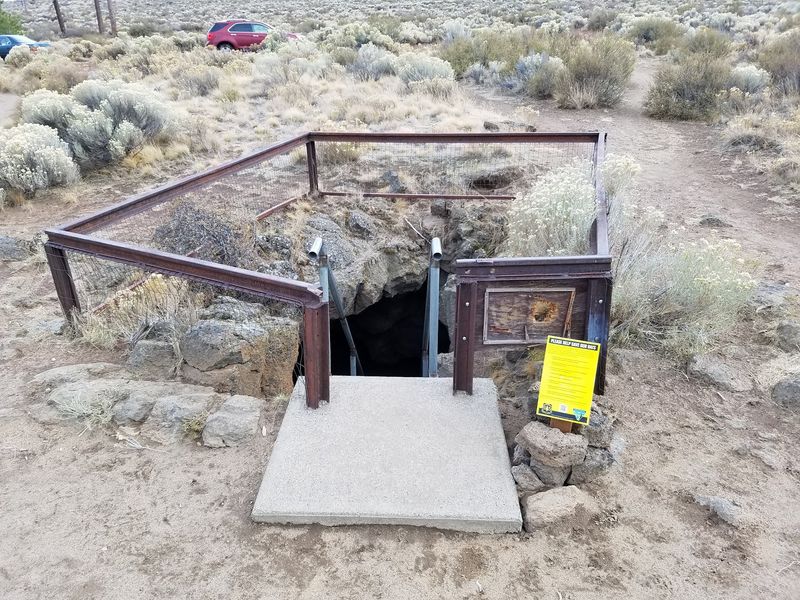
Boyd Cave sits off China Hat Road in Bend, Oregon 97702, tucked into the Deschutes National Forest at coordinates 43.9422, -121.1983. Getting there takes about 20 to 30 minutes from downtown Bend, and the last stretch of road turns to rough gravel and rock.
A two-wheel-drive vehicle can handle the road in dry conditions, but four-wheel drive gives you more flexibility if the weather has been wet. The parking area is small and easy to miss, since there are no dramatic signs announcing the cave.
From the parking lot, the cave entrance is only about 30 to 50 feet away, marked by a steel rim and a metal staircase. The whole setup looks almost casual from above, just a fenced-off hole in the ground surrounded by high desert scrub.
The site is managed as part of the Bend trail system, and more details are available at bendtrails.org. There are no facilities on site, so plan accordingly before you make the drive out.
The Lava Tube Origins
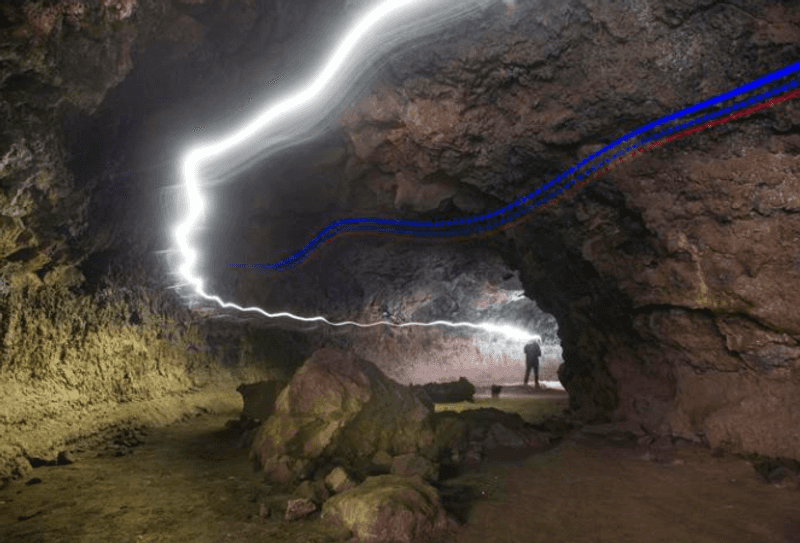
Boyd Cave is a lava tube, which means it was not carved by water or wind but by flowing molten rock. When a lava flow moves across the surface, the outer edges cool and harden while the hot lava inside keeps moving.
Eventually the inner lava drains out completely, leaving behind a hollow tunnel with walls made of solid basalt. The Central Oregon region sits on one of the most lava-rich landscapes in the continental United States, and the area around Bend is riddled with these underground passages.
The flows that created Boyd Cave are estimated to be several thousand years old, formed during a period of intense volcanic activity in the Cascade Range. The cave’s ceiling, walls, and floor all show the raw texture of cooled lava, giving the whole place a rough, unfinished look that no human hand could replicate.
Standing inside and knowing that rivers of molten rock once flowed right where you are standing adds a layer of awe to the whole experience that is genuinely hard to shake.
Descending Into the Dark
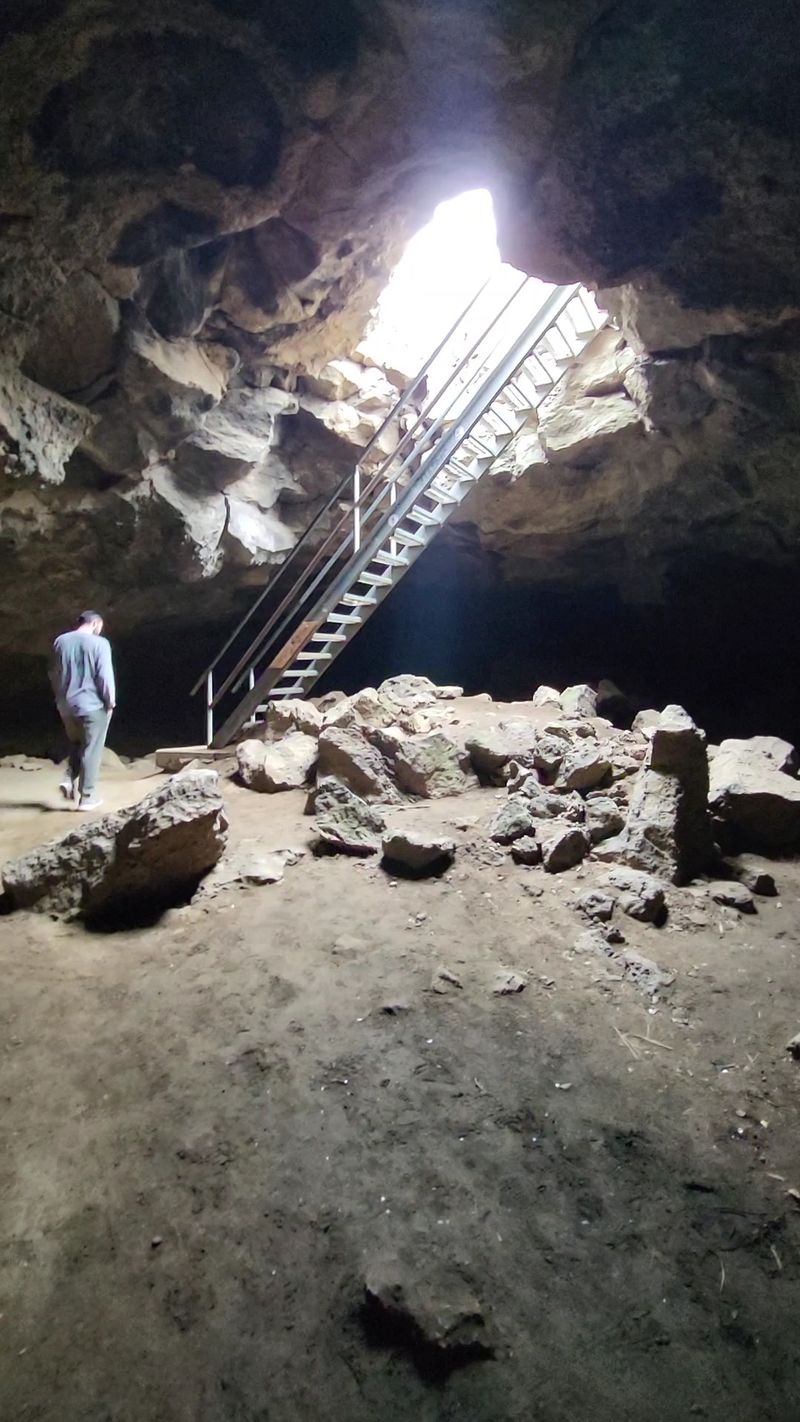
The metal staircase at the cave entrance is narrow, and the handrails are the only thing between you and a fairly abrupt introduction to the cave floor. As soon as you take the first step down, a wave of cold air rushes up from below, which feels like opening a freezer on a hot summer afternoon.
On days when Bend’s high desert heat pushes above 80 degrees, that cold air is genuinely refreshing. The temperature inside the cave stays consistently cool year-round, hovering in the low 40s Fahrenheit regardless of the season.
Once you reach the bottom of the stairs, the space opens up into the first large chamber, and the light from above fades surprisingly fast. The floor is a mix of sand, loose rock, and hardened lava, so your footing needs attention from the very first step.
The transition from bright Oregon sunshine to near-total darkness happens in just a few feet, and your eyes need a solid minute to start adjusting before you can make out the cave’s true scale around you.
Gear That Actually Matters Here
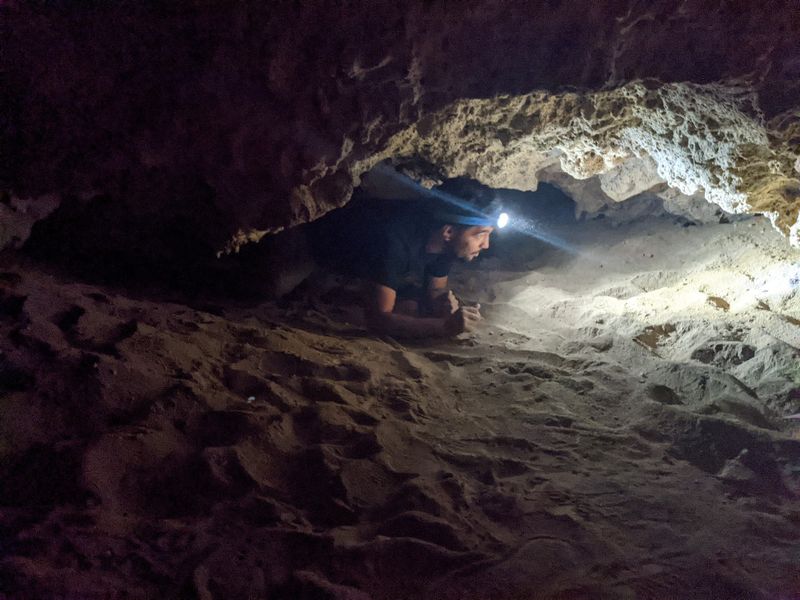
Every single person in your group needs their own light source, and a phone flashlight is not going to cut it for the deeper sections. A headlamp is the best option because it keeps both hands free for climbing and crawling, which you will absolutely need further in.
Sturdy boots with ankle support and thick soles make a real difference on the uneven lava floor. The rocks can be sharp in places, and anyone who has tried navigating the cave in thin-soled sneakers will tell you it is not a fun experience.
Warm layers are non-negotiable. A hoodie works for a short visit, but a proper jacket is smarter for anyone planning to explore deep into the tube.
Gloves are worth bringing too, since you will be touching cold, rough rock surfaces throughout.
A helmet is a smart addition, especially in the tighter crawl sections where the ceiling drops unexpectedly. Bringing spare batteries for your headlamp rounds out the kit and makes sure a dead battery does not cut your adventure short before you are ready to head back up.
The Crawl Section Everyone Talks About
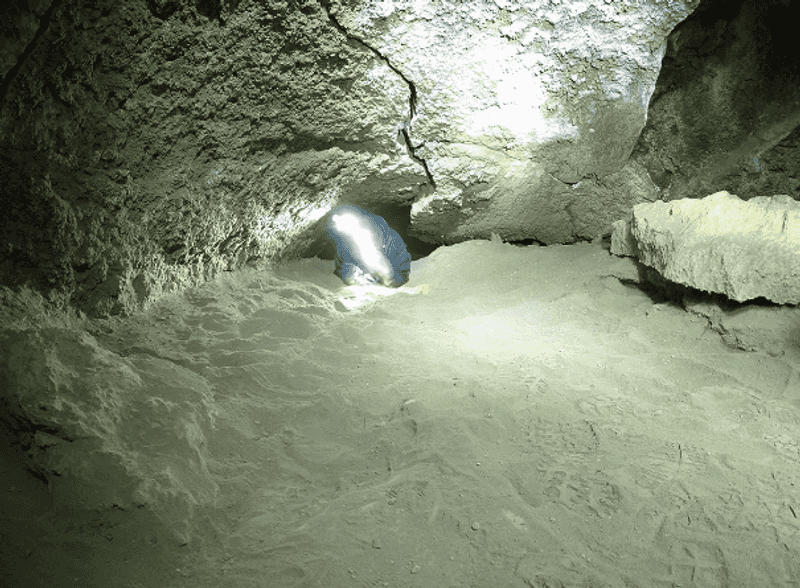
About halfway through Boyd Cave, the ceiling drops low enough that crouching is no longer enough. You get down on your hands and knees and army crawl through a tight passage, and that is the moment when the cave earns its reputation.
The floor in this section is mostly sandy, which makes the crawl less painful than it sounds. The sand was deposited over centuries as fine particles filtered down through cracks in the lava above, and it actually cushions your knees and palms reasonably well.
What catches most people off guard is not the physical effort but the mental side of it. The ceiling is right there above your head, the walls are close on both sides, and the darkness in front of you is absolute.
Anyone with even mild claustrophobia should take a beat before committing to this section.
The payoff is real, though. The tunnel opens back up into a large chamber on the other side, and the relief of standing upright again after crawling through that tight passage feels like a small personal victory worth celebrating.
How Far Back the Cave Goes
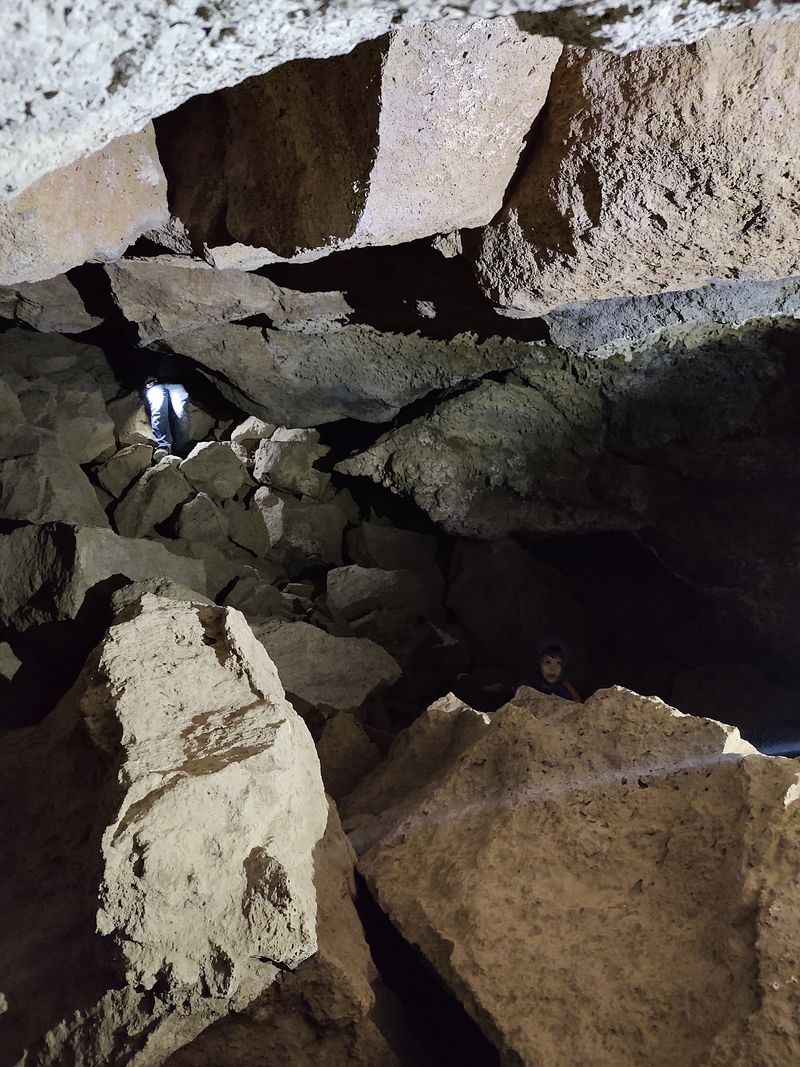
Boyd Cave does not have a clearly marked end point, which is part of what makes it so compelling. The main tube stretches roughly a quarter mile, though the cave keeps going beyond what most casual visitors explore.
The deeper you go, the more the terrain changes. Wide, walkable sections give way to areas where you have to crouch, and then the ceiling rises again into open chambers that feel almost cathedral-like given the surroundings.
The variety keeps the experience from feeling repetitive.
Some visitors have pushed back what feels like a mile or more before turning around, though the disorienting darkness makes distance hard to judge accurately. The further you go, the more the surface world fades from your thinking entirely, and the cave becomes the only reality that exists.
Turning around is always the right call when your light starts to dim or your group feels uncertain about the route back. The cave does not loop, so retracing your steps is straightforward, but doing it in failing light adds unnecessary stress to what should be a fun outing.
Wildlife You Might Encounter Underground
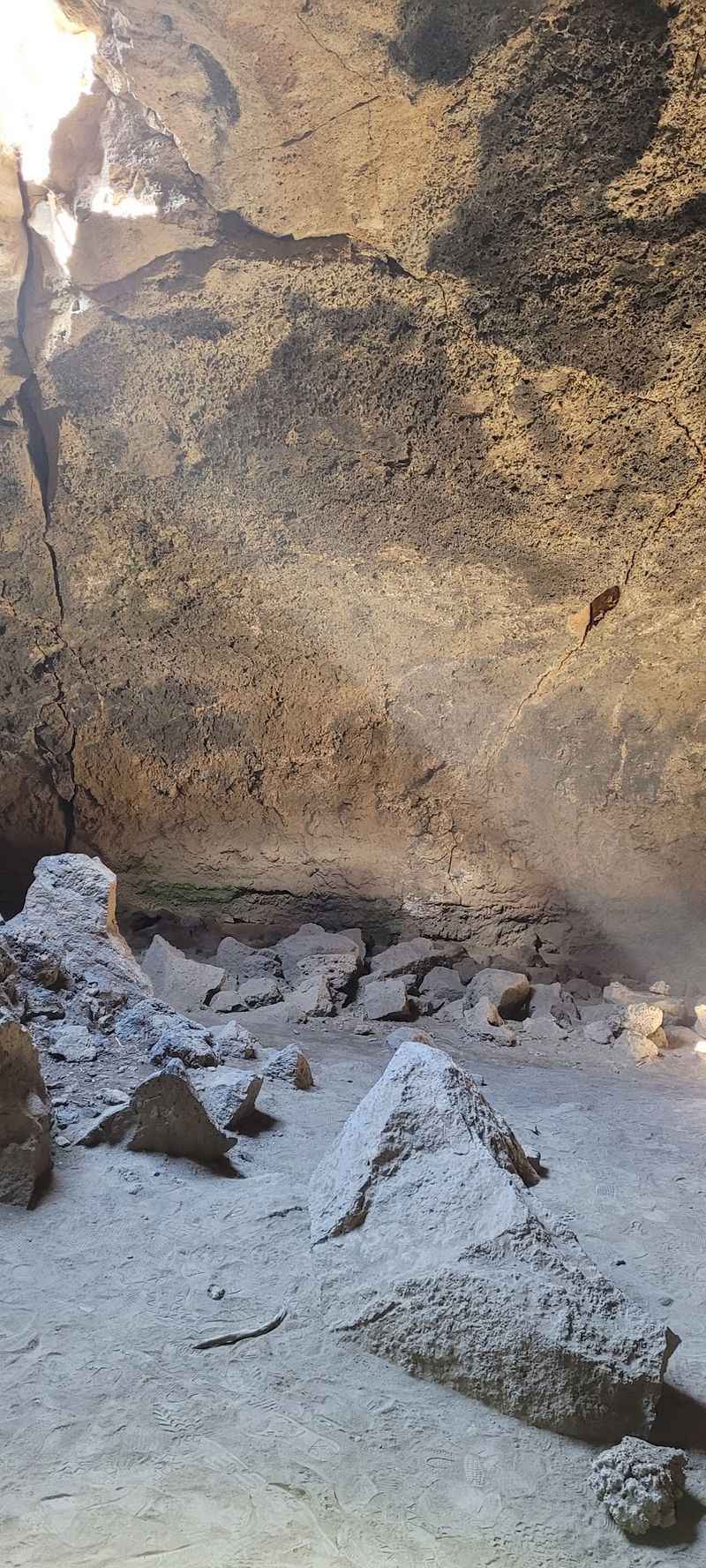
Bats are the most notable residents of Boyd Cave, though spotting one is not guaranteed. They tend to roost in the deeper, quieter sections of the tube, and most visitors only catch a glimpse if they happen to disturb a resting individual near the ceiling.
The cave is an important habitat for bat species that rely on cool, stable underground environments for roosting and hibernation. Because of this, it is worth being mindful about noise and movement, especially during winter months when bats are more vulnerable to disturbance.
One practical note: if you plan to visit multiple caves in the region, change your footwear between sites. This helps prevent the spread of white-nose syndrome, a fungal disease that has affected bat populations across North America and can be carried on clothing and gear between cave systems.
Beyond bats, the cave itself is largely free of the insects and small animals you might expect. The cold, dry environment limits what can survive down there, which is part of why the cave feels so pristine and otherworldly compared to above-ground habitats in the area.
Visiting as a Family With Kids
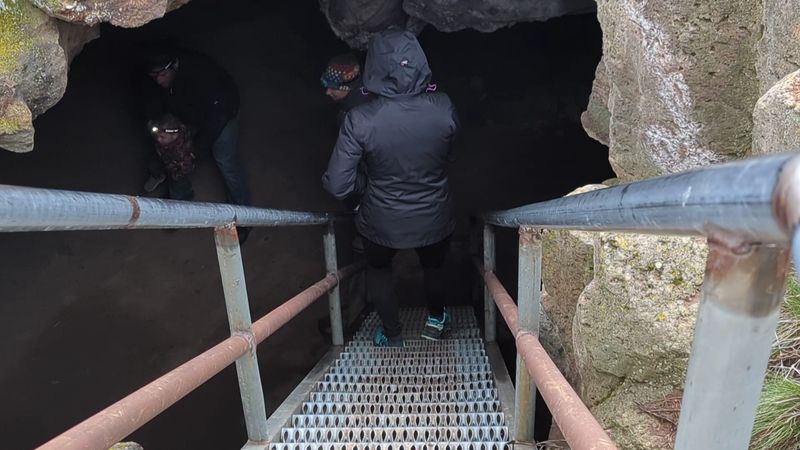
Boyd Cave works surprisingly well as a family outing, with a few caveats worth knowing before you load up the car. The entrance chamber and the first stretch of the cave are accessible to most kids who are comfortable in the dark and do not mind uneven ground.
Younger children who have not spent time underground before may find the darkness and the cold more startling than they expected. Bringing a backup light for each child, not just each adult, is a genuinely good call that prevents a lot of stress if someone drops or loses their primary flashlight.
The cave is pet-friendly, so dogs can join the adventure, though the crawl section tends to be a dealbreaker for larger breeds. One visitor’s dog made it through the easy sections just fine before deciding the tight passage was not worth the trouble.
The short distance from the parking lot to the cave entrance is a genuine plus for families with smaller kids. There is no long hike required before the adventure even starts, which means energy is saved for the cave itself rather than the approach trail.
The Cost and Crowd Situation
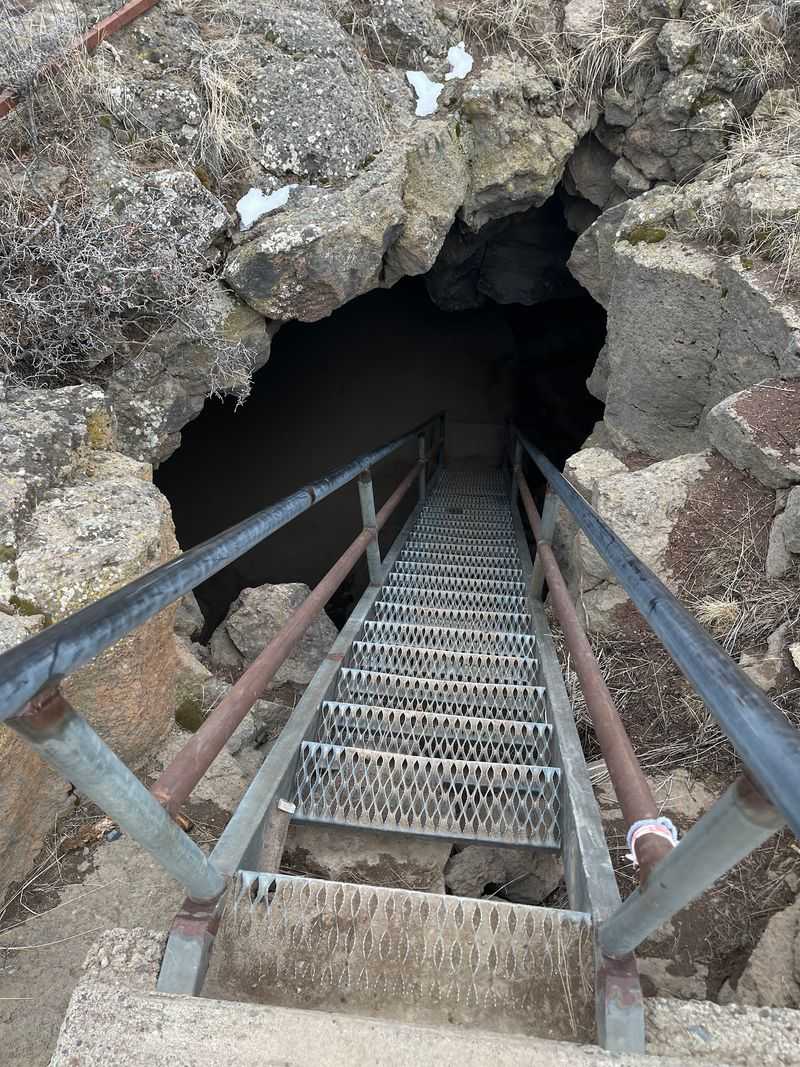
Boyd Cave is completely free to visit, which puts it in a category that feels increasingly rare for quality outdoor experiences in the Pacific Northwest. There are no reservation systems, no entry fees, and no timed entry windows to navigate.
The crowd situation is refreshingly low-key compared to nearby Lava River Cave, which requires paid reservations and draws significantly more foot traffic. Most visitors report finding only one or two other groups at Boyd Cave, even on summer weekends.
That low-crowd dynamic changes the whole feel of the experience. You can move at your own pace, pause to take photos without a line behind you, and actually take in the quiet of the cave without the background noise of a large tour group echoing through the tunnel.
The trade-off is that the site has no staff, no guided tours, and no safety infrastructure beyond the entrance staircase. You are responsible for your own preparation and your own decision-making once you are underground, which is honestly part of the appeal for anyone who prefers their adventures a little unfiltered and self-directed.
Best Times of Year to Go
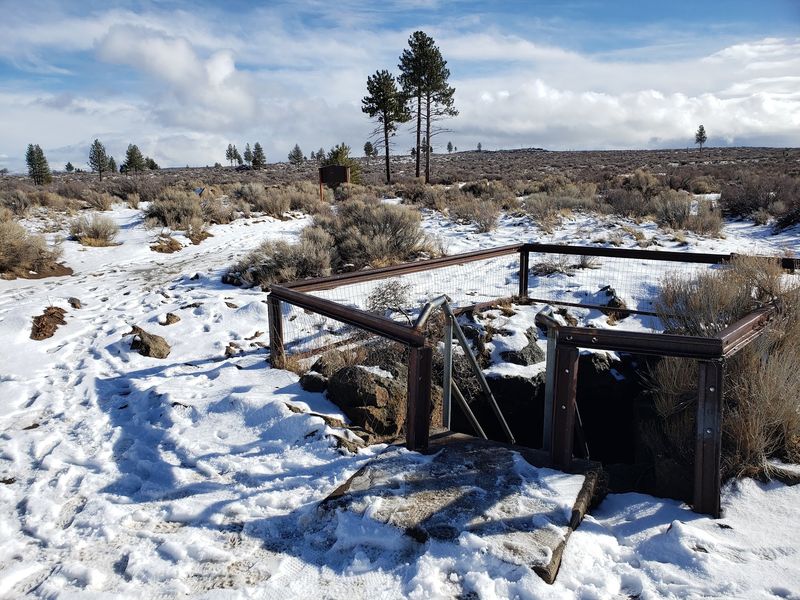
Summer is the most popular season for Boyd Cave, and for good reason. The contrast between the 80-plus-degree heat of Central Oregon’s high desert and the cool 40-degree air inside the cave makes the whole experience feel like a natural reward for making the drive out.
That said, the cave is open year-round, and visiting in the off-season has its own appeal. Crowds drop even further in fall and spring, and the cooler surface temperatures mean the temperature shift underground is less dramatic, which some people actually prefer.
Winter visits are possible but require more preparation. The access road can become difficult or impassable after snow or rain, and the cave itself gets genuinely cold when the ambient temperature outside is already low.
Layering aggressively and checking road conditions before heading out is essential for a winter trip.
The cave’s consistent internal temperature means the experience itself does not change much with the seasons. What changes is everything around it: the quality of the light, the crowds, and the condition of the dirt road that gets you there in the first place.
Photography Tips Inside the Cave
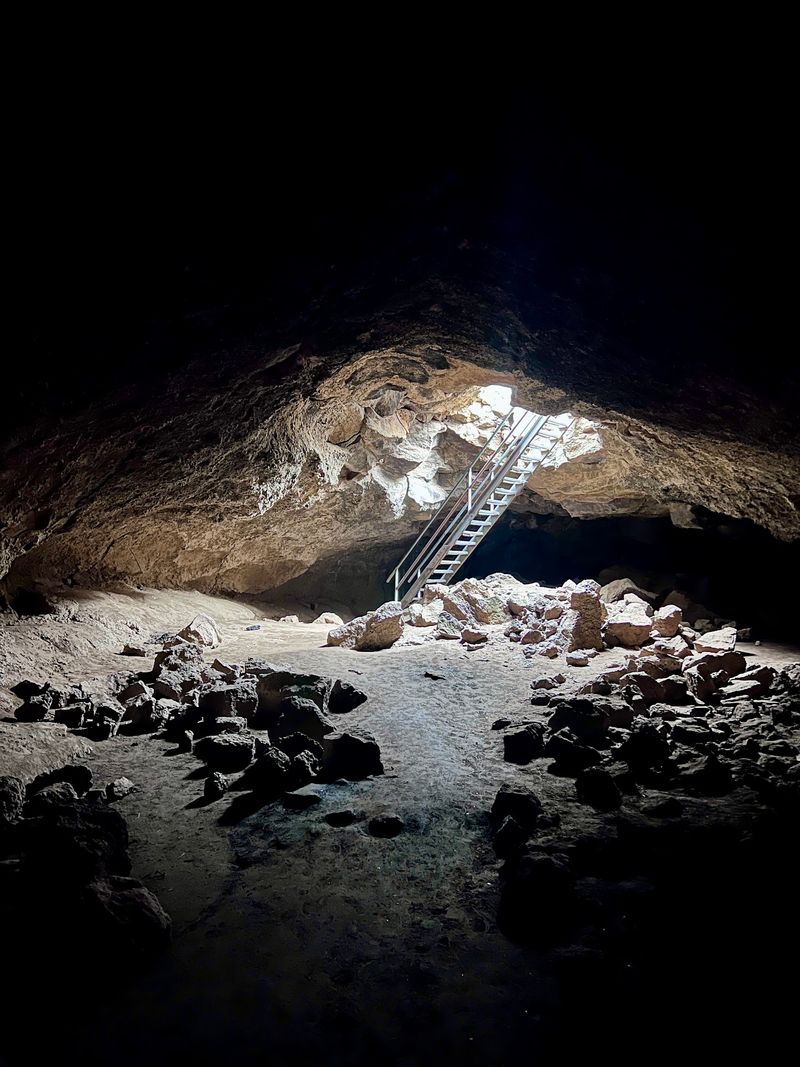
Getting good photos inside Boyd Cave is a genuine challenge, but the results can be spectacular with the right approach. The key trick is using one phone’s flashlight as a background light source while a second person takes the actual photo, which floods the frame with warm light and reveals the texture of the lava walls.
Long exposure settings on a camera or a night mode on a modern smartphone work better than a standard flash, which tends to bleach out the foreground and leave the background completely black. The cave’s natural darkness is actually an asset for dramatic lighting setups.
Composition is easier than you might expect because the lava walls have so much natural texture and shape. Pointing your camera down a long section of the tube with a light source at the far end creates a natural leading line that pulls the eye through the frame.
Dusty conditions can affect image clarity, especially when a larger group has been moving through the cave. Arriving early or waiting for the air to settle before shooting gives you noticeably sharper results and cleaner backgrounds throughout your cave photography session.
What Makes Boyd Cave Worth the Detour
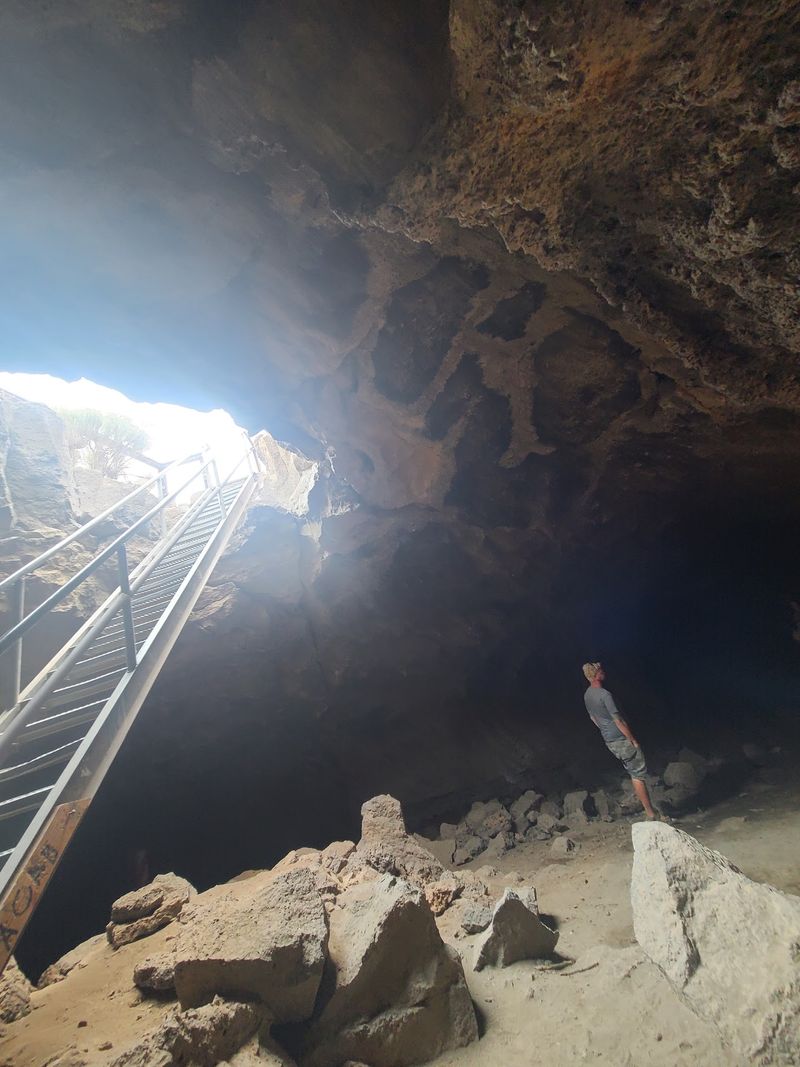
There is something genuinely refreshing about a place that has not been packaged or polished for mass tourism. Boyd Cave has no gift shop, no audio tour, no ranger station, and no Instagram-friendly viewing platform.
What it does have is a real underground lava tube that you can explore on your own terms.
The combination of easy access, zero cost, and low crowds makes it one of the better outdoor finds in Central Oregon. The fact that the cave entrance is a short walk from the parking lot removes the barrier that keeps some people away from more remote destinations.
The experience scales naturally with your comfort level. A nervous first-timer can stick to the entrance chamber and still feel the thrill of being underground in a volcanic tunnel.
A more experienced caver can push deeper into the tube and find sections that feel genuinely remote and raw.
Boyd Cave is the kind of place that stays with you not because it is grand or famous, but because it is honest. The lava formed it, time preserved it, and now it sits out there in the Oregon desert waiting for whoever shows up with a headlamp and a sense of curiosity.
Share this story