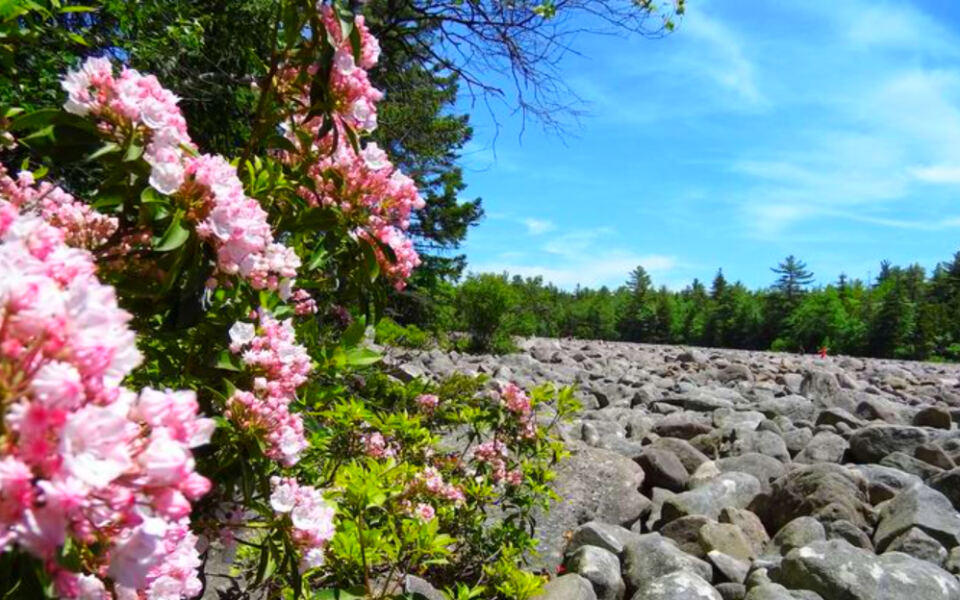
There is a place in Pennsylvania where the ground looks like a river stopped mid-flow, except instead of water, it is made entirely of massive, ancient boulders. The first time I stood at its edge, I genuinely had to remind myself that I was still on planet Earth.
Stretching nearly 1,800 feet long and 400 feet wide, this stony expanse covers about 16 acres, and beneath those rocks, the field runs at least 12 feet deep. No trees grow inside it, no grass pushes through the cracks, and the silence that hangs over it is the kind that makes you hold your breath.
Scientists believe it formed over 20,000 years ago during the last ice age, shaped by freezing, thawing, and the slow grind of periglacial forces. What you are about to read will take you through every layer of this remarkable place, from its jaw-dropping geology to practical tips that will make your visit genuinely unforgettable.
A National Natural Landmark Right in Carbon County
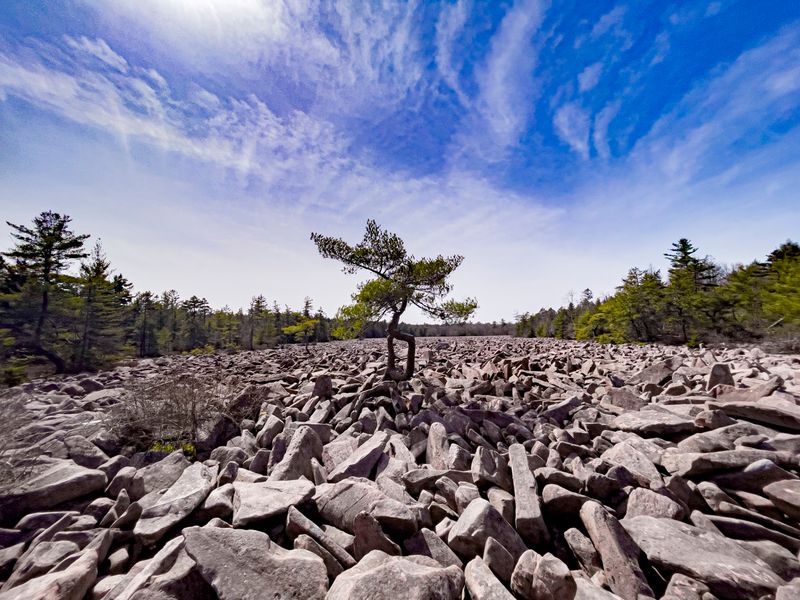
Most people drive through Carbon County, Pennsylvania, without realizing they are minutes away from one of the most extraordinary geological features in the entire eastern United States. Hickory Run Boulder Field sits within Hickory Run State Park, near Lake Harmony, PA 18624, with the park’s main office at 3 Family Camp Road, White Haven, PA 18661.
Designated a National Natural Landmark in 1967, this 16-acre field of loose, ancient boulders has earned its federal recognition honestly. The park itself spans nearly 16,000 acres in the western foothills of the Pocono Mountains, but the boulder field is undeniably the crown attraction that draws visitors from across the country.
A five-mile dirt road off Route 534 leads directly to the field by car, though the Boulder Field Trail offers a 3.5-mile one-way hiking alternative for those who prefer to earn the view on foot. Either way, the first glimpse of that stony expanse never fails to stop people in their tracks.
What 20,000 Years of Ice Can Actually Do to a Landscape
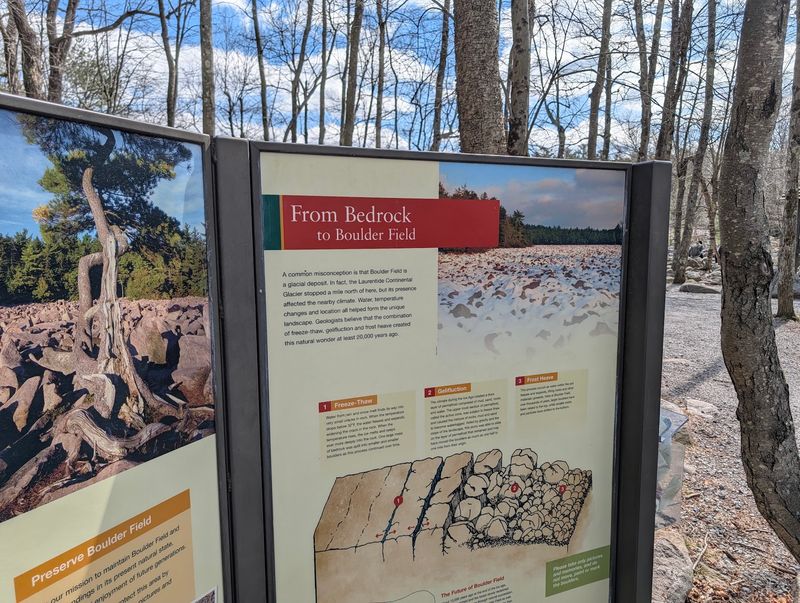
The boulder field did not appear overnight, and its origin story reads like a slow-motion geological thriller that unfolded across tens of thousands of years. During the last glacial period, known as the Wisconsin Glacial Period, massive ice sheets advanced to within less than a mile of this specific valley in the Pocono Mountains.
The glaciers never directly overran the site, but their proximity created an environment of extreme, sustained cold and permafrost. Water repeatedly seeped into the vertical fractures, called joints, within the exposed Catskill Formation sandstone on the surrounding ridges.
Each freeze-thaw cycle expanded those cracks a little further, eventually prying loose enormous blocks of stone.
Once freed, those blocks were nudged downslope over saturated, slushy ground through a process called gelifluction, which gradually rounded their sharp corners into the boulders visible today. Geologists believe this field has survived multiple glacial-interglacial cycles, making it far older and more resilient than its quiet appearance suggests.
The Sheer Scale That Makes Your Brain Short-Circuit
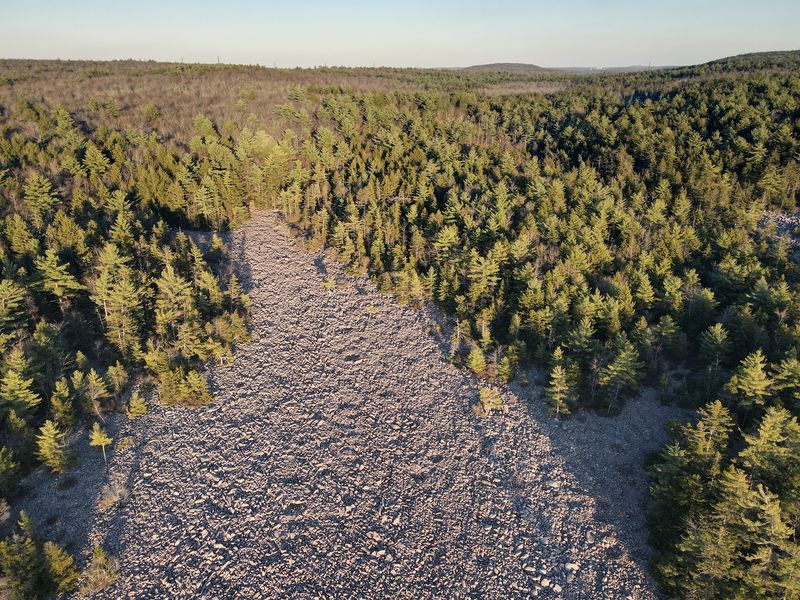
Numbers help here, because the eye alone struggles to process what it is seeing. The boulder field measures roughly 400 feet wide by 1,800 feet long, an area equivalent to about fifteen football fields laid side by side.
That covers approximately 720,000 square feet of tightly packed, loosely arranged stone.
Beneath the surface, the accumulation runs at least twelve feet deep in the center, a dense underground puzzle of rock with no fine material like sand or clay filling the gaps between boulders. The boulders themselves range from smaller than three feet to more than thirty feet in length, with some individual specimens stretching up to 26 feet across.
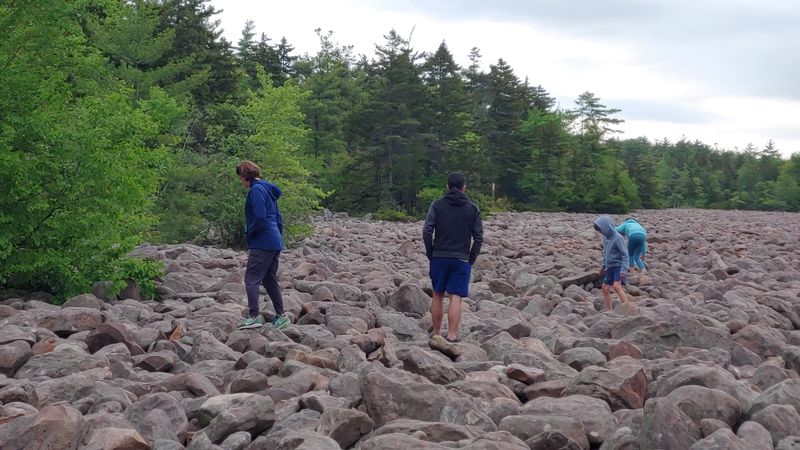
The relief between neighboring boulders can be as much as four feet, which means crossing the field is never a flat stroll but a constant series of small climbs and descents. That combination of scale, depth, and surface variation is what makes this the largest boulder field of its kind in the entire Appalachian region, and it earns that title without any exaggeration.
The Rock Types That Tell an Ancient Ocean’s Story
Every boulder scattered across this field has a story that predates the ice age by hundreds of millions of years. The dominant rock type is a hard, gray-red, medium-grained sandstone and conglomeratic sandstone sourced from the Catskill Formation, specifically the Duncannon Member, which forms the low ridges rising 175 to 200 feet above the field on its north and south sides.
The Catskill Formation represents sedimentary deposits laid down during the Devonian Period, when massive river deltas spread across what is now the Appalachian region. Those ancient sediments compacted over millennia into the robust bedrock that would eventually be shattered by periglacial forces and transformed into the boulders now covering this valley floor.
The distinctive reddish hue visible on many of the boulders reflects the iron-rich conditions under which those ancient sediments were deposited. As you cross the field, notice how the rocks toward the eastern, upslope end tend to be more angular, while those near the parking area are noticeably rounder, a visible record of how far each boulder traveled during its slow downhill journey.
Why There Are Zero Plants Growing Inside the Field
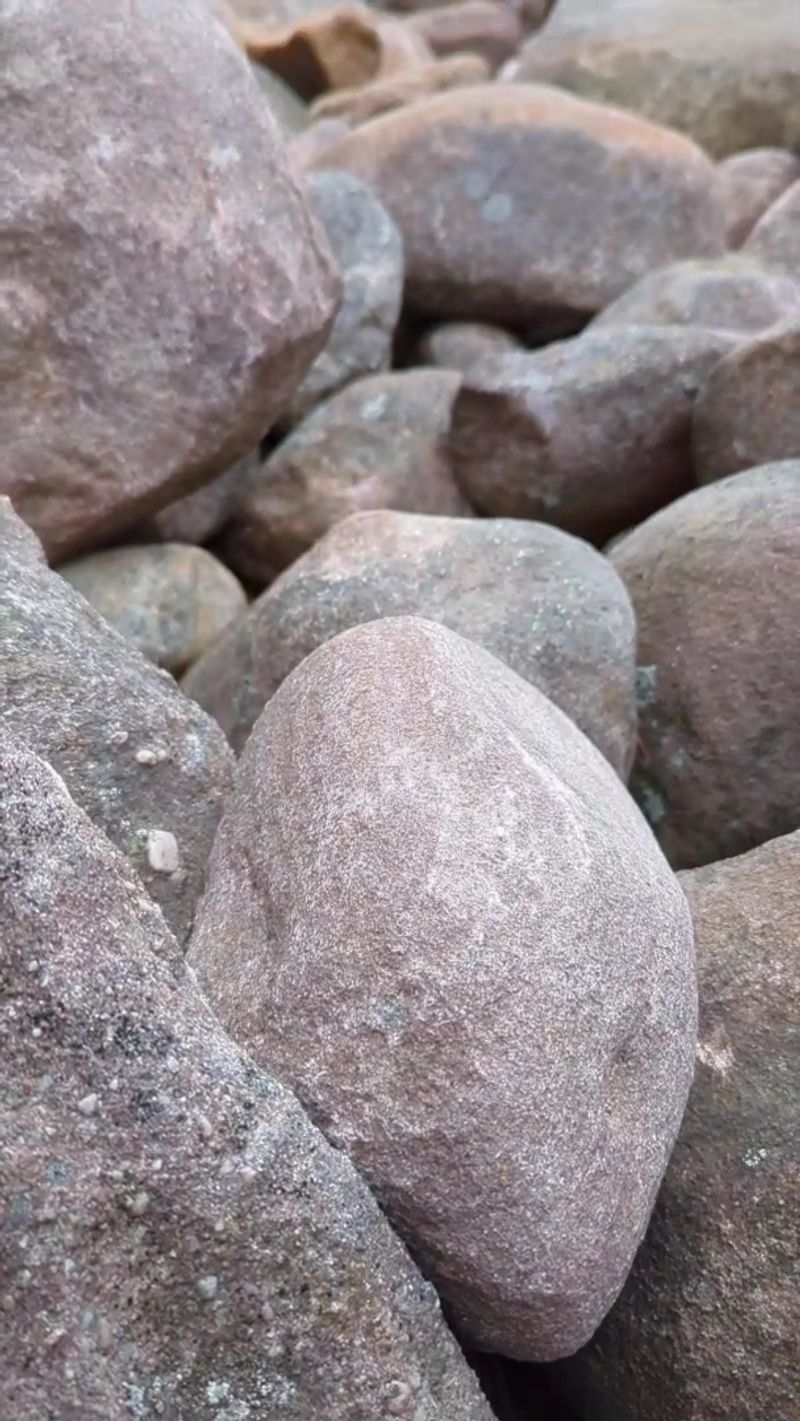
One of the first things visitors notice, often before they can even name what feels strange, is the total absence of plants inside the boulder field. No grass, no shrubs, no trees push through the gaps between the rocks, creating a stark, almost lunar contrast with the dense coniferous forest that presses right up to the field’s edges on all sides.
The explanation is rooted in the same geology that created the field. The enormous weight of the accumulated boulders compresses the soil below to a degree that makes root establishment extremely difficult.
The open-work structure of the field, where loose rocks sit with deep air gaps between them rather than compacted soil, also prevents moisture retention at the surface level that most plants require.
This bare interior is one of the features that helped the boulder field earn its National Natural Landmark designation, because it represents a near-perfect preservation of a periglacial landscape. Interestingly, a careful look reveals patches of lichen clinging to boulder surfaces, proving that life finds a way even in the most stubborn geological environments.
The Hidden Water Flowing Beneath Your Feet
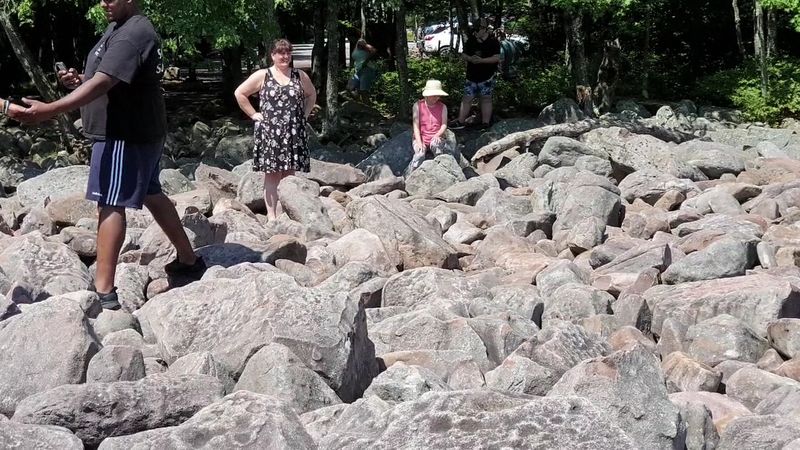
Here is something that surprises nearly every first-time visitor: the boulder field is not as silent as it looks. Crouch down near some of the larger gaps between rocks, and on a quiet day, you can hear the faint sound of water moving somewhere beneath the stony surface.
The field sits near the headwaters of Hickory Run, and water percolates through the loosely packed boulders, flowing along the bedrock far below the surface in channels that never see daylight. This subterranean movement is a crucial part of the field’s character, as the combination of heavy rock above and flowing water below creates a microenvironment unlike anything in the surrounding park.
That hidden hydrology also contributes to the field’s cool temperatures, even on warm summer days, making it noticeably refreshing compared to the sunlit trail approaches. The contrast between the silent, motionless surface and the active, invisible world beneath it adds a layer of sensory intrigue that photographs simply cannot capture.
You have to be there, crouched quietly, to appreciate it fully.
Getting There: The Dirt Road That Sorts Serious Visitors from Casual Ones
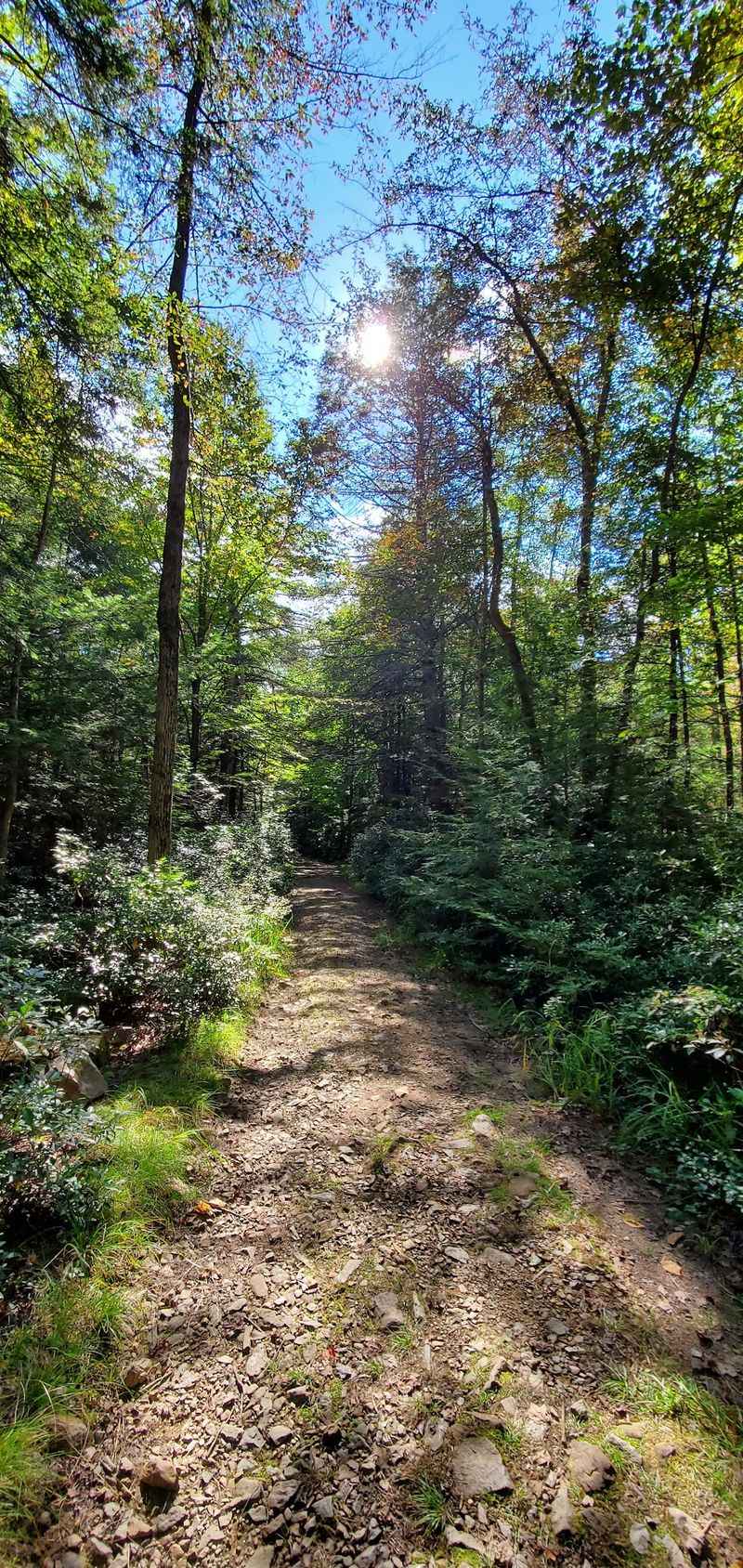
The journey to the boulder field is its own kind of adventure, and not every vehicle handles it with grace. From Route 534, a five-mile one-way dirt road winds through the forest directly to the boulder field parking area.
The road is unpaved, occasionally bumpy, and not recommended for lowered vehicles or cars with worn tires.
Plan roughly 15 minutes of careful driving each way, and keep your speed reasonable because the road is narrow in sections and other visitors may be coming from the opposite direction. The park does not maintain this road during winter months, typically closing vehicle access from November through March, which means the boulder field becomes hike-access only during that period.
The alternative is the Boulder Field Trail, a 3.5-mile one-way route from Route 534 that makes the round trip a solid seven-mile hike across rocky, rooted terrain through beautiful Pocono forest. Hikers who choose this path are rewarded with a gradual build of anticipation, with the forest giving way to that extraordinary stony expanse only at the very end of the trail.
Footwear, Snakes, and Everything Else You Need to Know Before You Step On
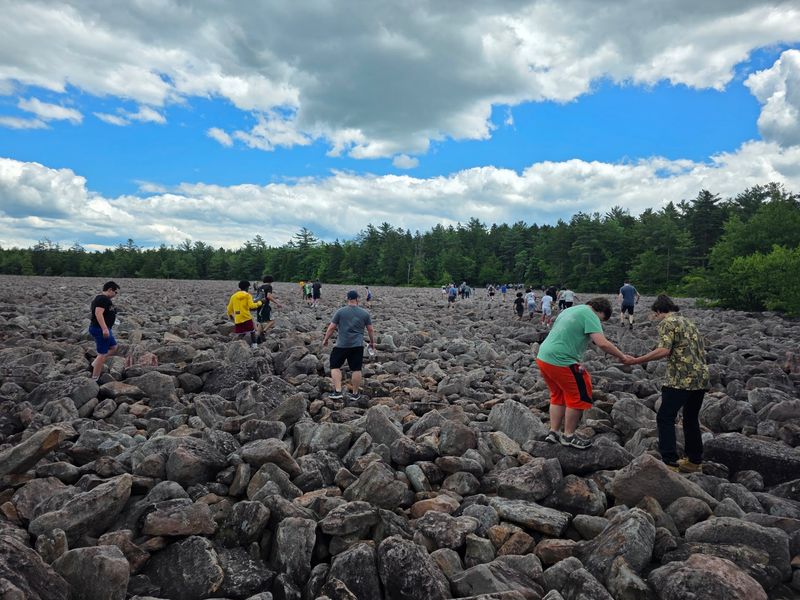
Sturdy hiking boots with ankle support are not optional here; they are the single most important thing you can pack for this visit. The boulder surfaces are uneven, often slick with moisture, and the gaps between rocks are deep enough to swallow an ankle with very little warning.
Sandals, flip-flops, and casual sneakers turn a fun outing into a painful one quickly.
From April through October, Timber Rattlesnakes use the warm boulder surfaces for sunning, so watching where you step and where you place your hands is genuinely important. Ticks are also active in the surrounding wooded areas during the warmer months, so a thorough check after your visit is a smart habit to build.
The park prohibits moving, stacking, or collecting any rocks or natural material from the field, including lichen, as the boulder field is a protected National Natural Landmark. Existing rock towers can create instability and hazards for other visitors, so the Leave No Trace ethic applies firmly here.
During hunting season from October through January, blaze orange is strongly recommended if you plan to hike the Boulder Field Trail through adjacent State Game Lands.
What Makes It Feel Completely Different in Every Season
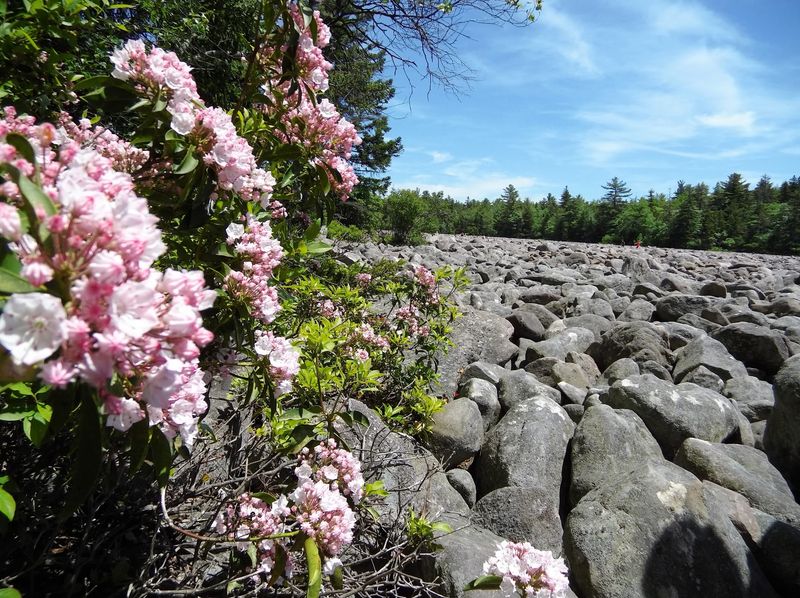
Summer visits bring the full visual drama of the boulder field framed by lush green forest, and the field’s interior stays noticeably cooler than the surrounding landscape thanks to the cold air trapped between the rocks. Weekends from June through August are the busiest periods, and the parking area can fill before 10 AM, so an early start or a late afternoon arrival makes the experience considerably more peaceful.
Autumn is widely considered the most photogenic season, when the surrounding hillsides ignite with fall color and the gray-red tones of the boulders pop against a backdrop of orange, red, and gold foliage. The field itself does not change, but everything around it does, creating a composition that feels almost theatrical in its contrast.
Winter transforms the approach entirely. Snow-dusted boulders and a hushed, almost meditative silence settle over the field when vehicle access is closed and foot traffic drops to a trickle.
Those willing to hike in during winter are treated to one of the most serene natural experiences in the Poconos, a frozen, painterly stillness that feels genuinely rare in the modern world.
The Surrounding Park That Deserves Its Own Article
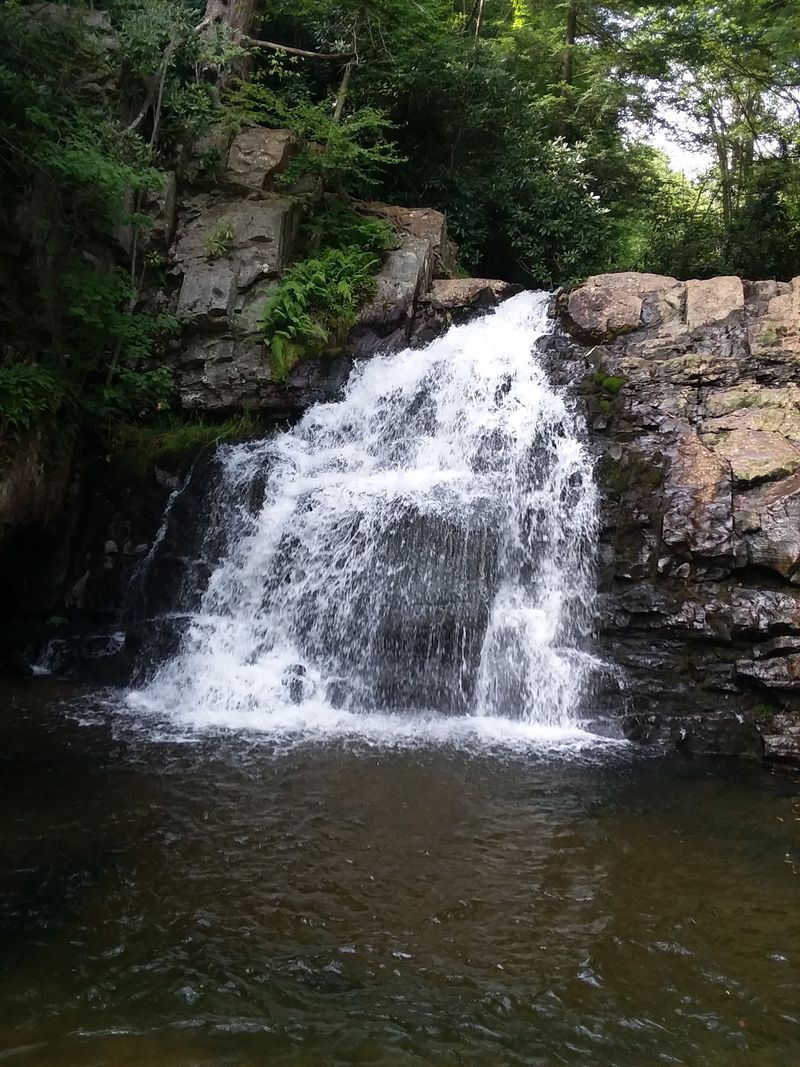
The boulder field is the headline act, but Hickory Run State Park’s nearly 16,000 acres offer a supporting cast that is well worth your attention. Over 40 miles of hiking trails wind through the park, ranging from gentle forest walks to rocky, challenging routes that test even experienced hikers.
Hawk Falls is a particular favorite, a picturesque 25-foot natural waterfall reached by a relatively short trail that makes it accessible for most fitness levels. Sand Spring Lake provides a designated swimming area with a sandy beach, open from late May to mid-September, offering a cooling reward after a morning spent clambering across boulders.
Anglers will find productive trout streams throughout the park, including Mud Run and Hickory Run itself. In winter, Sand Spring Lake freezes reliably enough for ice skating, and the Sand Spring Trail becomes a cross-country skiing route.
The park’s visitor center, which expanded its self-guided exhibit space in 2020, offers excellent interpretive information about the boulder field’s geology and the broader natural history of the Pocono region.
Why This Place Stays With You Long After You Leave
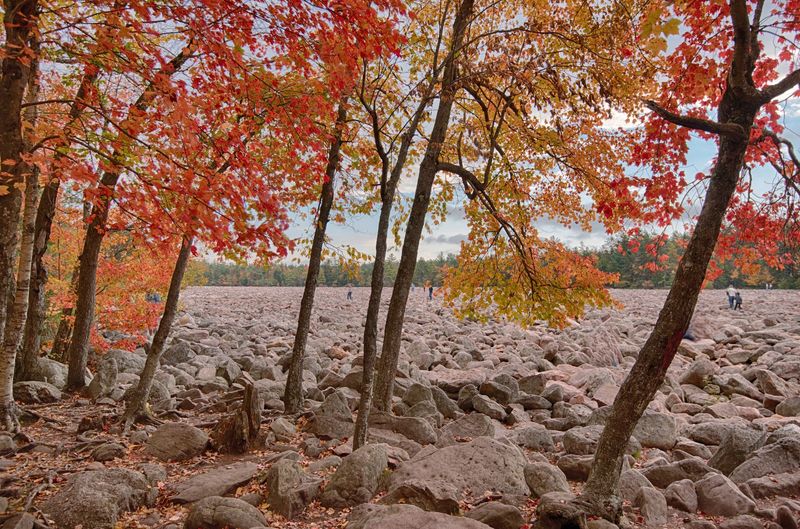
There are plenty of beautiful parks in Pennsylvania, but very few places that genuinely shift your sense of scale the way this boulder field does. Standing at the center of that stony expanse, with the treeline marking the boundary of the field on all sides and thousands of ancient rocks stretching in every direction, the feeling is hard to categorize.
It is not quite wilderness, not quite a geological museum, and not quite a hiking destination in the traditional sense. It is something rarer: a place where the physical evidence of deep time is laid out in front of you, touchable and immediate, in a way that no exhibit or documentary can replicate.
The boulders have been sitting in roughly the same configuration for over 20,000 years, and they will likely be there long after every visitor who has ever walked across them.
That permanence is oddly comforting, and it is probably why so many people who visit as children find themselves returning as adults, bringing their own kids to stand in the same stony river and feel the same quiet astonishment they felt the first time.
Share this story