A stone house beside the Susquehanna River sits on land that once held a frontier fort from the 1750s. The fort is long gone, but the house that came later still stands, and you can tour its rooms today.
Across the road, a red covered bridge waits for anyone with a camera. That bridge did not start out here, which is a fun story on its own.
Long trains also rumble across a huge stone arch bridge just upriver, in plain view of the picnic benches. I like a place where history, scenery, and a playground all share the same lawn.
It feels easy, friendly, and a little bit surprising at every turn. This corner of Pennsylvania sits just minutes from the state capital, yet it feels far quieter.
So how did one riverside farm collect so many stories?
A Riverside Estate Just North of the Capital
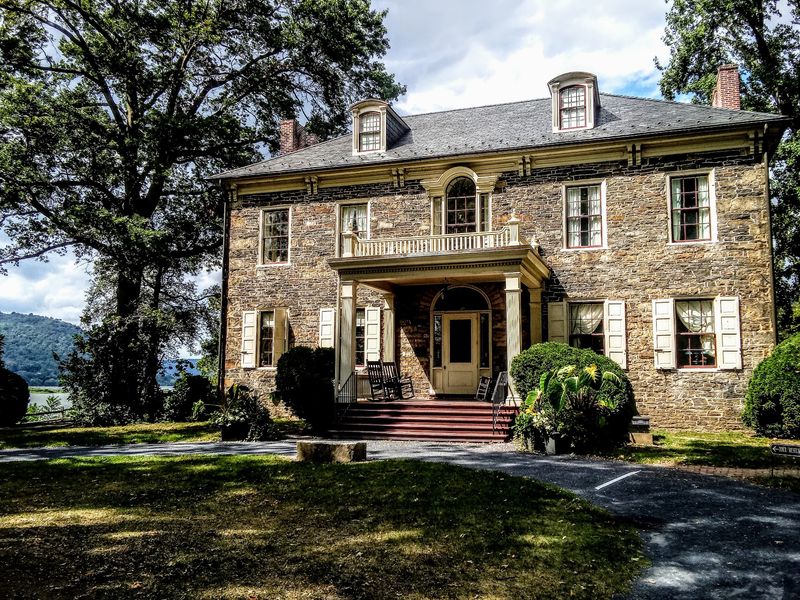
Fort Hunter Mansion and Park sits at 5300 N Front St in Harrisburg, Pennsylvania, right along the Susquehanna River. It is part of the Dauphin County park system, so the grounds are open for everyday wandering.
The mansion, barns, and other old buildings spread out across land that has been lived on for centuries.
What grabs me first is the mix. You get a historic house museum, open lawns, river views, picnic spots, and a playground in one stop.
Few places near a state capital pack that much into such a relaxed setting.
The park actually sits on both sides of Front Street. The mansion and the playground near the river are on one side, while the barn area, pavilions, and covered bridge sit across the road.
Use care when crossing, since traffic moves along this busy route.
Parking is simple, and the grounds feel tidy and well kept. I would plan to walk a bit, because the ground can be uneven in spots.
The real reason this estate matters, though, goes back to a name that hints at a much older chapter.
The Fort in the Name Was Real
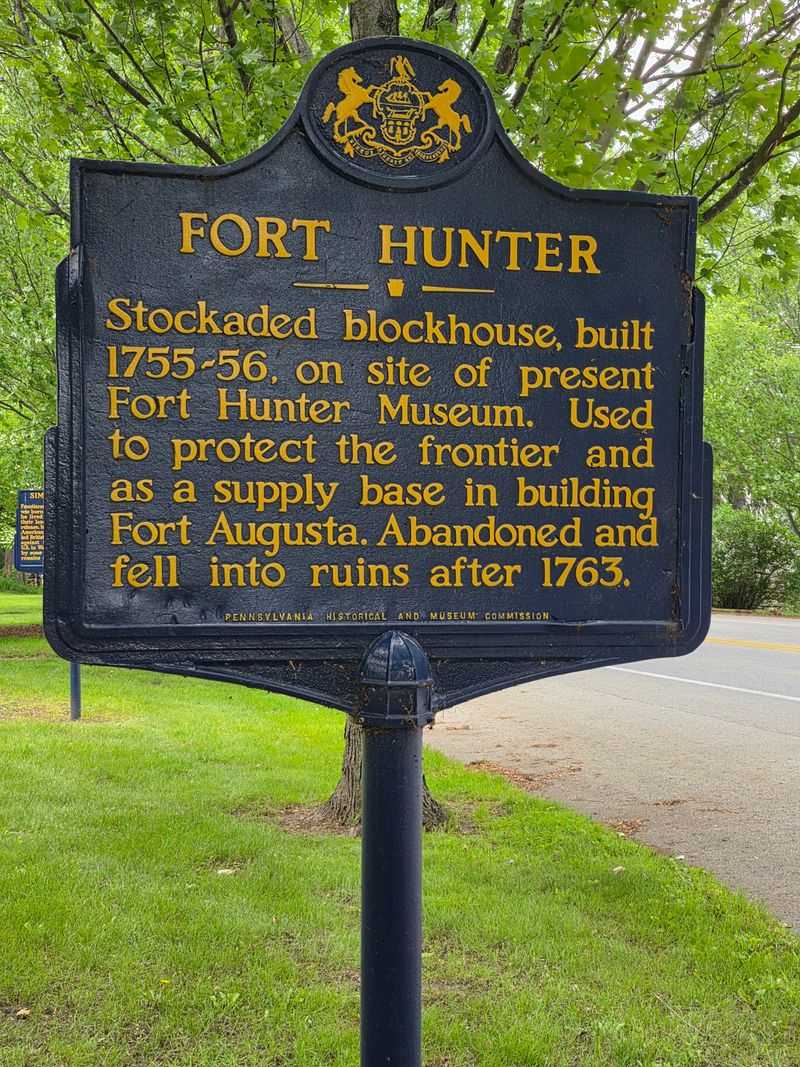
Yes, there really was a fort here. In the 1750s, colonial Pennsylvania built a chain of small frontier posts, and one of them stood on this spot by the river.
It took its name from Samuel Hunter, an early settler who ran a mill nearby.
The fort was not a giant stone castle. It was a simple wooden post meant to watch the river and protect nearby families during a tense time on the frontier.
After things calmed down in the 1760s, the fort was no longer needed and slowly disappeared.
Nothing of the original wooden fort survives above ground today. Still, I find it interesting that the name stuck around for more than 250 years.
Every time someone says Fort Hunter, they are pointing back to that early chapter.
This history explains why the location matters so much. The river was a main travel route, and this bluff gave a clear view up and down the water.
Standing on the lawn, you can see why people picked this spot.
Once the fort faded, the land was ready for a new owner with bigger plans.
Captain McAllister Builds a Stone House
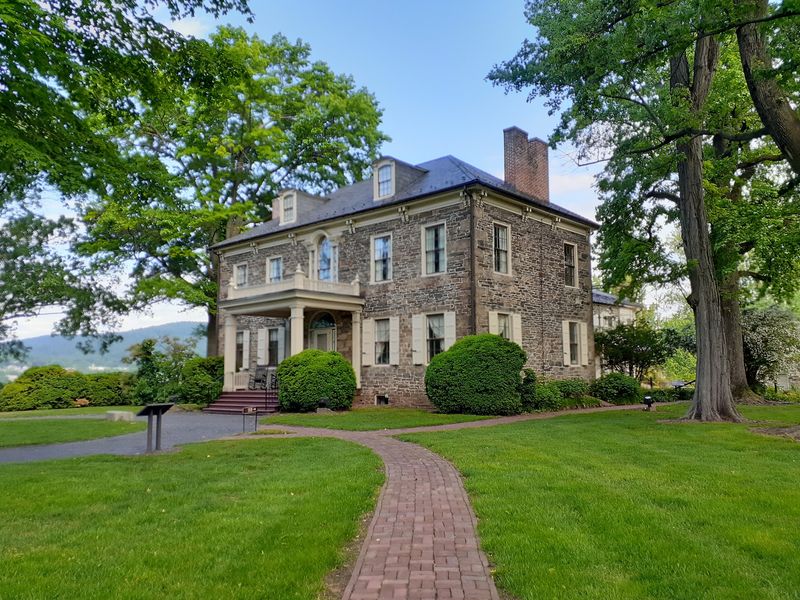
Captain Archibald McAllister bought the property in the late 1780s and turned it into a busy farm. He was a veteran of the Revolutionary era, and he had a real knack for business.
Under his care, the place grew into a small village of its own.
The oldest stone part of the mansion dates to his time. Later, he added a larger section in the early 1800s, and a frame addition came decades after that.
If you look closely at the outside, you can spot how the house grew in steps.
McAllister also ran a tavern for travelers, plus mills, a store, and farm operations. The river and the road out front brought plenty of people past his door.
That kind of traffic made the estate a handy stop for anyone heading north.
I like that the house shows its age so honestly. Instead of one perfect design, you get layers built by real people solving real needs.
It reads like a family scrapbook made of stone and wood.
The house kept changing hands after McAllister, and the next family left an even bigger mark inside.
Rooms Filled With a Family Collection
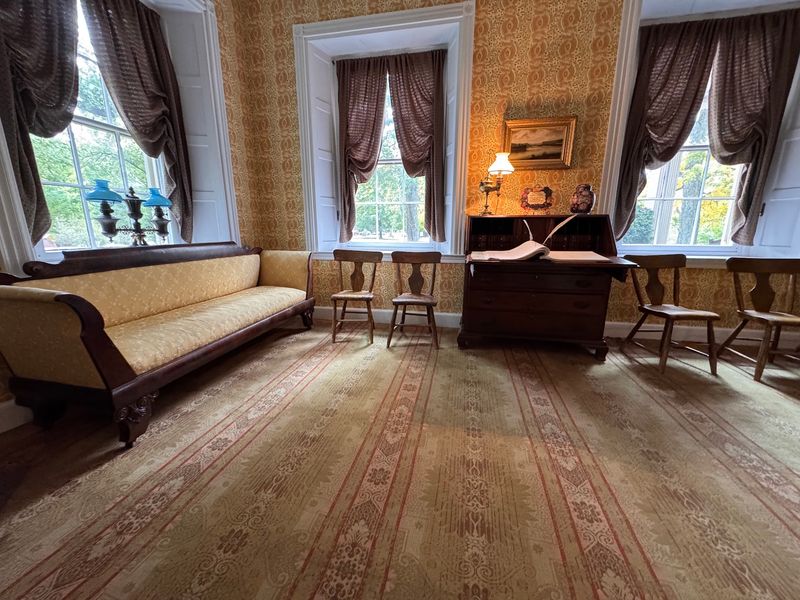
Think of the mansion as a time capsule that a family chose to share. In 1870, Daniel Dick Boas bought the estate, and it stayed in his family for years.
His great-granddaughter, Margaret Wister Meigs, later worked to preserve the house and open it to the public.
Thanks to her, the rooms hold furniture, clothing, toys, and household items gathered over generations. The collection gives you a peek at how people actually lived, from fancy parlors to everyday tools.
Antique fans will have plenty to study.
Tours are guided and last about 45 minutes. A small admission fee applies, and the guides are known for answering questions and sharing stories about the objects on display.
I would come with a few questions ready, because the docents clearly enjoy them.
Plan for some steps inside the mansion. The house was built long before modern access rules, so it is not wheelchair friendly.
Wear comfortable shoes and take your time on the stairs.
After the tour, step back outside and look across the road. The barns there tell a very different kind of story.
Barns, a Tavern, and a Tiny Church
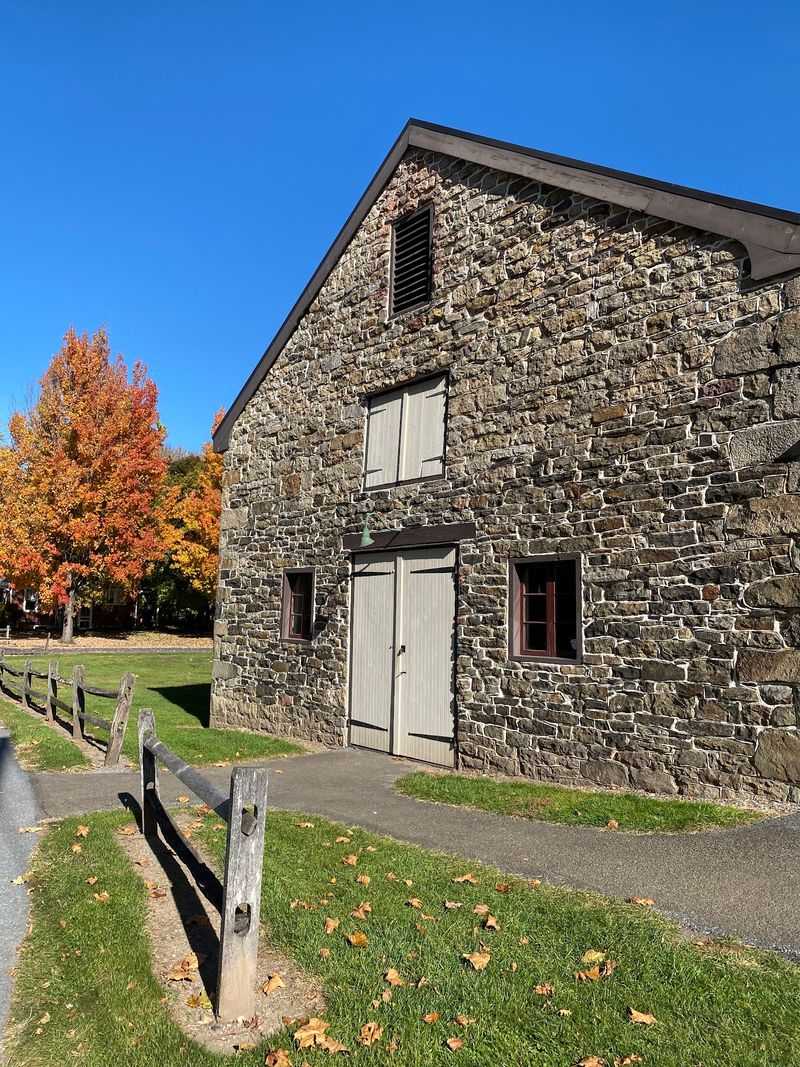
Farm life left plenty behind here. Scattered around the grounds you will find a dairy barn, a horse stable, the old tavern house, and a small church.
Each building adds a piece to the bigger picture of how the estate worked.
The large Centennial Barn is the one people notice first. Its name points to 1876, the year the nation marked its 100th birthday.
Today it hosts exhibits and seasonal events, so it stays busy throughout the year.
The stone barn makes a nice contrast with the cream-colored barn nearby. Photographers love the variety, since you can switch backgrounds just by walking a few steps.
I would bring a camera even on a casual stop.
Kids tend to enjoy the barn area because it feels hands-on. The exhibits help explain farm chores that most of us never think about anymore.
Milking, hauling, and storing crops suddenly make a lot more sense.
The little church is easy to miss if you rush. Give it a minute, because these smaller buildings often hold the most surprising details.
Just past them, a bright red bridge has its own travel story.
A Covered Bridge That Moved Here
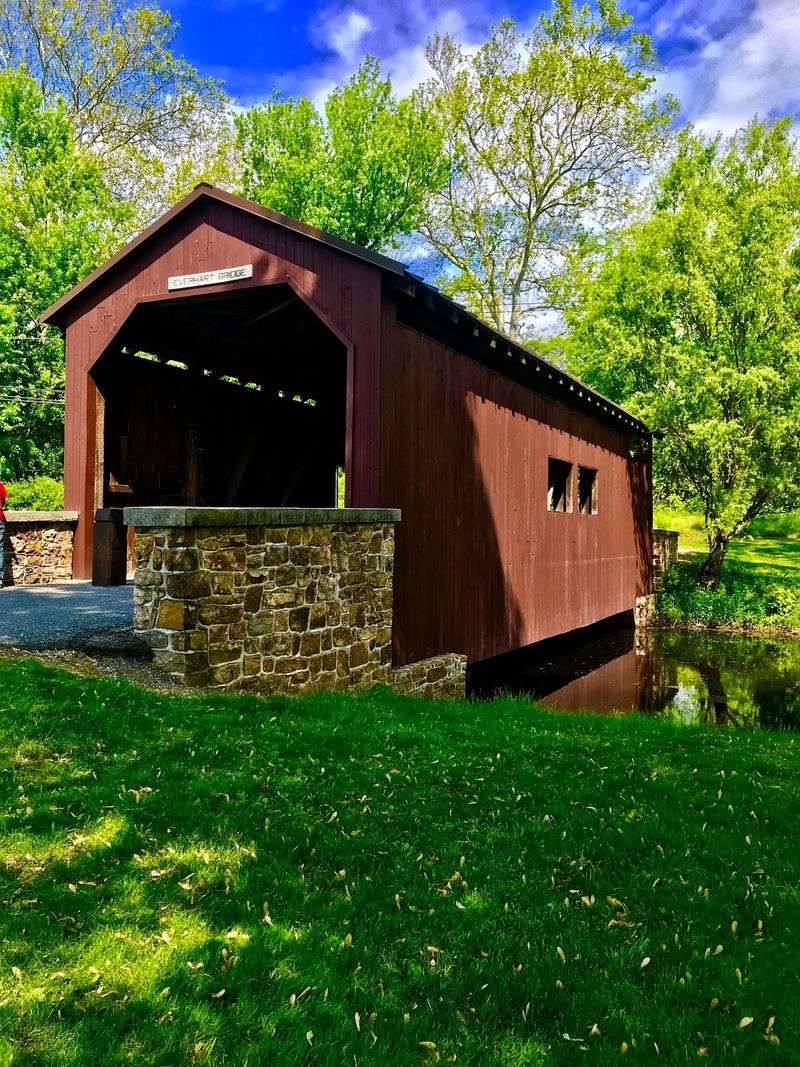
Here is a fun twist. The Everhart Covered Bridge was not built at Fort Hunter.
It dates to the 1880s and originally crossed a creek elsewhere in Dauphin County.
In the 1990s, the bridge was moved to the park and set over Fishing Creek. Saving an old covered bridge takes real effort, and I like that someone cared enough to give it a second home.
Now it fits right in with the other historic buildings.
Covered bridges were built with roofs to protect the wooden structure from rain and snow. That roof helped the bridges last much longer than open ones.
It is a smart old idea hiding in plain sight.
You can walk through the bridge and look out from the openings. It is one of the most photographed spots in the park, especially for family pictures and engagement shoots.
Fall leaves make it look even better.
A picnic area sits close by, so this is a great place to slow down. Pack a lunch and enjoy the creek sounds.
From here, the bigger river views are just a short walk away.
Swings With a Susquehanna View
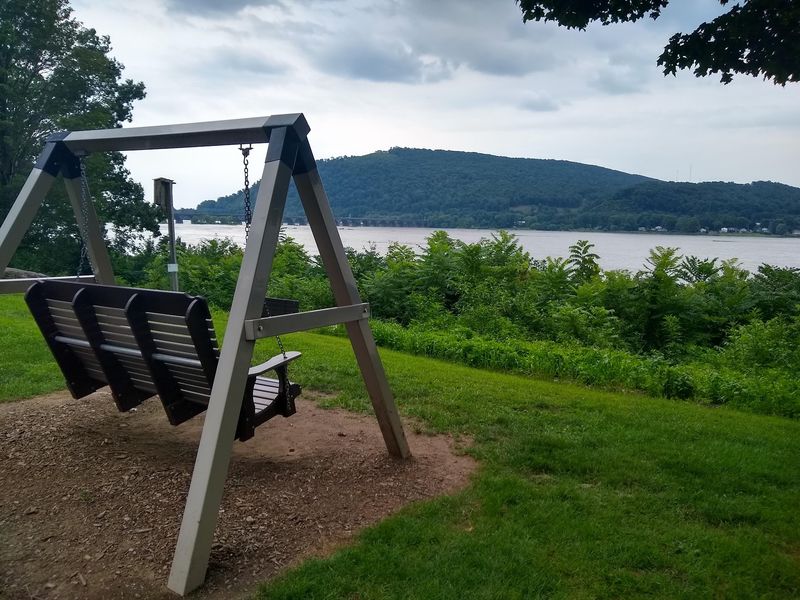
Grab a swing and settle in. Along the river side of the park, benches and swings face the wide Susquehanna, and they are popular for good reason.
The view stretches far across the water toward the hills beyond.
Sunset is a favorite time to visit. The sky changes color over the river, and the light can sparkle on the water.
I would show up a little early to claim a seat.
The Susquehanna is wide and shallow here, with small islands and rocky patches. Birds often move along the water, and the trees along the bank shift with the seasons.
Every visit can look a little different.
There is also access down near the river where you can feel close to nature. Just watch your footing, since riverbanks can be slippery.
Kids should stay close to an adult near the water.
This area is where the park feels the calmest. People read, chat, or simply sit and watch.
Turn your head to the left, though, and you may spot something huge moving across the river.
Trains Roll Across a Giant Stone Bridge
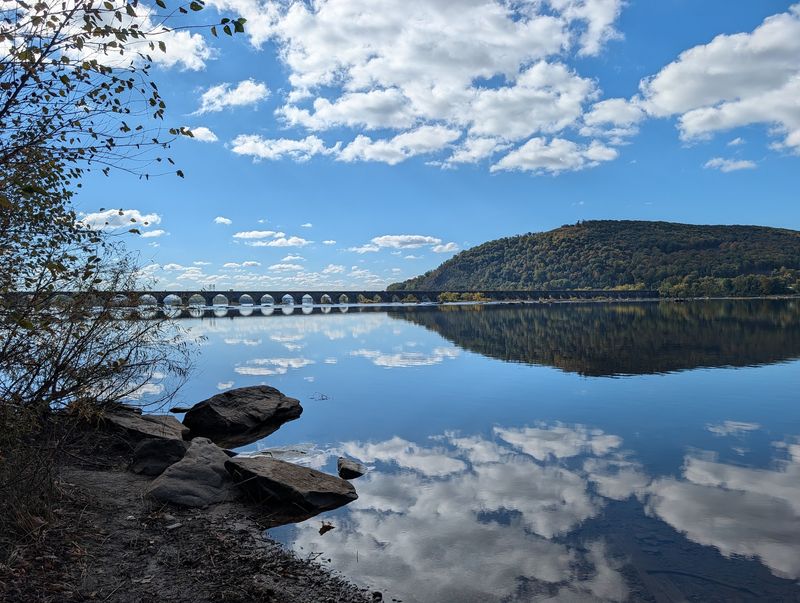
Long freight trains are part of the show here. Just upriver, the Rockville Bridge carries rail traffic across the Susquehanna, and you can see it clearly from the park.
Trains cross it regularly, sometimes with many cars in a row.
The Rockville Bridge opened in 1902. It is widely known as one of the longest stone masonry arch railroad bridges in the world, with dozens of arches marching across the water.
Seeing it in person helps you understand just how big that project was.
Train fans of all ages tend to love this view. Little ones may want to count cars, while grown-ups can admire the stonework.
It is a fun bonus that costs nothing.
The bridge also connects nicely to the park’s bigger theme. This spot has always been about moving people and goods along the river.
First canoes and wagons, then trains, all passed through this valley.
Keep your camera ready if you hear a horn in the distance. A train on those arches makes a great photo.
Afterward, the paved path offers a way to keep exploring on foot.
Trails, Picnics, and Room to Run
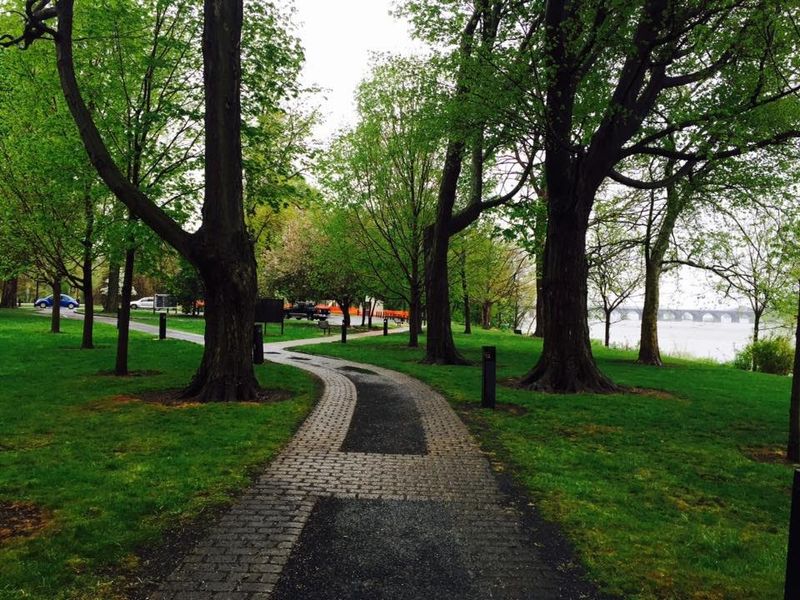
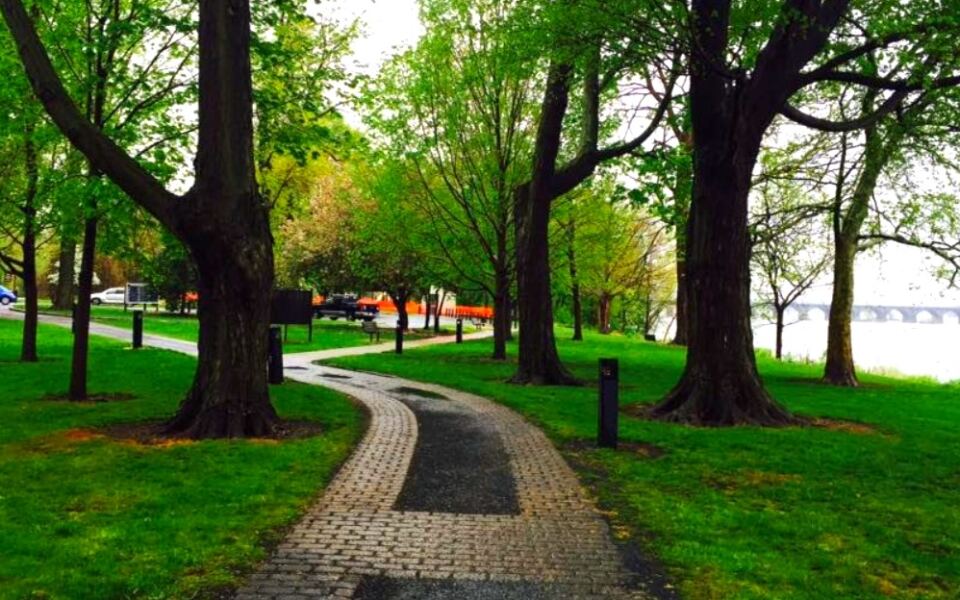
Bring sneakers and a blanket. A paved path runs parallel to the river, making it easy for walkers, joggers, and families with strollers.
The trails inside the park are limited, but there is still plenty of space to stretch your legs.
Picnic tables and pavilions sit on both sides of the road. Restrooms are available too, though some are basic, so packing hand sanitizer is a smart move.
A little planning keeps the day easy.
The playground is a big hit with kids. Open grassy areas around it give them room to run while adults relax nearby.
I like that parents can see the play area and still enjoy the scenery.
Dogs are welcome on the grounds, but not inside the buildings. Keep your pup on a leash and bring water on warm days.
Plenty of folks visit with their four-legged friends.
Wildlife, trees, and plants add to the walk. Keep an eye out for birds along the river and squirrels darting across the lawn.
Of course, the park gets even livelier when special events fill the calendar.
Fairs and Holiday Traditions All Year
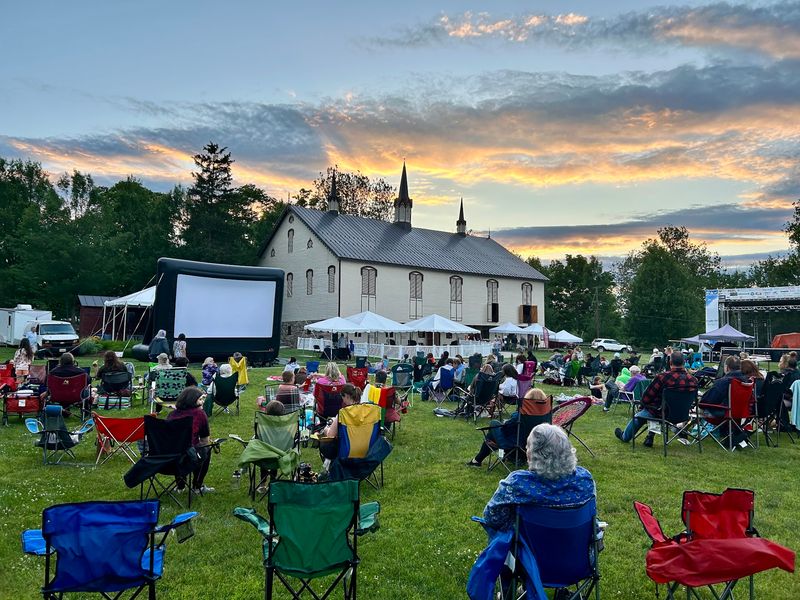
Mark your calendar, because the grounds come alive several times a year. In spring, the Garden Fair brings plants, crafts, and vendors to the lawns.
In fall, Fort Hunter Days fills the park with craft booths and old-fashioned fun.
The holiday season brings Christmas at Fort Hunter. Past events have included a toy train display in the Centennial Barn, a festival of decorated trees, and homemade cookies for sale.
The small gift shop also opens for shoppers looking for something different.
Many of these events have free entry to the grounds, while mansion tours may cost extra. Crowds can build in smaller spaces, so arriving early helps.
Dress warmly for winter visits, since you will walk between buildings.
Event dates and details change from year to year. Check the official Fort Hunter website or social pages before you go.
That way, you will know what is happening and when.
I like how these events tie the old estate to today. Families keep making new memories on land that has hosted visitors for centuries.
Somehow, that feels exactly right for a place built around the people who passed through.
Share this story