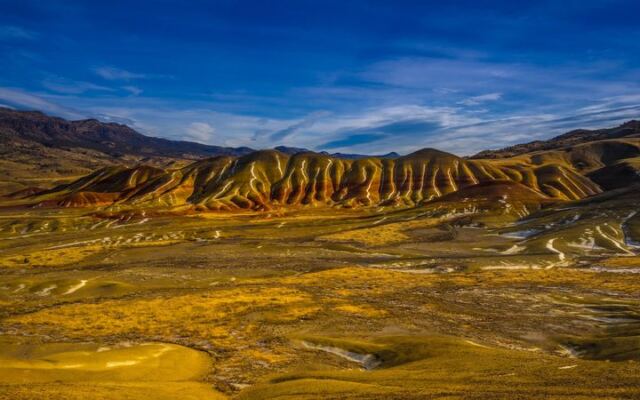
Somewhere out in the high desert of Oregon, past the last stretch of cell service and a rumbling gravel road, the ground itself changes color like someone spilled paint across the hills. Most travelers rush past without a second glance, never guessing what waits just off the highway.
What you find are striped mounds of red, gold, and amber that record millions of years of history you can actually stand beside. If you love the thrill of discovering a place tourists overlook, this one belongs on your list.
A Hidden Wonderland Tucked Into Oregon’s High Desert
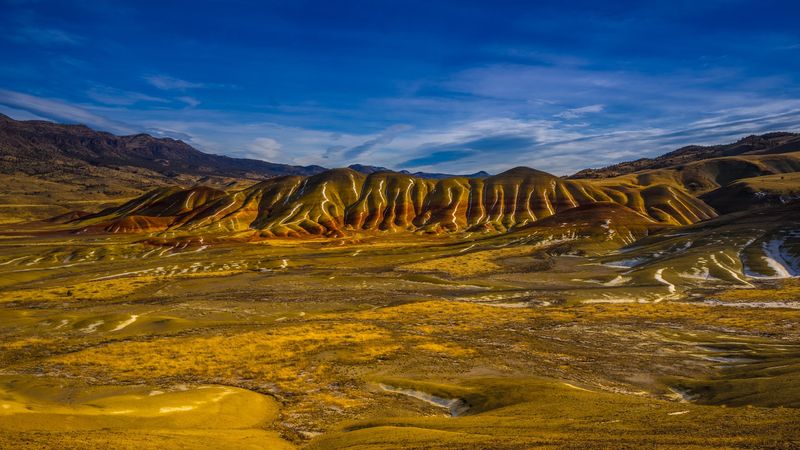
Roughly nine miles northwest of the tiny town of Mitchell, the Painted Hills Unit sits far from Oregon’s busy coast and crowded mountain trails. It’s one of three units that make up John Day Fossil Beds National Monument, and it feels wonderfully remote.
The setting is pure high desert: dry air, wide open skies, and rolling mounds banded in earthy colors. Visitors often describe it as an oasis dropped into an otherwise hot, empty stretch of country.
What makes it special isn’t just the scenery, though. These hills preserve a record of ancient climates and creatures stretching back millions of years.
Walking here, you’re standing on layers that formed long before humans ever roamed. Regulars mention how easy it is to drive right past, which is exactly why those who stop feel like they’ve found a genuine secret.
Colors That Shift With Every Passing Hour
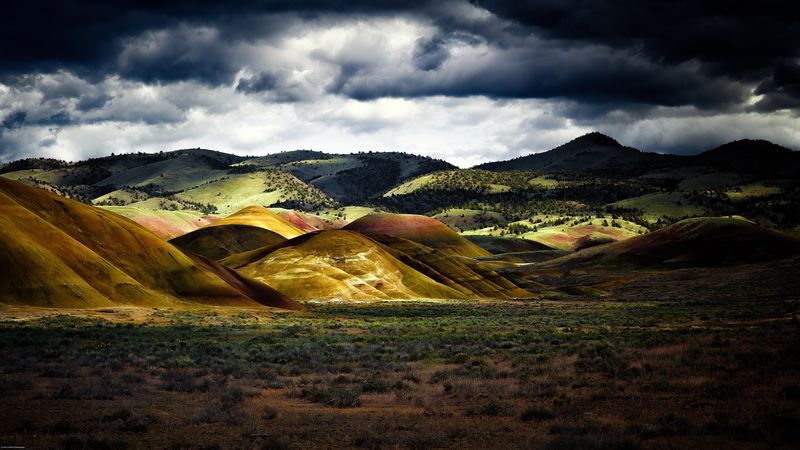
Picture a landscape that repaints itself throughout the day. The hills glow deep red, golden yellow, and soft pastel bands depending on the light, and no two visits look quite the same.
Many folks say a brighter day brings out the boldest hues, while others swear by arriving close to sunset when the colors turn rich and dreamlike. One visitor noted that a September afternoon left the tones a bit muted, so timing really matters.
Here’s a tip worth remembering: come after a rain if you can. Moisture deepens the reds and golds into something almost unreal.
The banding you see comes from different ancient soils stacked over enormous spans of time. Each stripe tells its own chapter, and watching them change with the sun feels like nature quietly showing off just for you.
Short Trails That Reward Almost Everyone
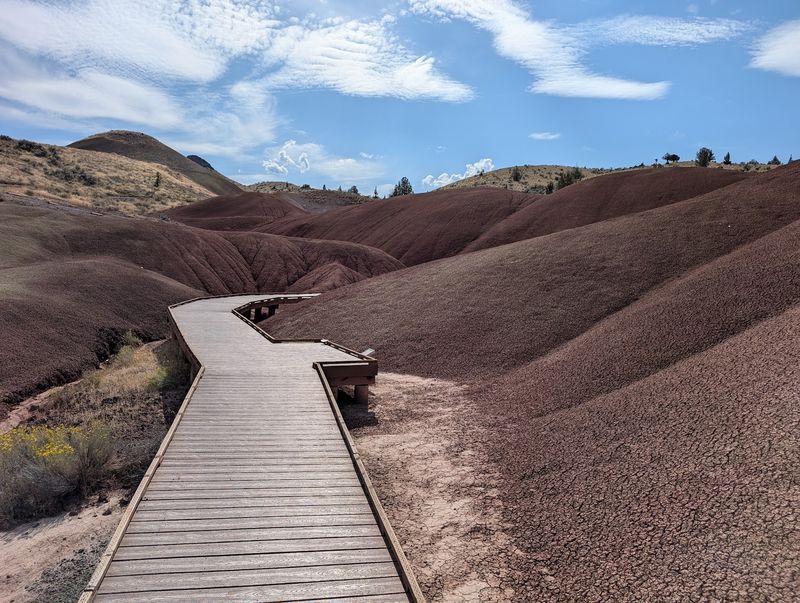
Not every worthwhile hike demands sweat and sore knees. Most trails here are short round trips from the parking areas, making the whole unit welcoming to families, older visitors, and anyone short on time.
The Overlook Trail earns steady praise for being easy yet rewarding, delivering sweeping views without much effort. Other quick paths, some barely half a mile, lead you right up close to the painted mounds.
Guests frequently mention how accessible it all feels, with several stops scattered along the road so you can hop out, wander, and hop back in.
One gentle reminder pops up again and again from regulars: stay on the designated trails. The fragile surface bruises easily, and keeping to the paths ensures these colorful slopes stay untouched for the next curious traveler who stumbles upon them.
The Carroll Rim Climb Worth Every Step
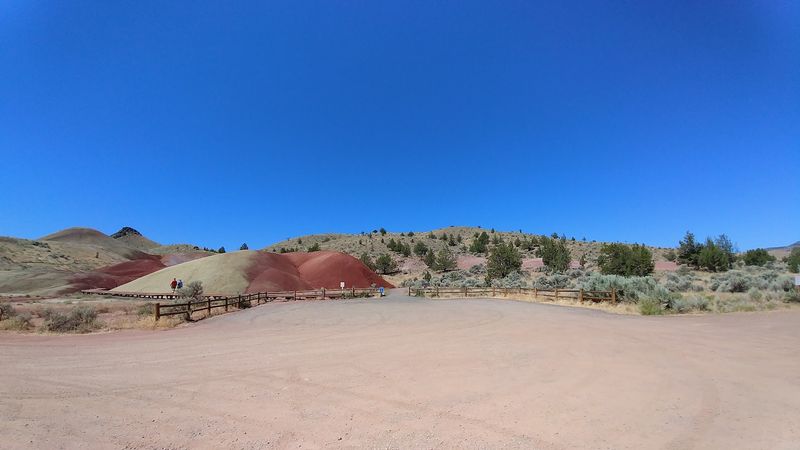
Ready for a little more challenge? Directly across from the Overlook Trail, the Carroll Rim Trail climbs to a viewpoint that has visitors practically insisting you don’t skip it.
At only about 1.6 miles round trip, it’s short but mighty. The reward is a top-down panorama of the painted landscape spread out below, a perspective you simply can’t get from the lower trails.
Those who’ve made the climb describe the summit views as amazing and say missing them would be doing yourself a disservice.
Because the desert air runs dry and the sun beats down with little wind, the uphill stretch feels tougher than similar hikes elsewhere in Oregon. Bring water, take your time, and pace yourself.
The effort pays off in a quiet, sweeping vista that most passing tourists never bother to earn.
Fossils and Geology From a Vanished World
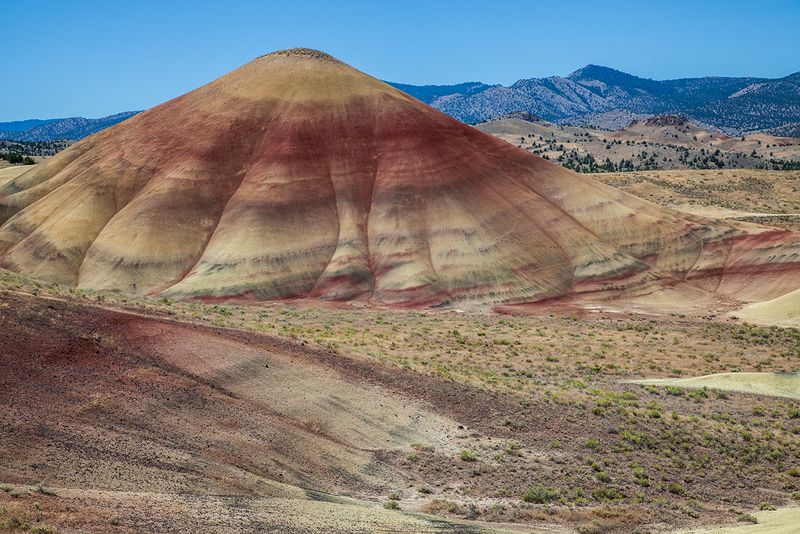
Beneath those famous colors lies the real reason this place carries the name fossil beds. The layers here preserve traces of ancient plants and creatures from a landscape that looked nothing like today’s dry hills.
Interpretive signs scattered along the trails explain how the formations came to be, turning a simple walk into a lesson stretching back millions of years. Geology fans especially enjoy the rocky formations perched atop the hills.
Visitors describe the sensation of marveling at wonders that took eons to build, calling it both surreal and humbling.
Long ago, this region held very different climates, and each colorful band records another slice of that changing world. You don’t need a science degree to appreciate it.
Just knowing you’re strolling across chapters of deep time makes every footstep feel a bit more remarkable.
A Shady Picnic Oasis in the Dry Country
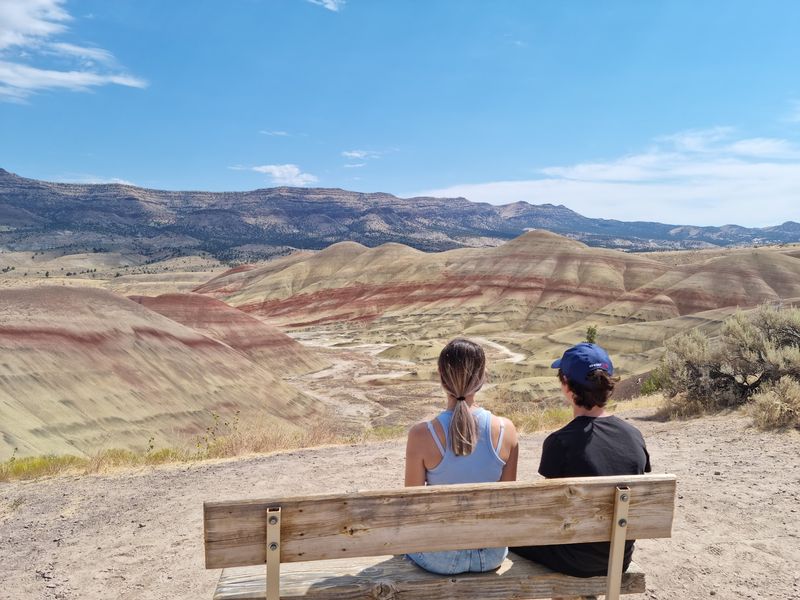
After hours under the desert sun, a patch of green feels like a small miracle. The picnic area at the Painted Hills surprises people with its shade trees and neatly kept grass, standing out against the surrounding heat.
Guests describe it as peaceful and tranquil, a genuine oasis even in the thick of summer. The trees shelter the picnic tables, and the lawn stays watered, so it makes an ideal spot to cool off and refuel.
Clean restrooms round out the comfort, though it’s worth knowing that at some parts of the unit you’ll only find porta-johns, so plan accordingly.
Pack a lunch, spread out under the branches, and let the quiet settle in. Few visitors expect such a restful little corner out here, which makes discovering it all the more delightful during a warm Oregon day.
Getting There and What to Pack
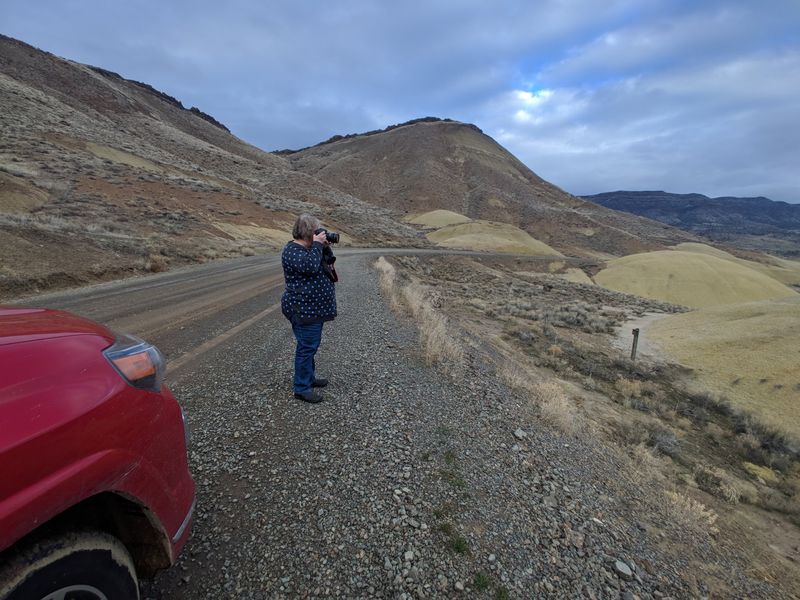
Half the adventure is the journey, and this one takes some planning. The unit sits well off the beaten path, and the final few miles run along a loose gravel road with washboard sections.
Regulars strongly suggest skipping a low front-wheel-drive sedan for that stretch, since the gravel gets slippery on the climb to the viewing areas. A sturdier vehicle handles it far better.
Cell service disappears out here, so mark your route beforehand and don’t rely on a live map. Bring plenty of water, especially on hot days when the dry air sneaks up on you.
If rain moves in, expect mud, and good shoes plus trekking poles help enormously. The monument stays open 24 hours every day of the week, and there’s no admission fee, making a spontaneous detour surprisingly easy once you commit to the drive.
Why This Painted Landscape Stays With You
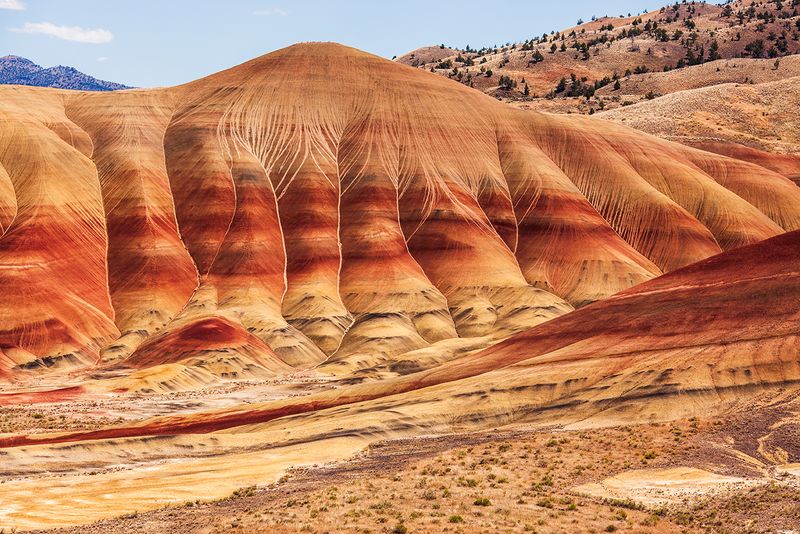
Some places you visit and forget. This isn’t one of them.
Travelers repeatedly call the Painted Hills a treasure of Oregon, the kind of spot that lingers in memory long after the dust settles off your boots.
Yes, it’s a haul to reach, and a few honest visitors admit the drive feels long for a single destination. Pair it with a bigger road trip and it shines even brighter.
Early May brings desert wildflowers and surprisingly good bird watching, adding another reason to explore in spring when crowds stay thin.
What sticks with most people is the feeling of standing somewhere both ancient and quietly overlooked. It’s uncrowded, unpretentious, and genuinely awe-inspiring.
For an Oregonian craving a discovery that tourists breeze right past, few places deliver quite like these softly glowing, endlessly colorful hills.
Share this story