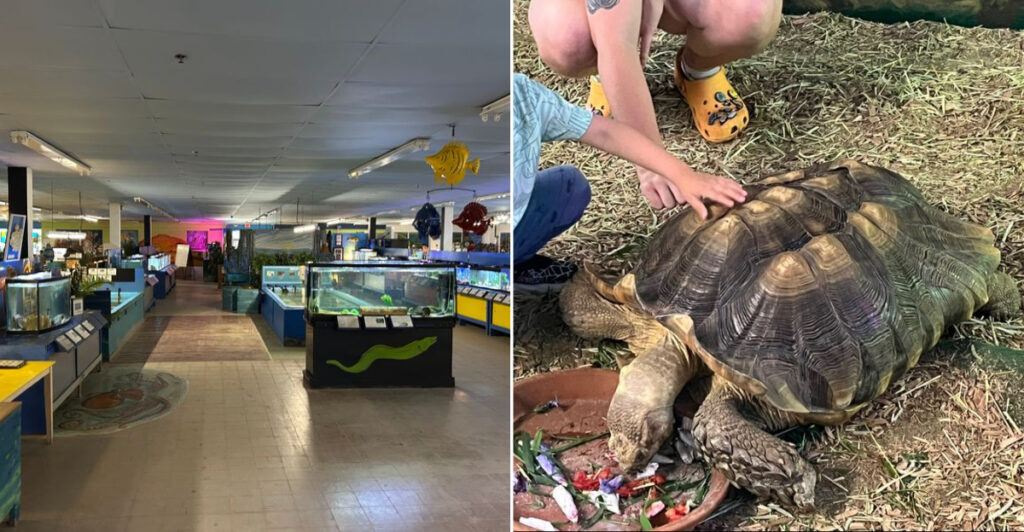
Rhode Island may be the smallest state in the country, but it punches well above its weight when it comes to family-friendly destinations. Tucked along the shores of Narragansett Bay, there is a local aquarium that has been quietly winning over families, school groups, and curious adults for years.
The place is loaded with touch tanks, live feedings, a free-roaming tortoise, and exhibits pulled straight from the waters of the bay. What makes it stand out is not just what is inside, but how the whole experience is put together in a way that keeps kids engaged for hours without anyone checking their phone.
Darwin Steals the Show Every Time
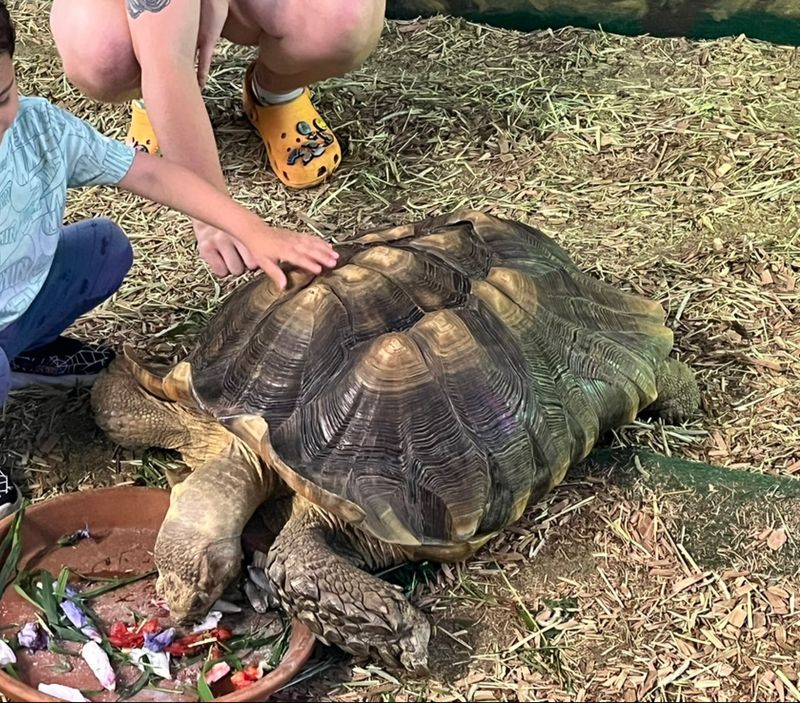
There is a 26-year-old Galapagos land tortoise named Darwin who roams the center on his own schedule, and he has become the undisputed star of every visit. Kids who arrive expecting fish tanks end up completely captivated by a creature that looks like it wandered out of a nature documentary.
Darwin moves freely through the center during certain parts of the day, and catching him mid-stroll is the kind of unexpected highlight that families talk about long after the drive home. He is large, curious in his own slow way, and remarkably calm around people of all ages.
Staff members are always nearby when Darwin is out, ready to share facts about Galapagos tortoises and answer the flood of questions that kids inevitably fire off. For toddlers especially, the combination of his size and his unhurried pace makes him absolutely impossible to ignore.
Touch Tanks That Actually Deliver
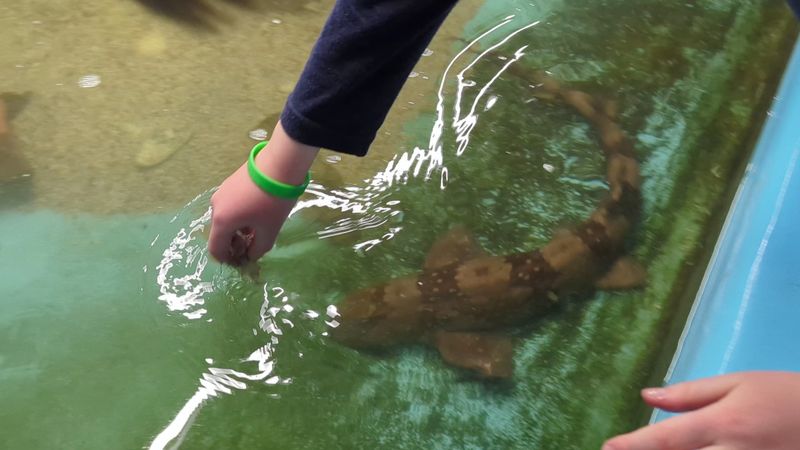
Touch tanks are the backbone of the Biomes experience, and there are a lot of them spread throughout the center. Families can reach in and interact with horseshoe crabs, rays, skates, spider crabs, and dogfish sharks, all in tanks designed for hands-on contact rather than just observation.
The variety keeps kids moving from one station to the next without losing interest. Each tank is labeled with clear information about the animals inside, so even when staff members are occupied elsewhere, there is always something to read and learn on the spot.
Clean sinks and hand-washing stations are available nearby, which is a practical touch that parents notice and appreciate. The touch tank area tends to draw the biggest crowds, especially on rainy days when the center fills up, but the layout is open enough that multiple families can participate at the same time without feeling packed in.
Feedings Every 30 Minutes
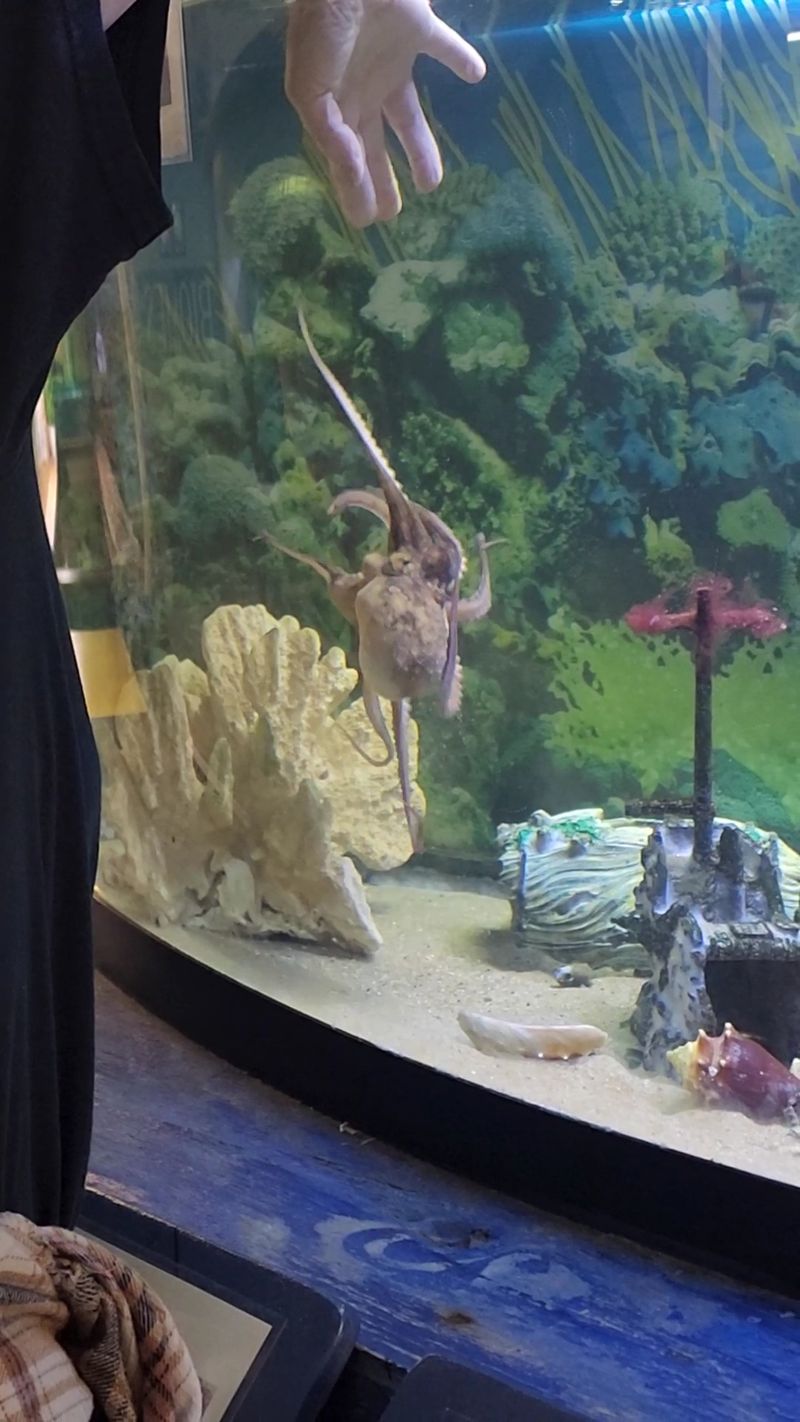
One of the most talked-about features at Biomes is the feeding schedule, which runs throughout the day with sessions happening roughly every 30 minutes. The posted schedule lets families plan their walk-through around the feedings rather than stumbling across them by chance.
The feedings cover a range of animals, including seahorses, the resident octopus, bamboo sharks, and horseshoe crabs. Staff members do not just drop food in the water and walk away.
They explain animal behavior, share personality quirks, and sometimes involve kids directly in the feeding process.
The octopus feedings in particular have a reputation for being genuinely entertaining. Staff have been known to create puzzles for the octopus to solve in order to reach its food, which turns a routine feeding into a mini science lesson about animal intelligence.
That kind of detail is exactly what separates this place from a standard fish-tank setup.
The Octopus With a Personality
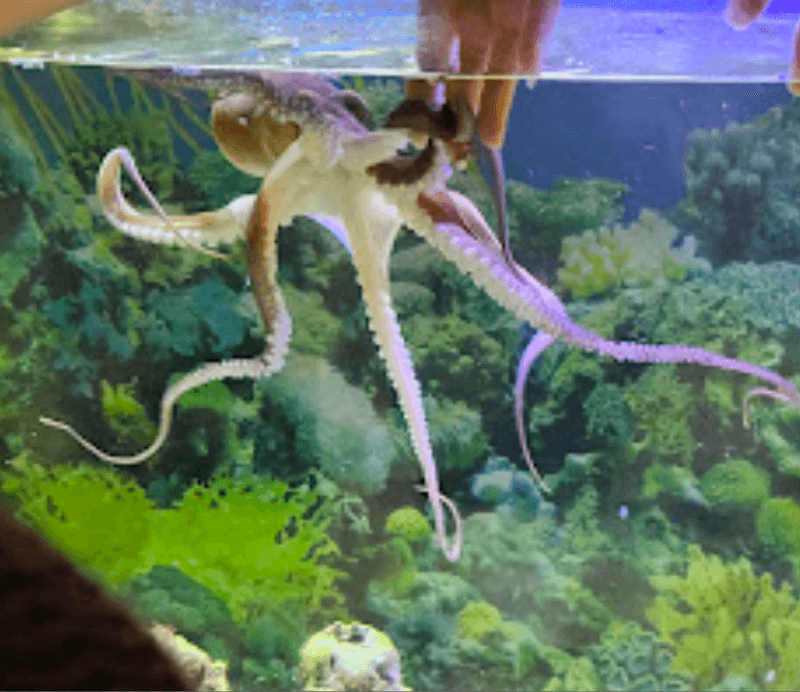
The octopus at Biomes has earned something of a fan following among regular visitors. Staff members who work closely with the animal have noticed distinct behavioral patterns and quirks, and they share these observations during feedings with a level of enthusiasm that is clearly genuine rather than scripted.
Octopuses are among the most intelligent invertebrates on the planet, and the Biomes team leans into that fact. The puzzle-feeding approach, where the octopus must work to retrieve its food, gives the animal mental engagement while giving visitors a front-row seat to some impressive problem-solving behavior.
For kids who have only ever seen an octopus in a book or on a screen, watching one move, react, and interact with its environment in real time is a completely different experience. It tends to be the moment that flips a skeptical older kid into a genuinely curious one, which is exactly the kind of outcome the center aims for.
Seahorses, Eels, and Bay Creatures
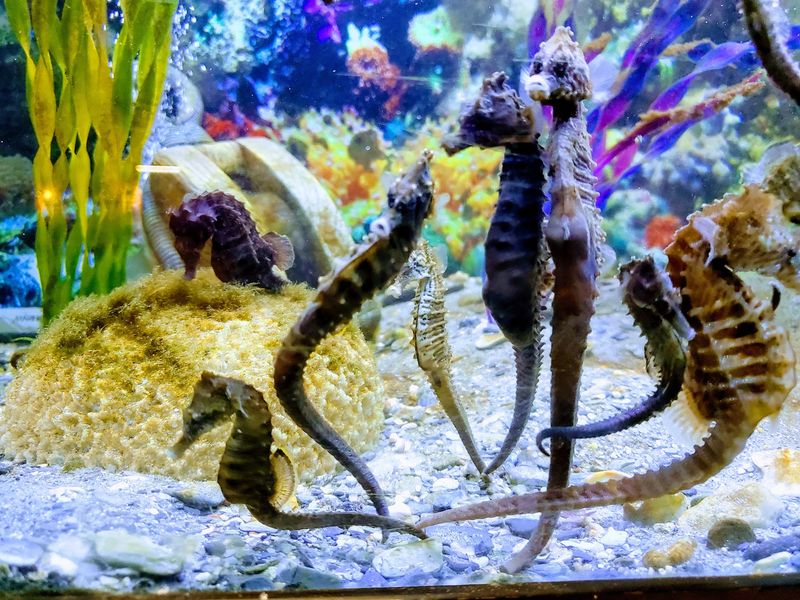
Beyond the headline attractions, Biomes holds an impressive range of marine life drawn from local and regional waters. Seahorses, moray eels, remoras, and a variety of fish native to Narragansett Bay fill tanks throughout the center, each with its own exhibit space and information panel.
The exhibits are designed to reflect the actual ecosystems found in and around Rhode Island waters, which gives the aquarium an educational angle that goes beyond novelty. Kids come away knowing something real about the creatures that live just offshore, which is a connection that a generic tropical fish display simply cannot make.
Staff are available throughout the floor to answer questions and add context to what visitors are seeing. The combination of well-labeled tanks and approachable staff means that the learning happens naturally, without anyone feeling like they are sitting through a lecture.
That balance keeps both kids and adults genuinely engaged throughout the visit.
Reptiles, Amphibians, and a Surprise Ferret
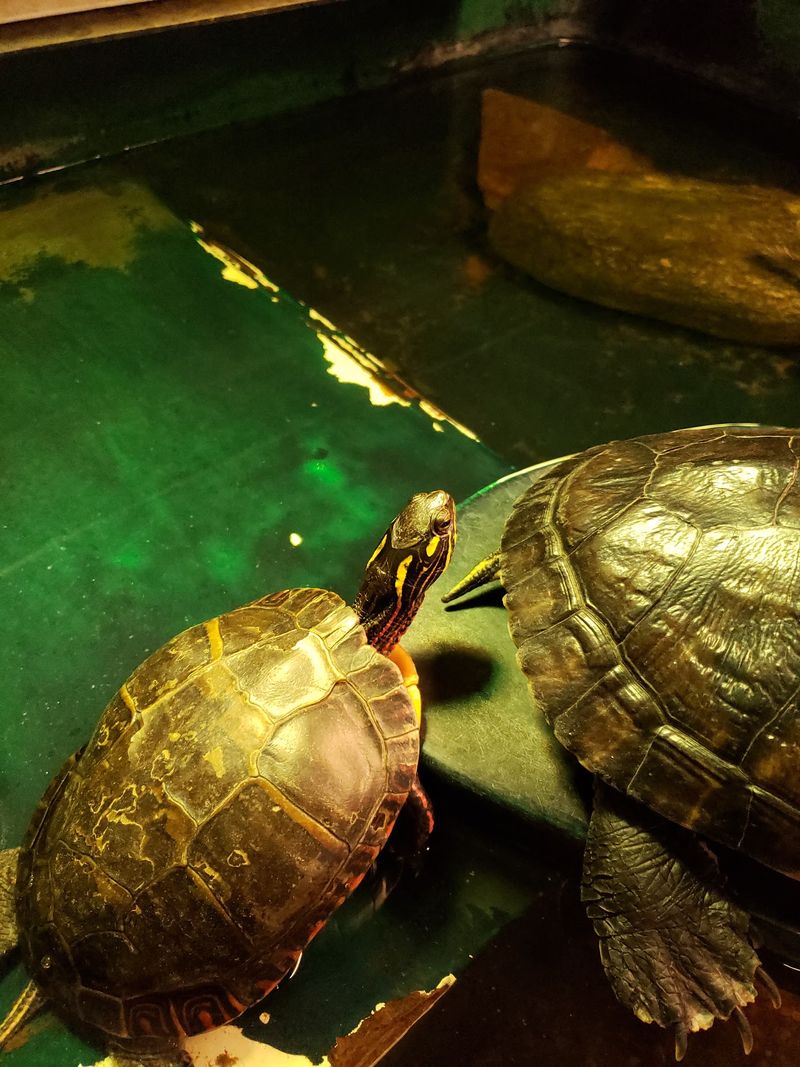
Biomes is not strictly a fish-and-crustacean operation. The center also houses an assortment of reptiles, amphibians, and at least one ferret, which adds a layer of variety that keeps the experience from feeling one-dimensional.
For kids who are more into land animals than sea creatures, this section of the center tends to be a major draw.
One standout feature is the opportunity to hold a resident snake named Buddy, which has become a memorable moment for many young visitors. Staff members are careful and encouraging with nervous kids, walking them through the experience at whatever pace they need.
The reptile and amphibian exhibits are woven into the larger floor layout rather than tucked away in a separate room, which means families encounter them naturally as they move through the space. It adds an element of surprise to the visit and keeps the energy up throughout, especially for kids who have already made their way through the main touch tanks.
A Corner Built Just for Toddlers
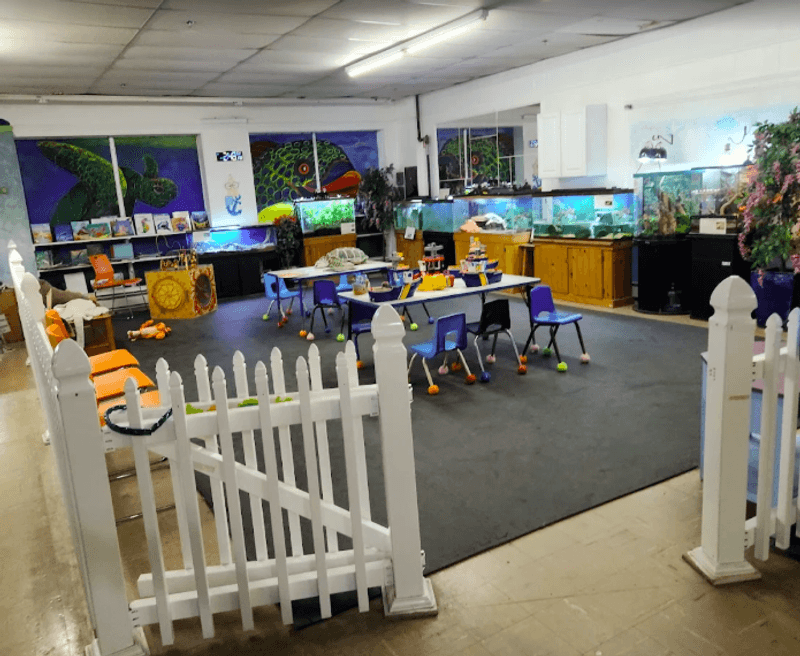
Families with very young children often worry about whether an aquarium visit will hold a toddler’s attention long enough to be worth the effort. Biomes addresses that concern directly with a dedicated corner designed specifically for small kids, complete with ferrets, toy boats, books, and a ball-and-pipe activity section.
The toddler area is set up so that parents can sit nearby while kids explore at their own pace. The scale of everything in that corner is sized for small hands and short attention spans, which makes a real difference for families traveling with children under three.
There are also tables throughout the center set up with board games and activities like checkers, Uno, Connect Four, and tic-tac-toe, which give older siblings something to do during slower moments. The layout overall feels like it was designed by someone who has actually taken kids to places like this and knows exactly where the friction points are.
Wall Murals and African Cichlid Tunnel
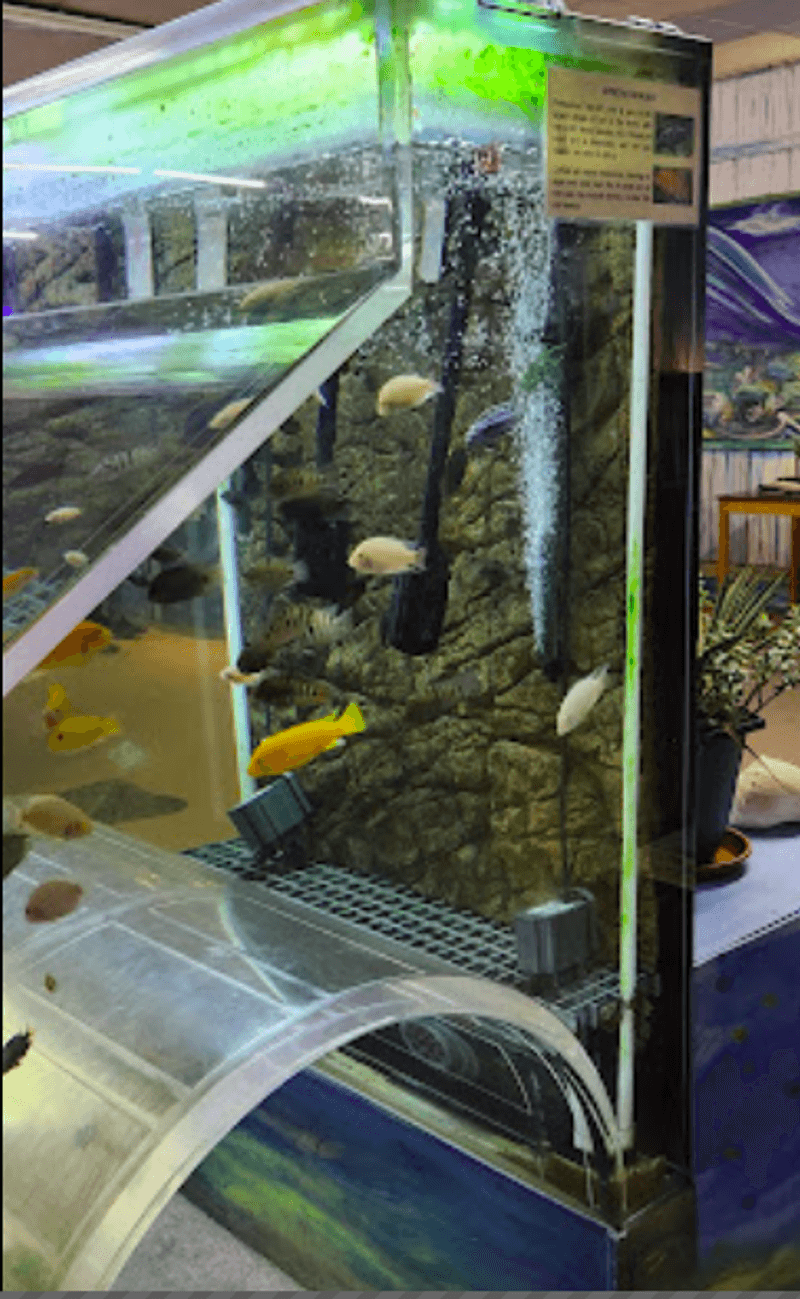
The interior of Biomes has a few design touches that set it apart from a purely utilitarian exhibit space. Hand-painted murals cover sections of the walls, giving the center a visual character that feels local and personal rather than corporate.
The artwork adds context to the marine life on display and keeps the space from feeling sterile.
One of the more creative installations is an African cichlid tunnel built low to the ground for small children. Kids can crawl or crouch through it and look up at fish swimming overhead, which is the kind of perspective-shifting experience that sticks with a child long after the visit ends.
Details like these reflect a thoughtful approach to how different age groups move through the space. The center clearly considered the experience from a child’s eye level, not just an adult’s, and that attention to physical scale and accessibility makes the whole visit feel more inclusive and well-designed.
Bamboo Sharks You Can Actually Feed
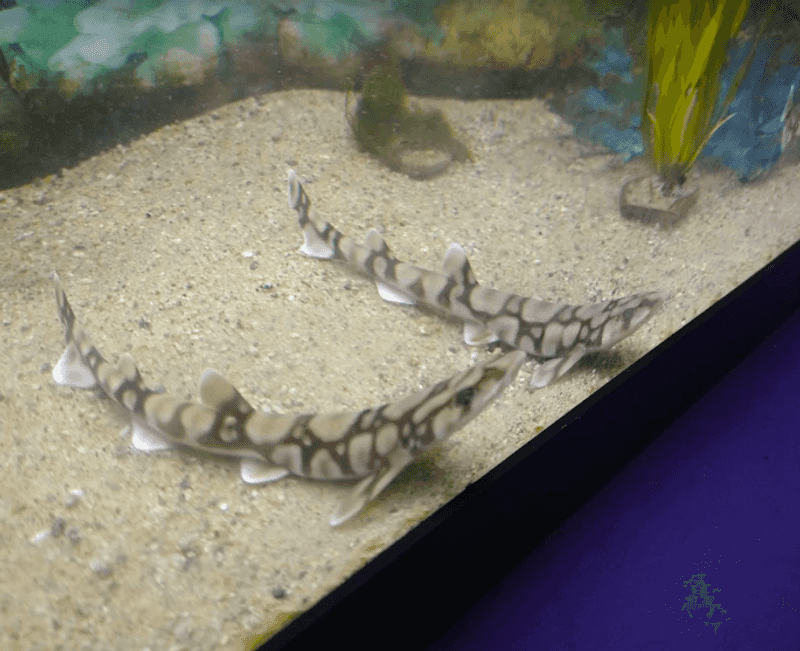
Feeding a shark is not something most kids get to put on their list of real-life experiences, but Biomes makes it possible through its bamboo shark exhibit. The feeding sessions are scheduled and supervised, and kids can participate directly rather than just watching from a distance.
Bamboo sharks are small, docile, and well-suited for this kind of interaction. They are not the dramatic, open-water species that movies have made famous, but up close they are genuinely fascinating, and the feeding process gives kids a tactile connection to an animal they would otherwise only read about.
The experience tends to be a confidence builder for kids who are initially hesitant. Staff are patient and clear about what to expect, and the structured format of the session keeps things calm and manageable even with a group of excited children involved.
It is the kind of activity that turns a good visit into a great one.
Memberships, Gift Certificates, and Repeat Visits
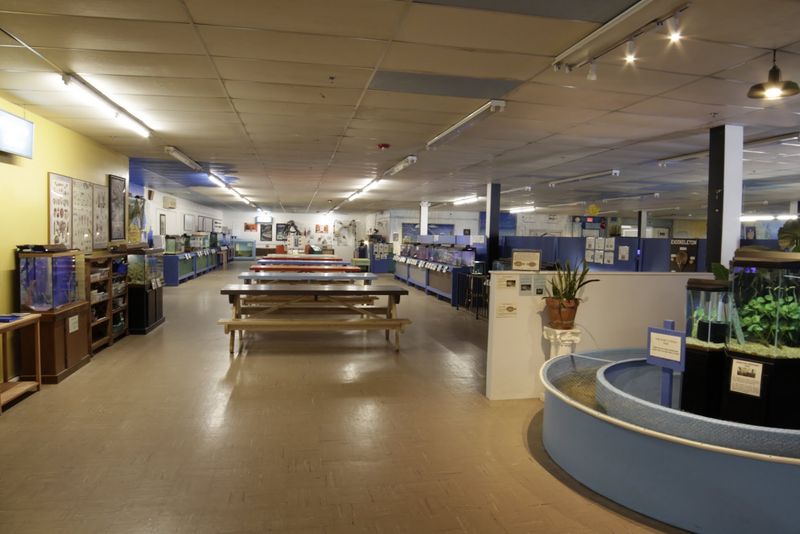
Biomes has a strong base of repeat visitors, and the membership program is a big reason why. Families who visit once and enjoy the experience often come back multiple times throughout the year, especially since the exhibits change and animals grow and behave differently over time.
Gift certificates are available and have become a popular option for grandparents and relatives looking for an experience-based present rather than a toy. The combination of education, hands-on activity, and genuine entertainment makes it a gift that works for a wide age range.
Annual memberships make financial sense for local families who plan to visit more than twice in a year, given the accessible ticket pricing. The center’s consistent hours, open every day from 12 to 5 PM, make it easy to build visits into a regular routine without much planning required.
That kind of low-barrier access is part of what keeps families coming back season after season.
Part of the Larger Narragansett Bay Story
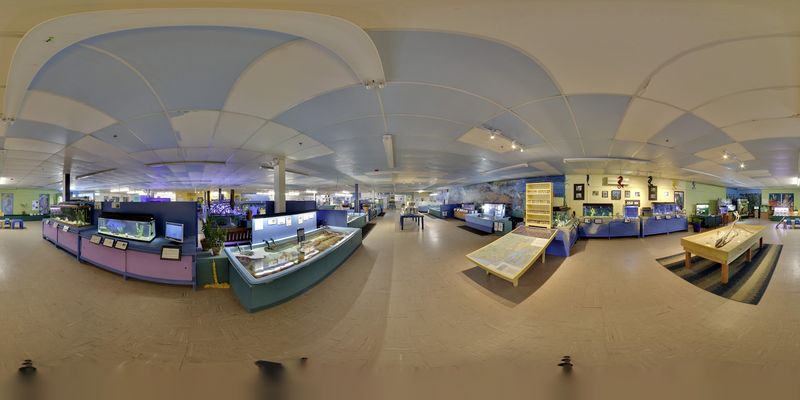
Biomes does not exist in isolation from the body of water it celebrates. The center’s focus on local sea life ties directly into the broader story of Narragansett Bay, one of the most ecologically significant estuaries on the East Coast.
Many of the animals on display were collected from those very waters, which gives the exhibits a living, regional relevance that national chain aquariums rarely achieve.
The center sits along the ebike trail corridor running between Warwick and Narragansett, which means it has become a natural stop for cyclists and active families exploring the area. That connection to the surrounding landscape reinforces the idea that what is inside the building is not separate from the world outside it.
For families visiting Rhode Island for the first time, a stop at Biomes offers a genuine introduction to the marine ecosystems that define this part of New England. It is a place that earns its place on the itinerary not through spectacle, but through substance.
Where the Bay Comes Inside
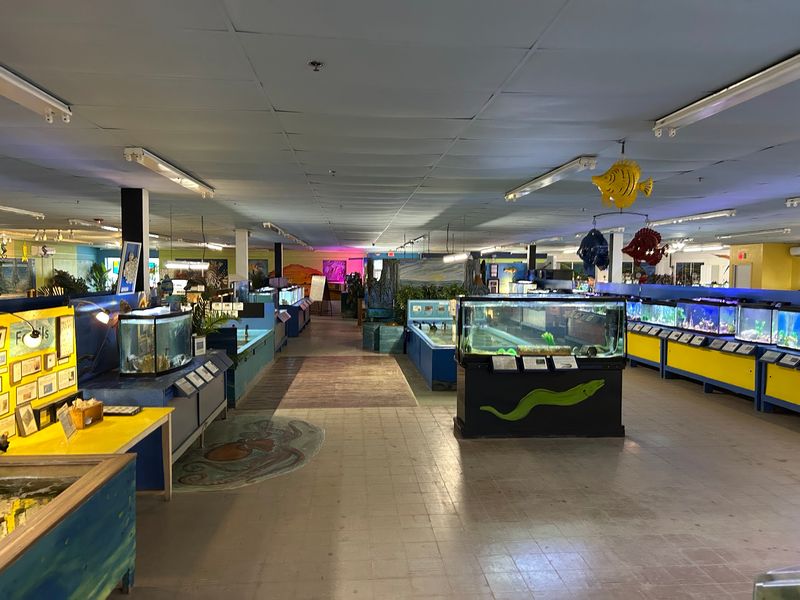
Right on Post Road in North Kingstown, Rhode Island, Biomes Marine Biology Center sits at 6640 Post Rd, North Kingstown, RI 02852, and it does not try to look like something it is not. The exterior is understated, which catches a lot of first-timers off guard before they walk through the door.
The building holds Rhode Island’s largest aquarium, and the focus is entirely local. Most of the exhibits feature sea life pulled directly from Narragansett Bay and surrounding Rhode Island waters, which gives the whole place a regional identity that bigger chain aquariums rarely match.
The aquarium is open daily from 12 to 5 PM, which makes afternoon visits easy to plan around morning beach trips or other activities in the area. Parking is free and plentiful, which is a small but genuinely welcome detail that families with young kids tend to appreciate right away.
Share this story