Block Island, Rhode Island sits about thirteen miles off the coast, and most people who visit spend their time on land. But the real character of this island reveals itself on the water, specifically on the calm, wildlife-rich waters of Great Salt Pond.
Whether you are a first-timer nervous about tipping over or a seasoned paddler looking for local knowledge, this small operation on Block Island has built a loyal following for good reason. The guide behind it all, Corrie, is a Block Island native with a background in environmental science, and she brings that knowledge to every tour in a way that feels more like a conversation than a lecture.
The Guide Who Grew Up on the Water
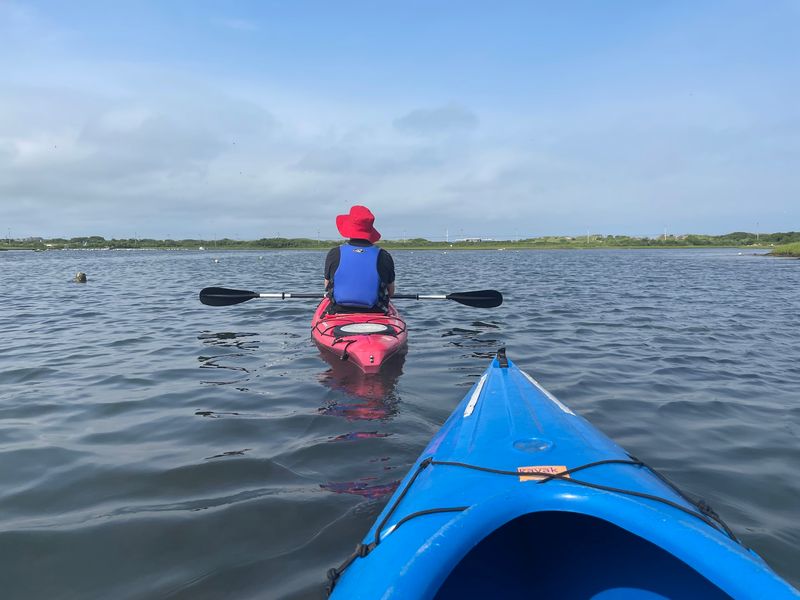
Corrie is the kind of guide who turns a two-hour paddle into something worth talking about for years. She grew up on Block Island and holds a degree in an environmental field, which means the information she shares during tours is grounded in real science, not just local folklore.
Her approach is relaxed and conversational. She does not lecture from a script.
Instead, she responds to what the group is curious about, pointing out wildlife, explaining tidal patterns, and sharing bits of island history as they naturally come up along the route.
What stands out most about her style is the genuine enthusiasm she brings to every outing. Families with young kids, solo paddlers, and bachelorette groups have all left with the same impression: Corrie knows this pond the way most people know their own backyard, and she is genuinely happy to share it with anyone willing to pick up a paddle.
Great Salt Pond and Why It Matters
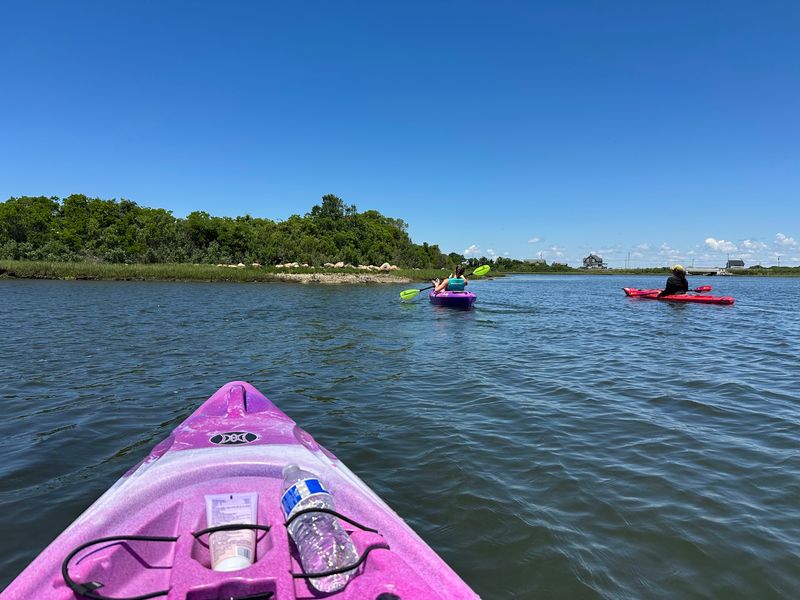
Great Salt Pond is not your average body of water. It is a protected harbor and a functioning coastal ecosystem that supports a wide range of bird species, marine life, and plant communities.
The pond covers a significant portion of the island’s interior and connects to the ocean through a maintained channel.
Because the pond is sheltered from open ocean swells, it provides ideal conditions for flatwater paddling. The water stays relatively calm on most days, making it accessible to beginners while still offering enough distance and variety to keep experienced paddlers interested.
The ecological value of the pond is something Corrie explains during tours with clear, easy-to-follow detail. She covers how the tidal flow works, why the salt marshes are so important for water quality, and what role the pond plays in supporting migratory birds.
By the end of a tour, most people leave with a much clearer picture of why places like this are worth protecting.
Perfect for First-Timers and Nervous Paddlers
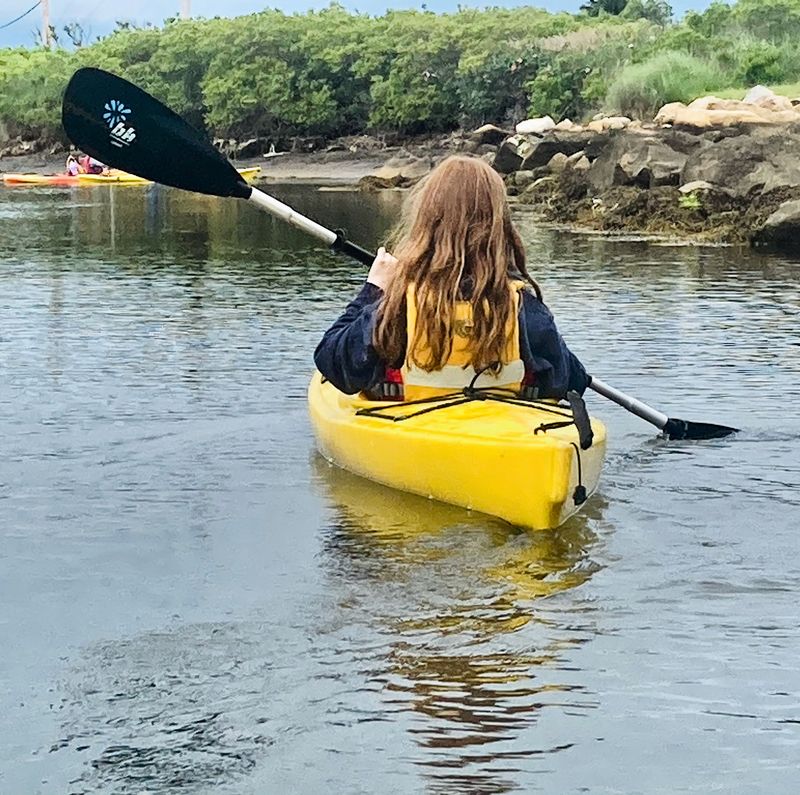
Not everyone who shows up at Pond and Beyond has kayaked before, and that is completely fine. The operation is set up with beginners in mind.
Before anyone gets on the water, Corrie walks through the basics of paddling technique, how to steer, and what to do if the kayak starts to drift.
The launch area is shallow and calm, which takes a lot of the anxiety out of that first push off from shore. Tandem kayaks are available for those who want a more stable ride or who prefer to paddle with a partner sharing the work.
The equipment is kept in solid condition, which matters more than people often realize. Well-maintained kayaks track better and respond more predictably, which directly affects how confident a new paddler feels out on the water.
Loaner dry bags are also available, a small but thoughtful detail that protects phones and wallets during the paddle.
The Horseshoe Crab Moment That Nobody Forgets
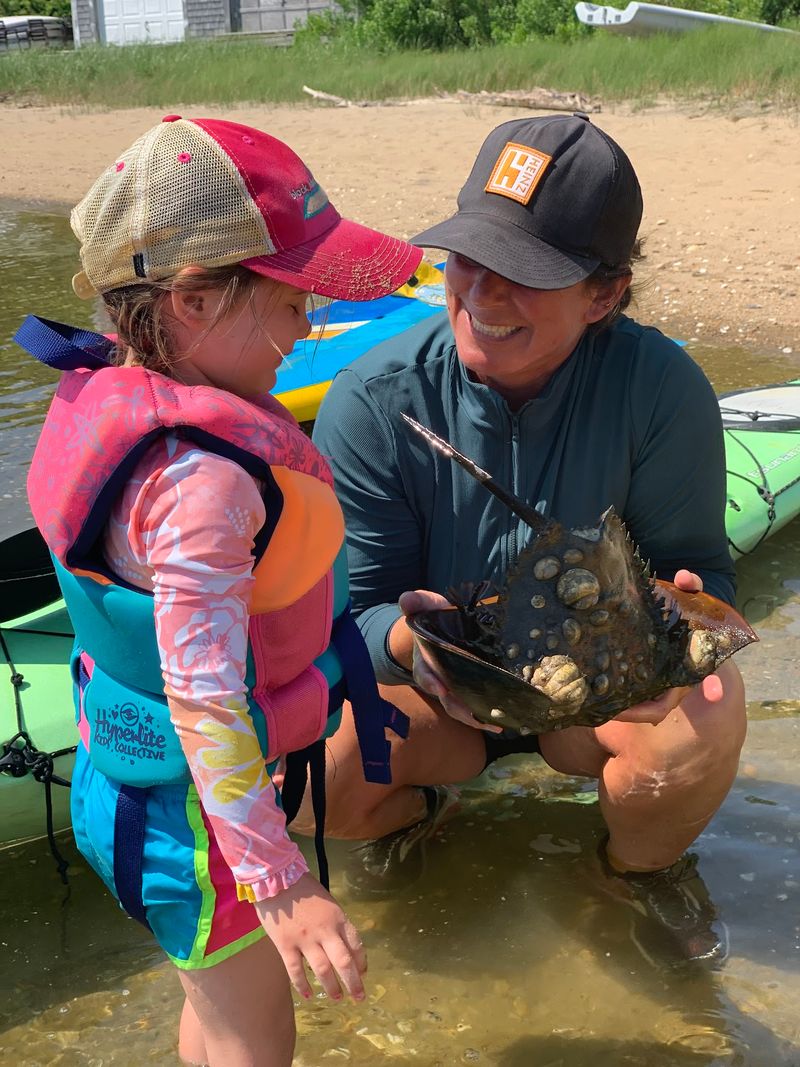
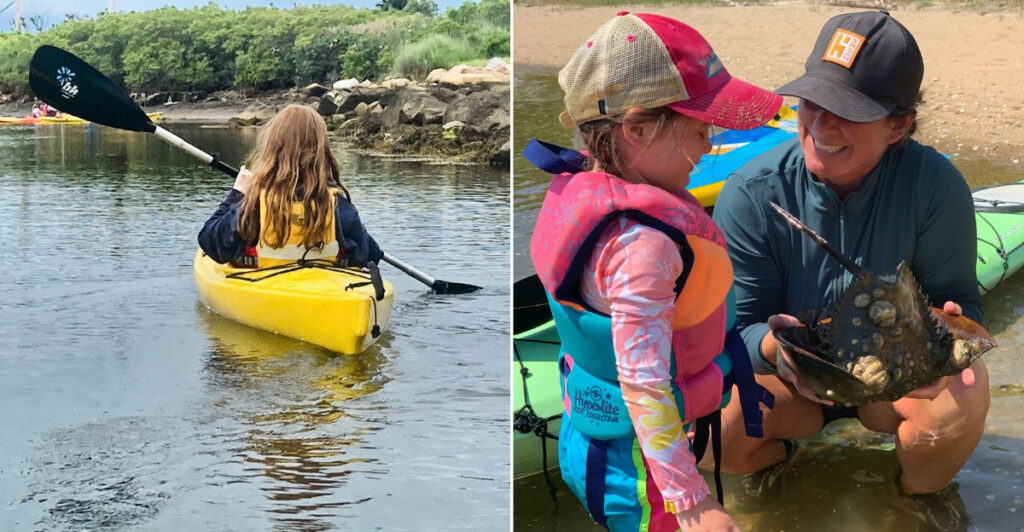
There is one moment that comes up again and again when people talk about their experience at Pond and Beyond, and it involves a horseshoe crab. During tours on Great Salt Pond, Corrie has been known to spot one of these prehistoric-looking creatures in the shallows and carefully scoop it up so the group can get a close look.
Horseshoe crabs are not actually crabs at all. They are more closely related to spiders and scorpions, and they have been around for roughly 450 million years.
Corrie explains their role in the local ecosystem, including how their eggs serve as a critical food source for migratory shorebirds along the Atlantic flyway.
For kids especially, holding or seeing a horseshoe crab up close is the kind of hands-on moment that makes a nature tour stick in the memory long after the paddle is over. It is one of those unexpected highlights that no guidebook could have prepared anyone for.
Birds, Egrets, and the Wildlife Along the Route
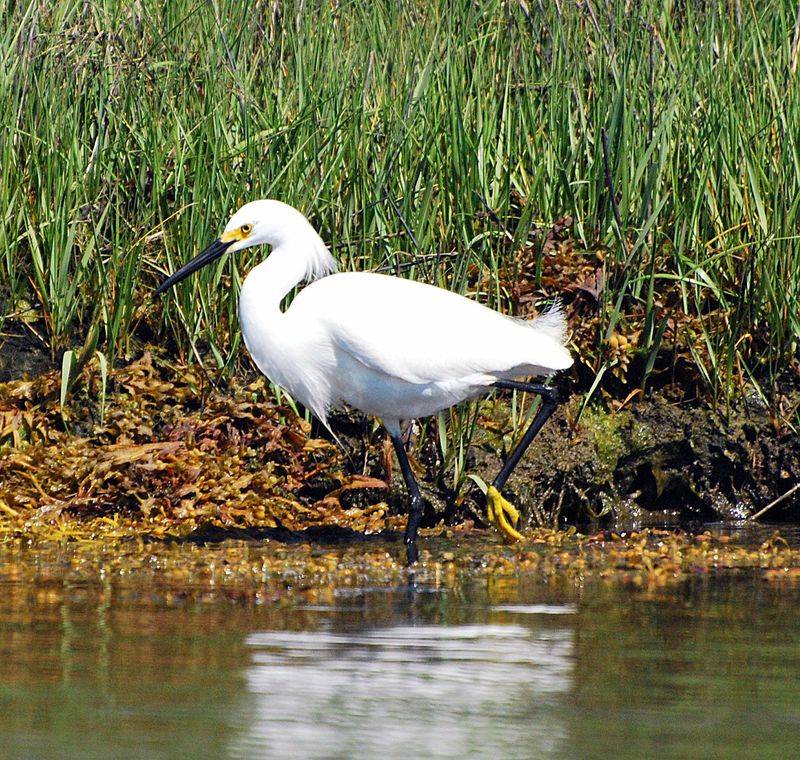
The birdwatching along the tour route is genuinely impressive, even for people who do not consider themselves birders. Great Salt Pond and the surrounding marshes attract a wide variety of species, particularly during migration season and throughout the warmer months when the pond is most active with wildlife.
During tours, Corrie has pointed out two types of egrets, common and least terns, American oystercatchers, and ducklings navigating the shallows near the marsh edges. The oystercatcher is a particularly striking bird, with its bright orange bill and loud, distinctive call that carries across the water.
The calm pace of a kayak or paddleboard makes it far easier to observe birds without startling them, compared to a motorized boat. Getting low on the water and moving quietly through the channels gives paddlers a perspective on the marsh that is simply not available from shore.
Wildlife encounters here feel earned rather than staged.
What Corrie Teaches About Salt Marshes
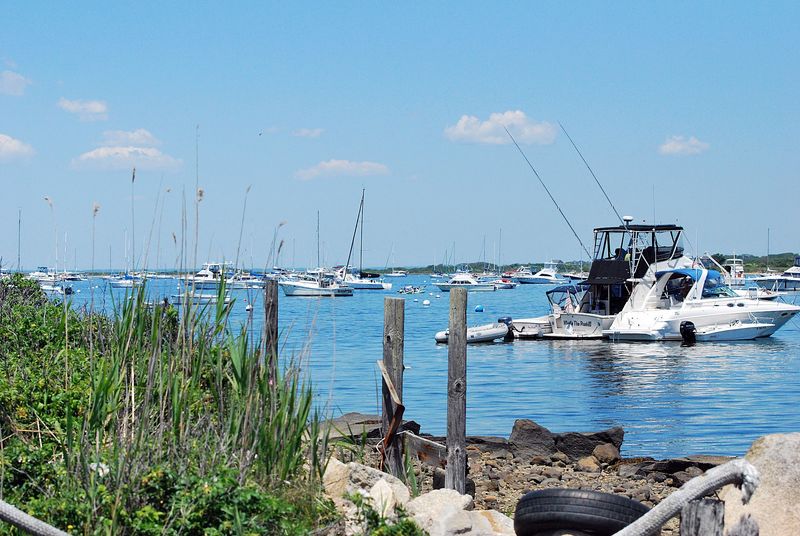
Salt marshes tend to get overlooked. They are not the dramatic crashing waves that end up on postcards, and they do not look like much from a distance.
But up close, from inside a kayak drifting through a tidal channel, they reveal a level of biological activity that is hard to overstate.
Corrie explains the role of cordgrass, the dominant plant in most Atlantic salt marshes, and how it stabilizes sediment, filters runoff, and provides shelter for juvenile fish and invertebrates. She also covers how tidal flow connects the marsh to the open pond and why disrupting that flow can have cascading effects on the whole system.
The information is delivered in plain, accessible language that works for adults and kids alike. Nobody leaves a Pond and Beyond tour feeling talked down to.
The goal seems to be genuine understanding rather than a rehearsed environmental speech, and that distinction makes the whole lesson land much more effectively.
Tours That Work for the Whole Family
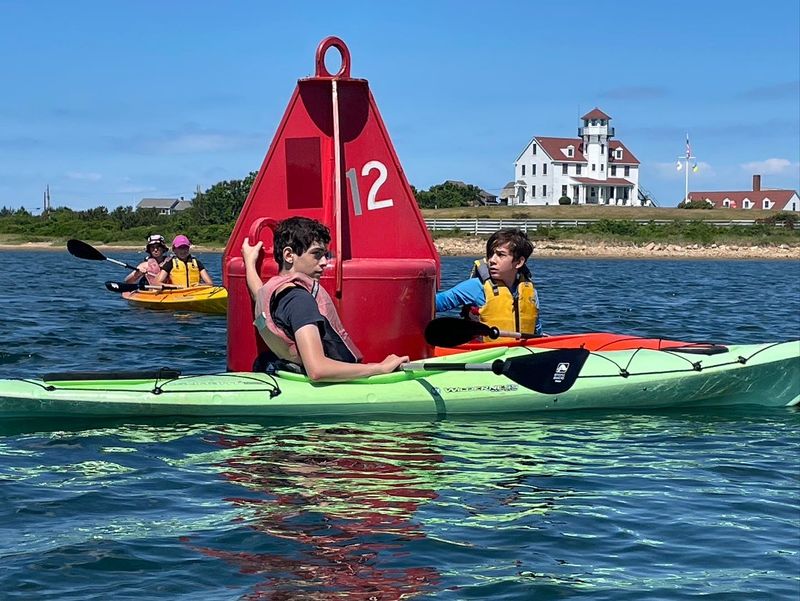
Pond and Beyond has welcomed kids as young as two years old on its tours, which says a lot about how adaptable the experience is. Corrie has a knack for finding ways to keep children of different ages engaged, whether that means explaining the lifecycle of a horseshoe crab to a ten-year-old or pointing out a great egret to a toddler from the front of a tandem kayak.
Families who have made Block Island a regular summer destination often return to Pond and Beyond year after year, treating it as a reliable anchor activity for the trip. The consistency of the experience matters for repeat visitors, and the operation delivers that reliably.
The calm water of Great Salt Pond means even nervous parents can relax once they are out on the water. The environment is forgiving, the pace is unhurried, and the whole outing tends to run somewhere around two hours, which is long enough to feel substantial without exhausting younger paddlers.
Paddleboard Yoga and Other Ways to Get on the Water
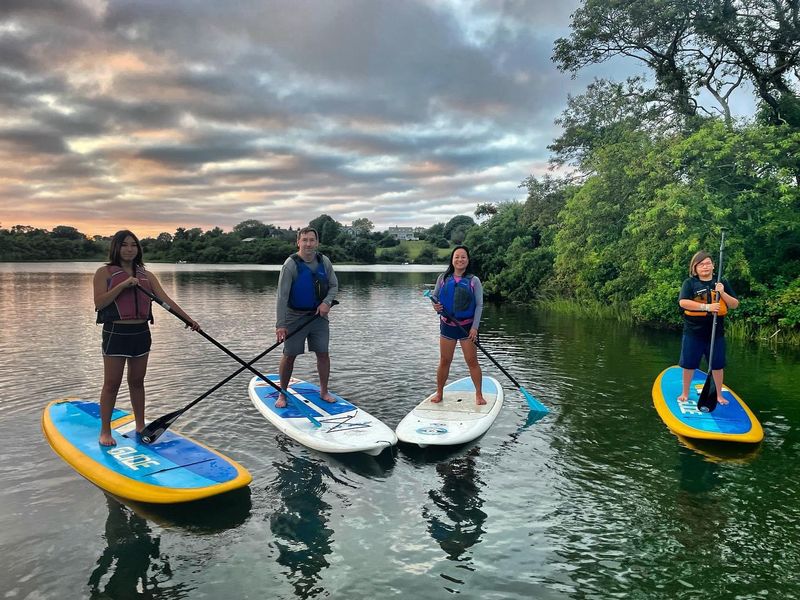
Kayaking is not the only way to experience Great Salt Pond through Pond and Beyond. The operation also offers stand-up paddleboarding, including paddleboard yoga sessions led on the calm surface of the pond.
It is a niche offering that has attracted both curious first-timers and people with existing yoga practice who want to add a new challenge.
Balancing on a paddleboard requires a different kind of physical focus than mat-based yoga. The surface moves, which forces a more active engagement with core muscles and shifts the whole experience into something that feels both familiar and completely new at the same time.
SUP rentals are also available for those who just want to paddle on their own without a guided tour. The pond’s calm conditions make it well-suited to paddleboarding, even for people who have never tried it before.
The staff takes the time to cover the basics before anyone heads out independently, which keeps the experience safe and enjoyable.
The Sunset Tour and Evening on the Pond
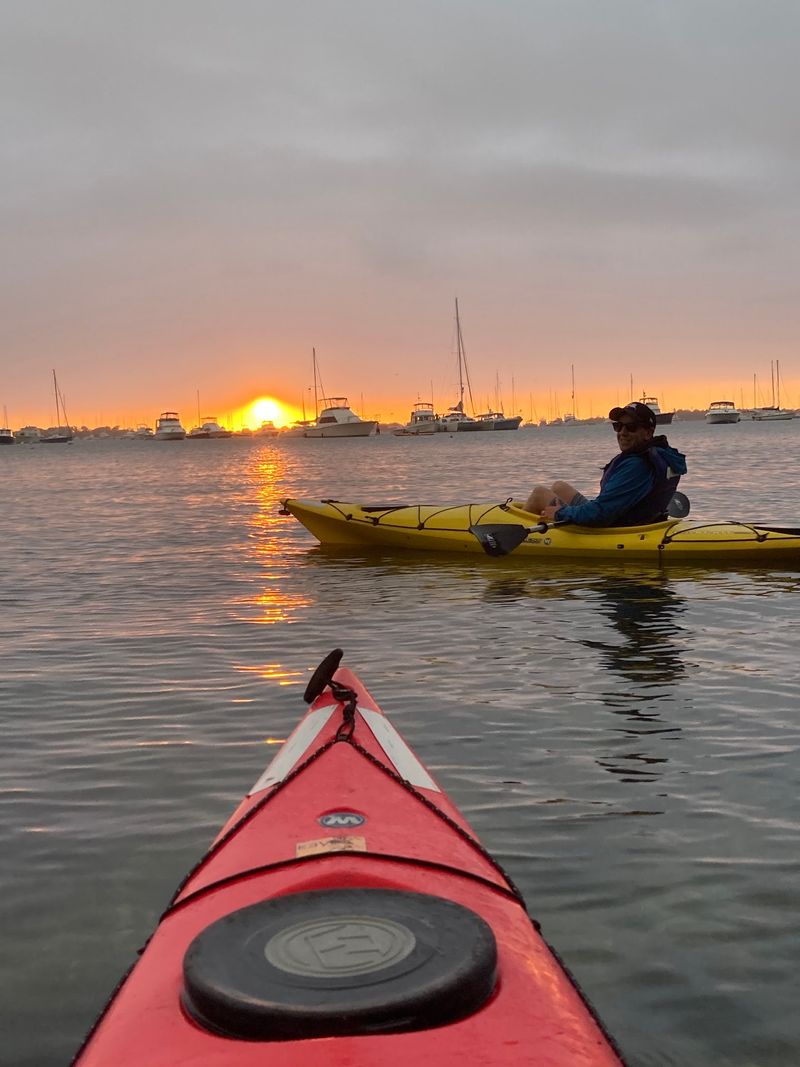
Not every tour at Pond and Beyond happens in the morning. The operation also offers sunset kayak and paddleboard tours, which give the pond a completely different character.
The light shifts across the water, the bird activity changes as the day winds down, and the overall pace of the tour tends to feel more relaxed than the morning sessions.
Great Salt Pond at dusk has a stillness to it that is hard to find during the busier parts of the day. Boat traffic on the water decreases as the evening approaches, and the light reflecting off the surface creates conditions that experienced photographers and casual observers alike tend to find worth the trip.
Corrie continues sharing information about the pond during evening tours, including details about how nocturnal species use the marsh after dark. The sunset tour is a popular choice for couples, and it also works well for families who prefer to spend their mornings exploring the rest of the island before hitting the water.
Island History Seen From the Water
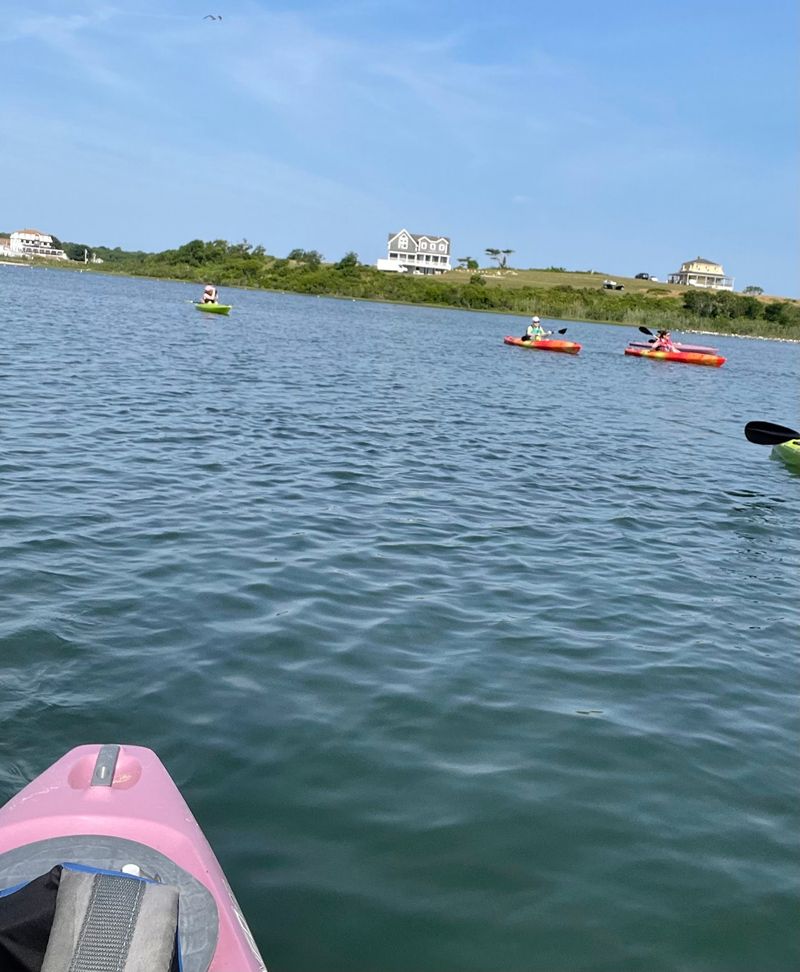
One of the more unexpected parts of a Pond and Beyond tour is the history lesson that comes woven into the paddle route. From the water, certain historic homes and structures on Block Island become visible in ways that are not apparent from the road network.
Corrie points these out during tours and provides context about the island’s settlement history.
Block Island has a long history tied to fishing, farming, and maritime trade, and the pond itself played a central role in that history as a natural harbor. Understanding the human history of a place alongside its ecological story gives the whole tour a richer, more layered quality.
The combination of natural science and local history is something that distinguishes a Pond and Beyond tour from a simple rental experience. Paddlers come away with a sense of the island’s full story, not just the wildlife checklist.
That depth of context is something that is difficult to get from any other activity on Block Island.
Planning Your Visit to Pond and Beyond
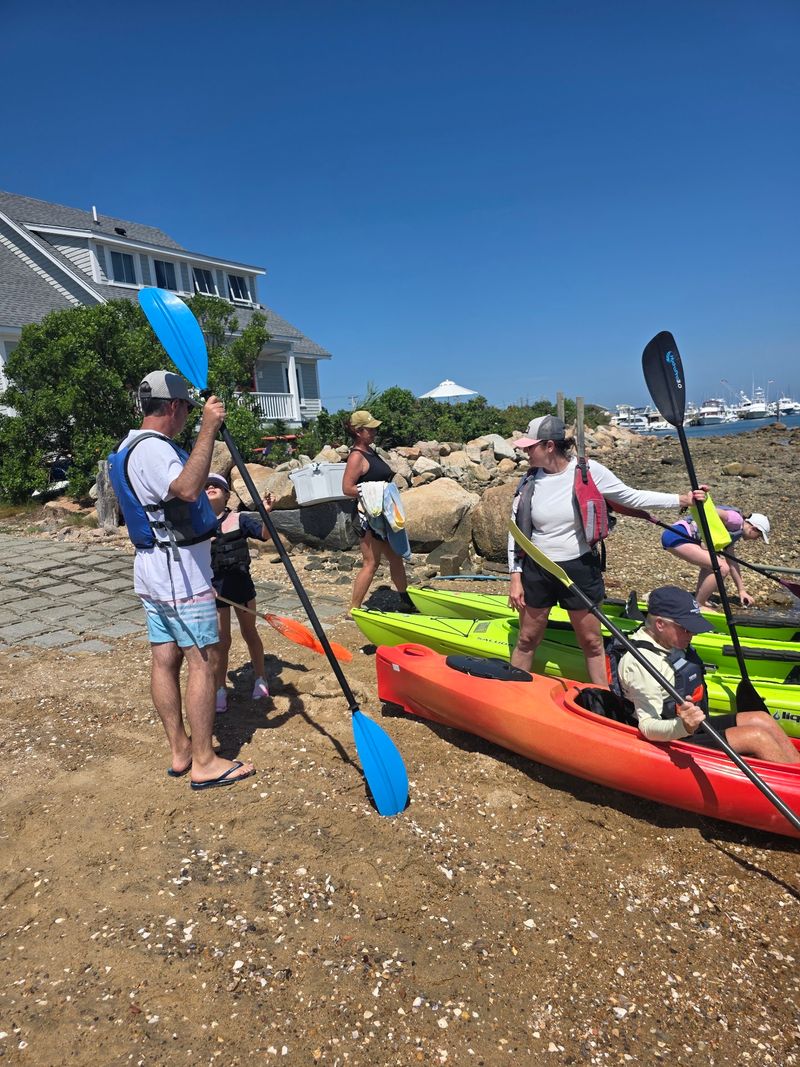
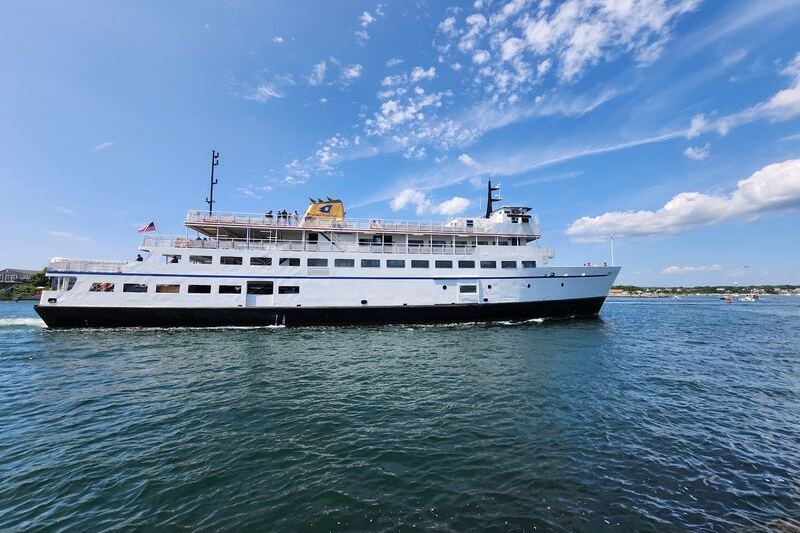
Getting to Pond and Beyond starts with getting to Block Island, which means taking the ferry from Point Judith in Narragansett or from other departure points in Connecticut and Long Island. The operation is located at 216 Ocean Ave in New Shoreham, and it is close enough to the main ferry dock that some visitors walk directly there without needing any other transportation.
Tours and rentals are available throughout the summer season, and Corrie has shown flexibility with scheduling, even accommodating groups that missed an earlier ferry. Booking in advance is a smart move during peak summer weeks, especially around holidays like the Fourth of July when the island gets particularly busy.
The operation is also accessible for people with limited mobility. The water-level launch setup removes many of the physical barriers that make kayaking difficult at other locations.
Pond and Beyond has worked with disabled paddlers before, and the staff approaches those situations with patience and practical problem-solving rather than hesitation.
Where the Journey Begins on Block Island
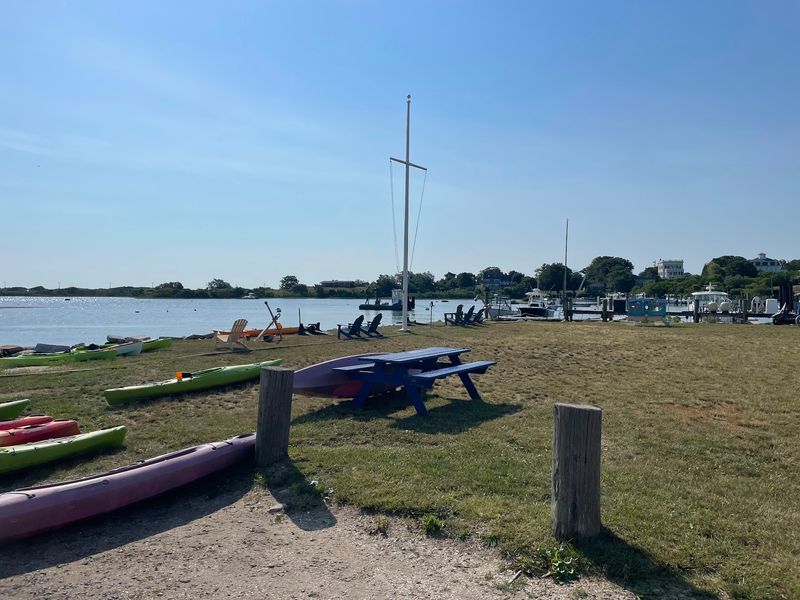
Pond and Beyond Kayak is located at 216 Ocean Ave, New Shoreham, RI 02807, right on the edge of Great Salt Pond on Block Island. The setup is refreshingly straightforward.
Kayaks and paddleboards are stored close to the water, which means the transition from dry land to paddling is quick and easy.
The location works in favor of beginners especially, since the water near the launch point tends to stay calm even when conditions elsewhere on the island are rougher. There is no long carry or complicated logistics to deal with before getting on the water.
Block Island itself is accessible only by ferry or small plane, which gives the whole experience a remote, off-the-grid quality that many travelers find hard to replicate anywhere else. Starting a paddle tour here feels less like a tourist activity and more like getting a genuine look at one of Rhode Island’s most protected natural spaces.
Share this story