
A plain building near Barnegat Bay once handled work far bigger than its quiet exterior suggests. During World War II, New Jersey was not just watching history happen overseas, it was helping carry American communications across the world.
Today, the site sits silent, fenced, and easy to miss unless someone knows why it matters. The story ahead follows the address, the wartime role, the marshland setting, the old communications web, and the practical limits that make this landmark more of a look-and-learn stop than a walk-through attraction.
America’s Voice Across Wartime Distance

Here is the part that turns a fenced-off building into a conversation starter: the station is tied to the era when America needed reliable long-distance communication during World War II. The title phrase, America’s voice, fits because international broadcasting and radio transmission were essential tools for sending official messages far beyond the local shoreline.
During that period, transmitting stations did work most people never saw. They were not glamorous front-page places, yet they helped carry information over long distances when communication itself had national importance.
Ocean Gate Radio Transmitting Station belongs to that overlooked category of infrastructure. It represents the kind of place where engineering, geography, and national purpose met in a practical way.
Nothing in the provided data supports treating the site as a restored wartime exhibit, so it is better understood as a surviving landmark connected to that larger communications story. Its importance comes from what it once did, not from polished displays or scheduled interpretation on site.
That makes it especially interesting for people who like history with a little homework attached. The building may be quiet now, but its wartime connection gives the stop a reason to linger in the mind after the map app has moved on.
The ITT Chapter Behind The Fence

A useful clue to the site’s identity comes from its connection to ITT, International Telephone and Telegraph. That detail helps place the building within a larger communications industry, not just as an isolated local structure with a mysterious past.
ITT was associated with major telecommunications work, and the Ocean Gate site is remembered locally as part of that world. The available information describes the property as having once had poles and wires spread across many acres of marshland.
That matters because transmitting stations were not only about a single building. The surrounding infrastructure could be just as important, with layouts designed for the technical demands of sending signals over distance.
One local account describes the old arrangement as a spider web type configuration across marshland. That is not a reason to trespass or hunt for remains, but it does help explain why the property footprint was more complex than the current roadside view might suggest.
The ITT connection also keeps the station from feeling like a random abandoned structure. It was part of a serious communications operation, and that gives the plain exterior a deeper role in New Jersey’s overlooked technology history.
Marshland Wires And A Hidden Engineering Footprint
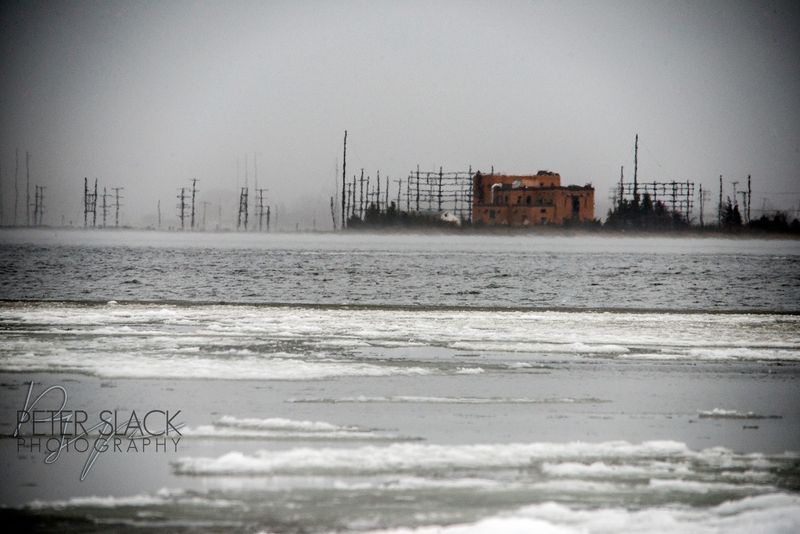
Maps can make the area look simple, but the former transmitting grounds had a more involved character. The property was remembered as spreading across many acres of marshland, with poles and wires running in multiple directions.
That detail is one of the strongest reasons the station stands out. A radio transmitting site needed more than walls and a roof, because the land around it could become part of the working system.
The marshland setting was not a decorative backdrop. It was part of the station’s operating environment, and the remembered web of poles and wires suggests a site built around function rather than public presentation.
For a modern day-tripper, that means the most interesting feature may be what is no longer easy to read from the road. The current fenced property hints at a past network that once extended far beyond the building itself.
New Jersey has many landmarks that are easy to interpret at a glance, but this one asks for a slower kind of attention. The story is not sitting on a plaque in the supplied information, so the old engineering footprint becomes the puzzle piece that makes the place stick.
A Landmark Older Than The Automobile Era

Long before Bayville became a point on a modern navigation screen, the broader area had transportation links that shaped how people understood the landscape. Local memory connects the landmark to the days of railroads before automobiles became dominant.
The available information mentions railroads running across the Toms River and across Barnegat Bay. That detail widens the story from radio technology to the older movement networks that once crossed this part of New Jersey.
It also explains why the station can feel rooted in more than one chapter of local history. The site is not only about wartime broadcasting or corporate telecommunications, but also about a region that has been shaped by routes, crossings, and infrastructure for generations.
For New Jersey readers, that layered past is the real hook. Shore-area history often gets flattened into beach days and seasonal traffic, yet places like this show a more technical and connected side of the coast.
The railroad reference does not turn the station into a rail attraction, and the supplied details do not describe surviving tracks at the site. Still, it adds context, reminding readers that Bayville’s quiet landmark sits within a much older pattern of movement and communication.
The Off-Limits Reality Of The Site

Curiosity needs a seatbelt here, because the station is not a walk-in attraction. The building is abandoned, gates keep the property off limits, and public access inside or directly around the structure is not available based on the provided information.
That point deserves plain wording because the site can attract people who like old infrastructure. A good visit means staying outside restricted areas, keeping the stop brief if needed, and treating the property boundary as part of the experience.
Some online comments mention people being noticed quickly when they get too close, which is a helpful reminder rather than a dare. The best approach is simple: do not enter the property, do not test the gates, and do not turn a history stop into a headache.
The station’s strongest value for casual travelers is visual context from legal public areas and the history attached to the address. Anyone hoping for interior rooms, guided tours, artifacts, or hands-on displays should adjust expectations before going.
That may sound limiting, but it also keeps the article honest. Ocean Gate Radio Transmitting Station is compelling because of what it represents, not because it functions like a traditional visitor attraction.
A Drone-Friendly Reputation From Outside The Gates
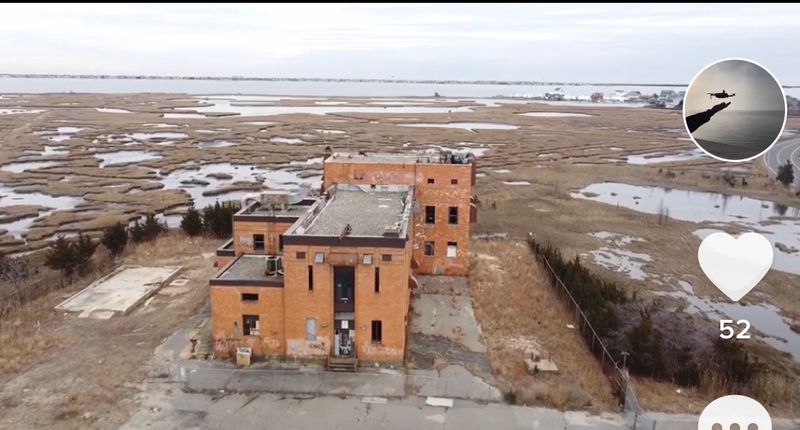
Oddly enough, the most enthusiastic modern angle attached to the place involves cameras in the air. Available public comments describe the station as very cool to look at and mention it as a spot people have considered for drone photography.
That makes sense for a site with a restricted ground-level footprint. A drone can show the relationship between the building, the fenced land, and the surrounding marshland without needing to step into off-limits space.
Common sense still has to run the control panel. Drone users are responsible for following all applicable rules, avoiding restricted areas, and respecting property boundaries, because the data does not indicate that the station itself grants special access.
The drone angle also explains why the site keeps attracting attention even without public tours. From ground level, the building is a quiet relic; from above, the layout can better suggest why a transmitting station needed space around it.
For readers who do not fly drones, this section still offers a useful takeaway. The station is best understood as a landscape-scale communications site, not merely as a single abandoned building on Bayview Avenue.
The Local Plea To Save The Relic
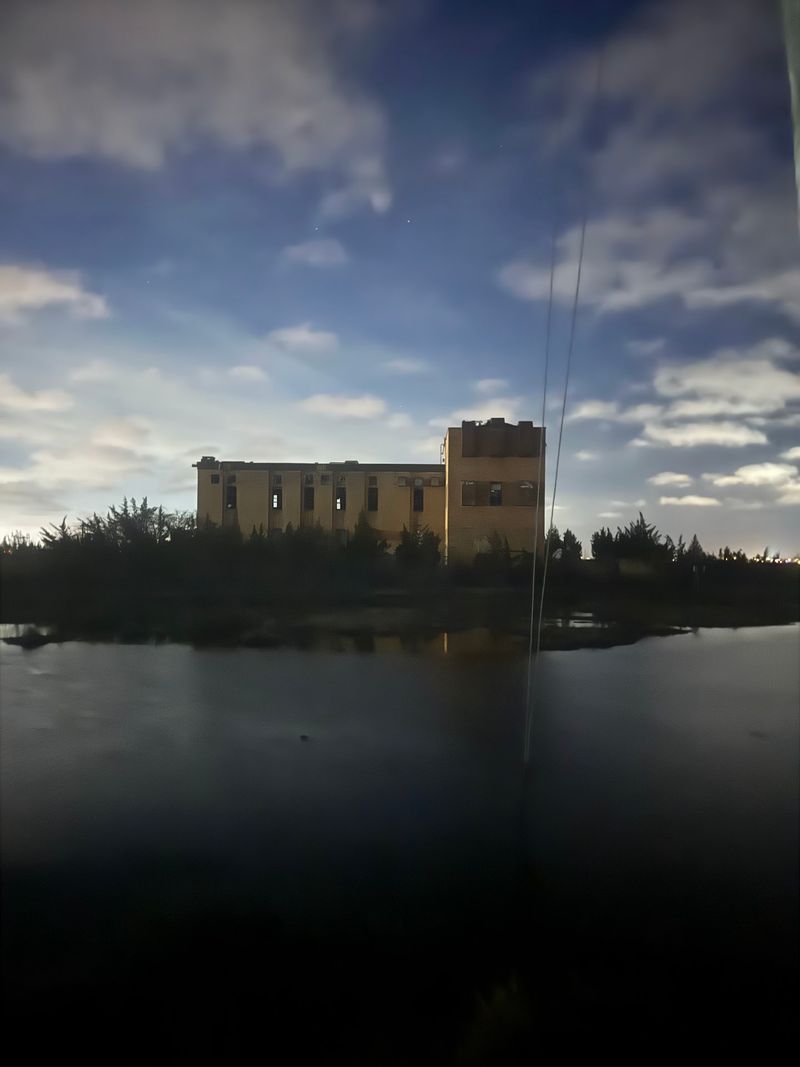
Few things stir New Jersey pride faster than the possibility of losing a piece of local history. The Ocean Gate Radio Transmitting Station has inspired preservation-minded reactions, including calls to save the landmark rather than let it disappear.
The supplied public comments include strong feelings that the building should not be torn down. They also include frustration that the structure has declined, which is common with abandoned places that still hold community meaning.
There is also an unverified claim in the provided comments about a large entertainment company buying the land and future redevelopment. Because the supplied data does not confirm that claim, it should not be treated as fact.
What can be said safely is that people have noticed the station, argued over its condition, and attached local value to it. That alone says something about the way overlooked infrastructure can become part of a town’s identity.
Preservation does not always start with grand ceremonies or official campaigns. Sometimes it begins with residents refusing to let a quiet building become invisible, which is a very Jersey kind of loyalty to have.
A Short Stop For History-Minded Day-Trippers

Not every historic place asks for half a day, a timed ticket, or a packed itinerary. Ocean Gate Radio Transmitting Station works better as a short, purposeful stop for people already interested in New Jersey history, communications history, or unusual roadside landmarks.
The site suits patient history fans more than travelers looking for activities. There are no public interior features listed in the supplied data, no admission information provided, and no posted operating hours included in the place details.
That makes planning straightforward in one way and limited in another. A respectful look from outside the gates can be enough, but anyone expecting a staffed attraction will find the station outside that category.
Its strongest audience may be local residents, heritage-minded day-trippers, and people who enjoy learning how ordinary-looking places fit into national stories. The landmark also has appeal for those interested in old communications networks and the physical traces they left behind.
A trip here should be framed honestly: brief, cautious, and research-driven. Read up before going, keep to public areas, and let the address serve as a real-world anchor for a story that once reached far beyond Bayville.
The Quiet Verdict On A Silent Station

The final read on this place is refreshingly specific: it is not a museum, not a tour stop, and not a place to enter. It is a fenced historical landmark with a past that reaches into wartime communication, ITT operations, marshland engineering, and local memory.
That combination gives Ocean Gate Radio Transmitting Station its value. The building itself may be silent, but the facts around it are loud enough for anyone who enjoys New Jersey history beyond the usual postcard subjects.
Practical details matter most before a visit. The address is public, the property is off limits, and the supplied data does not provide admission fees or hours, so the safest expectation is an exterior-only look from legal public space.
As a destination, it rewards curiosity more than convenience. The story asks readers to connect a quiet Bayville landmark with the wider systems that once carried messages across long distances during a critical period in American history.
That is a worthy kind of stop for New Jersey: modest on the surface, stubbornly interesting underneath, and easy to overlook until the backstory clicks. The station may no longer transmit, but it still has something to say.
A Bayville Landmark With A Global Backstory

Small places sometimes carry the biggest historical receipts, and the Ocean Gate Radio Transmitting Station is a very New Jersey example of that. The historical landmark is at 66-98 Bayview Ave, Bayville, NJ 08721, in Ocean County, New Jersey, United States, near the Barnegat Bay area.
At first glance, the site does not announce itself like a museum, monument, or polished heritage center. It is an abandoned communications building, and the available public information makes clear that it is not accessible for walking inside or directly around the structure.
That limit is part of the visit, not a small footnote. Gates keep the property off limits, so the experience is about understanding the place from outside the boundary and connecting the quiet site to the much larger network it once served.
The name can be a little confusing because the address is in Bayville, while the station is known as Ocean Gate. That kind of local naming wrinkle fits the place well, since its story stretches beyond a single street, town line, or ordinary roadside stop.
For New Jersey readers, the appeal comes from the surprise. A spot that looks like leftover infrastructure once belonged to a communications world tied to wartime messaging, peacetime operations, and the long reach of American broadcasting.
Share this story