Some of the best stops in Oklahoma are the ones you almost drive right past. Out on the flat, wind-brushed edge of the state, a plain little building holds far more history than it has any right to.
Step inside and you find rooms packed with arrowheads, dinosaur tracks, Dust Bowl headlines, and pioneer treasures from a corner of the map that once belonged to nobody. If you love a good surprise, this one is worth the miles.
A Small Building on Sewell Street in Goodwell
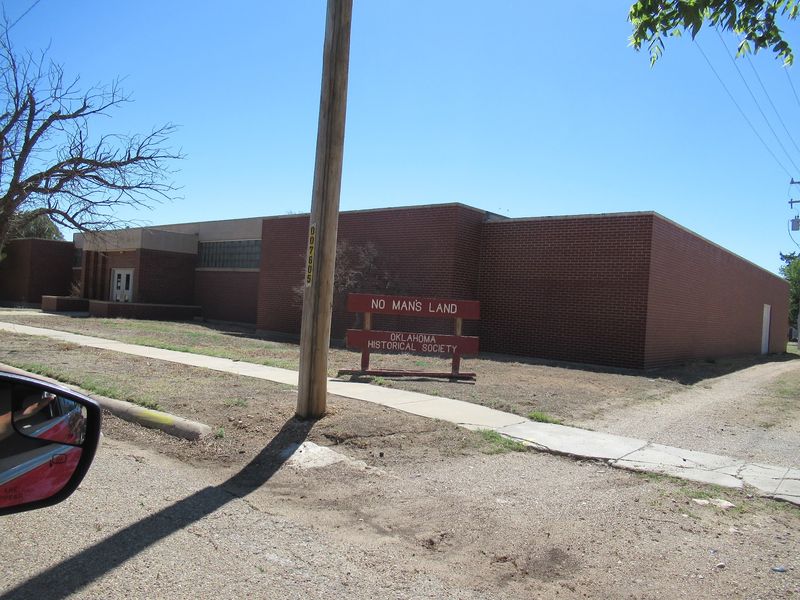
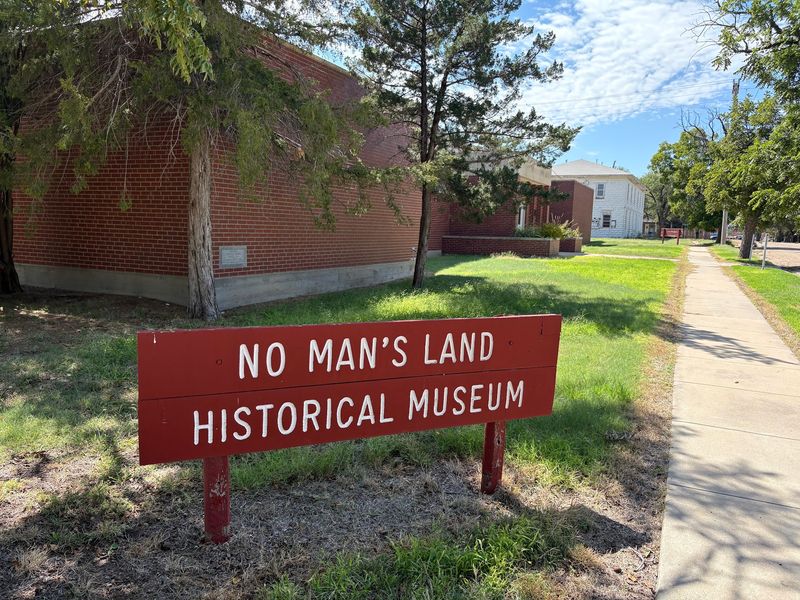
Picture a quiet street in a tiny Panhandle town, and you have already found it. No Man’s Land Museum sits at 207 Sewell St in Goodwell, Oklahoma, a place most travelers only know as a dot on the highway between bigger destinations.
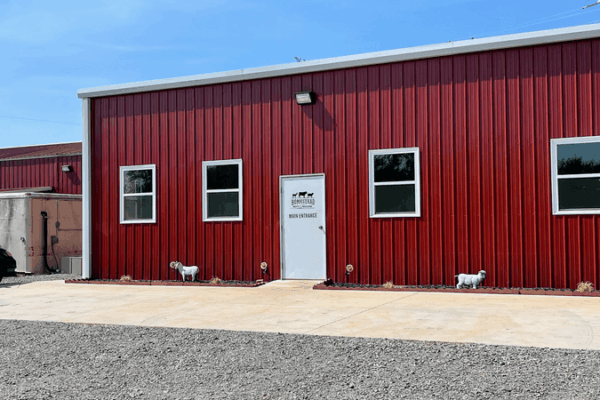
From the curb, the building does not shout for attention. Visitors often admit it looks little from the outside, which makes the moment you walk through the door even more fun.
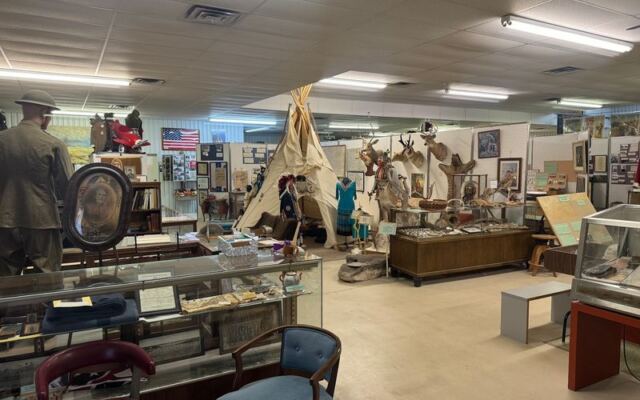
Inside waits a large collection of historical artifacts gathered from across the Oklahoma Panhandle, covering everything from ancient fossils to frontier life.
The museum focuses on one very specific region, and that focus is part of its charm. Rather than trying to tell the story of the whole world, it zooms in on the strip of land that stretches across the top of the state.
Every room seems to ask the same question: what was life like out here, long before paved roads and cell towers?
For road-trippers, the location is a gift. One cross-country driver described pulling off just to learn about this unique region, and plenty of others treat it as a lovely detour.
Small town, big collection, easy stop.
The Strange Name Behind No Man’s Land
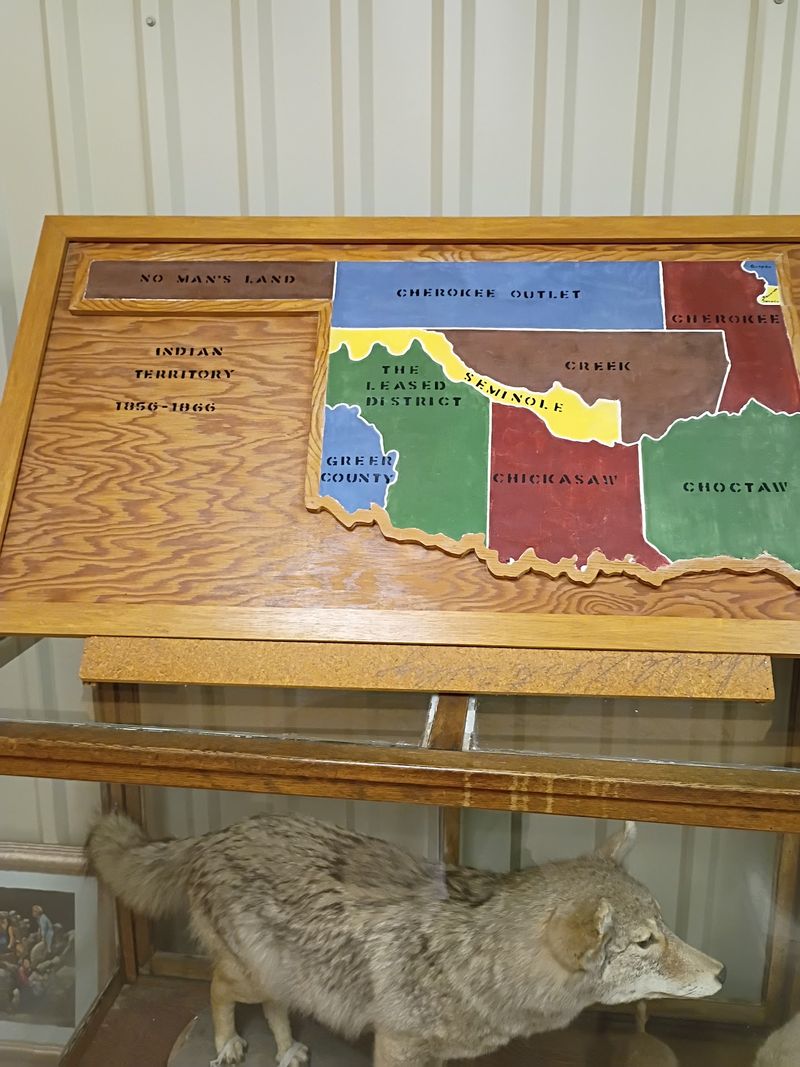
Few museums carry a name that sounds like the opening line of a legend. No Man’s Land is a nickname with real roots, tied to the long, skinny strip of the Oklahoma Panhandle that sits squeezed between neighboring states.
That name fits the mood of the collection perfectly. Here was a region that felt remote, rugged, and a little bit lawless in the popular imagination, a place where settlers had to figure things out on their own.
The museum gathers the pieces of that story and puts them on display so modern visitors can see how people actually lived on this wide, windy ground.
Families with roots in the area seem to feel this most strongly. Visitors describe the museum as full of amazing stories for the people who used to live, or still live, in the Panhandle.
One guest said the artifacts made them more appreciative of the cultural richness of folks in this part of Oklahoma.
Even if your own family tree grew somewhere else, the idea pulls you in. A forgotten corner of the map, a name with a little mystery attached, and a building full of proof that people built real lives here.
Hard to resist.
Room After Room of Panhandle Treasures
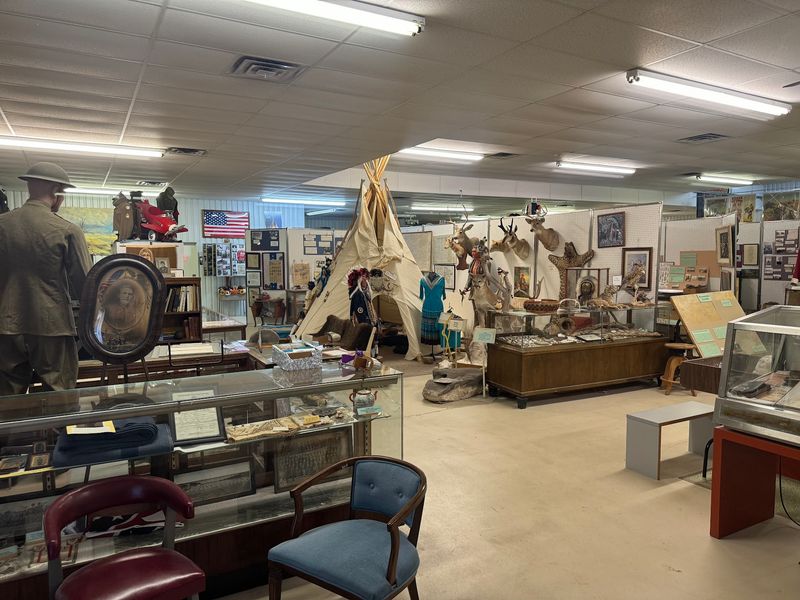
Wandering is the whole point. One visitor said their favorite part was simply drifting from one room into the next, never quite sure what would turn up around the corner.
The collection covers an impressive spread of time periods. You might see prehistoric fossils in one space, then frontier relics, then old photographs and printed news from the twentieth century.
Guests often describe it as chock full of artifacts and trinkets found throughout the Panhandle, with something to catch the eye of every member of the family.
Not every visitor sees it the same way, and that is fair to mention. A few folks have said the setup feels more like a storage space than a polished big-city museum, with displays that could use more funding and care.
Others noticed some duplicate items sitting side by side.
Honestly, that packed, slightly crowded feeling is part of what makes it memorable. It feels less like a gallery and more like a giant attic owned by the whole region, where every shelf hides a surprise.
If you enjoy hunting for the odd and interesting rather than reading slick signs, you will likely have a great time here. Bring patience and curiosity, and the rooms reward you.
Arrowheads and Spearheads Worth the Trip Alone
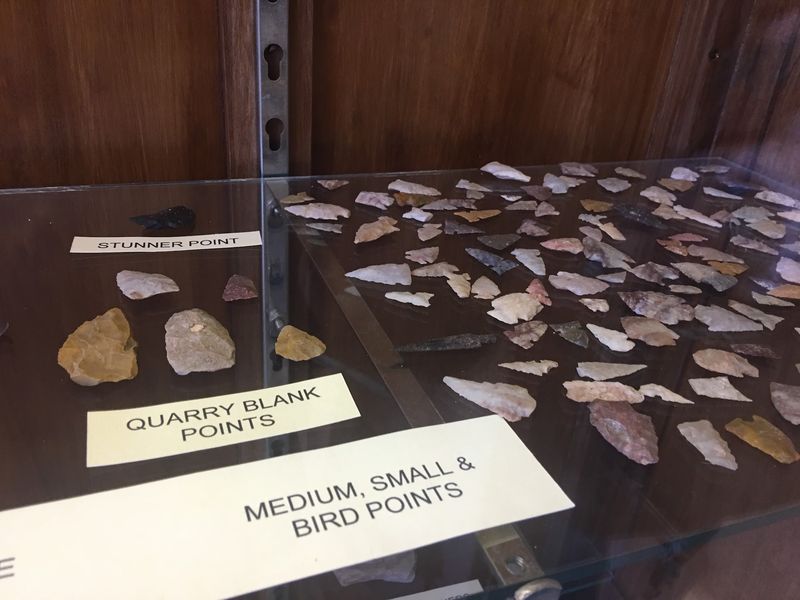
Ask a repeat visitor what stands out, and there is a good chance the answer will be the points. The arrowhead and spearhead collection gets serious praise, with one longtime guest calling it one of the best they have ever seen.
There is something quietly amazing about looking at a carefully shaped stone point. Someone, long ago, chipped that edge by hand on this same open land.
Seeing dozens of them gathered in one place gives you a real sense of how many people traveled, hunted, and lived across the Panhandle centuries before settlers arrived.
A visitor from the Oklahoma City area named the arrowheads as one of their two favorite sections in the whole building. They also mentioned snapping plenty of great pictures, so keep your phone charged if you like to document the details.
Take your time with these cases. Look at the different shapes, sizes, and colors of stone, and notice how some points are long and slim while others are short and sturdy.
Kids especially tend to get hooked once they realize these were real tools, not decorations. It is a hands-off exhibit, but it sparks a lot of hands-on imagination.
Dinosaur Tracks and Fossils From Deep Time
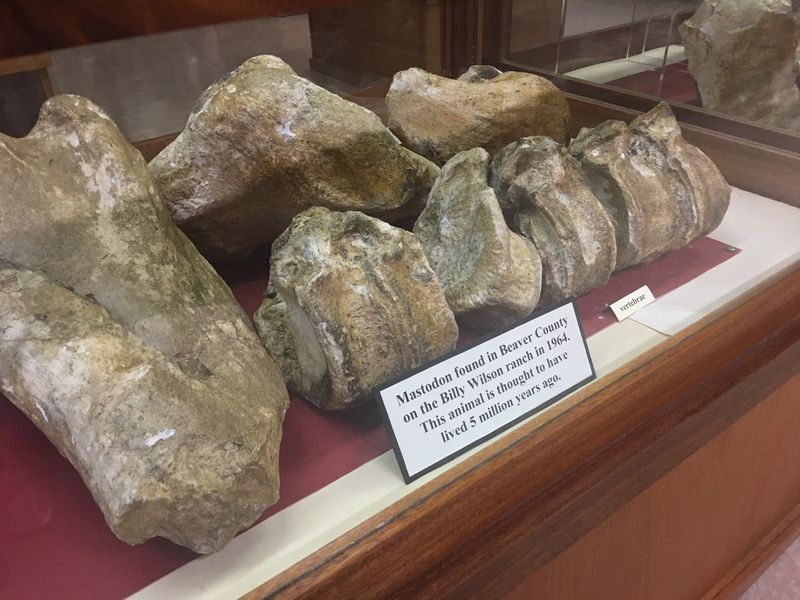
Long before wagons rolled across the prairie, much bigger feet left their mark here. Among the museum’s most talked-about pieces are fossilized dinosaur tracks, a reminder that the Panhandle story stretches back millions of years.
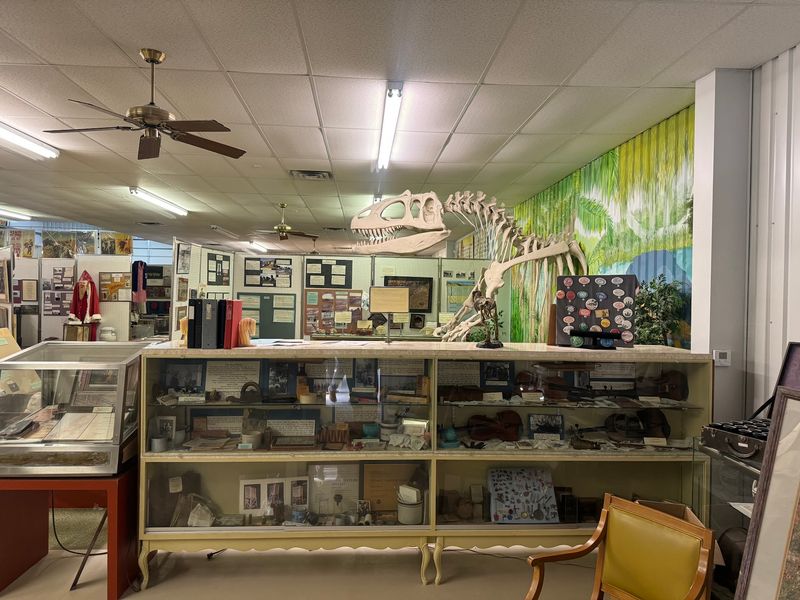
Several visitors call the dinosaur exhibit a highlight, with one describing it as a super display that pairs nicely with the frontier items nearby. Fossils show up again and again when people talk about what they enjoyed, and the combination of ancient creatures and pioneer life gives the place a fun, unexpected range.
Fair warning for bone fans, though. One guest felt the fossil advertising oversold things, noting there were only a few actual bones on display.
So if you are picturing a towering skeleton like you would find at a major natural history museum, adjust your expectations a bit.
What you will find is the thrill of standing in front of real evidence that giant animals once walked the same ground you just drove across. For young dinosaur lovers, that alone can be a big deal.
Pair the tracks with the nearby rocks and crystals, and you have a satisfying little science stop tucked inside a history museum.
Crystals, Rocks, and Shiny Surprises
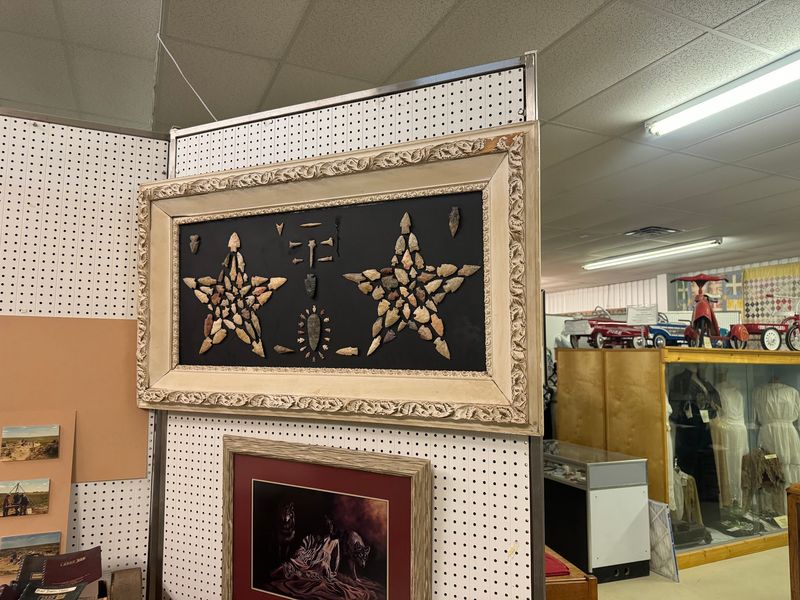
Rock hounds, this section is calling your name. Alongside the arrowheads, the museum displays a variety of crystals and rocks that have won over more than one curious traveler.
The Oklahoma City visitor who loved the arrowheads named the crystals and rocks as their other favorite area. It makes sense.
After all the old photographs and pioneer relics, a case full of sparkle and color gives your eyes a cheerful break.
Geology is a sneaky part of the Panhandle story. The land here shaped everything, from where ancient animals roamed to how farmers fought the wind and dry soil.
Looking at stones and minerals gathered from the region helps connect the dots between the fossils in one room and the farm life shown in another.
Kids who collect pretty pebbles on every vacation will probably press their noses right up to the glass. Adults might find themselves doing the same, honestly.
Spend a few minutes noticing the textures and shades, from rough and earthy to smooth and glassy. It is the kind of exhibit that does not need a long explanation to be enjoyable.
Sometimes a beautiful rock is simply a beautiful rock, and that is more than enough.
Dust Bowl Headlines and Black-and-White Memories
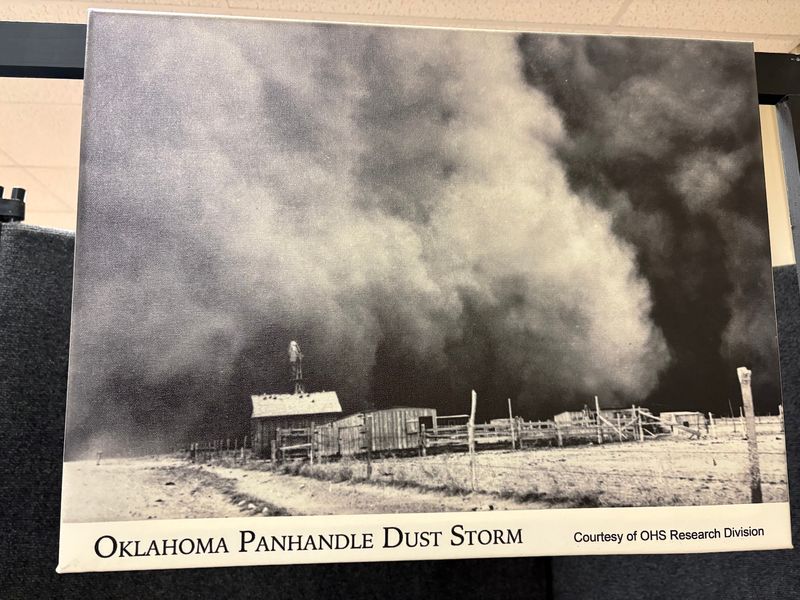
History hits differently when you read it in the original newsprint. Visitors who come looking for Dust Bowl stories often leave especially happy, thanks to the old newspaper articles and black-and-white photographs on display.
One cross-country traveler said reading those yellowed articles and studying the old photos was a personal favorite. Another family called ahead specifically because they wanted to learn about the Dust Bowl, and they left saying they learned a lot.
The Panhandle sat right in the heart of that hard era, when wind lifted the soil and farm families faced years of struggle. Seeing the headlines as people read them at the time makes the story feel close and real instead of distant textbook material.
Another printed treasure catches attention too. In a room to the left of the entrance, guests have spotted a newspaper piece titled Saga of the Cimarron, a 1929 Daily Oklahoman interview with a man named Thomas Braidwood about his experiences in the region.
A descendant of his once visited and was thrilled to see it.
Slow down in these rooms. Read a few full articles, and let the faces in the photos tell you what the Panhandle once asked of its people.
Old West Relics and Frontier Living
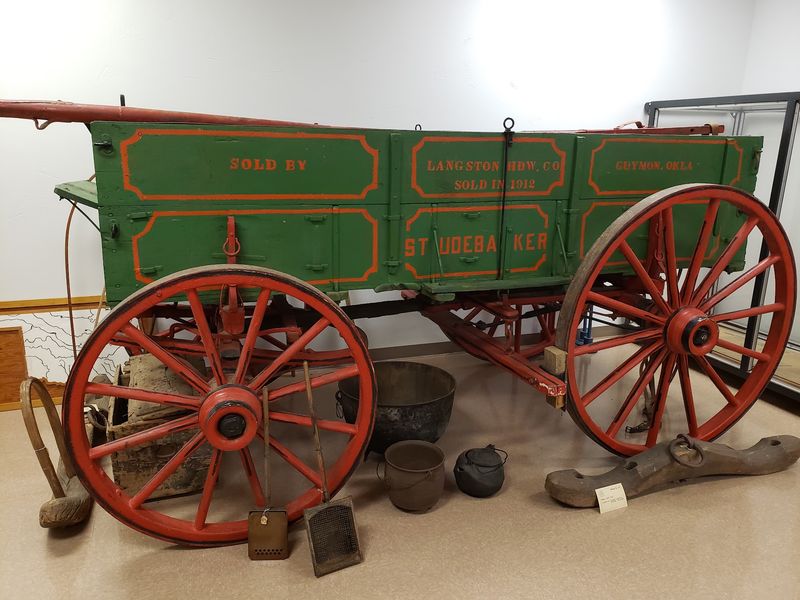
Cowboy hats off to the frontier corner of the collection. Several guests point to the old west items as a real treat, describing them as some really cool things that bring the pioneer era to life.
The museum’s range of time periods means you can follow the region’s story almost like a timeline. After the ancient tracks and stone points, the frontier pieces show how settlers adapted to a wide, demanding landscape with very few comforts.
Antiques of all kinds fill the shelves, giving a feel for daily life when everything had to be built, fixed, or grown by hand.
One visitor summed up the variety nicely, saying the collections run all the way from fossilized dinosaur tracks to authentic frontier gear. That contrast is a big part of why people call the place fascinating as a whole.
If you grew up hearing stories from grandparents about farm chores and homestead life, these displays may feel surprisingly familiar. If you did not, they offer a fun window into how much work went into ordinary days.
Either way, imagine trying to run a household out here with only these tools. Suddenly a modern kitchen feels pretty luxurious.
Friendly Faces and a Charmer Named Dixie
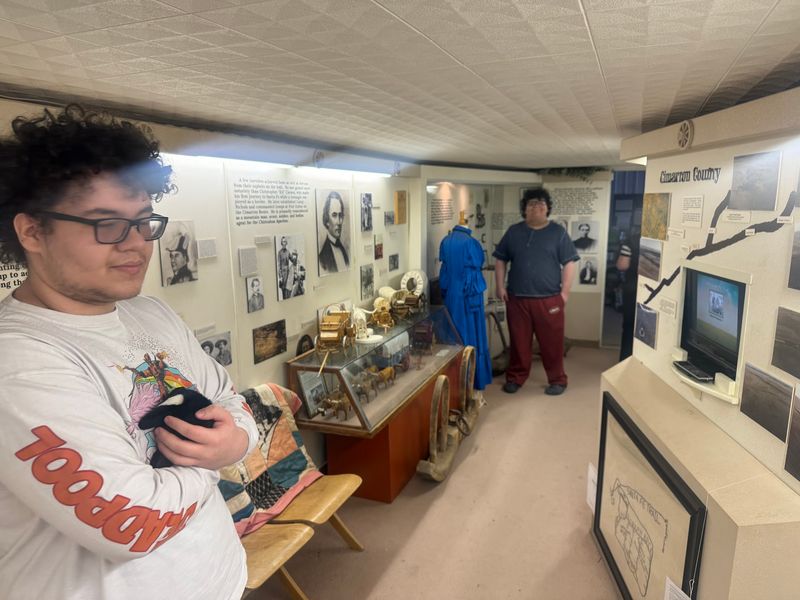
Kindness may be the museum’s most valuable exhibit. Again and again, visitors mention how warm, helpful, and enthusiastic the staff are.
One family described the lady at the front as super nice and added that Dixie is adorable, a sweet detail that clearly made their visit. Others call the staff very kind, very knowledgeable, and genuinely excited to share the collection.
Even a guest who had some criticisms of the displays made sure to say the people were polite.
A favorite story involves a curator named Seth. A family called to ask about the museum and learned it closed at 4, about an hour before they could arrive.
Seth happily kept the doors open for them, and they left grateful and full of new knowledge.
That kind of hospitality is hard to find at bigger attractions with long lines and timed tickets. Here, you are more likely to get a real conversation and maybe a story or two you would never read on a sign.
Do not be shy about asking questions. The folks who look after this collection obviously care about it, and their enthusiasm turns a quick stop into something you will remember.
Hours, Contact Info, and Smart Planning
Timing matters here, so plan ahead. The museum is open Tuesday through Saturday from 10 am to 4 pm, and it is closed on Sunday and Monday.
That schedule has caught a few travelers off guard. One visitor stopped by on a Sunday afternoon while heading home, only to find the doors locked.
Do not let that be you, especially if Goodwell is a once-in-a-while stop on a longer road trip.
Calling or emailing before you go is a great idea. You can reach the museum at 580-349-2670, and more information is available on the website at nmlhs.org.
One past guest recommended emailing a day or two ahead to arrange access, and another family had wonderful luck after calling in advance.
As for cost, a visitor several years ago mentioned that admission was free. Since that comment is not recent, it is smart to confirm current pricing when you call.
Give yourself enough time to wander. With so many rooms and so much packed into each one, rushing through would be a shame.
An unhurried visit lets you actually read the newspapers, study the arrowheads, and chat with the staff.
A Diamond in the Rough for Curious Travelers
Call it a small town gem, a lovely detour, or a diamond in the rough. Visitors have used all three phrases, and each one fits.
No Man’s Land Museum will not dazzle you with fancy lighting or high-tech screens. A few guests have noted it could use more polish and funding, and fossil fans should not expect a hall full of skeletons.
That honesty is worth keeping in mind.
Still, the heart of this place is hard to beat. Where else can you see dinosaur tracks, a standout arrowhead collection, sparkling crystals, frontier relics, and real Dust Bowl headlines, all under one modest roof?
Add a staff that will go out of their way to welcome you, and the stop becomes something special.
It suits history buffs, families with curious kids, Panhandle locals tracing their roots, and road-trippers who love finding quirky places off the beaten path. Anyone who enjoys learning how ordinary people built lives in a tough, beautiful landscape will feel right at home.
If your travels bring you through Oklahoma’s Panhandle on a weekday, pull over in Goodwell. You may walk in expecting a quick peek and walk out with a much bigger appreciation for No Man’s Land.
Share this story