Some New Jersey places do not need a big sign, a long tour route, or a gift shop to make people curious. In Kinnelon, a small chapel tied to old local memories and a remarkable design story has become the kind of place people talk about after seeing it only briefly, sometimes even only from a distance.
Its setting is unusual, its access is limited, and that combination gives it a little mystery without turning it into a made-up legend. Keep reading and the quiet details start to stack up: a northern New Jersey landmark, a Tiffany connection, a lake island, and a reminder that the state still has corners that feel wonderfully unexpected.
A Kinnelon Landmark With An Island Address
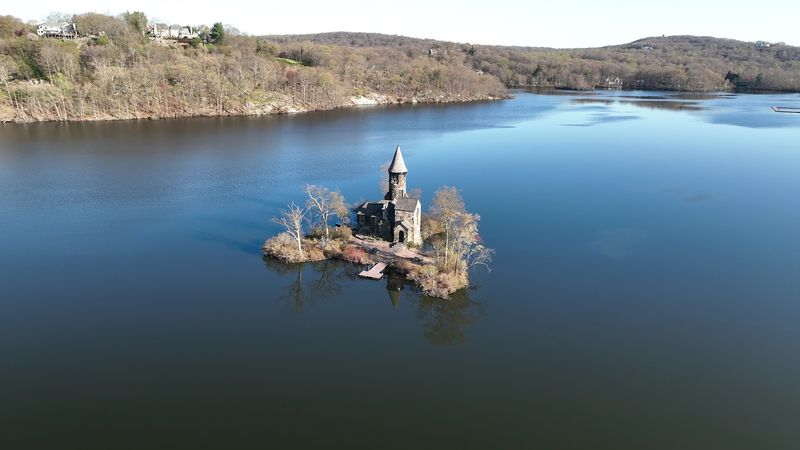
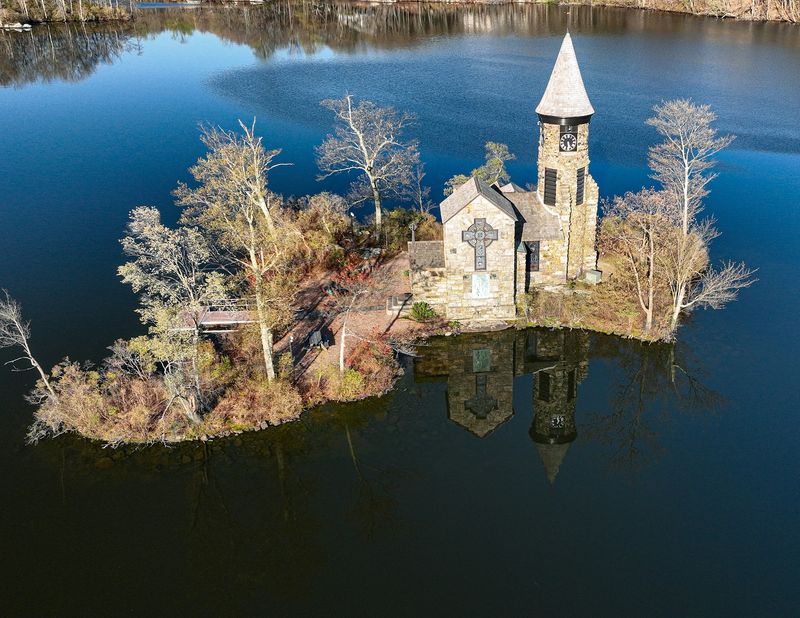
A little address line can raise a lot of questions when the place attached to it is a chapel on an island. Saint Hubert’s Chapel is listed at Kiel Ave Suite 292, Kinnelon, NJ 07405, in Morris County, New Jersey, United States, and it is categorized as a historical landmark.
The name points to a small chapel rather than a broad attraction, and that matters for expectations. It is not presented as a major public museum, a full campus, or a roadside stop with open daily access.
Kinnelon gives the chapel a northern New Jersey setting that feels different from the state’s busier stereotypes. The surrounding area is tied to lakeside living, local history, and a quieter kind of attention that does not need a packed schedule to feel worthwhile.
The most important practical detail comes early: the chapel has been described as accessible by boat only. That single fact changes the entire visit plan, since this is not a simple park-and-enter landmark.
For day-trippers, the address can still help with research and orientation, but it should not be treated as a promise of entry. The smart approach is to see Saint Hubert’s Chapel as a special landmark first, and a public outing only if current access is confirmed through proper local channels.
The Tiffany Connection That Raises Eyebrows
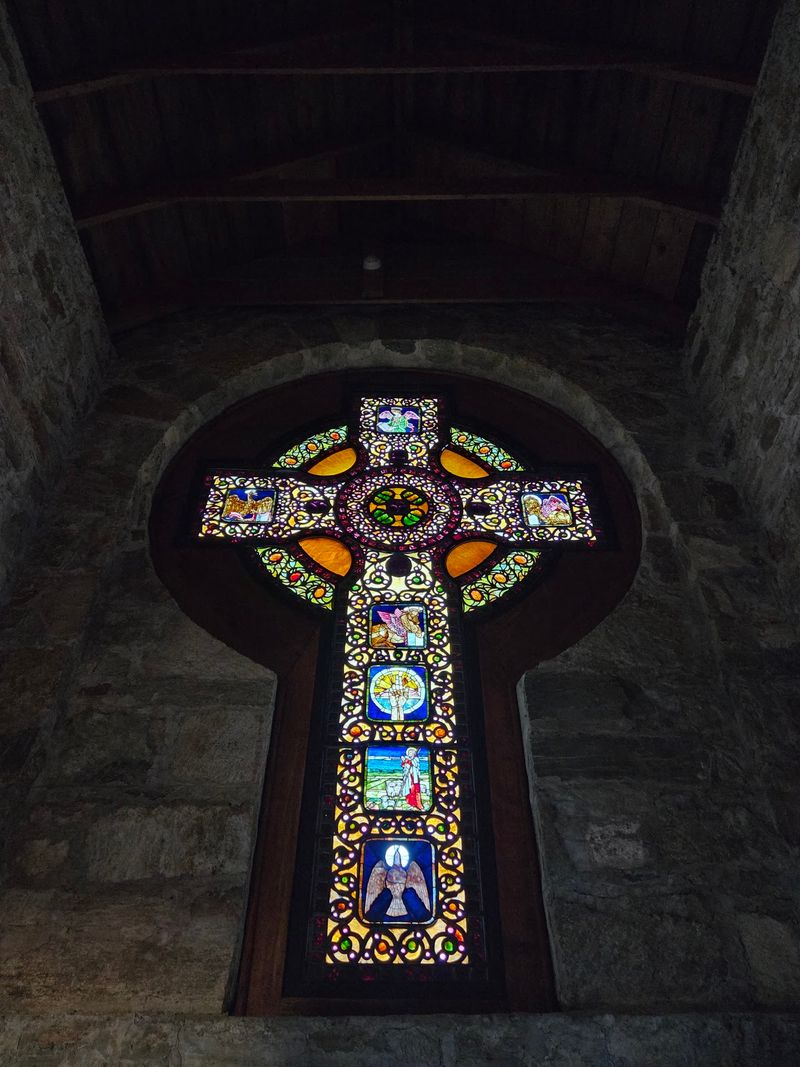
A famous design name sits quietly behind this small chapel, which is part of why it has such pull for architecture-minded New Jersey wanderers. Saint Hubert’s Chapel was executed by Louis Comfort Tiffany and completed in 1891, according to the available local information tied to the landmark.
That connection gives the chapel a larger story than its size might suggest. Tiffany’s name is widely associated with decorative arts, glasswork, and carefully considered design, so seeing it linked to a chapel in Kinnelon makes the place feel unusually specific.
The chapel was commissioned by Francis S. Kinney in 1887.
That date gives the site a late 19th-century frame, placing it in an era when private estates, religious spaces, and designed landscapes often overlapped in ways that still shape how older landmarks are understood.
No one needs a graduate degree in architecture to appreciate why the detail matters. A small New Jersey chapel would already be interesting in an island setting, but a Louis Comfort Tiffany connection adds a reason to pause and look up its history before making any plans.
The result is a place that feels less like a random curiosity and more like a carefully planted historical footnote. New Jersey has plenty of those, but this one wears its importance quietly.
Francis S. Kinney’s 1887 Commission
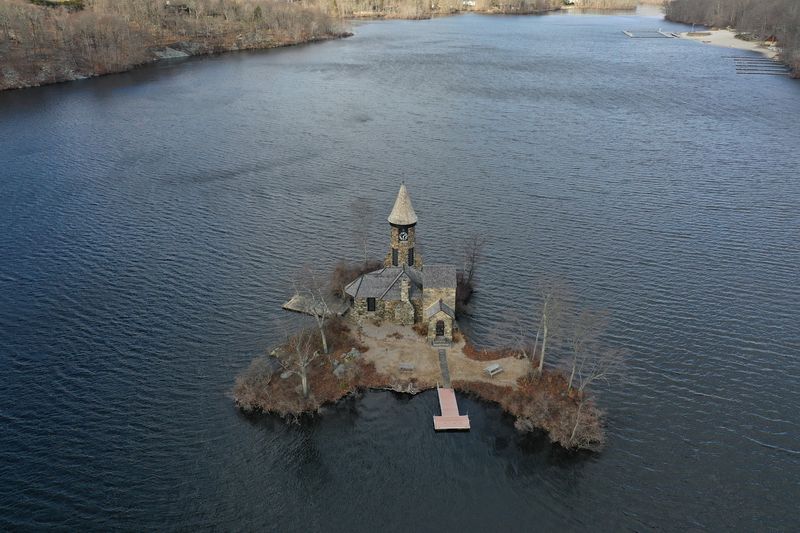
History becomes easier to follow when a date and a name anchor the story. Francis S.
Kinney commissioned Saint Hubert’s Chapel in 1887, placing the project several years before its 1891 completion.
Those two dates give the landmark a compact but meaningful timeline. They show that the chapel was not a quick afterthought, but a planned work connected to a specific patron and a specific design vision.
The late 1800s were a period when private religious structures could carry personal, family, and community meaning all at once. Saint Hubert’s Chapel fits that broader pattern without needing extra drama added to its story.
For New Jersey residents who enjoy local history, the Kinney detail is the kind of thread that makes a place more than a stop on a map. It connects Kinnelon to wider conversations about design, estate culture, and the people who shaped landmarks that still spark curiosity more than a century later.
There is also something pleasantly tidy about the timeline: commissioned in 1887, completed in 1891, still recognized today. That is not a long list of facts, but it is enough to make the chapel feel rooted rather than random.
A Chapel Reached By Boat Only
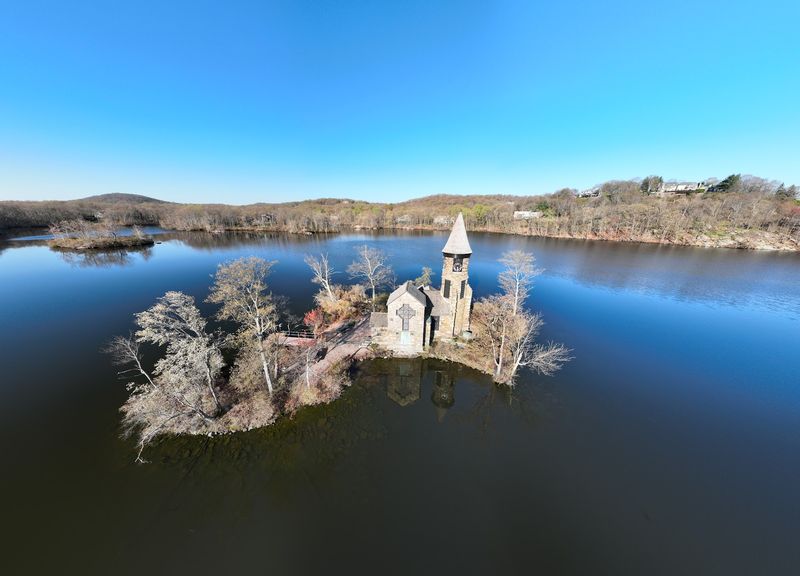
Here is where the practical side gets interesting: Saint Hubert’s Chapel has been described as accessible by boat only. That detail may be the biggest reason the place feels so different from the usual historic landmark experience.
Most New Jersey day trips involve a parking lot, a path, a front door, and maybe a sign with a few rules. This chapel does not fit neatly into that rhythm, which means planning should begin with access rather than arrival time.
The boat-only note also helps explain why so much of the chapel’s appeal comes through glimpses, photographs, and local memory. A landmark that is visible but not casually reachable can become part of the mental map of a town in a special way.
That does not mean people should improvise. Private access concerns are part of the data tied to the site, and one account describes it as private and for residents only, with entry restricted unless a person knows a family in the town.
So the right attitude is simple: admire the story, research carefully, and respect boundaries. The chapel’s unusual access is part of its identity, not an obstacle to bulldoze with bad manners and a full phone battery.
The Lake Setting People Remember
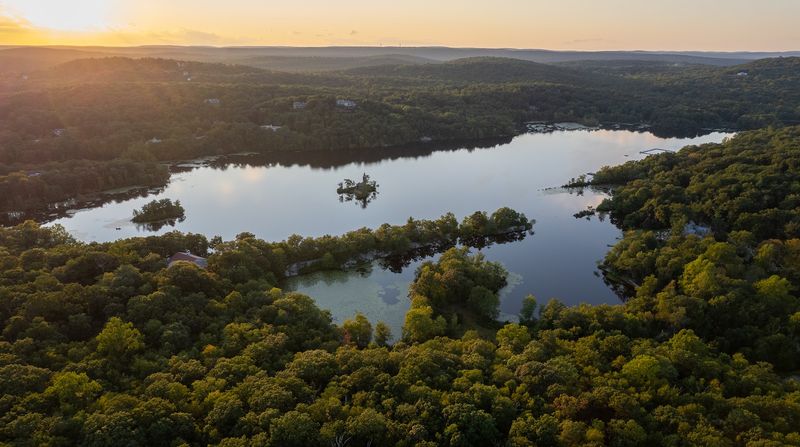
Local memory plays a real role in how Saint Hubert’s Chapel is understood. One long-ago Kinnelon connection describes growing up on Kitty Ann Mountain just north of the chapel, seeing it from the mountain and while sailing around it on the lake.
That memory adds context without overcomplicating the place. The chapel is not only an architectural object, but also a landmark people have carried with them after childhood, moves, and many years away from the area.
A painting from the late 1950s is also mentioned in that same account, with the island and chapel prominently included. That kind of detail shows how the chapel has occupied a place in family stories and homegrown visual history, not just map listings.
Kitty Ann Mountain also appears in the recollection alongside an old tower that could be reached by bicycle. The chapel’s story, at least through local memory, belongs to a broader Kinnelon landscape of hills, water, and remembered routes.
For readers who grew up in New Jersey towns with one landmark everyone noticed but not everyone entered, this will feel familiar. Some places become meaningful because they stay in the background for years, steady and hard to forget.
A Small Scale That Works In Its Favor
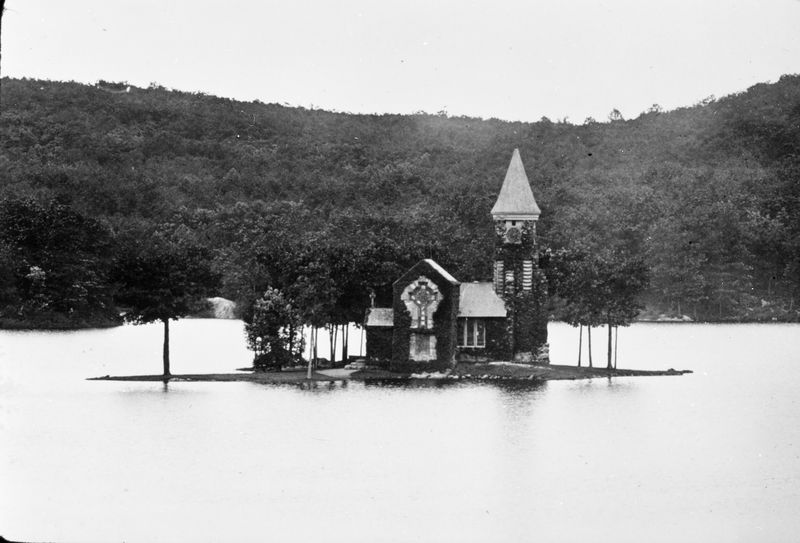
Small places often have to be more interesting than large ones, because there is nowhere for weak details to hide. Saint Hubert’s Chapel benefits from that compact presence, drawing attention precisely because it does not try to act like a grand public complex.
The available descriptions call it a little chapel, and that word matters. It suggests a structure whose impact comes from setting, origin, and design association rather than acreage or a long list of attractions.
In New Jersey, that kind of scale can be a strength. Residents are used to discovering worthwhile places tucked into towns, lake communities, old roads, and local landmarks that do not always make national travel lists.
The chapel’s size also keeps the focus sharp. There is no need to pretend it offers an all-day itinerary, a packed exhibit program, or a sprawling campus, because the appeal sits in one unusual combination: Tiffany, 1891, island setting, Kinnelon.
That combination is enough. A place can be modest and still be memorable, especially when its story is clean, its access is unusual, and its role in local memory has lasted for generations.
Private Access And Realistic Expectations
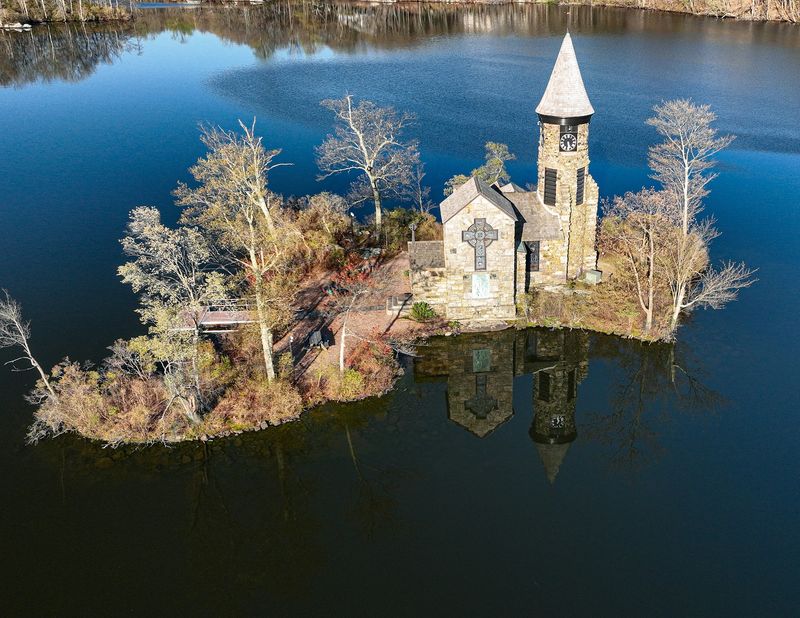
Not every interesting landmark is open like a public park, and Saint Hubert’s Chapel is a good reminder of that. One account tied to the place describes it as private and for residents only, with access denied to people who do not have a local family connection.
Another note simply says it was closed. Those details should shape expectations more than curiosity does, because a good New Jersey day trip should never depend on talking past boundaries.
The chapel’s website listing points to the Smoke Rise community website, which reinforces that this is not a typical county-run attraction with posted open hours for general sightseeing. No public schedule or admission cost is provided in the data available here.
That means the practical advice is less glamorous but more useful: do not assume entry, do not build a whole itinerary around stepping inside, and check official local sources before attempting any visit. When a landmark is tied to private or community access, respect is part of the trip planning.
The upside is that the story still holds value even if access is limited. Some places are best appreciated through careful research, local context, and a clear understanding of what is and is not open to the public.
A Northern New Jersey Surprise
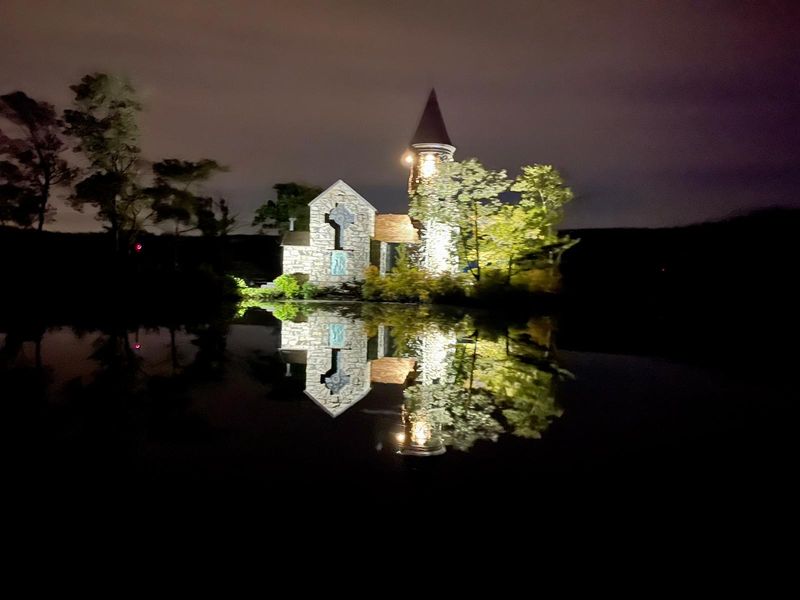
Northern New Jersey does not always get credit for its quieter historic corners, which is exactly why Saint Hubert’s Chapel catches attention. It sits in Kinnelon, away from the state’s louder travel shorthand, and gives locals another reason to push back on tired jokes about New Jersey being predictable.
The chapel’s appeal is not built on spectacle. It comes from specificity, and New Jersey tends to shine when a place has a strong local identity rather than a broad tourism pitch.
A chapel tied to Louis Comfort Tiffany, completed in 1891, and set on an island is the kind of detail that makes even longtime residents pause. It suggests there are still small pieces of the state that can surprise people who think they already know the map.
For short-hop day-trippers, the Kinnelon connection also matters because it keeps the subject grounded. This is not a vague regional recommendation, and it is not being stretched into a pretend weekend empire.
It is simply a real New Jersey landmark with an unusual story and limited access. Sometimes that combination is more interesting than another overstuffed itinerary trying to be everything before lunch.
A Photograph Worth Planning Carefully
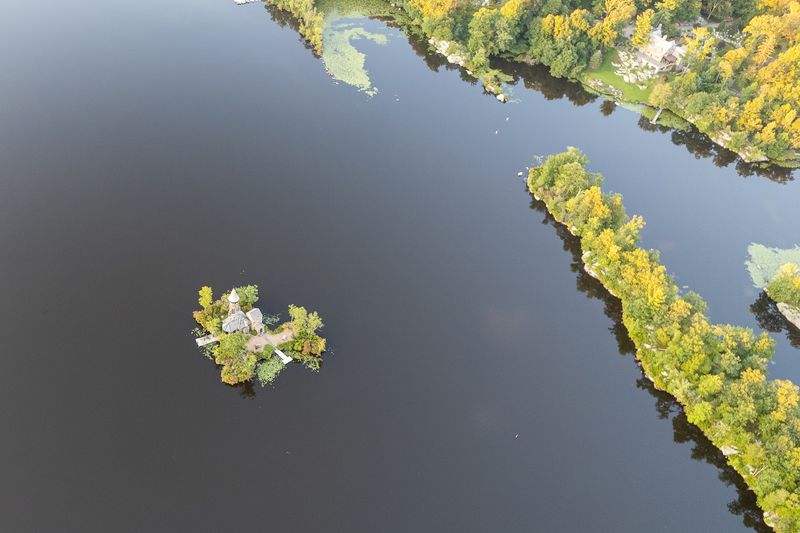
Camera interest follows this chapel for obvious reasons, but the key word is careful. One person described feeling lucky to see Saint Hubert’s Chapel in person and photograph it, which says a lot about how uncommon a close look can feel.
The landmark’s boat-only access and private-access concerns mean photography should be planned with restraint. A good photo is never worth ignoring property rules or treating a community space like a free-for-all backdrop.
The smarter route is to research public viewpoints, official access information, and current community guidance before trying to frame a shot. Since no public hours are provided in the available data, spontaneity is not the best strategy here.
Photographers who enjoy historic architecture may still find the chapel fascinating because it compresses several strong elements into one subject. The Tiffany connection, 1891 completion date, island placement, and local memory all give the image a story beyond a pretty structure.
That is the real reward. A photograph of Saint Hubert’s Chapel is not just a vacation souvenir, but a small record of a landmark that asks people to slow down, verify access, and act like guests in someone else’s neighborhood.
The Quiet Pull Of Local Memory
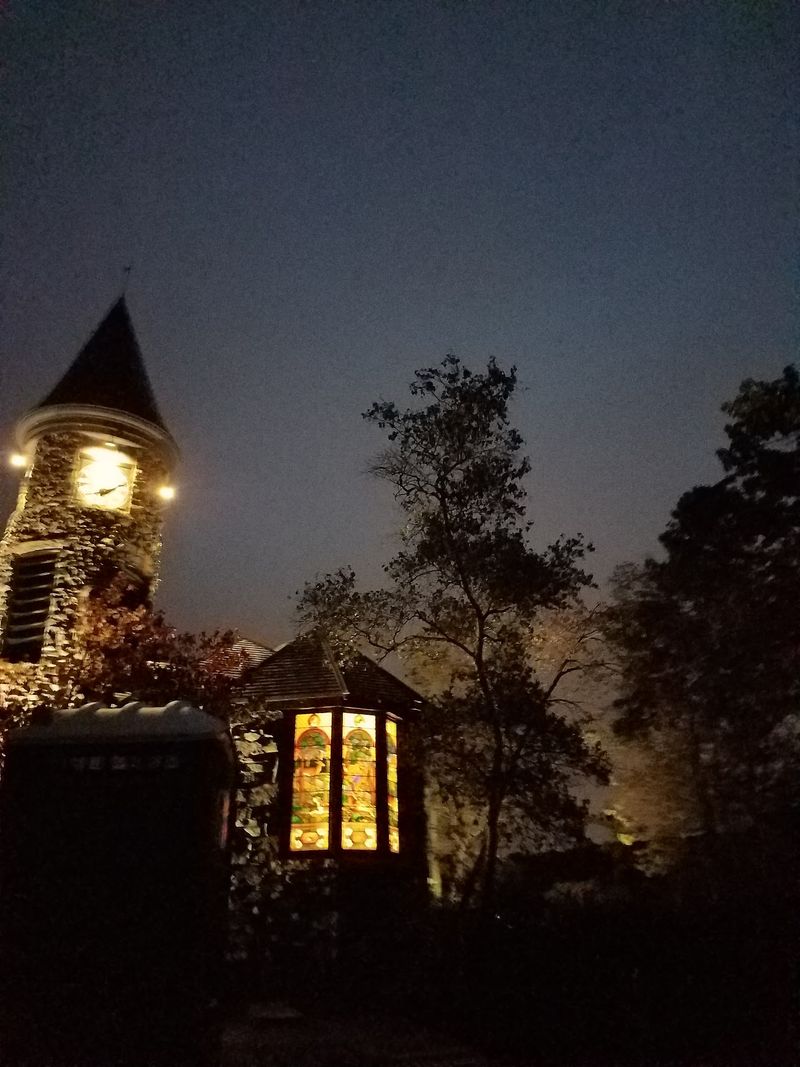
Some landmarks gather meaning because people keep remembering them long after they move away. Saint Hubert’s Chapel has that kind of pull in the available local account from someone who grew up nearby and wanted to return after many years.
The memory includes Kitty Ann Mountain, the lake, the chapel, and an old tower reached by bicycle. Those details form a personal map, the kind that rarely appears on official signs but often explains why a place stays important.
There is also a mention of a painting from the late 1950s with the island and chapel prominently displayed. That single artwork detail gives the chapel another layer, showing it was not only noticed, but preserved as part of a family’s visual record.
Local history often works that way in New Jersey. A church, chapel, bridge, tower, lake, or main street building becomes more than its original purpose because people attach ordinary life to it year after year.
Saint Hubert’s Chapel benefits from that human scale. Its story is architectural, yes, but it is also remembered from afar, and that may be why it feels larger than its footprint.
What The Public Listing Actually Tells You
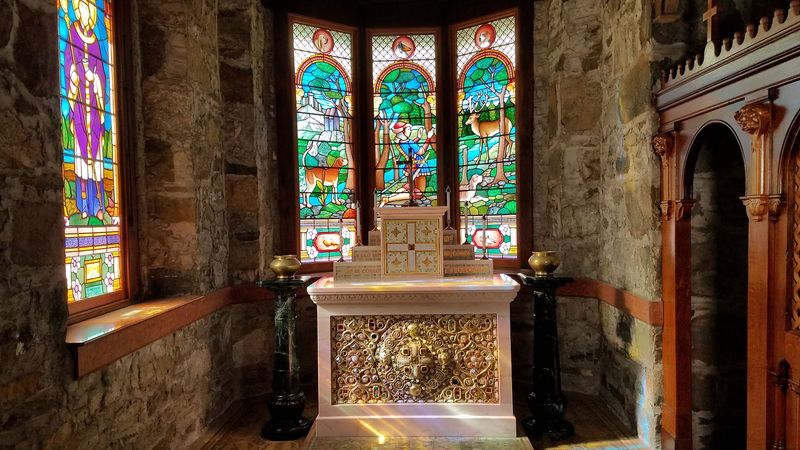
Practical information for Saint Hubert’s Chapel is brief, and that is important in itself. The public listing identifies it as a historical landmark, gives the Kinnelon address, and links to the Smoke Rise website.
It does not provide public hours, an admission fee, or a general open-door visitor setup in the data used for this article. Because of that, any plan should be built around confirmation rather than assumption.
The strongest access clue says the chapel is accessible by boat only. A separate access-related account describes it as private and for residents only, which should be treated as a serious planning note.
For people who like to keep weekend ideas simple, that may sound like a speed bump. In reality, it is just a filter: Saint Hubert’s Chapel is better suited to careful research, respectful viewing where allowed, and historical curiosity than to casual drop-in sightseeing.
No price details are available in the provided information, so it would be inaccurate to call it free or paid for the general public. The honest takeaway is that the chapel is fascinating, but access details deserve attention before anyone points the car toward Kinnelon.
A Stop For History Lovers, Not Checklist Tourists
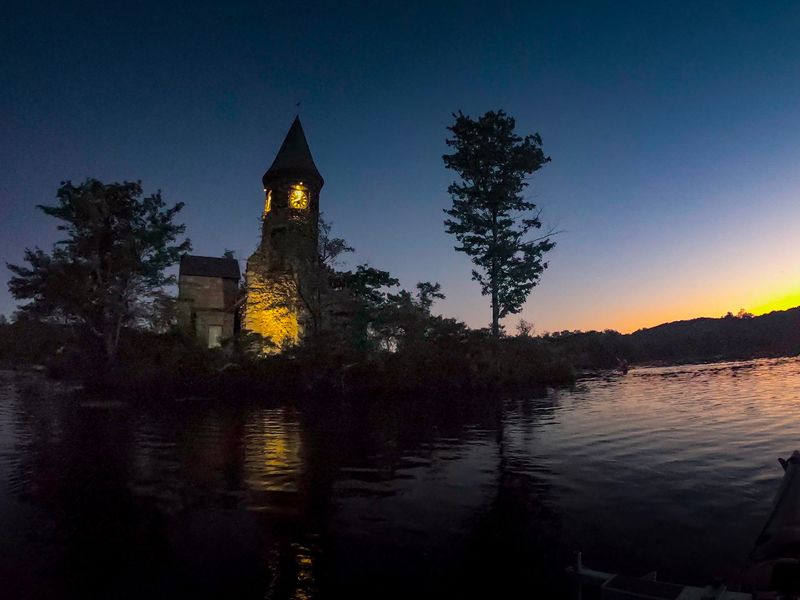
Checklist travelers may find Saint Hubert’s Chapel a little tricky, because it refuses to behave like a standard attraction. There is no verified public schedule in the available data, and the access story is limited enough to require patience.
History lovers, though, may appreciate exactly that. A landmark does not have to offer a ticket window to be worth learning about, especially when its story includes a 19th-century commission, a Tiffany connection, and a distinctive island setting.
The chapel also suits people who enjoy tracing the layers around a place rather than only collecting entry stamps. Kinnelon, Kitty Ann Mountain, the lake, and the remembered old tower all appear in the local memory connected to the chapel.
That makes the site feel like part of a larger local puzzle. The pieces are not presented as an official tour route, but they still help explain why the chapel has stayed in people’s minds.
Anyone expecting a fully open attraction may leave frustrated if they do not research first. Anyone who enjoys a quiet historical lead, a specific New Jersey setting, and a reason to learn more may find the chapel’s restraint oddly satisfying.
A Soft Verdict On A Hard-To-Reach Chapel
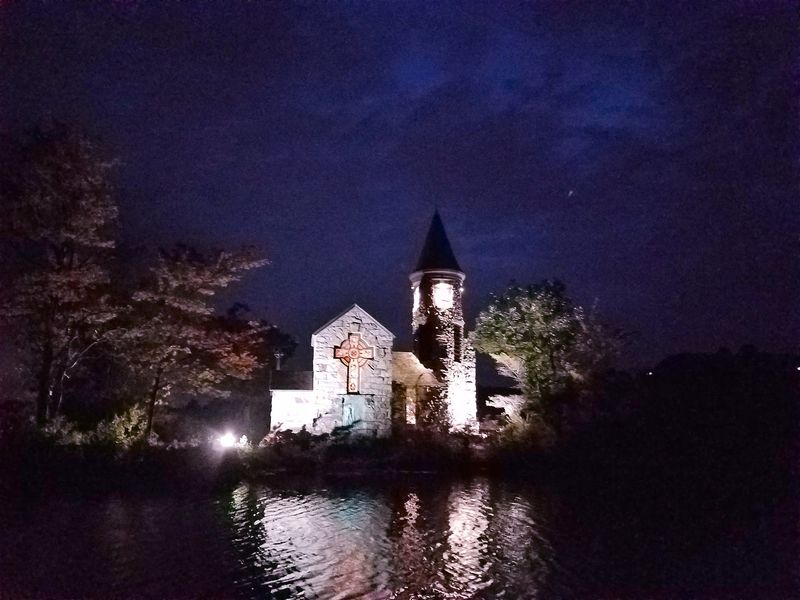
Saint Hubert’s Chapel is not the easiest New Jersey place to recommend in the usual travel-blog way, and that is exactly why it is interesting. Its appeal depends on accepting that a destination can be meaningful even when it is not built for casual public access.
The facts are compact but strong: a Kinnelon historical landmark, commissioned by Francis S. Kinney in 1887, executed by Louis Comfort Tiffany, completed in 1891, and described as accessible by boat only.
Add the private-access concerns, and the chapel becomes less of a drop-in stop and more of a story to approach responsibly.
For New Jersey residents, that still counts for something. The state is full of places that reward curiosity, and Saint Hubert’s Chapel fits the category of small landmarks that make local history feel close, specific, and worth defending.
The best verdict is a gentle one: learn about it, respect its limits, and treat any possible visit as something that requires confirmation. In return, this small chapel offers a reminder that New Jersey’s most memorable places are not always the ones shouting for attention.
Share this story