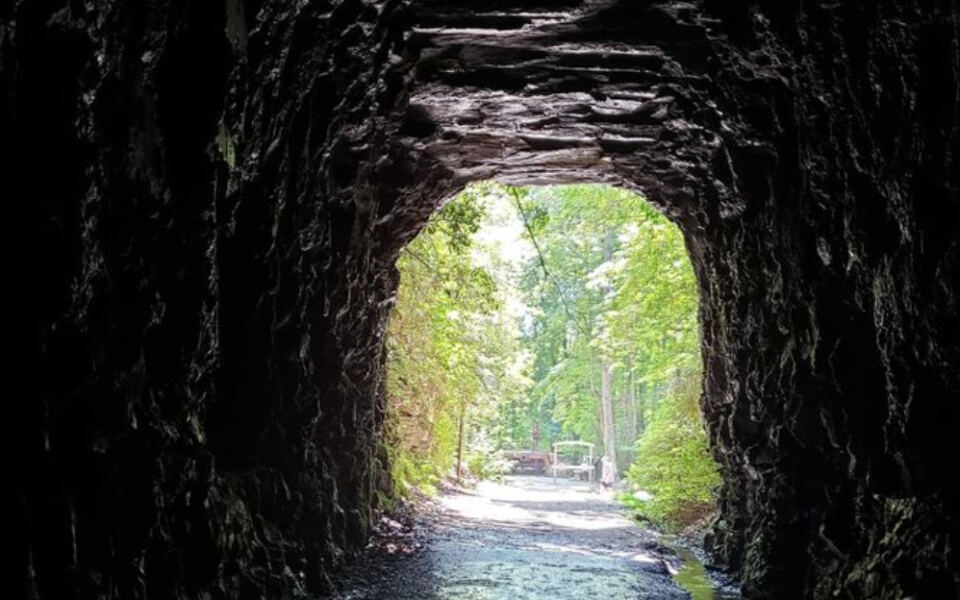
Somewhere in the mountains of South Carolina, a trail winds through the woods and leads hikers straight into the hollow silence of tunnels that were carved by hand more than 150 years ago. These tunnels were never finished for their original purpose, yet they still stand today as one of the most quietly remarkable outdoor experiences in the entire Southeast.
The story behind them involves ambition, engineering, and a railroad dream that never quite made it over the mountains. Once you learn what is waiting at the end of this trail, it is hard not to start planning a trip.
A Railroad Dream That Never Crossed the Mountains
Back in the mid-1800s, railroad builders had a bold plan. They wanted to connect the South Carolina Lowcountry to the Tennessee Valley by pushing a rail line straight through the Blue Ridge Mountains.
The project was called the Blue Ridge Railroad, and it was considered one of the most ambitious engineering efforts of its era in the American South.
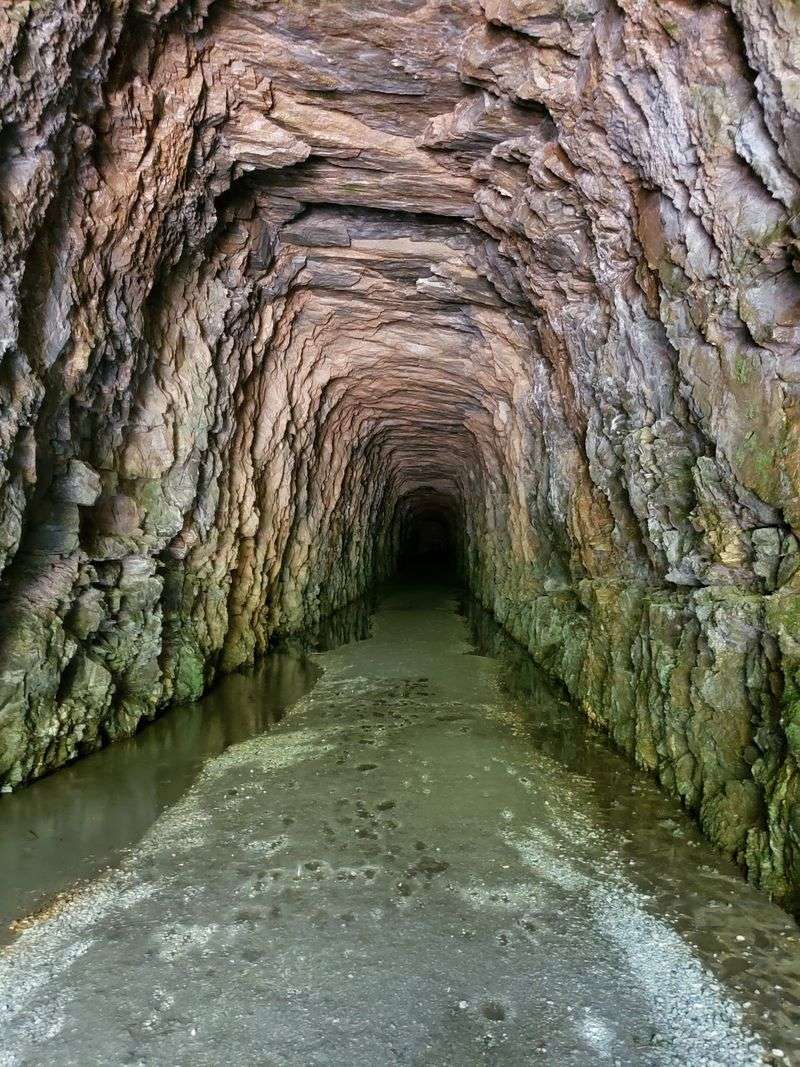
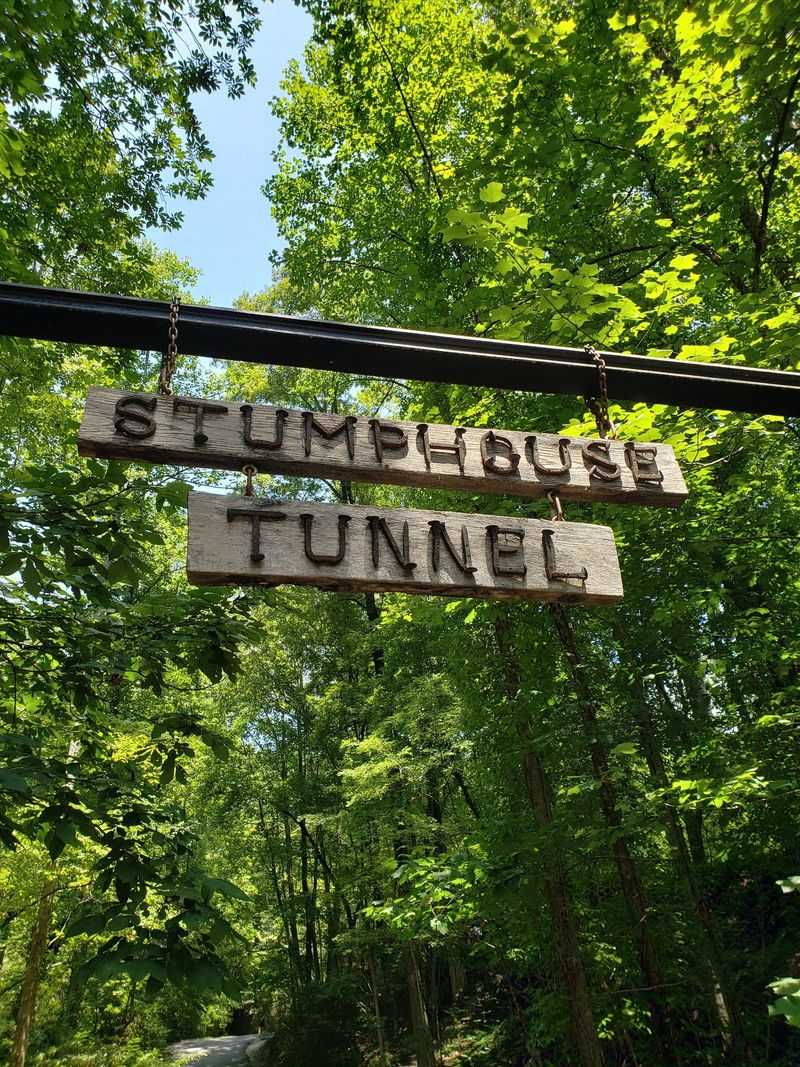
Workers began blasting and hand-drilling through solid rock to create tunnels that would allow trains to pass through the mountain. The main tunnel, often called Stump House Tunnel, was intended to stretch nearly 1,600 feet through the mountain.
Progress was slow and expensive, and the project was eventually halted before completion due to financial and political setbacks.
The tunnels were left exactly as they stood, unfinished and silent. That incomplete history is exactly what makes walking into them feel so surprisingly powerful today.
Where the Trailhead Is Located
The Blue Ridge Railroad Historical Trail trailhead sits just outside Walhalla, South Carolina, in Oconee County. The trailhead address is along the Blue Ridge Railroad Historical Trail, Walhalla, SC 29691, and it serves as the starting point for one of the most historically interesting hikes in the state.
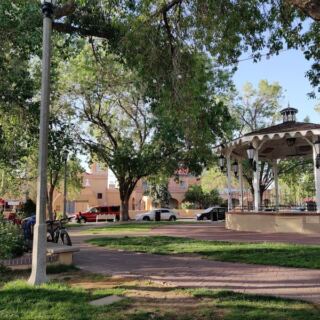
Walhalla itself is a small mountain town with a charming downtown and a strong sense of local pride. Getting to the trailhead is fairly straightforward, and there is a parking area available for visitors.
A small parking fee has been noted by visitors in the past, making it an affordable outing for families and solo hikers alike.
The trailhead is shared with at least one other nearby trail, so reading the posted signs carefully when you arrive helps ensure you set off on the right path from the start.
What the Trail Itself Actually Looks Like
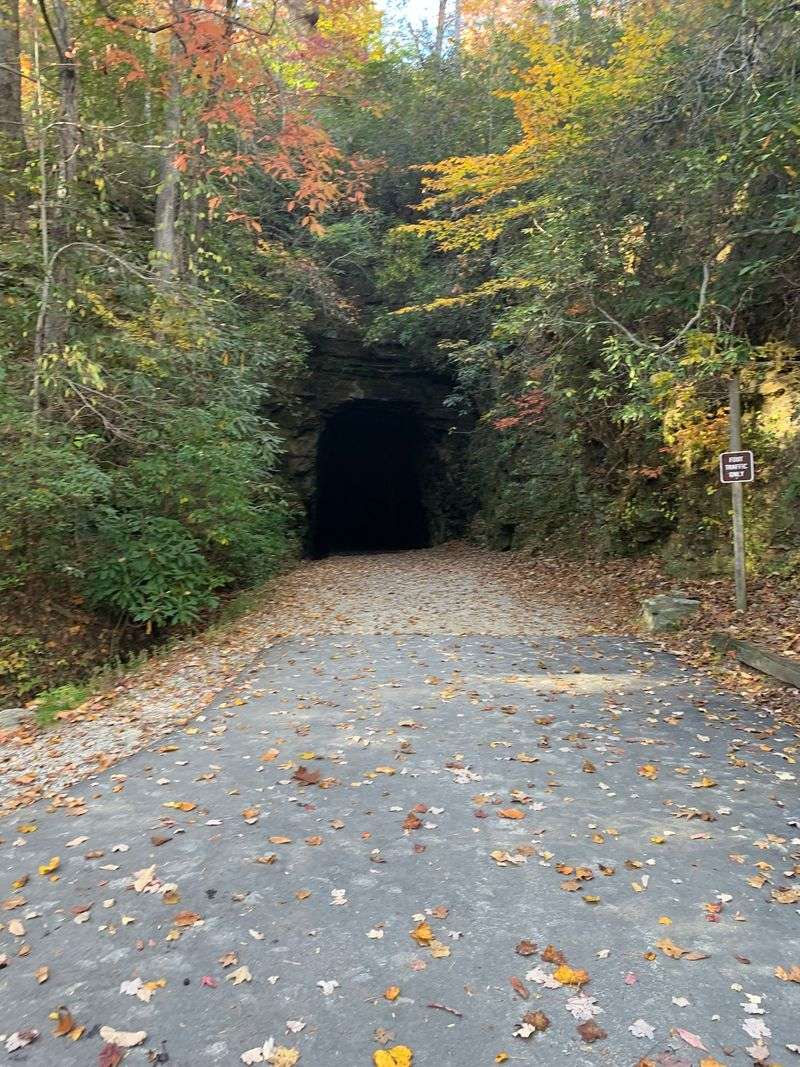
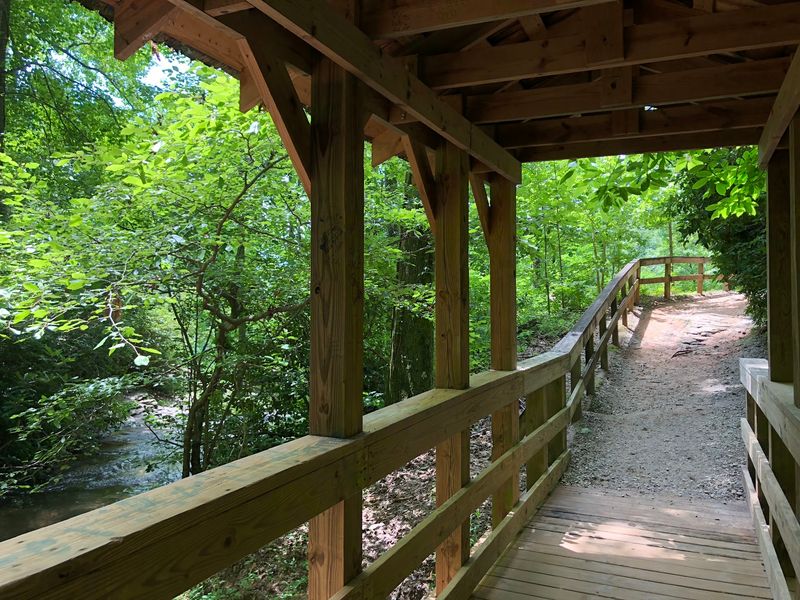
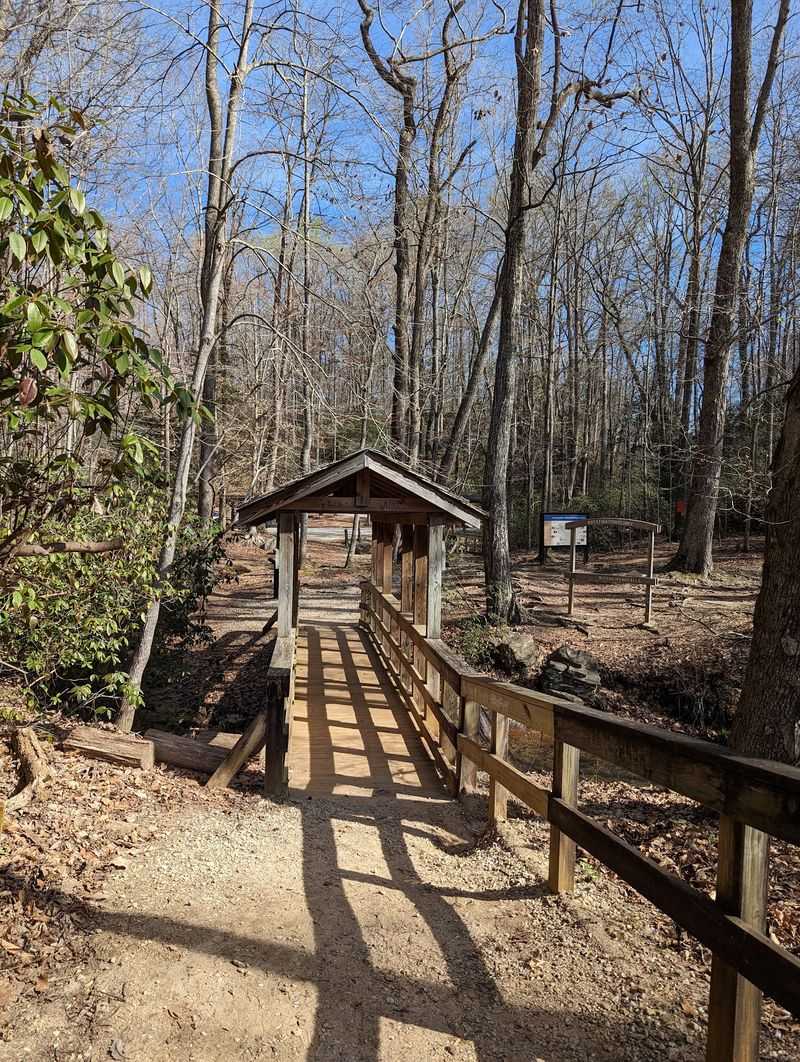
The trail follows a relatively flat path through thick forest, which makes it accessible to a wide range of hikers. The total distance runs approximately five miles out and back, which is manageable for most people with a reasonable fitness level.
Yellow blazes on the trees keep you oriented throughout the hike.
The terrain along most of the route is gentle, though some sections can get slippery after rain. Hikers who visit following wet weather should wear shoes with solid grip and expect muddy patches along the path.
Some areas have overgrown vegetation, but the route itself stays clearly defined.
There is something almost meditative about walking through these woods, knowing that the path you are on roughly follows the route that 19th-century railroad workers once carved through the landscape. The forest has reclaimed most of what they built, but the tunnels remain.
Stump House Tunnel, the Star of the Trail
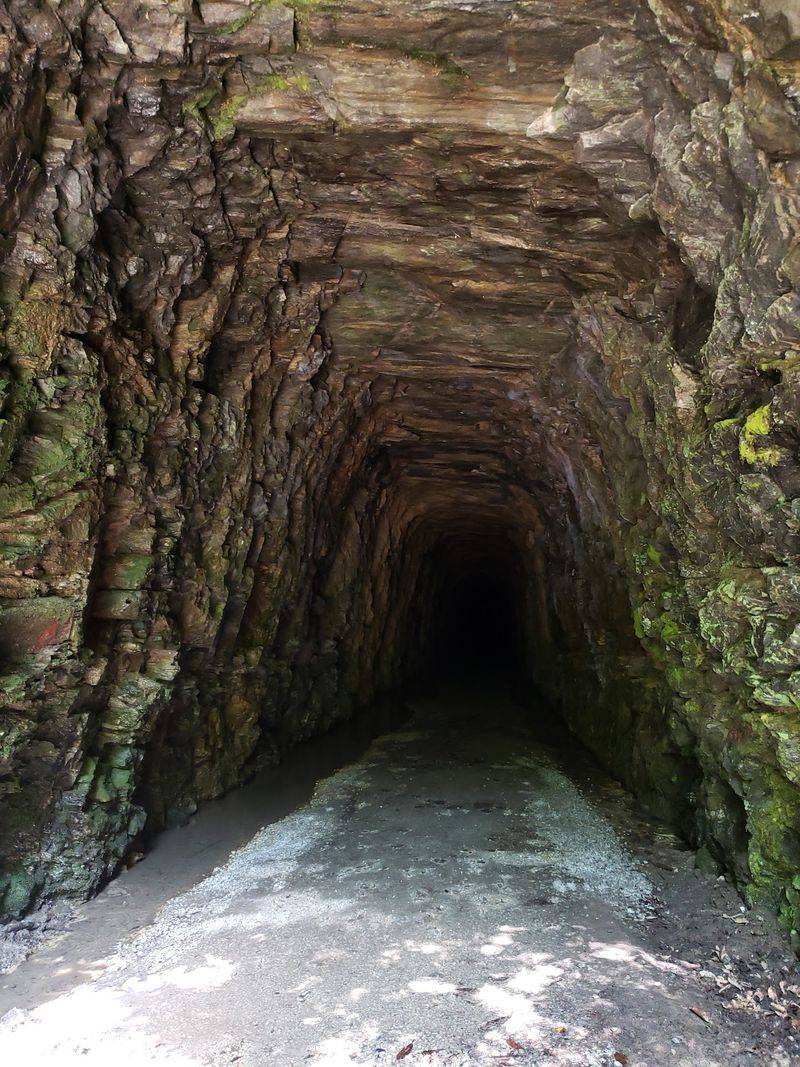
Stump House Tunnel is the centerpiece of the entire hike, and it earns that title without any exaggeration. At nearly 1,600 feet in planned length, it was meant to be the longest tunnel on the Blue Ridge Railroad.
Workers drilled and blasted into the mountain for years before the project was abandoned, leaving behind a tunnel that goes deep into the rock but never reaches the other side.
The blocked end is part of what makes it so compelling. You walk in, your flashlight beam catches the rough-cut walls, and eventually you reach the point where work simply stopped.
It feels like walking into a moment frozen in time.
The tunnel stays naturally cool year-round, which has made it useful in unexpected ways over the years. That cool, consistent temperature played a role in some fascinating local history that most visitors do not expect to learn about on a hiking trail.
The Time Clemson University Made Cheese Inside the Tunnel
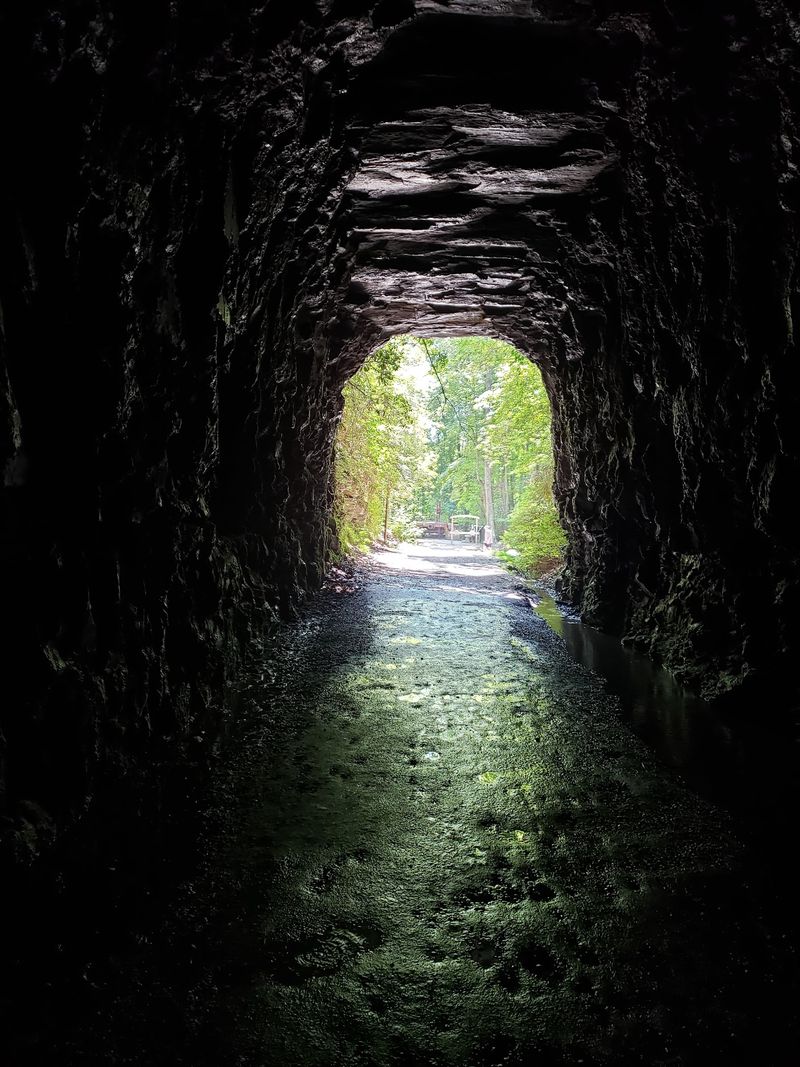
Here is the detail that stops most people in their tracks. For a period after the tunnel was abandoned as a railroad project, Clemson University actually used the interior of Stump House Tunnel to age blue cheese.
The cool, humid conditions inside the tunnel turned out to be ideal for the cheese-aging process.
Clemson Blue Cheese became a well-known product, and the tunnel played a genuine role in its production history. The university eventually moved its cheese-making operations elsewhere, but the story of cheese being aged inside a mountain railroad tunnel in South Carolina is one of those facts that sounds made up and absolutely is not.
Long-time locals still remember the tunnel by the nickname Stump House, and some remember the cheese connection fondly. It adds a wonderfully unexpected layer to what is already a trail full of surprises, and it gives the place a personality that is hard to match anywhere else in the state.
The Air Shaft Above the Main Tunnel
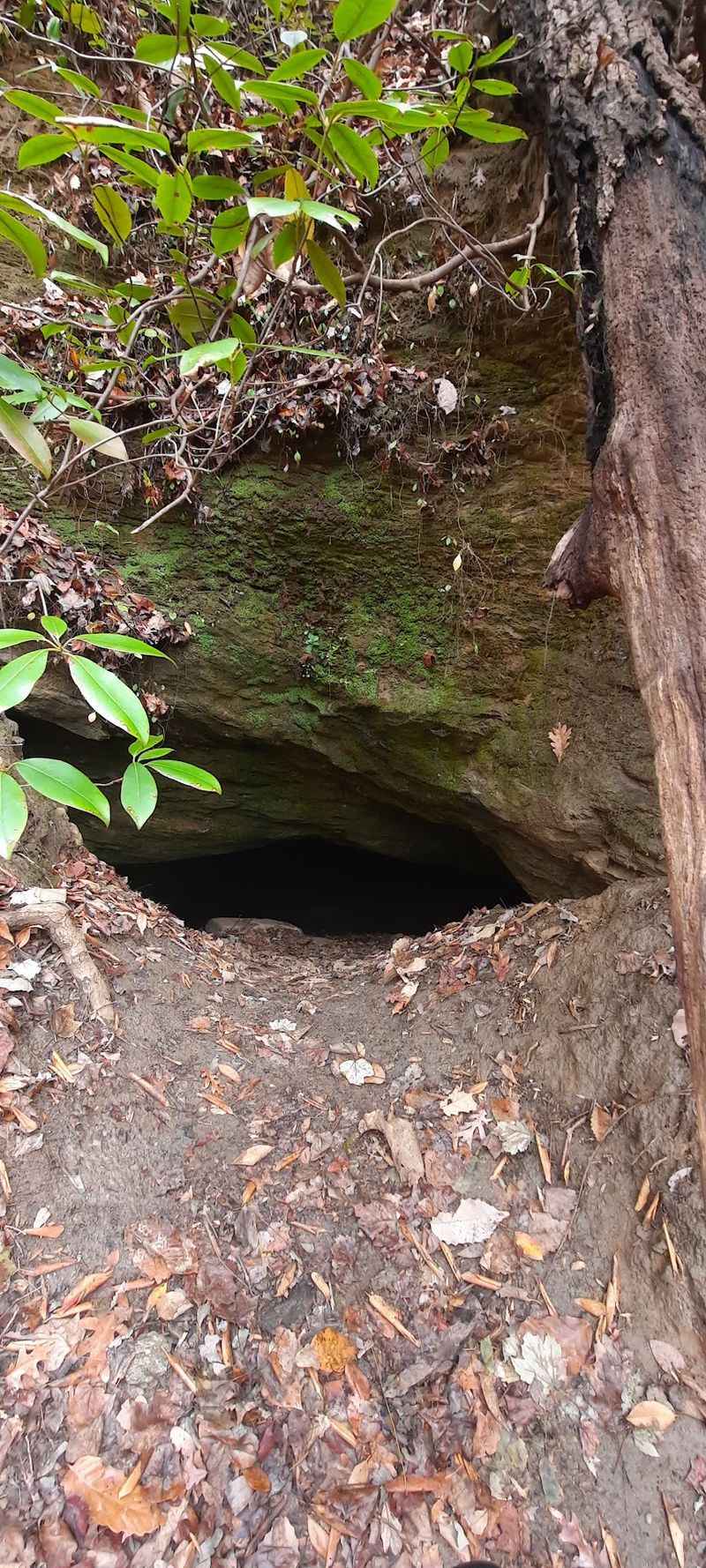
Above Stump House Tunnel, somewhere on the ridge, there is a vertical air shaft that was drilled down into the tunnel during construction. Air shafts like this were common in 19th-century tunnel projects because workers needed ventilation while blasting and drilling deep inside the rock.
Over the years, the air shaft became a spot that adventurous visitors tried to access, and some apparently attempted to rappel down through it into the tunnel below. That is not recommended, not sanctioned, and genuinely dangerous.
The area around the shaft is known to be hazardous, and visitors should stay on the established trail rather than exploring the ridge above the tunnel.
Knowing the air shaft exists up there adds an interesting dimension to the experience of standing inside the tunnel and looking up. The engineering required to coordinate that kind of vertical drilling with horizontal tunnel work in the 1850s was no small feat.
The Waterfall That Shares the Same Area
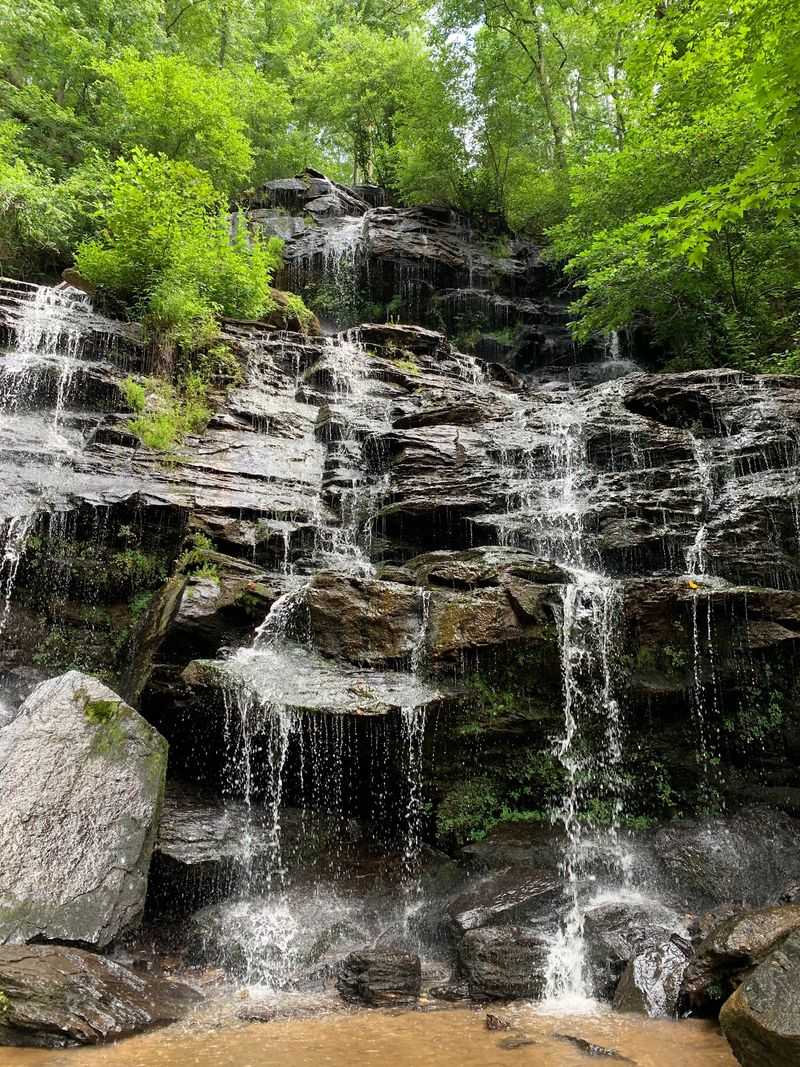
The tunnel trail is not the only attraction worth your time in this area. A waterfall is also accessible nearby, and several visitors mention it as a highlight of the outing.
The combination of tunnels and a waterfall in the same general area makes this a particularly satisfying day trip.
Waterfall chasing and history exploring do not often go together this naturally. Having both available within a short distance of each other means you can spend a full morning or afternoon without running out of things to see.
The waterfall adds a softer, more scenic counterpoint to the industrial history of the tunnels.
That said, the area around the falls has been noted as slippery and requires careful footing. Wearing appropriate footwear and staying on designated paths keeps the experience enjoyable rather than stressful.
The scenery is genuinely worth the effort of getting there safely.
Trail Hours and Practical Visiting Information
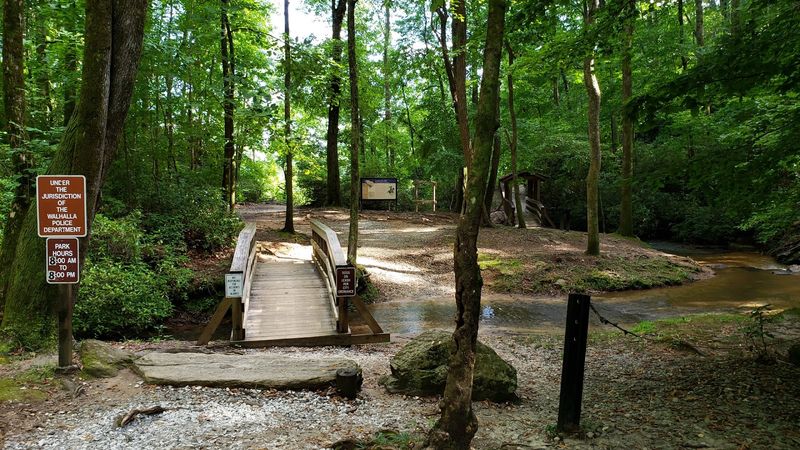
The Blue Ridge Railroad Historical Trail is open daily from 6 AM to 8 PM. That window gives hikers plenty of time for a morning start, which tends to be the most comfortable option during warmer months when afternoon heat builds up quickly in the forest.
A small parking fee applies when you visit. The cost has historically been very modest, and most people who have been there agree it is a reasonable exchange for access to this kind of experience.
Cash on hand is always a good idea for smaller parks and trailheads in rural areas.
The trailhead is shared with at least one other trail in the area, so arriving with a clear sense of which trail you intend to hike saves confusion at the start. Reading the posted signs at the trailhead before setting off takes only a minute and makes the whole outing smoother.
What to Bring for the Best Experience
A flashlight is not optional on this hike. Every person who has been inside Stump House Tunnel says the same thing: it gets genuinely dark in there, and your phone screen will not cut it.
A proper handheld flashlight or a headlamp gives you the best experience and keeps your hands free.
Sturdy shoes matter more here than on many other trails. The path can be muddy after rain, and the tunnel floors are uneven stone.
Good grip underfoot makes a real difference when you are navigating damp rock in low light.
Bring water, especially in warmer months. The hike itself is not strenuous, but the round trip of approximately five miles adds up.
A light jacket is also worth tossing in your bag because the temperature inside the tunnels drops significantly compared to the outside air, which can feel jarring if you are not prepared for it.
Why the Flat Terrain Makes This Trail Accessible
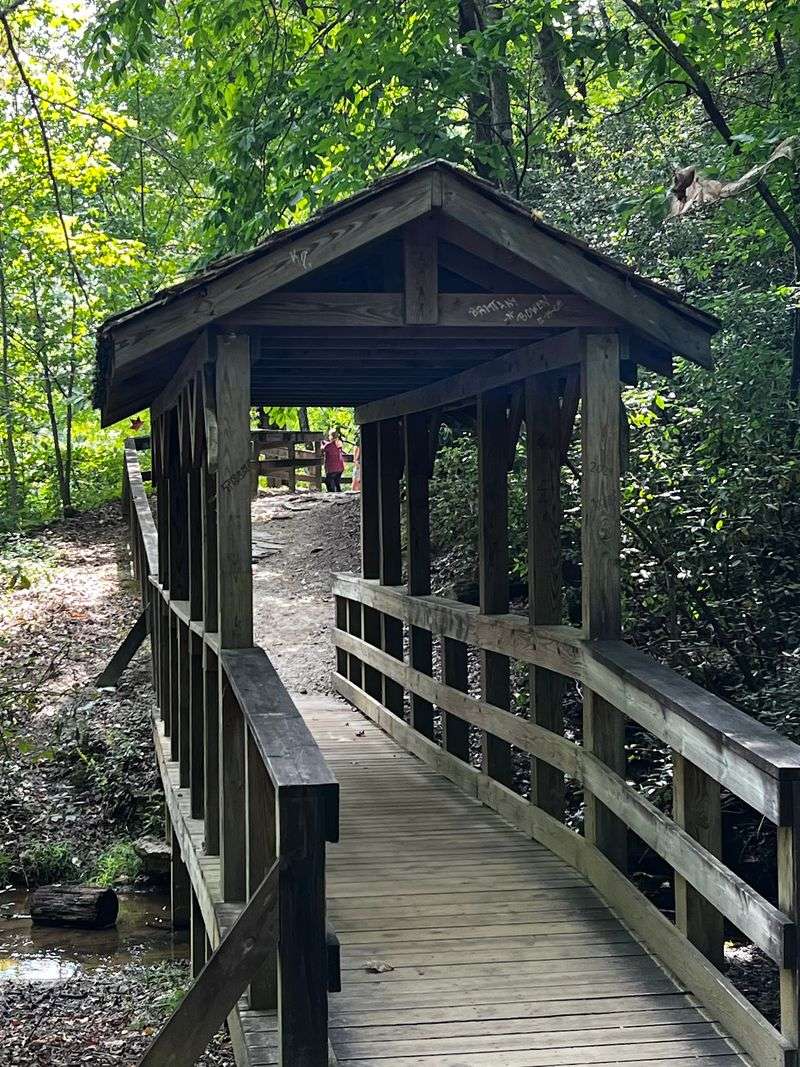
One of the things that stands out about this hike is how manageable the terrain actually is. Most of the trail follows a relatively flat grade, which reflects its origins as a railroad bed.
Trains need gentle gradients, and the grading work done by 19th-century laborers created a path that is now genuinely walkable for a wide range of fitness levels.
Families with older children, casual hikers, and people returning to the trail after a long break all tend to find this route approachable. The five-mile out-and-back distance is long enough to feel satisfying without being punishing.
The payoff of reaching the tunnels gives the hike a clear sense of purpose and destination.
Wet conditions change the equation somewhat, since the path can become slick in spots. Choosing a dry day or at least waiting a day or two after heavy rain makes the experience more comfortable and safer overall.
The Quiet and Peaceful Atmosphere Along the Route
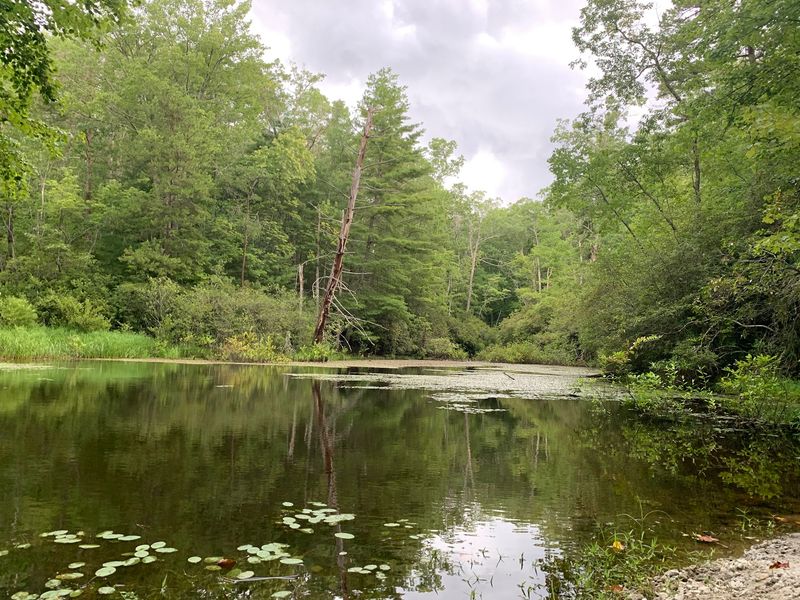
There is a particular kind of quiet that settles in when you are hiking through forest on a trail that sees relatively few visitors. The Blue Ridge Railroad Historical Trail has that quality.
Birds, wind through the trees, and the crunch of leaves underfoot tend to be the main sounds for long stretches of the walk.
That stillness makes the tunnels feel even more dramatic when you reach them. The contrast between the open, airy forest and the close, dark, cool interior of the tunnel is striking in a way that is hard to fully anticipate before you experience it.
Visitors who have done the hike often describe it as peaceful and unhurried. This is not a crowded attraction with tour groups and souvenir stands.
It is a quiet piece of history sitting in the woods, available to anyone willing to walk out and find it.
The Historical Significance of the Blue Ridge Railroad Project
The Blue Ridge Railroad was not a small or casual undertaking. It was part of a larger vision to connect South Carolina’s commerce more directly to markets further inland and eventually to the Midwest.
The state government invested heavily in the project, and it was seen as a matter of economic importance for the entire region.
Construction began in the 1850s and involved a significant labor force working in difficult mountain terrain. The tunnels required drilling through solid granite, which was exhausting and dangerous work even by the standards of that era.
The financial strain of the project, combined with the disruptions brought on by the Civil War, ultimately ended any realistic chance of completion.
What remains today is a rare physical record of that ambition. The tunnels are not just scenic curiosities.
They are tangible evidence of what people were willing to attempt and how history sometimes stops mid-sentence and never finishes the thought.
Why This Trail Deserves More Attention Than It Gets
Most people driving through Oconee County have no idea this trail exists. That is honestly a little surprising given what it offers.
Three unfinished railroad tunnels, a nearby waterfall, flat and accessible terrain, a small admission fee, and a layer of history that includes Clemson cheese-making all in one outing. That combination is hard to find anywhere.
The trail does not get the same attention as some of South Carolina’s more famous outdoor destinations, which means it tends to stay refreshingly uncrowded. For hikers who prefer discovering places before they become packed on weekends, this is exactly the kind of spot worth bookmarking.
Before heading home, exploring a bit of downtown Walhalla is worth the extra time. The town has its own history and character, and pairing a morning on the trail with an afternoon in town makes for a well-rounded day in the South Carolina mountains.
Share this story