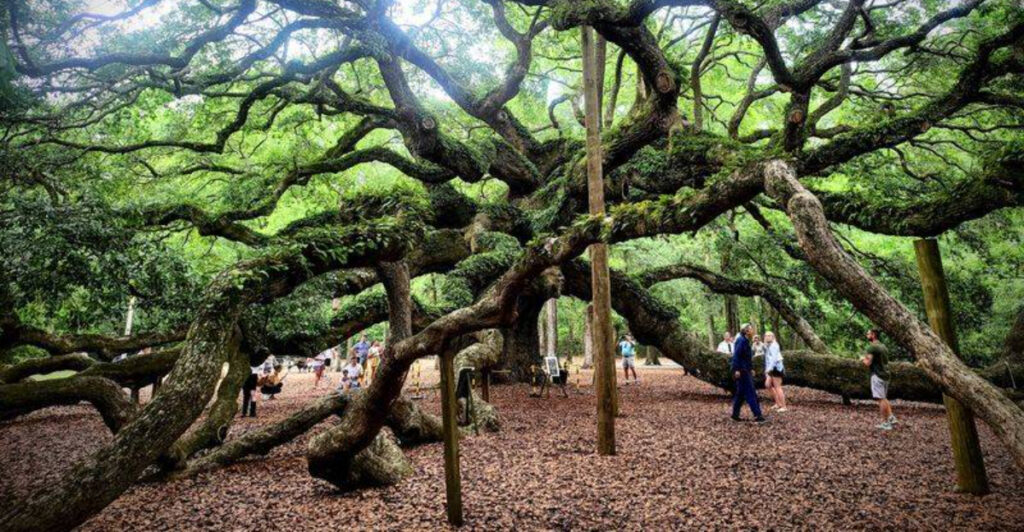
There is a tree in South Carolina so large that its branches spread across nearly 17,000 square feet of ground. That is roughly the size of three basketball courts, all covered by the canopy of a single living oak.
This tree has been growing for an estimated 400 to 500 years, quietly standing through centuries of history while the world changed around it. Once you see it in person, photographs will never quite do it justice again.
A Tree That Rewrites Your Sense of Scale
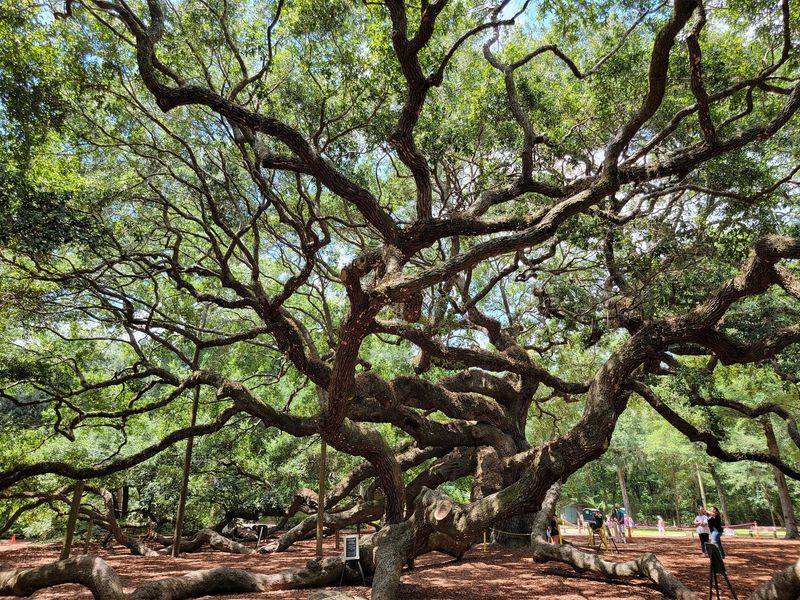
Most people arrive at the Angel Oak Tree expecting something impressive. What they do not expect is to feel genuinely small standing next to it.
The tree stretches over 65 feet tall, and its branches extend outward in every direction, creating a canopy that covers nearly 17,000 square feet of ground beneath it.
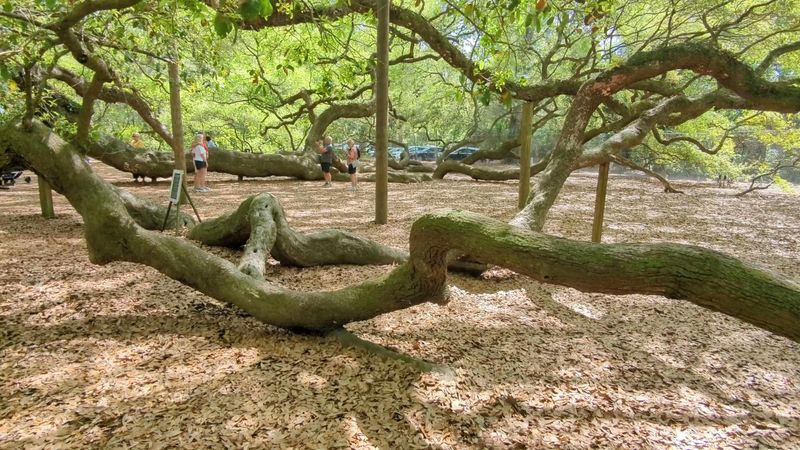
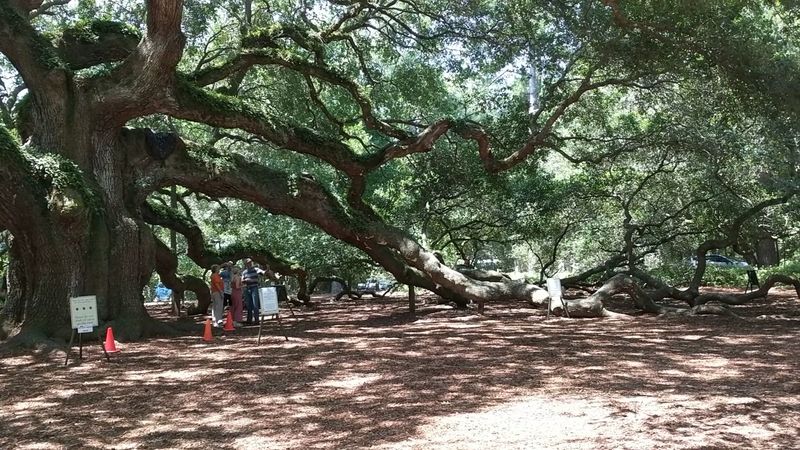
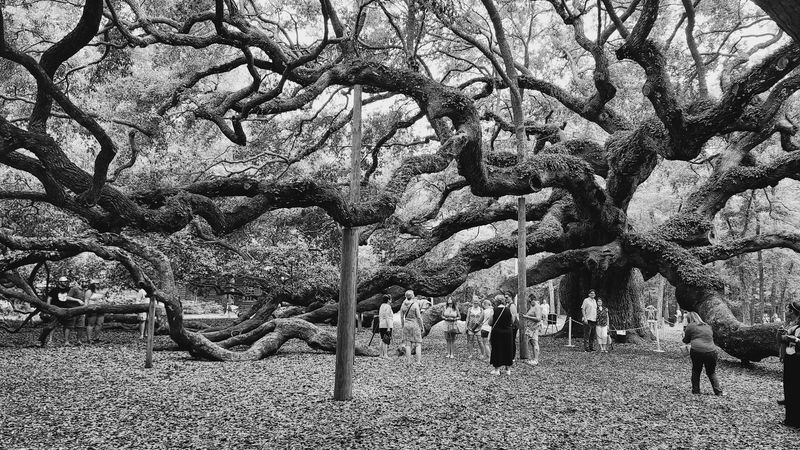
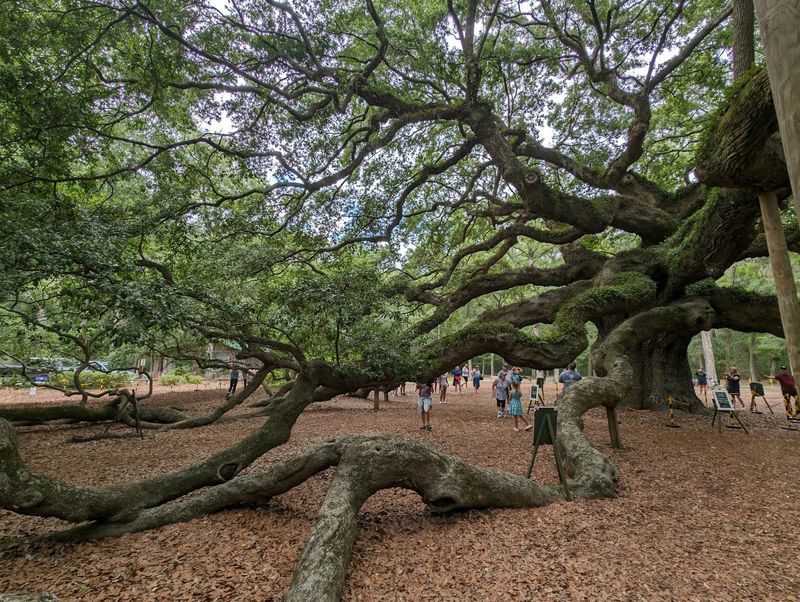
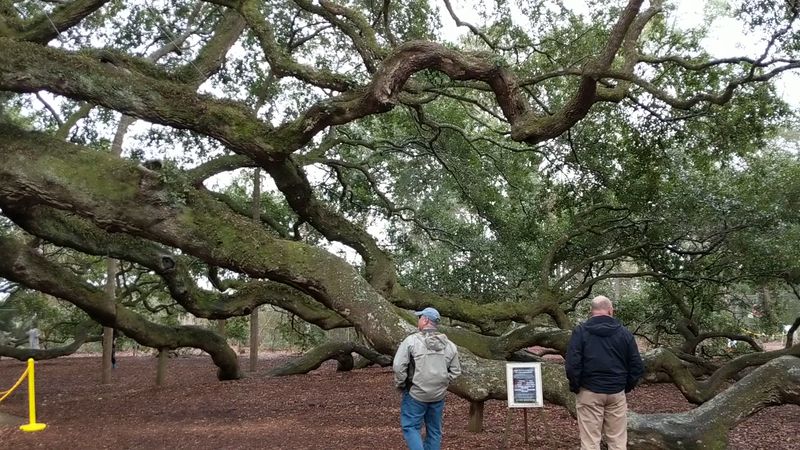
Some of those branches are so long and heavy that they dip down and touch the soil before curving back upward, almost like the tree is embracing the earth around it. The trunk itself is massive, with deeply textured bark that speaks to centuries of slow, patient growth.
Angel Oak Tree, located at 3688 Angel Oak Rd on Johns Island, SC 29455, is one of the most remarkable living landmarks in the eastern United States. No photo fully prepares you for standing beneath it.
How Old Is This Tree, Really
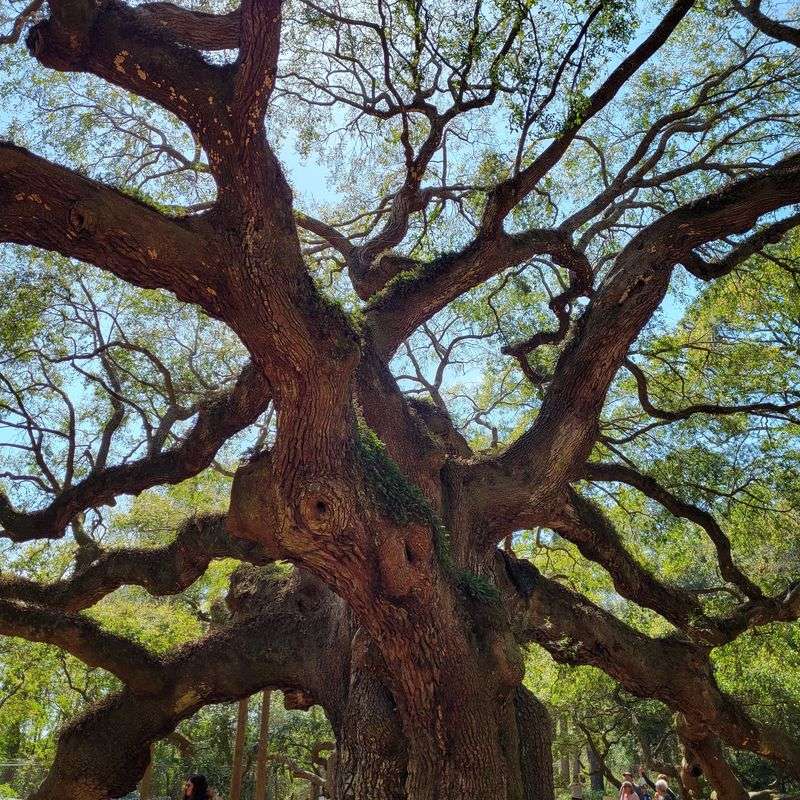
The age of the Angel Oak is a subject that inspires genuine awe. Experts estimate the tree is somewhere between 400 and 500 years old, though some researchers have suggested it could be even older.
That means this oak was already a mature tree long before the United States existed as a country.
To put that in perspective, the tree was growing on Johns Island during a time when European explorers were still mapping the coastlines of North America. Generations of people have come and gone, civilizations have risen and changed, and through all of it, this oak kept growing.
What makes that longevity even more remarkable is that live oaks are naturally resilient trees, built to withstand coastal storms and shifting soils. The Angel Oak has survived all of that and then some, standing as a quiet testament to just how long nature can endure.
The Name Behind the Legend
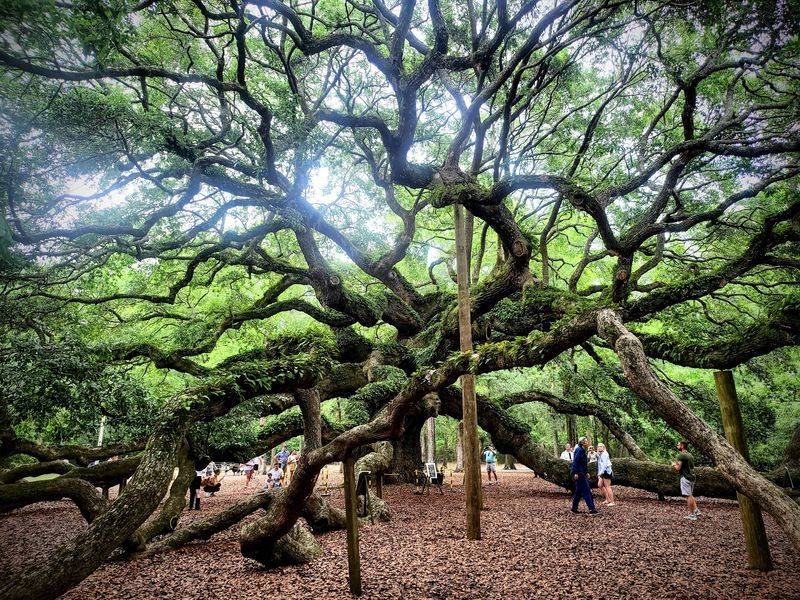
The name Angel Oak carries a certain poetic weight, and the story behind it adds to the tree’s mystique. The tree takes its name from Justus Angel and his wife Martha Waight Tucker Angel, who owned the surrounding property in the early 1800s.
The land itself has a long history tied to the agricultural heritage of Johns Island.
Over time, the property changed hands and the tree became a focal point of local identity. There are also local legends suggesting that the spirits of freed slaves appear around the tree as angels, though this story exists in the realm of folklore rather than documented history.
Regardless of which version of the name’s origin resonates most, the title fits perfectly. Standing beneath those sweeping, cathedral-like branches, draped in Spanish moss, the word angel feels less like a name and more like an accurate description of the atmosphere the tree creates.
What 17,000 Square Feet of Shade Actually Feels Like
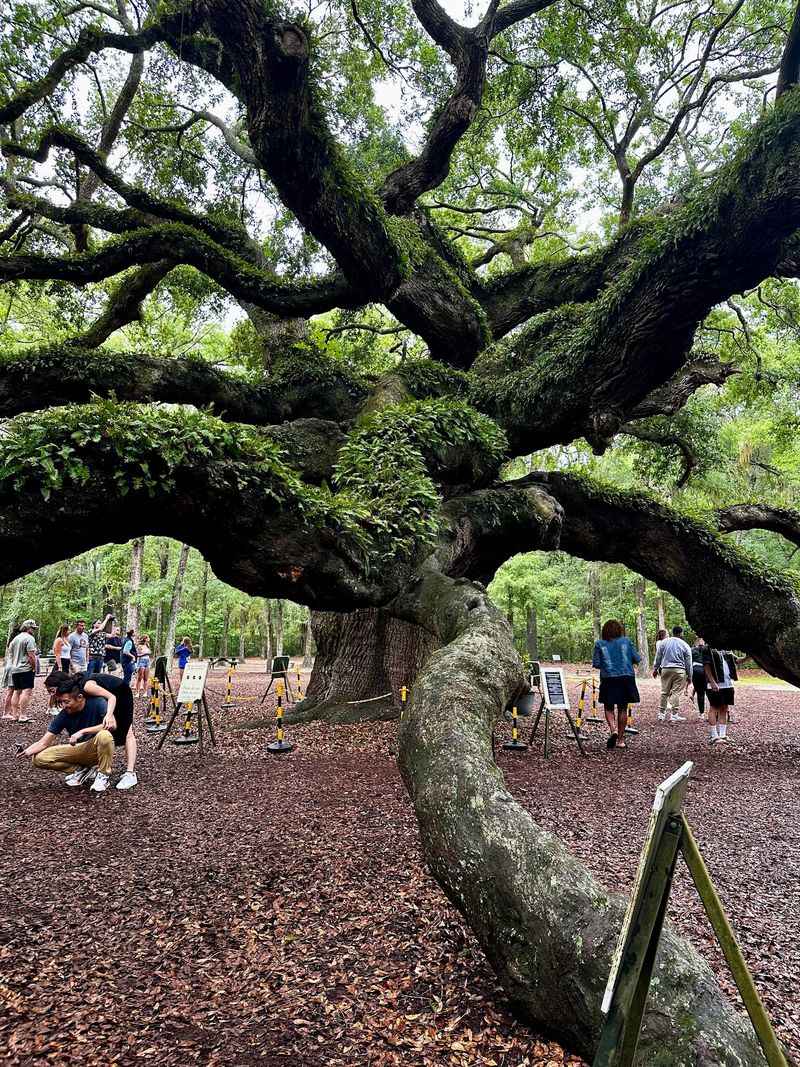
Walking under the canopy of the Angel Oak is a sensory experience that is hard to describe without sounding dramatic. The air feels cooler almost immediately.
The light shifts from open and bright to something softer, filtered through thousands of leaves and curtains of Spanish moss hanging from the branches above.
Sound changes too. The noise of the parking lot and nearby road fades quickly, replaced by birdsong and the occasional rustle of wind through the canopy.
Visitors tend to slow down and speak more quietly once they step beneath the branches, as if they instinctively recognize they are somewhere worth paying attention to.
The sheer coverage of nearly 17,000 square feet means that even on a warm sunny day, the area beneath the tree feels like a completely different world. That shift in atmosphere is part of what makes the Angel Oak so memorable long after the visit ends.
The Branches That Touch the Ground
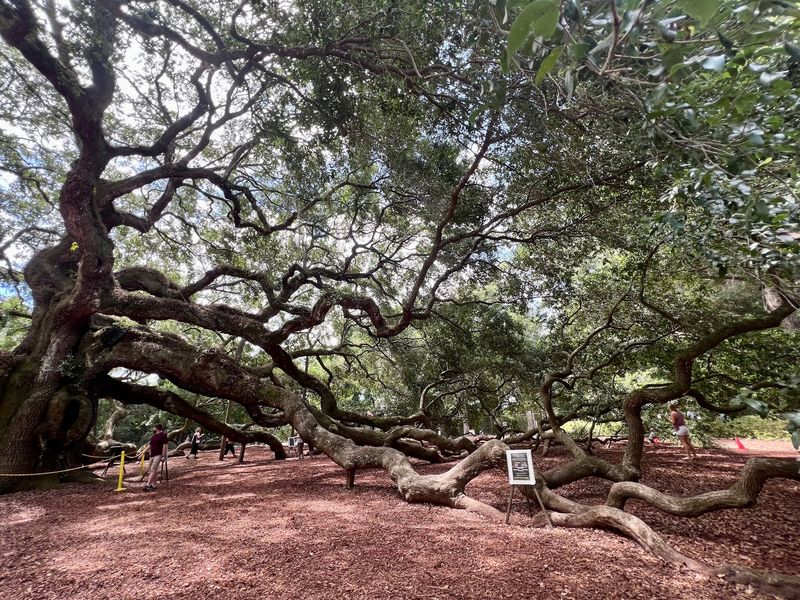
One of the most visually striking features of the Angel Oak is the behavior of its longest branches. Several of them grow outward horizontally for extraordinary distances before becoming too heavy to stay elevated.
They gradually arc downward until they graze the ground, then sometimes curve back upward again.
The longest limbs reportedly extend more than 180 feet from the trunk when measured along their length. That is longer than many buildings are wide.
These drooping, ground-grazing branches create natural archways and tunnels around the base of the tree that visitors love to photograph from different angles.
There is something almost theatrical about those branches. They give the tree a sense of movement, as if it is slowly reaching outward in all directions at once, exploring the landscape around it inch by inch over hundreds of years.
Every angle offers a completely different view of the same remarkable tree.
Visiting Without Spending a Dime
One of the genuinely pleasant surprises about visiting the Angel Oak is that admission is free. There is no ticket booth, no reservation system, and no cover charge to stand beneath one of the most ancient living things on the East Coast.
Donations are welcomed and appreciated, but they are never required.
Free parking is available on site, and the walk from the parking area to the tree is short and easy. The grounds are well maintained, with clear paths that allow visitors to walk around the tree and view it from multiple sides without disturbing the root system.
Picnic tables are also available for those who want to slow down and spend a little extra time in the peaceful surroundings. The combination of no cost, easy access, and a genuinely extraordinary natural feature makes the Angel Oak one of the best free attractions in the entire Charleston area.
The Best Time of Day to Show Up
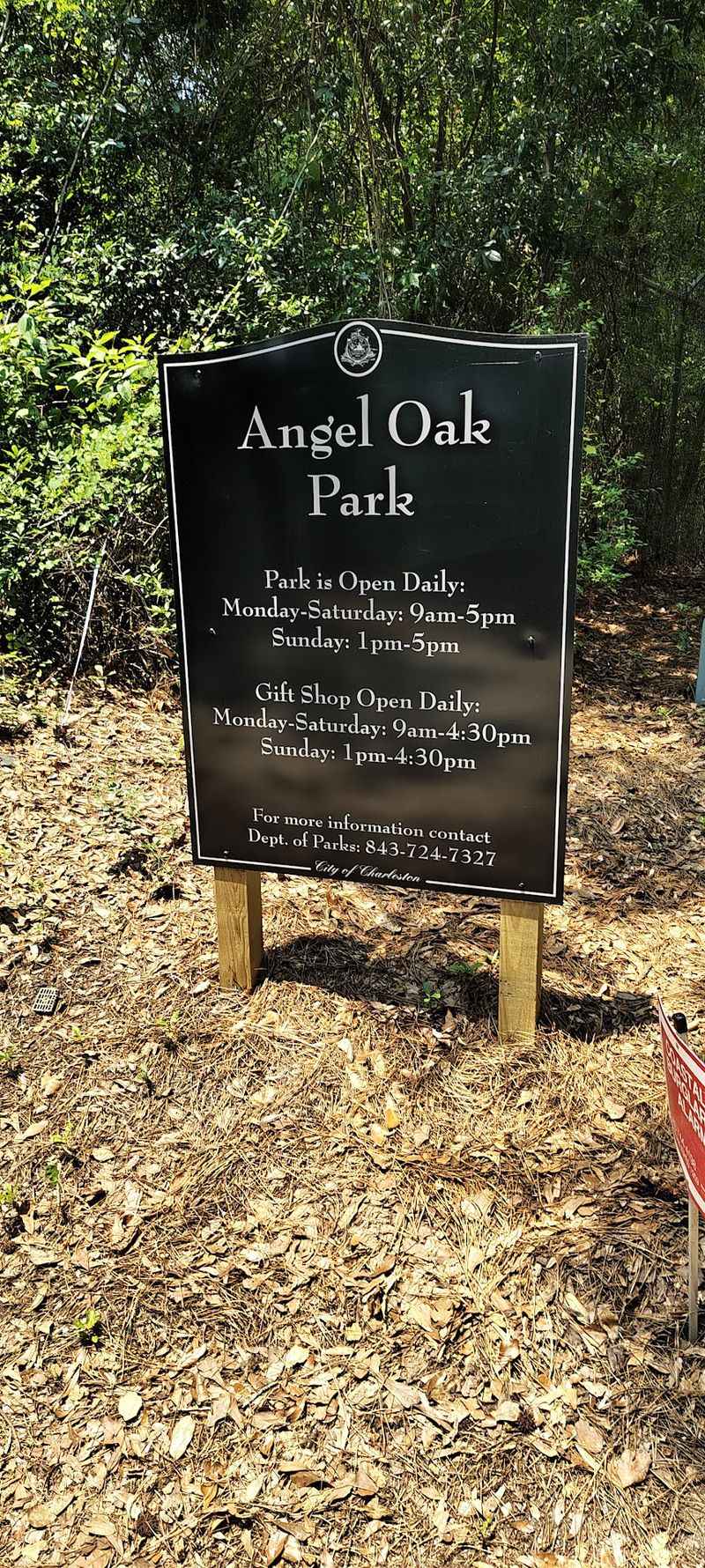
Timing your visit to the Angel Oak can make a noticeable difference in the experience. The park opens at 9 AM on most days, and arriving early is one of the best strategies for avoiding crowds.
Weekday mornings tend to be quieter, which means more space to walk around and better opportunities for unobstructed photographs.
Midday on weekends can get busy, especially during peak travel seasons when Charleston draws large numbers of visitors. The parking lot has a limited capacity, and the area around the tree can feel crowded when many people arrive at the same time.
Sunday hours are different from the rest of the week, with the park opening at 1 PM rather than 9 AM. The park closes at 4:50 PM daily, so planning to arrive at least an hour before closing gives you enough time to genuinely enjoy the experience without feeling rushed.
Photography Tips for Capturing Something This Big
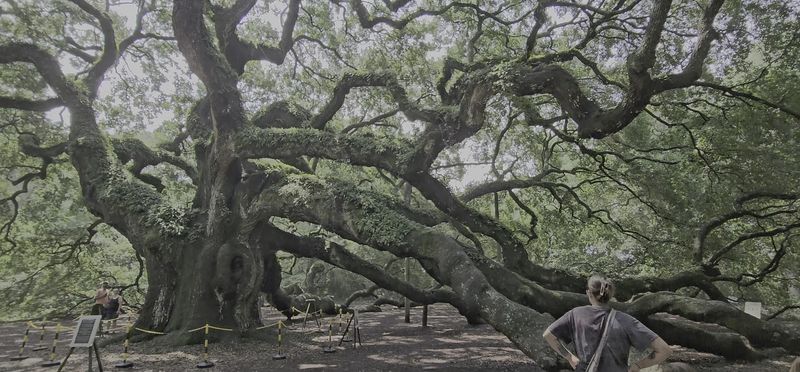
Photographing the Angel Oak is one of those challenges that every visitor discovers pretty quickly. The tree is simply too large to fit into a standard smartphone frame without losing the sense of scale that makes it so impressive.
Getting creative with your angles is the key to bringing home images that actually reflect the experience.
Crouching low and shooting upward through the branches gives a dramatic perspective that shows the canopy spreading overhead. Moving to the edges of the permitted viewing area and shooting across the full width of the tree can also capture the horizontal sprawl that makes it so visually striking.
One important note: tripods are not allowed on site, so you will be working handheld. Early morning visits offer softer, more even light that is much easier to work with than the harsh midday sun.
Shooting on an overcast day is another option that many photographers prefer for this location.
The Gift Shop and a Few Handmade Surprises
Right near the entrance to the Angel Oak grounds, there is a small gift shop where visitors can pick up souvenirs before or after seeing the tree. The shop carries a selection of Angel Oak and Charleston-themed items, including magnets, apparel, and various keepsakes that make easy gifts for people back home.
What makes the gift shop a little more interesting than a typical souvenir stand is the occasional presence of artisans selling handmade sweetgrass baskets. Sweetgrass basket weaving is a deeply rooted Gullah Geechee tradition in the South Carolina Lowcountry, and seeing those handcrafted pieces available near the tree adds a meaningful cultural layer to the visit.
The shop is on the small side, so it can feel a bit tight when several visitors browse at the same time. Still, it is worth a quick look, particularly for anyone interested in taking home something that reflects the local heritage of the Johns Island area.
How the Tree Has Survived This Long
The survival of the Angel Oak over hundreds of years is not simply a matter of luck. Live oaks are naturally suited to coastal environments, with deep root systems that anchor them against strong winds and storm surges.
The Angel Oak has weathered countless hurricanes and tropical storms during its long life on Johns Island.
Preservation efforts have also played a significant role in protecting the tree. The City of Charleston acquired the property in 1991, ensuring that the land around the tree would be protected from development.
Careful management of the grounds, including restrictions on climbing and touching the bark, helps prevent damage to the root system and the tree itself.
Visitors are asked to stay on the designated paths and to treat the area with respect. A young sapling grown from the Angel Oak is also kept on site, representing a small but hopeful continuation of the tree’s legacy for future generations.
What Johns Island Has to Offer Beyond the Tree
Johns Island itself is worth a bit of extra time if your schedule allows. The island has a distinctly rural, unhurried character that feels noticeably different from the busier pace of downtown Charleston, which is only about 25 minutes away by car.
Wide stretches of farmland, tidal marshes, and tree-lined roads give the island a quiet, grounded quality.
The area has deep roots in the Gullah Geechee culture, and that heritage is visible in the local traditions, cuisine, and craftsmanship found throughout the Lowcountry. Johns Island is also home to Kiawah Island and Seabrook Island nearby, both of which offer coastal scenery worth exploring if you have an extra day.
Spending a morning at the Angel Oak and then slowly making your way back toward Charleston through the island’s backroads is a genuinely satisfying way to experience a part of South Carolina that many visitors drive through too quickly to appreciate.
Why People Keep Coming Back
There is something about the Angel Oak that brings people back more than once. Several visitors describe returning years later and finding that the tree feels just as powerful the second time, sometimes even more so.
The tree does not change much from visit to visit, but the people standing beneath it often do, and that shift in perspective changes the experience entirely.
Parents bring children who grow up to bring their own children. People make detours of hundreds of miles just to spend twenty quiet minutes standing under those branches.
The Angel Oak has a way of putting ordinary life into perspective simply by existing, rooted and patient, in a way that nothing built by human hands quite replicates.
That combination of natural spectacle, free access, and genuine emotional resonance is rare. The Angel Oak is the kind of place that earns a permanent spot in memory long after the visit is over.
Share this story