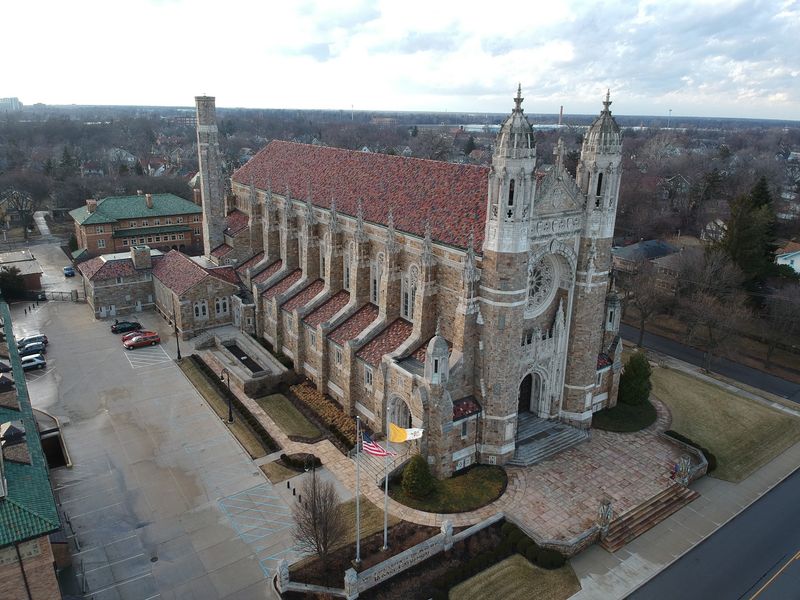
Ohio has a way of hiding its most extraordinary places in plain sight, and few discoveries hit harder than rounding a corner in Toledo and finding a cathedral that looks like it was airlifted straight from Spain. Our Lady, Queen of the Most Holy Rosary Cathedral is one of those rare places that earns every superstition about sacred ground.
The architecture alone is enough to stop you mid-sentence. Whether you come for the history, the artistry, or simply a quiet moment of awe, this Toledo landmark delivers something most people never expect to find this close to home.
A Toledo Landmark Worth the Drive
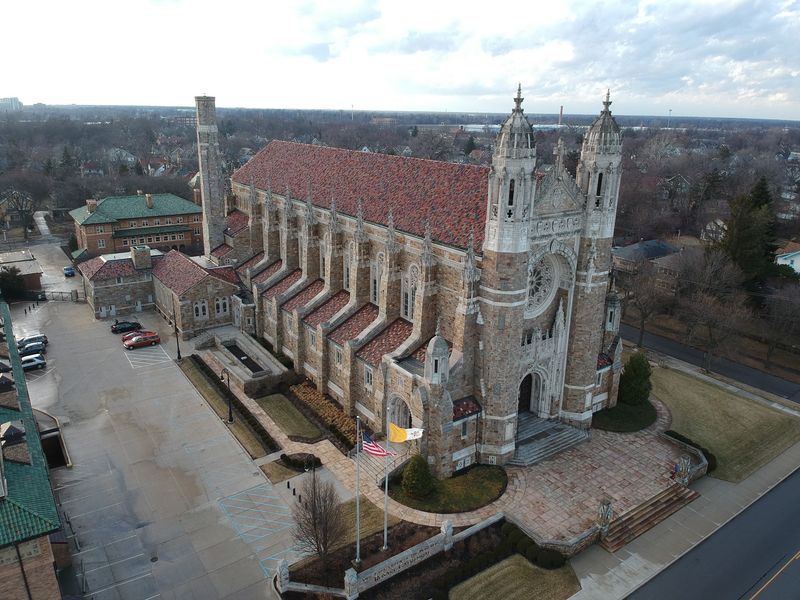
Some buildings announce themselves quietly, and Rosary Cathedral is one of them. Our Lady, Queen of the Most Holy Rosary Cathedral sits at 2535 Collingwood Blvd, Toledo, OH 43610, in a residential stretch of the city that gives you almost no warning before the facade appears.
The cathedral belongs to the Roman Catholic Diocese of Toledo and serves as the bishop’s seat for the region. That designation alone carries weight, but the building earns its status through sheer presence rather than title.
Toledo is a city that rewards curious travelers, and this cathedral sits near the top of any honest list of reasons to make the trip. The surrounding Collingwood Boulevard neighborhood has a quiet, established feel that suits the cathedral’s gravity perfectly.
Getting here is straightforward from anywhere in northwest Ohio, and the drive along Collingwood itself gives you a sense of the cathedral’s scale before you even park the car.
The Spanish Plateresque Style That Sets It Apart
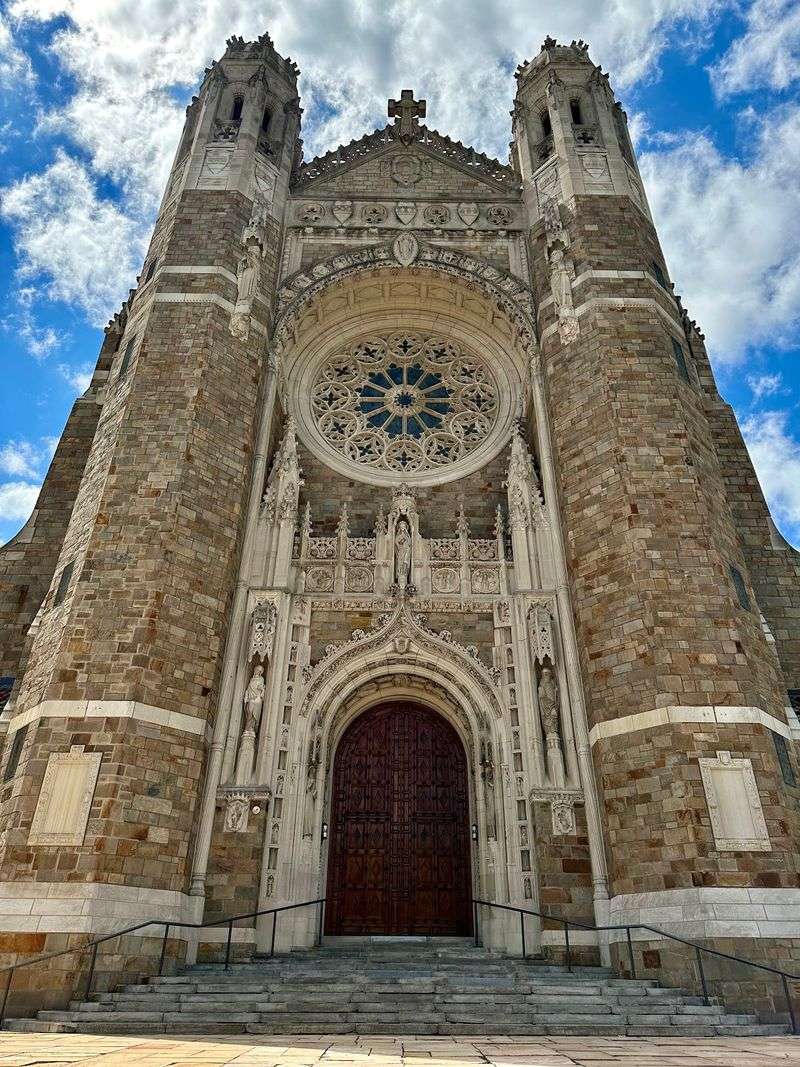
Most people can name a handful of architectural styles without thinking too hard, but Spanish Plateresque is not usually on that list. That unfamiliarity makes the first look at Rosary Cathedral even more striking.
The Plateresque style takes its name from the Spanish word for silversmith, “platero,” and the comparison holds up. Every surface seems to carry a layer of intricate carved ornament, the kind of detail that rewards slow looking.
The stone tracery, the layered relief work, and the sculptural program across the facade create a visual richness that is genuinely rare anywhere in the American Midwest.
Visitors consistently describe the experience of seeing it for the first time as comparable to encountering the great churches of Rome or Spain. That is high praise, and the building earns it honestly.
The craftsmanship visible on the exterior alone justifies a stop, but it functions mostly as a preview of what waits inside. Few Ohio buildings carry this level of architectural ambition, and fewer still pull it off with this kind of coherence and confidence.
The Ceiling That Makes People Look Up and Go Quiet
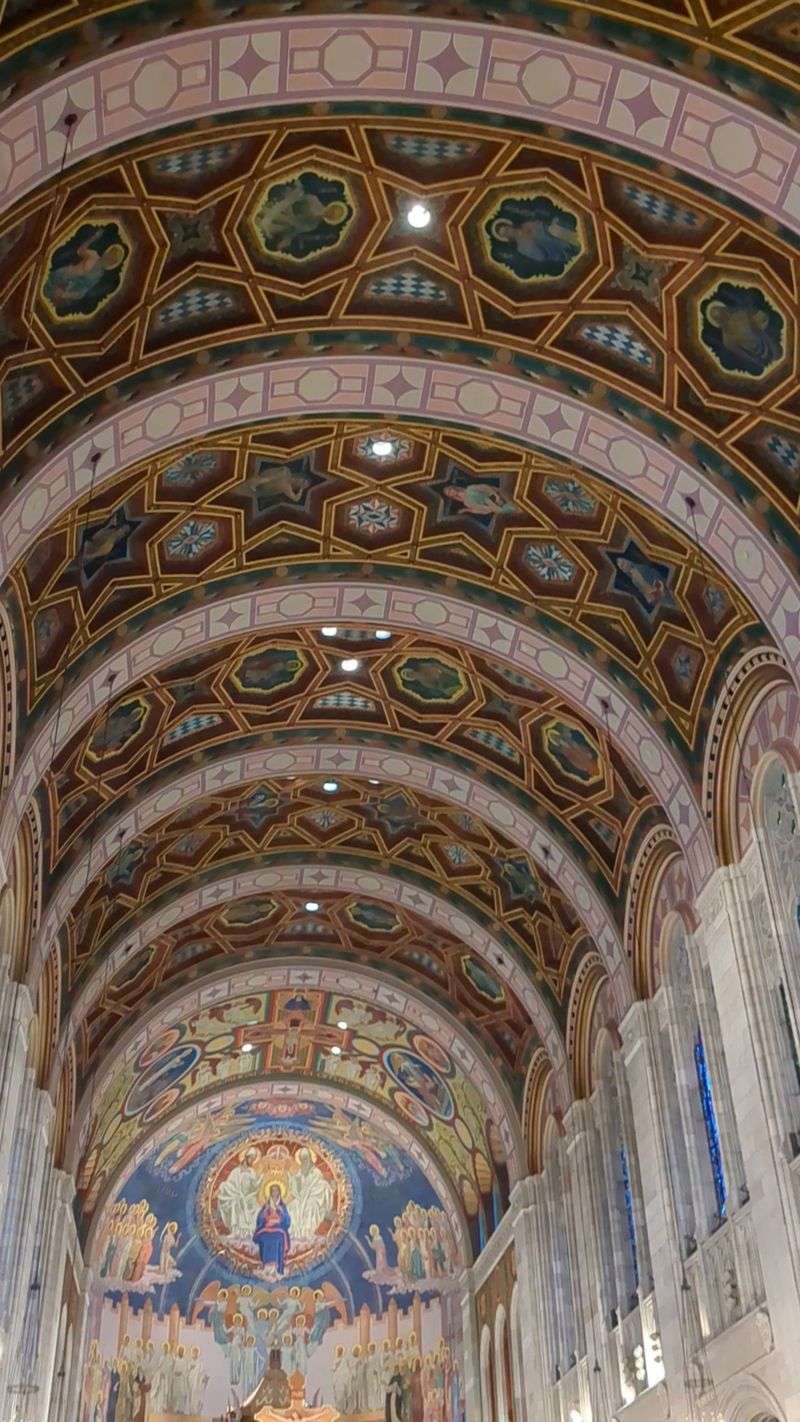
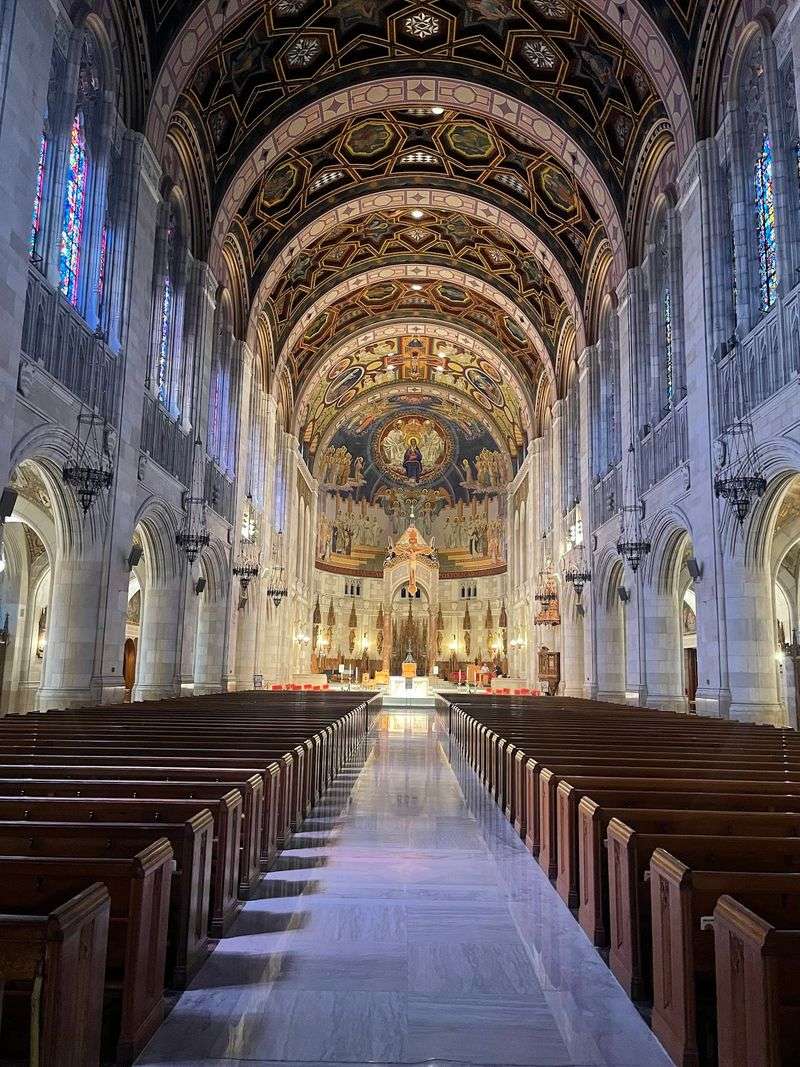
Ceilings in great churches are often the feature that floors people first, and the ceiling at Rosary Cathedral follows that tradition with authority. Visitors mention it repeatedly and consistently, often reaching for words that fall slightly short of the actual experience.
The painted ceiling stretches across the nave in a program of religious imagery that reads almost like an illustrated Bible suspended overhead. The colors hold a warmth that artificial lighting tends to flatten in lesser spaces, but here the palette stays alive and readable from the floor below.
Spending time looking upward in this space does something to the pace of a visit. People slow down.
Conversations drop to murmurs. The ceiling creates a kind of involuntary reverence that works on believers and architecture enthusiasts equally.
It is the kind of feature that makes you wish you had brought better eyes, or at least a longer neck. The combination of painted imagery and the architectural framework that carries it makes this ceiling one of the most compelling interior features in any Ohio building open to the public.
Stained Glass, Marble, and the Art of Telling Stories in Stone
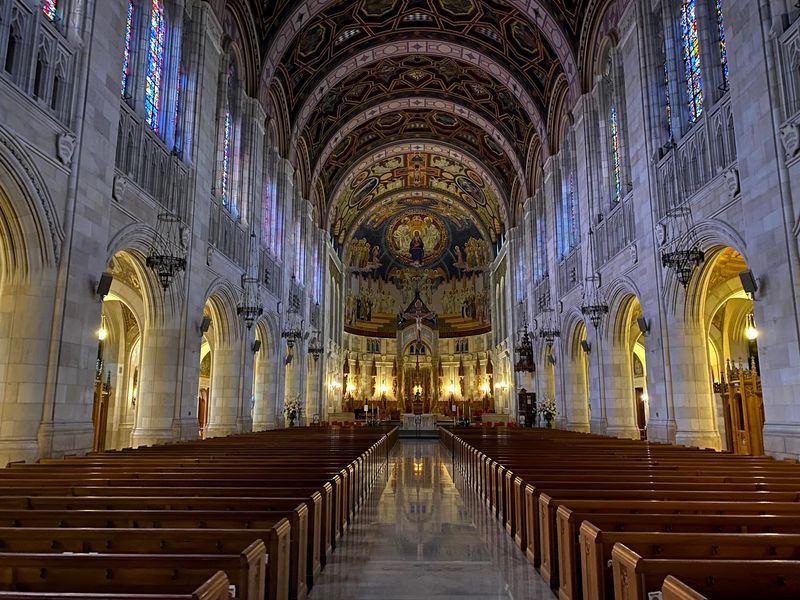
Beyond the ceiling, the interior of Rosary Cathedral unfolds as a layered collection of art forms working together. The stained glass windows filter daylight into color across the stone floors and wooden pews, shifting as the sun moves and making the space feel different at different hours of the day.
The marble work throughout the interior carries the same commitment to quality visible everywhere else in the building. The large ornate golden tabernacle in the side chapel draws particular attention, a piece that would command respect in any context but feels especially powerful here where the surrounding architecture amplifies everything around it.
The iconographic program across the walls and columns tells biblical stories in a visual language that does not require any prior knowledge to appreciate. Each element seems placed with intention, and the overall effect is of a space where every surface participates in the larger meaning of the building.
Art historians, casual visitors, and people of faith all find different things to hold their attention, which is the mark of a genuinely great interior. Few places in Ohio pack this much visual and spiritual content into a single room.
The Pipe Organ and the Sound of the Space
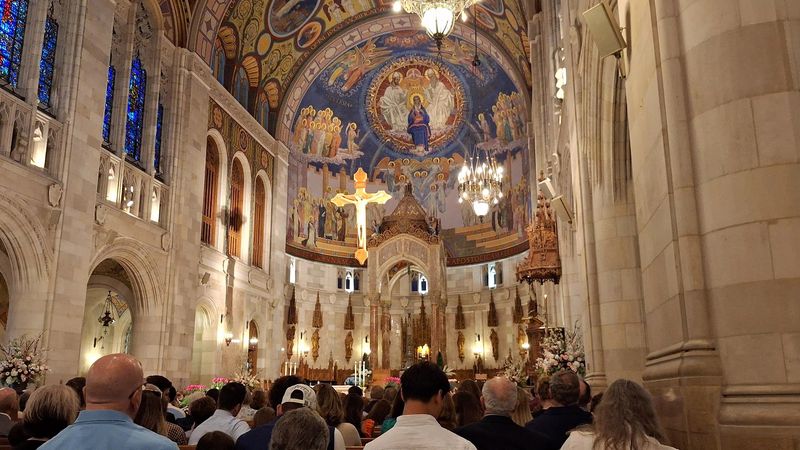
Architecture creates silence in some buildings and sound in others, and Rosary Cathedral belongs firmly in the second category. The acoustics reward music in a way that becomes immediately obvious the moment the pipe organ speaks.
Visitors who attend Mass specifically mention the organ as a highlight that elevates the entire liturgical experience. The instrument fills the space in a way that feels physical as much as auditory, the kind of sound that you feel in your chest before your ears fully process it.
Great cathedral organs are designed to work with their rooms, and this one clearly does.
Even outside of Mass, the acoustic character of the space is noticeable. Footsteps carry, whispers travel, and the ambient sound of the building has a quality that most modern spaces simply cannot replicate.
Attending a Sunday service gives visitors the full sensory experience, but even a quiet weekday visit makes the acoustic potential of the room apparent. If the schedule allows for it, planning a visit around a Mass offers a dimension of the cathedral that no self-guided tour brochure can fully capture.
The organ alone is reason enough to stay.
Self-Guided Tours and the Welcome That Greets Every Visitor
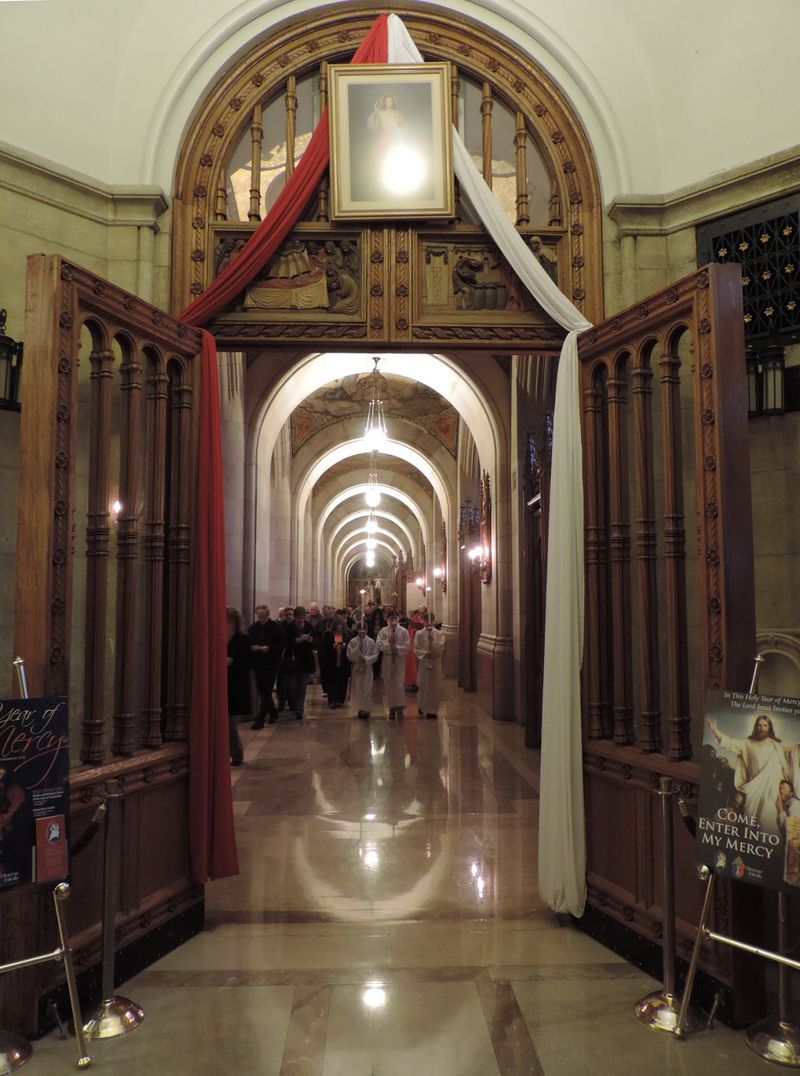
One of the practical pleasures of visiting Rosary Cathedral is how genuinely easy the experience is to navigate on your own terms. Self-guided tour brochures are available inside the cathedral near the side entrance, and the same materials can be downloaded from the cathedral’s website at rosarycathedral.org before a visit.
The brochures walk visitors through the architectural and artistic highlights in a sequence that makes sense of the space without overwhelming anyone. Having a guide in hand changes the experience from passive admiration to active discovery, and the difference is noticeable.
Details that might otherwise blur together become individual stories worth pausing over.
The welcome extended to visitors extends beyond printed materials. The staff and parishioners at Rosary Cathedral have a reputation for making people feel at home rather than like tourists passing through.
Groups have even arranged private Masses and coordinated with local caterers for full-day pilgrimage visits, which speaks to the flexibility and hospitality the cathedral offers. For anyone arriving outside of Mass times, the side door provides access when the main doors are locked, and that detail is worth remembering before making the trip.
The Atmosphere That Works on Everyone, Believer or Not
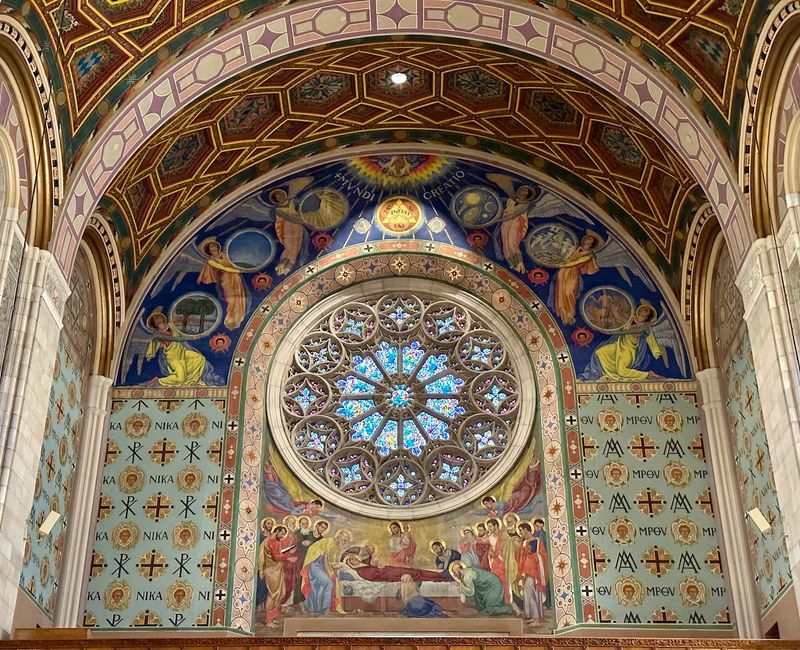
Sacred spaces carry their character independent of any individual visitor’s beliefs, and Rosary Cathedral demonstrates that principle with quiet consistency. The atmosphere inside is one that people across very different backgrounds describe in similar terms: peaceful, stilling, and unexpectedly moving.
Something about the combination of scale, light, and material quality produces a response that bypasses analytical thinking entirely. The ceiling is overhead, the marble is underfoot, the glass is filtering the light, and the overall effect arrives before any conscious processing happens.
That quality is not accidental. Great religious architecture has always aimed to shift the interior state of the person inside it, and this building does exactly that.
Visitors who come for architectural tourism leave with something they did not expect, a genuine sense of calm that lingers past the parking lot. Visitors who come for worship find a space that amplifies the experience rather than simply containing it.
The cathedral earns a 4.9-star rating from over a hundred reviews, and the consistency of that response across such different kinds of visitors says something real about what the building actually delivers. Rare is the place that genuinely works on everyone, and this one does.
Hours, Access, and Planning Your Visit to Rosary Cathedral
Planning a visit to Rosary Cathedral takes about five minutes of preparation and pays off immediately. The cathedral is located at 2535 Collingwood Blvd, Toledo, OH 43610, and can be reached by phone at 419-244-9575 for any questions before arrival.
Mass times follow a regular weekly schedule. Sunday services run from 10:00 AM to 11:30 AM.
Weekday Masses on Monday through Friday begin at 7:00 AM and conclude by 7:30 AM. Saturday Mass runs from 8:00 AM to 9:00 AM.
Outside of those windows, the main doors are typically locked, but the side door remains accessible for visitors who want to tour the interior on their own schedule.
There is no admission charge to visit the cathedral, which makes it one of the most accessible and rewarding stops in all of northwest Ohio. The cathedral’s website at rosarycathedral.org is worth a look before arriving, both for downloadable tour materials and current scheduling information.
Toledo sits within easy driving distance of much of Ohio, making Rosary Cathedral a natural anchor for a day trip that combines a genuine architectural wonder with the quiet satisfaction of finding something this remarkable this close to home.
Share this story