There is a burger on a menu in downtown Austin that goes by a name most restaurants would never dare put in print. It is bold, unapologetic, and apparently lives up to every bit of its reputation.
The same kitchen that produces this legendary burger also fires up steaks over a wood flame, turning out Southwestern-inspired plates that keep locals and visitors coming back on a regular basis. Austin has no shortage of great places to eat, but this particular spot on Congress Avenue has carved out a reputation that feels genuinely earned.
The Restaurant Behind the Legend
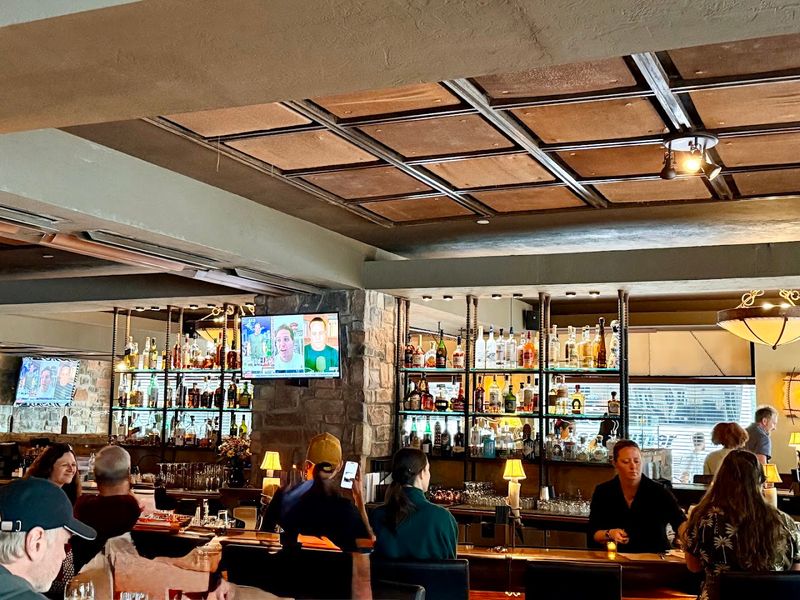
Some restaurants earn their reputation quietly over time. Roaring Fork, located at 701 Congress Ave in Austin, Texas, United States, earned its place on the Austin dining map by doing something straightforward really well: cooking over fire and refusing to apologize for bold flavors.
The restaurant sits in the heart of downtown Austin, close to the Texas State Capitol. Its Old West-inspired interior feels immediately comfortable without trying too hard to look rustic.
The space blends dark wood, warm lighting, and a lively bar area that fills up fast on weekend evenings.
Roaring Fork describes its menu as refined Southwestern fare, which is a pretty accurate shorthand for what arrives at the table. The kitchen leans into wood-fired cooking, Southwestern spice profiles, and hearty American classics prepared with noticeably fresh ingredients.
It is the kind of place that rewards a reservation.
Wood-Fired Cooking That Sets the Tone
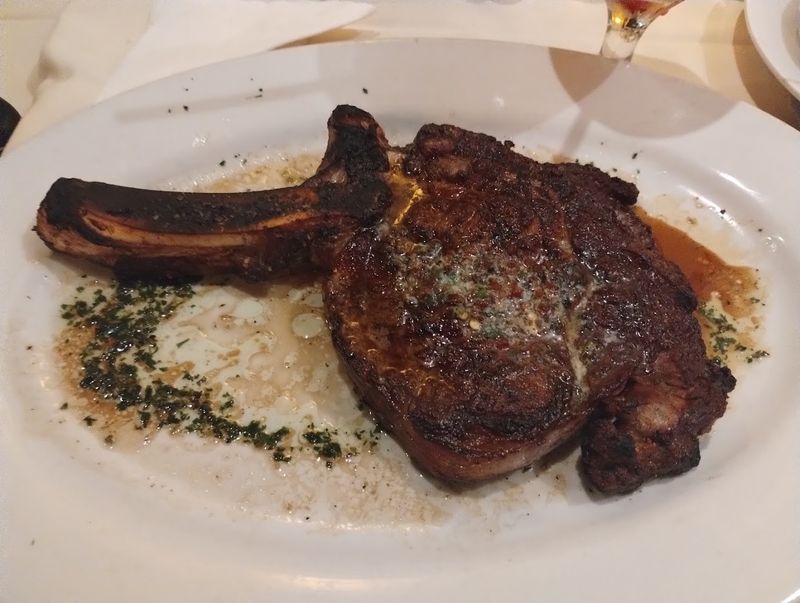
The wood-fired grill is not a gimmick at Roaring Fork. It is the foundation of the entire menu.
Cooking over real wood flame gives the steaks a depth of flavor that a gas grill simply cannot replicate. There is a slight smokiness that settles into the crust of each piece of meat, and that char carries through to the first bite.
That approach shapes how everything else on the menu is built. Sides, sauces, and accompaniments are designed to complement rather than compete with the natural richness that wood-fired heat produces.
The kitchen clearly understands that restraint is sometimes the most powerful seasoning.
For anyone who has grown accustomed to perfectly controlled cooking temperatures, the wood-fired method introduces a welcome unpredictability. The crust on a well-seared steak here has a personality of its own, and that is exactly the point.
The Big Ass Burger That Earns Its Name
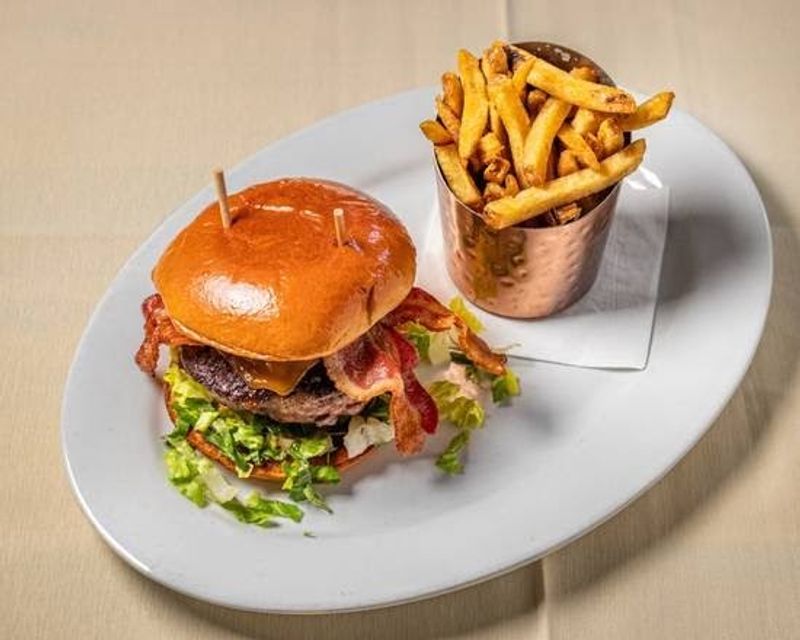
The Big Ass Burger is exactly what the name promises. This is not a slider or a modest stack designed to look impressive in photos.
The burger arrives as a legitimately substantial piece of work, and the flavor backs up the size without hesitation.
Multiple guests who have ordered it alongside an expensive filet have walked away talking more about the burger. That says something meaningful about how seriously the kitchen treats what could easily be dismissed as a casual menu item.
The beef is seasoned well, and the construction holds together the way a good burger should.
Ordering the Big Ass Burger feels slightly rebellious in a restaurant with linen tablecloths, and that contrast is part of the charm. Roaring Fork seems fully aware that its most talked-about item does not fit neatly into the fine dining category, and it leans into that tension with confidence.
The Filet Mignon That Keeps Regulars Loyal
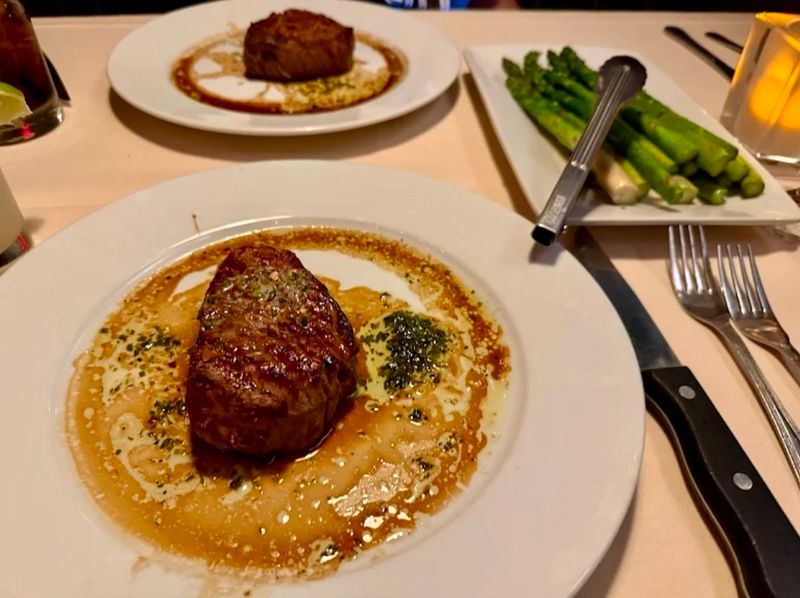
The 8-ounce filet mignon is one of the most consistently praised items on the menu. Guests describe it as juicy, flavorful, and cooked with a precision that suggests the kitchen takes its steak program seriously.
For a downtown Austin restaurant that also sells a burger with an irreverent name, the filet holds its own against more traditional steakhouses.
The filet also appears in an Oscar-style preparation, which adds a layer of richness for those who want the full experience. Either way, the cut benefits from the wood-fired approach that defines the kitchen’s philosophy.
The result is a piece of meat that does not need much help from the plate around it.
Regulars who return specifically for the filet tend to build their entire evening around it, choosing sides and dessert as supporting characters rather than the main attraction. That is a good sign for any steakhouse.
Sides That Steal the Spotlight
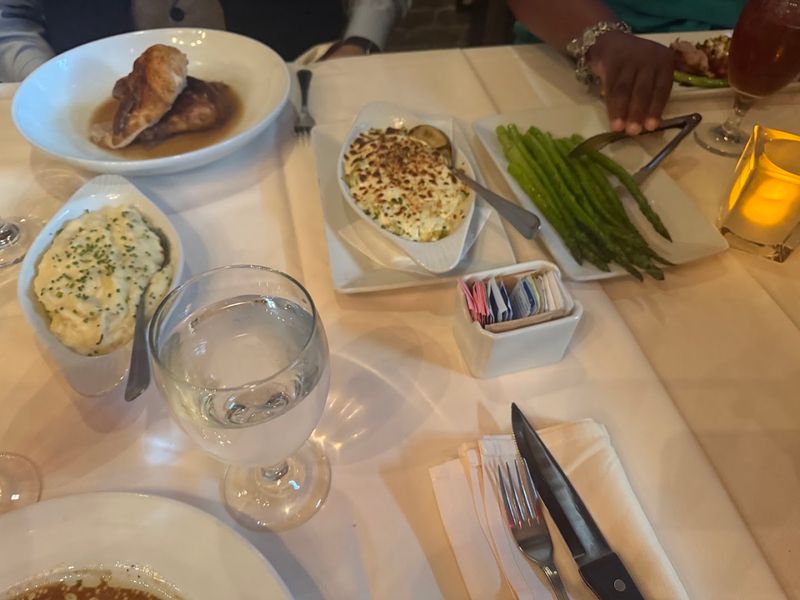
At many steakhouses, side dishes are an afterthought. At Roaring Fork, they have developed their own loyal following.
The green chile mac and cheese is one of the most talked-about items on the entire menu, showing up repeatedly in conversations about what to order. It carries a gentle heat that builds slowly and pairs unexpectedly well with a wood-fired steak.
The mashed potatoes are creamy and rich in the way that only scratch-made potatoes can be. The cornbread has generated its own level of enthusiasm, with some guests describing it as the unexpected highlight of the meal.
Truffle fries, spinach, mushrooms, and grits round out a side menu that takes its role seriously.
Choosing sides here is genuinely difficult, which is a problem most restaurants would love to have. The kitchen treats every element of the plate with the same attention it gives the main course.
Desserts That Close the Meal Properly
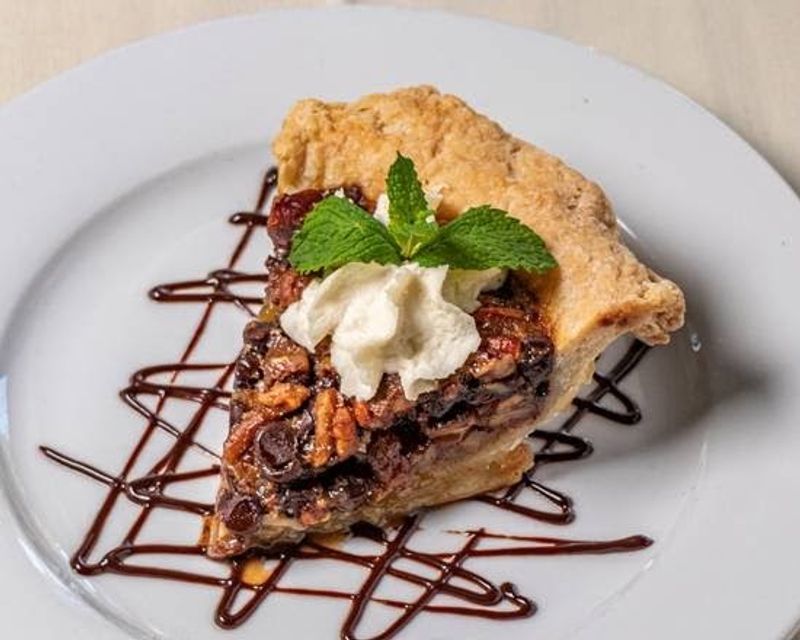
A meal at Roaring Fork does not end quietly. The dessert menu carries the same conviction as everything that comes before it, and the creme brulee has earned a reputation as one of the best versions available in downtown Austin.
The caramelized sugar top arrives with a satisfying crack, and the custard beneath it is smooth without being overly sweet.
The pecan pie is another strong option, leaning into Texas tradition without feeling like a cliche. The apple crisp and raspberry cheesecake have also drawn positive attention from guests who were already full but ordered anyway, which is usually the most honest form of praise.
Skipping dessert here is the kind of decision that leads to mild regret on the drive home. The kitchen clearly understands that finishing a meal well is just as important as starting it right, and the dessert program reflects that philosophy.
An Atmosphere That Works on Multiple Levels
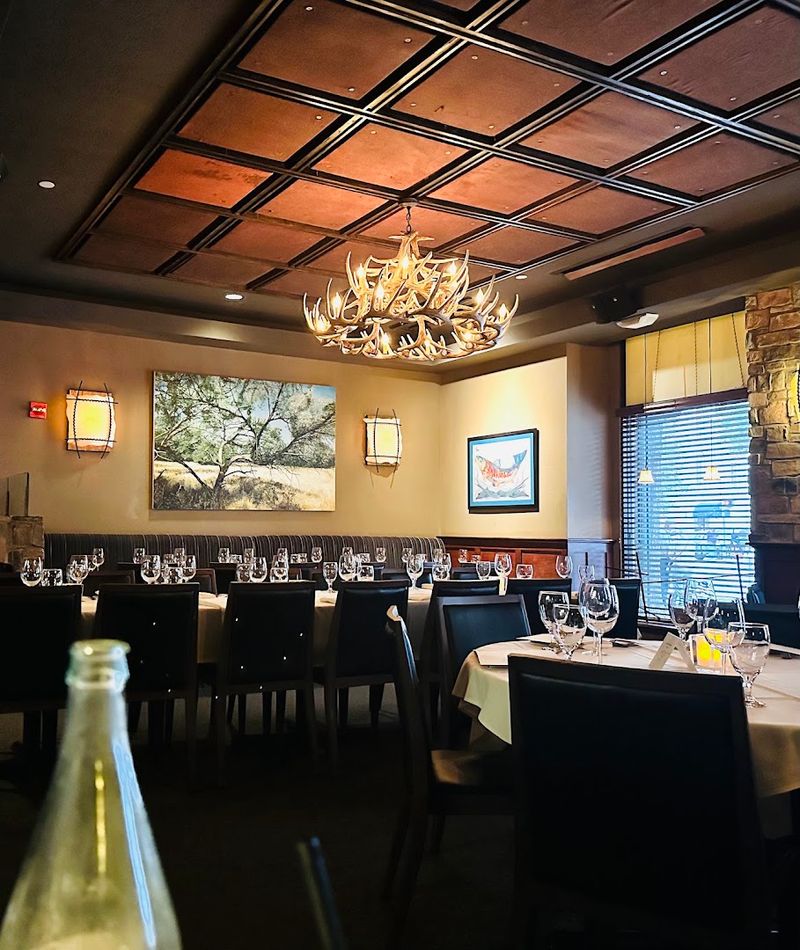
The interior of Roaring Fork manages to feel upscale and relaxed at the same time, which is harder to pull off than it sounds. Dark wood, warm lighting, and a fireplace create a setting that works for a business dinner, a date night, or a group of friends passing through Austin for a concert or event.
The linen tablecloths are present, but casual dress is completely acceptable.
The bar area draws its own crowd and has a slightly different energy from the main dining room. High-top tables near the windows offer a view of Congress Avenue, and the private dining areas in the back accommodate larger groups without isolating them from the broader atmosphere of the restaurant.
The noise level can climb on busy nights, which some guests notice and others appreciate as a sign of a room that is genuinely alive. The energy here feels earned rather than manufactured.
Where Downtown Austin Meets the Menu
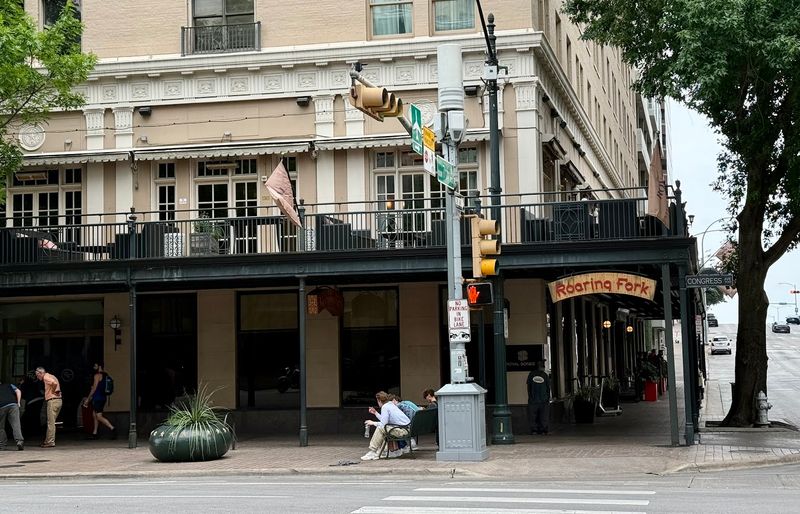
The location on Congress Avenue places Roaring Fork in the center of Austin’s most active corridor. The Texas State Capitol sits nearby, and the surrounding blocks fill up with activity on most evenings, especially during major events like Formula 1 weekend or live music festivals that draw large crowds to the city.
Being downtown means the restaurant sees a steady mix of locals and out-of-town visitors. Some guests stumble in after a long day of meetings or sightseeing, while others plan the meal as the centerpiece of their Austin trip.
The kitchen seems to understand that it is cooking for both audiences simultaneously.
Parking in the area can be limited, which is worth planning around. Rideshare drop-off is a practical option that many guests use, especially on weekend evenings when street parking near Congress Avenue becomes competitive.
The Southwestern Flavor Profile Explained
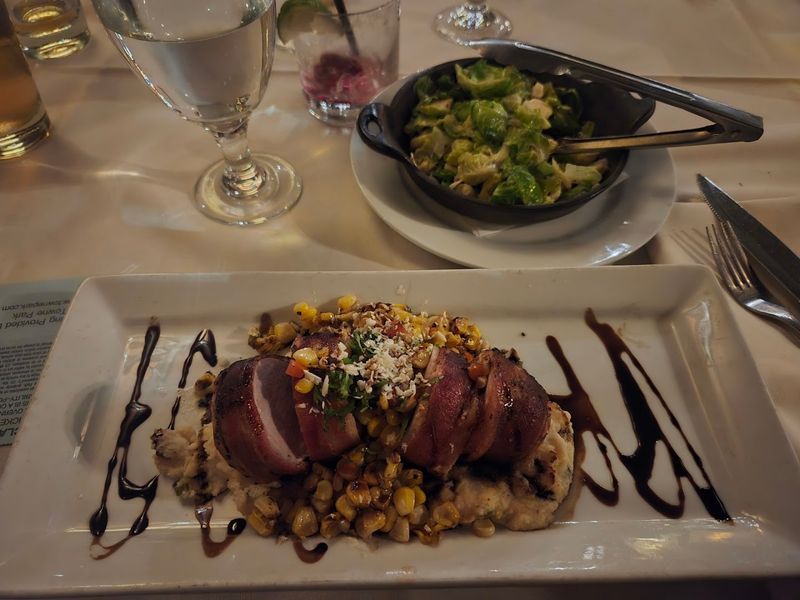
Roaring Fork describes its food as refined Southwestern fare, and that label does real work on the menu. Southwestern cooking in this context means green chiles appear in the mac and cheese, spice profiles lean toward bold rather than timid, and ingredients like grits and pork stew sit comfortably alongside filet mignon and rainbow trout.
The kitchen does not treat Southwestern flavors as decoration. They are structural elements that show up in the way dishes are seasoned, sauced, and plated.
A green pork stew on the appetizer menu signals that the chef is interested in regional identity rather than generic American fare dressed up with a few chiles.
That commitment to a specific culinary point of view gives the menu a coherence that many restaurants lack. Every dish feels like it belongs in the same conversation, which makes ordering feel purposeful rather than overwhelming.
Practical Details Worth Knowing Before You Go
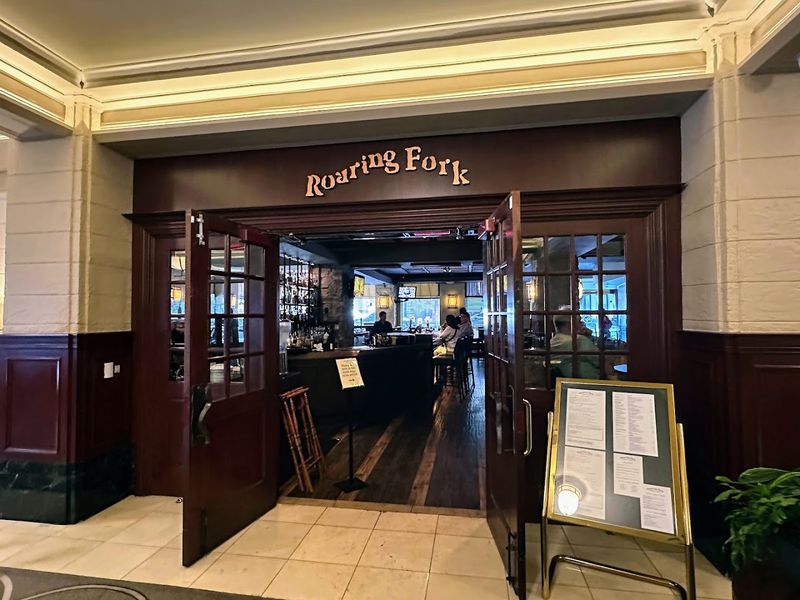
Roaring Fork is open Monday through Friday from 11 AM to 10 PM, which means it handles both lunch and dinner crowds on weekdays. On Saturdays, service runs from 4 PM to 10 PM, and on Sundays the kitchen closes at 9 PM.
That Saturday and Sunday schedule makes it a natural fit for a weekend dinner reservation.
Reservations are strongly recommended, particularly on weekends and during major Austin events. The restaurant fills up quickly on busy nights, and walk-ins, while sometimes possible at the bar area, carry more uncertainty as the evening progresses.
Calling ahead or booking online removes that variable entirely.
Pricing sits at the higher end of the Austin dining spectrum, so arriving with realistic expectations about the bill makes the experience more enjoyable. The value proposition holds up well when the food is firing on all cylinders, which it does more often than not.
Why This Spot Keeps Drawing People Back
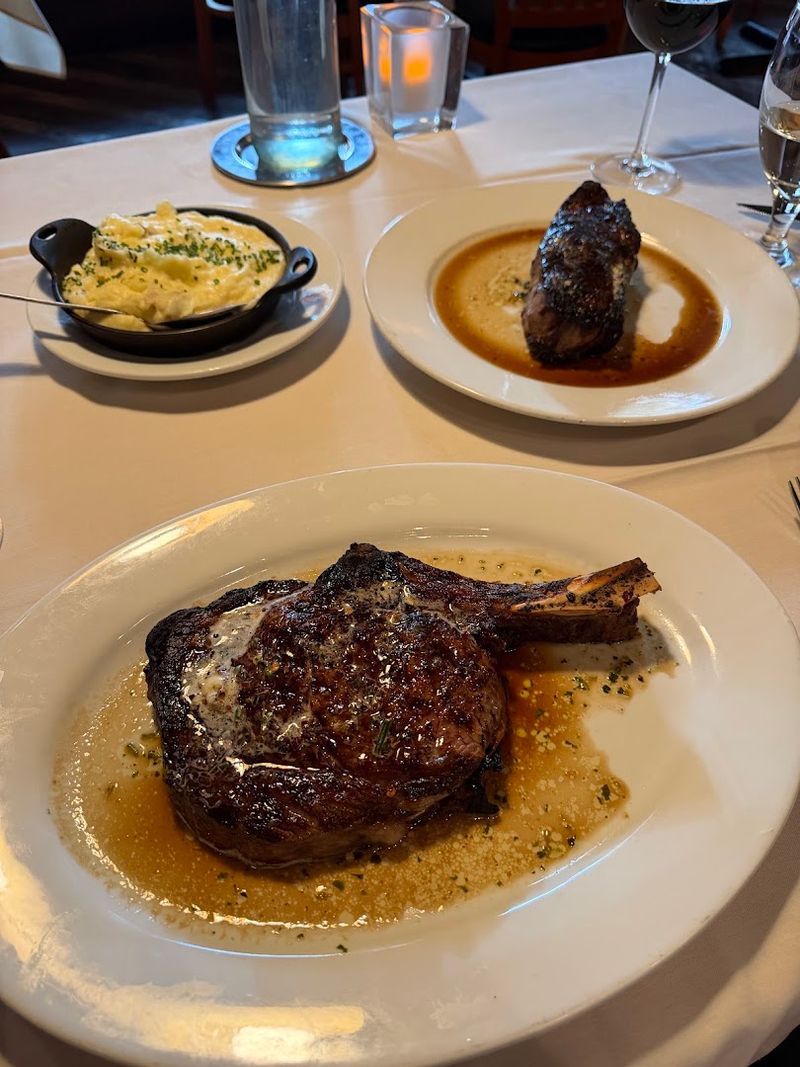
Repeat visits to Roaring Fork tend to follow a predictable pattern: someone comes in for the first time, orders the filet or the burger, discovers the green chile mac and cheese almost by accident, and then spends the next few weeks telling other people about it. The restaurant has a way of generating genuine word-of-mouth enthusiasm that no marketing campaign can fully replicate.
The combination of a strong menu identity, a comfortable atmosphere, and a location that puts it directly in the path of downtown Austin foot traffic creates a self-reinforcing cycle. Locals bring out-of-town guests here because it reliably delivers, and visitors leave with a specific memory attached to a specific dish.
Austin has plenty of places to eat a good steak. Roaring Fork has built something slightly different: a restaurant with a personality strong enough that the food and the name stick with you long after the check is paid.
Share this story