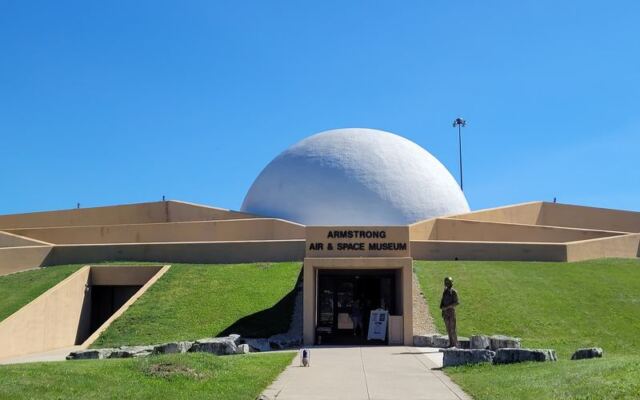
A moon-shaped building sits right beside an Ohio interstate. Plenty of drivers pass it without a second glance.
Inside, a real Gemini spacecraft waits at close range. A 30-minute film retells the first moon landing, and a hallway of mirrors and lights mimics the stars.
I love a stop that turns a boring highway break into a story. I believe this one proves that a small museum can tell a giant tale.
Ready to see what’s hiding behind that dome?
A Moon-Shaped Landmark Beside the Highway
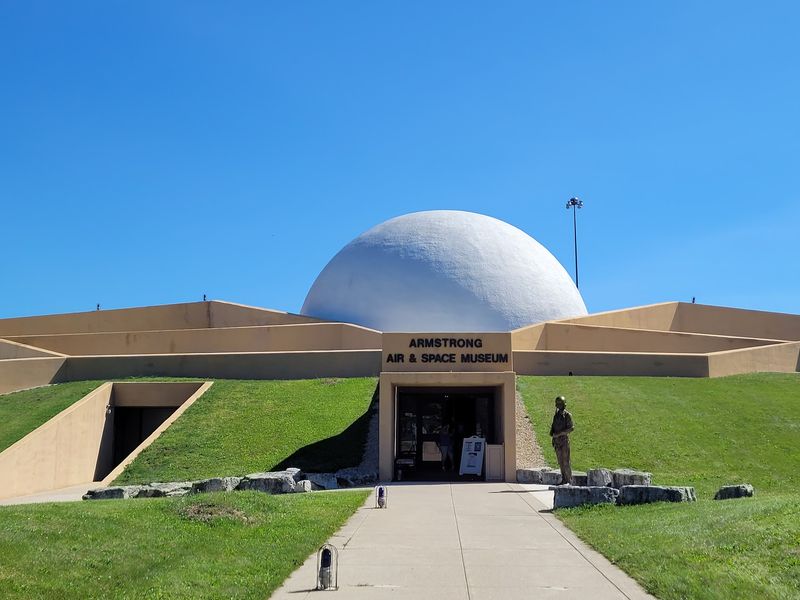
Drivers on I-75 can spot a round, moon-like building from the road. That is the Armstrong Air & Space Museum, and it’s an easy exit for a quick stretch.
The museum is a museum of space history in Wapakoneta, Ohio. Its orb-shaped design gives away the theme before you even park.
Visitors often say they passed it many times before finally stopping. Several admit it looks small from the highway.
Once inside, they describe a place packed with artifacts, models, and stories.
Plenty of parking makes the stop simple. That matters when you’re on a road trip and want a break that feels like more than a gas station.
For Ohioans, this is a proud in-state surprise. A trip into space history sits right off a road many of us already know by heart.
Neil Armstrong Was a Hometown Kid

Neil Armstrong, the first person to walk on the moon, was a Wapakoneta native. The museum leans into that local connection, and it gives the whole visit a warm feeling.
Exhibits follow his early years and his love of flying. Visitors say the hometown angle feels touching, and it makes the story personal.
Newspaper clippings carry you through the excitement of his big moment and beyond. They are easy to read and fun to linger over.
The museum describes itself as one small museum telling one giant story. That’s a clever motto, and it fits the place well.
If you like biographies, this is a great fit. You leave knowing a quiet Ohio boy who reached the moon.
Gemini VIII Up Close
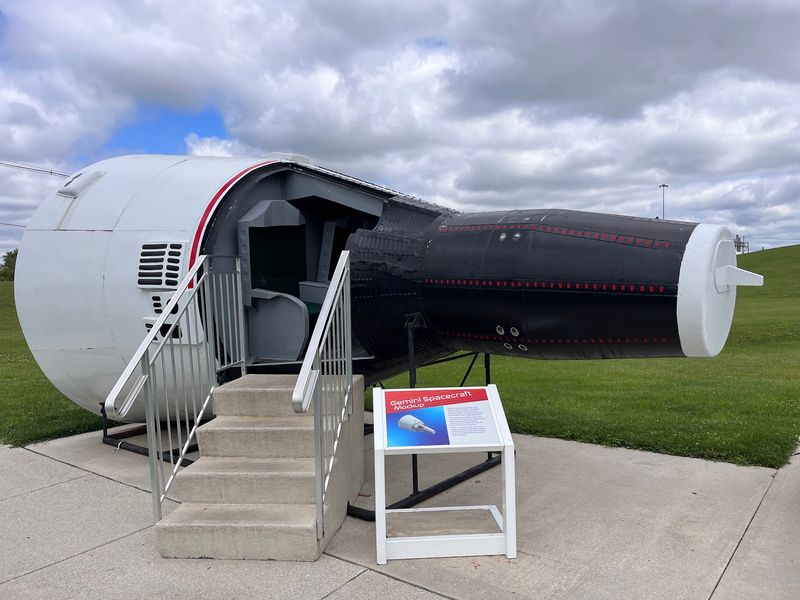
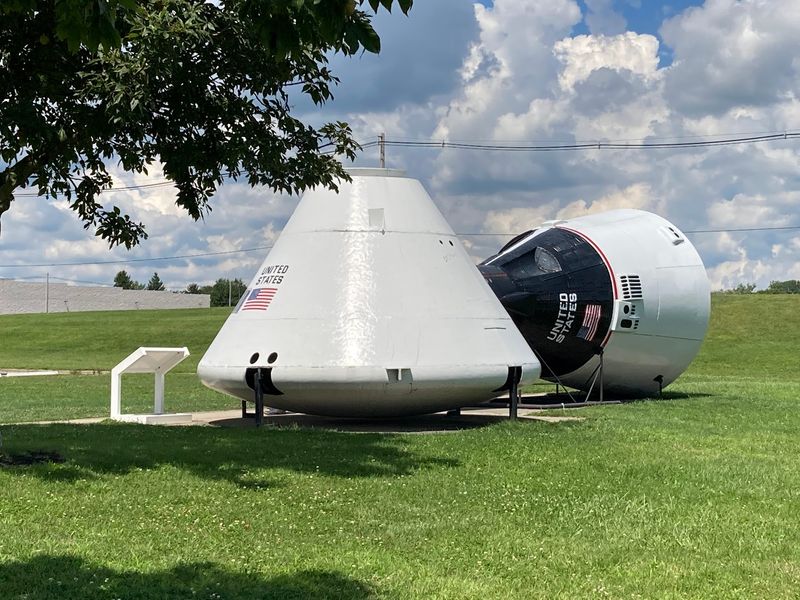
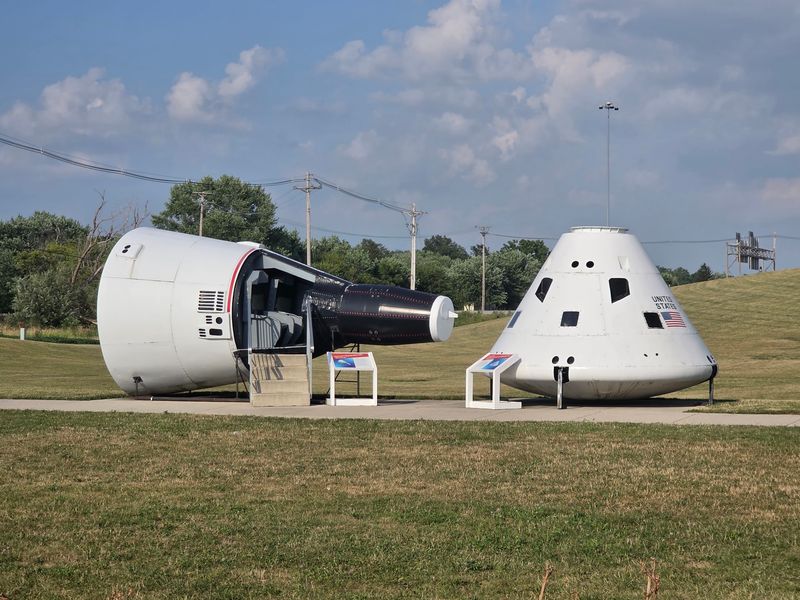
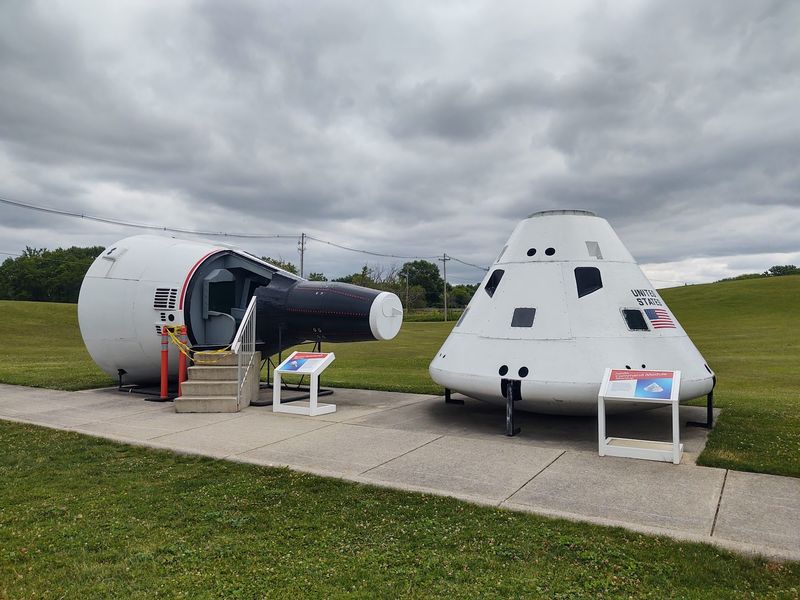
Here’s the star attraction. The Gemini VIII capsule sits on display, and visitors say they could get closer to it than at other museums.
Armstrong flew this craft in 1966. Some guests call it reason enough to visit all by itself.
Stand near it and the size surprises you. It looks like a tight ride, and visitors often wonder how anyone fit inside.
The flight is also part of Armstrong’s legend. Guests mention that he helped save the mission during a tense moment in orbit.
Take your time here. Read the story, walk around the capsule, and let the history sink in before moving on.
A Real Moon Rock and Authentic Relics
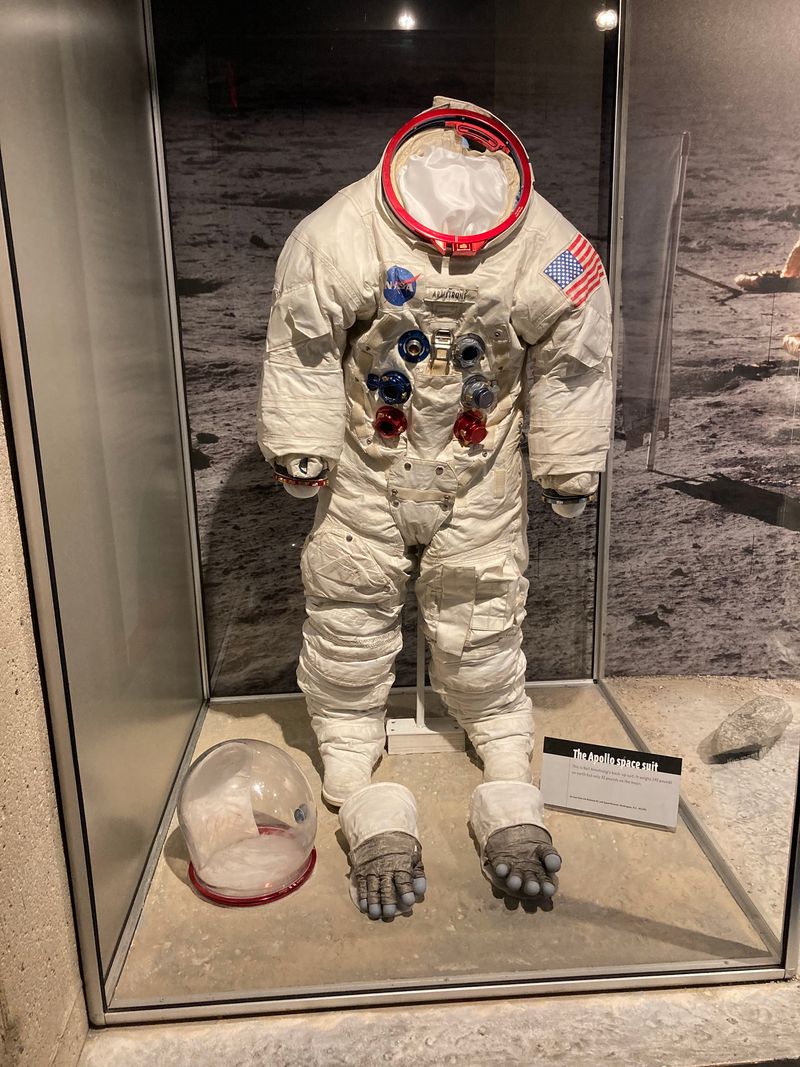
Yes, there’s an actual moon rock. Visitors list it among their favorite things, right beside the space suits.
The museum says it loves having so many authentic artifacts from the Space Race. You’ll also find models and replicas mixed in.
Each display comes with its own backstory. Guests say that makes it easy to follow even if you’re new to space history.
Spend a few minutes at each case. Small details, like stitching on a suit or a note on a label, are where the fun hides.
It’s the kind of collection that makes a quick stop turn into a longer one. Before you know it, an hour has slipped away.
The 30-Minute Film Worth Sitting Down For
Don’t skip the movie. Visitors keep calling the 30-minute film in the auditorium a highlight.
It covers the flight of Apollo 11 and the first moon landing. Guests say it also sums up the wider space program well.
It plays about halfway through the self-guided tour. That timing gives your feet a rest and your brain a recap.
One visitor called it a documentary of Neil and Buzz’s journey. Another said it was top notch.
Sit back and let the old footage do its work. By the time the lights come up, the exhibits around you make even more sense.
A Wall of Patches From Both Sides of the Space Race
Collectors, get ready. The museum has a huge set of mission patches from Apollo and beyond.
One visitor even spotted Russian mission patches. Another said the variety beat what they’d seen at Kennedy Space Center.
The Soviet side of the space race gets a spot too. That gives the story a fuller shape than a one-country tale.
Patches might sound small, but each one marks a real mission. Together they look like a colorful family tree of exploration.
Give yourself a few extra minutes at this display. It’s easy to wander past, and it’s a shame to miss.
Mirrored Hallways and Interactive Stations
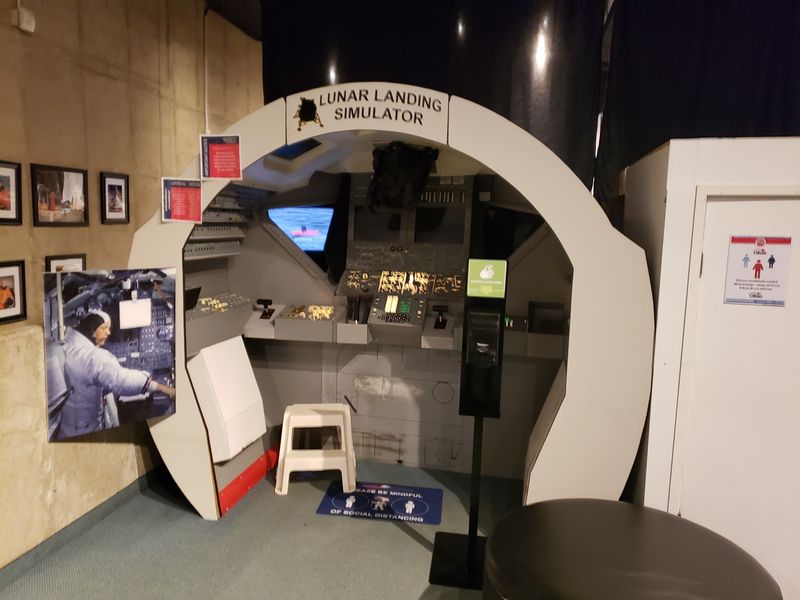
Walk down the hallway of mirrors and lights. It’s built to simulate stars, and visitors enjoy it.
Several interactive stations are spread through the museum. Guests say a younger sibling loved them.
Honesty matters, though. One family with younger kids wished for more hands-on activities, and said they’d return when the kids are older.
The museum itself says it has plans for more immersive, hands-on exhibits. That’s good news for families.
For now, older kids and space fans will get the most out of it. Little ones can still enjoy the story of Armstrong’s early love of flying.
Staff Who Make the Visit Easier
Friendly staff come up again and again among visitors. It’s one of the most mentioned topics about the museum.
An employee often walks the floor sharing facts about items. Guests describe the team as knowledgeable and kind.
That personal touch fits a small museum. You can ask a question and get a real story back.
The museum is run as a small local organization. That helps explain the welcoming feel.
If a display sparks a question, ask. You might leave with a fun fact nobody put on a label.
How Long to Plan for the Visit

Plan for about thirty minutes to two hours. It depends on how much you read.
Some visitors say you could rush through. Others took a couple of hours, film included.
It is a small museum compared to larger space museums, and guests are upfront about that. Treat it as a focused story, not a sprawling campus.
One visitor with a cane said the museum was accessible. That’s helpful to know before you go.
A road-trip break or a half-day outing both work here. Bring curiosity and you’ll fill the time easily.
Who Will Love It Most

Space nerds will be thrilled. Anyone who enjoys a good biography will be too.
History fans get timelines of the Space Race. Visitors call it one of the best they’ve seen in the country.
Families can enjoy it, with a small caution. Very young kids may lose interest, while older kids tend to engage more.
Aviation fans have a bonus. One flying visitor noted the museum is about ten minutes from the Neil Armstrong Airport.
If you want a museum that is easy to digest, this is your place. It rewards curiosity without wearing you out.
Hours and Admission Basics

The museum opens at 10 AM and closes at 5 PM. It runs Tuesday through Sunday and is closed on Mondays.
Visitors describe the entry fee as reasonable and affordable. Check the museum’s official website for current prices before you go.
Hours can change, so a quick check is smart. That’s true for any small museum.
The gift shop sits at the end of the route. Guests call it nice and well stocked, though one mentioned higher prices.
Plenty of parking means no stress on arrival. Park, walk in, and start exploring.
Finding 500 Apollo Drive

The address is 500 Apollo Dr, Wapakoneta, OH 45895. The street name is fitting, isn’t it?
You’ll find it right off I-75 in western Ohio. That makes it a simple detour on a long drive.
Ohioans can treat it as a day trip or a weekend stop. It’s a drivable discovery close to home.
Pair it with a drive through Wapakoneta, Armstrong’s hometown. The museum is the natural anchor for any visit to the area.
Fuel up the car, pick your exit, and follow the moon-shaped building. You can’t really miss it.
A Soft Verdict for Space Lovers
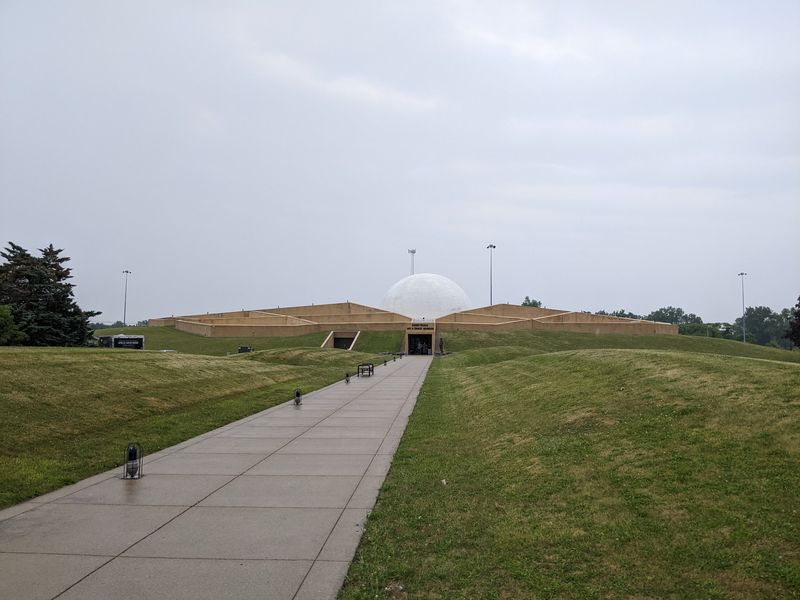
The Armstrong Air & Space Museum is honest about being small. It’s also full of real artifacts and heart.
One visitor felt the Apollo 11 story could be deeper. The museum answered that it is planning more immersive exhibits ahead.
Most guests leave happy. They talk about Gemini VIII, the moon rock, the film, and the kind staff.
If you want a quick, meaningful break in Ohio, it’s a strong pick. It also reminds you that giant stories can start in small towns.
Go with curiosity and reasonable expectations. You may find yourself planning a return trip.
Share this story