Some of the best days in Florida start with a quiet road, a small sign, and a parking lot with plenty of open spots. You pull in expecting a quick look around, and three hours later you are still wandering past old wooden buildings, smelling the forge, and wondering why nobody told you about this place sooner.
It feels like a slice of the state that time politely forgot, with history you can touch and festival days that bring old farm skills back to life. Grab a snack, wear comfy shoes, and get ready to see how Florida pioneers really lived.
A Pioneer Village Hiding in Pasco County
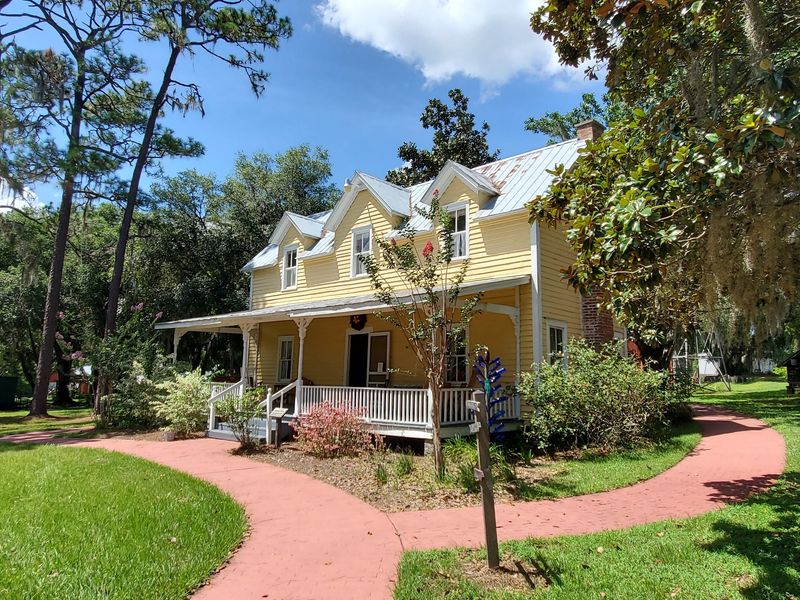
Just outside Dade City, at 15602 Pioneer Museum Rd, sits a spot that plenty of Tampa Bay drivers zoom right past. Pioneer Florida Museum & Village is an open-air museum packed with pioneer farm equipment and restored buildings from the 1800s and early 1900s.
Think of it as a walkable time machine set in the rolling, rural side of Pasco County.
Unlike a big city museum with velvet ropes and echoing halls, this place spreads out under the trees. You move from building to building at your own speed, peeking into rooms that once held real Florida families, shopkeepers, and schoolkids.
One visitor called it a genuine glimpse into pre-1945 pioneer life, and that description fits nicely.
The village is especially known for its event days, when farm festivals, quilt shows, and living history demonstrations fill the grounds with activity. Those are the days when the old ways stop being displays and start being something you can watch happen in real time.
Even on a regular weekday, though, the grounds have plenty to explore.
Guests often admit they had never heard of it before stopping by. That is part of the charm here, a true Old Florida find that still feels like a local secret, even after decades of welcoming curious travelers through its gates.
Donated Pieces Since 1961
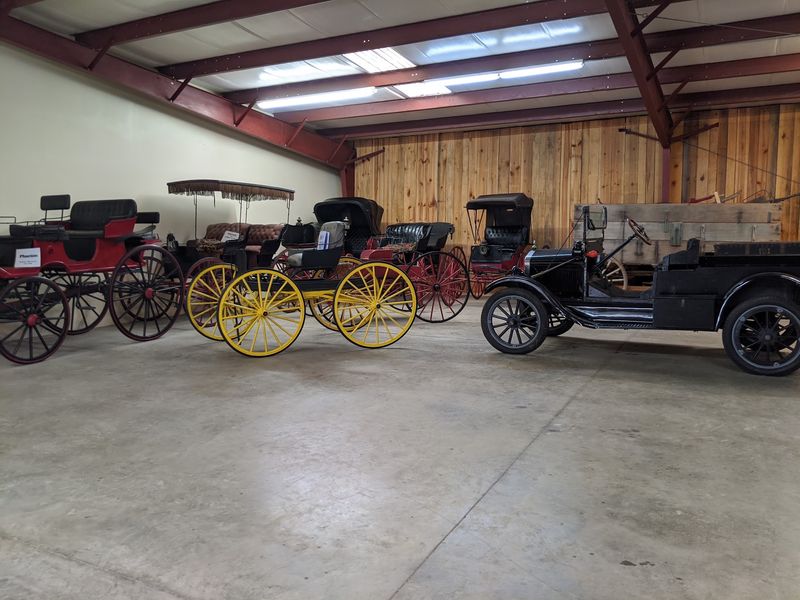
Back in 1961, the museum began accepting donated items and buildings, and it has been growing ever since. That simple idea, letting the community hand over pieces of its own past, shaped everything you see today.
Each wagon wheel and wooden chair arrived because somebody wanted it saved.
Here is the neat part. Many of the buildings did not start out on this land at all.
They were relocated from nearby communities, carefully moved and restored so future generations could step inside rather than just read about them in a book.
According to the museum, a dedicated staff, generous donors, and hundreds of talented volunteers keep the whole operation running. That volunteer spirit shows up in small ways, from tidy displays to the friendly chats you will have along the paths.
It feels less like a corporate attraction and more like a community scrapbook you can walk through.
For history fans, that backstory adds weight to every visit. You are not just looking at old stuff behind glass.
You are seeing what local families valued enough to pass along, and that gives the village a warm, personal feel that bigger museums sometimes miss.
Sixteen Wooded Acres and Peaceful Paths
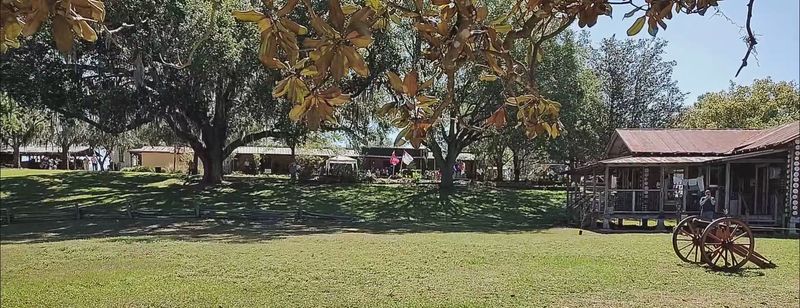
Picture roughly 16 wooded acres, laced with pleasant paths that link one historic building to the next. Shade drifts across the walkways, birds chatter overhead, and the loudest sound might be gravel under your sneakers.
Visitors often describe the grounds as gorgeous, and many say the walk itself is half the fun.
Crowds are rarely a problem. Guests mention that it is not busy, there is zero rush, and there are no lines or waits to deal with.
For anyone tired of theme park shuffles, that calm pace feels like a gift.
A word of friendly warning, though. Since so much of the experience happens outdoors, hot days can turn the stroll into a sweaty one, and the staff themselves admit that cooler weather makes for a more pleasant visit.
Florida winter and early spring are ideal, which lines up nicely with snowbird season.
Bring water, a hat, and maybe a little patience for lingering. The grounds reward slow walkers who stop to read signs and peek through windows.
If you like your history with a side of fresh air and quiet, these paths deliver both in generous helpings.
Overstreet House, Schoolhouse, and Chapel
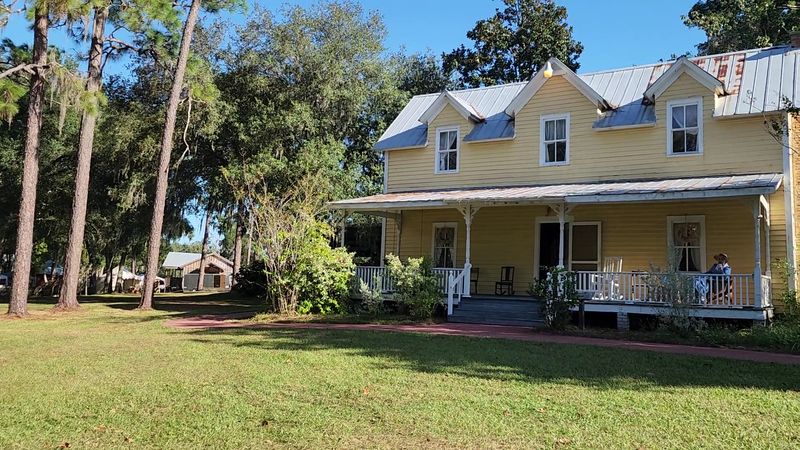
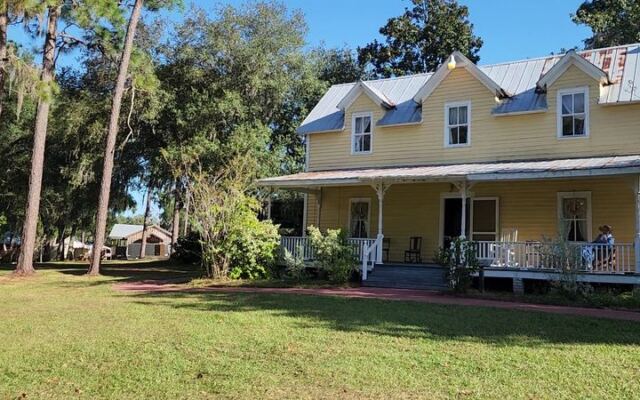
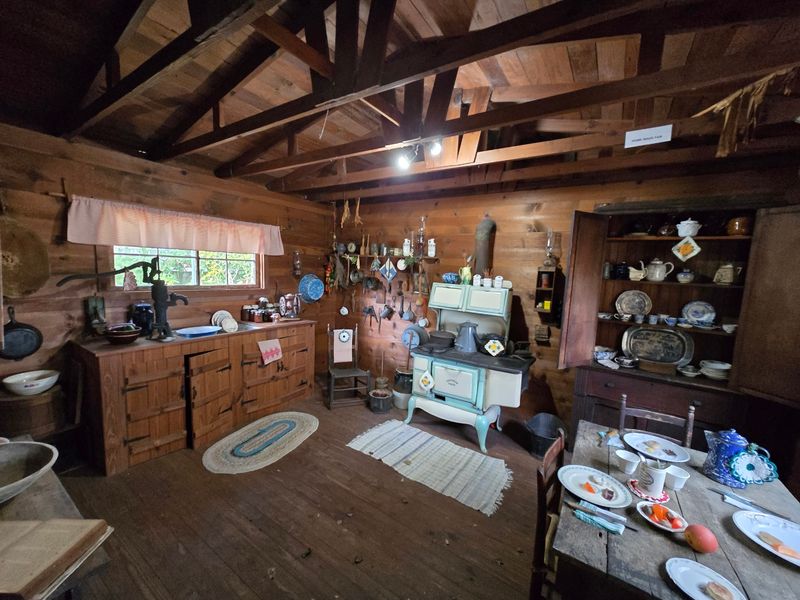
Step onto the porch of the 1890s Overstreet House and you can almost hear a screen door slapping shut. The home is one of the standout relocated buildings, showing how a Florida family lived long before air conditioning or electric fans.
Simple rooms, sturdy furniture, and plenty of character fill the space.
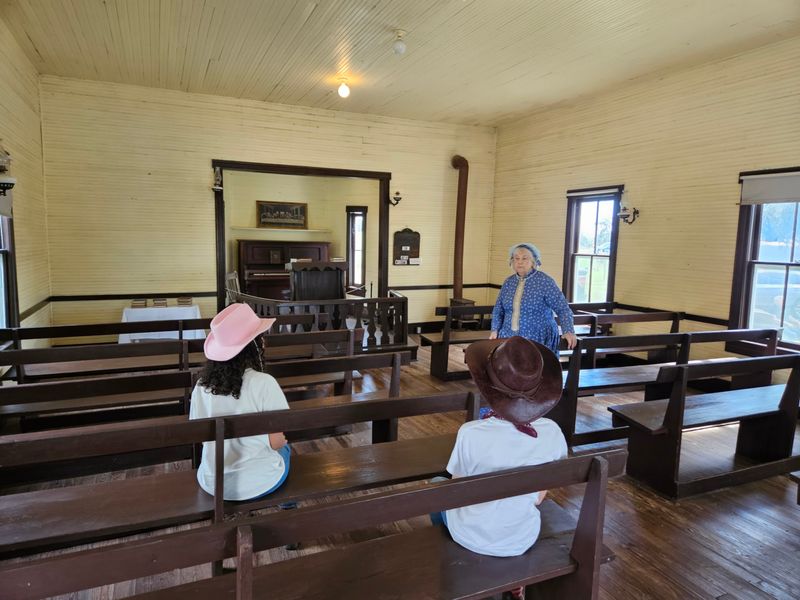
Nearby stands a one-room schoolhouse brought over from Lacoochee. Kids especially love comparing it to their own classrooms, and parents tend to enjoy the reaction.
One family mentioned that seeing the old school helped broaden their children’s view of how people used to live.
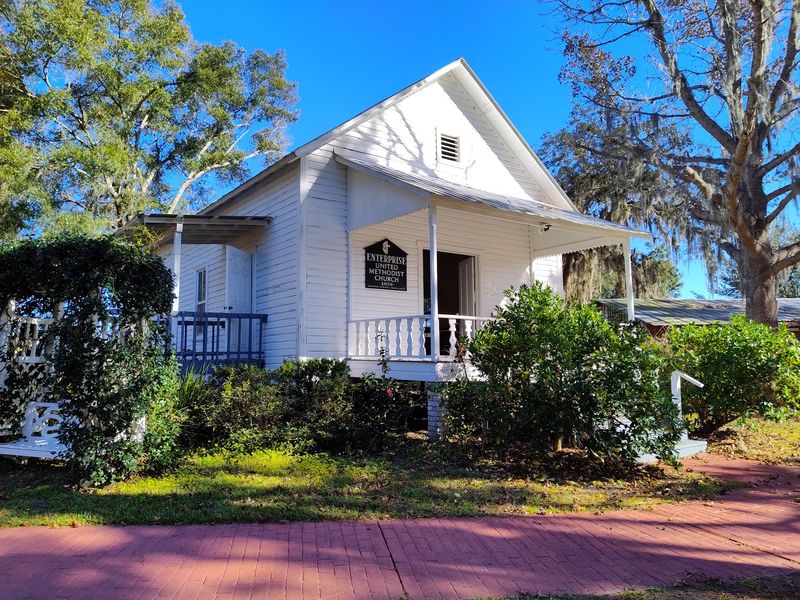
Then there is the church, a quiet wooden building that many guests wander through on their way around the village. Its plain beauty speaks to the role faith and gathering played in small pioneer communities.
Event days sometimes bring extra life to these spaces too.
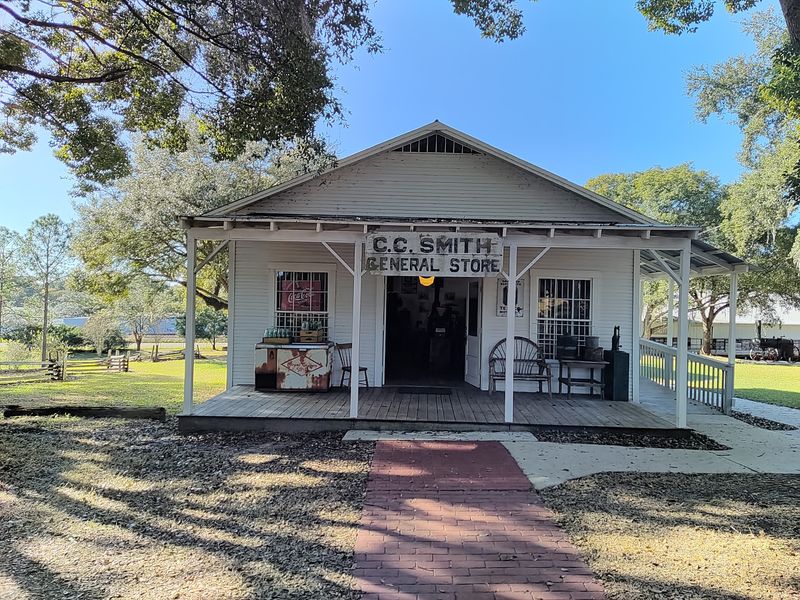
Other stops round out the collection, including a shoe shop, a carpenter shop, and an old sawmill that visitors mention passing on their tour. Each building tells a small piece of a larger story.
Put together, they form a little town where every door opens onto another chapter of rural Florida life.
Trilby Depot and Railroad Memories
All aboard for one of the most photographed corners of the village. The Trilby train depot was relocated here, and it stands as a reminder of how railroads stitched small Florida towns together.
One visitor happily pointed out that it is one of the Henry Plant train stations.
Railroads changed everything for pioneer communities. Crops, mail, supplies, and visitors suddenly moved faster, and little depots like this one became the beating heart of town life.
Standing on the platform, it is easy to imagine passengers waiting with trunks and baskets.
Kids get a kick out of this area too. One parent shared that their four-year-old got to ring a train bell, which was easily a highlight of the day.
Some longtime fans even remember the spot by its railroad charm, calling it a must for train lovers.
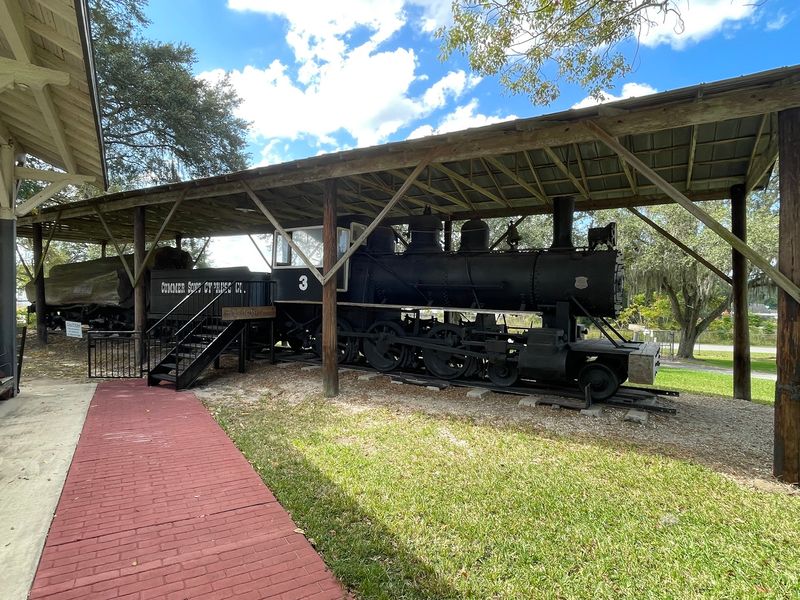
Elsewhere on the grounds, a steam engine adds more mechanical muscle to the collection. Gearheads and curious grandparents alike tend to linger here, swapping stories about how machines like these powered work before modern engines took over.
Whether you love trains or just love a good photo backdrop, the depot area earns a slow, appreciative look.
Artifacts From Beadwork to First Lady Dolls
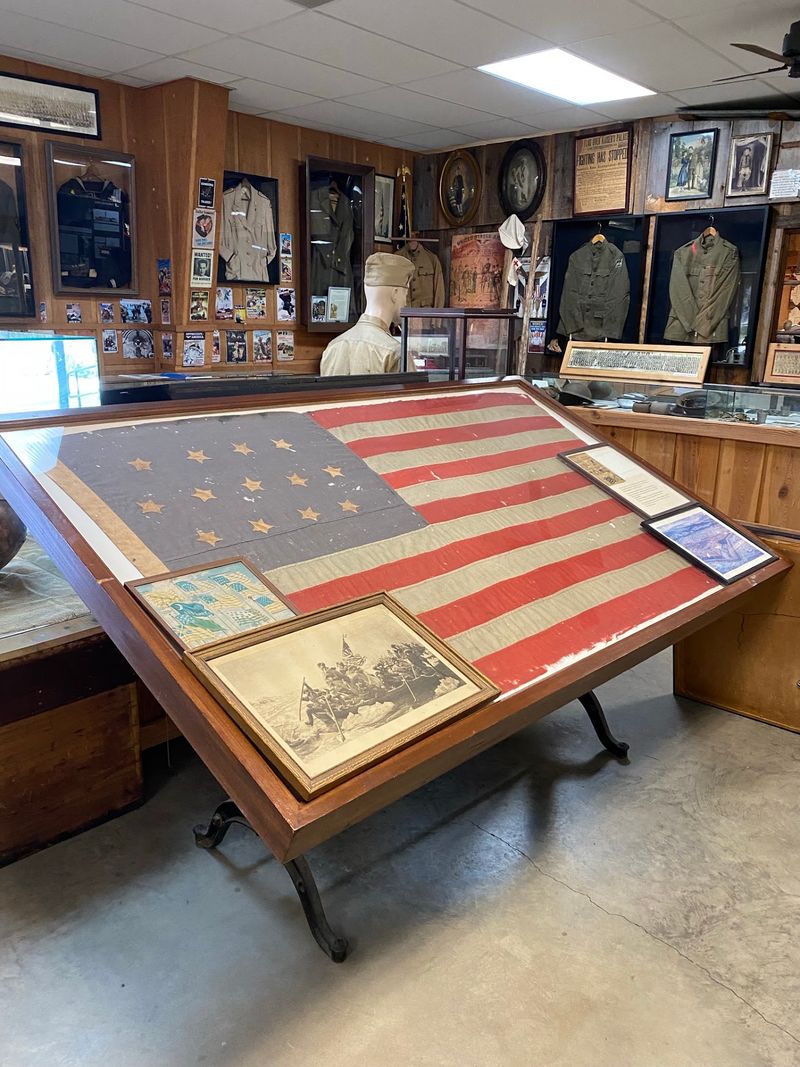
Don’t skip the main building. Plenty of guests walk in expecting a few dusty shelves and walk out amazed at how much is packed inside.
One history lover said they had never seen a more complete collection of frontier culture.
The variety is impressive. You will find native beadwork, a set of first lady dolls, rows of tools, and old sewing and weaving machines that show just how much handwork went into daily life.
Household items and antiques fill in the gaps, painting a clear picture of pioneer kitchens and workshops.
Exhibits also highlight the struggles and craftsmanship of everyday rural Florida. Instead of just showing objects, the displays explain what life demanded from the people who used them.
There is lots and lots to read, so bookworms will feel right at home.
Fun fact for the curious: since the museum has been taking donations since the early 1960s, many items come straight from local families. That means the spinning wheel you are admiring may have once stood in a farmhouse a few miles away.
Plan extra time here, because these rooms have a sneaky way of swallowing an afternoon.
Blacksmiths, Spinners, and Working Hands
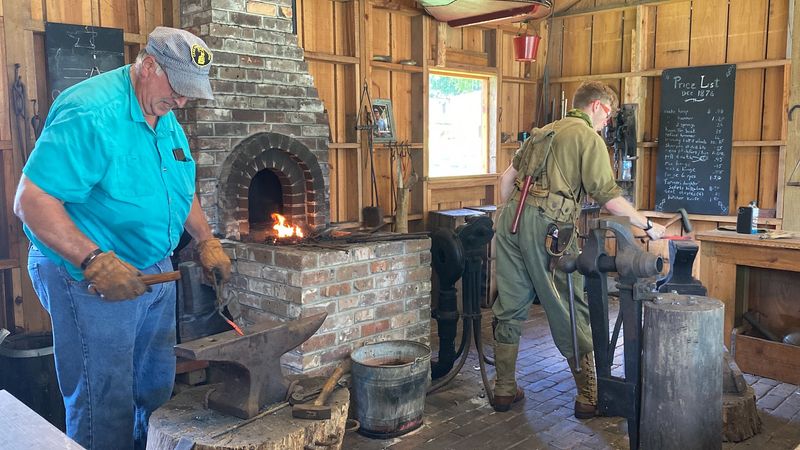
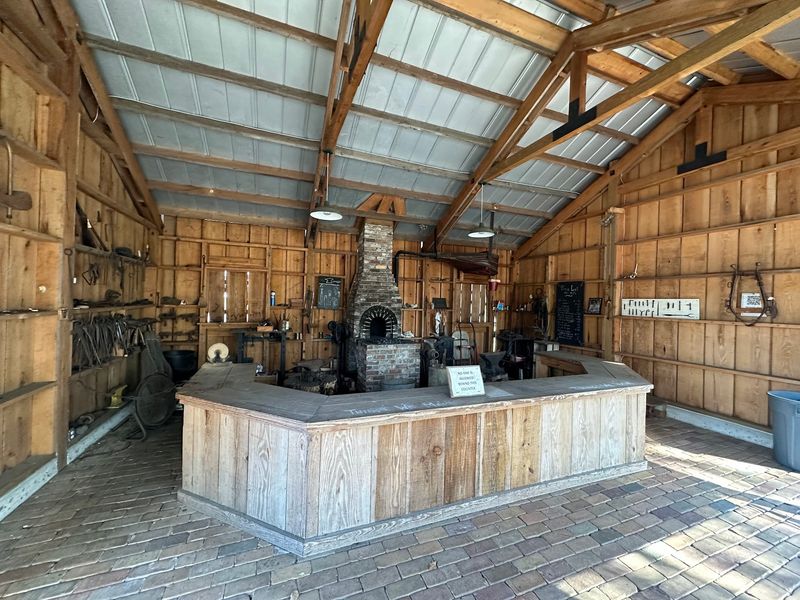
Clang, clang, hiss. Few sounds pull a crowd faster than a blacksmith at work, and on many event days you will find one teaching kids how iron gets shaped.
Visitors mention watching these demonstrations up close, sparks and all.
Craft demos go beyond the forge. One family described meeting two sweet ladies making yarn, who let their little one feel the different textures.
Moments like that turn a museum trip into something hands-on and memorable.
Reenactors also appear at many events, and guests say they truly bring history to life. Hearing someone explain a chore while actually doing it makes the past click in a way a sign never could.
Live bands sometimes join the mix, adding a toe-tapping soundtrack.
Here is the thing about these skills. A century ago, they were not hobbies, they were survival, and watching them in action gives you real respect for the patience pioneers needed.
Whether it is metal, wool, or wood, the working demonstrations remind everyone that nearly everything in a pioneer home started as raw material and somebody’s two hands. Check the event list before you go, since demos vary from one day to the next.
Farm Festival Days and Old-Time Harvest Fun
When the Farm Festival rolls around, the whole village wakes up. One guest described a single day that included draft horses pulling, a blacksmith teaching kids, a quilt show, and rows of vendors selling goods and treats.
Add gorgeous weather and you have a classic Old Florida outing.
Festival days are where the farm side of the museum really shines. Old equipment, animals, and traditional skills come together in a way that shows how rural Floridians worked through the seasons.
If you came hoping to watch sugar cane turned into sweet syrup the old-fashioned way, these harvest-style events are your best bet, so check the museum calendar for which demonstrations are scheduled.
Other events bring their own flavor. Visitors have mentioned an alligator show, egg hunts, reenactments, live music, and tasty food, with one guest praising the hamburgers.
Each event is different, the museum says, so returning fans rarely see the same day twice.
The quilt show draws its own loyal crowd, and for good reason. Stitched patterns and bright fabrics hanging near historic buildings make for a lovely pairing.
Plan to arrive early, since festival days hold far more than a quick visit can cover.
Historians Who Love a Good Question
Ask one question here and you may walk away with three great stories. Knowledgeable staff come up again and again when guests talk about their visit, and the praise is hard to miss.
People describe the team as friendly, helpful, and genuinely excited to share what they know.
One visitor said the staff kindly answered all of their extra questions and that they learned more in one afternoon than they had in a long time. Another singled out a team member at the history center for her deep knowledge.
Several folks simply put it this way: the historians really know their stuff.
That kind of expertise turns a simple walk into a richer experience. A plain tool on a shelf becomes fascinating once someone explains who used it and why.
Kids who might wander past a display often stop when a real person starts talking.
So don’t be shy. Whether you are wondering how a machine worked or where a building came from, there is a good chance someone nearby has the answer, and probably a fun side story too.
It is one of the friendliest parts of the whole visit, and it costs nothing extra.
Room to Roam for Kids and Grandparents
A four-year-old riding a pony, ringing a train bell, and peeking into an old schoolhouse all in one morning? That is exactly how one family described their day here.
Little explorers find plenty to do, and nobody has to wait in a long line to do it.
The village works well across generations. Grandparents often recognize tools and household items from their own childhood, while younger kids marvel at how different life used to be.
Those shared conversations might be the best souvenir of all.
Event days can add extras like a petting zoo, egg hunts, and animal shows, giving restless kids something lively between buildings. Even on quiet days, the open grounds let children stretch their legs without anyone shushing them.
Parents say their kids truly enjoyed it, which is high praise for a history museum.
History buffs, homeschool families, retirees, and couples looking for a calm day trip all fit right in. It is not flashy, and that is precisely the appeal.
If your crew enjoys reading signs, poking around, and imagining life without screens, this spot hits a sweet note for everyone from toddlers to great-grandparents.
Hours, Admission, and Handy Planning Tips
Good news for budget watchers. Recent visitors report adult admission at $12, seniors at $10, students at $6, and kids under 5 free, with parking also free.
A lifetime family pass has been mentioned at $350 for folks who plan to come back often.
Hours run Tuesday through Saturday from 10 AM to 4 PM, and the museum is closed on Sundays and Mondays. Most guests spend around one and a half to two hours on a self-guided tour, though history lovers say five hours still was not enough.
One visitor planned a short stop and ended up staying all day.
Food options are simple, with a mini gift shop offering drinks and snacks, plus restrooms in several spots. Picnic lunches are welcome, and event days usually bring vendors with more to eat.
Guests have also mentioned the museum participates in Harvest Hosts, handy news for RV travelers.
For questions or the latest event schedule, call 352-567-0262 or visit pioneerfloridamuseum.org. Prices and events can change, so a quick check before you drive is smart.
Aim for a cooler day, wear walking shoes, and bring water for the outdoor stretches.
Why the Drive to Dade City Pays Off
Real Florida still exists, and it is hiding in plain sight on a quiet road near Dade City. Pioneer Florida Museum & Village offers the kind of day that feels both relaxing and surprisingly rich.
You come for a look and leave with a head full of stories.
Value is a big part of the appeal. For about the price of a fast-food lunch for two, you get acres of shaded paths, dozens of historic buildings, and an indoor collection that impresses even seasoned museum fans.
Free parking and easy access only sweeten the deal.
Timing makes a difference, though. A calm weekday is perfect for slow browsing, while festival days bring draft horses, crafts, music, and the bustling farm spirit that makes the village feel alive.
Hot afternoons can be tough, so cooler months tend to be the sweet spot.
One guest called it one of the last places in Florida that is fun, interesting, and informative all at once, and plenty of others would likely nod along. If you treasure overlooked gems and Old Florida character, this little village deserves a spot on your list.
Pack a picnic, gather your favorite people, and go see where Florida’s homegrown story began.
Share this story