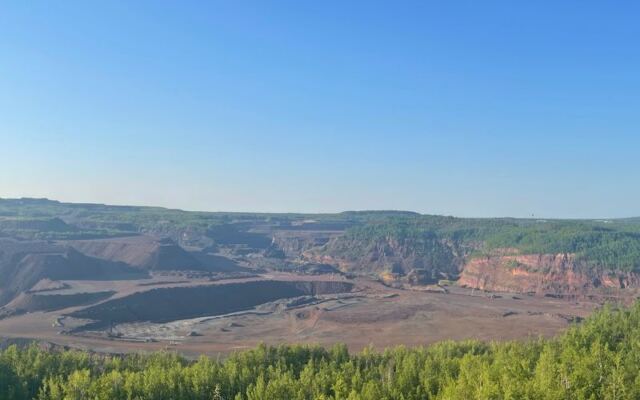
A hole in the ground so big it earned the nickname the Grand Canyon of the North sits at the edge of a quiet town, and looking at it costs nothing, which I love.
The pit stretches roughly three and a half miles long and plunges several hundred feet deep. Better yet, it’s still working, so the giant haul trucks crawling along the bottom are on the job, not on display.
Up top, you can climb into retired mining trucks, wander a path lined with massive equipment, and gaze from a brand-new viewing platform. It’s the kind of stop that sounds like a quick photo break and turns into an afternoon.
I can’t imagine a better way to understand how northern Minnesota built so much of America. So how small do those trucks look from the rim?
A Free Front-Row Seat To The Grand Canyon Of The North
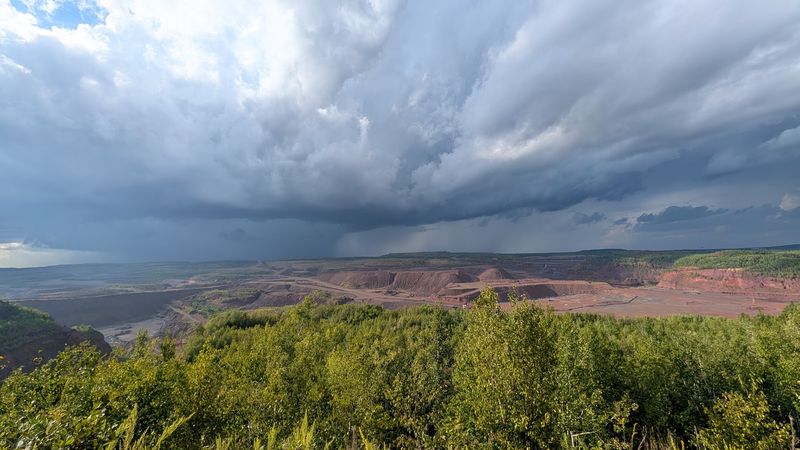
Few overlooks in the Upper Midwest can claim a world record, but this one can. The Hull–Rust–Mahoning Open Pit Iron Mine is often called the largest open-pit iron mine on the planet.
It sits on the Iron Range in northern Minnesota, right beside the town of Hibbing. The nickname Grand Canyon of the North gets tossed around a lot, and honestly, it fits.
Here’s the part that makes thrifty Minnesotans smile. Admission to the overlook is free, so the biggest view on the Range costs exactly zero dollars.
The site works like an outdoor museum with a live show attached. You get a modern visitor center, a viewing platform, historic equipment, and a real mine humming away below.
Most big-city attractions charge serious money for a skyline view. Up here, the view is a canyon carved by people, and nobody asks for a ticket stub.
Some folks stop for ten minutes and keep driving. Others linger for a couple of hours, wandering among the machines and reading every plaque along the way.
How A Town Moved To Make Room For Ore
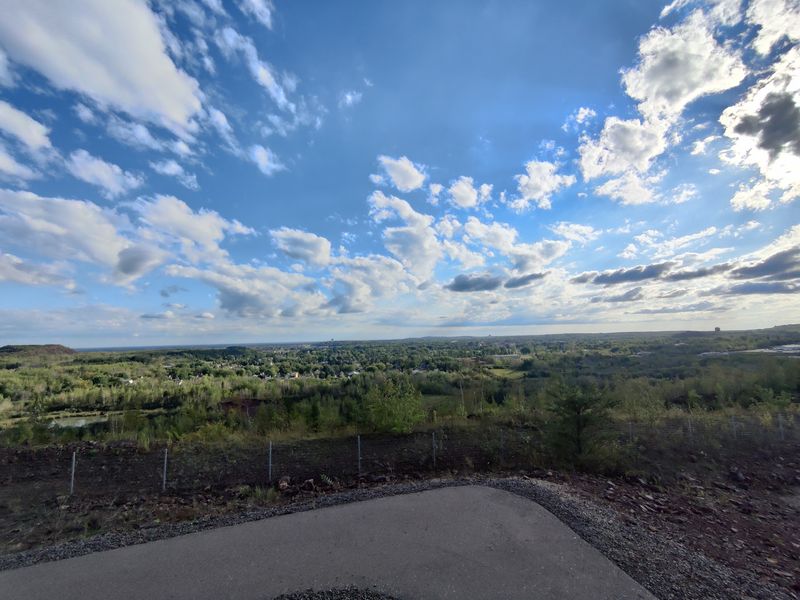
Iron ore built this corner of Minnesota, plain and simple. The mine dates back to the late 1800s and early 1900s, when the Mesabi Range became one of the richest iron regions anywhere.
Fun fact: the original town of Hibbing actually sat on top of valuable ore. Over the following decades, much of the town was relocated south so mining could keep expanding.
That bit of history alone deserves a road trip. Whole buildings were moved, and the community you see today partly exists because of that giant shift.
The mine is a designated National Historic Landmark. That title recognizes how much steel, and how many jobs, flowed out of this one enormous hole.
Ore from the Range helped feed American industry through some of its busiest decades. Plenty of bridges, cars, and buildings across the country likely trace back to these rust-colored walls.
Plaques around the overlook walk you through those chapters in bite-sized pieces. Reading them while staring into the pit makes the history feel far less like a textbook.
Measuring A Hole You Can’t Fit In One Photo
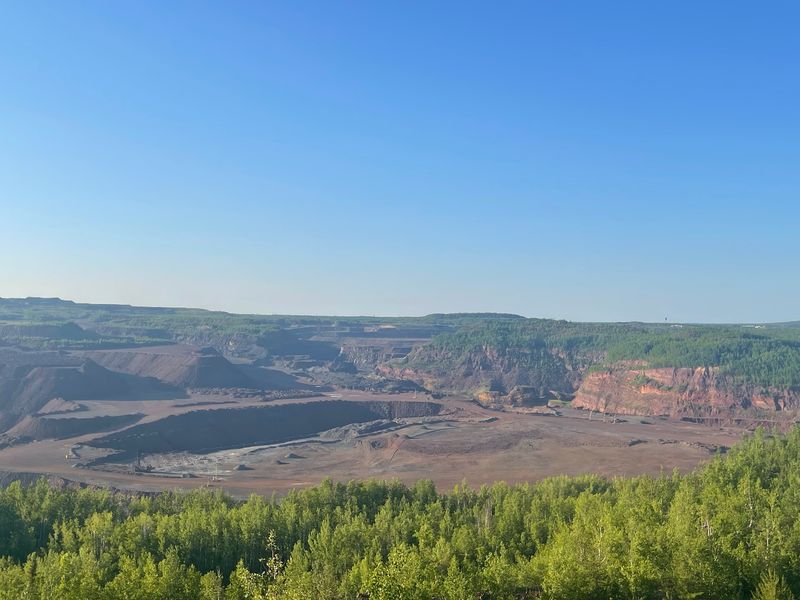
Three and a half miles long. About a mile and a half wide.
Several hundred feet deep.
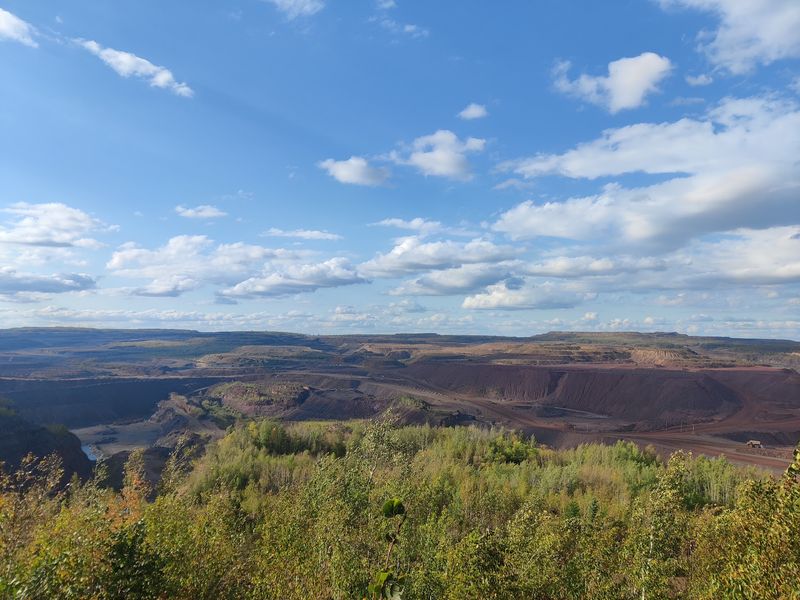
Those numbers sound big on paper, but they really land once you stand at the rim. The far walls look almost like distant hills, layered in reds, grays, and browns.
Getting the whole thing in one camera frame is a fun challenge. A panorama setting helps, though even that may struggle to capture the full sweep.
Terraced benches step down the walls like a giant staircase. Those ledges let crews work safely at different depths and give the pit its striking, sculpted look.
Scale gets especially tricky once you spot equipment far below. Machines that tower over people up close shrink into tiny toy trucks from the overlook.
That disorienting moment is part of the charm here. Your brain keeps recalculating, and the canyon keeps getting bigger the longer you look at it.
The Mine Below Is Still Clocking In
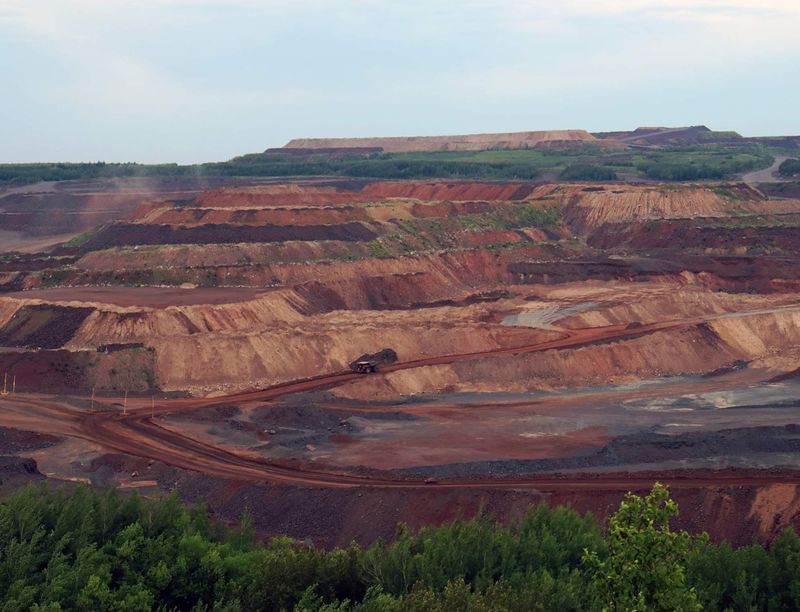
Plenty of historic sites are frozen in time. This one keeps working while you watch.
Mining continues in the pit today, focused on taconite, a lower-grade iron ore. Crews still haul rock, and the operation remains very much part of the regional economy.
That means the scenery changes. Massive haul trucks creep along the roads, shovels load material, and the whole place moves with steady purpose.
Bring binoculars or a camera with a good zoom lens. Details deep in the pit can be hard to catch with the naked eye, and a little magnification brings the action closer.
Scheduled blasts sometimes happen in active mines, and catching one is considered a real treat. Timing is unpredictable, so treat it as a bonus rather than a guarantee.
Watching a working mine from a safe distance feels a bit like eavesdropping on industry. It’s real work happening in real time, and the overlook gives you the best seat around.
Climb Aboard Trucks Taller Than Your House
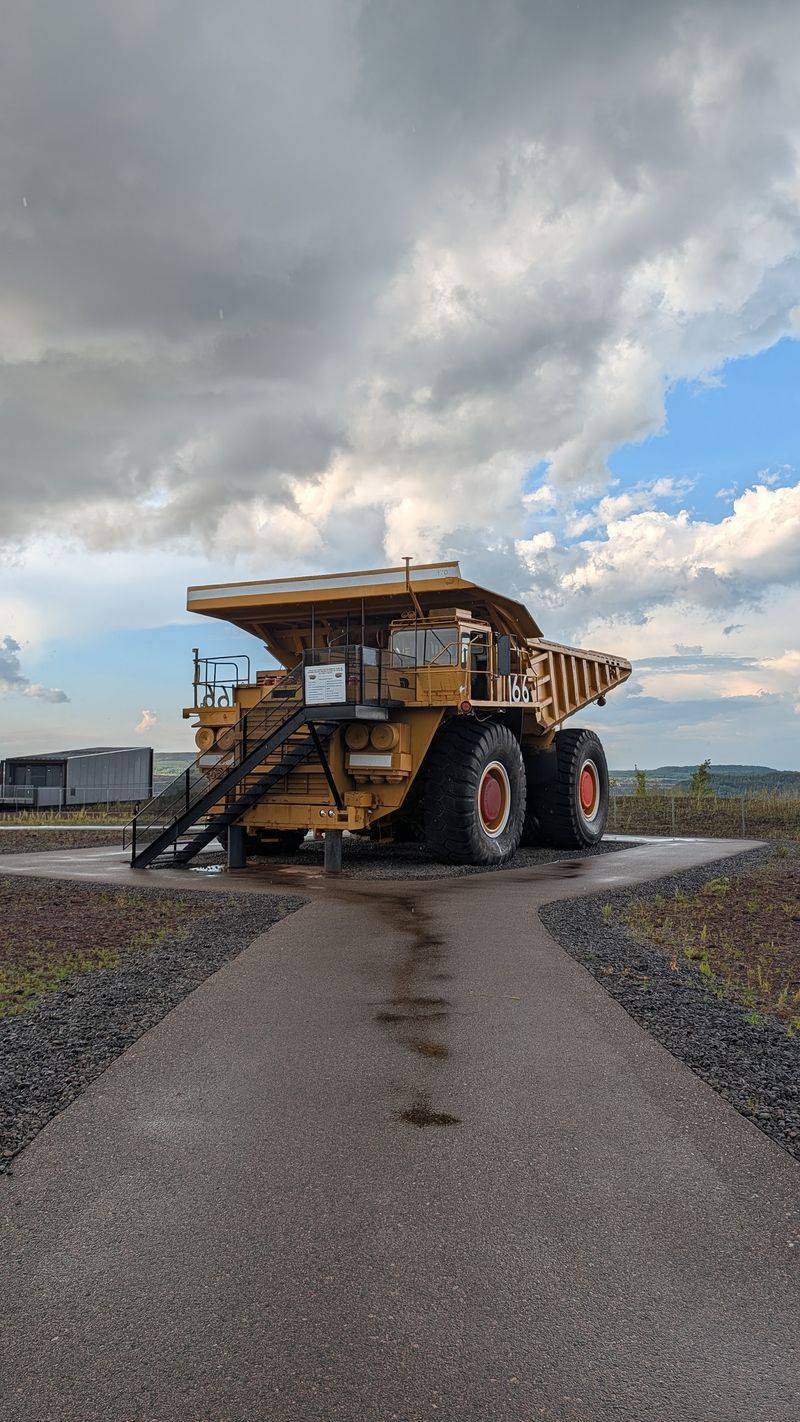
Tires taller than a grown adult tend to get everyone’s attention. The outdoor equipment display delivers that wow factor in a big way.
A short walking path winds past retired mining machinery from different eras. Shovels, buckets, and haul trucks line the route, many of them carefully restored.
At the end of the path waits a large mining truck. Some trucks on display let you climb inside the cab, which offers a surprisingly lofty view of the site.
Each piece of equipment helps tell the story of how mining evolved. Plaques nearby explain what the machines did and how methods changed through the years.
Construction-loving kids may think they’ve hit the jackpot. Honestly, adults tend to get just as giddy standing beside a bucket that could swallow a small car.
The path is easy to explore at your own pace. Stroll quickly between photos or stop at every sign, since nobody is rushing you along.
A Visitor Center Built For Big Views
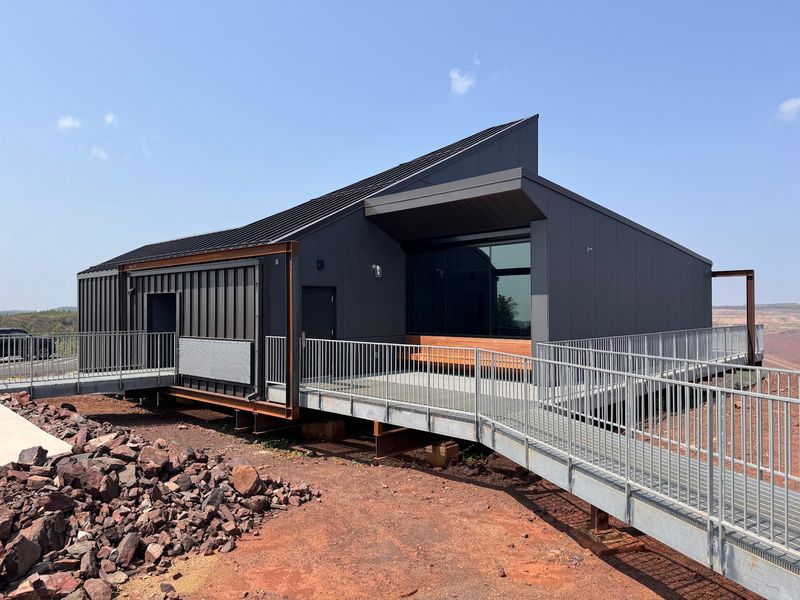
New buildings don’t usually steal the show at a mine. The newly built visitor center here gives the canyon a serious run for its money.
The facility replaced a much smaller welcome setup. It now offers modern facilities, well-designed displays, and interactive exhibits that make iron mining easy to understand.
A viewing platform on the building ranks among the highlights. From up there, the pit spreads out in every direction like a living map.
Inside, a gift shop area comes with an air-conditioned view of the mine. That’s a welcome perk on a hot summer afternoon or a chilly shoulder-season day.
Friendly, knowledgeable staff and volunteers often help visitors with questions. Some volunteers have connections to the region’s mining past, which adds a personal layer to the facts.
The address is 611 McKinley St, Hibbing, MN 55746. Plug it into your GPS and follow the signs toward the mine view.
Plaques, Displays, And Range Stories Worth Reading
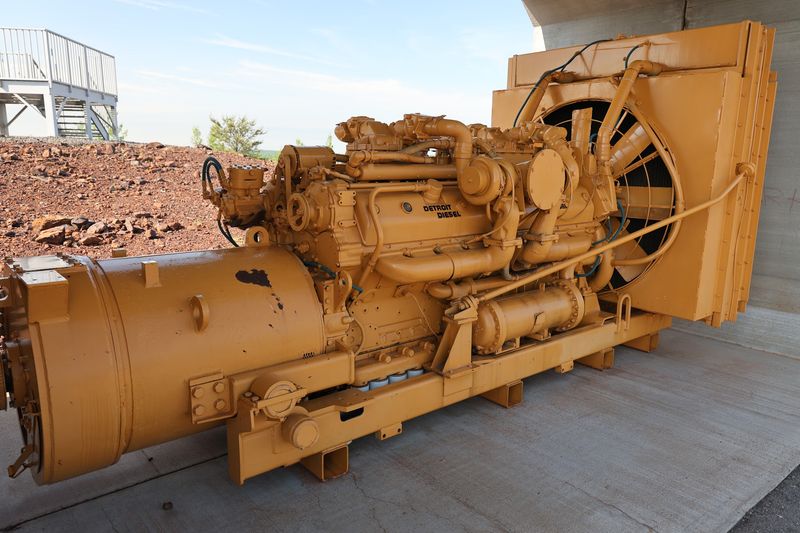
Learning sneaks up on you here. One plaque leads to another, and suddenly you know what taconite is and why it matters.
Historical signs dot the overlook and equipment path. They explain mining procedures, machinery, and the people who shaped the Iron Range.
Inside the visitor center, interactive displays take things further. Hands-on exhibits help younger visitors grasp ideas that might otherwise feel abstract.
The legacy of mining runs deep across northern Minnesota. Families arrived from many countries to work these pits, building tight-knit communities that still define the Range.
Some background reading before or after your stop can make the visit richer. Knowing a little about the Mesabi Range adds context to every truck and terrace you see.
Not into history? The view alone carries the visit just fine, but the stories make it stick a little longer.
Room For Little Legs And Big Curiosity
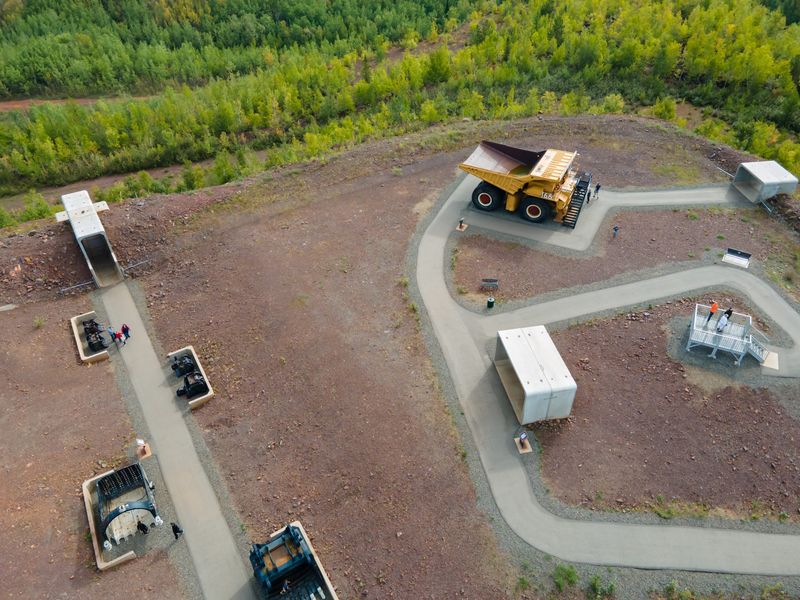
Got a backseat full of restless kids? The overlook might be the perfect pressure valve on a long northern drive.
Open space around the site gives children room to stretch and burn off energy. Pair that with giant trucks and the visit practically sells itself to young travelers.
Families with kids are a common sight here. Anyone obsessed with diggers and dump trucks gets a real-life version far bigger than any sandbox toy.
Grown-ups get plenty too. Mining history buffs, photographers, road trippers, and anyone curious about how things are made will find something to chew on.
Free admission makes it easy on the family budget. That’s classic Minnesota value, the kind of outing that leaves money for ice cream later.
Visits scale nicely to your schedule. A quick look works between errands, while a slower wander can fill a relaxed morning without any pressure.
When Autumn Paints The Rim
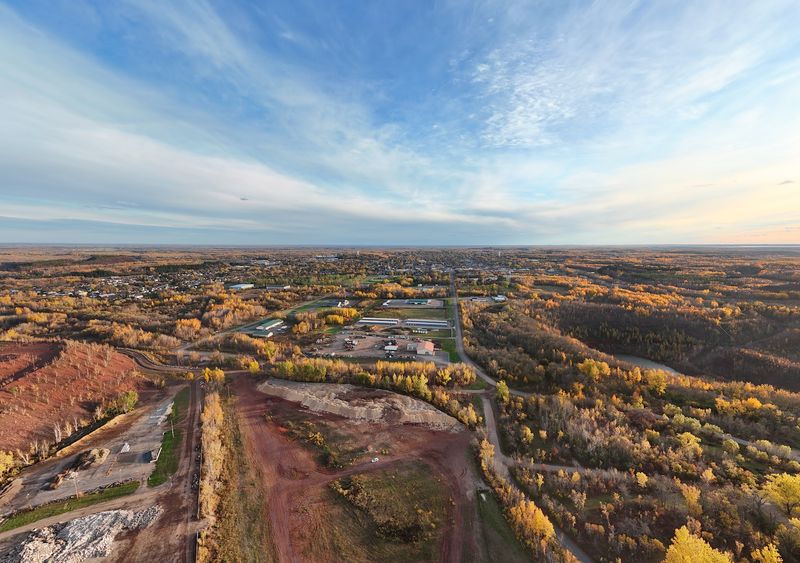
Rust-red rock and blazing orange leaves make quite a pair. Fall turns the overlook into one of the more colorful stops on the Range.
Trees surrounding the pit and town put on a show as the season changes. The overlook doubles as a handy spot for viewing autumn colors.
Summer brings long days and easy road-trip weather. Hours stretch well into the evening, giving you plenty of time to catch the light shifting across the pit walls.
Weather on the Iron Range can change quickly, so pack a layer. Even warm days may feel breezier up on an open overlook.
The view also takes in the town of Hibbing itself. Seeing the community and the mine side by side shows how closely the two have always been linked.
Each season seems to bring out different textures in the canyon. That’s a good excuse to come back more than once.
Hours, Parking, And A Few Smart Tips
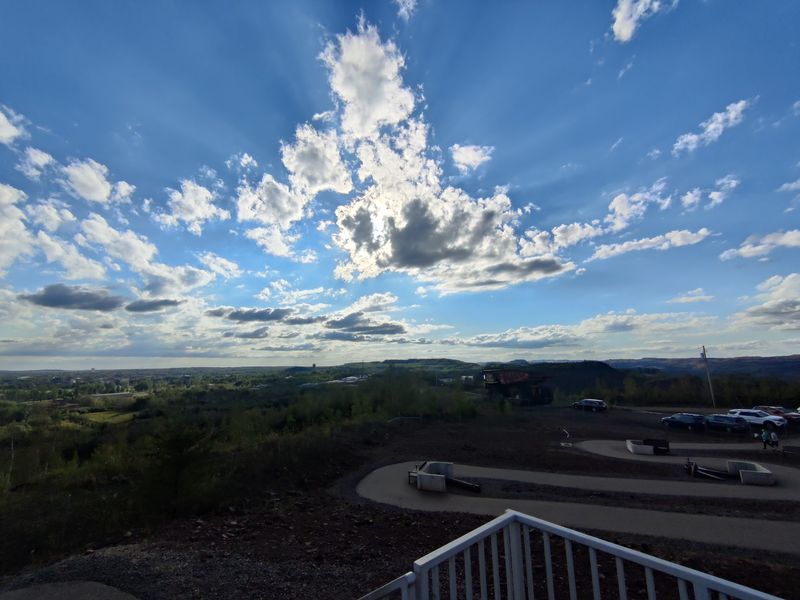
Timing your trip is refreshingly simple. Typical hours run 9 AM to 9 PM Monday through Saturday, with the site closed on Sundays.
Hours can shift by season, so a quick check before you leave is wise. The visitor center may keep different hours than the outdoor areas.
Parking is on the smaller side. On busier days, arriving earlier could make finding a spot easier.
The access road may not be fully paved. Drive with a little patience and you’ll reach the top without trouble.
Pack binoculars, a camera, and comfortable shoes for the equipment path. Sunscreen helps in summer, and a jacket helps nearly any other time.
Hibbing sits about three and a half hours north of the Twin Cities. Grand Rapids and Virginia are nearby, so the mine fits neatly into a bigger Iron Range loop.
Why This Canyon Belongs On Your Minnesota Bucket List
Bragging rights don’t come much bigger than a world’s largest. Minnesota gets to claim this one, and it’s free to see.
The Hull–Rust–Mahoning Open Pit Iron Mine mixes jaw-dropping scale, real working industry, and deep Iron Range pride. Few stops anywhere combine all three so neatly.
Big-city attractions can charge a fortune for an impressive view. Here, the grandest canyon in the Midwest asks only for your time and a bit of curiosity.
Kids get giant trucks to climb. Adults get history, a modern visitor center, and a working mine that keeps the story going.
It’s easy to call this just a big hole in the ground. Spend a little time at the rim, though, and it starts to feel like the heartbeat of a whole region.
Tag the friend who loves road trips and machines. Then point the car north toward Hibbing and see the Grand Canyon of the North for yourself.
Share this story