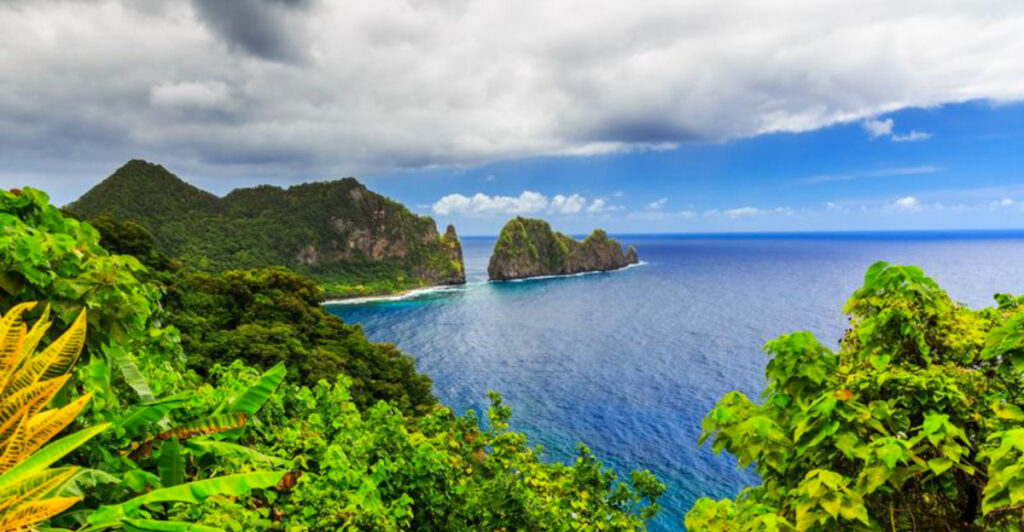
Tucked deep in the South Pacific, the National Park of American Samoa blends translucent lagoons with emerald rainforests and towering sea cliffs. Its remoteness keeps crowds away and preserves a sense of serenity that few parks can match. Named the safest U.S. national park in one analysis, it offers peaceful exploration and striking biodiversity both above and below the waves. Read on to discover twelve compelling facts that reveal why this off-the-radar paradise deserves a top spot on your adventure list.
1. Only U.S. national park located south of the equator

The National Park of American Samoa holds a unique distinction as the only U.S. national park located south of the equator. Sitting entirely in the Southern Hemisphere, it offers tropical seasons, oceanic breezes, and a perspective on American public lands unlike any other. This equatorial position shapes its lush rainforests and coral ecosystems, creating vibrant biodiversity. Travelers experience sunrise and starfields that feel subtly reoriented, reinforcing the park’s sense of remoteness and wonder. Its hemispheric exclusivity adds intrigue, making a visit feel both distinctly American and unmistakably Pacific, where culture, climate, and conservation intersect beautifully.
2. Only unit entirely below the equator

Beyond hemispheric trivia, the National Park of American Samoa is the only unit in the entire U.S. National Park System situated wholly below the equator. That fact underscores its geographic singularity and ecological value. Marine currents, tropical rainfall, and equatorial sunlight nurture coral gardens and glossy-leaved rainforest. Visiting here expands the scope of what “America’s parks” encompass, stretching to Polynesian villages and volcanic islands. The park’s location supports endemic species and seasonal marine life migrations. It also preserves a cultural and natural mosaic that would be difficult to replicate in more temperate zones, enriching the system’s diversity and resilience.
3. Remoteness equals quiet and low visitor numbers

The park’s remote South Pacific setting translates to remarkably low visitation, gifting travelers rare solitude. Flights are limited, logistics require planning, and distances deter casual crowds, preserving a calm that feels timeless. Trails, beaches, and reefs are often shared with birds and fish rather than tourists. This quiet is a conservation ally, easing pressure on habitats and wildlife. Visitors hear waves, wind, and village life rather than engines and chatter. The result is a meditative experience that heightens safety, awareness, and appreciation. Remoteness is not a barrier here; it is the very essence of the park’s charm.
4. Cited as safest U.S. national park in one index

According to a safety-analysis report, the National Park of American Samoa ranked as the safest U.S. national park based on low fatalities, minimal search and rescue incidents, and limited visitor volume. Its remoteness and measured tourism pace contribute to this standout rating. Trails are modest, ocean activities emphasize prudence, and ranger guidance supports informed choices. Safety blends with serenity, allowing space to appreciate coral gardens, rainforest canopies, and village culture. Travelers still prepare carefully for weather, currents, and logistics, but the overall risk profile remains favorable. It is a destination where calm and caution work hand in hand.
5. Established in 1988

Created by Public Law 100-571 on October 31, 1988, the park is a relatively young addition to the National Park System. Its late twentieth-century designation reflects evolving conservation priorities, including marine protection and cultural landscapes. Establishment formalized partnerships with villages and affirmed a commitment to safeguarding reefs, rainforests, and traditions. Since 1988, research and stewardship have expanded knowledge of coral health, endemic species, and traditional land practices. This foundation guides visitor education, community co-management, and ecosystem resilience. A modern charter supports a living park, where natural processes and cultural continuity remain central to its mission and identity.
6. Composed of three and sometimes four islands

The park spans parts of Tutuila, Taʻū, and Ofu, and some sources include Olosega, reflecting the archipelago’s linked geography. Each island offers distinct moods: Tutuila’s dramatic headlands and villages, Taʻū’s soaring cliffs, and Ofu’s famed beach and lagoon. Olosega, paired with Ofu by a bridge, shares crystalline waters and coral gardens. Inter-island differences create a tapestry of habitats, from volcanic ridges to fringing reefs. Travel between islands reveals shifting light, cloud forms, and ocean color. Together, they form a cohesive yet varied sanctuary that rewards patient exploration and respectful engagement with communities and nature.
7. Land and marine environments protect reef and rainforest

More than half the park is marine, safeguarding coral reefs, lagoons, and offshore waters alongside lush terrestrial rainforest. This land-sea pairing creates a holistic conservation model where upland forests filter runoff and reefs buffer shores. Visitors can hike cloud-kissed ridges in the morning and snorkel living coral gardens in the afternoon. Mangroves, beaches, and rocky headlands knit these systems together. Integrated protection supports resilience against storms and climate stress. The park’s dual identity invites travelers to respect both currents and canopy, recognizing how ocean and land communities depend on one another for long-term health.
8. Amazing biodiversity especially under water

The underwater world dazzles with vibrant coral gardens and teeming fish life, including over 250 coral species recorded around the islands. Reef flats, drop-offs, and channels host parrotfish, butterflyfish, and reef sharks, while invertebrates paint micro-landscapes of texture and color. Clear water and limited crowds foster unhurried observation. Healthy coral assemblages provide shelter and sustenance for countless organisms, reinforcing the importance of careful stewardship. Snorkelers, free-divers, and scientists all find a living laboratory here. Above water, fruit bats, tropical birds, and endemic plants contribute to the mosaic, completing a biodiversity picture that feels astonishingly alive.
9. Traditional land ownership and co-management

Unlike many U.S. parks, lands here remain under communal ownership by village councils, with the federal government leasing them for protection. This model respects Fa’a Samoa and ensures that conservation aligns with community priorities. Co-management fosters dialogue about access, resource use, and cultural practices. Visitors encounter a living landscape where customs shape stewardship and daily life. Boundaries feel less like fences and more like relationships, sustained by trust. The approach demonstrates how protected areas can honor indigenous governance while achieving robust ecological outcomes, offering a valuable blueprint for culturally grounded conservation elsewhere.
10. Stunning geological features sea cliffs and shield volcanoes

Geology steals the show on Taʻū, where towering sea cliffs rise over 3,000 feet, remnants of a massive shield volcano’s collapse. These basalt walls meet the ocean with thunderous energy, sculpted by waves and tropical weather. Across the islands, volcanic ridges, tuff cones, and lava flows narrate an origin story written in stone. Trails trace contours that reveal deep time at every vista. The drama is both aesthetic and scientific, inviting contemplation of island-building processes. Standing at a cliff edge or beach, you witness raw Pacific forces that continue to shape this extraordinary landscape today.
11. Cultural richness Samoan way of life Fa’a Samoa lives on

Fa’a Samoa, the Samoan way, thrives in villages that share shorelines and valleys with the park. Customs, communal values, and the matai chiefly system guide daily life and stewardship. Guests are encouraged to dress modestly, seek permission, and respect quiet rhythms, especially on Sundays. Cultural protocols enrich the visitor experience, transforming sightseeing into relationship building. Ceremonies, language, and hospitality reveal a living cultural landscape intertwined with nature. Learning about fa’alavelave obligations or ava ceremonies deepens understanding. Here, culture is not a museum piece; it is vibrant, welcoming, and integral to conservation success.
12. Clear pristine waters make for excellent snorkeling

Crystalline lagoons and uncrowded reefs create exceptional snorkeling, with visibility that often feels unreal. Gentle entries from sandy beaches lead to coral gardens alive with color and motion. Conditions can vary with swell and tides, so local guidance and reef-safe practices are essential. The clarity elevates every detail, from branching corals to darting damselfish. Quiet coves add a meditative calm that invites slow exploration. Snorkelers come away with heightened respect for fragile ecosystems and the need to minimize impact. It is the perfect expression of the park’s allure, where safety, serenity, and beauty seamlessly align.
Share this story