
A Gothic stone hospital built for smallpox patients now stands wrapped in ivy, with the United Nations building staring back from across the water. It’s roofless and held together by rods and bolts.
Somehow, it’s still one of the most striking buildings in New York.
The architect behind it also designed one of the most famous cathedrals in the country. That detail alone made me stop and read twice.
A building meant for quarantine ended up looking like a castle from an old novel.
I like how the whole place refuses to blend in. Skyscrapers glitter just beyond the river, yet the grounds around the ruin feel hushed and slow.
Getting there involves a ride through the sky, which is half the fun.
So how does a crumbling hospital become a peaceful escape in the busiest city around? The answer is part history and part magic.
A Castle-Like Ruin on a Skinny Island in the East River
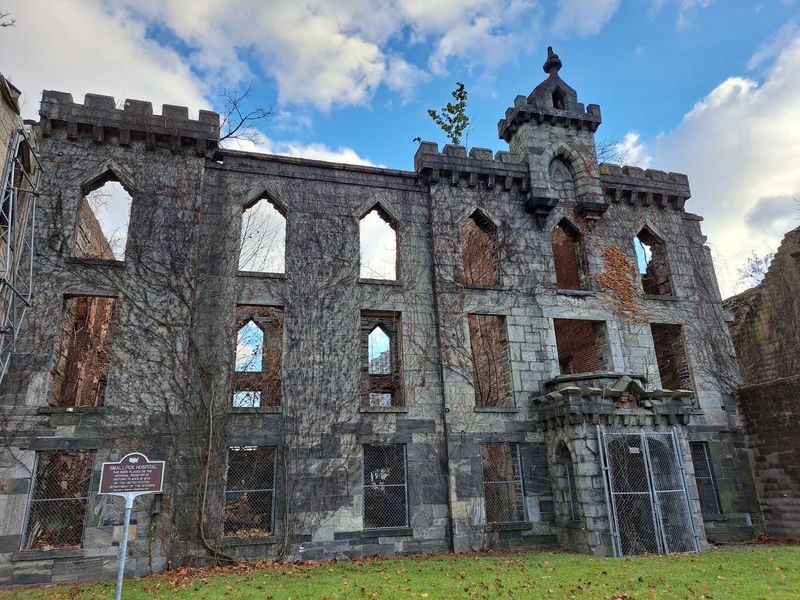
Smallpox Memorial Hospital sits near the southern tip of Roosevelt Island, a narrow strip of land between Manhattan and Queens. It’s officially a historical landmark, and it looks the part from every angle.
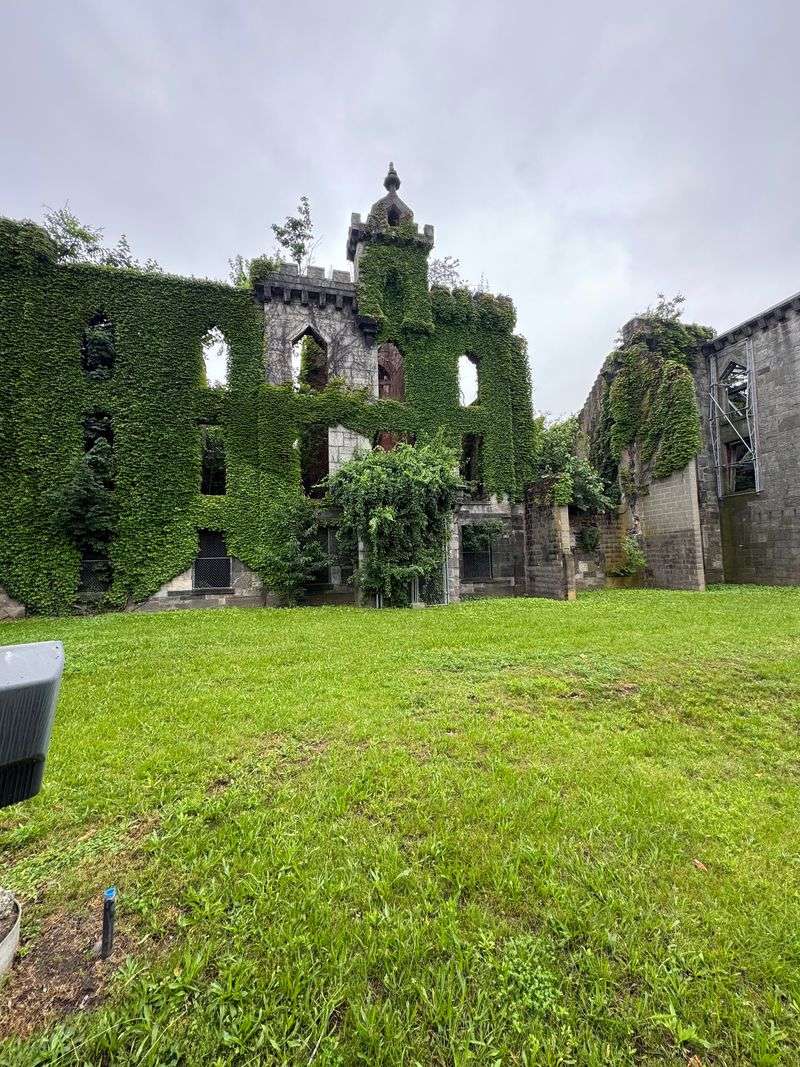
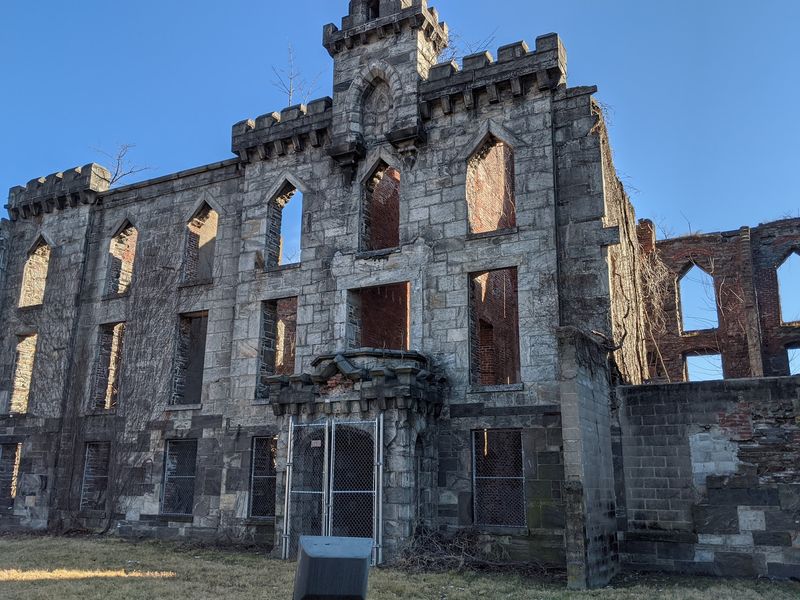
The building is a shell now, with gray stone walls, pointed window openings, and ivy climbing wherever it pleases. There’s no roof to speak of, so the sky fills in the gaps.
Honestly, that only adds to the drama.
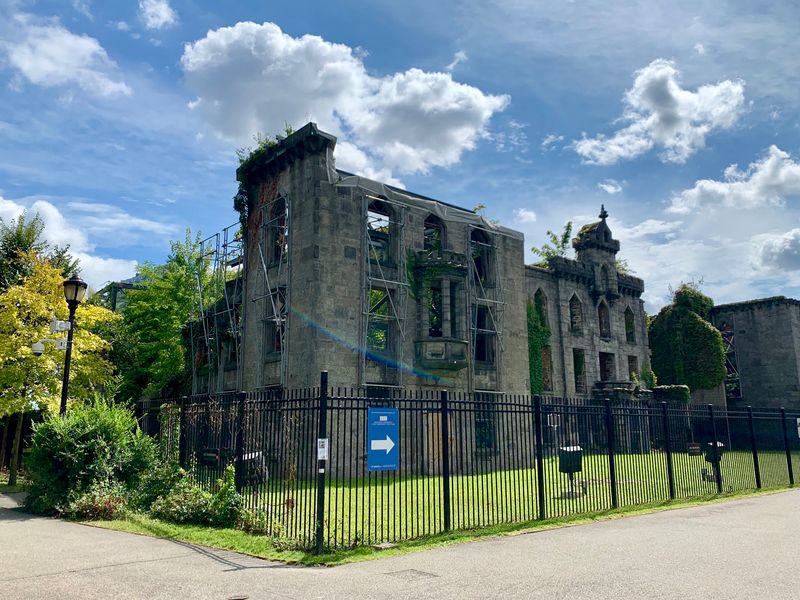
Don’t expect to wander inside, though. The ruin is fenced off all the way around for safety.
You’ll admire it from the outside, which turns out to be plenty.
What makes it so memorable is the setting. On one side, there’s grass, trees, and a quiet park.
On the other side, Manhattan towers rise across the water like a wall of glass.
That contrast is the whole reason this spot sticks with people. A nineteenth-century relic and a modern skyline share the same view.
Few places in New York pull off that kind of time travel so casually.
Consider this your first clue that Roosevelt Island has more personality than its size suggests. The hospital is just the opening act.
Built in 1854 When Smallpox Ruled the Headlines
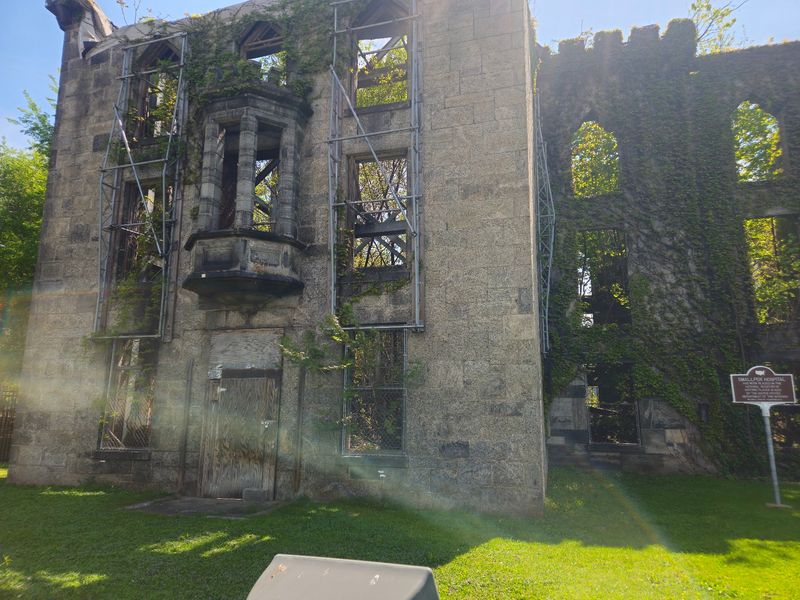
Construction on this hospital began in 1854, a time when smallpox was one of the most feared illnesses in America. Cities needed somewhere to care for patients away from crowded neighborhoods.
An island in the East River fit that need neatly.
Back then, the island looked very different. Much of the surrounding city was still far more rural than the dense boroughs we know today.
The hospital went up as a serious, purpose-built place of care.
It’s often described as one of the first major hospitals in the country dedicated to treating smallpox. Thousands of patients passed through its doors over the years.
That’s a lot of history packed into a single stone building.
Later, the structure took on a new role as a nursing school. It stayed in use in that form until the 1950s.
After that, the doors closed and nature slowly moved in.
Knowing this backstory changes how the ruin feels. Those empty window frames once looked out on patients, nurses, and students.
Now they frame the sky and the river instead.
History buffs will want to linger here. Everyone else will probably catch the bug too, the curious kind, thankfully.
The Famous Architect Behind the Pointed Windows
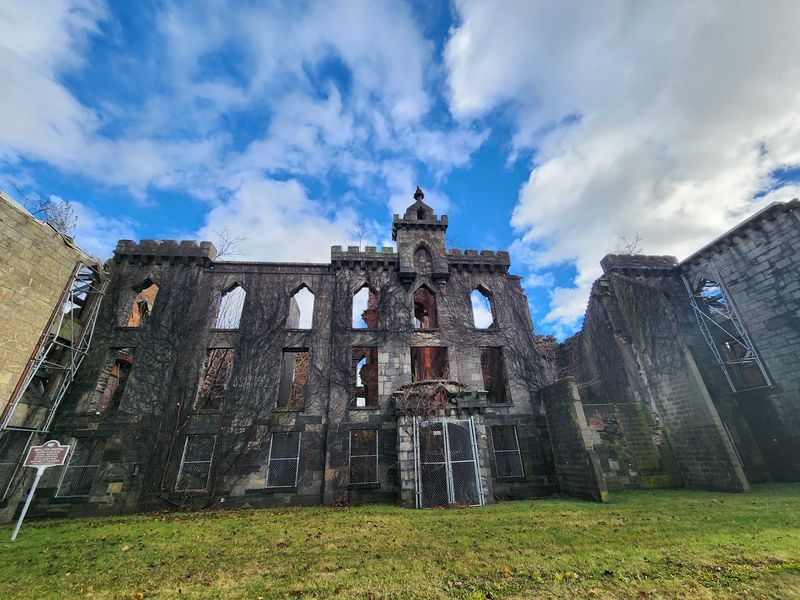
Here’s a fun connection for trivia night. The hospital was designed by James Renwick Jr., the same architect behind St. Patrick’s Cathedral in Manhattan.
Same designer, very different mission.
You can see his love of the Gothic Revival style right away. The pointed arches, the rough stone, and the tall vertical lines all feel almost churchlike.
It’s hard to believe this was a medical building.
Gothic Revival was popular in the nineteenth century for buildings that wanted to look important and lasting. Renwick clearly delivered on that promise.
Even as a ruin, the structure carries real presence.
Take a moment to trace the outline of the facade. The symmetry is still easy to spot, even with sections missing.
Ivy fills some openings like living curtains.
Architecture fans tend to find this spot especially rewarding. You get to study the bones of a design without decoration getting in the way.
It’s like seeing a sketch carved in stone.
Then there’s the funny irony of it all. Renwick’s grand cathedral draws crowds every day across the river.
His quieter masterpiece sits here with ivy for company and a far calmer pace.
Ivy, Stone, and a Very Literary Look
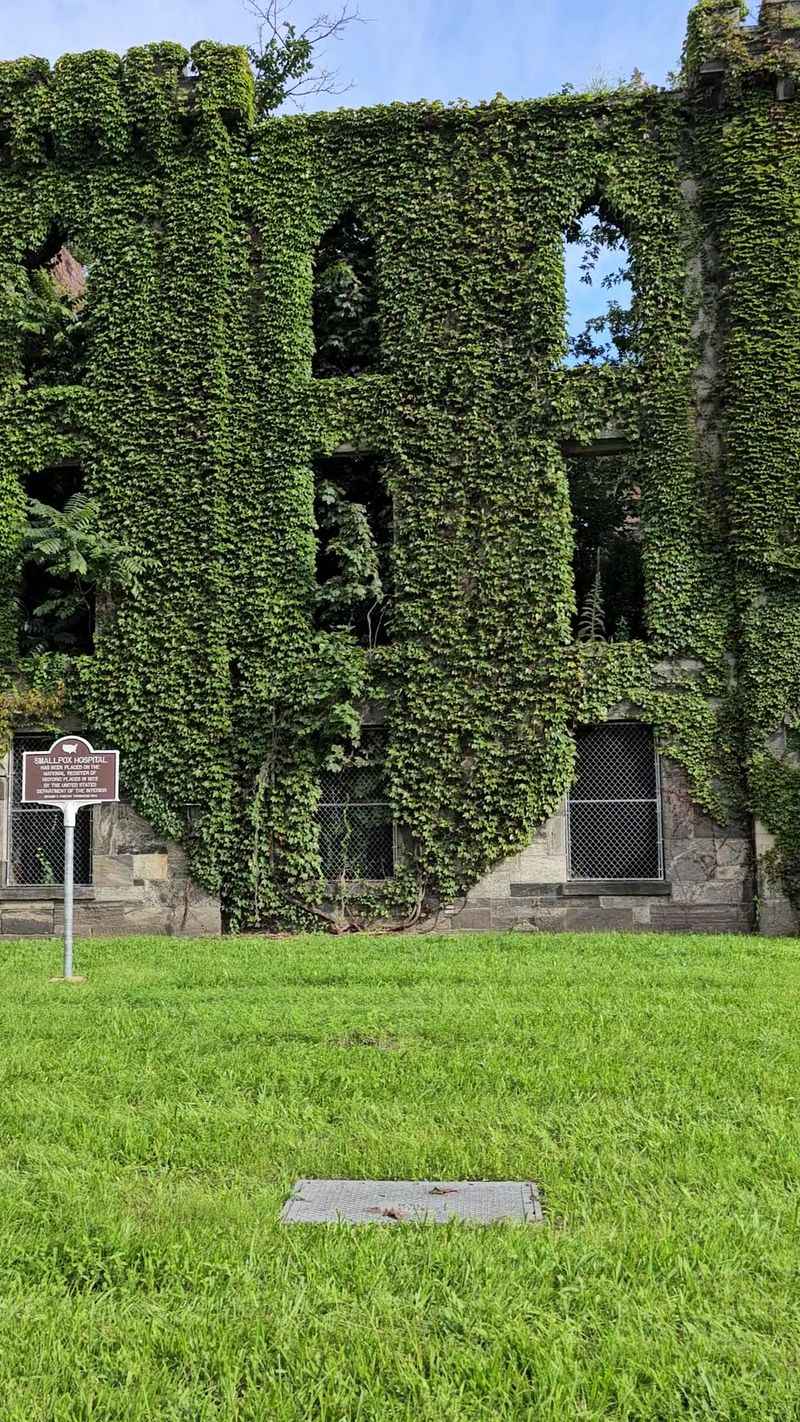
Green vines have spent decades claiming these walls. In warmer months, the ivy turns the gray stone into something lush and almost storybook.
In cooler months, the tangled stems look a bit more mysterious.
The whole scene feels like it wandered out of a classic novel. Think windswept moors and brooding heroes, only with a subway stop nearby.
It’s gothic in the literary sense, not just the architectural one.
That overgrown look also makes the building feel softer. The harsh edges of the ruin get blurred by leaves.
Nature isn’t destroying it so much as dressing it up.
Photographers love this part of the visit, and it’s easy to see why. Light filters through the empty window frames in interesting ways.
Every angle gives you a slightly different mood.
Visit at different times of year and you’ll practically see a different building. Spring brings fresh green growth along the stone.
Fall adds warm tones from the nearby trees.
It’s a lovely reminder that ruins keep changing. The walls may stay put, but their outfit shifts with the seasons.
Not bad for a building that retired in the 1950s.
Rods, Bolts, and a Fence That Keeps the Story Standing
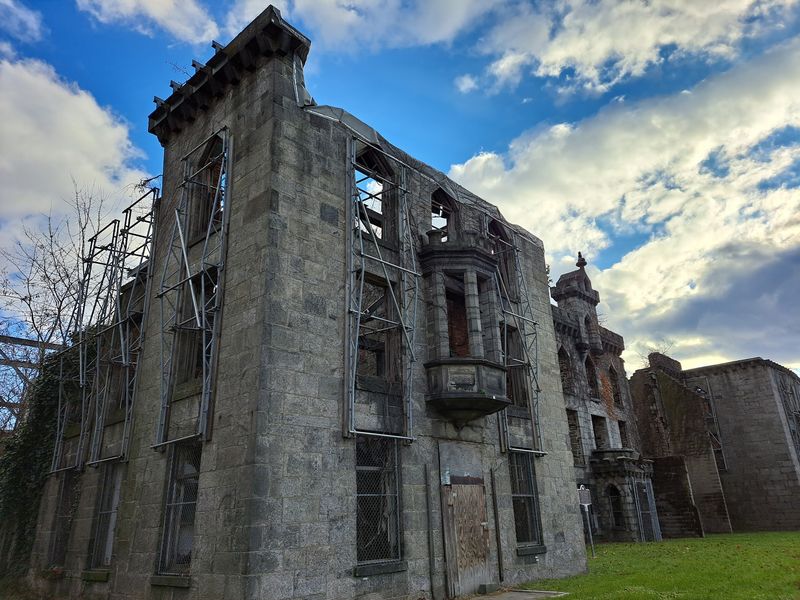
Steel supports and bolts hold parts of this ruin together. Without them, some walls simply wouldn’t stay upright.
Preservation here is a careful balancing act.
Because the structure is unstable, a fence surrounds the entire building. You can’t step inside or touch the stone.
That might sound disappointing, but it’s what keeps the site around for future visitors.
The good news is that the fence doesn’t ruin the view. Its bars are spaced so you can still see the facade clearly.
Plenty of great photos get snapped right through the gaps.
Work on the structure has happened at different times over the years. It’s a sign that people care about protecting this piece of New York history.
A ruin this old needs regular attention.
For healthcare workers and science lovers, the site carries extra meaning. Smallpox has since been eradicated worldwide, thanks to vaccines and public health efforts.
Standing here makes that achievement feel very real.
So think of the fence as a frame rather than a barrier. It turns the hospital into an outdoor exhibit.
You look, you learn, and the building keeps telling its story another day.
Skyscraper Views That Feel Close Enough to Touch
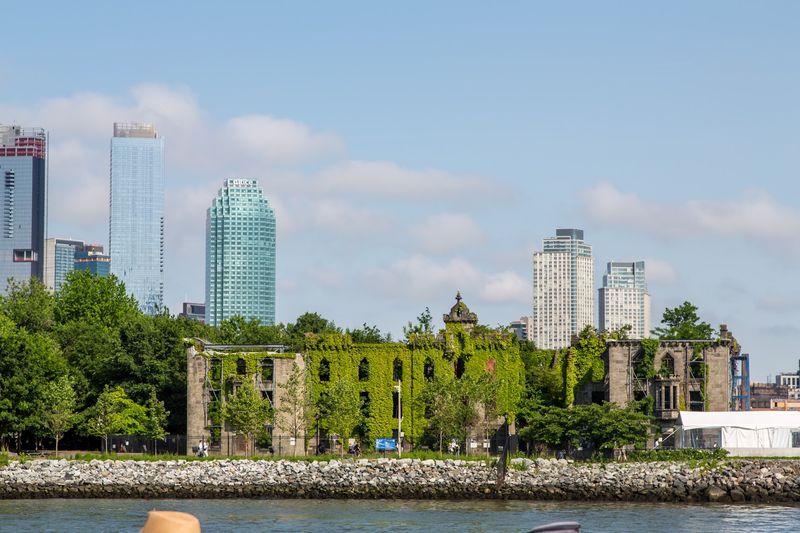
Turn around from the ruin and Midtown Manhattan fills the horizon. The United Nations headquarters stands right across the East River.
It’s one of the most dramatic city views you’ll find anywhere.
That’s what makes the hush around Smallpox Memorial Hospital so surprising. Millions of people bustle just across the water.
Yet the island side often feels calm and almost secluded.
Many people describe this area as eerily quiet. It’s not silent, of course, since it’s still New York.
But the noise feels distant, like a radio playing in another room.
The views get even better as you walk toward the island’s tip. Open lawns and benches give you places to pause and soak it in.
You can watch boats glide by while the skyline glimmers.
Sunset is a natural favorite for photos. The towers catch the warm light while the stone ruin glows softly behind you.
Two centuries share one golden moment.
Bring a camera, or at least a fully charged phone. You’ll want shots of the hospital, the skyline, and the river.
Somehow, all three look better together than apart.
A Ride Through the Sky to Reach the Ruins
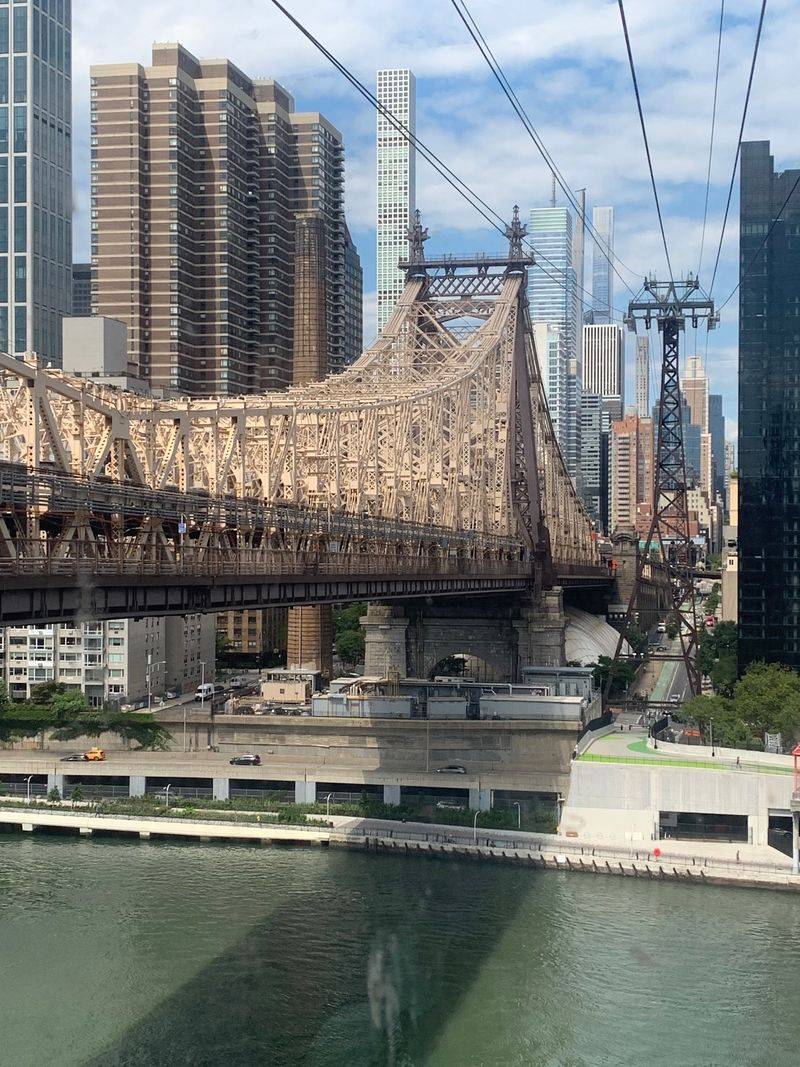
Getting there might be the most fun commute in the city. The Roosevelt Island Tramway glides over the East River from Manhattan.
Along the way, you get sweeping views of the water and skyline.
The tram uses regular subway fare, so it’s an affordable thrill. Kids and adults alike tend to press close to the windows.
It feels more like a ride than a transit trip.
Prefer to stay underground? The F train also stops on Roosevelt Island.
From the subway station, the walk to the hospital takes roughly fifteen minutes.
From the tram station, plan on about a ten-minute stroll. Just head south along the riverside path.
The walk is pleasant and mostly flat.
Bikes are another great option, since the island’s roads tend to be calm. Some people like to loop around the whole island.
It’s a relaxing way to see more of the shoreline.
Here’s a smart plan for the day. Take the tram over for the views, then catch the subway back.
You’ll experience both ways in, and neither will cost you much more than a cup of coffee.
Southpoint Park and the Stroll Toward the Island’s Tip
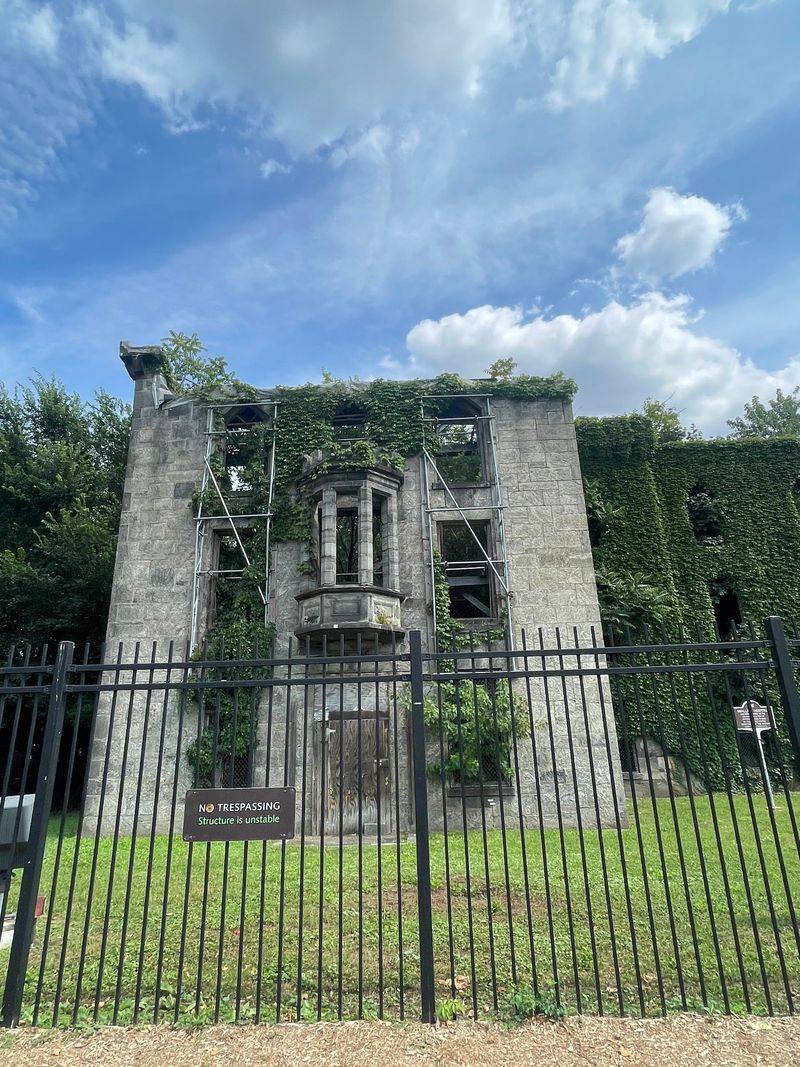
Lawns, tree groves, and riverside paths surround the ruin. This is Southpoint Park, the green space at the southern end of Roosevelt Island.
It sets the stage before the hospital even comes into view.
As you walk in, clusters of trees partially hide the building. Then you round a bend and there it is.
That slow reveal is part of the charm.
The official address is E Rd, New York, NY 10044. Still, you won’t need to memorize it.
Just keep heading south and the stone walls will find you.
Benches and grassy spots offer places to sit and stare. Some folks happily spend a long stretch just gazing at the facade.
It’s that kind of view.
Historical signs nearby explain the hospital’s past. They give helpful context without turning the visit into homework.
Reading them makes the ruin feel more personal.
Early mornings tend to be especially peaceful here. The light is soft and the paths are calm.
If you’re an early riser, this is your reward for setting that alarm.
Feline Neighbors and a Sleek Memorial Next Door
Cat lovers, take note. Along the way to the hospital, there’s a small cat sanctuary caring for homeless felines.
It’s a sweet little detour.
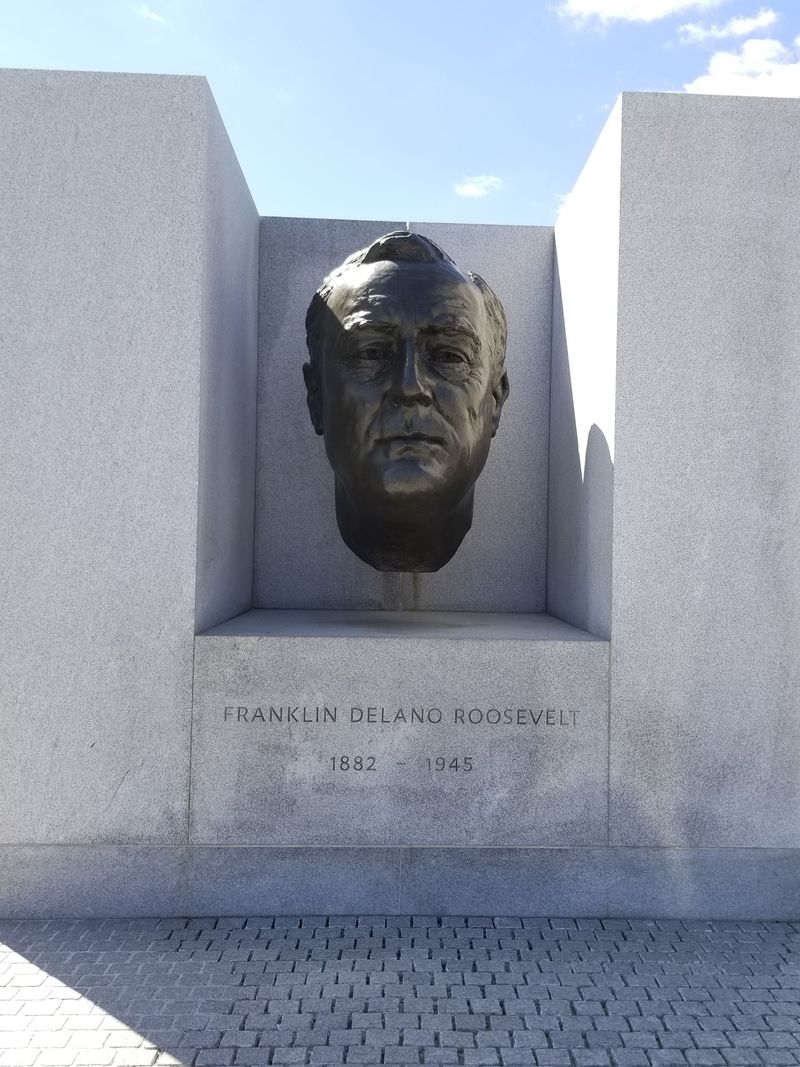
Just past the ruin lies Franklin D. Roosevelt Four Freedoms State Park.
The memorial is clean, white, and minimal in design. Next to the weathered hospital, it feels like a completely different century.
That contrast is wonderful to experience in one walk. One structure is rough, overgrown, and full of shadows.
The other is crisp, bright, and calm.
The park sits right at the very tip of the island. River views stretch out on both sides.
It’s a natural place to end your visit and catch your breath.
Nearby, you’ll also find Blackwell House, another historic building on the island. It adds one more layer to Roosevelt Island’s long story.
History really does pile up here.
Pair all three stops for a rich half-day outing. Start with the cats, admire the ruin, and finish at the memorial.
You’ll leave feeling like you explored a tiny world within New York City.
Quiet Corners for Dreamers, Photographers, and Curious Minds
Some places beg you to rush. Smallpox Memorial Hospital asks you to slow down instead.
The mood here is thoughtful, a little melancholy, and surprisingly peaceful.
History lovers will feel right at home. Photographers will have a field day with the textures and light.
Readers who adore gothic novels might feel like they’ve stepped into a favorite book.
It’s also a great pick for anyone needing a break from city chaos. The island feels calmer than much of New York.
A quiet walk here can reset a hectic travel day.
Families can enjoy it too, especially kids who love spooky-looking buildings. The tram ride alone usually wins them over.
Just keep expectations clear, since there’s no going inside.
Someone hoping for a full museum tour may feel the visit is short. There isn’t much to do beyond looking and reading signs.
Knowing the history beforehand makes it far more rewarding.
Think of it as a moody pause rather than a big attraction. You come for the atmosphere and the story.
You leave with photos and a strange, lingering calm.
Hours, Costs, and Smart Timing for Your Visit
Good news for budget travelers: there’s no entrance fee to see the ruin. You’ll only pay for your tram or subway ride.
That makes it one of the easiest bargains in New York.
The site’s listed hours run from 9 a.m. to 7 p.m. That schedule applies Wednesday through Monday.
It’s closed on Tuesdays, so plan around that day.
Morning is a lovely time to go. The light is gentle and the park feels especially calm.
It’s also a great way to start a bigger day exploring the city.
Wear comfortable shoes for the walk from the tram or subway. The paths are easy, but you’ll cover some ground.
Pack water on warm days, too.
A visit to the ruin itself doesn’t take long. Most people spend time looking, snapping photos, and reading the history signs.
Add the nearby park and memorial for a fuller outing.
There are also places to eat elsewhere on Roosevelt Island. That’s handy if hunger strikes after all that walking.
Grab a bite, then head back over the river with the skyline glowing.
Why This Stone Shell Deserves a Spot on Your New York List
Few city sights pack this much feeling into a fenced-off ruin. Smallpox Memorial Hospital mixes history, architecture, and natural beauty in one quiet corner.
Add a skyline view, and it becomes unforgettable.
It won’t keep you busy for hours on its own. That’s not really the point.
The magic comes from pausing long enough to let the story sink in.
Think about everything this building has seen. Patients, nurses, and students once filled its halls.
Now ivy and sunlight do the talking.
Pair it with the tram ride, Southpoint Park, the cat sanctuary, and Four Freedoms State Park. Suddenly, a simple stop turns into a full adventure.
Roosevelt Island rewards anyone willing to explore it slowly.
For visitors to New York who think they’ve seen it all, this is a fresh surprise. It shows a gentler, older side of the city.
And it does so with Manhattan practically waving from across the water.
So next time you need a break from the crowds, head south on the island. Stand by the fence and look up.
The silence might be the most surprising sound you hear all day.
Share this story