Oklahoma has a way of surprising you when you least expect it. You might be rolling through a stretch of southern plains, thinking you know exactly what the next stop will bring, and then something pulls you off the highway and into a world you did not see coming.
The Chisholm Trail Heritage Center in Duncan is exactly that kind of place, a spot that looks modest from the outside but delivers an experience that sticks with you long after you have driven away. History, art, hands-on adventure, and a little bit of theater magic all come together under one roof.
Where the Chisholm Trail Story Comes Alive
Sitting along Chisholm Trail Parkway in Duncan, Oklahoma, the Chisholm Trail Heritage Center and Garis Gallery of the American West is the kind of place that quietly earns its reputation. From the parking lot, the building reads as a clean, well-kept museum, but step inside and the story of one of America’s most iconic cattle routes unfolds in vivid, layered detail.
The center is dedicated to preserving the legacy of the Chisholm Trail, the historic path that carried millions of longhorn cattle northward from Texas through Oklahoma to Kansas railheads after the Civil War. Cowboys, cattle bosses, and entire communities shaped their lives around this route, and the museum makes sure none of that gets forgotten.
Visitors consistently mention that the staff sets the tone from the moment they walk through the door. Warm greetings, knowledgeable guides, and a genuine enthusiasm for the history make the whole experience feel personal rather than passive.
Whether you are a lifelong Oklahoman or a road-tripper passing through for the first time, the center has a way of making the trail feel immediate and real.
The 4D Theater Experience That Catches You Off Guard
Few things in a small-town museum prepare you for a full sensory ambush, but the 4D theater at the Chisholm Trail Heritage Center manages exactly that. The main film presentation tells the story of life on the cattle drive with narration, sweeping visuals, and a production quality that belongs in a much larger venue.
The theater adds wind, scent, and rain effects to the mix, which means when a storm rolls across the screen, you feel it. Visitors often describe the moment the weather effects kick in as genuinely startling in the best possible way.
The smell-o-vision elements and atmospheric touches make the eighteen-minute runtime feel like a complete journey rather than a quick clip.
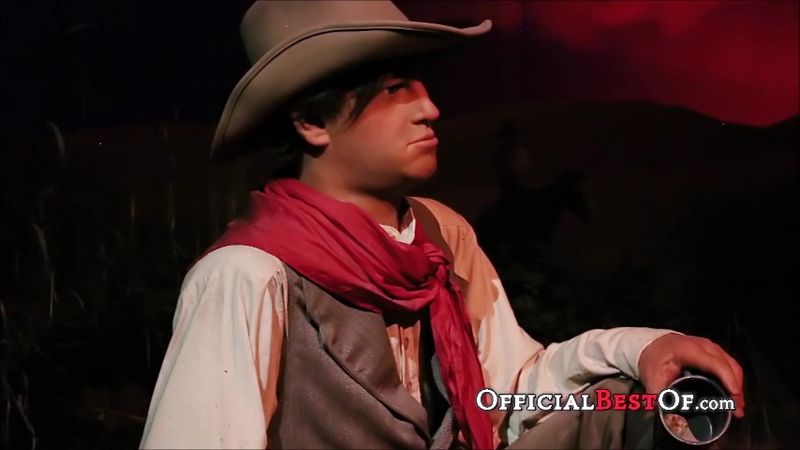
Beyond the main film, a second theater hosts an animatronics show that brings frontier characters to life in a more intimate setting. The combination of both presentations gives visitors two distinct flavors of storytelling in one visit.
Families with younger children find the animatronics show especially engaging, while the 4D film tends to win over skeptical adults who walked in expecting something far more ordinary. Together, these two theaters form the emotional core of the entire museum experience.
Hands-On Exhibits Built for Curious Minds at Every Age
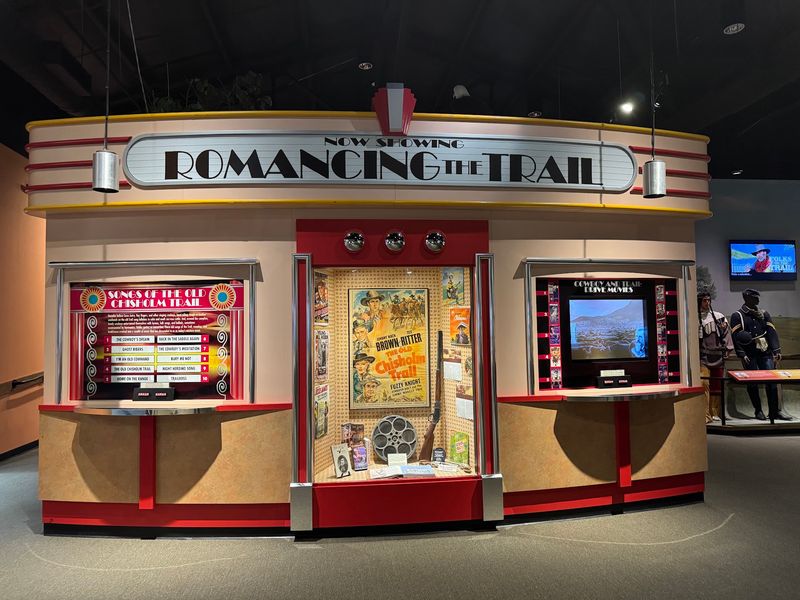
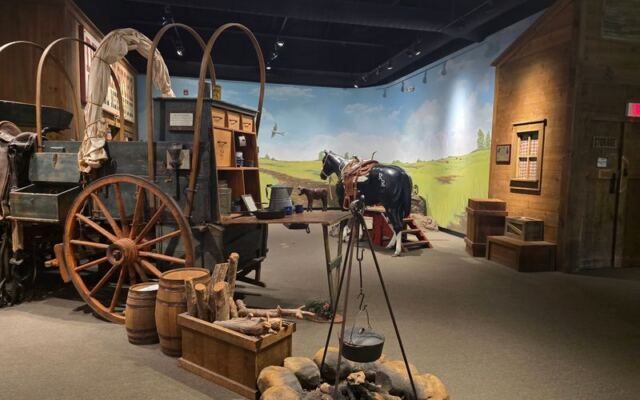
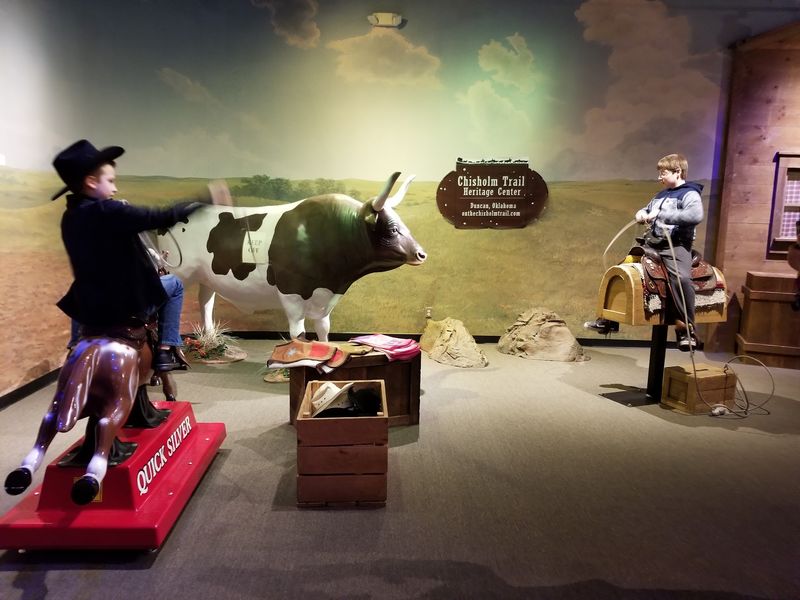
Touching history rather than just looking at it changes everything. The interactive exhibits at the Chisholm Trail Heritage Center are designed with that idea at the center, giving visitors a chance to engage directly with the story rather than read about it from behind a rope.
One of the most popular stops is the branding station, where visitors can try their hand at making their own cattle brand. The trail boss quiz adds a competitive edge that pulls older kids and adults in just as effectively as the younger crowd.
A recreated Duncan General Store lets visitors explore the kinds of supplies a trail cook or ranch hand would have relied on, complete with period-accurate goods and displays that reward close attention.
The interactive touch exhibits scattered throughout the main floor cover everything from cowboy gear to Native American history connected to the trail corridor. Visitors with children consistently highlight how well the museum holds young attention spans without dumbing anything down.
Adults find themselves lingering just as long, partly because the exhibits are genuinely informative and partly because the staff is always nearby, ready to add context or share a detail that does not appear on any placard.
The Garis Gallery and Its Remarkable Western Art Collection
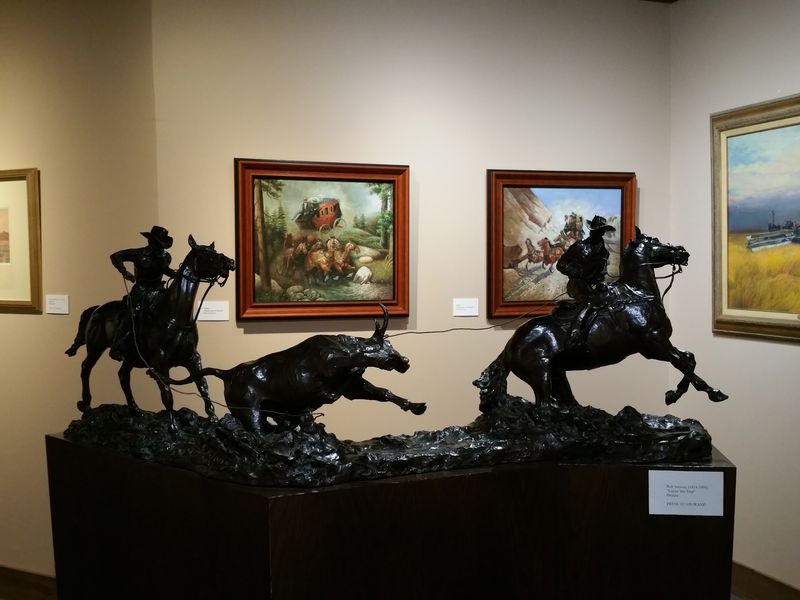
Art collectors and casual museum-goers alike tend to stop in their tracks when they walk into the Garis Gallery of the American West. The collection is compact but genuinely impressive, featuring works by some of the most celebrated names in American western art.
Paintings by Frederic Remington, Charles Russell, and George Catlin hang in a space that feels curated rather than crowded. Each piece connects to the broader story of the American frontier, making the gallery feel like an extension of the museum’s educational mission rather than a separate wing bolted on as an afterthought.
Some pieces in the collection are available for purchase, which adds an unexpected dimension to the browsing experience.
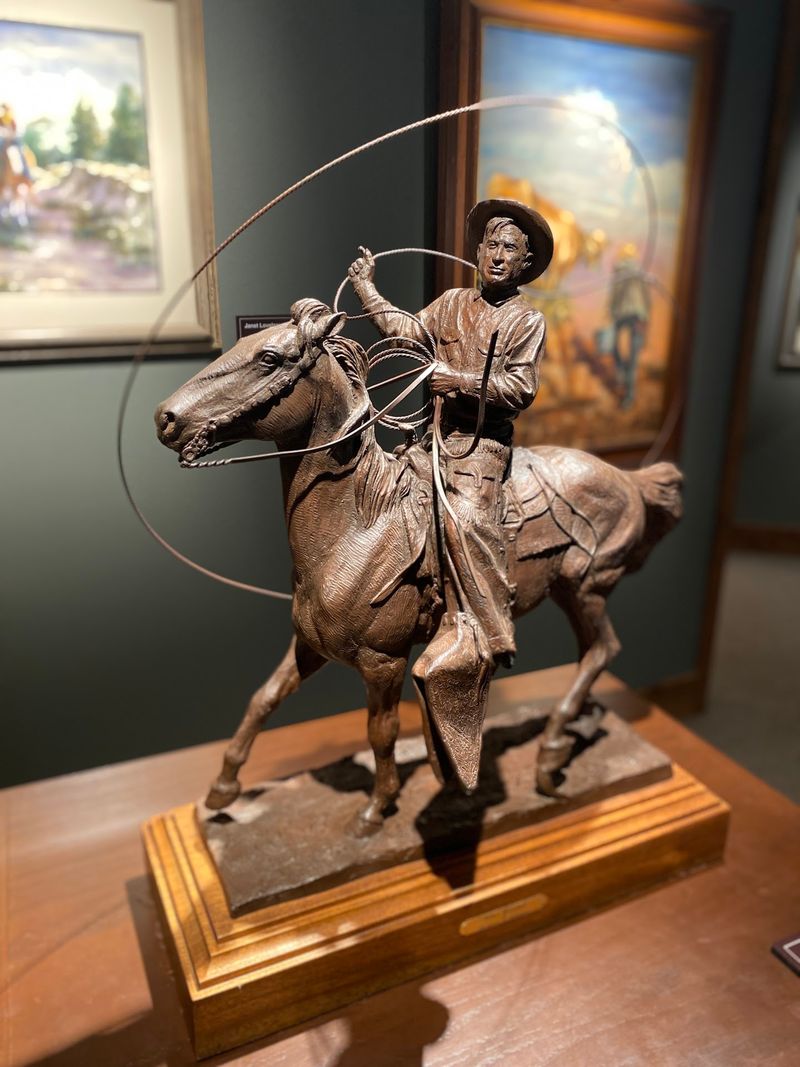
The outdoor bronze sculptures on the museum grounds deserve equal attention. Visitors regularly mention the outdoor pieces as a highlight, and the landscaping around them gives the whole property a polished, park-like feel.
The gallery also features rotating exhibits that change every eight to ten weeks, including regional art shows and school children’s work displayed alongside professional pieces. That rotating calendar means repeat visitors rarely see the exact same gallery twice, which is a compelling reason to plan a second trip rather than treat the center as a one-and-done destination.
The Cattle Drive Exhibit and What Life on the Trail Really Looked Like
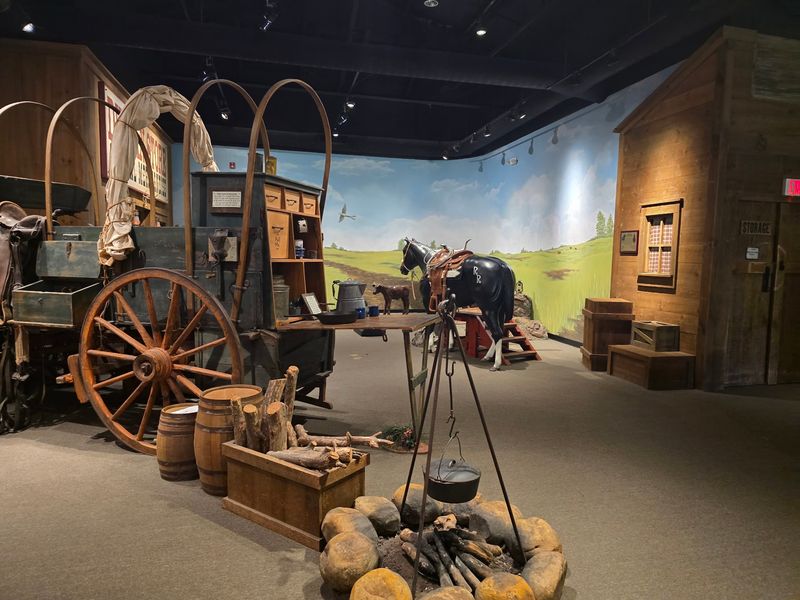
Romanticized portraits of the cowboy life tend to smooth over the grit, the exhaustion, and the sheer logistical challenge of moving thousands of cattle hundreds of miles across open country. The cattle drive exhibit at the Chisholm Trail Heritage Center does not let that happen.
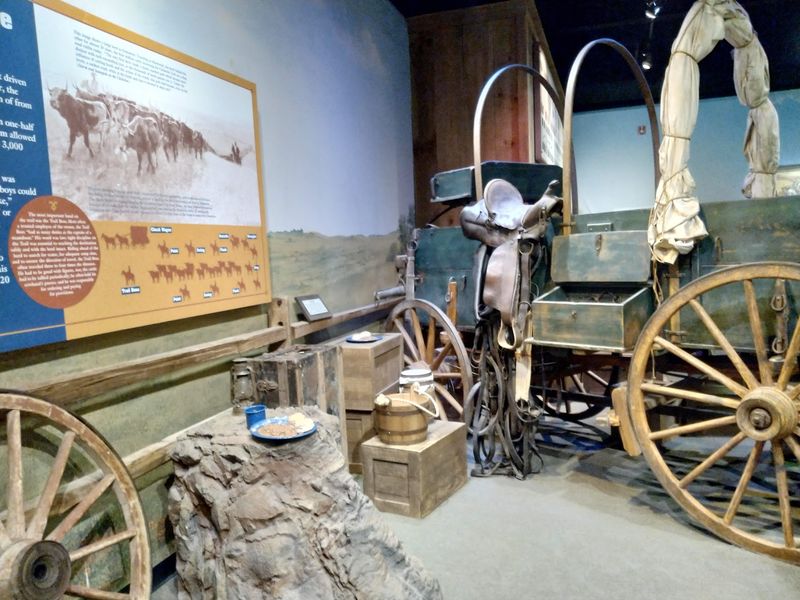
The displays walk visitors through the daily rhythms of a drive, from the roles of the trail boss and the cook to the dangers of river crossings and the social dynamics of a crew living and working in close quarters for months at a time. Artifacts, period equipment, and detailed interpretive panels build a picture that feels honest rather than polished for comfort.
Native American history woven into the trail narrative adds important context that many visitors say they had not encountered before. The Chisholm Trail passed through Indigenous lands, and the museum addresses that layer of the story with care and specificity.
Staff members are particularly knowledgeable on this topic and willing to go deeper with any visitor who asks. For anyone who grew up watching westerns and wondering what the reality behind the myth actually looked like, this exhibit provides a grounded, respectful, and genuinely educational answer.
Beautiful Grounds, Pavilion, and the Outdoor Experience
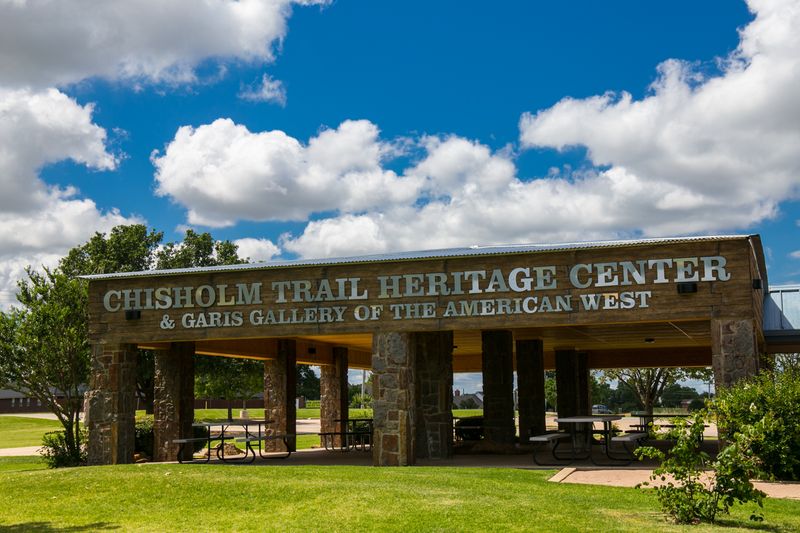
A museum that puts as much care into its outdoor spaces as its interior exhibits is telling you something about its overall philosophy. The grounds at the Chisholm Trail Heritage Center back up everything the inside promises, with landscaping that gives the property a sense of openness and calm that feels rare for a roadside stop.
A covered pavilion with picnic tables makes the property genuinely family-friendly for visitors who want to pack a lunch or simply take a break between the indoor exhibits and the outdoor sculptures. The large free parking lot removes one of the most common friction points of museum visits, especially for families arriving with kids, strollers, or a lot of gear.
The bronze sculptures placed throughout the grounds are worth a slow walk on their own. Several pieces depict cowboys, cattle, and trail scenes with a level of detail that rewards close inspection.
Visitors who arrive on a clear Oklahoma afternoon often spend a surprisingly long stretch of time outside before heading back in. The combination of indoor depth and outdoor breathing room gives the center a well-rounded feel that works whether you have ninety minutes or a full afternoon to spend.
Who Belongs Here and Why the Center Works for So Many Visitors
Road-trippers, school groups, history buffs, families with restless kids, and art lovers with no particular interest in cowboys all seem to find something worth their time at the Chisholm Trail Heritage Center. That range of appeal is not accidental; the museum is clearly designed to work across ages and interests rather than narrowly serving one demographic.
School field trips are a regular presence, and the center handles them well. The hands-on exhibits and theater presentations give structured groups a natural flow through the space without requiring constant adult management.
For families visiting independently, the staff’s willingness to walk visitors through the floor plan and personally start presentations makes the experience feel guided without being rigid.
Out-of-state visitors who stop in expecting a quick fifteen-minute browse routinely end up staying far longer than planned. The museum is a member of the North American Reciprocal Museum program, which means NARM cardholders can visit free of charge, a detail worth knowing before the trip.
Whether you are a lifelong Oklahoma history enthusiast or someone who simply pulled off the highway on a whim, the center has a reliable track record of exceeding expectations and sending visitors away with a fuller picture of the American West than they arrived with.
Hours, Admission, and Everything You Need Before You Go
Planning a visit to the Chisholm Trail Heritage Center is straightforward, which is part of why so many people end up stopping in without much advance notice. The center is open Monday through Saturday from 10 AM to 5 PM, and on Sundays from 1 PM to 5 PM, giving visitors solid flexibility across the week.
Admission is affordable by most measures, and the center participates in the North American Reciprocal Museum program for members. A senior discount is available, and the general pricing sits comfortably in the range visitors describe as well worth it for what the experience delivers.
Parking is free and plentiful, which removes a small but real barrier for larger groups or families.
The gift shop rounds out the visit with reasonably priced souvenirs and merchandise. Visitors have noted picking up quality items without feeling like they were being pushed toward overpriced keepsakes.
For event hosting, the center also rents a large classroom space and has drawn strong praise for its hospitality and staff responsiveness during outside events. The center is located at 1000 Chisholm Trail Pkwy in Duncan, Oklahoma, and can be reached by phone at 580-252-6692.
More details, including any updated programming, are available at onthechisholmtrail.com.
Share this story