A log cabin built in 1934 by the Civilian Conservation Corps still keeps its guests warm with a wood stove. That alone made me stop scrolling and start planning a weekend.
The cabins sit beside a pond deep in the woods of northern New Jersey. Each one has electricity, a small kitchen, and a fridge with a freezer, which feels almost luxurious for a place this old.
I like how simple the whole routine sounds. You pick up your keys, grab a bundle of dry firewood, and the evening belongs to the stove.
There’s no fancy lobby and no room service, just sturdy log walls with roughly ninety years of stories in them.
I can’t imagine a better excuse to unplug for a few days. So who built these cabins, what waits inside, and how do you claim one?
Real Log Cabins Waiting in the Northwest Corner of the State
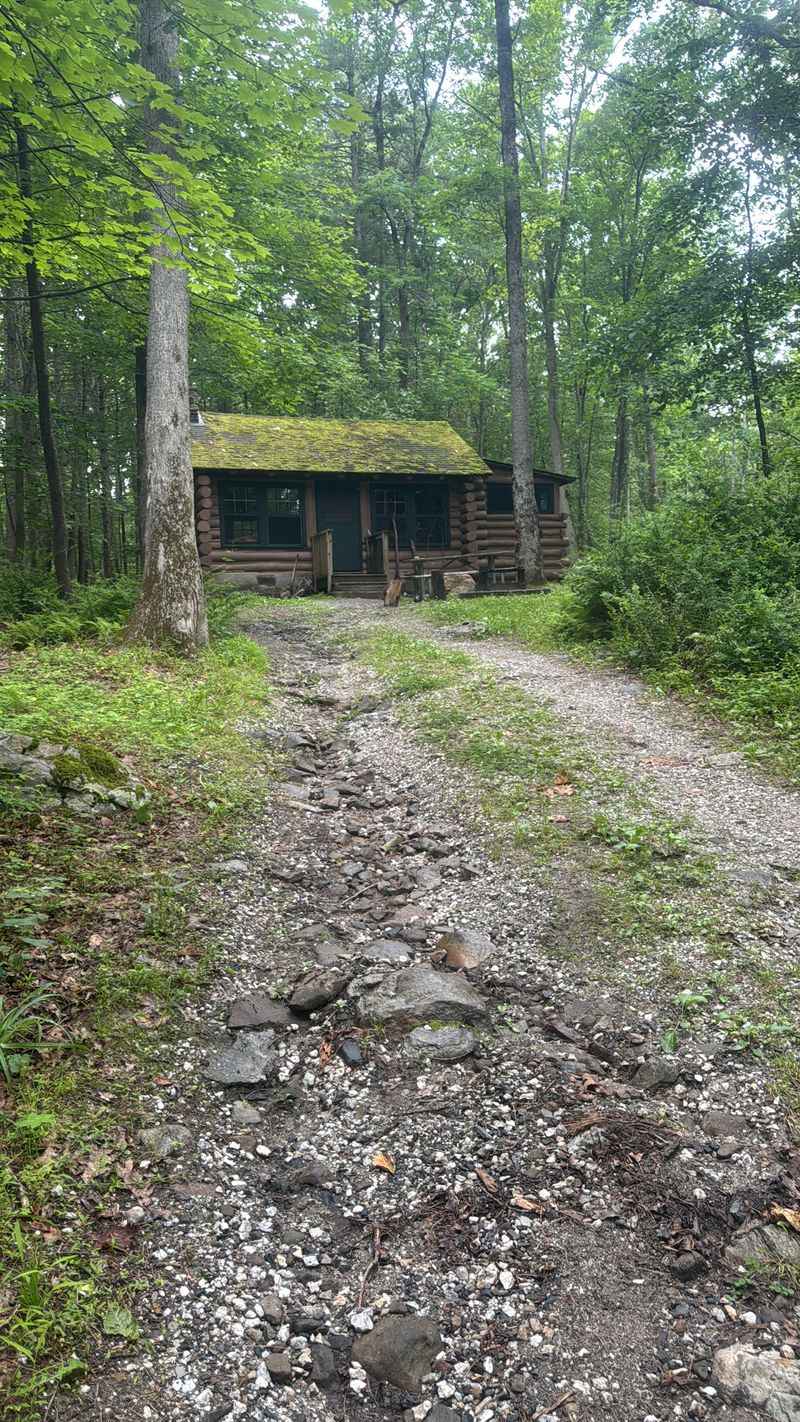
Real logs, real woods, and a real stove for heat. The Stokes State Forest cabins deliver exactly that, sitting inside one of the state forests of northwestern New Jersey.
These are camping cabins, not hotel rooms dressed up to look rustic. They belong to the state park system, so the setting is protected forest rather than a private resort.
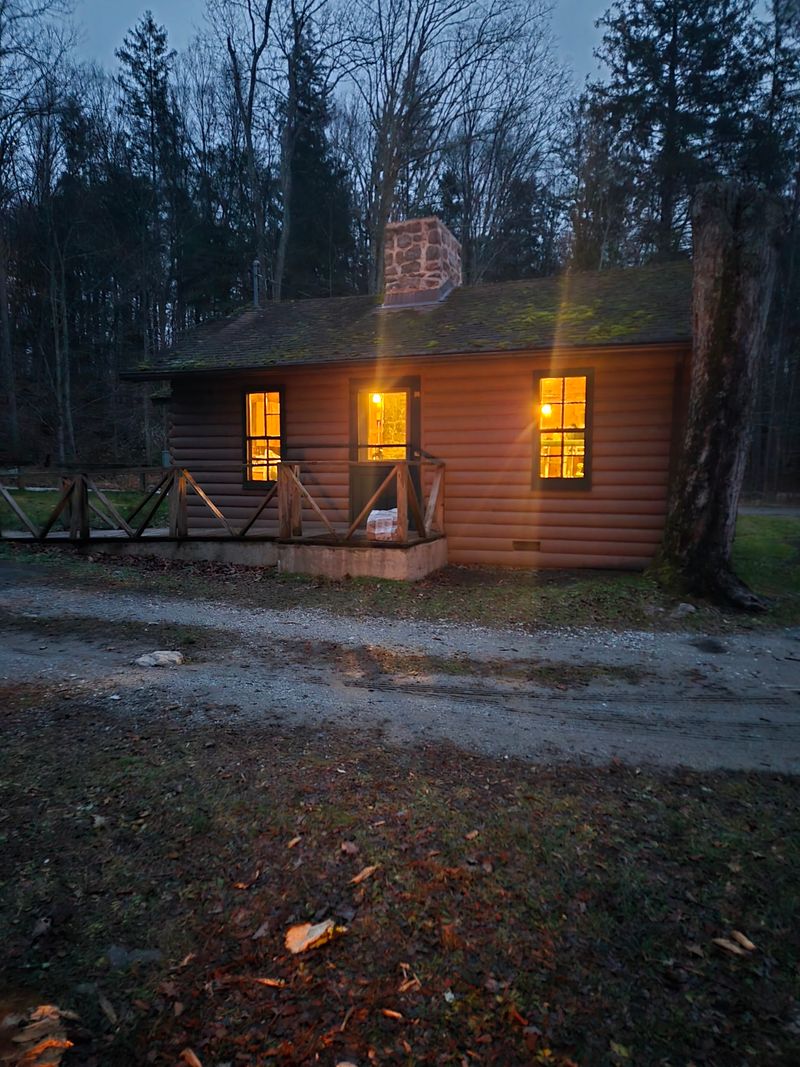
Here’s what makes them stand out. The cabins were built in the 1930s by the Civilian Conservation Corps, and guests still sleep inside those same log walls today.
Think of them as a middle ground between a tent and a house. You get electricity, a small kitchen, a bathroom with a toilet and sink, and a wood stove that does the heavy lifting on cold nights.
The location adds plenty of charm too. At least some cabins sit on a pond, and the surrounding park offers access to lots of trails.
For New Jersey residents, that means a true forest getaway without a flight or a marathon drive. For nearby day-trippers, it’s a reason to turn one day into a whole weekend.
Not bad for a building older than most of our grandparents.
A 1934 Gift From the Civilian Conservation Corps
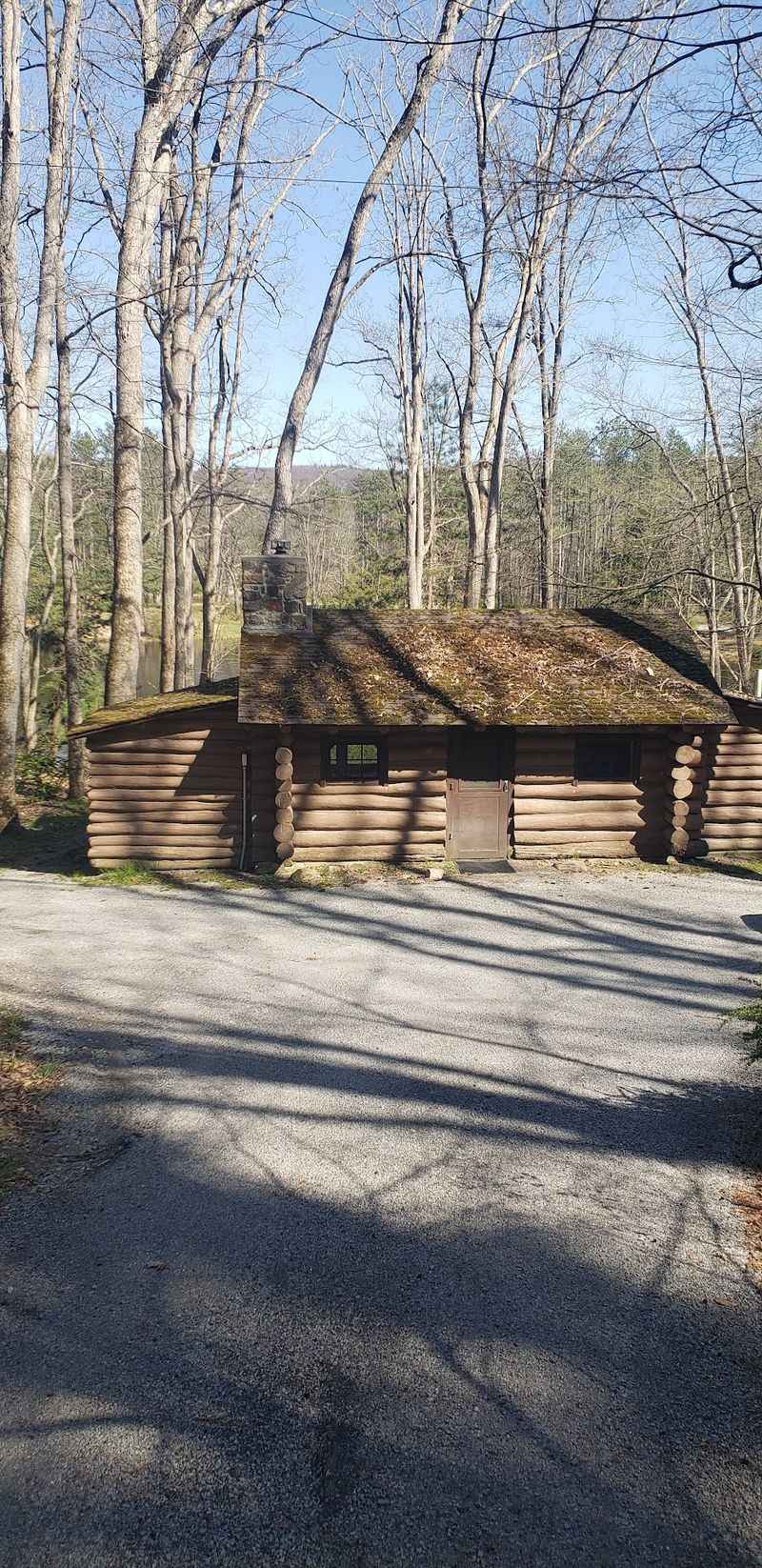
History buffs, this one’s for you. The cabins were built in 1934 by the Civilian Conservation Corps, a Depression-era program that put young workers to use improving public lands.
CCC crews left their mark on parks across the country. In New Jersey, these log cabins are one of the most touchable pieces of that legacy, because you can actually spend the night inside one.
That changes how a weekend feels. You aren’t just staying somewhere old; you’re sleeping inside a building that was shaped by hand during a very hard chapter in American life.
The cabins remain basic, and that’s part of the point. Their builders made something sturdy enough to keep working decades later, and the state continues to maintain them for public use.
Some families have been coming back for more than fifty years. That kind of loyalty says a lot about how well these cabins have been built and cared for.
I love the idea of a kid on a school trip and a grandparent on a reunion weekend sharing the same log walls, generations apart.
Few souvenirs beat a story like that.
The Wood Stove That Runs the Whole Show
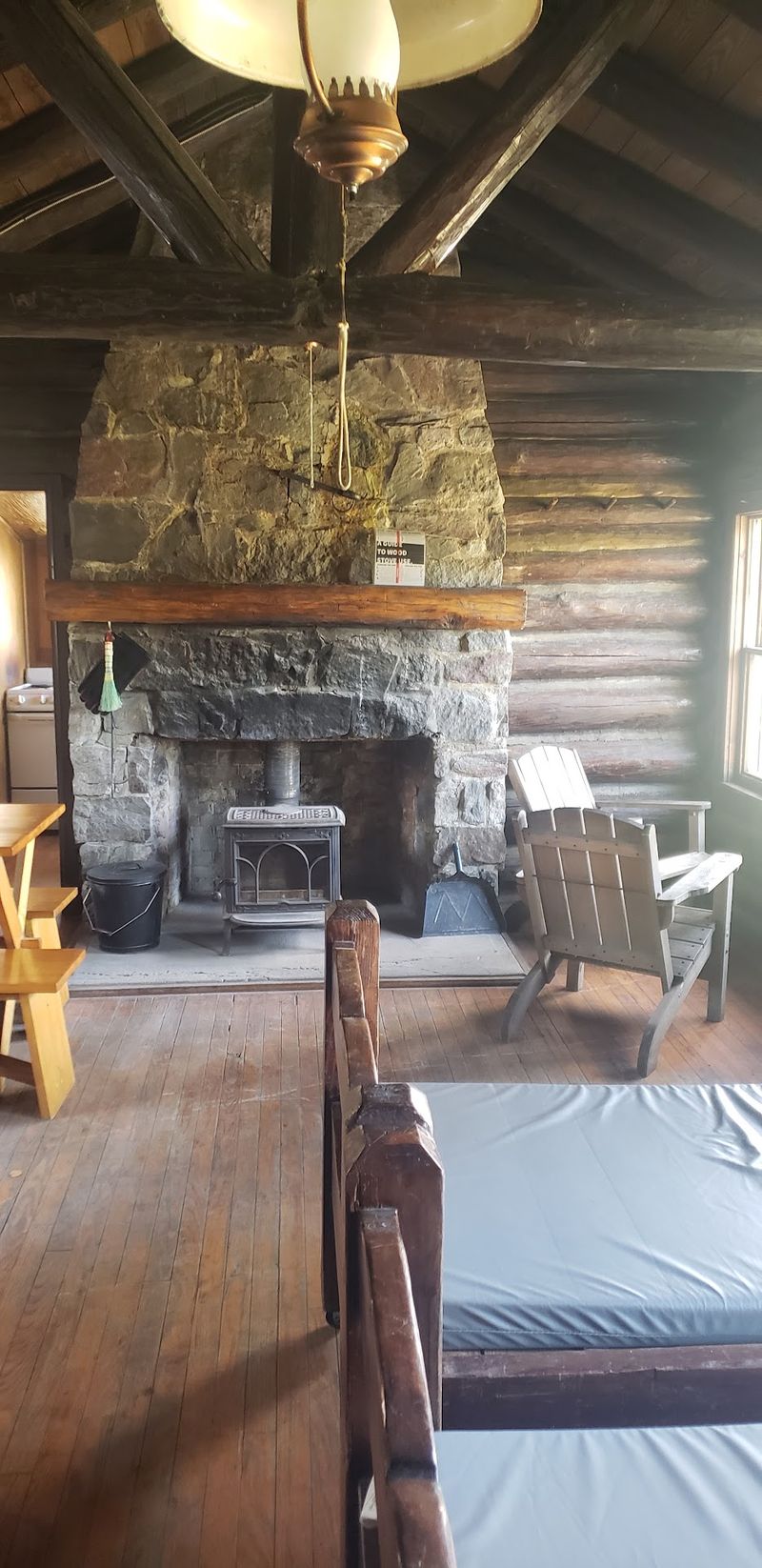
Forget thermostats. Inside each cabin, a wood stove serves as the heat source, and it’s the feature that gets talked about most.
In winter, the stoves are known for warming the space nicely. That makes these cabins a surprisingly strong pick for a cold-weather New Jersey escape, not just a summer outing.
There’s a small ritual to it. You load the wood, coax the fire along, and then the cabin slowly shifts from chilly to cozy while the forest outside goes dark.
Is it as easy as pressing a button? No, and that’s honestly the fun.
Tending a fire gives the evening a rhythm that phones and streaming apps can’t quite match.
The stove also makes the cabin feel lived-in right away. Log walls plus crackling heat create the kind of scene people usually only see on holiday cards.
A practical tip: bring patience on the first light-up. Dry wood catches much faster, which leads straight into the next section.
Once that fire settles in, though, good luck convincing anyone to leave the bench by the stove.
Dry Firewood Makes or Breaks Your Night
Damp wood is the quiet enemy of every cabin weekend. It smokes, sulks, and refuses to catch, usually right when everyone is cold and hungry.
Luckily, there’s an easy fix here. The park office, a short drive from the cabins, sells firewood, and it’s known for being nice and dry.
You’ll also spot roadside stands selling wood in the area. That wood is often damp, though, and it doesn’t catch fire as quickly.
So the smart move is simple. Grab your keys and your firewood in the same stop at the office, and you’re set before you even unlock the cabin door.
It sounds like a small detail, but it shapes the whole evening. Good wood means a faster warm-up, an easier start in the morning, and fewer frustrated sighs from the kids.
Plan on how many fires you want, too. A wood stove inside plus a fire pit outside can use up a stack faster than expected.
Think of dry firewood as the unofficial key to the cabin. The metal one opens the door, but this one opens the cozy.
More Kitchen Than You Would Guess
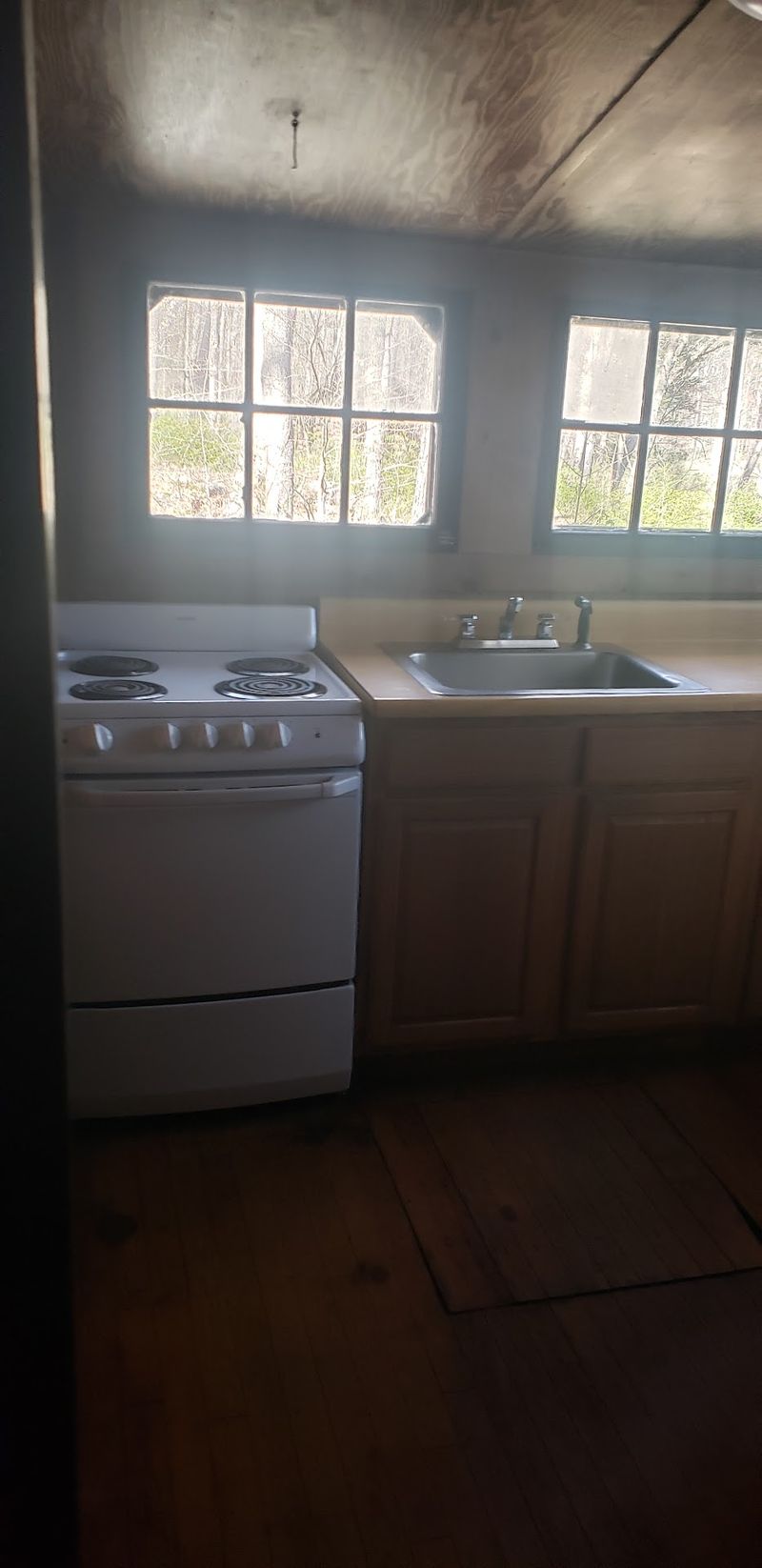
Hot water in a cabin built in 1934? Yes, and that’s only one of the pleasant surprises waiting in the kitchen.
Each cabin comes with a small kitchen that includes a fridge with a freezer and a stove with an oven. The kitchen sink has hot water, which makes dishes far less of a chore.
That setup opens up real cooking. You can bake, simmer, chill leftovers, and keep breakfast supplies cold without juggling coolers and melting ice all weekend.
A table with benches gives everyone a spot to eat. Add a few chairs, and the main room easily doubles as dining area, game zone, and planning headquarters for tomorrow’s hike.
The cabins are described as having almost everything needed for an extended stay. Still, it’s wise to pack your own basics, since the exact contents of each kitchen aren’t listed.
I’d bring a favorite pan, a good knife, and something worth cooking slowly. A pot of chili on the stove while snow falls outside sounds hard to beat.
Rustic cabin, sure. But nobody said rustic meant eating cold sandwiches for three days.
Bunk Beds, Twin Beds, and Honest Expectations
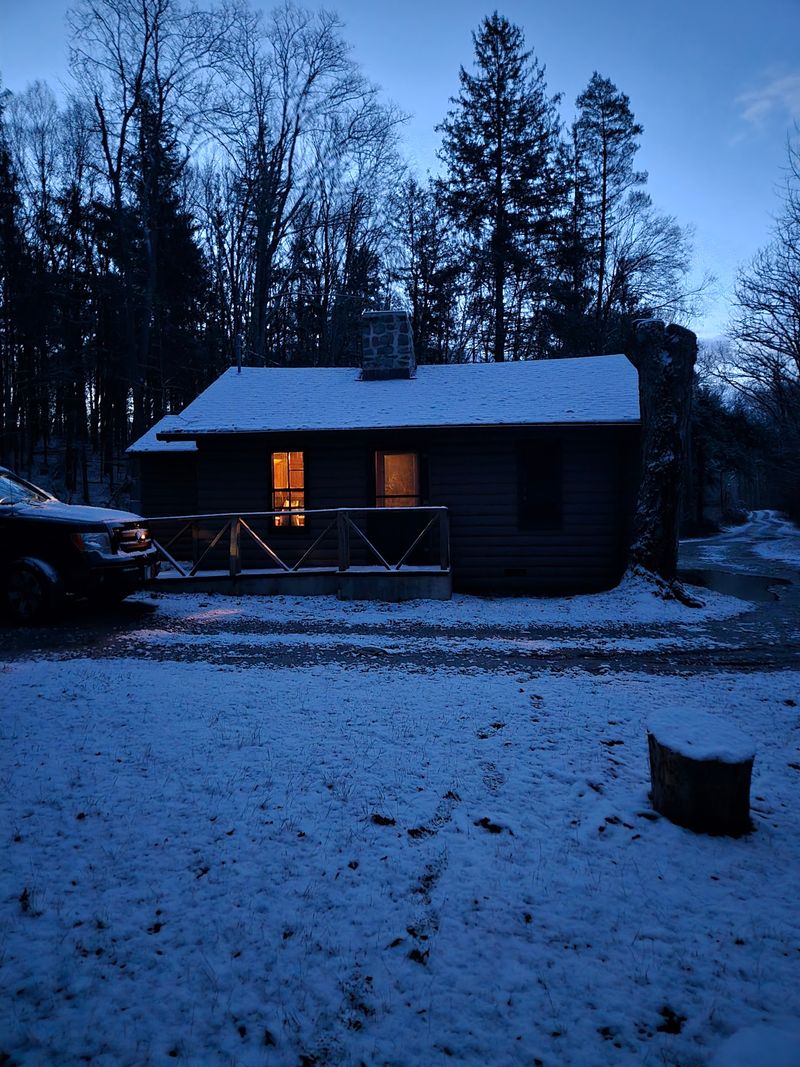
Kids tend to race for the top bunk the second the door opens. Here, that race is very much on.
The sleeping setup includes bunk beds along with two twin beds. One cabin, number 2, has four single beds, with two of them stacked as a bunk.
That arrangement works well for small groups. Families, a few friends, or a scout-style crew can all fit without anyone claiming the floor.
Now for some honesty. The beds aren’t described as super comfortable, so this is a cabin experience, not a plush hotel mattress situation.
A little preparation goes a long way. Many campers bring their own sleeping bags, extra pillows, or a foam topper, and that kind of packing makes sense here.
Remember that the stove handles the heat. On a cold night, a warm sleeping bag paired with a well-fed fire should keep everyone snug until morning.
And let’s be real, part of the charm is the slightly creaky bunk and the whispered jokes after lights out. Some of the best cabin memories happen precisely because nothing is too fancy.
Picnic Table, Grill, and a Fire Pit Right Out Front
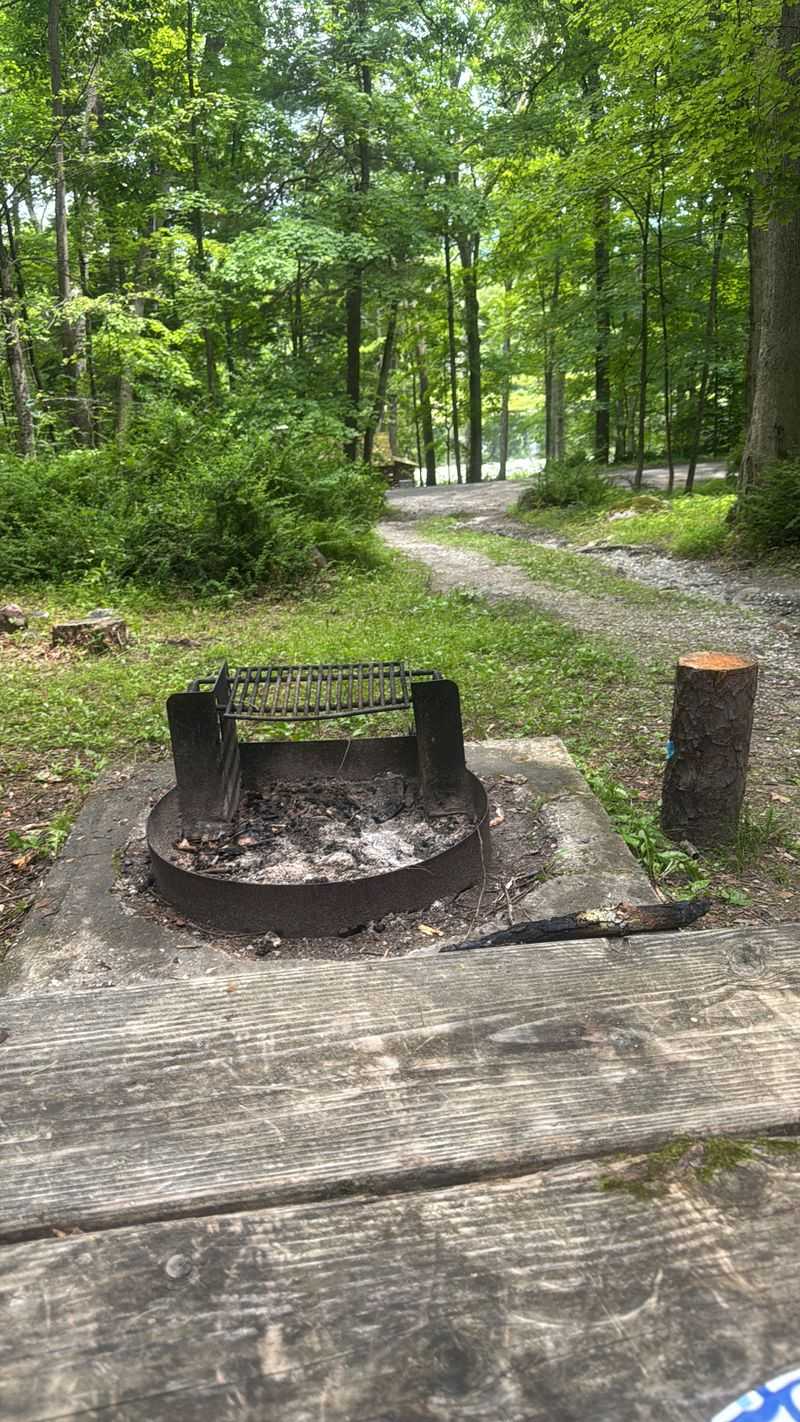
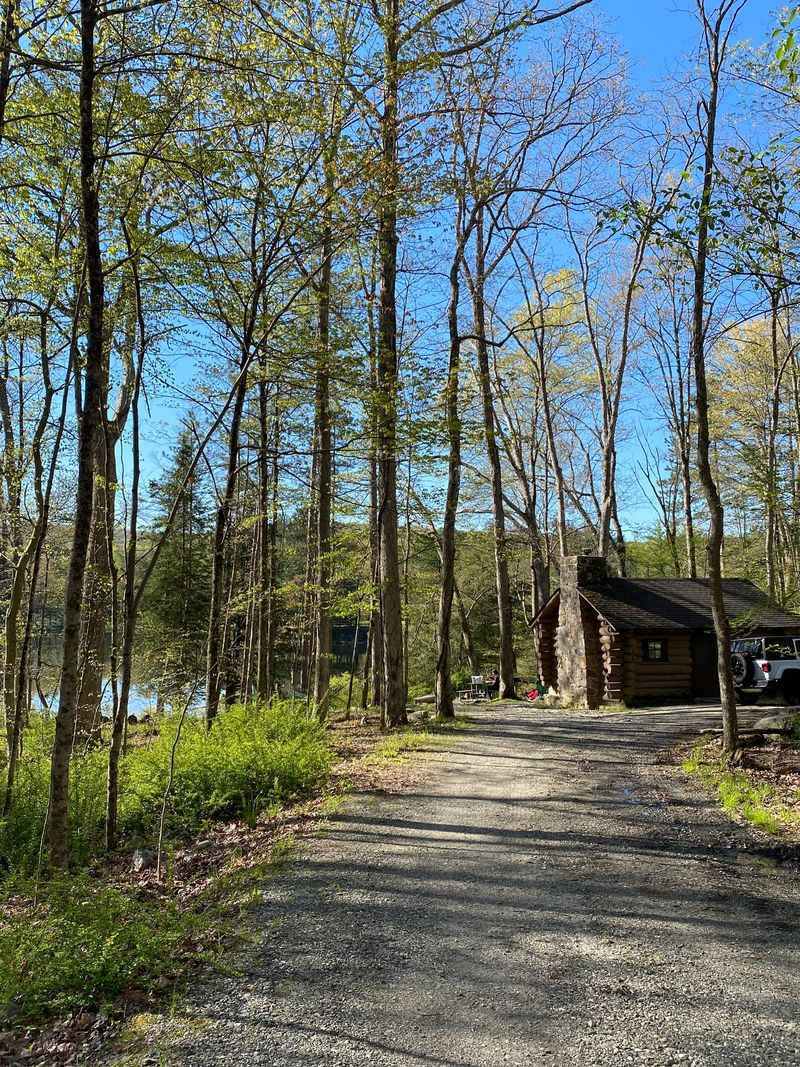
Step outside and dinner plans write themselves. Each cabin has a picnic table, a grill, and a fire pit right outside.
That trio covers almost every outdoor craving. Burgers at the grill, lunch at the table, and marshmallows over the fire pit once the sun drops behind the trees.
It also means the cabin doesn’t have to hold everyone all day. On nice afternoons, the whole crew can spread out under the trees with card games, books, or snacks.
The cabins also have two entrances. It’s a small feature, but it makes moving between the kitchen and the grill a little easier during a busy cookout.
Bring your own grilling tools and fire-starting supplies. And remember that dry firewood from the office will serve the fire pit just as well as the wood stove.
Evenings out here feel wonderfully old-fashioned. No screens required, just a ring of chairs, a crackling fire, and stories that get a little taller as the night goes on.
Honestly, the outdoor setup might compete with the cabin itself for favorite spot of the weekend.
A Pond Does All the Decorating
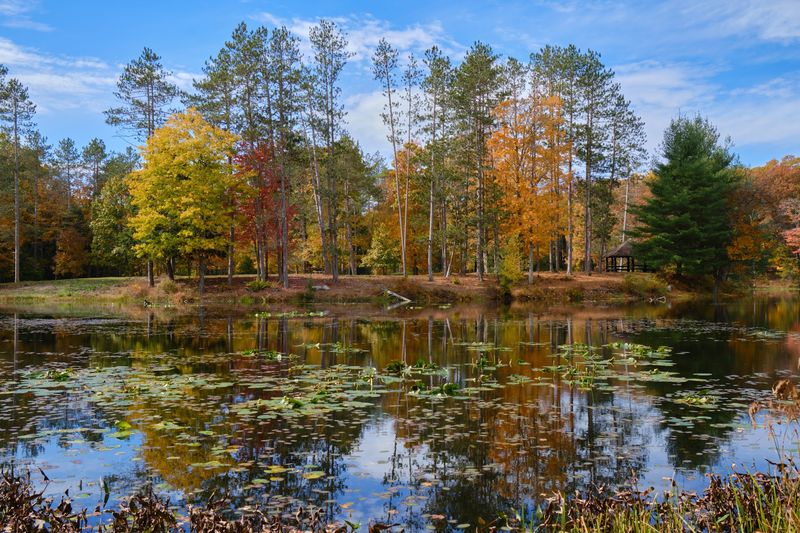
Interior designers would charge a fortune for this view. At the cabins, the scenery handles itself.
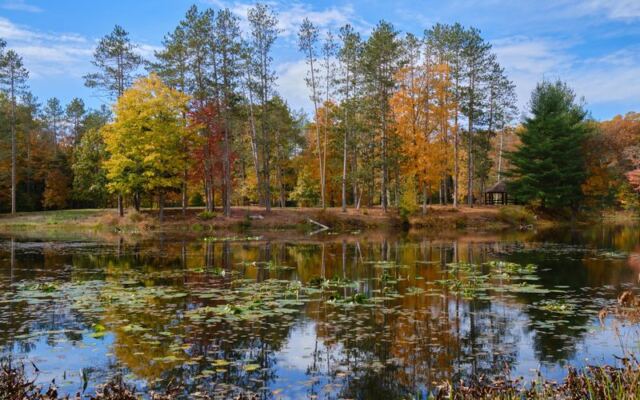
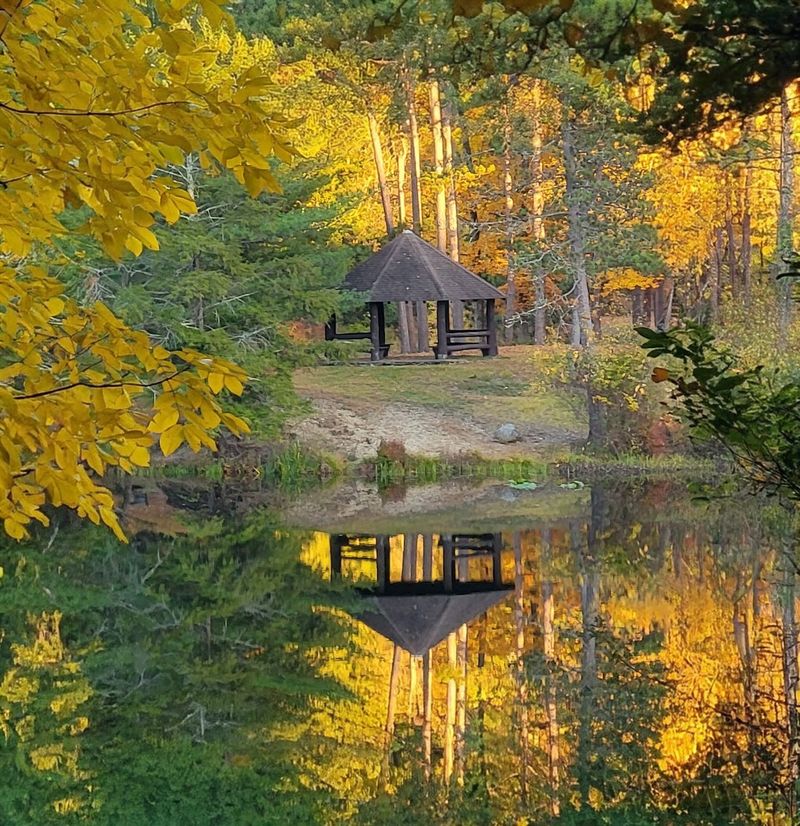
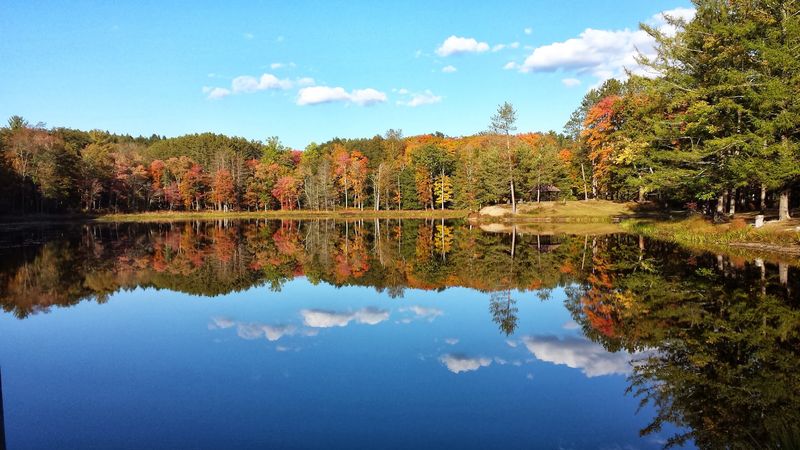
The cabins sit in a beautiful location on a pond. Calm water, tall trees, and a quiet forest make the setting a big part of the experience.
Words like magical and beautiful come up again and again when people describe this spot. For a basic state forest cabin, that’s quite a reputation.
Mornings feel like the right time to soak it in. A warm mug, a seat at the picnic table, and the pond slowly waking up seems like an ideal start to any day.
The scenery also gives each season its own personality. Bright summer greens, fall color, and bare winter branches all change the mood around the same little cabin.
Photographers will want extra memory space on their phones. Then again, it might be nicer to put the phone down for a while.
Plenty of New Jersey trips are about getting somewhere. This one is mostly about staying put, watching the water, and letting the forest set the pace for once.
Trails Practically Start at the Cabin Door
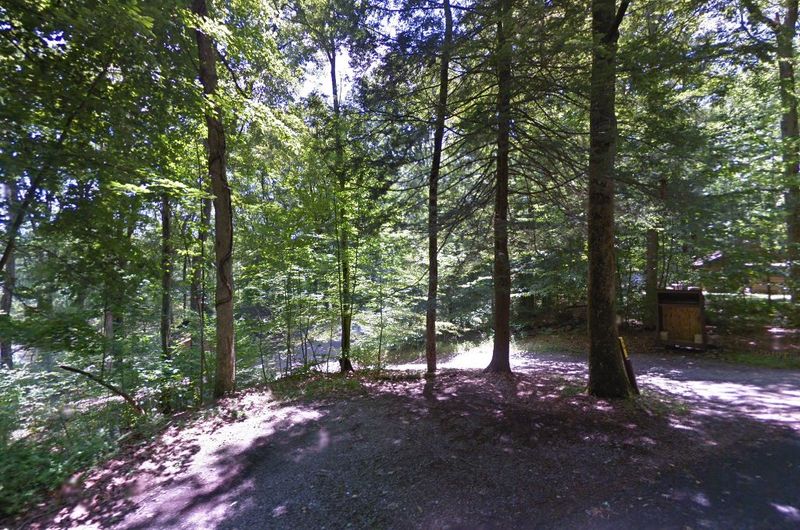
Lace up early. The cabins occupy a beautiful spot in the park with access to lots of trails, which makes hiking an easy add-on to any stay.
Stokes State Forest covers a large stretch of wooded land in Sussex County. That gives hikers plenty of room to explore without ever getting back in the car.
Having trails nearby changes the weekend math. You can take a short walk before breakfast, a longer hike after lunch, and still be back in time to light the stove.
It’s also a great setup for mixed groups. Energetic hikers can head out for hours while others stay behind with a book on the cabin bench.
Pack sturdy shoes and layers, since forest weather can shift during the day. A trail map from the park is smart to have before you head out.
Kids especially tend to love this part. Rocks to climb, sticks to collect, and a pond to circle make for an adventure that doesn’t need a ticket booth.
After a full day on foot, that wood stove will feel like the best reward in the state.
Two-Week Stays and a Laptop in the Woods
Two whole weeks in a log cabin? Some guests have done exactly that and called it one of their best stays.
The cabins are stocked with almost everything needed for a longer visit. With a fridge, freezer, oven, and hot water, settling in for more than a weekend feels realistic.
Remote workers, take note. A fair internet connection has been reported at the cabins, which could make a working trip possible for some people.
Keep expectations sensible, though. Fair isn’t the same as blazing fast, so heavy video calls or huge uploads might be a stretch.
The appeal of working here is pretty obvious. Answer emails in the morning, hike in the afternoon, and finish the day by the fire instead of a commute.
Longer stays also give the place time to work its slow magic. Day three feels different from day one once the routine of firewood, cooking, and walking takes over.
If your schedule allows it, this could be the rare New Jersey trip where the problem isn’t finding things to do. It’s deciding when to go home.
Warm-Weather Smarts and a Can of Bug Spray
Summer in the forest means company, and not all of it is welcome. In warmer months, ticks can be a nuisance around the cabins.
The American dog tick has been one bothersome visitor here. Packing bug spray before the trip is a simple and smart move.
A little routine helps a lot. Long pants on the trails, a quick tick check after hikes, and repellent before heading out should all become part of the daily rhythm.
Don’t let that scare anyone off. It’s just the reality of spending time in a lush New Jersey forest during the green season.
Warm months bring their own rewards, of course. Long evenings at the picnic table, grill nights, and pond views in full leaf are hard to resist.
Cooler months flip the script nicely. The bugs fade, the wood stove takes center stage, and the whole cabin experience gets a little cozier.
Either way, packing for the season makes a real difference. Bring repellent in summer, extra layers in winter, and a good attitude all year round.
Booking, Keys, and Where to Point Your GPS
Good news for planners. Stokes State Forest cabins can be reserved online through the State of New Jersey’s reservation system.
Pricing is known for being very reasonable, and the stay is often described as an excellent value. Rates can change, so check the state system for current costs and availability.
Once you arrive, your first stop is the park office. That’s where you pick up keys, and it’s also the place to buy that all-important dry firewood.
The office is a short drive from the cabins themselves. Plan for that quick hop before unloading the car.
For navigation, the listed address is 5 Skellenger Rd, Sandyston, NJ 07826. Sandyston sits in rural Sussex County, so expect winding, wooded roads near the end of the drive.
Cell service and timing can vary in the woods. Arriving with some daylight left makes finding the office, the cabin, and the light switches much easier.
Cabins are numbered, and several, including 2, 5, 8, and 9, have hosted happy guests. Once you find a favorite, you might just request it every time.
Share this story