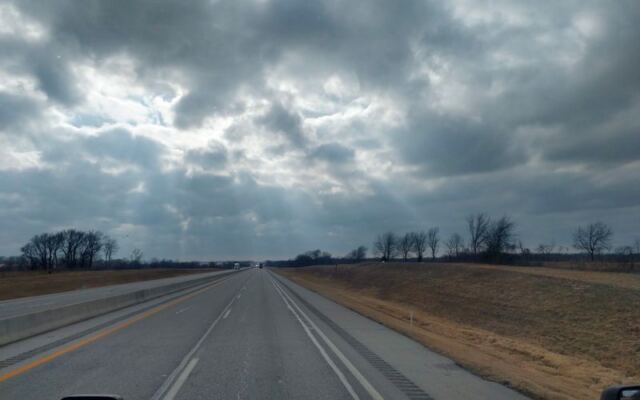
Somewhere in the dark hills of northeastern Oklahoma, a glowing ball of light has been making people argue for generations. Locals call it the Spook Light, and drivers who spot it along a rural stretch of road near Quapaw often come away convinced they saw something they cannot explain.
Researchers have run experiments, newspapers have printed competing theories, and the debate rolls on. The honest answer is more interesting than a simple ghost story.
A glow with several names
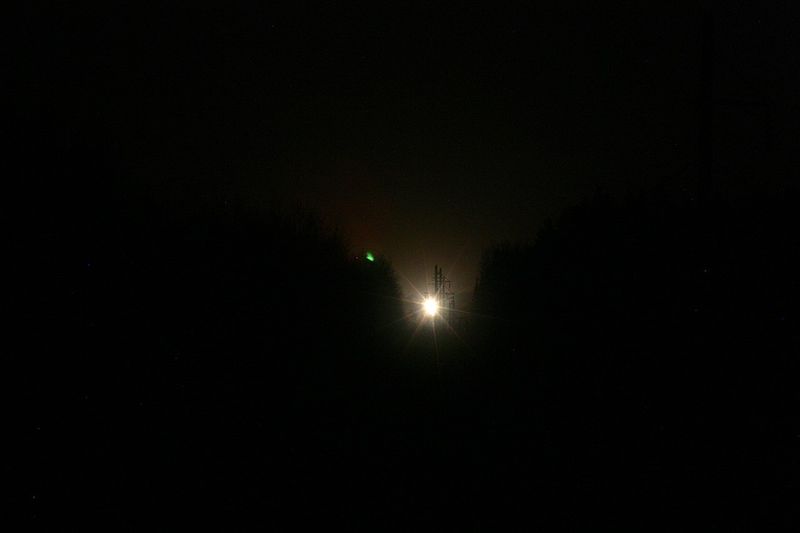
Out in the corner where Oklahoma, Missouri, and Kansas nearly touch, there is a stretch of rural road that has earned more nicknames than most towns in the region. Depending on who is telling the story, the floating light you might see there is called the Hornet Spook Light, the Joplin Spook Light, the Tri-State Spook Light, or simply the Spook Light.
Joplin’s official city page places the phenomenon near Quapaw, Oklahoma, and the city’s association with it reflects just how far the light’s reputation has spread across state lines.
The multiple names come from the geography. The area sits at a crossroads of three states, and communities on all sides have claimed some connection to the mystery over the years.
Missouri travelers heading west from Joplin have spotted it. Kansas residents have passed the story along.
But the road most associated with sightings runs through Ottawa County in northeastern Oklahoma, and Quapaw is the town most often named as the nearest landmark.
Visitors who make the trip are looking for a bobbing, glowing ball that reportedly appears above or along the road at night, shifting in brightness and sometimes changing color. No confirmed public viewing facility or designated parking area could be verified from the sources reviewed for this article, so anyone planning a visit should be prepared for a rural, unscripted experience.
What draws people out there is the same thing it has always been: a light that looks like it should not be there, and the nagging question of what is actually causing it.
The origin story shifts across accounts
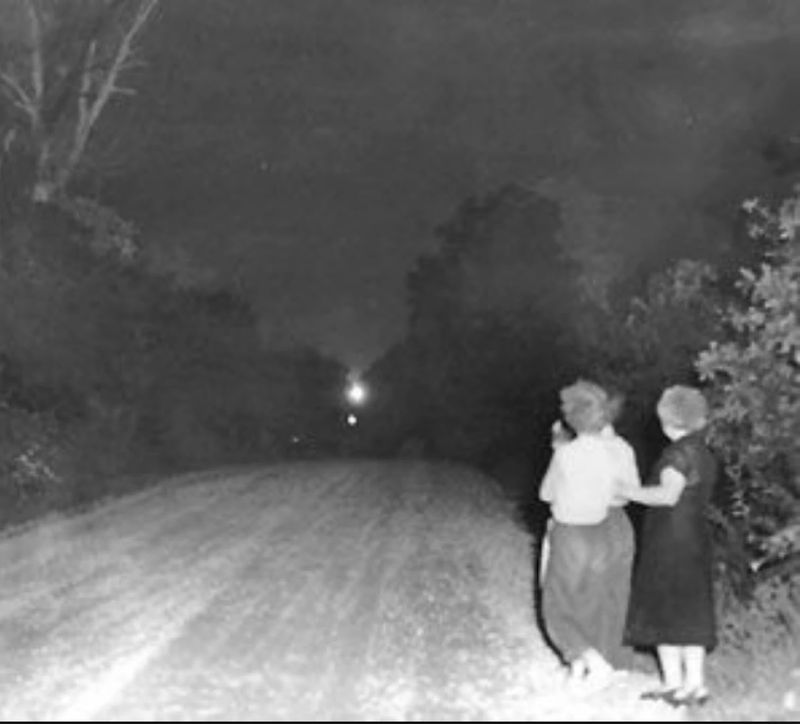
Pinning down when people first noticed the Spook Light turns out to be harder than it sounds. Joplin’s city page repeats a date of 1881 and names a publication as the source of the first official report, while a 1965 Oklahoma newspaper account preserved by the Oklahoma Historical Society suggests public attention really picked up around 1886.
The Oklahoma Humanities review of the phenomenon points to 1936 as an early documented account in its own historical survey. Those three dates do not line up, and the alleged 1881 publication was not independently verified in the archival material reviewed here, so the safest reading is that accounts give conflicting dates and no single first sighting can be confirmed.
Folklore has filled in the gaps that history left open. The 1965 Miami News-Record article documents several local legends already circulating at that time, including stories connecting the light to tragic events and to Indigenous people in the region.
The Oklahoma Historical Society’s entry on the nearby community of Peoria records competing versions of these legends as well. None of them are presented as verified history, and attributing any particular story to the Quapaw Nation without a reliable tribal source would go further than the evidence allows.
They are local folklore, passed along because they feel right for a mysterious light in a dark landscape.
What the historical record does show clearly is that by the mid-20th century, the Spook Light had already attracted serious attention, drawn curious visitors, and generated arguments about its cause. The Oklahoma Humanities account notes that the headlight explanation was already circulating alongside the ghost stories well before modern investigators took a closer look.
The mystery’s staying power has less to do with a shortage of explanations and more to do with the fact that none of them have fully satisfied everyone who has seen the light up close.
Headlights have passed repeated tests
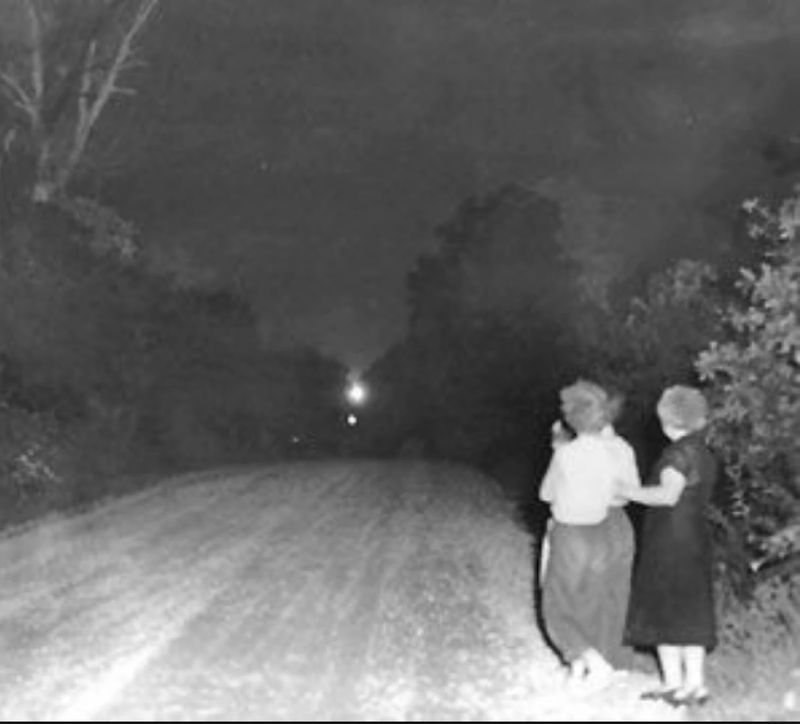
The most durable explanation for the Spook Light is not a ghost, a gas pocket, or an underground current. Oklahoma Humanities documents experiments conducted in 1946, 1955, 1965, and 2014 in which investigators found that headlights on nearby roads were visible from Spook Light Road under the right conditions.
Each of those tests added weight to the same basic idea: that what people see is real light, just not a mysterious one, but rather ordinary vehicle headlights traveling distant roads and reaching observers across the area’s particular landscape.
The 2014 experiment went a step further. Researchers reproduced the apparent changes in brightness and color that witnesses often describe, doing so by flashing and filtering headlights while observers watched from the road.
That result matters because color shifts and intensity changes are frequently cited as evidence that the light behaves in ways headlights cannot explain. The 2014 test showed those changes can in fact be reproduced with standard headlights under the right viewing conditions.
None of this settles every question. The experiments support headlights as a plausible source for at least some sightings, and the repeated nature of those tests across several decades gives the explanation real credibility.
What the tests did not do is account for every individual report ever made, including accounts from people who were standing in spots where the sightline to distant roads would have been blocked. The 1965 newspaper coverage noted that some longtime residents rejected the headlight theory even then, claiming the light predated automobiles entirely.
That claim was not verified, but it illustrates why the debate has lasted as long as it has: the headlight explanation is well-supported, and it still has not convinced everyone.
Hills and trees can hide the source
Geography is the key to understanding why the headlight explanation works in some spots and feels unconvincing in others. The Oklahoma Humanities investigation describes a specific sightline: from certain elevated points along Spook Light Road, headlights traveling on E-50 West are visible.
Move to a different spot where a hill or a stand of trees breaks the line of sight, and those same headlights disappear completely. That inconsistency is exactly what makes the light feel so strange to people who are watching from the wrong vantage point.
Standing on the road without knowing where the source is, a viewer might see a light appear, brighten, shift color, and then vanish, with no obvious connection to any passing car. The terrain is doing the work.
Hills rise and fall, tree lines open and close, and a driver on a distant road can send light across several miles of landscape in ways that look nothing like a car’s headlights by the time they arrive at the observer’s eyes.
What the experiment’s direct observations established is narrower than it might first appear. Researchers confirmed that headlights on E-50 West could be seen from select elevated positions on Spook Light Road and that the apparent brightness and color could be made to change by manipulating those headlights.
That is a concrete, repeatable finding. What it does not do is explain every claim that the light appears to hover, bob, or move in ways that seem purposeful.
Those behaviors are worth noting, but they are harder to test, and the Oklahoma Humanities authors acknowledged their conclusion as a partial solution rather than a complete one. The landscape hides the source well enough that the experience of watching the light can feel genuinely mysterious even when the cause is something straightforward.
A sighting is not on a schedule
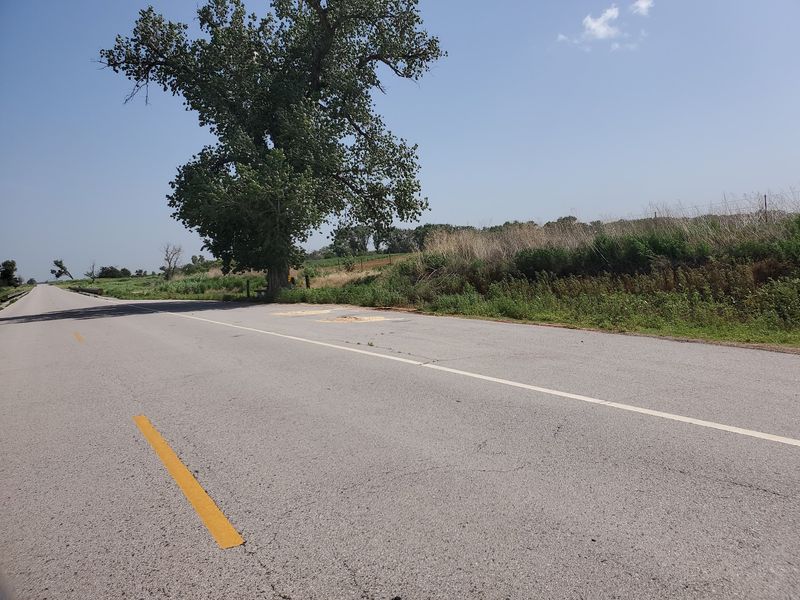
Anyone driving out to Spook Light Road hoping for a guaranteed show should recalibrate their expectations before leaving town. Joplin’s city page repeats a local recommendation that the best time to look is between 10 p.m. and midnight, and that window has been passed around for years as informal advice.
Neither that page nor the investigations reviewed for this article establish that the light appears on a predictable schedule or that a sighting is in any way guaranteed.
The practical side of a visit matters as much as the timing. No confirmed public viewing facility or designated stopping area was found in the sources reviewed here, which means visitors are navigating a rural road without the kind of setup you might find at a state park or a managed attraction.
Quapaw’s municipal code prohibits trespassing on private property, and the land along rural roads in the area is privately held. Following posted signs and staying on the public roadway is the right approach.
Stopping safely is its own consideration. Oklahoma Department of Public Safety guidance advises pulling off the road as soon and as safely as possible, which applies here as much as anywhere.
Parking in a travel lane, standing on the roadway at night, or chasing the light by accelerating down a dark rural road are all genuinely hazardous choices. If the light appears, the best view is from a lawful stopping place where you are not in the path of other drivers.
The experience is meant to be eerie, not dangerous, and the road does not get less dark just because something interesting showed up on the horizon.
A strong explanation, with limits
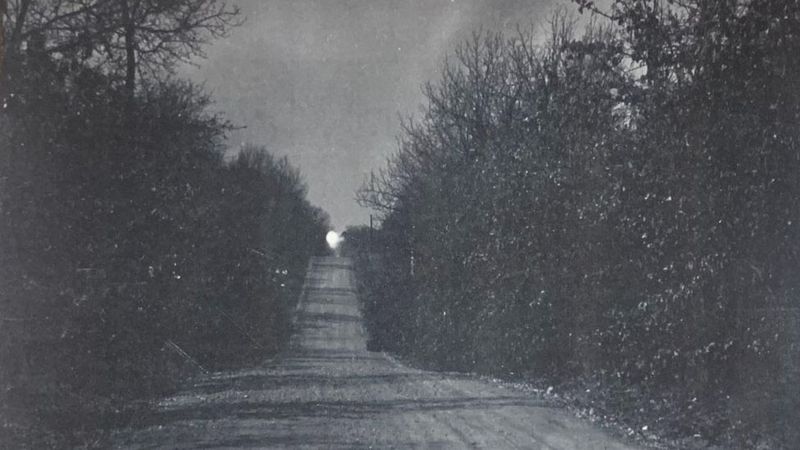
After decades of arguments and at least four rounds of field experiments, the clearest thing that can be said about the Spook Light is this: headlights on distant roads provide a well-supported explanation for at least some of what people have seen along Spook Light Road near Quapaw. The Oklahoma Humanities investigators characterized their own findings as a partial solution, not a complete one, and that honest qualification is worth keeping.
The historical record is murky enough, and the individual accounts varied enough, that the source of every reported appearance has not been verified. Competing explanations were already circulating by 1965, and they have not stopped circulating since.
That ongoing disagreement does not point toward an extraordinary cause. It mostly reflects the difficulty of testing a phenomenon that appears unpredictably, in the dark, on a rural road where the landscape itself is doing the work of concealment.
The Spook Light endures not because nobody has a reasonable answer, but because a reasonable answer and a memorable experience can exist at the same time. Knowing that distant headlights probably explain some of what you see does not make the light any less striking when it floats up out of the dark Oklahoma hills.
Share this story