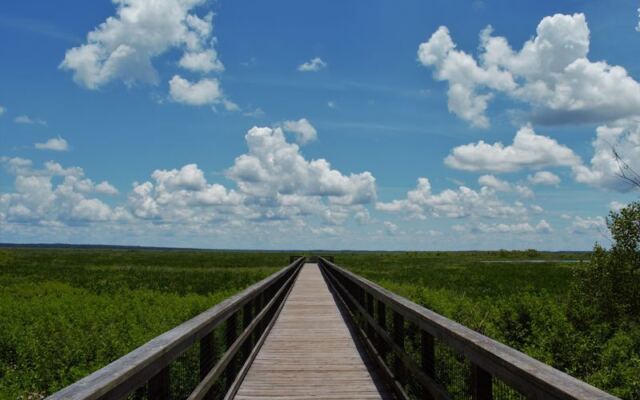
A herd of bison roams free on a Florida prairie. Wild Spanish horses graze nearby, and alligators sun themselves just off an elevated boardwalk.
I had to read that twice. This is the same state known for beaches and theme parks, yet here is a sweeping grassland that looks borrowed from the Great Plains.
The place is also a national landmark. It has observation towers, quiet trails, eagles overhead, and armadillos rustling around after dark.
I like how it feels wild without asking you to fly anywhere or book a guided tour.
The best part is how ordinary the approach seems. You pull off a familiar road, pay a small fee, and suddenly you’re scanning the horizon like a safari guide.
So which animal will show up first for you?
A Prairie Safari Sitting Quietly in North Central Florida
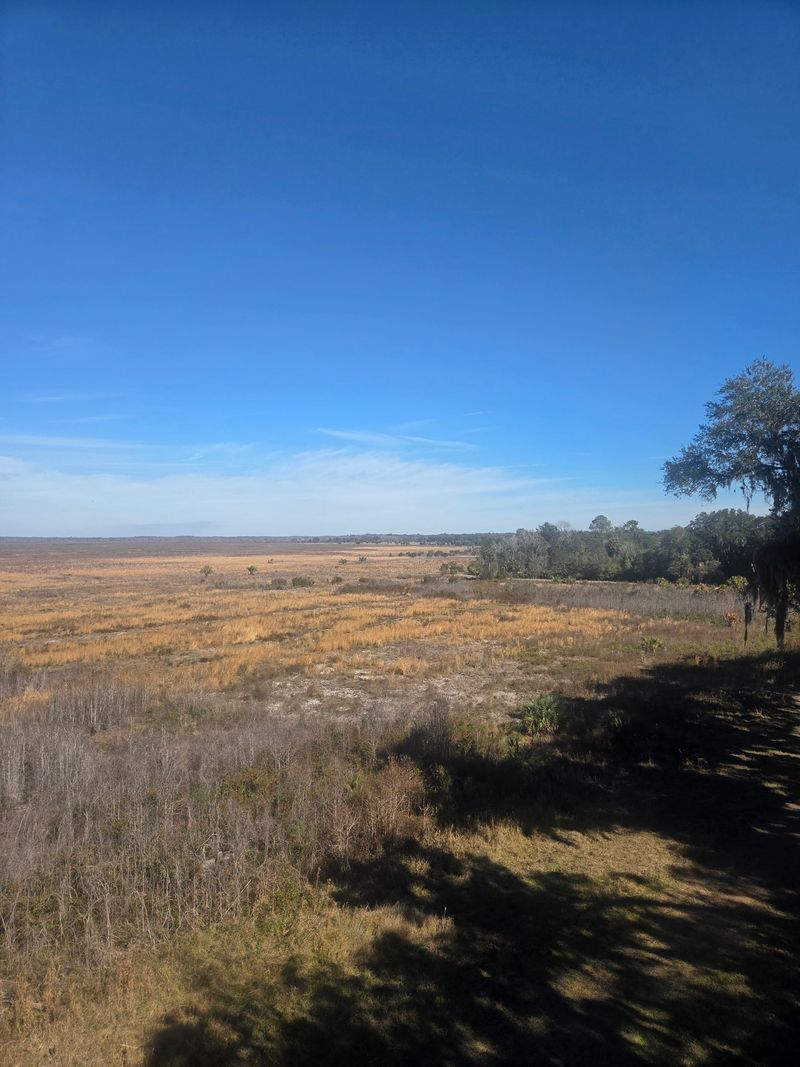
Bison, horses, and gators all share one Florida address, and that still sounds like a riddle. The answer is Paynes Prairie Preserve State Park, a sprawling nature preserve near the small town of Micanopy.
It sits in North Central Florida, not far from Gainesville and close to I-75. That makes it an easy detour for road trippers heading north toward Georgia or south toward home.
The park protects a huge open prairie, which is rare for this part of the country. It also carries national landmark status, so this is far more than a roadside picnic stop.
Inside, you’ll find a mix of wildlife habitats stitched together by trails. Hikers, cyclists, and horseback riders all get room to roam here.
The landscape feels remote and wide open, yet town is never very far away. That combination is part of the charm, since you get real wilderness without a long expedition.
Think of it as a safari that doesn’t require a passport, a jeep, or a pricey guide. You just need curiosity, good shoes, and some patience.
The animals keep their own schedule, after all, and the prairie rewards anyone willing to wait.
Grassland Scenery That Feels Borrowed From Another Era
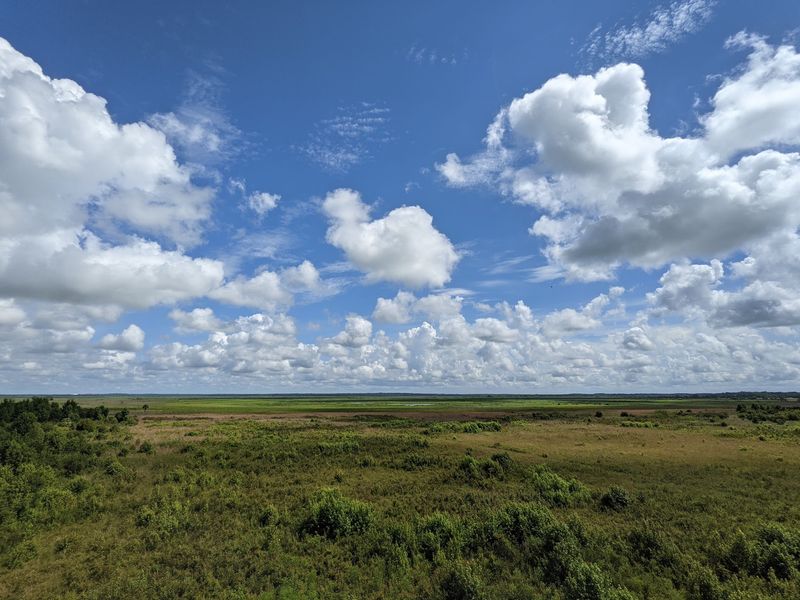
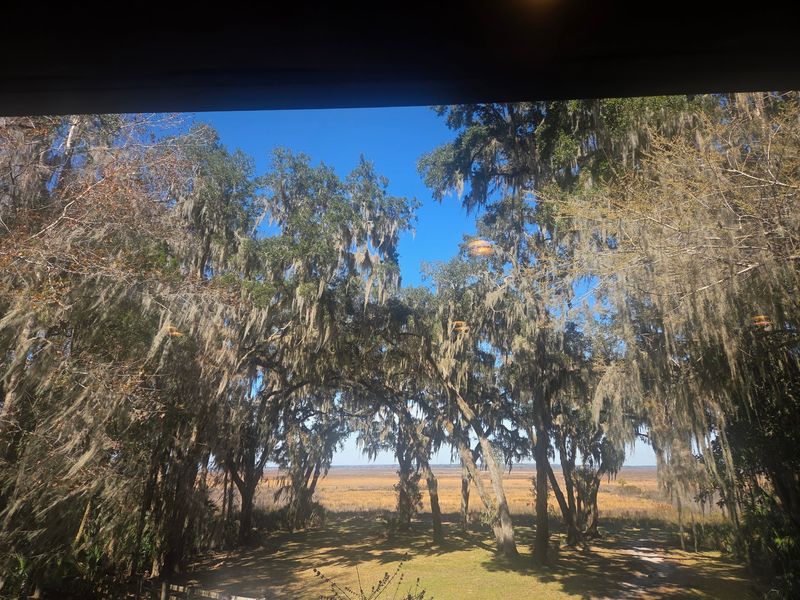
Few Florida views make you forget where you are. The prairie here does exactly that, stretching out in a broad basin of grasses and shallow water.
It feels like stepping back in time in the heart of the state. Wide horizons replace the usual wall of palms and pines.
Seasons reshape everything. During the drier winter months, the land opens up and both people and animals can reach more areas.
Rainy months bring water back across the basin. That’s when the prairie seems to wake up, and wildlife activity often picks up with it.
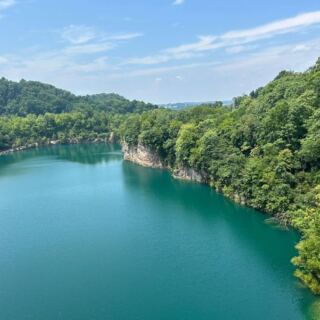
Even the lake inside the park earns attention for its beauty. Add in some striking old trees near the boardwalk, and you have scenery worth slowing down for.
One honest note helps set expectations. From certain far platforms, you may spot the interstate and a few buildings on the distant horizon.
That small reminder of modern life hardly spoils the view. If anything, it makes the scale of this protected space more impressive.
Plenty of open ground remains for the animals, and plenty of sky remains for you.
The Bison Herd Everyone Hopes to Spot
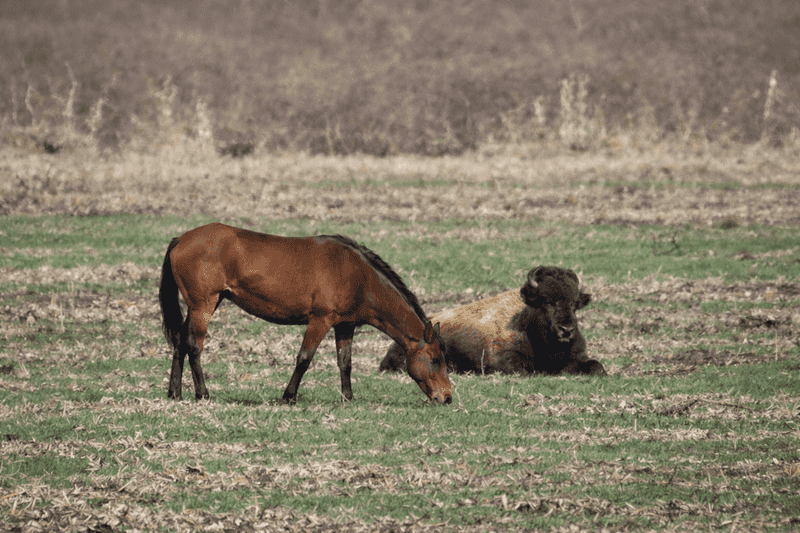
Yes, actual bison. A free-roaming herd lives on the prairie, and it is easily the most talked-about resident in the park.
Seeing these shaggy giants in Florida feels wonderfully out of place. They look like they wandered off a Western film set and decided to stay for the warm winters.
Spotting them takes a little luck, though. The prairie is large, and the herd moves wherever the grazing suits them that day.
Some trips deliver bison right away. Other days they stay far out, appearing only as dark shapes on the horizon.
That’s why binoculars are such a smart packing choice. A decent pair turns distant specks into clear, memorable sightings.
Your phone camera can help in a pinch, especially with zoom. Still, nothing beats steady glass when the herd is grazing a long way off.
Patience matters too. Scanning the grassland slowly from a tower or platform tends to work better than rushing between trails.
Don’t treat a no-show as a failure. It simply gives you a solid excuse to return.
Few Florida errands come with a better reason for a second trip.
Wild Spanish Horses Roaming Free
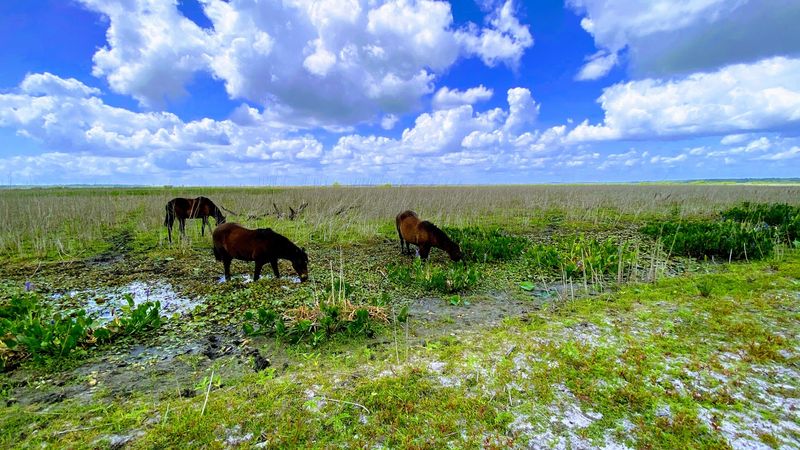
Horses grazing free in a Florida grassland might be the prettiest surprise in the whole park. These wild Spanish horses roam the prairie in herds, sometimes with young colts trailing along.
They draw just as much excitement as the bison. Watching them move across open land feels calm and almost cinematic.
The Bolen Bluff Trail is one of the best-known places to look for them. Herds have been seen spread across the prairie along that route.
Sometimes the horses even appear close to the observation tower. The roadside lookout area on US 441 can also offer a view when they’re grazing nearby.
Counting them becomes a fun game during longer stays. A dozen or so in one trip is not unheard of.
Give them plenty of space, of course. These are wild animals, not petting-zoo ponies, and the prairie is their home first.
Early mornings and late afternoons tend to bring softer light for photos. That timing also keeps you out of the harshest heat, which matters in Florida for most of the year.
Your camera and your comfort will both thank you.
Gator Gazing From the La Chua Trail Boardwalk
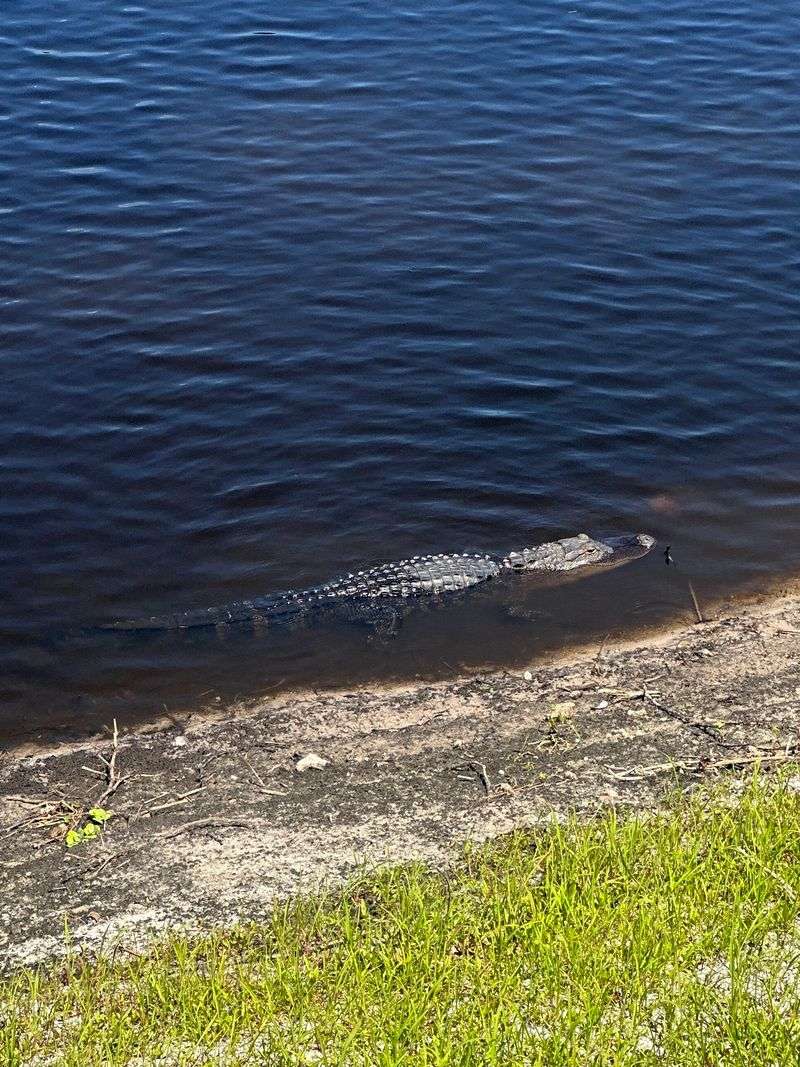
Fifty-plus alligators in a single outing? On the right day, that’s very possible along the La Chua Trail.
This route is famous for gator viewing, and the elevated boardwalk gives you a safe, clear look below. You get front-row seats without any awkward close encounters.
Water levels change the show. When the water runs low, the gators often crowd together near viewing areas, which makes spotting them remarkably easy.
You might even catch some dramatic behavior, like two gators squabbling over space. Nature doesn’t follow a script, and that’s half the fun.
It’s hard not to think of the University of Florida mascot here. With this many reptiles nearby, the Gators name suddenly makes a lot of sense.
Keep walking past the end of the boardwalk if you can. The short path beyond offers good chances for bird photos.
Some unusual old trees line the area too. They add a moody, prehistoric feel that matches the reptiles perfectly.
Stay on marked paths and keep a respectful distance. These animals look sleepy, but they’re wild through and through.
Admire them from above, where the view is best anyway.
Sweeping Views From the Observation Tower
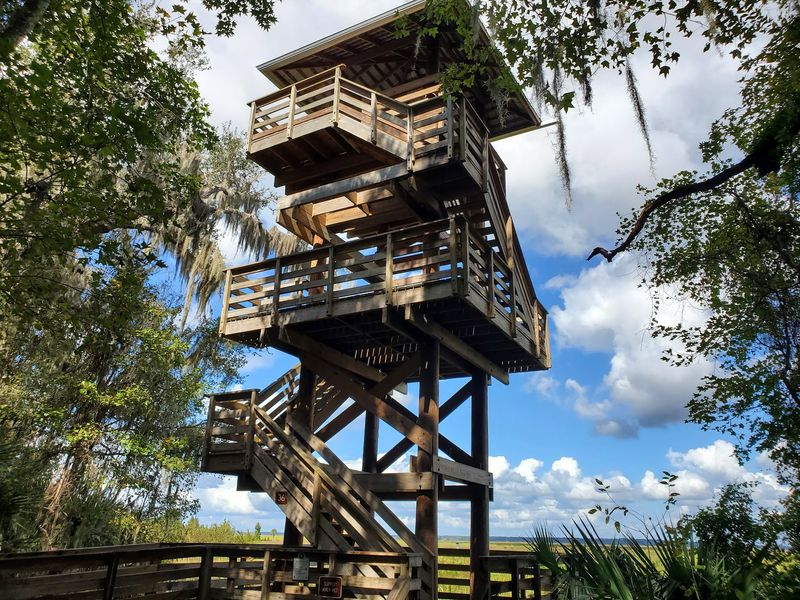
Height changes everything on a prairie. Climb the observation tower, and the flat grassland suddenly unfolds into a huge living map.
The tower ranks among the park’s most loved features. From the top, you can scan wide stretches of land for horses, bison, and birds.
It’s especially rewarding for photographers. Early morning and late afternoon light washes the prairie in warm color.
Sunrise and sunset get special praise here. The open sky makes both feel bigger and slower than usual.
Other towers and platforms are scattered around the park as well. Some sit at the end of longer walks, which adds a sense of reward when you arrive.
One far platform takes about forty minutes each way from its parking area. The path starts in shady woods, then opens into a clearing with the platform waiting ahead.
Watch your footing on that route. Tree roots and the occasional animal droppings keep things interesting.
Bring binoculars to every lookout. A tower gives you range, but good optics give you detail.
Together, they turn a pleasant view into a genuine wildlife hunt.
Birds, Armadillos and a Supporting Cast of Critters
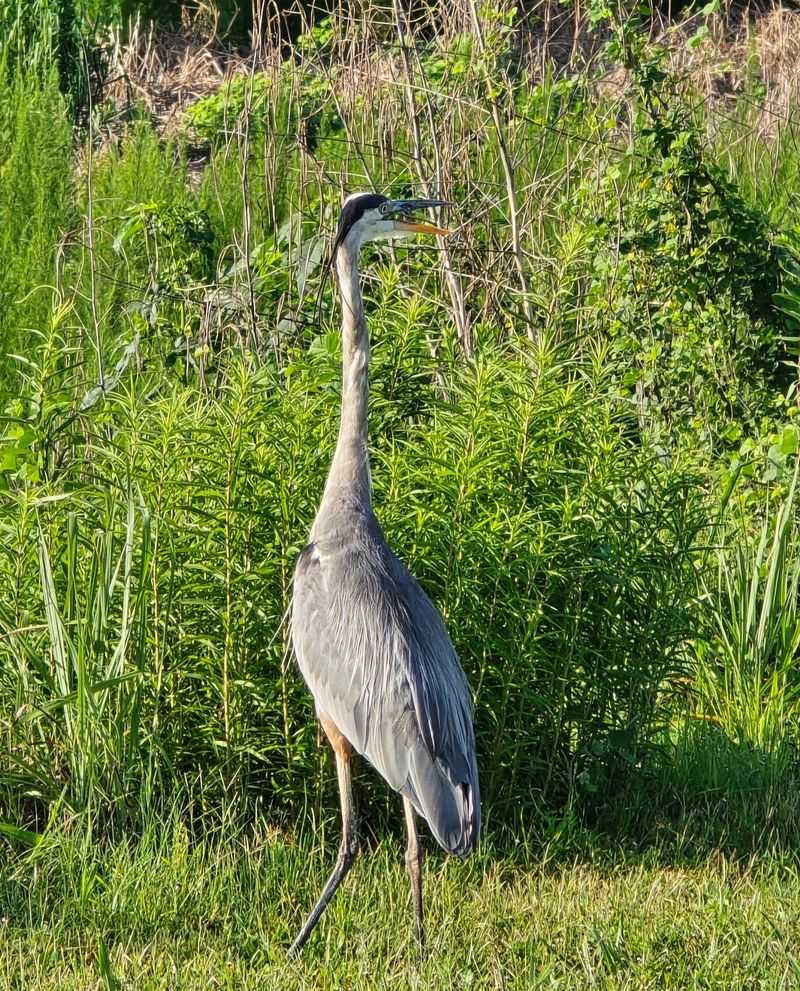
Headliners get the attention, but the supporting cast deserves applause. Paynes Prairie Preserve State Park is packed with smaller wildlife that keeps every walk lively.
Deer show up often, sometimes in numbers too large to count. Wild turkeys, snakes, and wild pigs round out the list.
Birders have plenty to celebrate. Sandhill cranes, bald eagles, and a wide variety of other species call this landscape home.
Look for a huge eagle’s nest on the drive toward the visitor center. It’s an easy bonus sighting that many people miss.
Armadillos steal the night shift. If you hear heavy rustling near camp after dark, one of these armored wanderers may be the culprit.
Not every animal brings good news, though. Wild hogs churn up ground along some paths, and the damage is a real concern for the prairie.
That reality makes the protected status even more meaningful. Managing a place like this takes ongoing care.
Each visit tends to deliver something new. One day might bring cranes, and the next might bring a turkey strutting across the trail.
Easygoing Trails for Hikers, Bikers and Riders
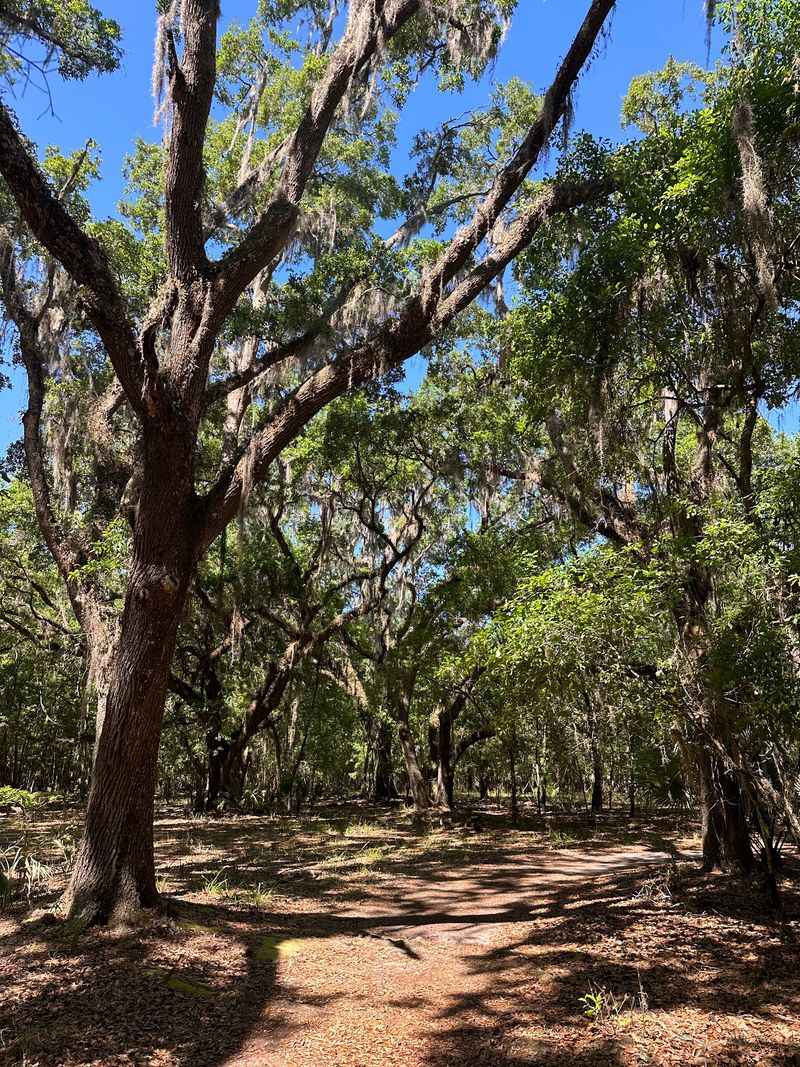
Good news for anyone who dreads steep climbs. The trails here are mostly flat, wide, and well kept.
That makes them ideal for long walks or relaxed bike rides. Every bend seems to offer another photo opportunity.
The park welcomes hiking, bicycling, and horseback riding. Multiple routes deliver different experiences, from shady woods to open prairie.
Nothing here counts as difficult. Casual walkers and steady cyclists can explore a lot of ground in one day.
The park is large, so treat it like several destinations in one. Grab the map from the main ranger station and plan which entry points to visit.
Different access spots show different views and different animals. Paying at the main entrance generally covers you as you move between areas that day.
Walking out onto the open prairie itself feels special. Strolling where horses grazed moments earlier is a thrill that’s hard to beat.
Pack water and dress for the season. Sunscreen and a hat matter in summer, and bug spray is wise year-round in Florida.
Comfortable shoes make the longer routes far more enjoyable.
Camping Under Prairie Skies
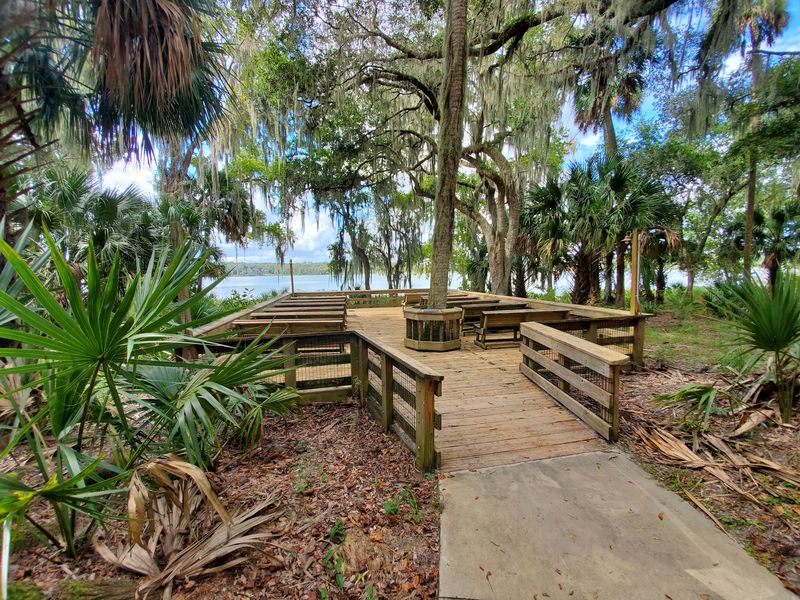
Overnight stays turn a day trip into a full wildlife weekend. The campground at Paynes Prairie Preserve State Park is quiet, clean, and well run.
Sites are roomy, mostly level, and covered in gravel. Many offer a decent amount of privacy from neighbors.
Individual sites come with electricity and water. Some other sites share water spouts and land while still feeling private.
Every site includes a fire ring with a grate. Firewood is sold near the ranger station, so you don’t have to haul your own.
A bathhouse offers hot showers and is kept clean daily. Hooks are plentiful, which campers always appreciate.
Dumpsters and a dump station are available for RV travelers. Paved roads run throughout the park, making bike rides between areas easy.
A few things are missing, so plan ahead. Ice isn’t sold on site, and there are no washers or dryers.
The campground is pet friendly too. Your dog can enjoy the trip, and you can step straight out to nearby trails.
Snagging a cancellation might be your best route to a spot.
Family Time at the Visitor Center and Picnic Spots
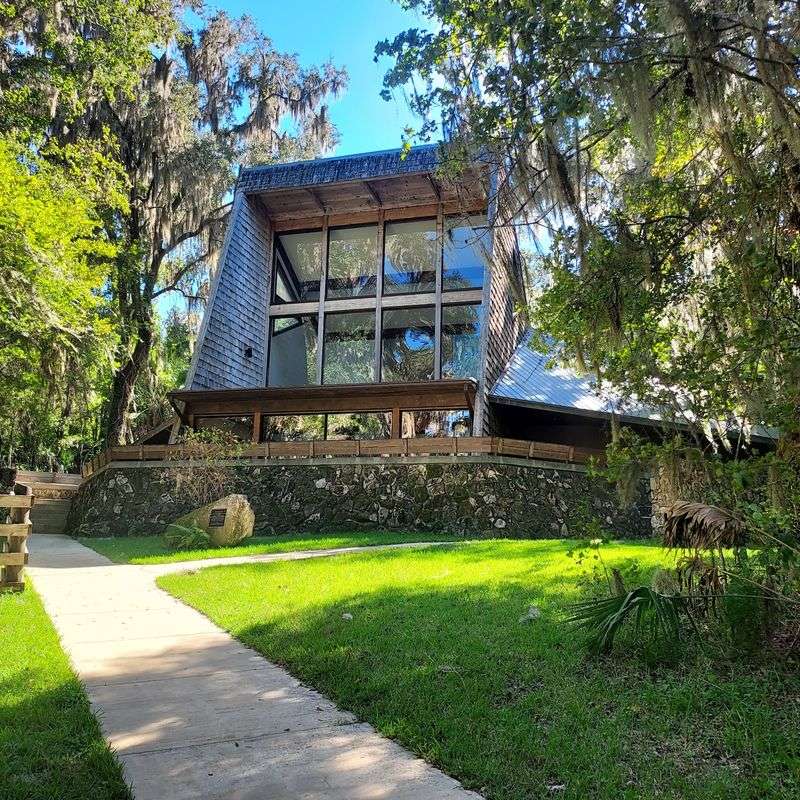
Kids who get restless on long hikes have options here. A playground and amphitheater give families easy breaks between wildlife searches.
The visitor center is clean and nicely done. It features an observation deck plus nature displays that explain the prairie’s story.
Staff earn steady praise for being friendly and knowledgeable. Asking a ranger where animals have been spotted recently is a smart move.
Restrooms are clean, and parking is ample. Those small comforts matter when you’re traveling with little ones.
Open green space makes group outings simple. Families and friends gather here for barbecues and relaxed afternoons outdoors.
It’s a peaceful setting with plenty of fresh air. Nobody needs a strict itinerary to enjoy the day.
Bring the binoculars for the kids too. Handing them their own pair makes spotting horses or cranes feel like a real mission.
A love of nature helps, though curiosity works just as well. Children often notice the armadillo or turtle that adults walk right past.
This park rewards sharp eyes at any age.
Hours, Fees and Finding Your Way In
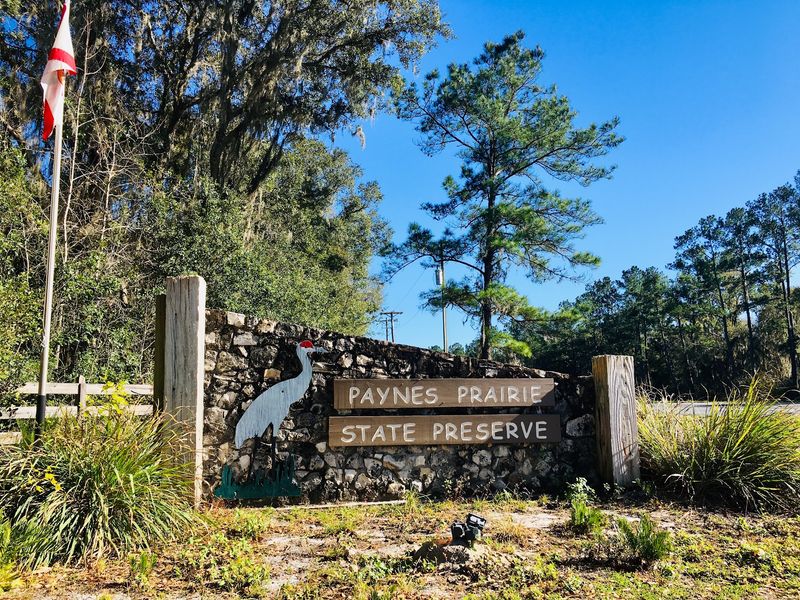
Planning is refreshingly simple. The park opens daily from 8 a.m. to 6 p.m., seven days a week.
The main entrance sits at 100 Savannah Blvd, Micanopy, FL 32667. Start at the ranger station there, pay the modest per-vehicle fee, and pick up a map.
Fees are charged per carload, which keeps costs friendly for families and groups. There’s no special Florida resident or senior discount, so plan on the standard rate.
Posted signs haven’t always matched the current fee. Checking ahead with the park keeps any surprises off the table.
Getting there is easy from I-75. That convenience makes the park a natural stop for travelers crossing the state.
Morning visits often reward you with more active wildlife. Cooler hours also make the longer walks more comfortable.
Bring water, sunscreen, bug spray, and a hat. Binoculars belong on the list too.
Remember that the park spreads across several access points. Budget extra time if you want to explore more than one, because each area offers its own view and its own residents.
Why This Prairie Deserves a Spot on Your Florida List
Some trips hand you exactly what you expected. This one hands you bison, wild horses, and gators, then dares you to explain it to friends back home.
That’s the magic of Paynes Prairie Preserve State Park. It packs a safari-style adventure into an easy day trip in North Central Florida.
Wildlife sightings are never guaranteed, and that’s honestly part of the appeal. Each visit feels a little different depending on the season and the water.
Dry months concentrate gators and open up the land. Wetter months bring the prairie back to vivid life.
Nearby Micanopy adds a charming bonus. The small, old town offers a museum and plenty of antique shops worth browsing.
Cyclists can even ride over from the campground. It makes a pleasant side trip after a morning on the trails.
For nature lovers, photographers, and families, this park checks a lot of boxes. It’s affordable, peaceful, and surprisingly wild.
Pack the binoculars and a little patience. The prairie has a habit of saving its best moments for anyone willing to linger.
Share this story