South America is one of those places that looks incredible in photos but can feel overwhelming to actually plan. The distances are massive, the landscapes change dramatically from one region to the next, and knowing where to start is half the challenge.
Small towns can be the perfect solution for first-time visitors, offering a slower pace, walkable streets, and a genuine sense of place without the chaos of a major city. The ten towns below cover everything from Inca ruins and coffee farms to desert stargazing and Patagonian hiking trails, giving any first trip real variety and depth.
Colonia del Sacramento, Uruguay
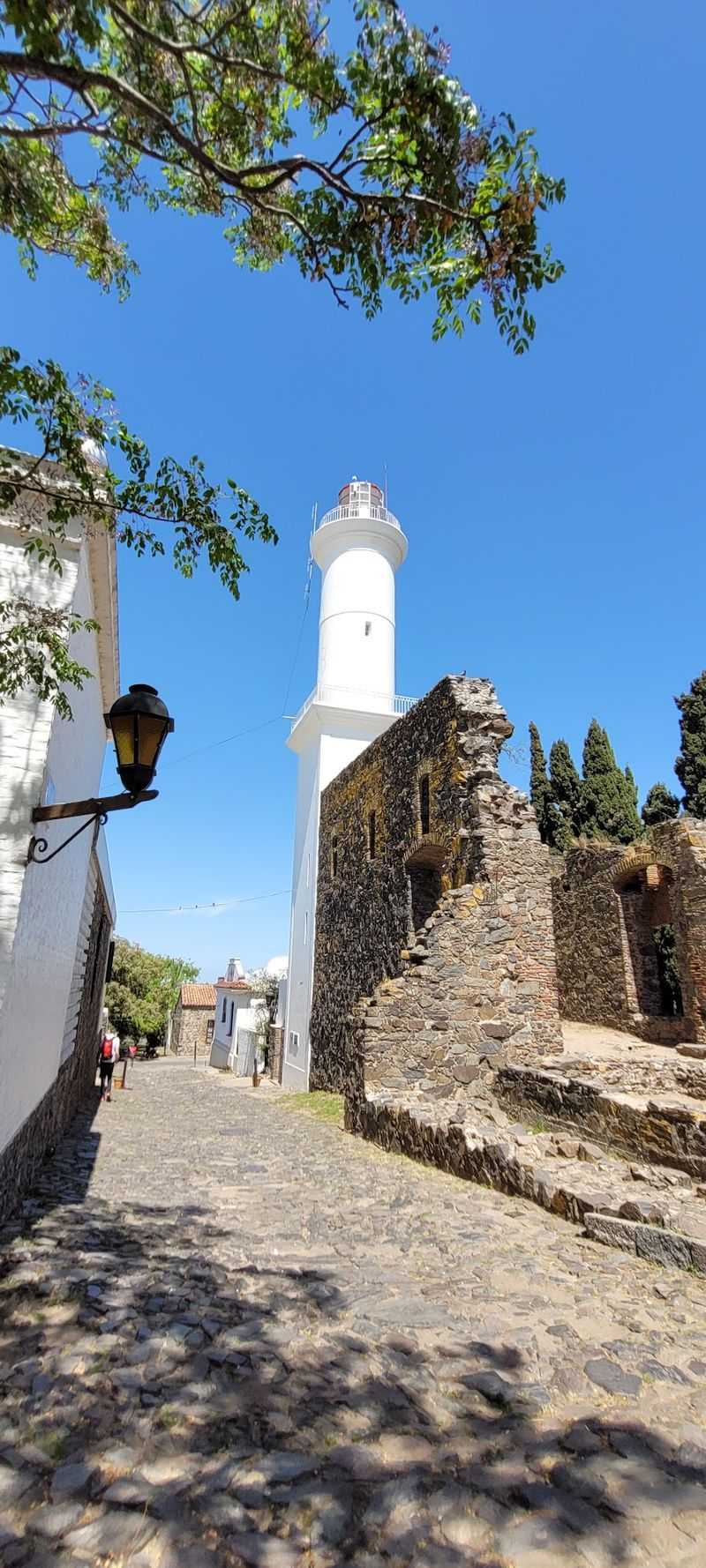
Crossing by ferry from Buenos Aires takes less than an hour, and suddenly you are standing on streets that feel lifted from a Portuguese village. Colonia del Sacramento was founded in 1680, and its historic quarter carries a distinctly different character from the Spanish colonial towns found across most of South America.
UNESCO recognized the area as a World Heritage Site in 1995, and walking through it, that honor makes complete sense.
The whole historic core is compact enough to explore entirely on foot in a single afternoon. Old stone walls, quiet plazas, waterfront lookouts, and small museums are all within easy reach of each other.
The atmosphere is calm and genuinely charming without feeling like a theme park.
For first-time travelers nervous about navigating South America, Colonia is almost reassuringly easy. Infrastructure is solid, English is spoken in most tourist spots, and the town pairs perfectly with a few days in Buenos Aires or Montevideo.
It is a gentle, low-stress entry point that still delivers real history and beautiful scenery.
Villa de Leyva, Colombia
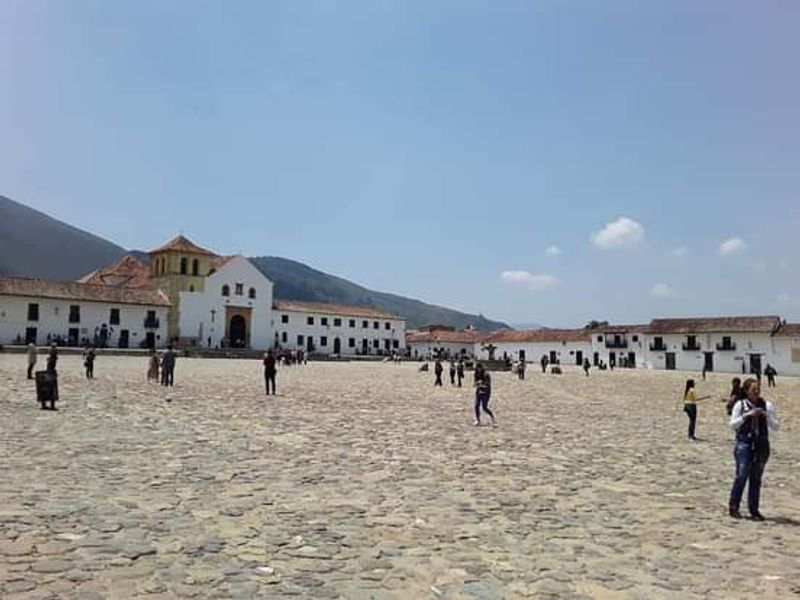
The Plaza Mayor in Villa de Leyva is so large that it genuinely stops people mid-step. At roughly 14,000 square meters, it is the biggest colonial plaza in Colombia, and the white-walled buildings, terracotta rooftops, and surrounding mountains create a setting that photographers absolutely love.
The town was founded in 1572 and has been a National Monument since 1954.
What makes Villa de Leyva especially interesting is how much variety hides beyond the plaza. The surrounding countryside shifts from high-altitude paramo wetlands to drier, almost desert-like terrain.
Several museums in the area display an impressive fossil collection, including the Paleontological Museum, which holds over 2,400 specimens.
Getting here from Bogota takes roughly three to four hours by road, making it a very manageable side trip from Colombia’s capital. The town itself has a good selection of boutique hotels, restaurants, and craft shops without ever feeling overcrowded.
First-time visitors who want colonial atmosphere, interesting history, and natural variety in one place will find Villa de Leyva hard to beat.
Paraty, Brazil
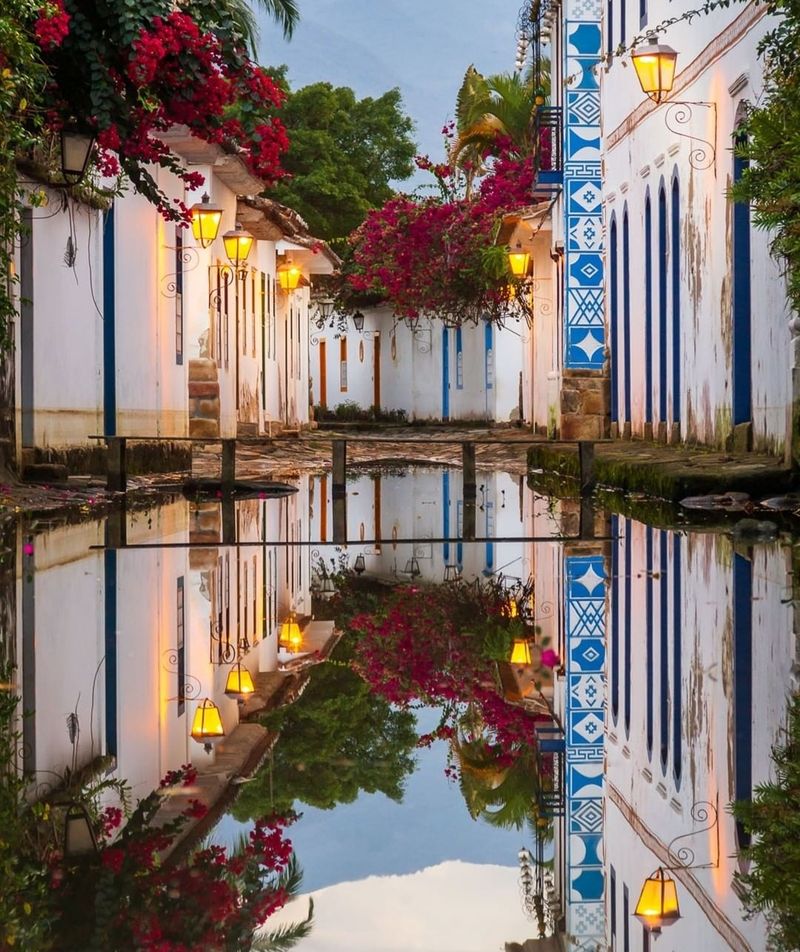
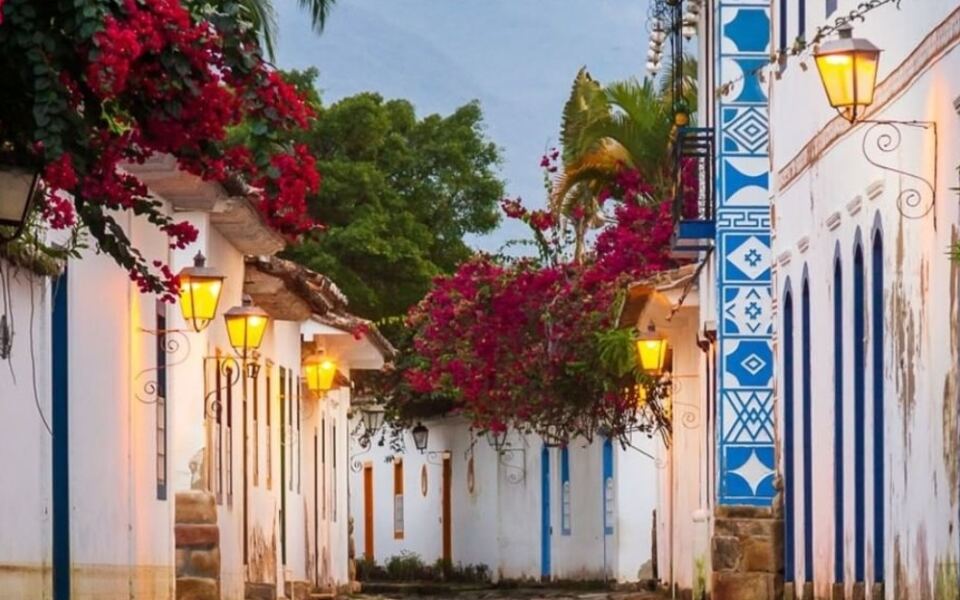
Paraty has one of those rare settings that genuinely earns the word spectacular. Colonial whitewashed buildings line stone streets beside a calm bay, while mountains covered in Atlantic Forest rise sharply behind the town.
Since 2019, Paraty has been part of a UNESCO World Heritage Site that recognizes both its cultural heritage and extraordinary biodiversity, making it one of very few places on earth to receive that dual recognition.
The protected landscape surrounding the town covers over 150,000 hectares of rainforest, beaches, islands, and peaks rising above 2,000 meters. Day trips by boat reach secluded beaches and islands that feel genuinely remote despite being just a short ride from town.
History fans will also appreciate that Paraty was once the coastal endpoint of the colonial Gold Route connecting inland mines to the sea.
The town sits between Rio de Janeiro and Sao Paulo, making it easy to add to almost any Brazil itinerary. Its historic center is car-free, which keeps the atmosphere peaceful and the walking very pleasant.
For first-time Brazil visitors, Paraty delivers colonial history, tropical nature, and coastal beauty in one surprisingly manageable package.
Ollantaytambo, Peru
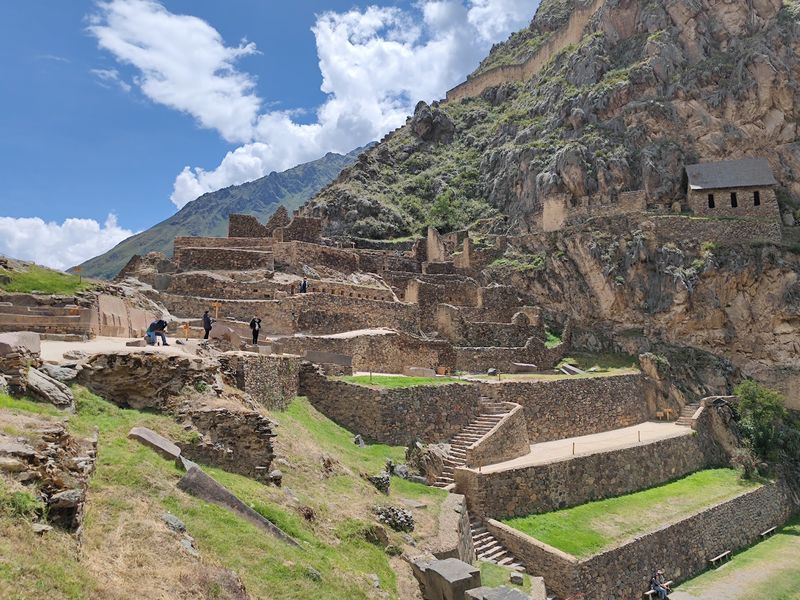
Most travelers pass through Ollantaytambo purely as a stop on the way to Machu Picchu, which is honestly a mistake. The town itself is one of the best-preserved examples of Inca urban planning anywhere on the planet, with original stone streets, functioning irrigation channels, and houses that have been continuously inhabited since the Inca period.
That kind of living history is genuinely rare.
Above the town, massive agricultural terraces and ceremonial structures climb the mountainside in a way that takes most visitors by surprise. The archaeological site also carries serious military history: Manco Inca defeated Spanish forces led by Hernando Pizarro here during the conquest period, making it one of the few places where Inca resistance succeeded.
Some of the enormous stone blocks used in construction were transported from a quarry roughly nine kilometers away.
Ollantaytambo sits about 82 kilometers northwest of Cusco and serves as the main departure point for the train to Machu Picchu. Staying overnight rather than just passing through rewards visitors with quieter streets in the morning and evening.
The combination of Inca history, Andean scenery, and practical rail connections makes it an ideal base for this part of Peru.
Salento, Colombia
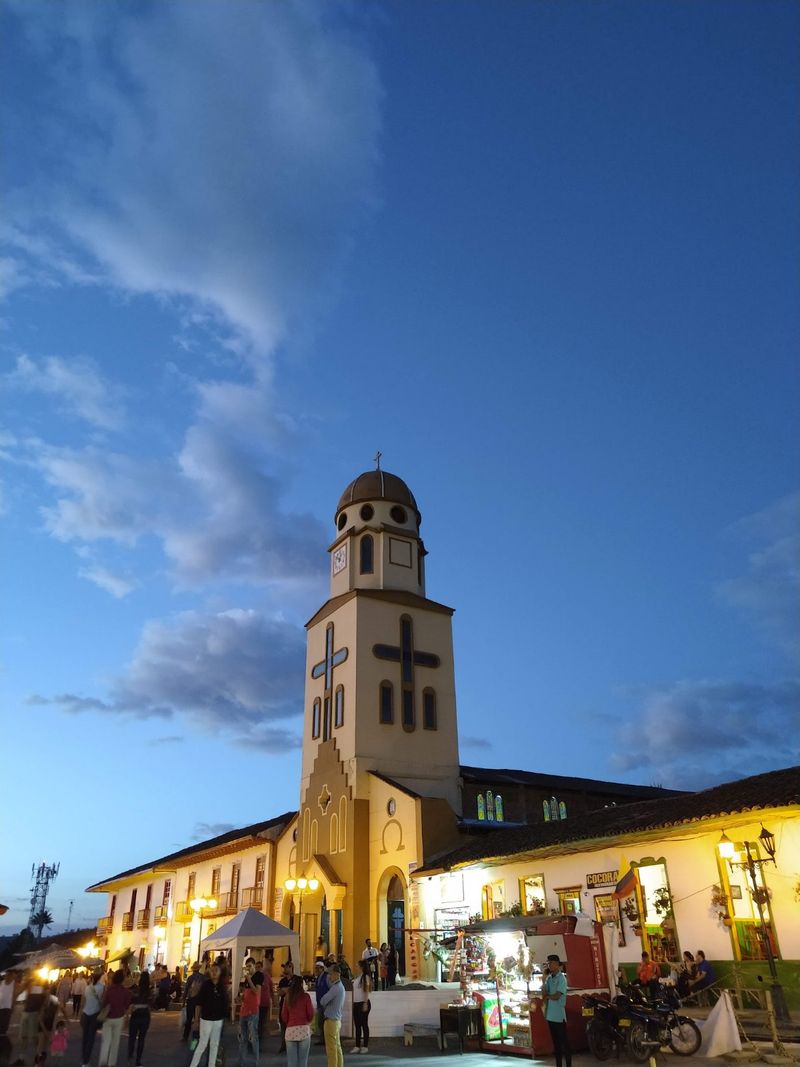
Salento looks like someone turned the color saturation up on a colonial town and then surrounded it with some of the most dramatic palm trees in the world. The brightly painted doors, carved wooden balconies, and traditional bahareque architecture give the town a character that feels genuinely distinct from other Colombian destinations.
Colombia’s tourism authority describes Salento as the oldest settlement in its part of the Coffee Cultural Landscape, which was recognized by UNESCO in 2011.
Just outside town, the Cocora Valley is home to towering wax palms, Colombia’s national tree, which can reach heights of over 60 meters. The hike through the valley is one of the most photographed walks in the country, and it is not hard to see why.
Coffee farms nearby offer tours where visitors can follow the full process from harvesting to brewing.
Armenia, the nearest city, is only about 25 kilometers away, making Salento easy to reach by jeep or bus. The town has a solid range of hostels, guesthouses, and restaurants catering to all budgets.
For first-time visitors to Colombia looking for something beyond Cartagena or Bogota, Salento delivers a colorful, scenic, and very memorable alternative.
Banos de Agua Santa, Ecuador
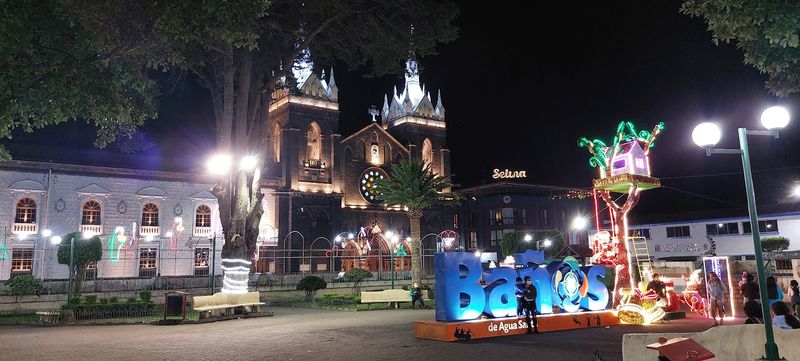
Sitting in a narrow valley with an active volcano looming directly above it, Banos de Agua Santa has a setting that is equal parts dramatic and oddly cozy. The town has built an entire identity around its naturally heated mineral springs, and Ecuador’s tourism ministry identifies five municipal thermal bath complexes in the area.
After a day of hiking or rafting, soaking in warm water with a volcano view is genuinely hard to top.
Adventure options here are impressively varied. The waterfall route linking 16 cascades includes Pailon del Diablo, one of Ecuador’s most powerful falls, while rafting, canyoning, and zip-lining fill out a solid activity menu.
The surrounding landscape also marks a fascinating geographic transition, as the town sits at the point where the Andean highlands begin dropping toward the Amazon basin.
Regular bus services from Quito make Banos easy to reach in about three hours. It sits roughly 180 kilometers from the capital, which is close enough for a long weekend but far enough to feel like a proper escape.
First-time Ecuador visitors often find Banos hits a sweet spot between accessible infrastructure and genuinely exciting natural surroundings.
San Pedro de Atacama, Chile
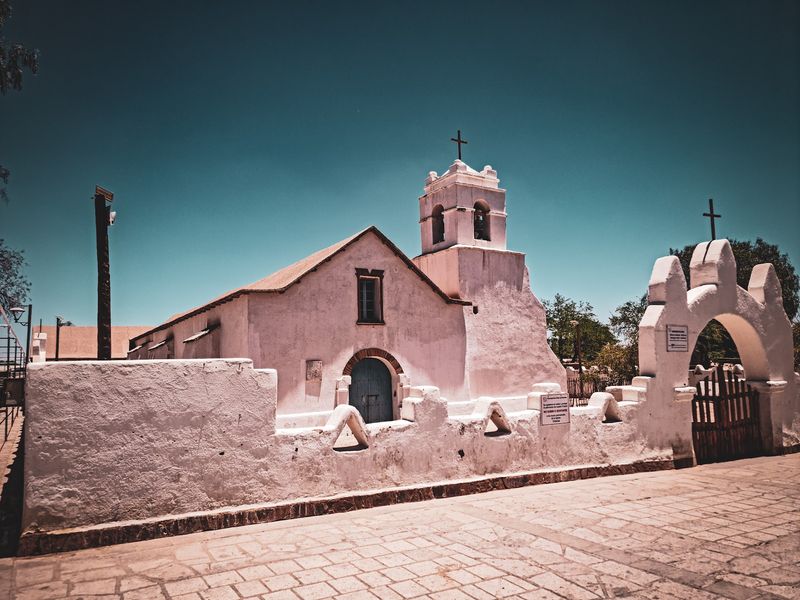
The Atacama Desert is the driest non-polar desert on earth, and San Pedro de Atacama sits right in the middle of it, looking like a small adobe village that somehow decided this was a perfectly reasonable place to exist. What the town lacks in size it more than makes up for in access to extraordinary landscapes.
Chile’s official tourism organization calls it the gateway to some of the country’s most surreal natural scenery.
Day trips from San Pedro reach Valle de la Luna, high-altitude flamingo lagoons, salt flats that stretch to the horizon, and the El Tatio geyser field, which erupts spectacularly at sunrise. The exceptionally clear skies have also turned stargazing into one of the area’s signature experiences, with several professional observatories offering public nights.
Few places on the continent offer such consistent astronomical visibility.
Getting here typically means flying into Calama’s El Loa Airport and taking a short overland transfer. Despite its remote feel, San Pedro has well-developed accommodation, restaurants, and tour operators that make independent travel very manageable.
First-timers wanting the Altiplano experience without arranging a full expedition will find the town handles the logistics efficiently.
Pucon, Chile
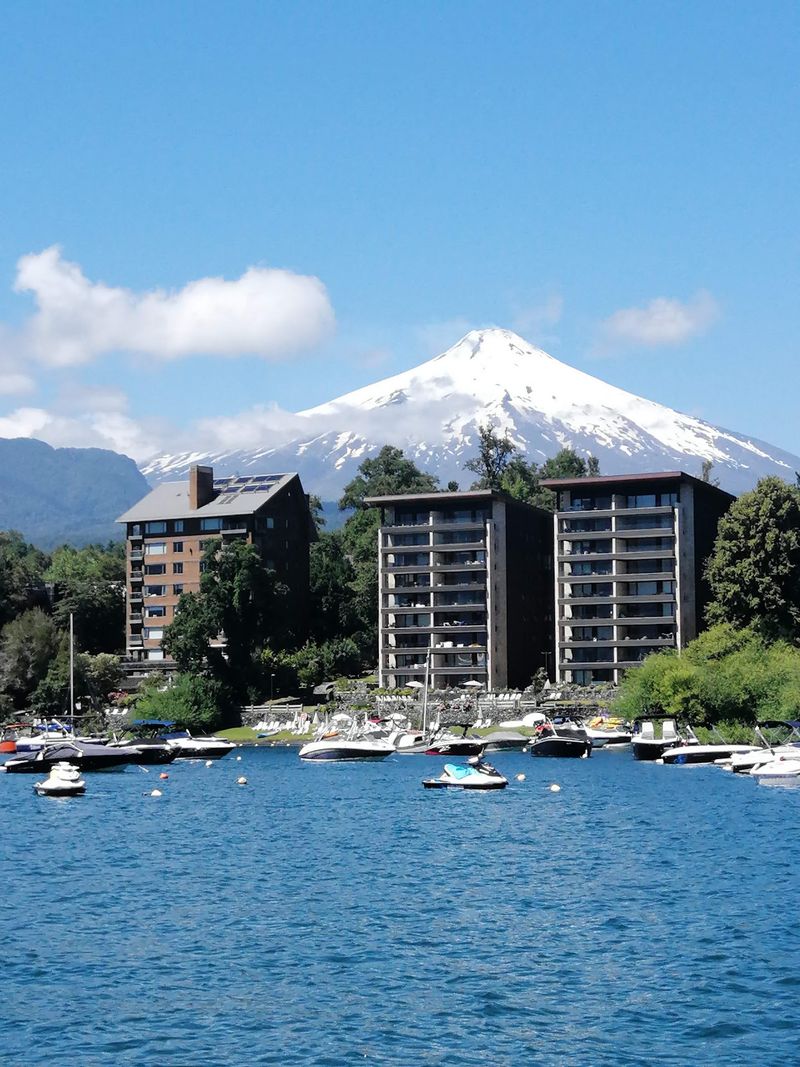
Waking up to a snow-capped volcano reflected in a lake is the kind of morning that makes people immediately start planning a return trip. Pucon sits beside Lake Villarrica at the foot of the Villarrica volcano, and the scenery alone would be enough to put it on any first-trip list.
Chile Travel highlights hiking, river activities, and hot springs among the region’s major draws, and the town delivers on all three.
The geothermal side of Pucon is particularly impressive. Chile’s tourism authority notes that the area has the country’s highest concentration of thermal centers, spread across the Liucura and Trancura river valleys.
Options range from basic stone pools beside rushing rivers to full spa complexes with multiple pools and treatments. That range means travelers of any comfort level and budget can find something that suits them.
Three national parks are accessible from Pucon: Villarrica, Huerquehue, and Tolhuaca. The hiking network covers everything from short lakeside walks to multi-day routes through ancient araucaria forests.
For first-time visitors to Chile who want outdoor adventure without the extreme remoteness of Patagonia, Pucon offers a very compelling and accessible middle ground.
El Chalten, Argentina
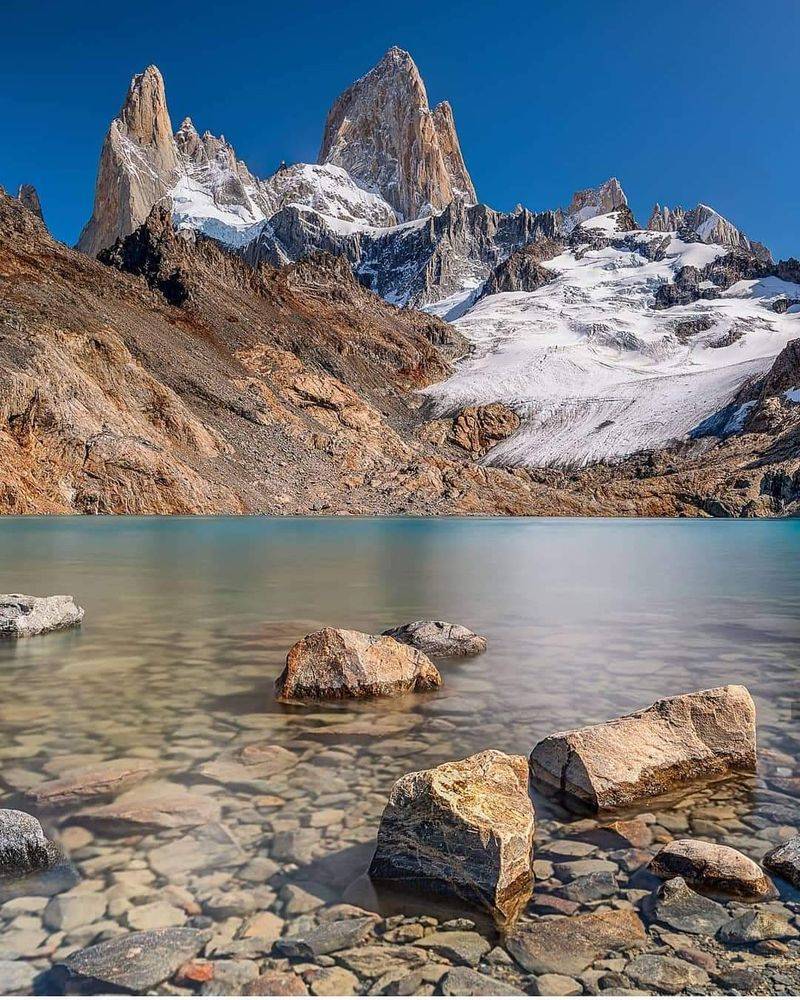
Argentina’s government officially calls El Chalten the National Trekking Capital, and after one look at the Fitz Roy massif looming above the rooftops, it is very easy to understand why. The town is tiny, with a population of only a few thousand, but the trails that begin right at its edges lead to some of the most dramatic mountain scenery on the entire planet.
There is no need for a shuttle, a guide, or a permit to access the main routes.
The Laguna de los Tres trail covers about 25 kilometers round trip and ends at the base of Fitz Roy with views that have graced more travel magazine covers than almost any other spot in Patagonia. The Laguna Torre route is approximately 19 kilometers and delivers equally jaw-dropping views of Cerro Torre.
Shorter options, including an eight-kilometer loop to Laguna Capri, suit visitors who want scenery without a full-day commitment.
El Chalten sits about 220 kilometers from El Calafate, which connects via regular bus services. Most visitors combine both towns, pairing Fitz Roy hiking with a visit to Perito Moreno Glacier.
For active first-timers, very few places on the continent offer such immediate and rewarding trail access from a town center.
Cafayate, Argentina
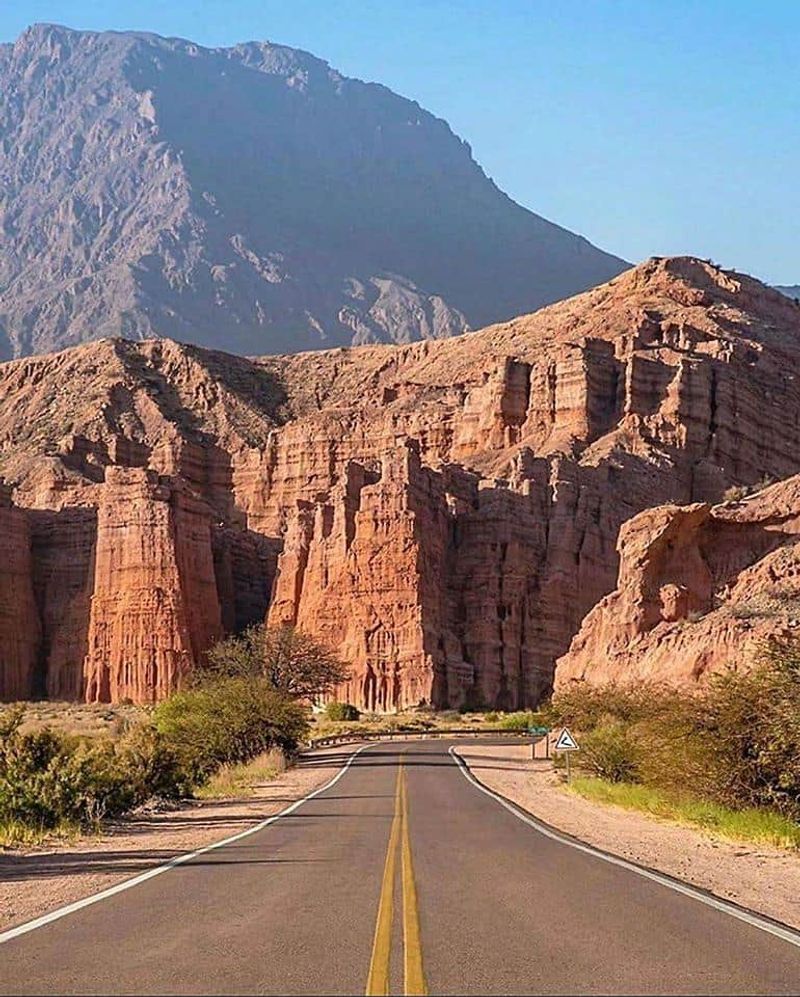
Red rock canyons, high-altitude vineyards, and a cathedral dating to 1885 make Cafayate one of the most visually distinctive small towns in Argentina. Located in the Calchaqui Valleys of Salta province, the town sits between roughly 1,600 and 3,100 meters above sea level, producing a grape variety called Torrontés that is almost impossible to find anywhere else in the world.
The Salta tourism authority identifies more than 60 wineries and tourism businesses along the regional wine route.
Beyond wine, the surrounding landscape is full of surprises. The Quebrada de las Conchas road connecting Cafayate to Salta city passes through extraordinary red sandstone formations with names like the Amphitheater and the Devil’s Throat.
Archaeological sites and sand dunes add more variety to day trips from town. The Vine and Wine Museum in Cafayate itself offers a solid overview of the region’s winemaking history.
Reaching Cafayate usually means flying into Salta city and driving or taking a bus through the canyon road, which is itself a highlight. The journey takes roughly three hours but feels considerably shorter because the scenery is so striking.
For first-timers who want landscapes, food culture, and wine without navigating a large city, Cafayate is a genuinely satisfying choice.
Share this story