New Hampshire is famous for its covered bridges, fall foliage, and White Mountain trails, but beneath that postcard-perfect surface, the Granite State hides a much stranger side. Centuries of maritime history, colonial settlement, and frontier life have left behind more than just old buildings and gravestones. Some of those remnants have developed reputations that no amount of historical research has fully explained. From a stone staircase that leads nowhere in a quiet forest to an island with a genuinely dark past, these ten locations attract visitors who are curious about what history leaves behind.
Ghost hunters, history buffs, and casual explorers alike have all made their way to these spots, and not everyone walks away with a simple explanation for what they experienced. This list covers ten real places across New Hampshire where documented history and persistent local legend overlap in the most fascinating ways. Keep reading, because a few of these entries might just make you reconsider that solo hike you had planned for the weekend.
1. Omni Mount Washington Resort, Bretton Woods, New Hampshire
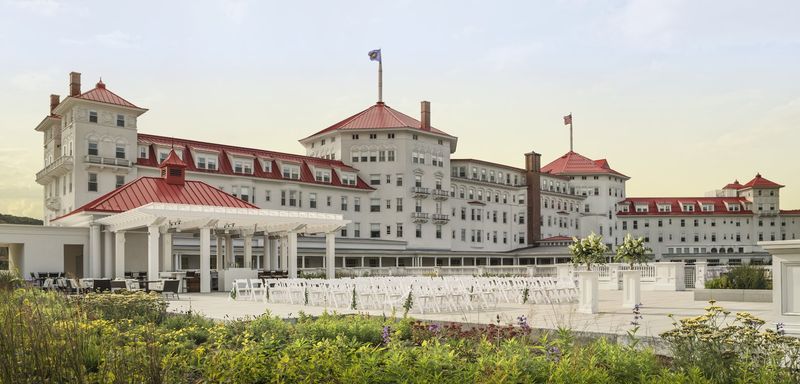
Few buildings in New England carry as much architectural authority as this sprawling white resort, which has dominated the base of Mount Washington since 1902. Built with 250 rooms and a staff that once outnumbered its guests, the Omni Mount Washington Resort was designed to impress, and it still does.
The hotel gained international significance in 1944 when it hosted the Bretton Woods Conference, where representatives from 44 nations gathered to reshape the global financial system. That alone would make it historically remarkable, but the resort has another claim to fame that draws a very different crowd.
According to longstanding hotel lore, the ghost of Carolyn Stickney, the wife of the original owner, has never quite checked out. Staff and guests have reported seeing her apparition near the grand staircase and wandering the upper hallways over many decades. Whether or not you believe the stories, the hotel’s ornate ballrooms, Spanish Renaissance architecture, and mountain views are absolutely worth the visit. The Omni Mount Washington Resort remains one of the most striking historic hotels in the entire northeastern United States.
2. America’s Stonehenge, Salem, New Hampshire
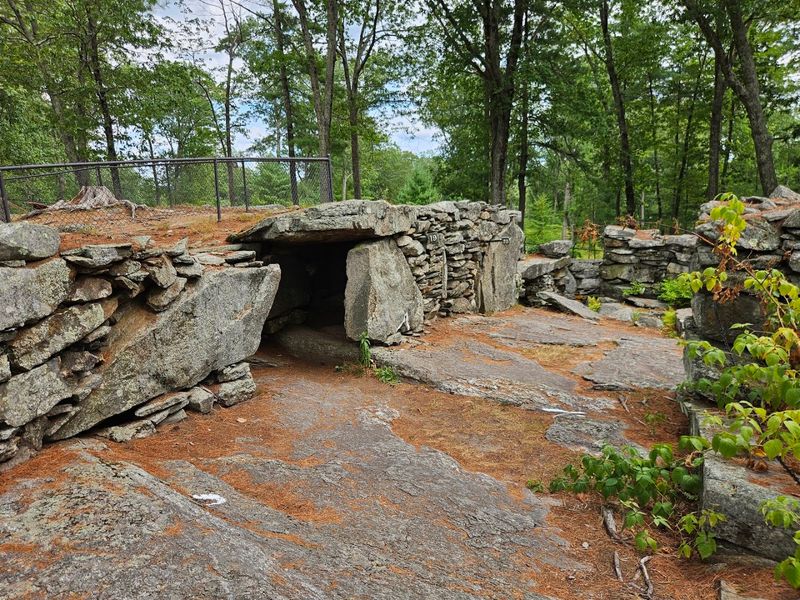
Nobody can agree on who built it, when it was built, or what it was actually used for, and that is precisely what makes America’s Stonehenge one of the most fascinating and debated archaeological sites in the entire country. Located in Salem, New Hampshire, this sprawling network of stone chambers, standing rocks, and carved features covers roughly 30 acres of wooded land.
Some researchers argue the structures date back thousands of years and may have been used for astronomical observations. Others suggest the site was built by colonial-era farmers in the 18th or 19th century. A third camp points to possible connections with ancient European or pre-Columbian visitors, though no theory has been definitively proven.
Visitors can walk marked trails through the site, examine stone chambers that are too precisely constructed to dismiss as random, and stand at a central ceremonial area that aligns with the solstice sun. The sheer scale of the unexplained stonework gives the place a quiet, persistent eeriness that lingers long after you leave the parking lot. For anyone drawn to unsolved historical mysteries, this attraction delivers real substance alongside the intrigue.
3. Ocean-Born Mary House, Henniker, New Hampshire
The legend of Ocean-Born Mary is one of New Hampshire’s most enduring folk stories, and the house connected to it has attracted curious visitors for well over a century. The tale begins in 1720 aboard a ship crossing the Atlantic, where a pirate captain allegedly spared the lives of passengers in exchange for the right to name a newborn girl Mary.
According to local tradition, that same captain later built a grand house in Henniker, New Hampshire, where Mary eventually lived out her days. Historians have challenged several details of the story, and no definitive evidence confirms the pirate connection, but the legend has proven remarkably stubborn.
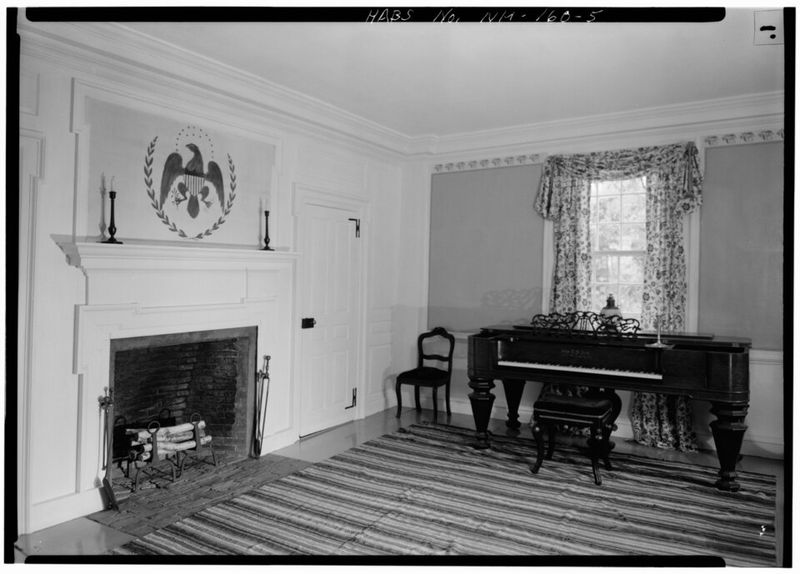
The house itself, built in the mid-1700s, is a genuinely impressive example of colonial architecture and has been privately owned throughout much of its history. Reports of unexplained activity inside the property have circulated for generations, with some accounts describing the figure of a tall woman appearing near the fireplace. Whether the ghost stories are real or simply good marketing for a fascinating piece of local history, the Ocean-Born Mary House remains one of Henniker’s most talked-about landmarks.
4. Madame Sherri Forest, Chesterfield, New Hampshire
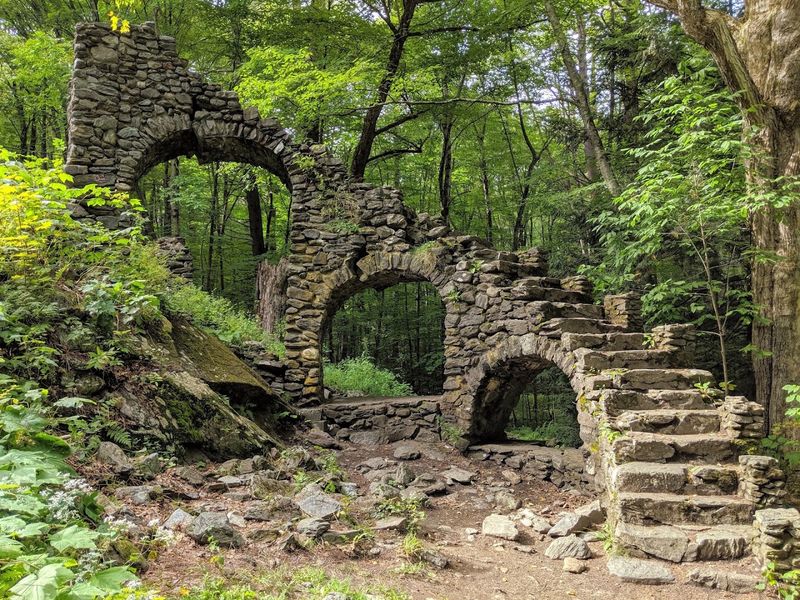
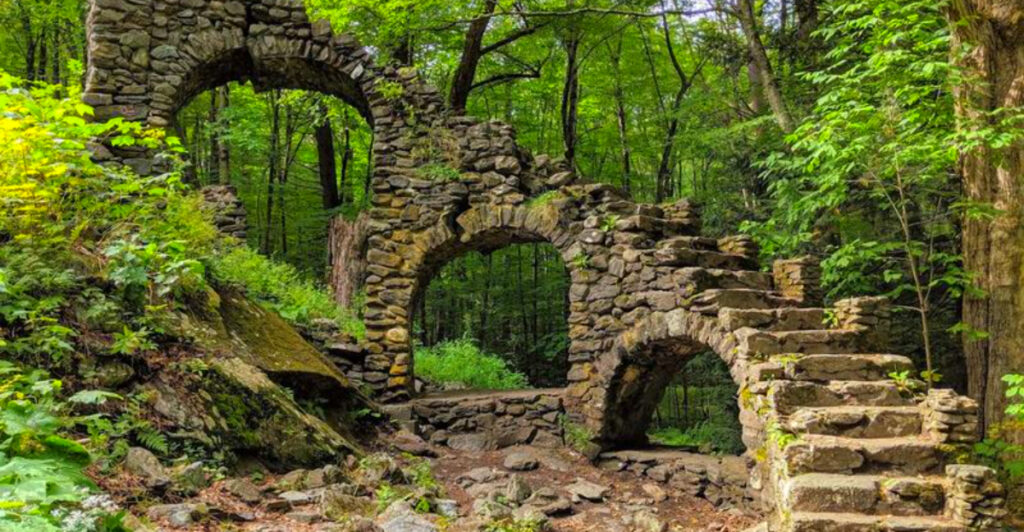
A Parisian-born costume designer once built herself a French-inspired chateau deep in the New Hampshire woods, and what remains of it today is both beautiful and deeply unsettling. Antoinette Sherri constructed her summer estate around 1930, complete with elaborate stonework, a Roman arch staircase, and landscaped gardens that were the backdrop for her famously extravagant parties.
She would arrive in Chesterfield via a chauffeur-driven Packard, draped in fur, while actually living in a modest, unheated farmhouse across the road with no running water. Her fortunes eventually declined, the property fell into neglect, and the mansion burned down in 1962, leaving only the stone foundation and the now-iconic grand staircase behind.
That staircase, sometimes called the “staircase to nowhere,” partially collapsed in July 2021 and is now roped off for safety. Beyond the ruins, the Ann Stokes Loop trail leads to Indian Pond, and the Mine Ledge Trail offers views of the Connecticut River Valley. Paranormal investigators have reported unexplained audio responses and unusual equipment readings near the ruins, and some visitors claim to have spotted the ghostly figure of Madame Sherri herself at the top of the crumbling steps.
5. Pine Hill Cemetery (Blood Cemetery), Hollis, New Hampshire
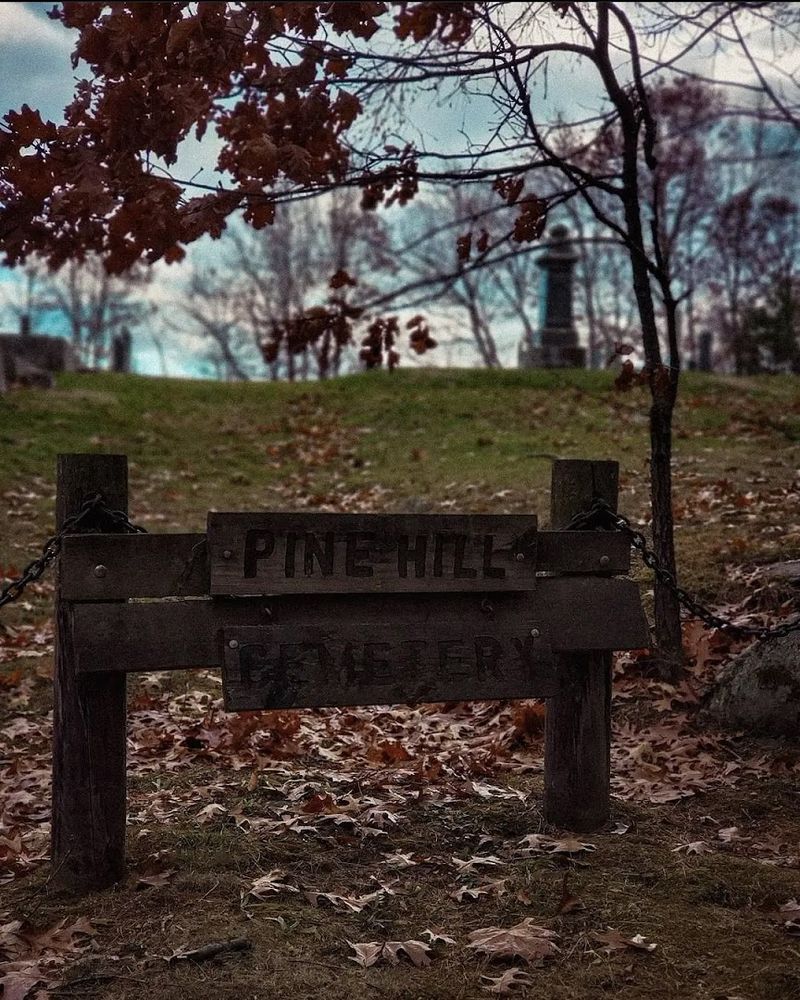
The name alone is enough to raise an eyebrow. Pine Hill Cemetery in Hollis, New Hampshire, is almost universally known by its far more dramatic nickname, Blood Cemetery, a title it earned because of Abel Blood, a local man buried there whose gravestone has inspired decades of paranormal speculation.
According to local legend, the hand on Abel Blood’s gravestone gradually moves over time, pointing downward rather than upward toward the sky. Paranormal enthusiasts have visited the cemetery for years hoping to document this phenomenon, and the site regularly appears on lists of New Hampshire’s most haunted locations.
The cemetery itself dates back to the early 19th century and contains a collection of beautifully carved gravestones that reflect the artistry of early New England memorial traditions. Beyond the Abel Blood legend, the grounds are peaceful and historically significant, offering a quiet window into the lives of Hollis’s earliest settlers. Visitors interested in colonial-era history will find plenty to appreciate here, even without the ghost stories. That said, most people who make the trip are really there for one reason: to find Abel Blood’s stone and decide for themselves.
6. Point Of Graves Burial Ground, Portsmouth, New Hampshire
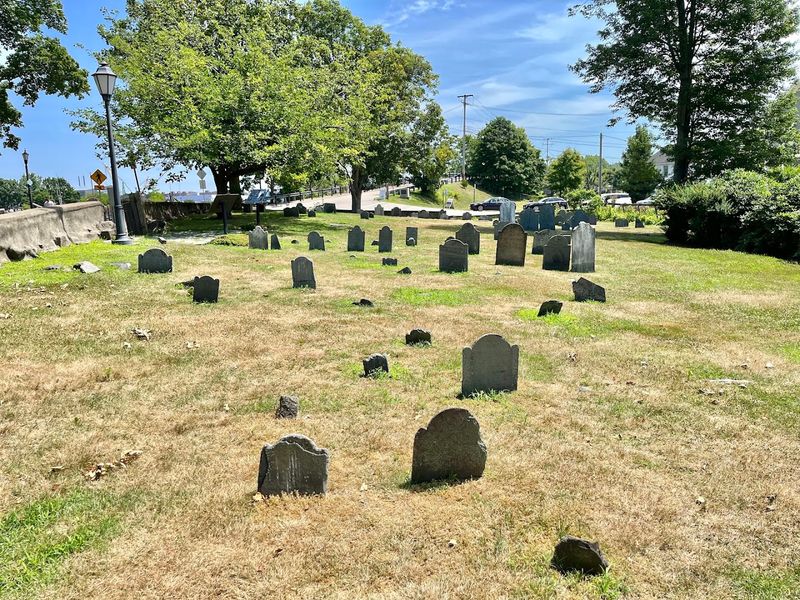
Established in 1671, Point of Graves Burial Ground holds the distinction of being Portsmouth’s oldest surviving cemetery, and it wears its age visibly on every weathered gravestone in the yard. The burial ground sits near the waterfront in one of New Hampshire’s most historically rich cities, and its location gives it a presence that feels genuinely removed from the modern world.
Many of the carved slate markers feature the classic skull-and-crossbones motifs common to Puritan-era gravestone art, which were actually symbols of mortality and resurrection rather than anything pirate-related, despite what popular culture might suggest. Several prominent colonial figures are buried here, and the inscriptions offer a direct, unfiltered look at 17th and 18th-century life.
Portsmouth’s popular ghost walking tours regularly include Point of Graves as a featured stop, and guides share accounts of unexplained shadows and figures reported by visitors over the years. Even setting aside the paranormal angle, the burial ground is a legitimate historical landmark that rewards careful exploration. The craftsmanship of the surviving gravestones is remarkable, and the sheer age of the site gives any visit a weight that is hard to shake once you are standing among the stones.
7. Isles Of Shoals, Rye, New Hampshire
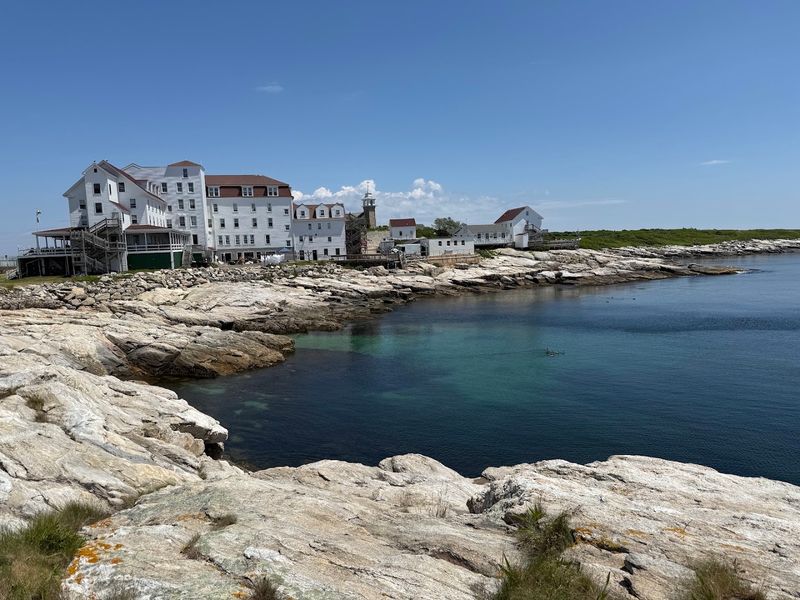
About ten miles off the New Hampshire coast, a cluster of small rocky islands sits in the Atlantic with a history dense enough to fill several books, most of them unsettling. The Isles of Shoals were one of the earliest European settlements in the Americas, attracting fishermen in the early 1600s long before many mainland towns existed.
The islands’ most notorious chapter came in 1873 on Smuttynose Island, where two women lost their lives in a brutal attack that became one of the most widely publicized criminal cases in 19th-century New England. The case inspired Anita Shreve’s novel “The Weight of Water” and remains a defining part of the islands’ dark reputation.
Seasonal ferry service carries visitors to Star Island, where a historic hotel and conference center operate during the warmer months. The island’s stone chapel, old cemetery, and rocky coastline create a setting that feels genuinely isolated from the mainland. Ghost stories connected to the islands are numerous and persistent, with accounts of unexplained figures near the hotel and along the rocky shoreline reported by guests and staff alike. For anyone fascinated by maritime history and regional legend, the Isles of Shoals deliver both in equal measure.
8. The Tilton Inn (The 1875 Inn), Tilton, New Hampshire
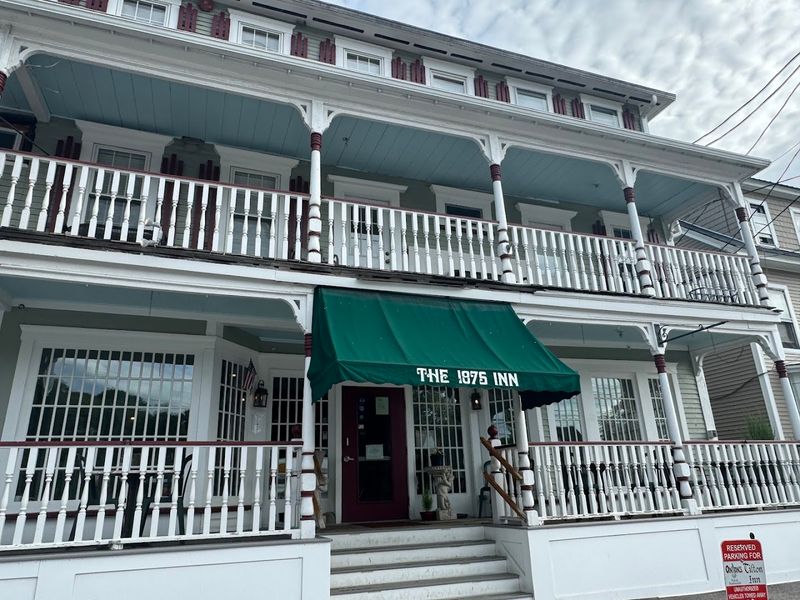
Built in 1875, this inn has accumulated nearly 150 years of guests, stories, and one particularly persistent legend involving a young girl named Laura who reportedly never left. The Tilton Inn, also known as The 1875 Inn, has appeared on paranormal television programs and earned a solid reputation among ghost hunters as one of New Hampshire’s most reliably eerie overnight destinations.
Accounts of Laura’s presence typically involve unexplained noises on the upper floors, objects moving without explanation, and the occasional sighting of a small figure in the hallways. Staff members have contributed their own stories over the years, and the inn has leaned into its haunted reputation as part of its identity.
Beyond the paranormal angle, the inn is a genuinely charming historic property with Victorian-era architectural details and a central location in Tilton that makes it convenient for exploring the Lakes Region. Guests who book a stay often do so specifically hoping for an encounter, while others simply appreciate the character of a well-preserved 19th-century building. Either way, The Tilton Inn offers an experience that feels meaningfully different from a standard hotel stay, which is exactly the point for most people who choose it.
9. Amos J. Blake House Museum, Fitzwilliam, New Hampshire
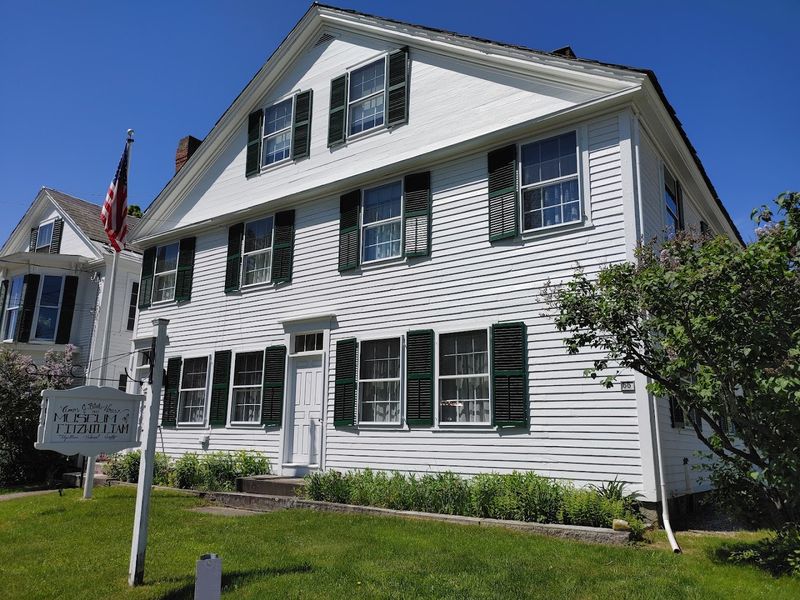
Built in 1837 and now operating as a local history museum, the Amos J. Blake House in Fitzwilliam is not the kind of place that announces its strangeness from the outside. From the street, it looks exactly like what it is: a well-preserved New England home filled with artifacts, furniture, and exhibits documenting the town’s history across nearly two centuries.
The museum’s collections include tools, household items, photographs, and documents that paint a detailed picture of rural 19th-century life in southwestern New Hampshire. For history enthusiasts, that alone makes it a worthwhile stop.
What sets the Blake House apart from a typical small-town museum is its secondary reputation as a location where paranormal investigators have reported consistent and unexplained activity. Multiple investigation teams have visited the property and documented accounts of cold spots, equipment anomalies, and what some describe as audible responses in otherwise empty rooms. The museum staff has acknowledged the interest from the paranormal community while maintaining the building’s primary identity as a serious historical resource. Fitzwilliam itself is a beautifully preserved New England town, making the Blake House a natural centerpiece for any visit to this quiet corner of the state.
10. Wentworth By The Sea, New Castle, New Hampshire
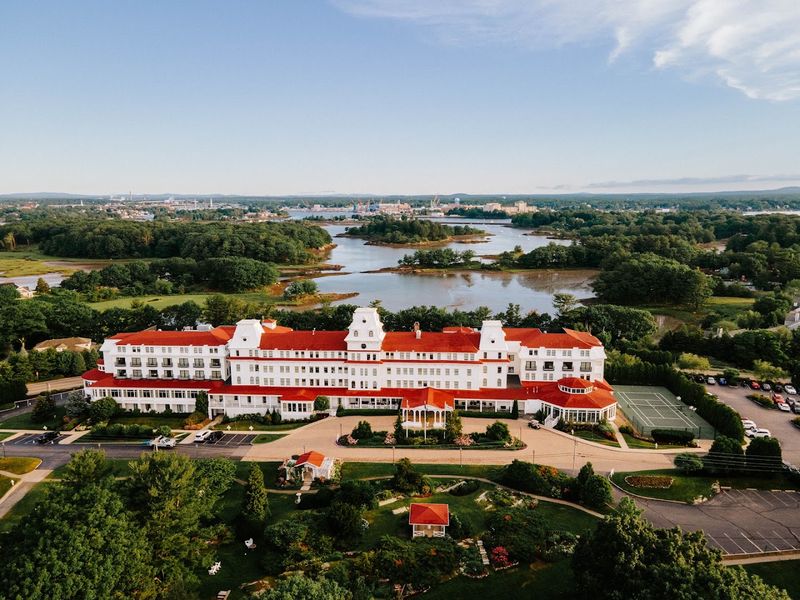
Perched on a peninsula in New Castle with commanding views of the Atlantic, Wentworth By The Sea has been one of New Hampshire’s most prestigious addresses since it opened in 1874. The hotel hosted the negotiations for the Treaty of Portsmouth in 1905, which ended the Russo-Japanese War, a detail that earned it a place in international history textbooks.
After a long period of closure and near-demolition, the property was fully restored and reopened in 2003 as a luxury resort, preserving its Victorian grandeur while adding modern amenities. The restoration itself uncovered a number of architectural details that had been hidden for decades.
Alongside its impressive credentials, the hotel has accumulated a collection of ghost stories that guests and staff have shared over the years. Reports of unexplained activity tend to cluster around the older sections of the building, with accounts of figures in period clothing and doors that behave without obvious cause. Whether those stories reflect genuine experiences or simply the imagination working overtime in a very old building, Wentworth By The Sea earns its spot on this list as a destination where luxury, documented history, and persistent local legend all share the same address.
Share this story