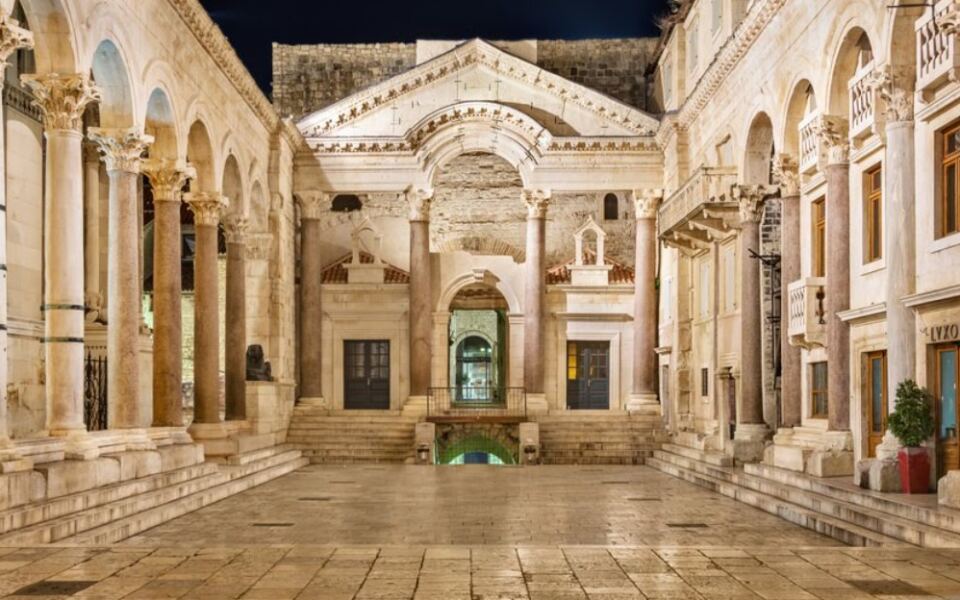
Croatia is one of those rare places that genuinely delivers on its postcard promise. From Roman emperors who turned palaces into cities to island towns where Venetian architecture meets crystal-clear Adriatic water, the variety here is hard to beat.
Whether you are chasing history, beaches, waterfalls, or all three, Croatia has a destination that fits. The ten stops below cover the country’s most celebrated heritage sites alongside island and coastal escapes that show a broader, equally rewarding side of this remarkable country.
Dubrovnik
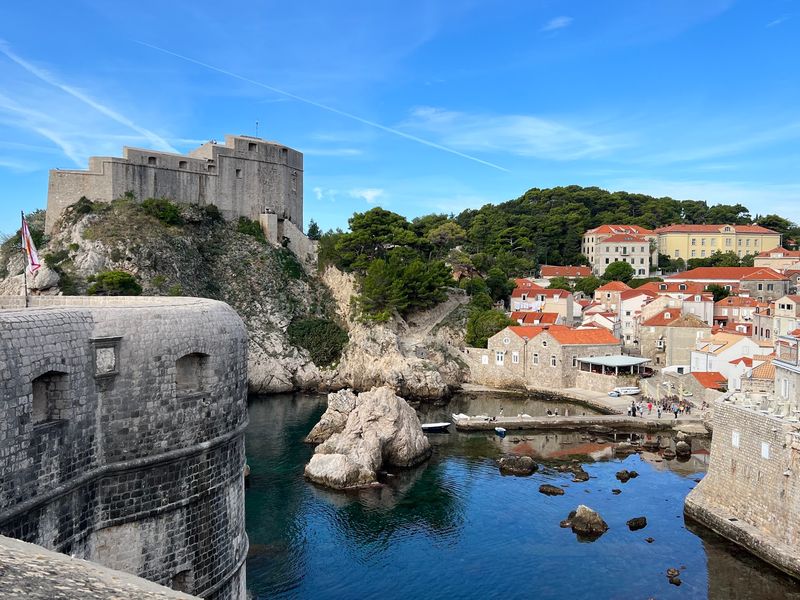
Few city walls in the world carry the weight that Dubrovnik’s do. Dating back to a maritime republic that rose to prominence from the 13th century, these limestone fortifications once protected one of the Mediterranean’s most independent and influential trading powers.
UNESCO recognized the old city in 1979, and it is easy to see why.
Walking the full circuit of the walls takes roughly an hour and rewards visitors with views over the rooftops, the Stradun below, and open sea on nearly every side. Inside, the Rector’s Palace, Franciscan monastery with its ancient pharmacy, and Onofrio’s Fountain fill the compact center with centuries of layered history.
What makes Dubrovnik genuinely special is that it still feels like a real city rather than a preserved relic. Locals shop, argue, and eat alongside tourists in the same narrow lanes their ancestors walked.
Arriving early in the morning or late in the afternoon, when tour groups thin out, reveals a quieter version of the city that is far easier to appreciate. Book wall tickets in advance during summer months to avoid long queues at the gates.
Split and Diocletian’s Palace
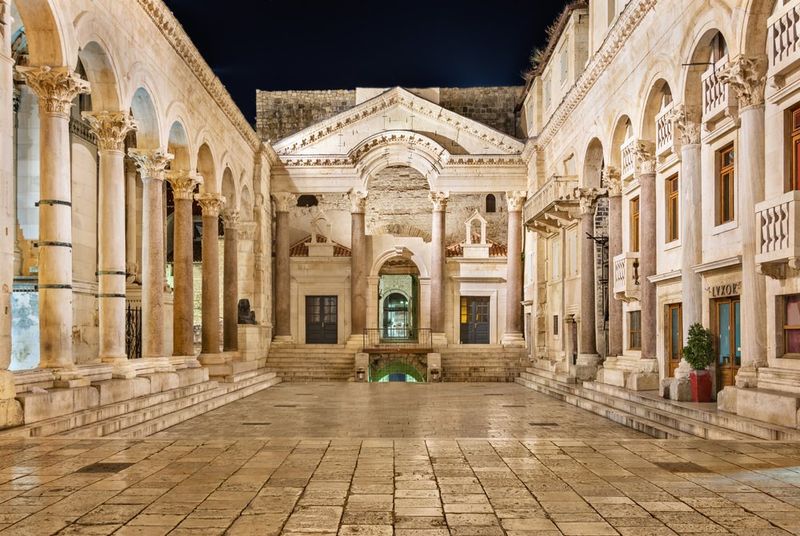
Imagine an entire Roman emperor’s retirement home slowly transforming into a living, breathing city over seventeen centuries. That is exactly what happened in Split.
Diocletian built his palace around the turn of the fourth century, and today roughly 3,000 people still live, work, and hang laundry inside its walls.
The Peristyle courtyard remains the social heart of the complex, surrounded by columns and overlooked by the vestibule of what was once the imperial apartments. Diocletian’s octagonal mausoleum was later repurposed as the Cathedral of St. Domnius, making it one of the oldest cathedral buildings in the world still in use.
The palace cellars, now open to visitors, give a strong sense of the original structure’s massive scale.
Split is also an excellent base for exploring nearby Dalmatian towns. Ferries to Hvar, Brac, and Vis depart regularly from the port just outside the palace walls.
The city itself has a lively restaurant and bar scene that runs well into the evening, particularly around the waterfront Riva promenade. UNESCO has listed the palace and historic center since 1979, but Split wears its heritage lightly and without fuss.
Hvar Town and the Pakleni Islands
Hvar Town has a justified reputation for style, but there is a lot more going on here than glamorous yachts and rooftop bars. The main square, Trg Svetog Stjepana, is one of the largest in Dalmatia and is framed by the 16th-century Arsenal and a loggia that still hosts open-air gatherings on warm evenings.
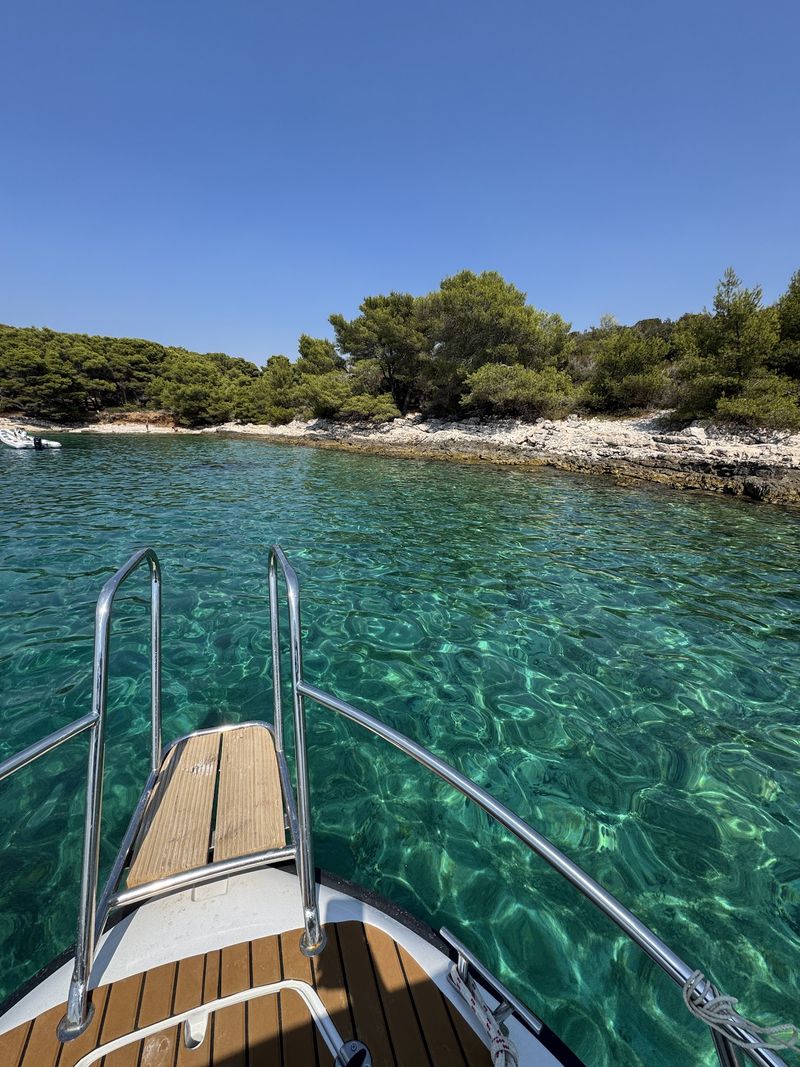
Above town, the Fortica fortress requires a steep climb but pays off with sweeping views over the harbor and the scattered green shapes of the Pakleni Islands. Water taxis run regularly from the waterfront to those islands, where rocky coves, small restaurants, and quiet stretches of pine-shaded coastline offer a completely different pace from the main town.
The public theater inside the Arsenal, dating to 1612, is one of the oldest in Europe still in operation. Beyond Hvar Town, the wider island rewards exploration.
Lavender fields, stone villages, olive groves, and family-run wineries producing Plavac Mali fill the interior. Renting a scooter or a car for a day is the best way to reach the eastern end of the island, where the village of Vrboska and the Stari Grad Plain, a UNESCO-listed ancient Greek agricultural landscape, offer a quieter and equally rewarding side of Hvar.
Korcula Town
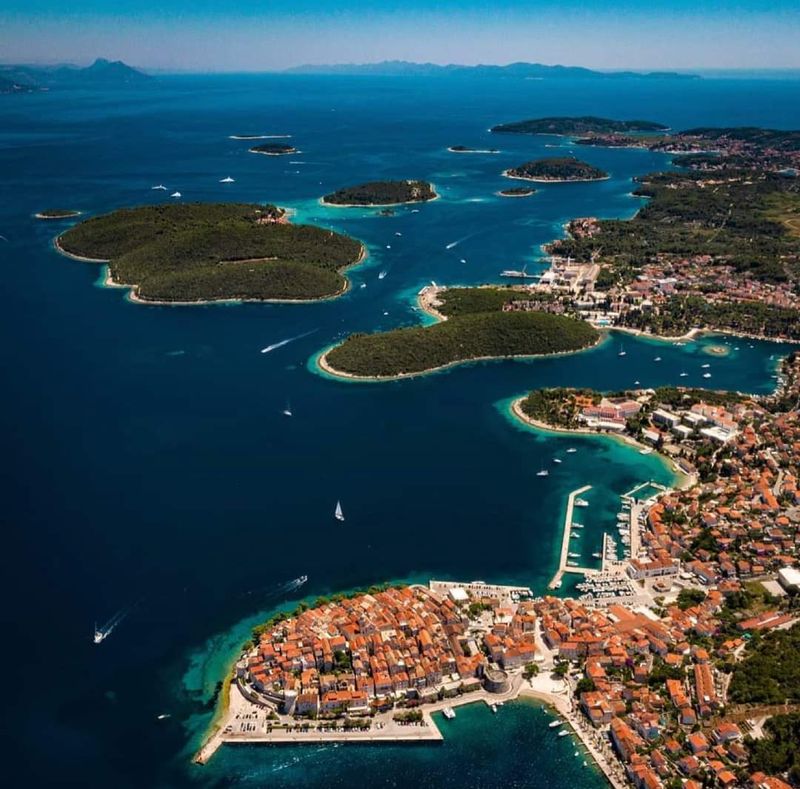
Korcula Town sits on a small peninsula like a miniature Dubrovnik, but without the crowds. Its old center uses a clever herringbone street pattern, a deliberate design choice that channels sea breezes through the town while blocking stronger winds from battering its stone facades.
Walking those lanes feels genuinely medieval in the best possible way.
St. Mark’s Cathedral anchors the center with a beautifully carved portal and a blend of Gothic and Renaissance detailing inside. Stone palaces, Venetian-era towers, and the remains of the old defensive walls fill the blocks around it.
The town is also home to the Moreška, a traditional sword dance with dramatic choreography that has been performed here for centuries and still draws audiences during summer performances.
Local wine culture adds another reason to linger. The Peljesac peninsula, just across a narrow channel, produces some of Croatia’s most respected red wines, and many local restaurants stock bottles from both sides of the water.
The claim that Marco Polo was born on Korcula is a long-standing local tradition, though historians debate the details. Whether or not it is true, the supposed birthplace house makes for an entertaining stop on any walking tour of the old town.
Plitvice Lakes National Park
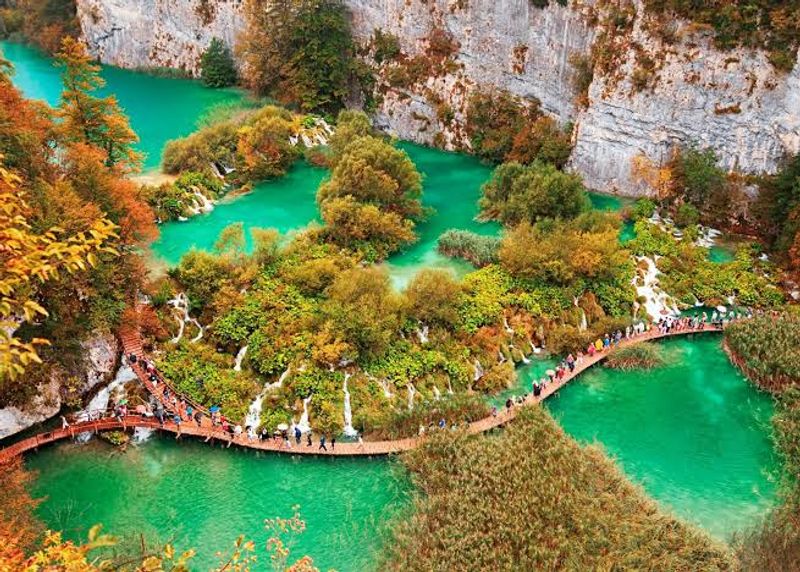
Croatia’s Adriatic coast gets most of the attention, but Plitvice Lakes is quietly one of the most breathtaking landscapes in all of Europe. Tucked inland and covering nearly 30,000 hectares, the park contains 16 named lakes connected by a cascade of waterfalls that tumble over constantly growing tufa barriers made from deposited calcium carbonate.
The color of the water shifts between emerald green, deep blue, and pale turquoise depending on the angle of the light and the mineral content at any given point. Wooden boardwalks run directly over the shallows, giving visitors the surreal experience of walking just centimeters above perfectly clear water.
Electric boats cross Lake Kozjak, the largest in the park, and panoramic buses link the upper and lower sections.
Several marked routes are available, ranging from a short two-hour loop to full-day walks that cover both the upper and lower lake groups. Spring and early summer bring the highest water levels and the most dramatic waterfall flows.
Autumn turns the surrounding forest gold and red, making photography almost effortless. Booking timed entry tickets well in advance is strongly recommended during peak season, as daily visitor numbers are capped to protect the park’s fragile ecosystem.
Rovinj
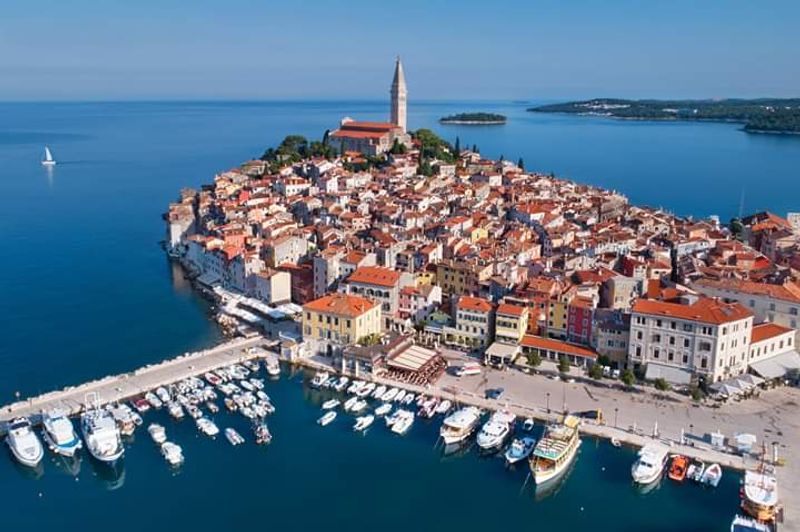
Rovinj looks like it was assembled specifically to be painted. Tall, narrow houses in shades of amber, terracotta, and faded yellow stack up the hillside of the Istrian peninsula, all pointing toward the bell tower of the Church of St. Euphemia perched at the very top.
The effect from the harbor is genuinely theatrical.
The historic center originally sat on its own island until 1763, when the channel between it and the mainland was filled in. That island origin explains why the old streets are so tightly packed and why the lanes twist and climb in ways that feel more organic than planned.
Balbi’s Arch marks the main entrance to the old town, and the climb up Grisia street toward the church passes galleries, small shops, and some of the best views back over the harbor.
South of the old center, Zlatni Rt forest park covers a headland of pine and oak trees with rocky swimming spots along the shoreline. The combination of medieval sightseeing in the morning and a quiet swim in the afternoon makes Rovinj one of the most satisfying stops on the Istrian coast.
The town is also a strong base for cycling, with well-marked routes running through the surrounding Istrian countryside toward vineyards and hilltop villages.
Zadar
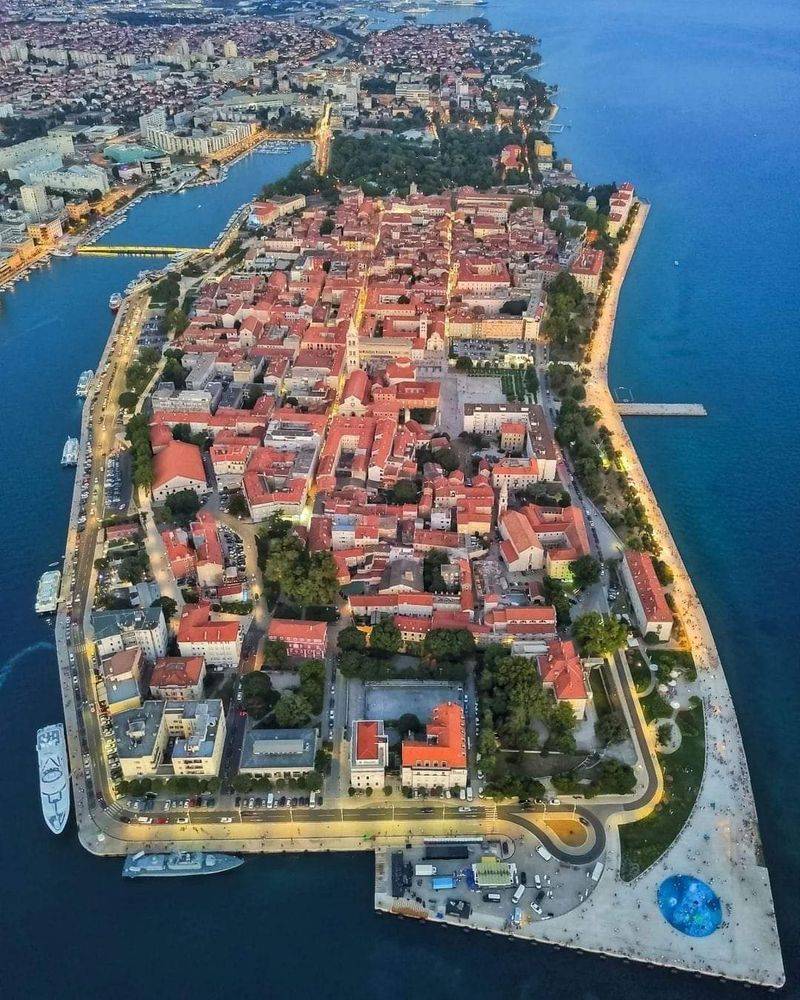
Zadar has been settled continuously for over 3,000 years, which means history is layered into every block of the old peninsula. Roman forum columns stand next to a 9th-century pre-Romanesque church, Venetian city walls wrap around medieval streets, and modern cafes fill buildings that have been rebuilt and repurposed more times than anyone can count.
What gives Zadar its most distinctive identity today is its waterfront. The Sea Organ, completed in 2005, stretches for about 70 meters along the promenade and contains 35 pipes beneath the stone steps.
Wave action and tidal movement push air through the system, producing a continuous, unpredictable musical sound that changes with the sea conditions. Sitting on those steps at dusk, with the sound rising and falling around you, is one of Croatia’s most genuinely unusual experiences.
Right beside it, the Greeting to the Sun adds a visual layer after dark. A 22-meter circle of 300 solar glass panels collects energy during the day and produces a shifting light display each evening.
Alfred Hitchcock once reportedly called Zadar’s sunset the most beautiful in the world, a claim locals are happy to repeat. The old town’s cafe scene, centered around the forum area, is relaxed and affordable compared to more tourist-heavy coastal cities.
Sibenik and the Cathedral of St. James
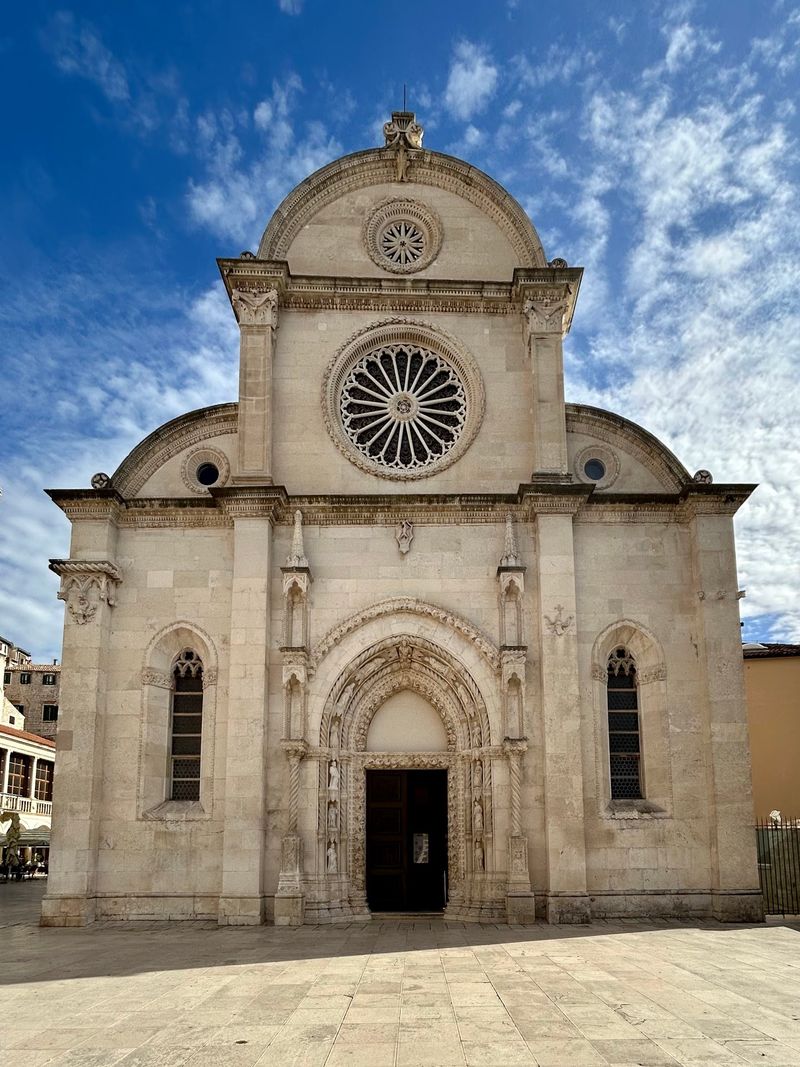
The Cathedral of St. James took over a century to build, and the result is one of the most technically ambitious stone structures in medieval Europe. Construction ran from 1431 to 1535, spanning the careers of multiple architects and the transition from Gothic to Renaissance design.
The entire building, including its vaults and dome, was assembled from interlocking stone without mortar or timber framing, a technique that still impresses engineers today.
Running along the exterior at eye level is a frieze of 71 sculpted human faces, each one distinct. Historians believe they represent the citizens of Sibenik who contributed to funding the cathedral’s construction.
Staring at those faces feels like a very direct connection to 15th-century Dalmatia. UNESCO added the cathedral to the World Heritage List in 2000.
The city around it climbs steeply from the waterfront toward a cluster of fortresses. St. Michael’s Fortress has been restored and now hosts outdoor concerts in summer, while St. Nicholas Fortress guards the entrance to the Sibenik channel from the sea.
Sibenik tends to attract fewer visitors than Dubrovnik or Split, which means shorter queues, more affordable restaurants, and a generally more relaxed atmosphere for exploring one of Dalmatia’s genuinely great architectural achievements.
Trogir
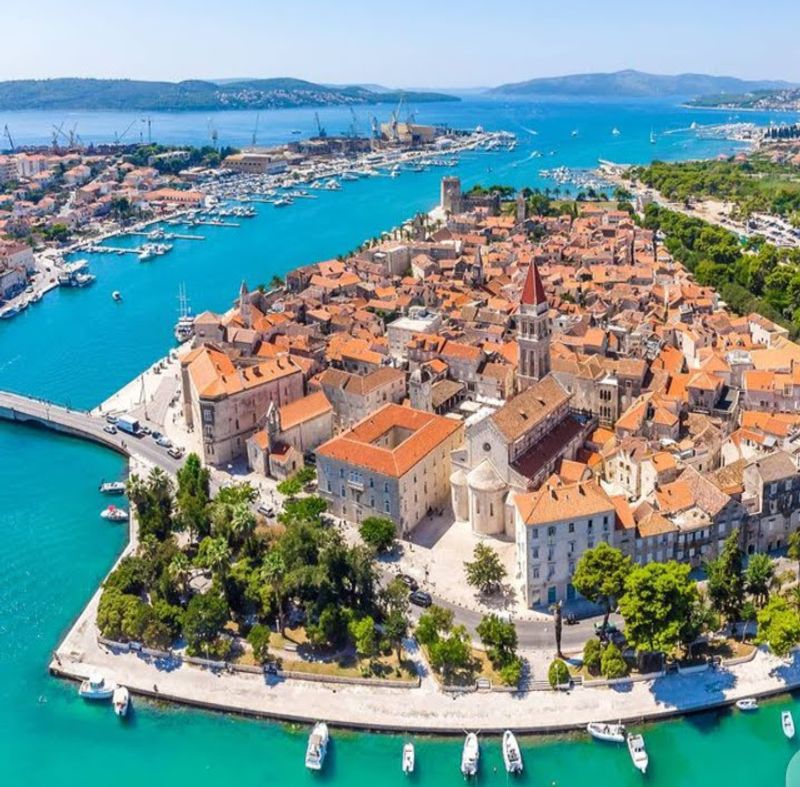
Trogir packs an extraordinary amount of history into a very small space. The old town occupies a tiny island barely 700 meters long, yet its streets contain a continuous urban plan stretching back to a Greek settlement founded in the third century B.C.
UNESCO describes it as an exceptional example of urban continuity, with Hellenistic street layouts still visible beneath centuries of Romanesque, Gothic, and Renaissance additions.
The Cathedral of St. Lawrence is the highlight for most visitors, particularly its west portal carved by the sculptor Radovan in 1240. The detail in that stonework, biblical scenes, animals, and figures representing the months of the year, is astonishing up close.
Kamerlengo Fortress at the western tip of the island adds a Venetian military counterpoint, and its tower offers one of the better panoramic views over the town and surrounding water.
Trogir sits only 27 kilometers from Split, making it a practical day trip by bus or taxi. However, staying overnight changes the experience significantly.
Once the day visitors head back, the town’s lanes and waterfront promenade become noticeably quieter, the restaurants fill with locals, and the limestone buildings take on a warm amber glow in the evening light. That version of Trogir is far more rewarding than the midday rush.
Mljet National Park
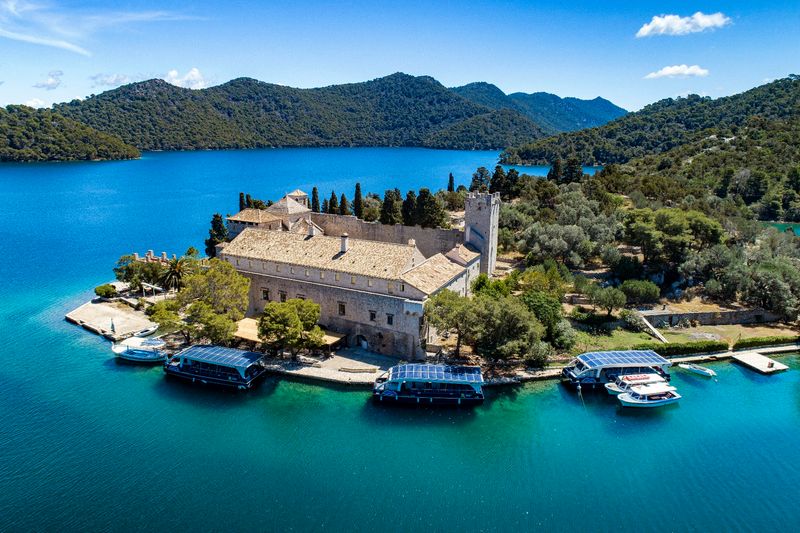
Mljet is the kind of island that makes you want to cancel your return ferry. Dense pine and oak forests cover most of its surface, the roads are quiet, and the national park at the western end of the island contains two seawater lakes so calm and green they look more like something from a Scandinavian fjord than the Adriatic.
Veliko Jezero and Malo Jezero are the park’s defining features, connected to the sea through a narrow channel that allows saltwater to flow in and out with the tides. In the middle of Veliko Jezero sits a tiny island holding a Benedictine monastery and Romanesque church originally built between 1177 and 1198.
Boats run to the monastery from the shore, and the building itself, still partly in use, sits in one of the most quietly dramatic settings in all of Croatia.
Hiking and cycling trails circle both lakes and climb to viewpoints above the forest canopy. The park covers approximately 5,300 hectares, including surrounding marine areas where the water clarity is exceptional for snorkeling.
Ferries to Mljet depart from Dubrovnik and from the mainland port of Prapratno, making it accessible without requiring a private boat. From 2026, park admission includes a return boat trip to the monastery island, which makes planning the visit straightforward.
Share this story