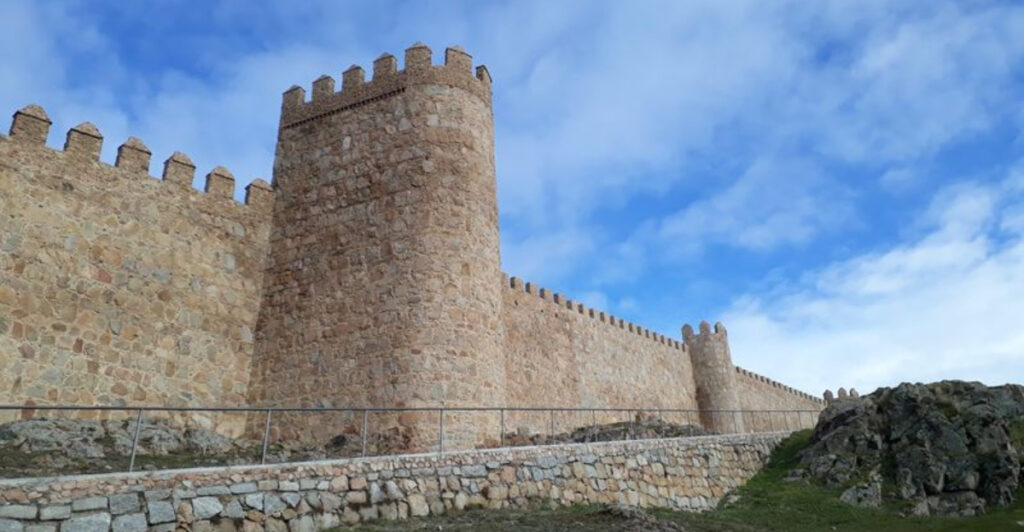
Some cities look so perfectly preserved that stepping inside them feels like walking onto a film set. Ancient gates, stone towers, narrow cobblestone lanes, and centuries-old buildings line streets that have barely changed in hundreds of years.
Walled cities like these exist on nearly every continent, each one shaped by a different culture, climate, and history. Whether you are a history fan, a traveler, or just someone who loves a good story, these places will absolutely take your breath away.
Carcassonne, France
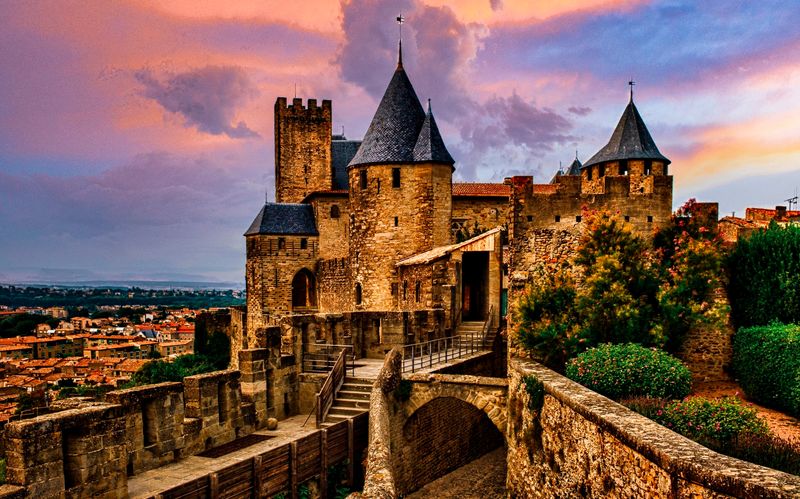
Carcassonne looks so dramatically fortified that visitors often stop at the first gate and simply stare. Towers with pointed conical roofs spike the skyline, stone walls stretch in every direction, and the whole citadel sits on a hill like it was placed there by a very ambitious set designer.
It is hard to believe this place is real.
Fortifications have stood on this strategic hill since before Roman times, making Carcassonne one of Europe’s oldest continuously defended sites. The current appearance owes a great deal to 19th-century architect Eugene Viollet-le-Duc, whose restoration gave the citadel much of its fairy-tale sharpness.
UNESCO recognized the entire site as an outstanding example of a medieval fortified town.
Walking the inner lanes, you pass old stone houses, a Gothic basilica, and a formidable castle within the walls. The sheer scale of the double ring of fortifications is staggering up close.
Visit at dusk when the stone turns amber and the crowds thin out, and you will understand exactly why filmmakers keep coming back here.
Dubrovnik, Croatia
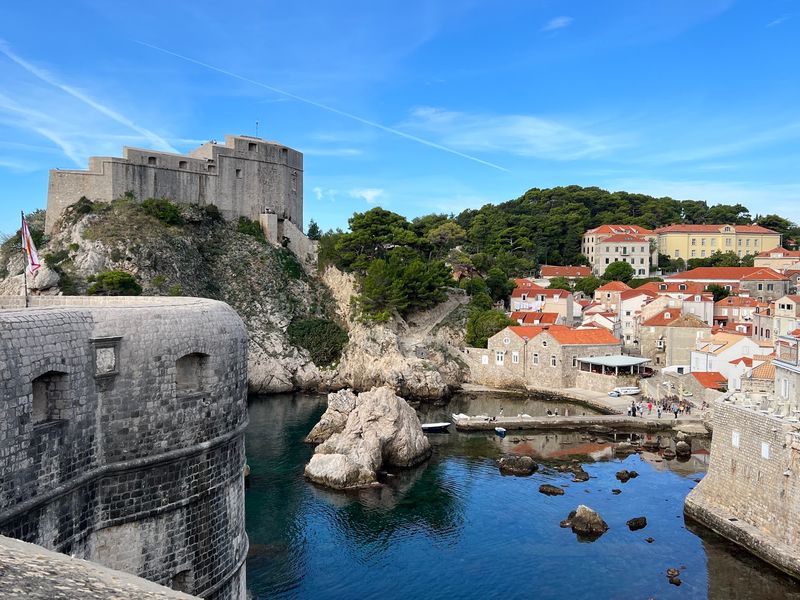
Stand on Dubrovnik’s famous ramparts and you get one of the most jaw-dropping urban views on the planet. Terracotta roofs pack tightly inside gleaming white walls, church towers punctuate the skyline, and the Adriatic Sea blazes electric blue in every direction.
It genuinely does not look like a real place.
The city built its reputation as a major Mediterranean maritime power from the 13th century onward, trading boldly with empires while maintaining a fiercely independent republic. A catastrophic earthquake in 1667 reshaped much of the interior, yet the city rebuilt with remarkable consistency, preserving its Gothic, Renaissance, and Baroque character across centuries.
Conflicts in the 1990s caused serious damage to the historic center, but restoration efforts were so thorough that UNESCO protection remained firmly in place. Today the polished limestone streets, hidden courtyards, and cliff-side fortifications draw visitors from across the world.
Walking the full circuit of walls takes about two hours and rewards you with constantly changing views of rooftops, sea, and ancient stone at every turn.
Avila, Spain
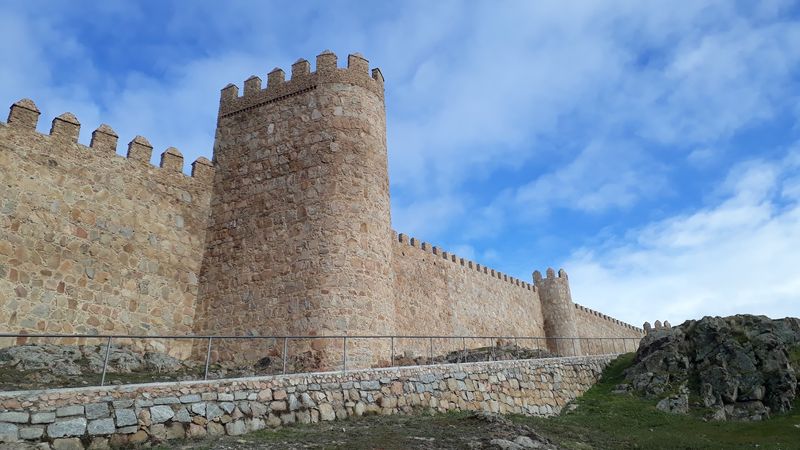
No other city in Spain wears its medieval armor quite as completely as Avila. The defensive circuit wraps the entire old town in a continuous line of stone, punctuated by 87 semicircular towers and nine gates.
From a distance, the whole ensemble looks less like a city and more like a crown planted on the Castilian plains.
Construction of the walls began in the 11th century as part of a broader effort to fortify the region against military threats. The result is one of the best-preserved Romanesque military structures in all of Europe, earning Avila its place on the UNESCO World Heritage list alongside its historic churches and cathedral.
After dark is when Avila really earns its cinematic reputation. Floodlights bathe the ramparts in warm gold light, and the surrounding plains fall into shadow, making the walls appear to float above the landscape.
The city inside is equally compelling, with a cathedral that doubles as part of the defensive wall and streets that feel untouched by modern life. Avila rewards slow, quiet exploration more than almost any city on this list.
Pingyao, China
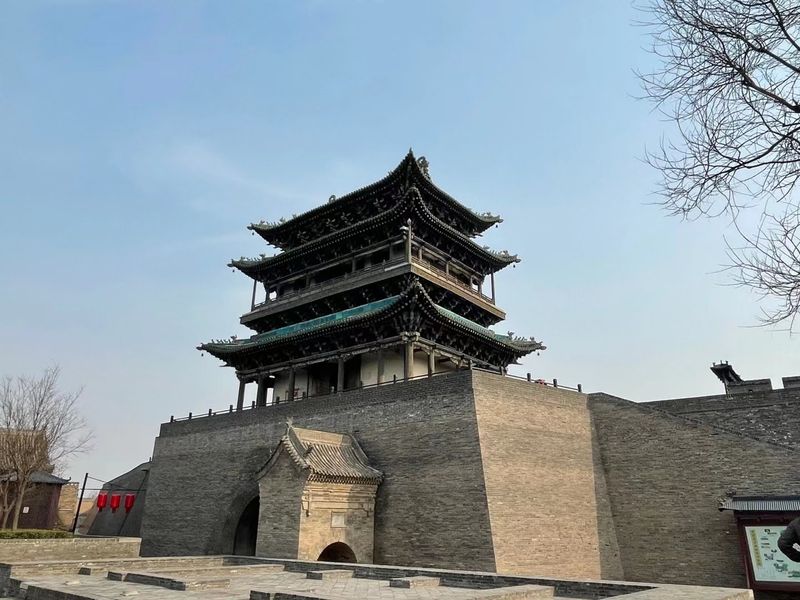
Walking through Pingyao’s ancient gates feels like the modern world simply switched itself off. Stone-paved streets branch between courtyard homes, old temples, and traditional shops, while watchtowers peek above the roofline at every corner.
The scale of preservation here is almost disorienting in the best possible way.
The city took its current form during the 14th century under the Ming Dynasty and became one of China’s most important financial centers during the Qing Dynasty. Historic banks, merchant houses, and counting rooms still line the main streets, offering a remarkably complete picture of how a prosperous Chinese city once operated.
Pingyao’s walls stretch nearly six kilometers in total and stand roughly ten meters high, with 72 watchtowers corresponding symbolically to the 72 disciples of Confucius. The entire urban complex covers around 225 hectares and represents more than five centuries of continuous architectural history.
UNESCO recognized it in 1997 as an exceptionally well-preserved example of a traditional Han Chinese city. Staying overnight inside the walls, when the day-trip crowds leave, gives you the rare experience of hearing a genuinely ancient city settle into nighttime quiet.
Mdina, Malta
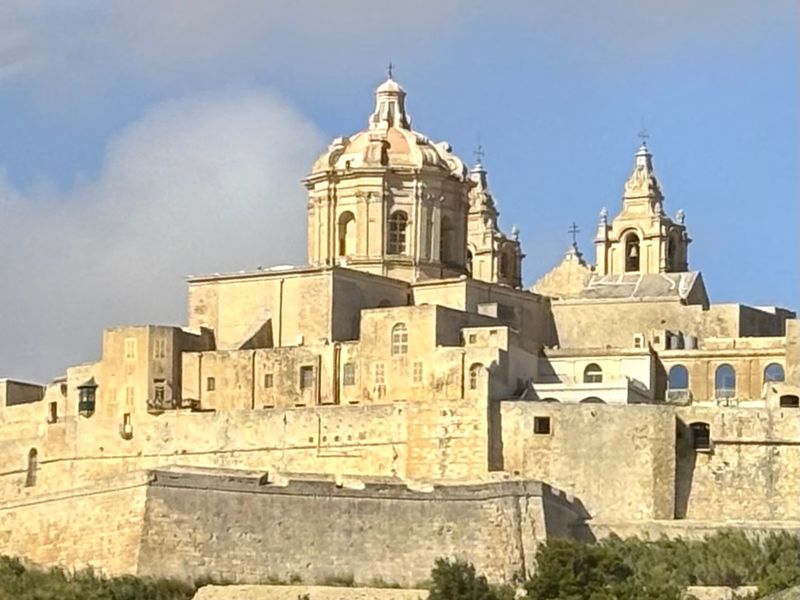
Locals call Mdina the Silent City, and the moment you step through its baroque gate you understand exactly why. Cars are banned from most of the historic interior, horses occasionally clip along the stone lanes, and the only real soundtrack is the wind moving through centuries-old alleys.
The golden limestone walls practically glow at sunset.
A fortified settlement has occupied this hilltop since ancient times, and Mdina served as Malta’s capital and seat of power for much of its early history. The compact city contains an impressive concentration of medieval and baroque palaces, churches, and noble houses packed into just a few winding streets, making it feel like a tiny world unto itself.
Mdina covers barely half a square kilometer, yet the density of historic architecture is extraordinary. Its cathedral, palaces, and fortified walls have made it a popular filming location, and sharp-eyed fans of certain fantasy television series may recognize its narrow lanes immediately.
The surrounding views over Malta’s central plateau are spectacular from the bastions, especially in the early morning before the tour groups arrive. Mdina is small, quiet, and absolutely unforgettable.
Old Quebec, Canada
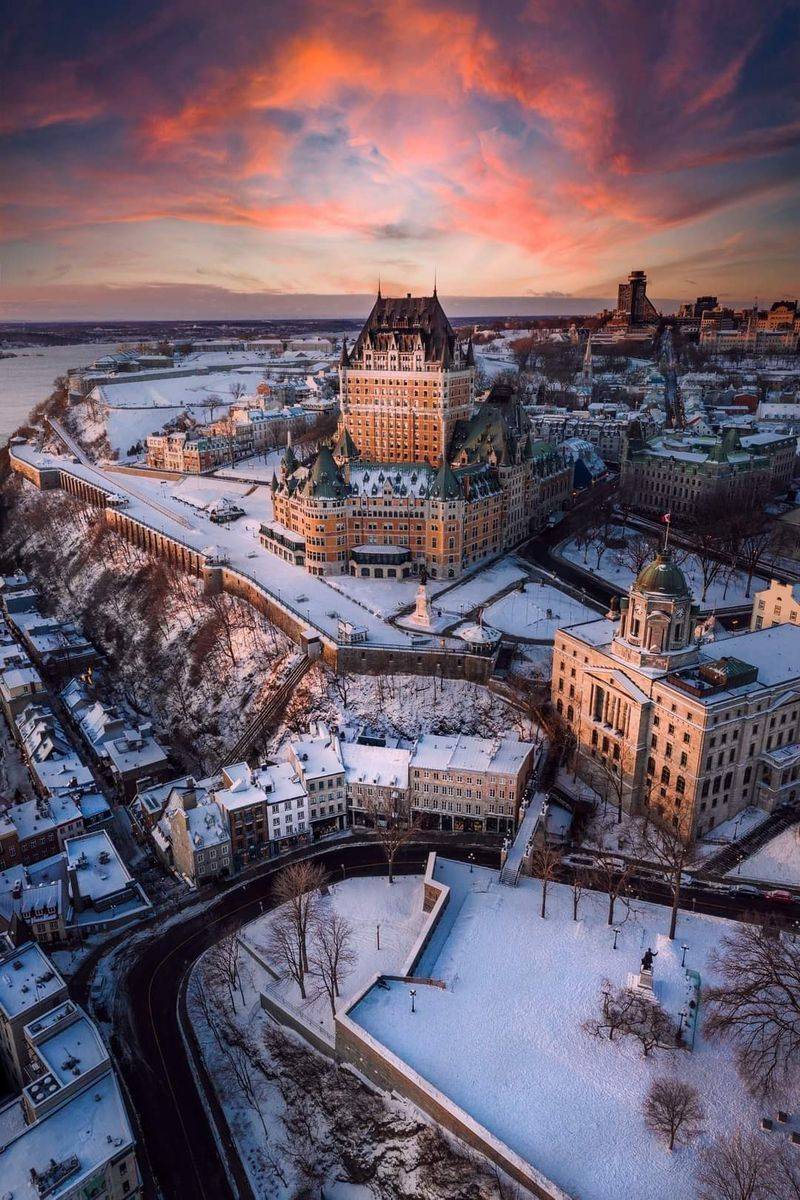
Old Quebec is the kind of place that makes North Americans do a double-take. Stone ramparts, steep cobblestone lanes, French-style architecture, and the enormous silhouette of the Chateau Frontenac stacked above the St. Lawrence River create a cityscape that belongs firmly in a European storybook.
The fact that it sits in Canada still surprises first-time visitors.
The city divides into an Upper Town defended by walls, bastions, and a star-shaped citadel, and a Lower Town that grew up around the historic harbor below. French settlers began building here in 1608, and the fortifications were strengthened repeatedly under both French and British rule over the following centuries.
UNESCO recognized Old Quebec as the only fortified city north of Mexico to retain a complete rampart system, a distinction that makes it genuinely unique in the Americas. The walls stretch for about 4.6 kilometers and include several grand gates that frame dramatic views of the river and surrounding landscape.
Winter transforms the city into something even more theatrical, with snow-covered rooftops and illuminated stone walls creating a scene that looks almost too picturesque to be real. Few cities anywhere reward a slow walk quite like this one.
Jaisalmer, India
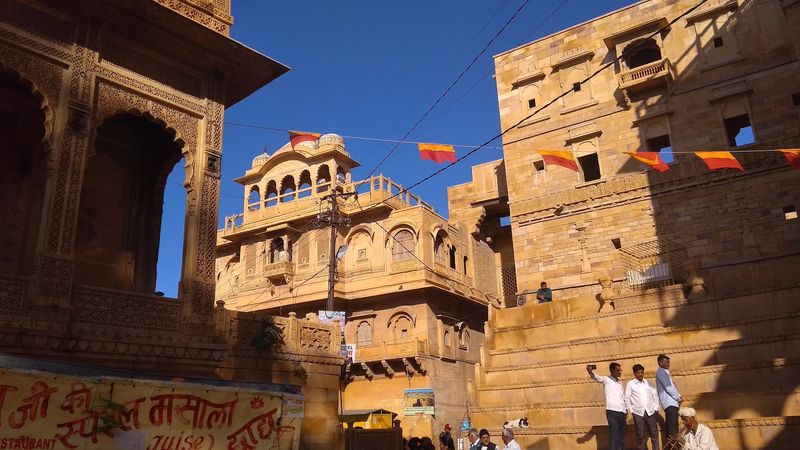
Jaisalmer Fort does not sit apart from the desert, it seems to grow directly out of it. The honey-colored sandstone walls blend so seamlessly with the Thar Desert landscape that the whole fortress appears to have risen naturally from the earth over centuries.
At sunrise, the entire structure turns a shade of gold that no filter could improve.
Founded in 1156 by Rawal Jaisal, the fort is one of the largest fully preserved fortified cities in the world and one of six Hill Forts of Rajasthan recognized by UNESCO. Unlike many historic forts that have become empty monuments, Jaisalmer’s interior remains a functioning neighborhood with families, guesthouses, temples, restaurants, and shops all operating within the ancient walls.
The carved stone facades of the Jain temples inside the fort are among the finest examples of medieval Indian craftsmanship anywhere in Rajasthan. Narrow lanes twist between homes and merchant houses decorated with intricate stonework that took generations of artisans to complete.
The fort’s elevated position offers sweeping views across the desert in every direction. Visiting in the cooler months between October and February makes exploring the sun-drenched lanes significantly more enjoyable.
Cartagena, Colombia
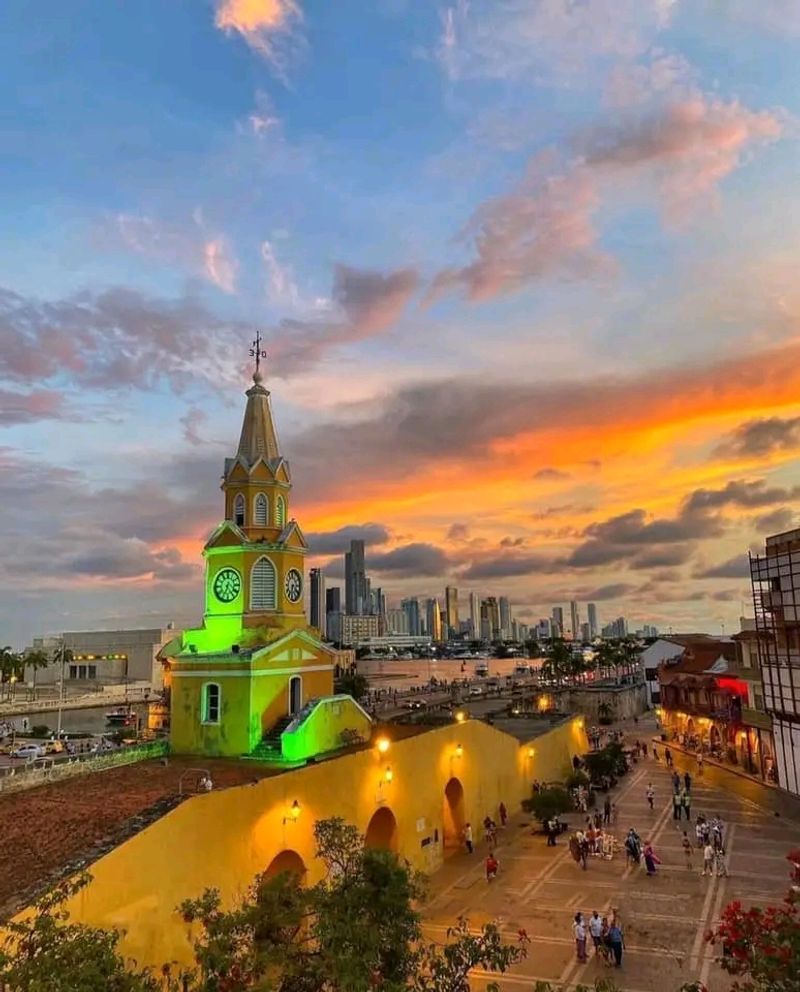
Cartagena’s historic center practically radiates color. Bright yellow, orange, and pink colonial buildings line cobblestone streets, bougainvillea spills over iron balconies, and the stone walls enclosing it all are broad enough to walk on top of.
The whole scene feels designed to be photographed, and yet it has looked roughly this way for over four centuries.
Spain built Cartagena into one of its most valuable Caribbean ports during the colonial period, and the fortification system constructed to protect it became one of the most extensive in the Americas. UNESCO describes the military architecture here as among the most complete examples of Spanish colonial defense construction in South America.
The historic districts inside the walls each have their own personality. San Pedro hosts grand churches and noble houses, San Diego was the merchant quarter, and Getsemani developed as a working-class neighborhood whose street art and creative energy now draw visitors of their own.
Horse-drawn carriages still clatter through the streets at night, and the warm Caribbean air carries the sound of music from nearby plazas. Cartagena is lively, gorgeous, and as cinematic as any city on Earth.
Baku Inner City, Azerbaijan
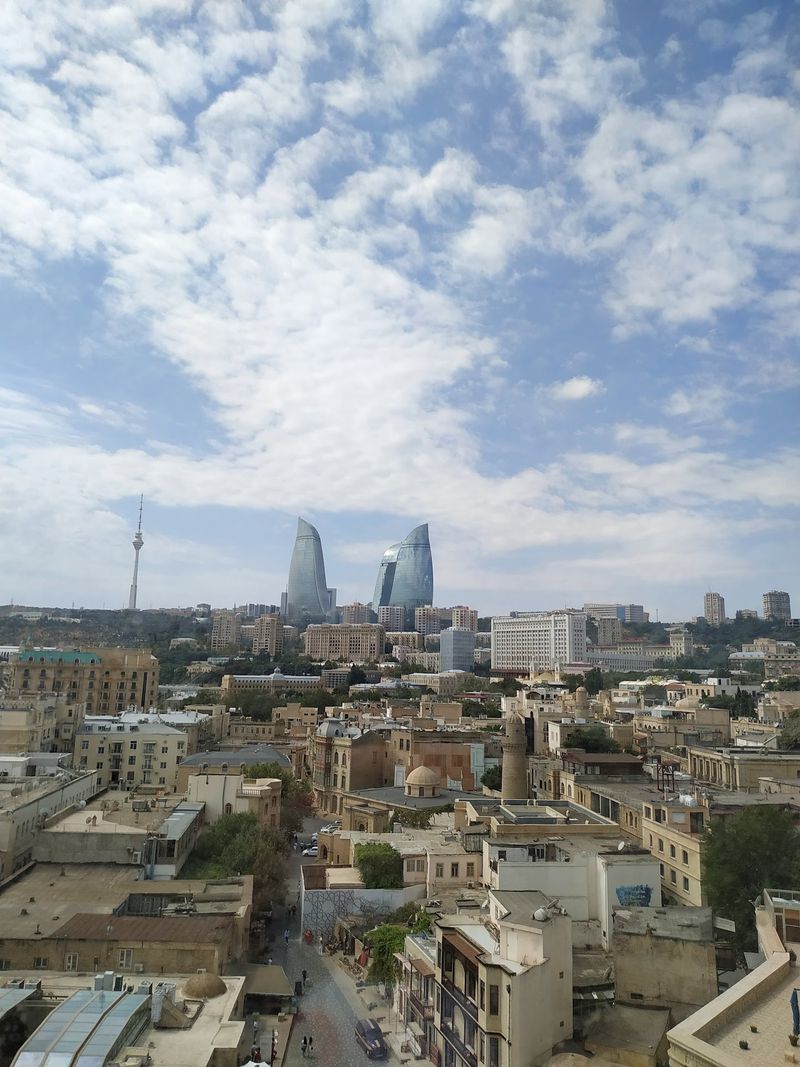
Tucked inside a ring of ancient walls at the heart of Azerbaijan’s ultra-modern capital, the Baku Inner City feels like a secret the rest of the city is keeping. Stone lanes wind between medieval mosques, caravanserais, and old residences while the glass towers of contemporary Baku rise visibly in the background.
The contrast is genuinely startling.
Known locally as Icherisheher, which translates simply as Inner City, this historic district has preserved substantial sections of its 12th-century defensive walls alongside two of Azerbaijan’s most iconic monuments. The cylindrical Maiden Tower, whose exact original purpose remains debated by historians, and the elegant Palace of the Shirvanshahs together anchor a neighborhood layered with centuries of overlapping cultures.
The architecture of the Inner City reflects an extraordinary mix of influences, including Zoroastrian, Persian, Arabic, Ottoman, Russian, and Azerbaijani traditions, each leaving visible marks on the buildings and street patterns. UNESCO recognized the site in 2000 for its exceptional cultural significance and the remarkable density of historic structures within such a compact area.
Exploring the Inner City on foot takes only a few hours, but the layers of history packed into those narrow lanes could keep a curious traveler busy for days.
Itchan Kala, Khiva, Uzbekistan
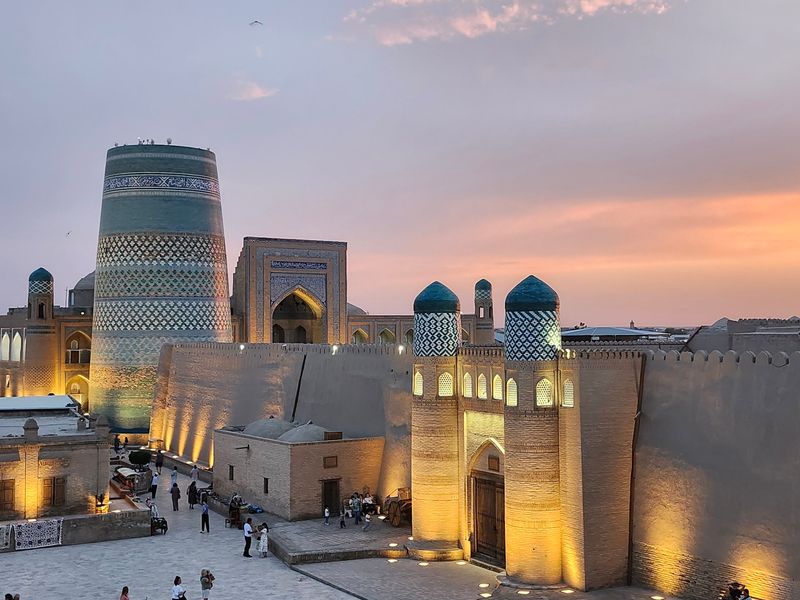
Khiva’s inner city looks like it was assembled specifically to represent the Silk Road at its most spectacular. Turquoise domes cluster above mud-brick walls, decorated minarets rise at sharp angles against the sky, and carved wooden columns frame the entrances to mosques and palaces.
Every single frame here looks like a painting.
Itchan Kala served as the last significant caravan stop before travelers faced the punishing desert crossing toward Persia. That position made Khiva wealthy, and the rulers who profited from Silk Road trade poured their resources into building and decorating the city with extraordinary ambition.
The roughly ten-meter-high walls that surround the inner city today still carry the weight of that history.
The collection of Islamic architecture preserved inside the walls spans more than two millennia of continuous settlement and includes palaces, madrassahs, mosques, mausoleums, and caravanserais in various states of beautiful preservation. UNESCO added Itchan Kala to the World Heritage list in 1990, making it the first site in Uzbekistan to receive that recognition.
Unlike some heavily restored historic cities, Khiva retains a lived-in warmth that keeps it from feeling like a museum. Walking here at golden hour, when the tiles shimmer, is simply unforgettable.
Share this story