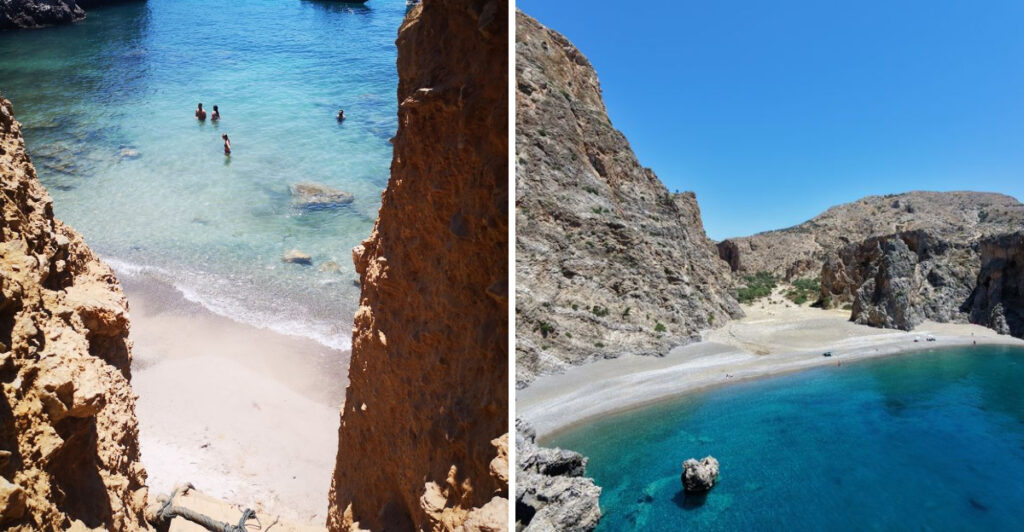
Greece is famous for its sparkling coastline, but the beaches that end up on postcards are only part of the story. Tucked behind cliffs, at the end of rocky trails, and across short boat rides from quiet harbors, there are stretches of shoreline that feel genuinely off the radar.
Some require a bit of effort to reach, and that effort is almost always worth it. These 10 hidden gems offer dramatic scenery, crystal-clear water, and the rare feeling of having a piece of the Mediterranean almost entirely to yourself.
Fteri Beach, Kefalonia
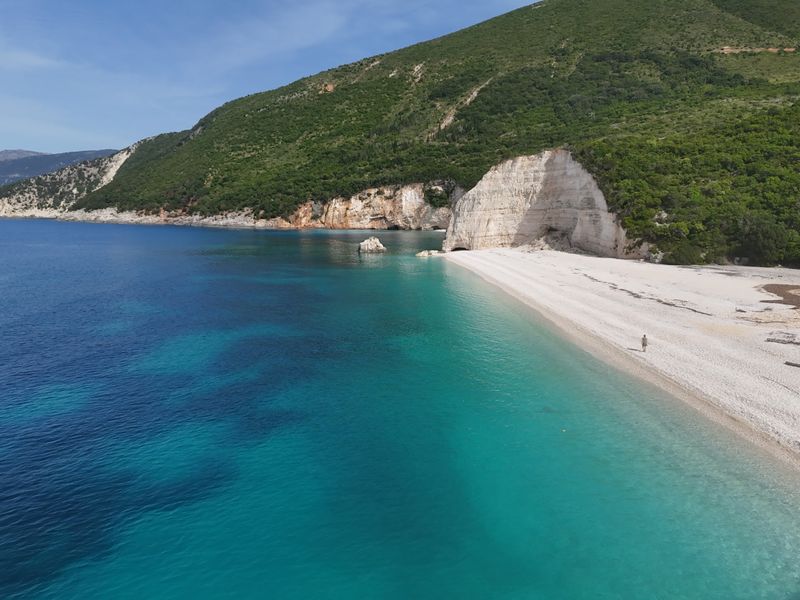
Pale limestone cliffs rise so high around Fteri Beach that the sky above looks like a narrow strip of blue ribbon. This remote cove on Kefalonia’s rugged coastline is framed by enormous rock walls on three sides, with the Ionian Sea filling the rest of the picture in shades of turquoise that seem almost too vivid to be real.
Getting here is part of what makes it special. Most visitors arrive by boat from Zola, near Agia Kyriaki Beach, since there is no paved road leading down.
There are zero amenities waiting at the bottom, so pack water, snacks, and plenty of sunscreen before you go.
Once you arrive, the reward is immediate. Natural rock formations jut out from the water, small caves invite exploration, and the sheer scale of the cliffs creates a sense of total seclusion.
Kefalonia already has a reputation for dramatic, vegetation-covered landscapes and emerald-toned seas. Fteri feels like the island turned that reputation up several notches.
Swimmers often describe the water here as among the clearest they have ever seen in Greece, which is saying a lot given the competition.
Seychelles Beach, Ikaria
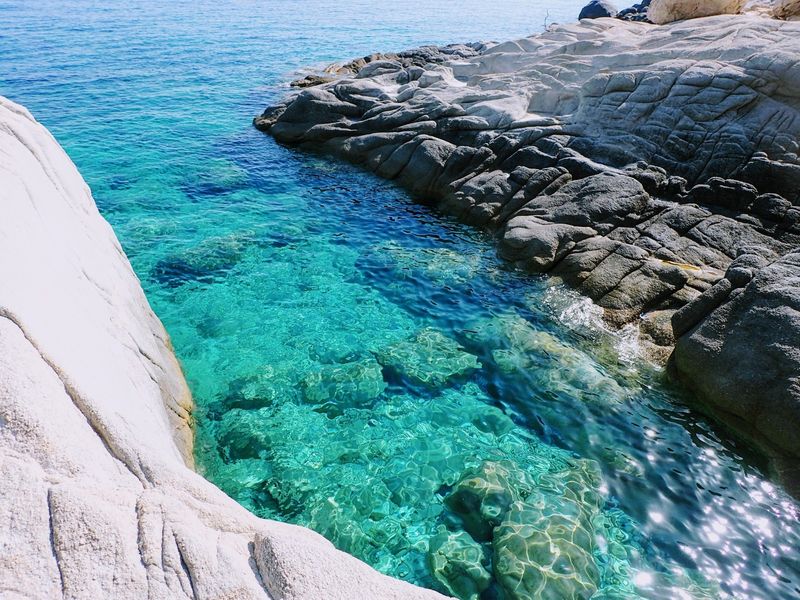
Naming a Greek beach after the Seychelles is a bold move, but spend five minutes here and you will understand why nobody argued with the decision. Sculpted granite boulders frame this tiny cove on Ikaria’s southern coast, and the water between them glows in shades of green and blue that look more Indian Ocean than northern Aegean.
Here is a fun detail: the dramatic granite formations you see around the cove were exposed after a landslide connected to a nearby tunnel project. Nature accidentally created something spectacular.
The shoreline itself is a mix of white pebbles and sand, and the surrounding landscape feels genuinely untouched.
Reaching Seychelles Beach typically involves a roughly 20-minute walk from Magganitis or a short boat ride. Either way, there are no facilities waiting at the end of the journey.
Ikaria is already one of Greece’s quieter islands, famous more for its long-lived residents and laid-back pace than for beach clubs and nightlife. Seychelles Beach fits that personality perfectly.
It asks for a little effort, offers zero creature comforts, and delivers exactly the kind of wild, extraordinary coastal scenery that makes the whole trip worthwhile.
Tsigrado Beach, Milos
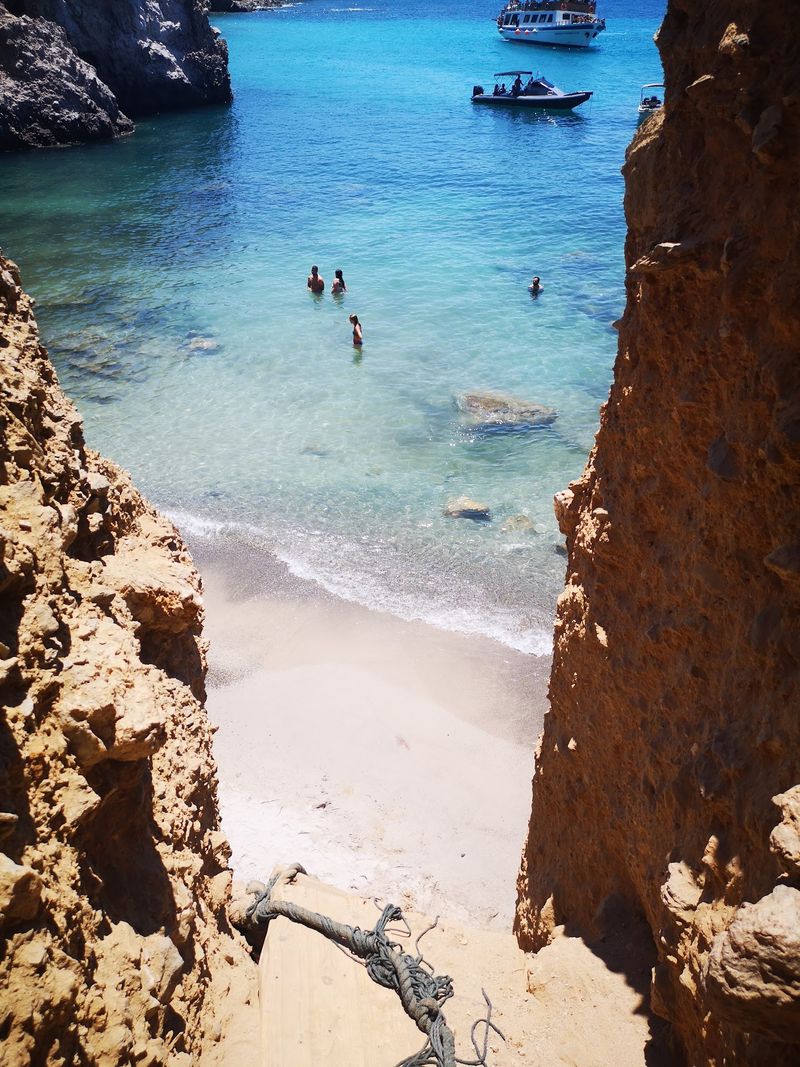
There is a beach in Milos where the only way to get to the sand is by squeezing through a narrow crack in the rock and lowering yourself down using ropes and ladders. That beach is Tsigrado, and yes, it is absolutely worth the mild heart-in-your-throat moment on the way down.
Once you land on the white sand, you find yourself inside a narrow cove completely enclosed by towering volcanic rock walls. The water is a vivid emerald green, and the surrounding cliffs create such a tight frame around the sky that the whole place feels like a secret chamber carved out of the island.
Milos has more than 70 stretches of coastline shaped by its volcanic geology, but Tsigrado feels the most intimate of all of them.
Access conditions and equipment can change seasonally, so always check locally before attempting the descent. Tsigrado is not suitable for everyone, and that is honestly fine, because the people who do make it down tend to have the place largely to themselves.
Bring water shoes for the rocky shoreline and plan to stay a while. Leaving feels genuinely difficult once you are settled in.
Agiofarago Beach, Crete
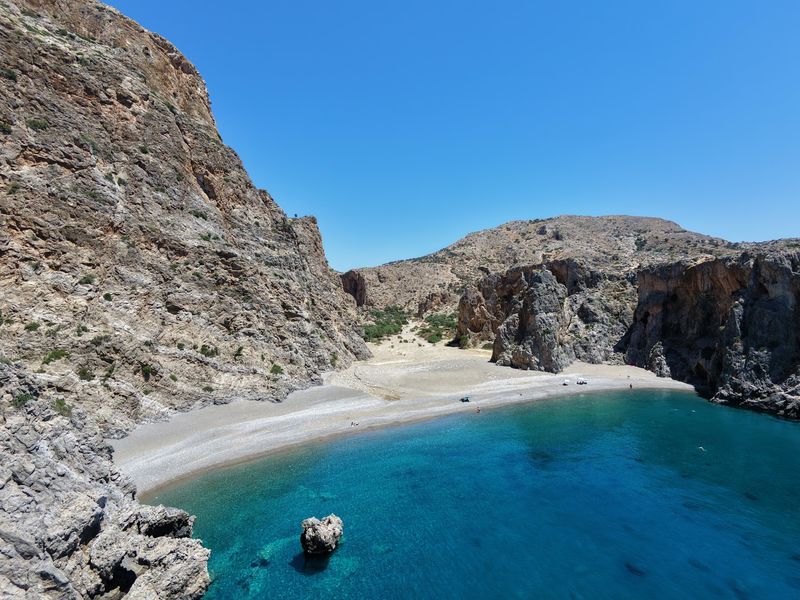
At the bottom of one of southern Crete’s most dramatic gorges, where the canyon walls finally part and the Libyan Sea takes over, you find Agiofarago Beach. The name means “gorge of the saints,” and the setting does carry a certain quiet, almost spiritual weight once you arrive.
Most visitors hike through the gorge to get here, a walk that winds between narrow rock walls and passes a small chapel carved into the stone. Others arrive by boat.
Either way, the approach builds anticipation effectively. The beach itself is a wild pebble shoreline backed by the same towering cliffs that form the canyon, creating a natural amphitheater with the sea at the center.
There are no beach bars, no loungers, and no promenade. The contrast with northern Crete’s busier resort towns could not be more complete.
What you get instead is remarkably clear water, total seclusion, and the satisfying feeling of having earned your swim. Agiofarago is the kind of place that reminds you why people travel to Greece in the first place, before the umbrellas and cocktail menus entered the picture.
Pack a picnic, bring good shoes for the hike, and give yourself the whole afternoon.
Katergo Beach, Folegandros
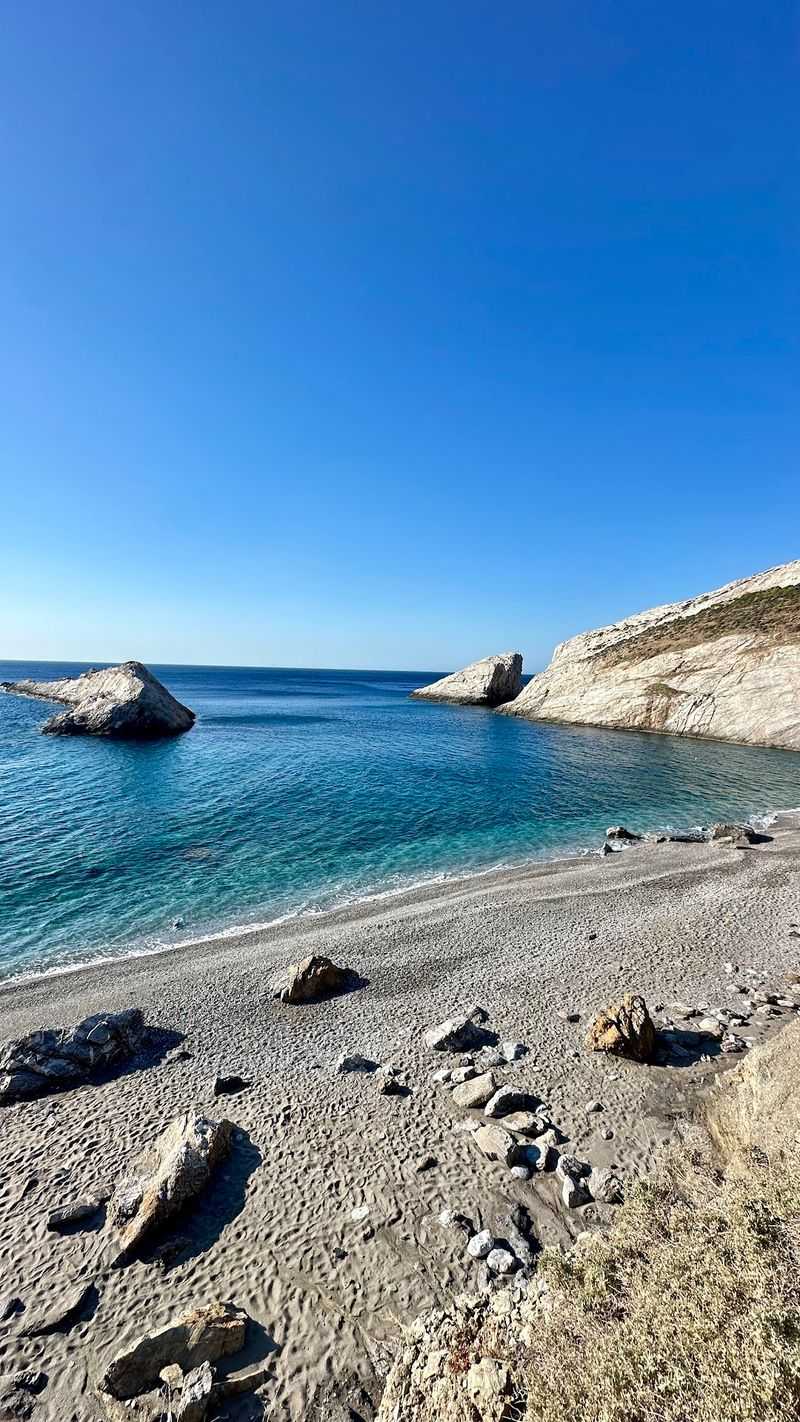
Folegandros has always attracted travelers who find Santorini a little too polished and Mykonos a little too loud. Katergo Beach, tucked beneath barren cliffs on the island’s southern coast, is the kind of place those same travelers keep coming back for.
The water here is almost unreasonably clear. Boat excursions from the main port regularly include Katergo on their route precisely because the transparency of the sea is so striking, even by Aegean standards.
The shoreline is a narrow strip of sand and pebbles, framed on both sides by rocky headlands that keep the cove sheltered and protected.
There are no organized beach facilities on Katergo, so the standard advice applies: bring everything you need before you leave. Food, water, and sun protection are essentials.
Some travelers hike in when conditions allow, though most arrive by boat. Folegandros generally has far fewer developed beach setups than other Cycladic islands, and Katergo takes that low-key approach to its logical conclusion.
Standing on the pebbles with cliffs behind you and open Aegean ahead, the sensation is one of total removal from ordinary life. That feeling is exactly the point, and it is genuinely hard to replicate anywhere else.
Grammata Beach, Syros
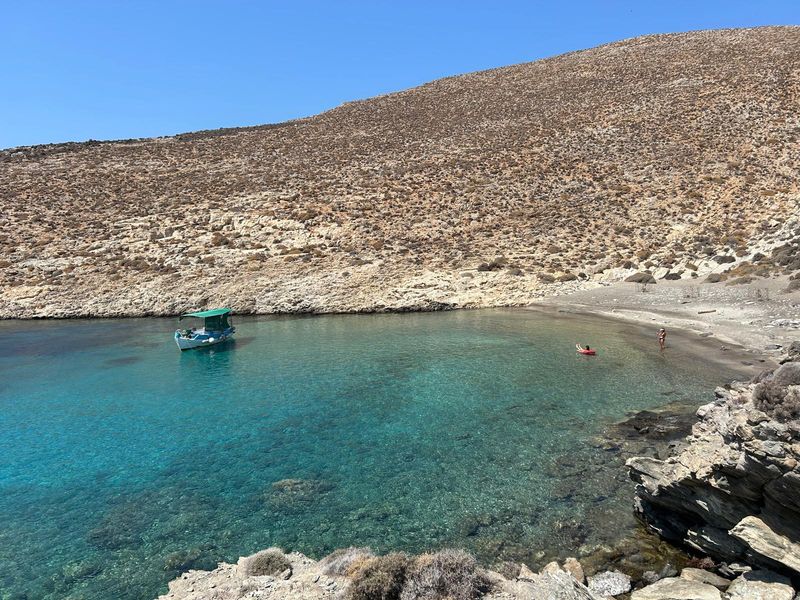
Most people who visit Syros spend their time in elegant Ermoupoli, admiring the neoclassical architecture and eating well. Grammata Beach is for the ones who want to see a completely different side of the island, and who do not mind earning that view.
Located in the wild northern part of Syros, Grammata is reachable by hiking or boat from the Kini area. The beach itself is a quiet, rocky cove with clear Aegean water, framed by rugged hills that look nothing like the island’s polished southern coastline.
But the most remarkable thing about Grammata is not the water. Ancient sailors carved inscriptions into the rocks around the bay, and some of those carvings date back more than 2,000 years.
Swimming beside stone messages left by seafarers from the ancient world is a genuinely unusual experience.
Grammata sits alongside other secluded northern Syros beaches including Lia, Marmari, and Amerikanou, all of which share that same remote, adventure-ready character. The journey into this part of the island feels like a small expedition.
Bring supplies, wear sturdy shoes if you are hiking, and take your time reading the rocks. Not every beach comes with its own ancient graffiti collection.
Glyfada Beach, Rhodes
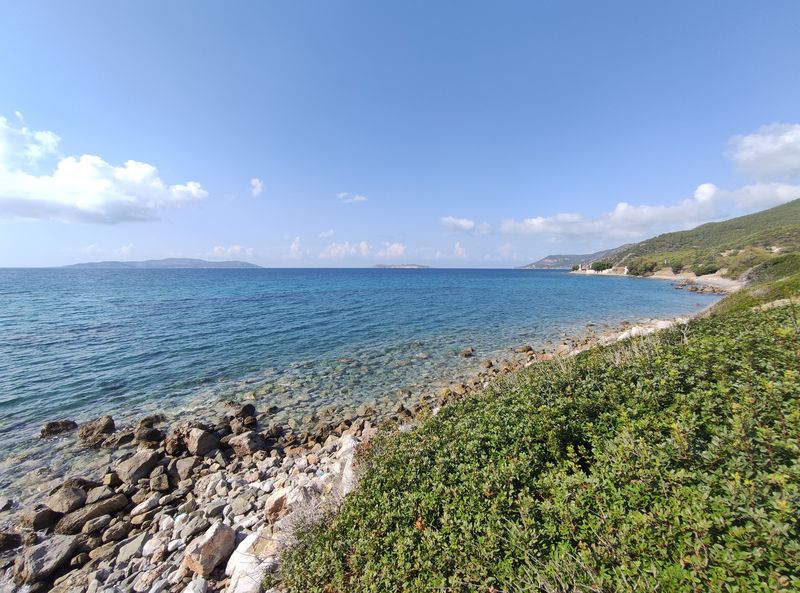
Rhodes gets millions of visitors every year, which makes finding a genuinely quiet beach on the island feel like a small victory. Glyfada, near the village of Monolithos on the island’s southwestern coast, is exactly that kind of victory.
What immediately sets Glyfada apart from most Rhodes beaches is the greenery. Dense Mediterranean vegetation grows right down toward the shoreline, giving the cove a lush, almost jungle-adjacent atmosphere that feels completely different from the dry, sun-bleached scenery typical of the eastern Aegean.
The Greek National Tourism Organisation specifically recommends Glyfada for travelers looking for something less developed and more natural.
The beach sits well away from the resort towns and party strips that define parts of Rhodes. Getting there takes a bit of effort, which is precisely why it stays quieter than the island’s more accessible shores.
The water is a deep, rich blue, and the surrounding landscape feels unhurried and genuinely wild. Glyfada is a good reminder that popularity and charm do not always go together.
Rhodes is one of the most visited islands in Greece, but the island still holds pockets of coastal scenery that feel entirely undiscovered. This is one of the best of them.
Dafnoudi Beach, Kefalonia
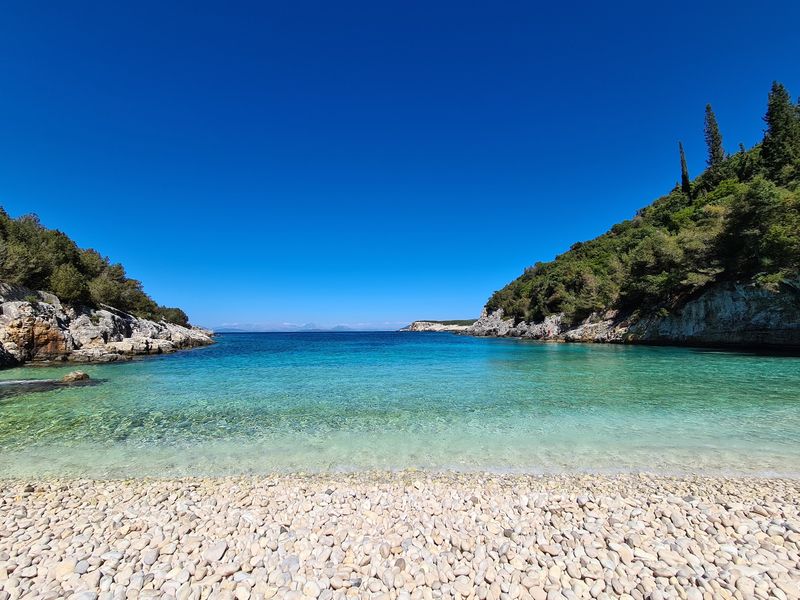
Walking through a cypress forest to reach a beach is not the most common pre-swim activity, but Dafnoudi makes a compelling case for it. The approach through tall, fragrant trees sets the mood before you even see the water, and the payoff when the cove finally comes into view is genuinely satisfying.
Dafnoudi is a compact pebble beach near Fiskardo on Kefalonia’s northern tip. The water has that luminous, almost electric clarity that the Ionian Sea does better than almost anywhere else in Greece.
Rocky edges surround the cove, and small caves are accessible from the water, giving swimmers with a sense of curiosity somewhere to explore.
There are no facilities here, which means no umbrellas, no beach bars, and no rows of loungers blocking the view of the vegetation. The greenery comes right down to the shoreline, creating a sense of total enclosure that feels more like a secret garden than a public beach.
Visitors staying near Fiskardo can reach Dafnoudi by road and then a short hike. Fteri gets most of the attention on Kefalonia, but travelers who find Dafnoudi often quietly decide it was the better discovery.
The cypress walk alone is worth the detour.
Amerikanou Beach, Syros
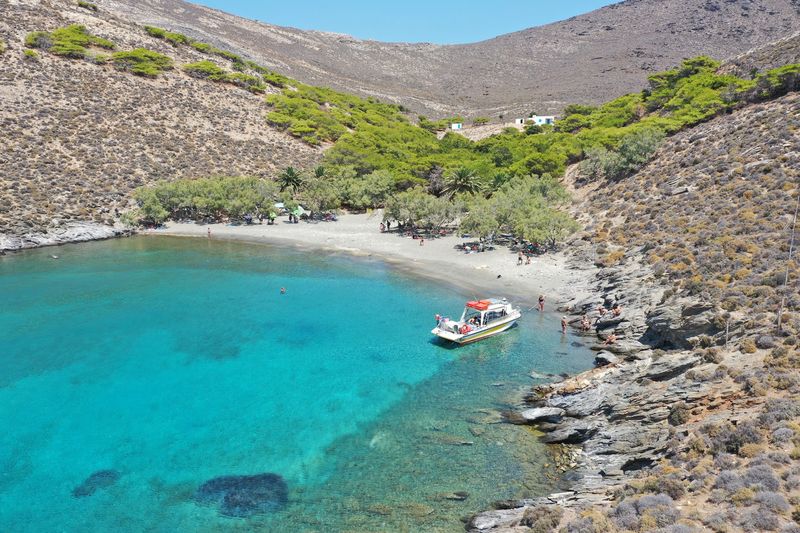
Also known as Gria Spilia, Amerikanou Beach sits in the part of Syros that most visitors never bother to reach. That is their loss and your gain.
Northern Syros is a different island entirely from the elegant, cafe-lined Ermoupoli that appears on most travel itineraries.
Getting to Amerikanou typically involves a boat excursion or a coastal hike from the Kini area. The beach is part of a cluster of secluded northern Syros shores that includes Grammata, Varvarousa, and Aetos, all sharing the same raw, undeveloped character.
Rocky hills rise behind the cove, the Aegean stretches out ahead, and there is very little in between except clear water and silence.
No infrastructure means no distractions. That is the entire appeal of Amerikanou, and it is not a small thing.
In a world where even remote beaches sometimes come equipped with a cocktail truck and a DJ set, a place that offers genuinely nothing except good swimming and dramatic scenery feels almost radical. Boat and hike excursions into this northern part of the island have grown in popularity among travelers who want to see Syros beyond its polished southern face.
Amerikanou is consistently one of the highlights of those trips.
Gramvousa Islet, Amorgos
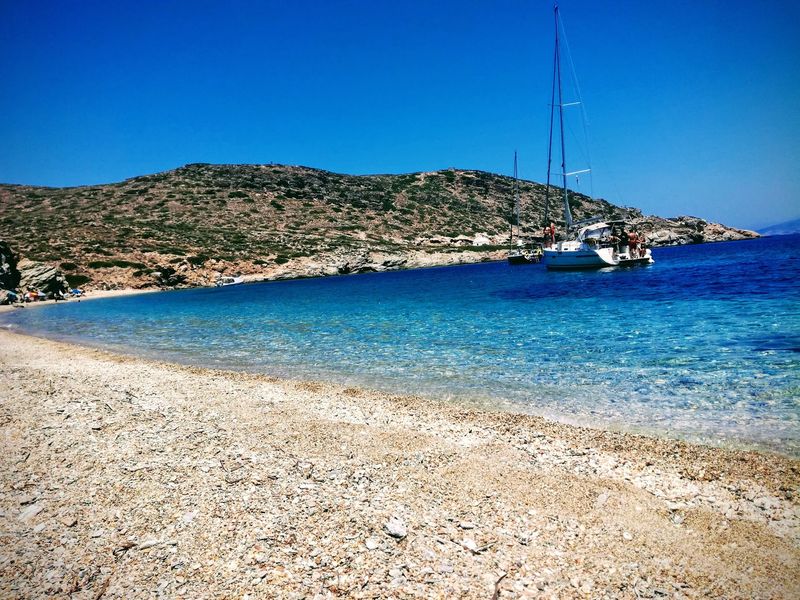
Amorgos is already the kind of island that attracts people who prefer cliffs and hiking trails to pool bars and souvenir shops. But if you want to go one step further into genuine remoteness, a boat from Kalotaritissa Bay will take you to Gramvousa, an uninhabited islet also called Krambousa, floating just off the northwestern tip of the island.
There is no town behind the beach, no taverna at the top of the path, and no road leading anywhere. Just clear Aegean water, rocks, and the surrounding open sea.
Discover Greece describes the water here as exceptionally clear even by Greek island standards, which should tell you something about what to expect when you jump in.
Amorgos itself is known for steep cliffs, deep-blue sea, and hiking routes that wind through largely untouched landscapes. The island sits well outside the mainstream Cycladic tourist circuit, attracting visitors who are happy to trade convenience for character.
Gramvousa takes that philosophy to its absolute limit. Reaching an uninhabited islet by boat, swimming in water with almost zero visibility-blocking depth, and having no schedule to keep for the afternoon is the kind of travel experience that is genuinely hard to find anywhere in Europe anymore.
Share this story