Nature has a way of showing off, and sometimes it goes completely over the top in the best possible way. From mountains striped like a painter’s palette to rivers that seem to bleed five colors at once, our planet is full of landscapes that look almost too vivid to be real.
These places get their wild colors from minerals, microorganisms, volcanic activity, and chemistry that took millions of years to develop. Get ready to see just how bold and brilliant the natural world can be.
Grand Prismatic Spring, Wyoming, United States
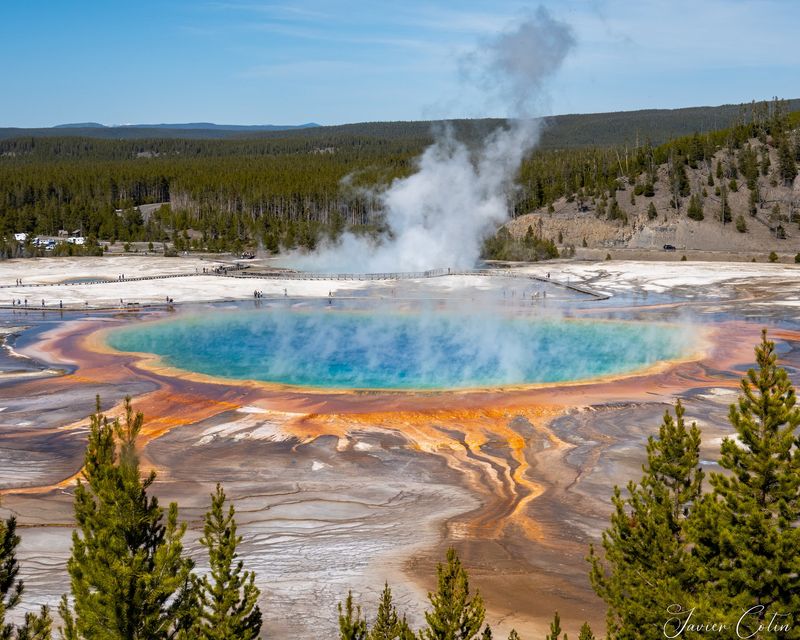
Staring down at Grand Prismatic Spring from the Fairy Falls Trail overlook feels like looking at a giant, steaming eye staring right back at you. The spring measures roughly 200 to 330 feet across and more than 121 feet deep, making it the largest hot spring in Yellowstone National Park.
That electric blue center is almost impossible to believe until you are standing right there.
The vivid rings of yellow, orange, green, and brown surrounding the blue core are not paint or filters. They come from thermophiles, which are heat-loving microorganisms that thrive at different temperatures around the spring’s edges.
Trillions of them live together in mats, and their collective pigmentation creates those brilliant bands of color.
Morning visits often mean less wind and clearer views from the boardwalks at Midway Geyser Basin. The overlook trail gives the best wide-angle perspective of the full color pattern.
Bring layers, because the steam can make the area feel much cooler than the surrounding landscape, even in summer.
Zhangye Colorful Hills, China
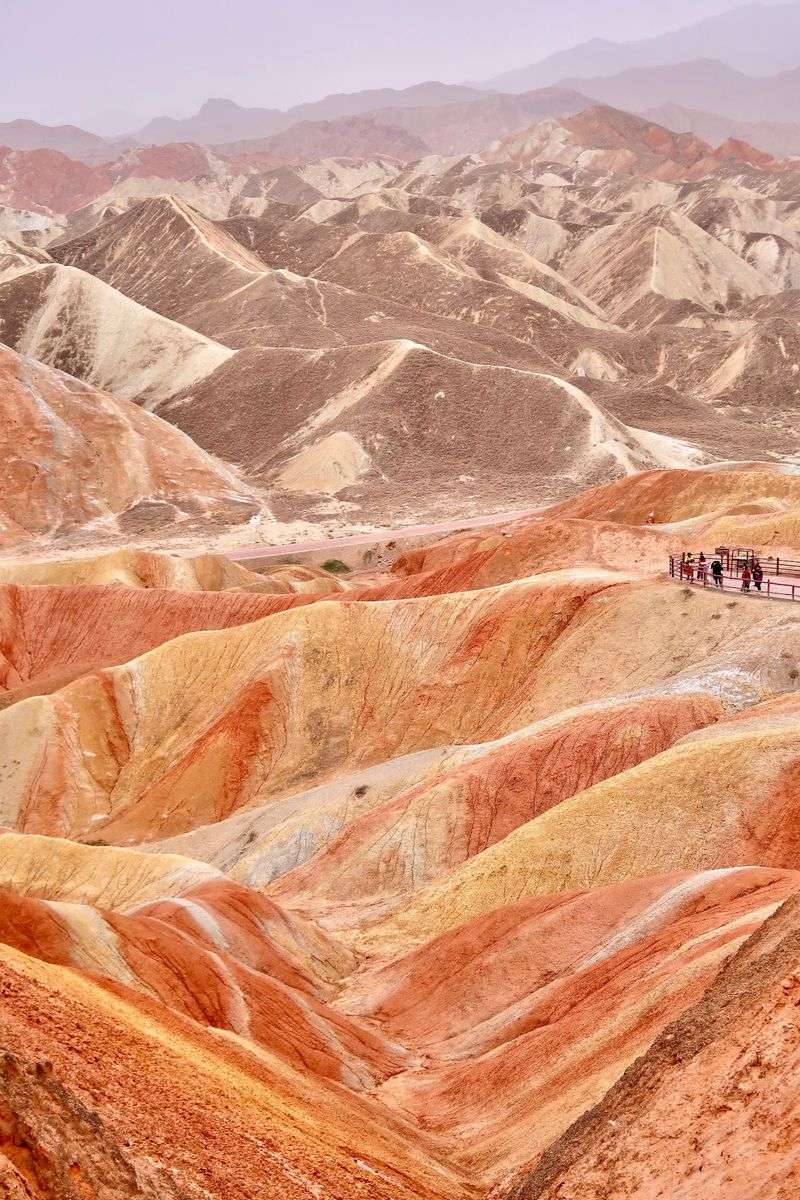
Scroll past a photo of Zhangye’s striped mountains without knowing what they are, and your first thought might be that someone ran a heavy filter over a boring landscape. The colors are completely real, shaped by millions of years of sediment buildup, tectonic uplift, and erosion along the northeastern edge of the Tibetan Plateau.
No editing required.
Red, orange, yellow, white, and darker tones stack on top of each other in layers that shift and deepen depending on when you visit. Morning light softens the palette, midday makes everything pop, and sunset turns the ridges into something that looks almost molten.
The site was added to China’s UNESCO World Heritage tentative list in 2025, which means the rest of the world is finally catching up.
Several viewing platforms are spread across the park, each offering a different angle on the hills. Arriving early helps you beat crowds and catch the soft golden-hour glow before the sun climbs too high.
Photographers tend to stake out spots near the highest platforms for the most dramatic layered views.
Cano Cristales, Colombia
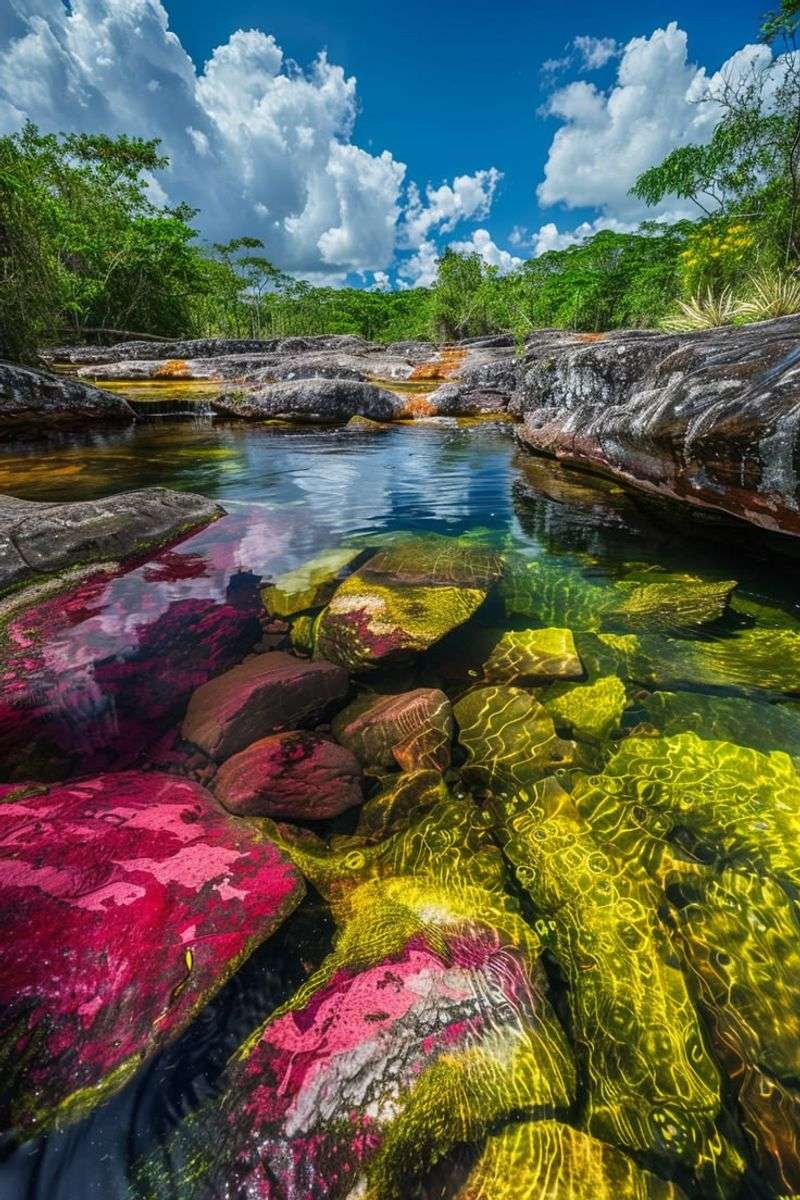
For a few weeks each year, a remote Colombian river transforms into something that looks borrowed from a fantasy novel. Cano Cristales, located in Sierra de La Macarena, earns its nickname “River of Five Colors” when red, yellow, green, blue, and dark tones become visible all at once through its crystal-clear water.
The timing of this display makes every visit feel like catching something rare.
Most of the red color comes from Macarenia clavigera, an aquatic plant found only in this river. When sunlight intensity and water levels hit the right combination, this plant bursts into brilliant color.
The peak display generally runs from July through August, though conditions vary from year to year.
Getting there is part of the adventure. Travelers fly or travel to La Macarena town, then arrange guided transport into the protected natural area.
Visitor numbers are controlled to protect the ecosystem, so booking ahead is essential. Swimming is allowed in certain sections, which means you can actually float through one of the most colorful rivers on the planet.
Vinicunca Rainbow Mountain, Peru
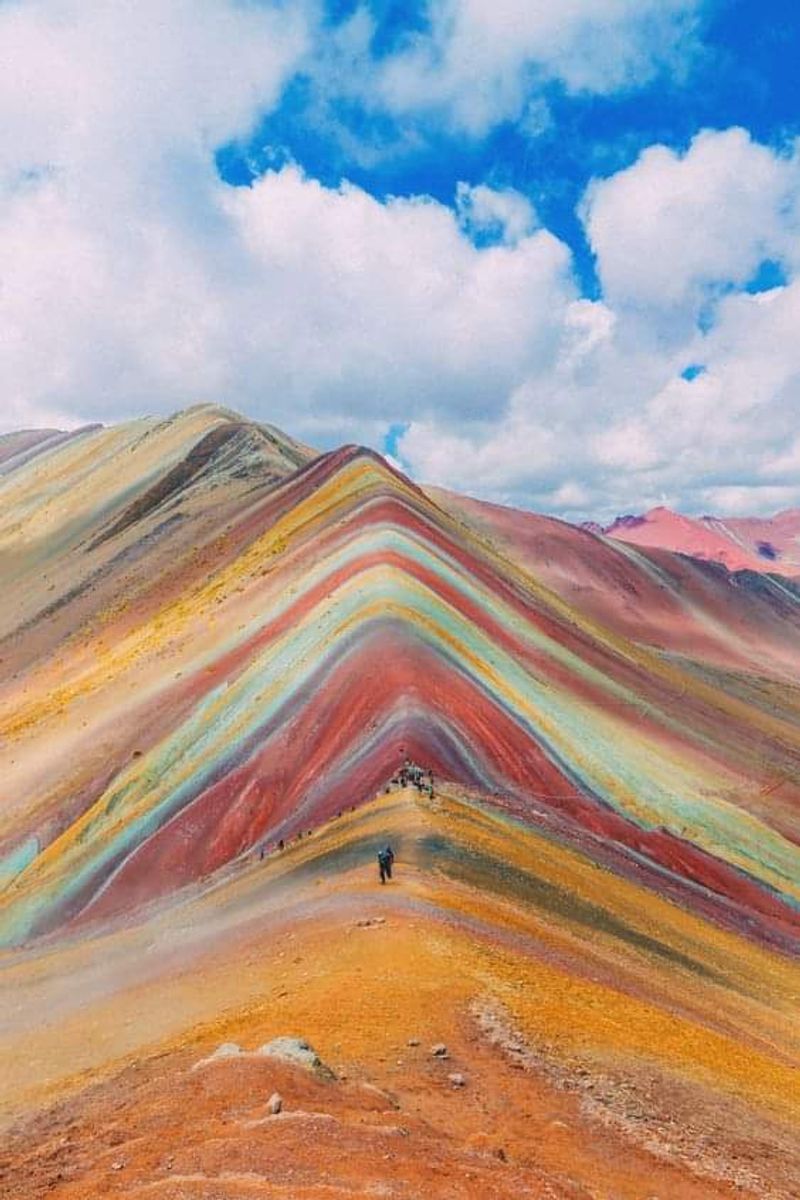
Nobody painted those stripes. Vinicunca, rising above 5,000 meters in the Cusco region of Peru, gets its famous banded appearance entirely from geology.
Ancient marine, lake, and river sediments built up in layers over millions of years, and tectonic forces eventually shoved them skyward. Oxidation and weathering then worked on each mineral layer differently, producing the burgundy, green, yellow, white, and reddish tones visible today.
The colors are not subtle. Bands of deep red sit next to pale green sections, which give way to warm yellows and bright whites.
Snow or heavy cloud cover can hide the stripes entirely, so weather plays a big role in what you actually see on arrival. Clear mornings tend to offer the sharpest color contrast.
The hike itself is physically demanding because of the altitude. Acclimatizing in Cusco for at least two days before attempting the trail is strongly recommended.
Horse rental is available for sections of the route if needed. Most tours depart Cusco before sunrise to reach the mountain during the best light and before afternoon clouds roll in.
Kelimutu Crater Lakes, Flores, Indonesia
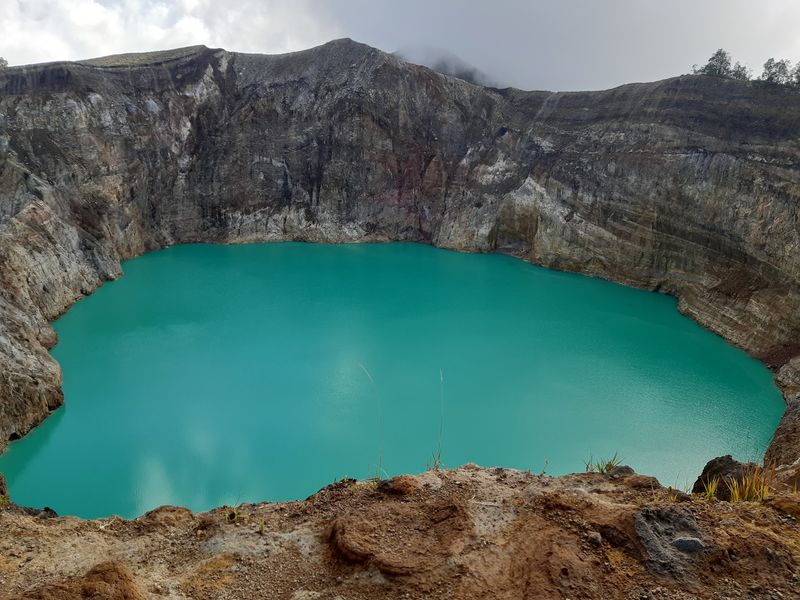
Three lakes sit at the summit of Mount Kelimutu, and on any given day, each one might be a completely different color from its neighbors. Observers have recorded them in blue, green, black, white, red, and brown over the years, and no one can reliably predict what shade will greet visitors on arrival.
In 2016 alone, the lakes reportedly changed colors six times.
Volcanic gases, mineral content, oxygen levels, and upwelling activity inside the lakes are thought to drive these transformations. The chemistry shifts gradually or sometimes quite suddenly, and the result is a color display that no two visitors experience exactly the same way.
That unpredictability is a big part of what makes Kelimutu so compelling.
Local tradition adds a spiritual dimension to the lakes, associating each one with the resting places of different groups of souls. Sunrise is the most popular visiting time, when the sky brightens slowly and the lake colors emerge from shadow.
The viewing area is a short walk from the car park at the summit. Budget extra time to simply sit and watch the light change across the water.
Marble Caves, General Carrera Lake, Chile
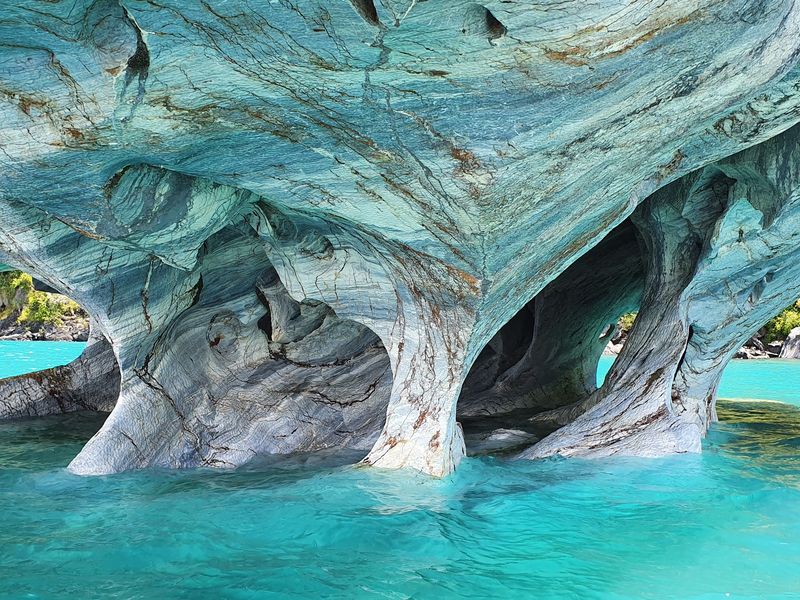
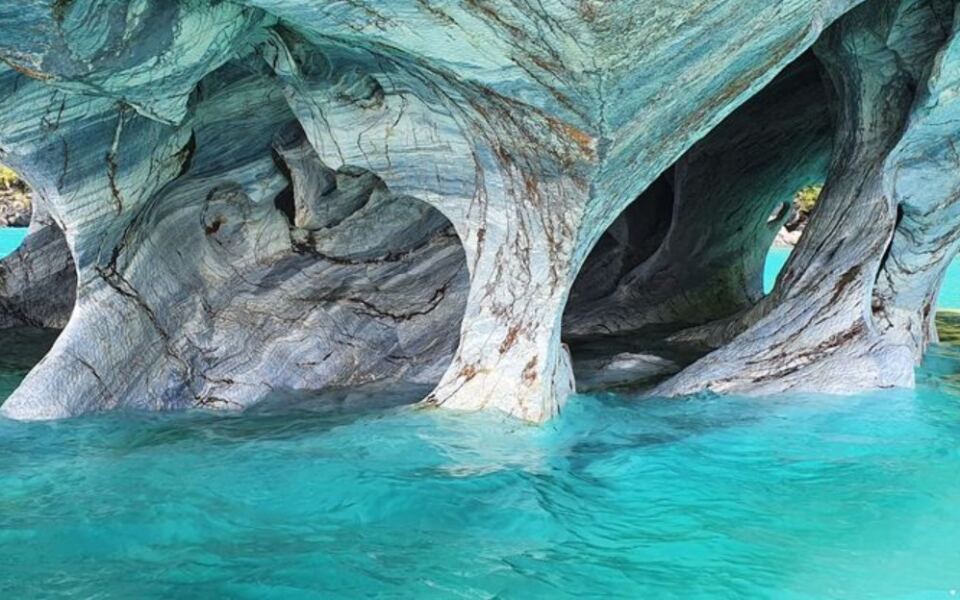
Tucked inside the Patagonian wilderness, the Marble Caves are the kind of place that makes you question whether you have accidentally sailed into a painting. Water erosion has been carving these arches, chambers, and curved walls for thousands of years, and the result is a network of sculpted marble that sits directly on the surface of General Carrera Lake.
The lake itself covers roughly 1,850 square kilometers on the Chilean side alone.
The turquoise and blue tones that flood the cave walls come from light reflecting off the glacial water below. The intensity of those colors shifts with the season, the weather, and the angle of sunlight entering the formations.
Some visitors describe the effect as being inside a glowing lantern made of stone.
Boats and kayaks depart from Puerto Rio Tranquilo, a small town about four hours south of Coyhaique. The crossing itself is scenic, with the lake’s brilliant blue water surrounding the boat on all sides.
Water levels vary seasonally, which affects how deeply boats can enter the caves. Visiting between November and March generally offers the most vivid colors and calmer lake conditions.
Painted Hills, Oregon, United States
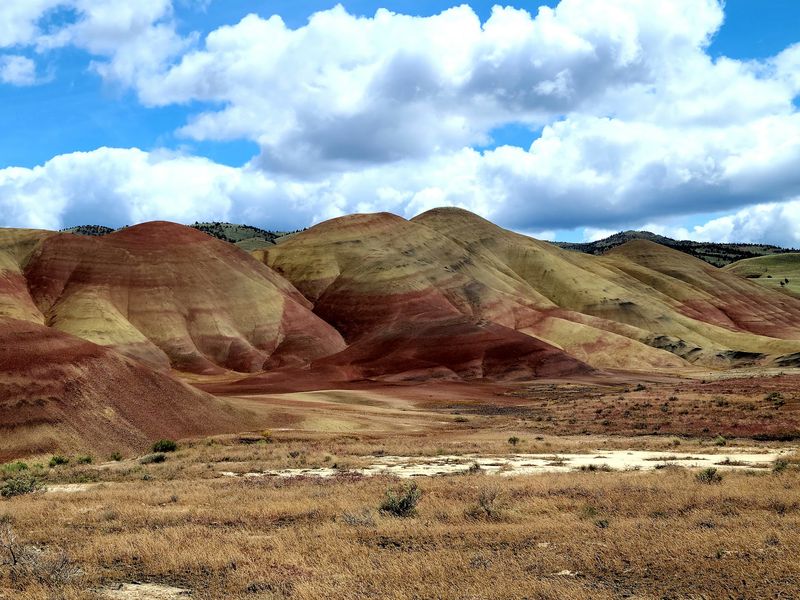
Some landscapes keep their secrets buried underground. Oregon’s Painted Hills wear theirs right on the surface, displaying millions of years of environmental history in smooth, rolling stripes of red, gold, tan, orange, and black.
These mounds are part of John Day Fossil Beds National Monument, and the layers visible today are linked to ancient soils and shifting climates from tens of millions of years ago.
The National Park Service notes that nearby plant fossils date from roughly 39 to 27 million years ago, which puts the age of these formations into genuinely mind-bending territory. Rainfall darkens and intensifies the individual color bands, while dry conditions make them look more muted.
Late-afternoon light is widely considered the best time to visit for photography, when warm tones deepen across the ridges.
Spring adds an extra layer of interest when yellow wildflowers bloom across the surrounding desert, contrasting sharply with the red hills behind them. Several short trails loop through the formation, including an elevated boardwalk that keeps visitors off the fragile clay surface.
The nearest town is Mitchell, Oregon, which offers basic services for travelers making the trip out to this remote but rewarding location.
Seven Coloured Earth, Chamarel, Mauritius
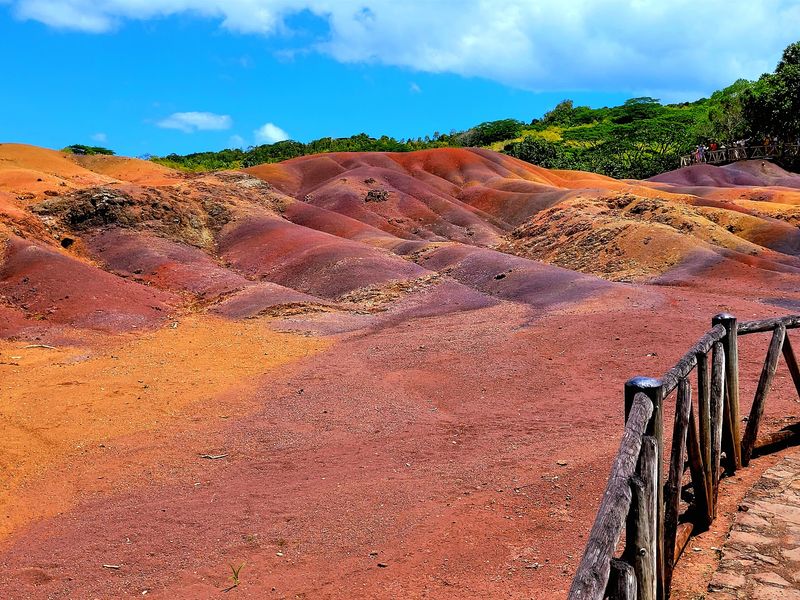
Most people visit Mauritius for the beaches and lagoons, which makes the Seven Coloured Earth at Chamarel one of the island’s best-kept inland surprises. The natural dunes display distinct shades of red, brown, violet, green, blue, purple, and yellow, all packed into a geopark covering roughly 8.5 hectares.
What makes it especially strange is that the colors stay separated rather than blending into a muddy uniform brown.
The formation is rooted in the island’s volcanic history. Cooling lava and weathering processes produced different mineral compositions across the dune area, which eventually settled into the banded pattern visible today.
The angle of sunlight shifts how bold or subtle each shade appears throughout the day.
Chamarel Waterfall sits nearby, dropping dramatically into a forested gorge just minutes from the colored earth. The southwestern highlands of Mauritius surround the area with lush mountain scenery, making the whole region worth spending a full day exploring.
Entrance to the geopark includes access to both the colored earth and the waterfall viewpoint. Early mornings tend to be quieter, with softer light that brings out the cooler purple and blue tones in the dunes particularly well.
Great Barrier Reef, Australia
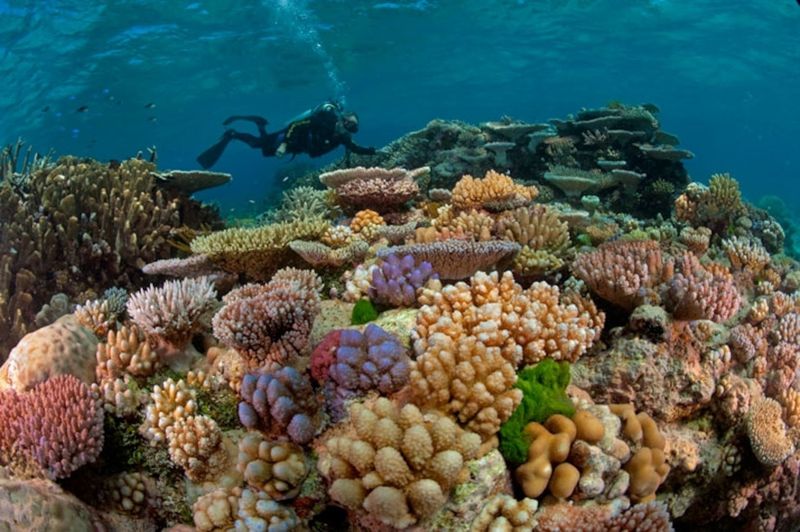
Underwater color does not get more extravagant than what the Great Barrier Reef puts on display. Australia’s Reef Authority describes it as the largest coral reef ecosystem on the planet, home to approximately 450 species of hard coral and more than 1,000 species of soft coral.
Add reef fish to that count and the palette becomes almost impossible to catalogue.
Much of the color in living coral comes from zooxanthellae, which are microscopic symbiotic algae living inside coral tissue. These algae produce pigments and energy, giving corals their vivid reds, purples, greens, and yellows.
When corals are stressed by warming water, they expel their algae and turn pale or white, a process known as bleaching, which strips the reef of its color and threatens its survival.
Snorkeling and diving trips depart from Cairns, Port Douglas, and the Whitsundays, among other access points. Outer reef sections generally offer the clearest water and most vibrant coral communities.
The reef spans more than 2,300 kilometers along the Queensland coast, so no single trip covers more than a small fraction of the total ecosystem. Each dive site tends to have its own mix of species and color combinations.
Havasu Falls, Arizona, United States
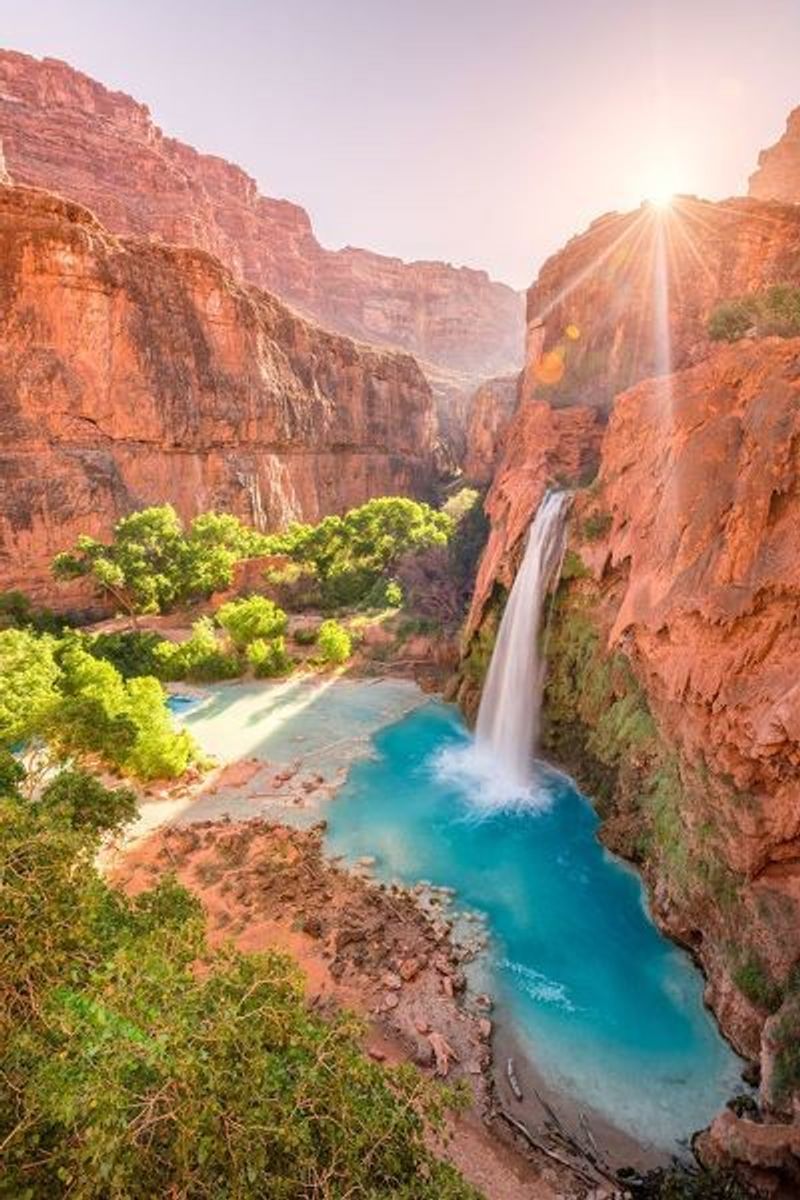
The turquoise water at Havasu Falls looks like someone borrowed it from a Caribbean resort and dropped it into the Arizona desert. The contrast between that electric blue-green pool and the surrounding red-orange canyon walls is so sharp that first-time visitors often stop walking just to stare.
The name Havasupai literally translates to “people of the blue-green waters,” which tells you this color has been famous for a very long time.
The water’s distinctive shade comes from dissolved minerals and calcium carbonate deposits that are common throughout the region. Those same minerals build up the travertine ledges that form the falls and the terraced pools below them.
Mineral content and flow rate both affect exactly how vivid the blue-green tone appears on any particular day.
Reaching the falls requires advance reservations through the Havasupai Tribe, a 10-mile hike into the canyon, and genuine respect for the tribal land you are passing through. The village of Supai sits about two miles before the falls and has no road access at all.
Helicopter service is available for those who cannot hike. Camping near the falls puts you there at sunrise and sunset, when the canyon light turns the red walls a deep, almost glowing amber.
Share this story