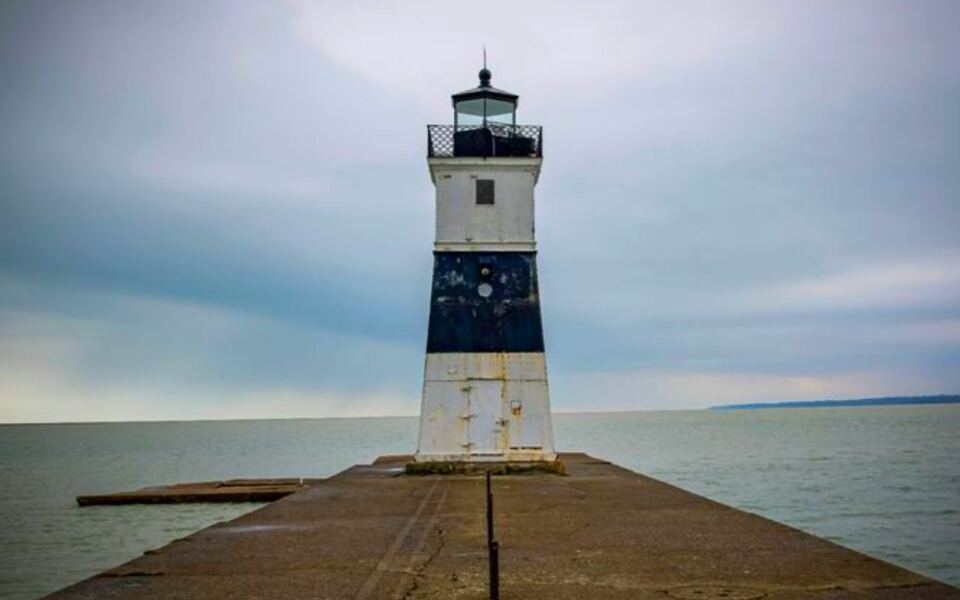
Pennsylvania may not seem like an obvious destination for maritime history, but its waterways tell a different story. Along Lake Erie, historic lighthouses still mark a shoreline shaped by shipping and navigation, while the Delaware, Schuylkill, Allegheny, and Ohio rivers are home to unusual beacons and preserved vessels.
This list goes well beyond traditional lighthouse towers. You can walk out to a striped pier light, board historic warships and submarines, climb a waterfront observation tower, and even find a lighthouse rising beside the Allegheny River far from the coast.
Together, these 10 places reveal a side of Pennsylvania that is easy to overlook, connecting Great Lakes navigation, naval history, river travel, and some genuinely unexpected landmarks.
1. Presque Isle Lighthouse, Erie, Pennsylvania
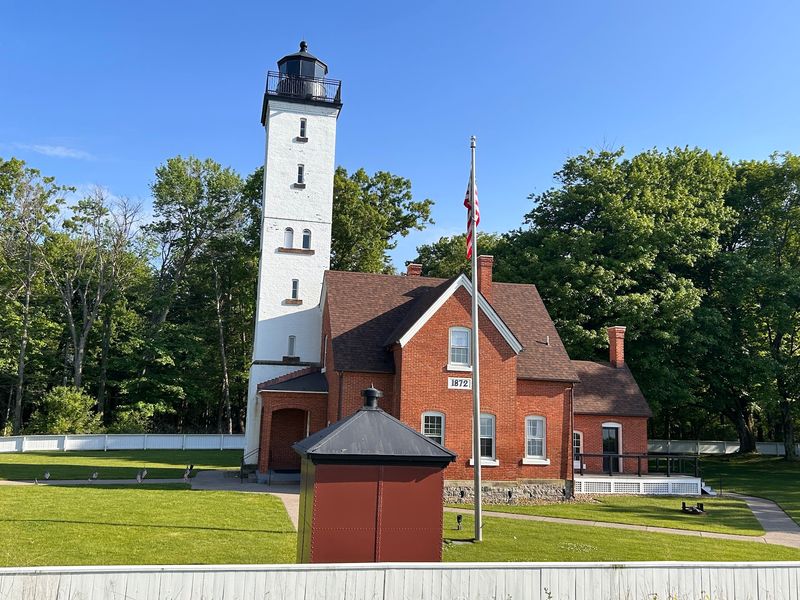
Built in 1873 and still actively guiding ships across Lake Erie today, Presque Isle Lighthouse has earned its reputation as one of Pennsylvania’s most recognizable lighthouse landmarks. The square tower hides an architectural surprise inside, where the stairwell is circular rather than following the shape of the exterior.
The tower originally stood 40 feet tall, but another 17 feet and 4 inches were added in 1896 to improve the reach of the light across Lake Erie. Today, visitors who tackle the 78-step climb are rewarded with elevated views over Presque Isle State Park and the surrounding water.
The keeper’s house adds another layer to the experience. Visitors can explore exhibits devoted to lighthouse history and learn how generations of keepers maintained a navigational aid in a location exposed to Lake Erie’s changing weather.
A tower climb currently costs $9 and includes self-guided access to the keeper’s house and grounds. Climbs are offered approximately every 20 minutes without advance reservations, although visitors must be at least 44 inches tall to climb.
A $13 combo pass covers climbs at both Presque Isle Lighthouse and Erie Land Lighthouse.
From Memorial Day through Labor Day, the lighthouse is open seven days a week from 10 a.m. to 5 p.m. During much of the shoulder season, hours are reduced, so checking the current schedule before making a special trip is a good idea.
2. Erie Land Lighthouse, Erie, Pennsylvania
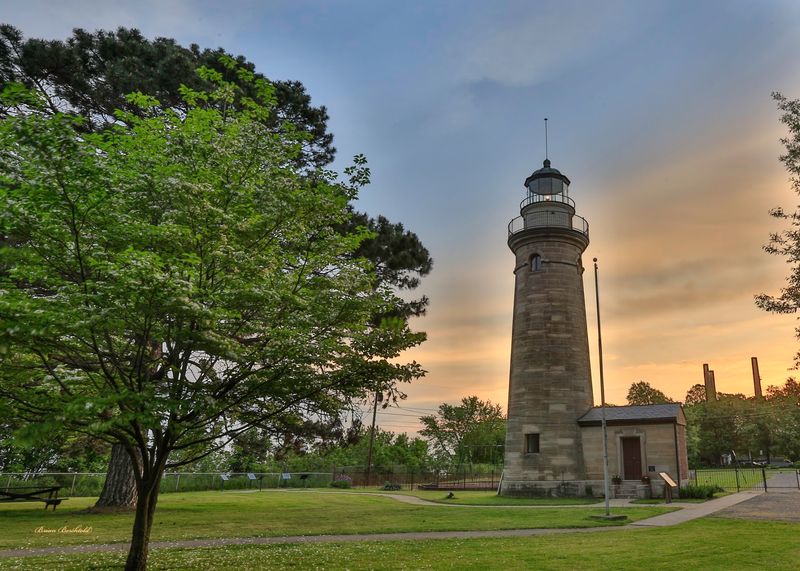
The oldest lighthouse site on the Great Lakes in the United States started here, on a bluff overlooking Lake Erie in what is now Lighthouse Park. The original tower was completed in 1818, beginning a lighthouse history at this location that stretches back more than two centuries.
The sandstone tower visitors see today dates to 1867. Its elevated position is one of the features that separates it from Erie’s other lights, giving visitors a different perspective over the lake and surrounding waterfront.
A restoration completed in 2004 helped preserve the structure, and the property is now operated by Presque Isle Light Station, the nonprofit organization behind Lake Erie Lights.
Visitors can climb 69 steps to the top of the tower. Admission currently costs $7, and climbs are offered at roughly 20-minute intervals without advance reservations.
Guests must be at least 44 inches tall to make the climb. Visitors planning to see both major Erie towers can purchase a $13 combo pass covering Erie Land Lighthouse and Presque Isle Lighthouse.
Erie Land Lighthouse also hosts Tower Tuesdays during its operating season. On the first Tuesday of participating months, tower climbs are free to the public, with the 2026 program beginning May 5 and running from 10 a.m. to 3 p.m.
The lighthouse also offers pay-what-you-wish climbs during Second Saturday events from May through October.
3. The Lighthouse at Turtle Rock, Philadelphia, Pennsylvania
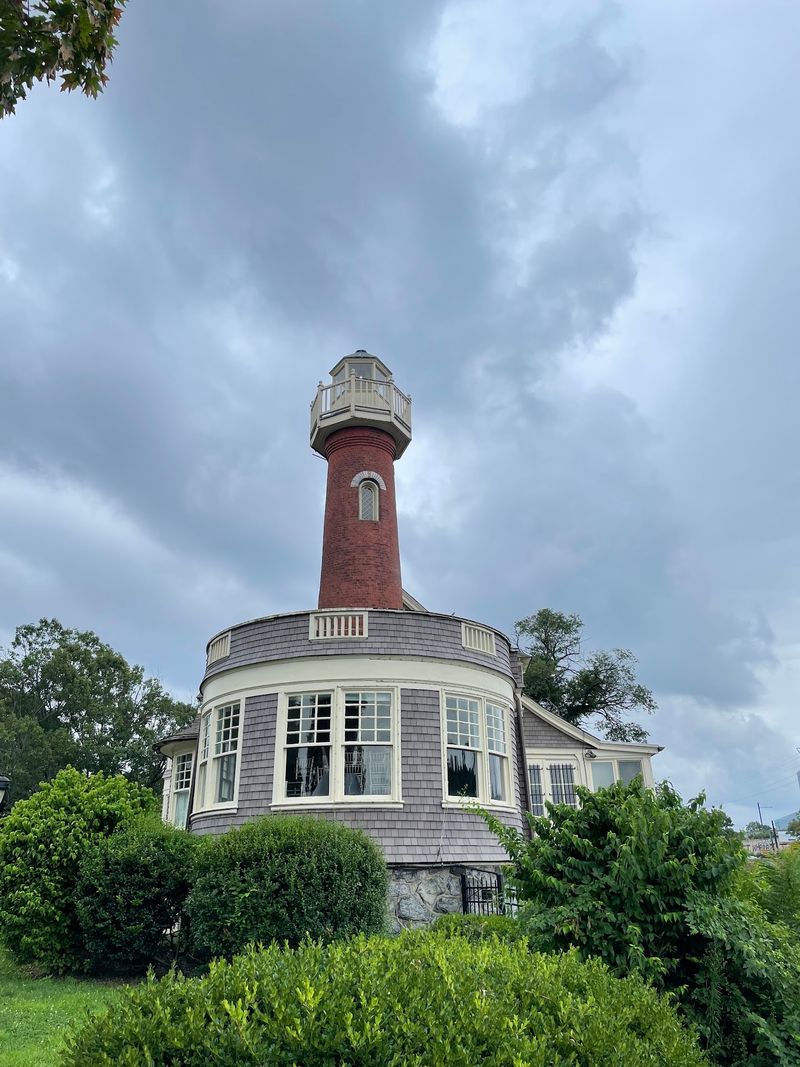
Tucked into Philadelphia’s famous Boathouse Row is a small brick lighthouse that predates the clubhouse surrounding it. Turtle Rock Lighthouse was completed in 1887 to aid traffic on the Schuylkill River, making it one of the most unusual surviving pieces of Philadelphia’s maritime history.
Builder Frank Thurwanger constructed the lighthouse for $2,663. Its name came from a nearby rock formation said to resemble a tortoise shell, while its location was chosen at a time when commercial vessels, rowers, skaters, and recreational traffic all shared the river.
The design is particularly distinctive. The red-brick tower supports a hexagonal lantern room surrounded by an eight-sided walkway, and the light originally operated using gas.
It was converted to electricity during a restoration in 1990.
The Sedgeley Club arrived later. Its clubhouse was built in 1902 and 1903 around the existing lighthouse, explaining why the two structures now appear to form a single building.
Unlike Pennsylvania’s Lake Erie lights, Turtle Rock should primarily be treated as a historic lighthouse landmark rather than an active navigational beacon. Sources differ on its modern operational status, with lighthouse references indicating that the decorative light is displayed only on special occasions.
The tower is not generally open for public tours, but visitors can see it from the Kelly Drive and Boathouse Row area, making it an easy addition to a walk along the Schuylkill River.
4. Sherman Memorial Lighthouse, Tionesta, Pennsylvania
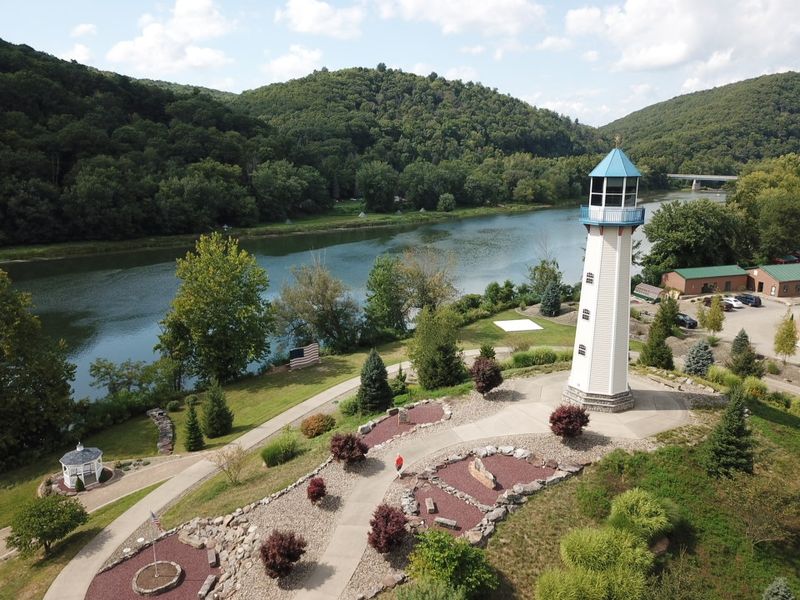
Finding a lighthouse beside the Allegheny River in tiny Tionesta is unexpected enough, but Sherman Memorial Lighthouse was never intended to imitate Pennsylvania’s historic navigation lights. Instead, it is a modern architectural landmark conceived by local businessman Jack Sherman and built as a memorial connected to his family.
The octagonal timber-framed tower stands 50 feet high and 16 feet in diameter. Above it sits a prefabricated aluminum-and-glass lantern room measuring another 25 feet high, giving the complete structure a much more imposing appearance than the tower measurement alone suggests.
Inside are six floors plus a basement, each revealing another part of the story. Displays cover Sherman family history, local lighthouse artwork, lighthouse miniatures, the building’s design and construction, and a miniature seaside village.
Visitors willing to tackle all 76 spiral steps can reach the lantern room and outside deck for elevated views across Tionesta and the surrounding landscape. A video presentation is available for people who cannot or prefer not to make the climb.
Public tours are conducted on the second Saturday of each month from June through October, plus the third Saturday in August during Tionesta’s Indian Festival. Tours run continuously from 1 p.m. to 4 p.m., with a suggested donation of $5 for adults and $2 for children.
The September 12 and October 10 dates remain on the 2026 calendar.
Rather than presenting it as a working navigational lighthouse, think of Sherman Memorial as one of Pennsylvania’s most unusual lighthouse-inspired landmarks, which makes it a particularly good fit for the broader title of this list.
5. North Pier Lighthouse, Erie, Pennsylvania
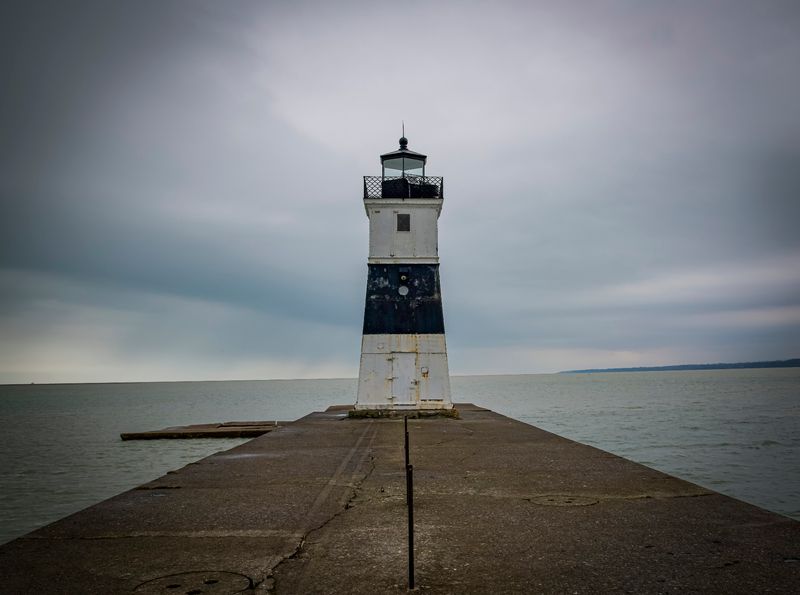
Only one lighthouse in the United States survives with this distinctive square-pyramidal design, and it stands at the end of the North Pier at Presque Isle State Park. Also known as the Erie Harbor North Pierhead Light, the compact black-and-white tower continues to mark the narrow entrance between Lake Erie and Presque Isle Bay.
The first wooden light was built in 1830 but was destroyed when a schooner struck it in 1857. Its replacement was forged in France and assembled in Erie, creating the unusual iron structure visitors see today.
As the pier changed, the lighthouse moved with it. The structure was relocated in 1882 and again in 1940, rather than three times as previously stated.
In 1995, the Coast Guard removed its fourth-order Fresnel lens and replaced it with an automated red flashing light powered by solar panels.
The lighthouse received national recognition in 2021 when it appeared on a U.S. postage stamp in the Mid-Atlantic Lighthouses series.
The tower itself is not open to visitors, but the exterior can be reached on foot during Presque Isle State Park hours. Visitors park near Beach 11 and the Coast Guard station before walking out along the pier to see the light.
With Lake Erie on one side and Presque Isle Bay on the other, the walk provides a completely different lighthouse experience from climbing the towers elsewhere in Erie.
6. U.S. Brig Niagara, Erie, Pennsylvania
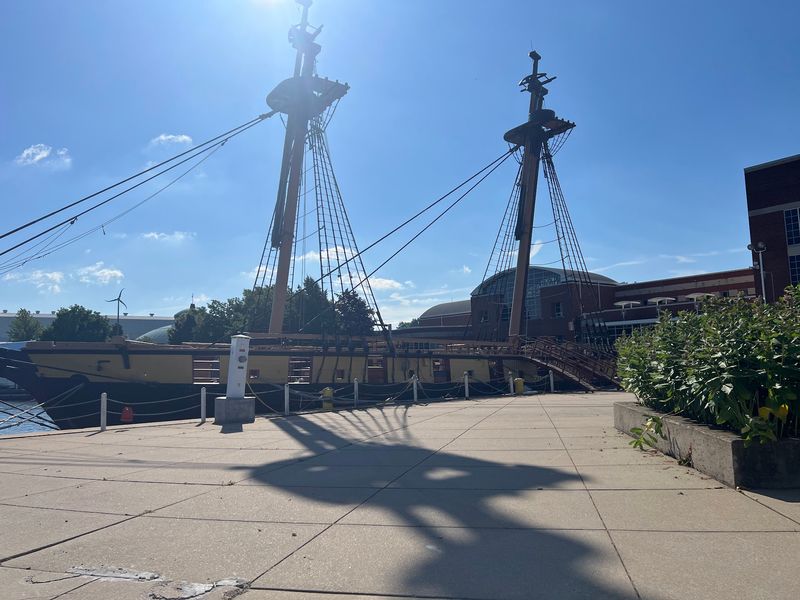
Few Pennsylvania vessels carry as much historical symbolism as the U.S. Brig Niagara.
The ship is a reconstruction of the vessel Commodore Oliver Hazard Perry used as his relief flagship during the Battle of Lake Erie in 1813, and today Niagara serves as the official flagship of Pennsylvania.
Its appearance in Erie is especially timely in 2026. Niagara underwent a year-long, $6.9 million restoration and refit in Maine designed to keep the vessel structurally sound and sailing for decades to come.
It made the roughly 2,000-nautical-mile journey back toward its home port for a July 2026 homecoming at the Erie Maritime Museum.
The extensive project included major carpentry and structural work along with updates to modern systems required to keep a historic sailing vessel operating safely. Rather than preserving Niagara as a static museum object, the work was intended to allow the ship to continue its sailing and educational mission.
Visitors will find Niagara home-ported beside the Erie Maritime Museum on Presque Isle Bay. Because access can depend on sailing, maintenance, and programming schedules, it is best to check the museum’s current calendar before planning a trip specifically to board the ship.
Even when boarding is unavailable, Niagara adds an important dimension to Erie’s maritime landscape. Combined with the nearby museum, Presque Isle Bay, and the city’s three historic lighthouse sites, it helps explain why this corner of Pennsylvania has such an unusually rich connection to Great Lakes history.
7. Cruiser Olympia, Philadelphia, Pennsylvania
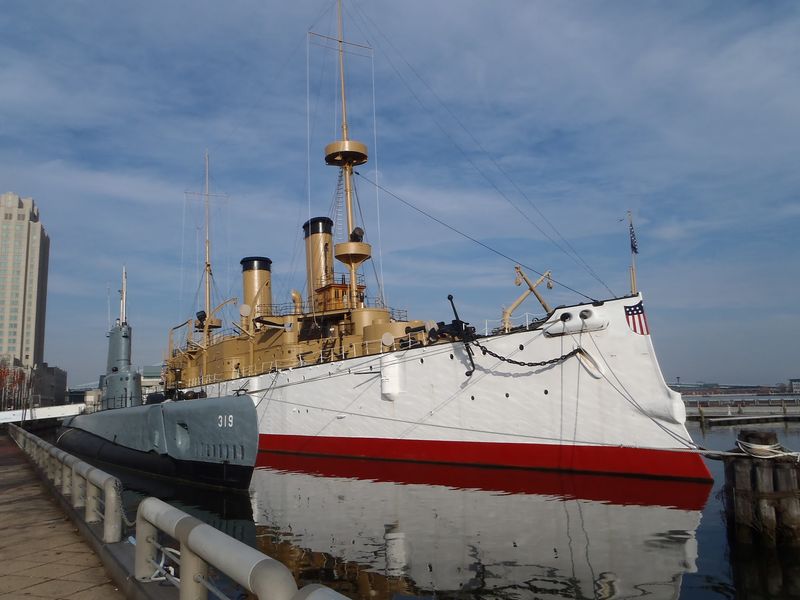
Philadelphia’s waterfront holds a maritime survivor of international importance. Cruiser Olympia entered service in 1895 and is now the oldest steel warship afloat in the world, preserved beside the Independence Seaport Museum at Penn’s Landing.
Olympia became famous as Commodore George Dewey’s flagship during the Battle of Manila Bay in 1898. Its story did not end with the Spanish-American War.
In 1921, the cruiser carried the remains of America’s World War I Unknown Soldier home from France before they were interred at Arlington National Cemetery.
Visitors can actually board the vessel rather than simply viewing it from shore. The normal self-guided route passes through spaces where sailors ate, slept, and worked, while portions of the machinery can be seen below.
Self-guided access to Olympia is currently included with general admission to the Independence Seaport Museum.
8. Submarine Becuna, Philadelphia, Pennsylvania
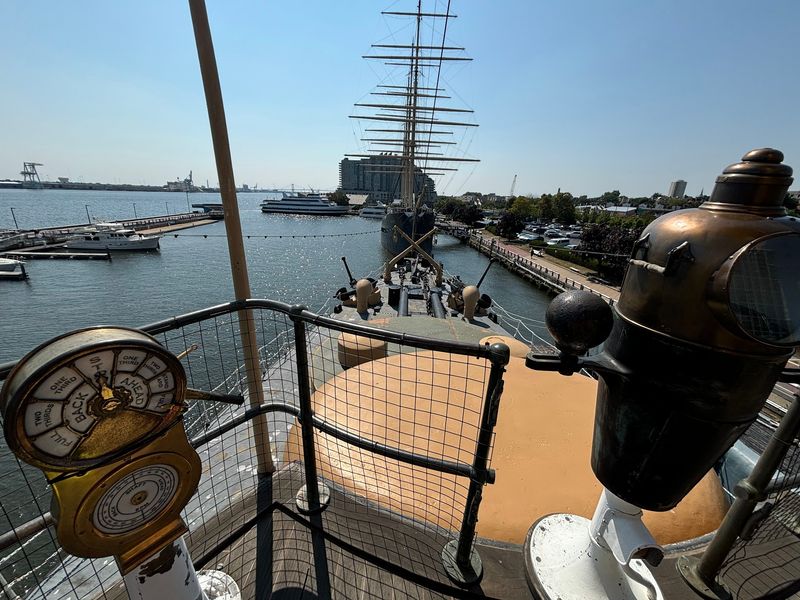
Docked beside Olympia is an entirely different chapter of American naval history. USS Becuna entered service in 1944 and operated in the Pacific during World War II before continuing its career through the early decades of the Cold War.
The submarine ultimately spent 25 years in service.
Becuna later underwent the Navy’s GUPPY modernization program, which improved the performance of older submarines using lessons learned from advanced wartime designs. The Independence Seaport Museum identifies Becuna as the world’s only surviving GUPPY 1-A submarine.
Unlike Olympia’s self-guided experience, Becuna is explored on a guided tour. Visitors descend into the submarine to see just how tightly sailors lived and worked beneath the surface.
The museum currently schedules multiple Becuna tours each day, although times can change.
Having a nineteenth-century cruiser and a World War II submarine sitting side by side makes this stretch of the Delaware River especially useful for an article about Pennsylvania’s maritime landmarks.
9. USS Requin, Pittsburgh, Pennsylvania
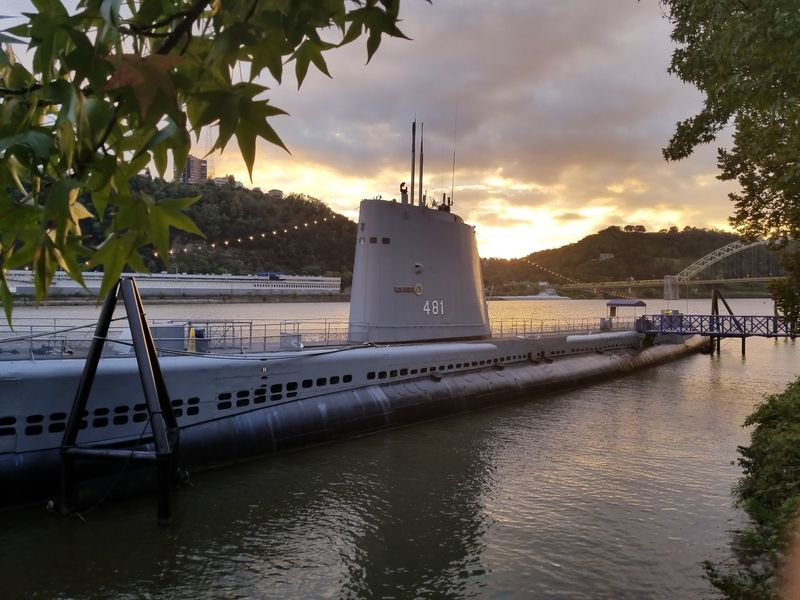
A submarine moored on Pittsburgh’s North Shore may be the most unexpected maritime landmark on this list. USS Requin was commissioned in 1945 and spent more than two decades in Navy service before eventually making the long journey inland to Pittsburgh, where it arrived in 1990.
The submarine now sits along the Ohio River beside Kamin Science Center, formerly Carnegie Science Center. Visitors can go aboard and explore a genuine Cold War-era submarine, including spaces that demonstrate how sailors lived and how the vessel’s technology worked.
The attraction remains part of the Science Center’s current visitor experience.
Its location is part of what makes Requin so memorable. Instead of encountering a preserved submarine in a coastal naval port, visitors find one surrounded by Pittsburgh’s bridges, stadiums, river traffic, and downtown skyline.
It also gives your list an important geographic break from Erie and Philadelphia while still fitting the maritime landmarks part of the headline extremely well.
10. Bicentennial Tower, Erie, Pennsylvania
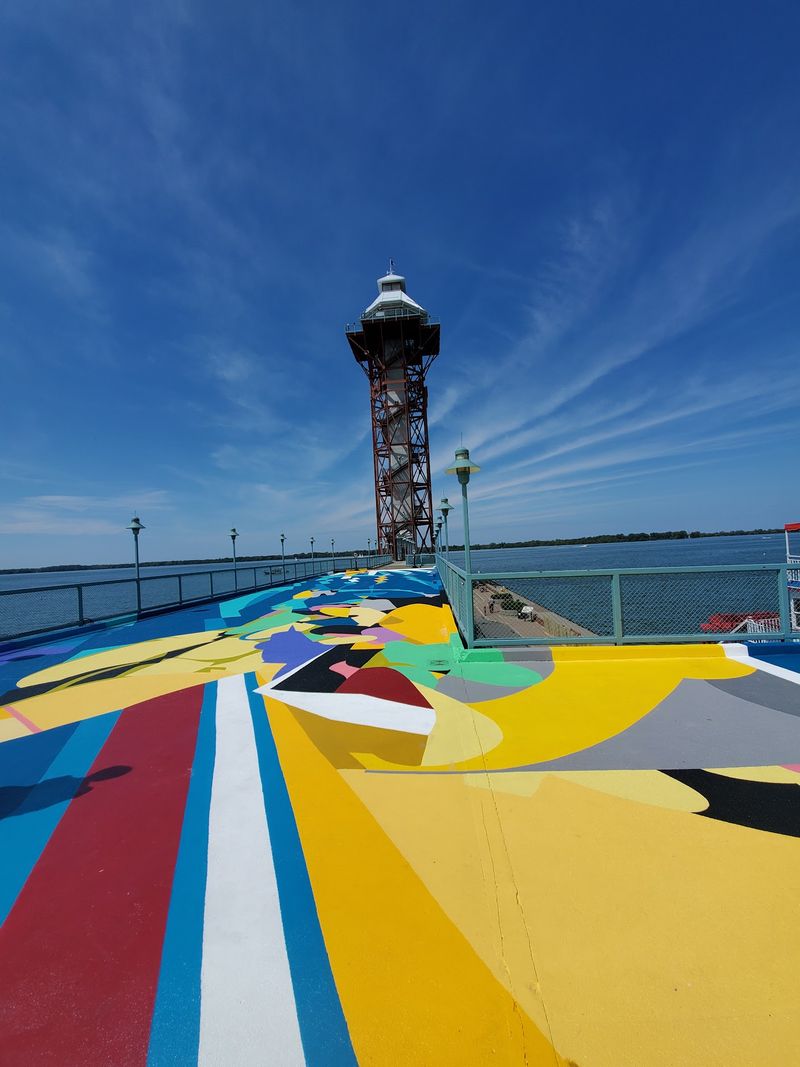
Bicentennial Tower is not a lighthouse, but it plays visually with many of the same elements: a tall waterfront tower, open water, boats, and sweeping views of the shoreline. Built in 1996 to commemorate Erie’s bicentennial, the structure rises from Dobbins Landing at the end of State Street and has become one of the city’s most recognizable waterfront landmarks.
The main observation deck stands 138 feet above the landing, while the structure reaches 187 feet to the top of its flagpole. Visitors who head up are rewarded with broad views across Presque Isle Bay toward Presque Isle State Park and Lake Erie, while downtown Erie spreads out in the opposite direction.
Its location also ties the rest of your Erie entries together. From the bayfront, visitors are surrounded by the harbor that shaped the city’s shipping and naval history, with the Erie Maritime Museum and Niagara nearby.
Share this story