Spain does summer differently from anywhere else in Europe. Long daylight hours push dinner to 10pm, plazas fill up after sunset, and entire neighborhoods spill into the streets for local fiestas.
Whether you want beach days, rooftop terraces, fire festivals, or cider poured straight from the bottle, Spain has a city that fits. These ten destinations do not just survive summer, they thrive in it.
Malaga
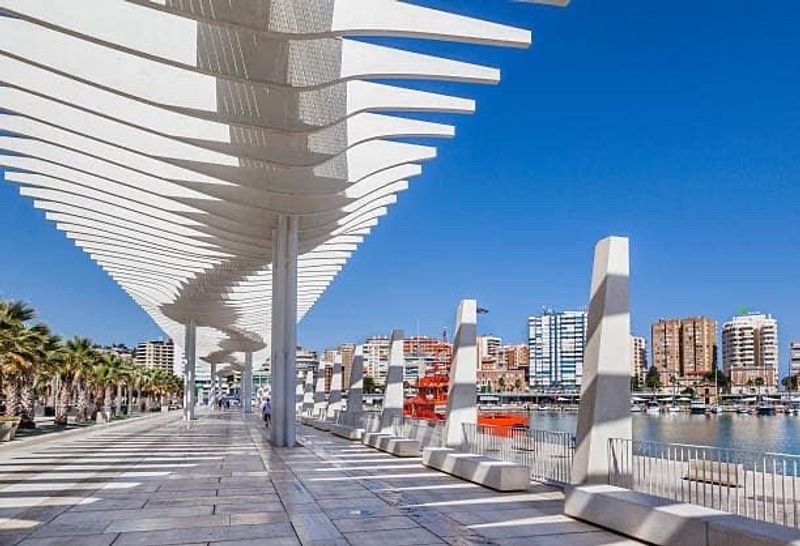
Sixteen city beaches is not a typo. Malaga genuinely has that many, and they range from the central La Malagueta to the charming seafront restaurants of Pedregalejo, where sardine skewers grilled on charcoal are practically a local religion.
Arriving in Malaga without eating sardines by the sea is a missed opportunity of serious proportions.
Then August rolls in and raises the stakes considerably. The Malaga Fair, running August 15 through 22 in 2026, fills the city with concerts, fireworks, street performances, and celebrations spreading from the fairground to the beach and the port.
The opening night fireworks over La Malagueta are worth planning a trip around.
Between festival days, the city itself has genuine cultural depth. The Picasso Museum, the Alcazaba fortress, and the Roman Theatre all sit within easy walking distance of each other.
You can cover the highlights in a morning and reach the beach before lunch.
Malaga works as a destination rather than just a gateway to Costa del Sol resorts. The combination of urban culture, seafood, beach life, and one of Spain’s great summer festivals makes it a strong choice from June through September.
San Sebastian
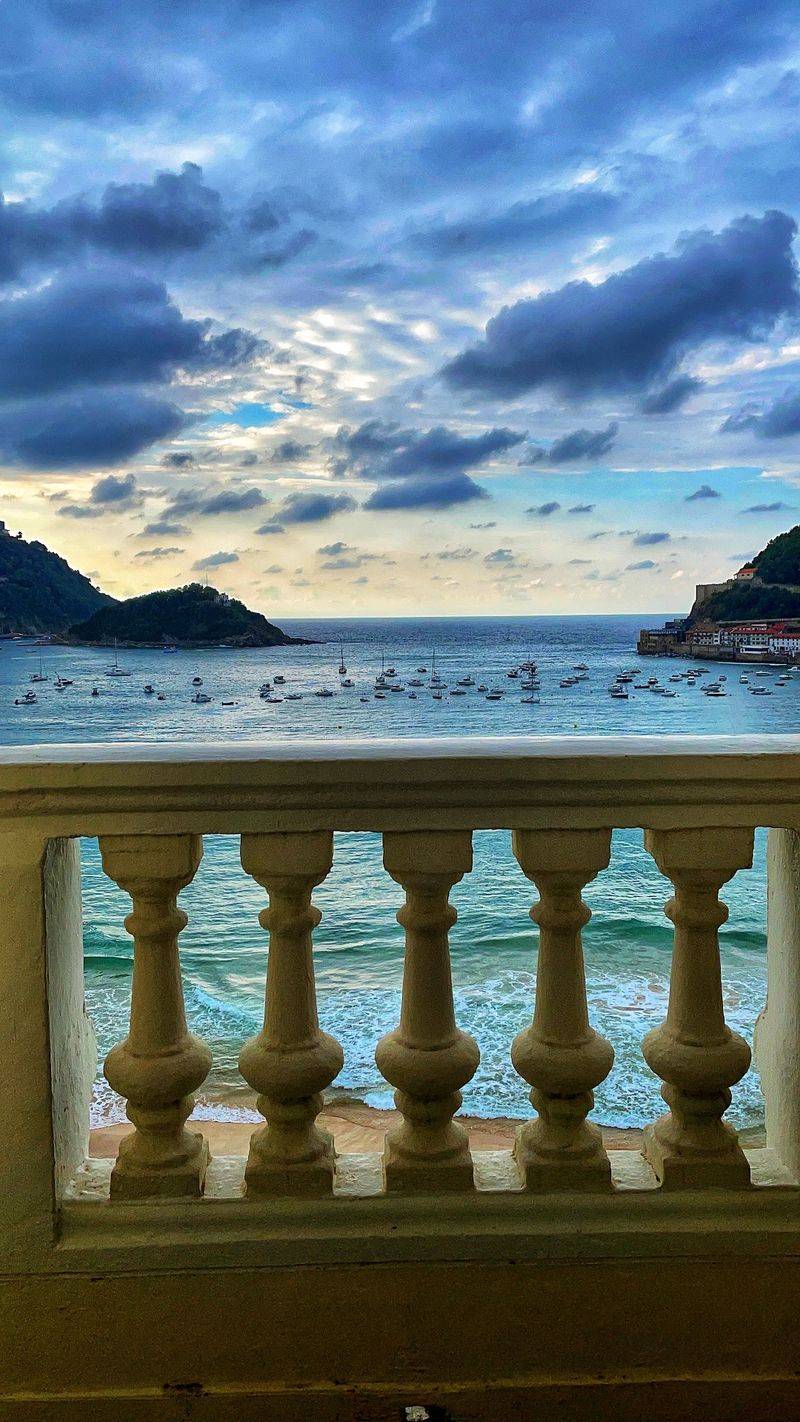
La Concha Bay wraps around the city center like a perfectly designed outdoor living room, and in summer, the whole neighborhood shows up to enjoy it. San Sebastian has the rare distinction of being a world-class food city that also happens to have one of Spain’s most beautiful urban beaches sitting right in the middle of everything.
The pintxos bars of Parte Vieja are the evening plan almost every night. Small plates of cured meats, anchovies, and creative Basque bites line the countertops of dozens of bars packed into a few narrow streets.
The routine is simple: leave the beach, walk into the old town, order a glass of txakoli, and start moving from bar to bar.
August adds the Semana Grande festival, which brings concerts, regattas, fireworks, and street celebrations across the city. The jazz festival is another summer highlight that draws serious music fans from across Europe.
San Sebastian manages to feel both festive and elegant at the same time, which is a difficult balance to strike.
The Basque Country’s cooler Atlantic climate keeps temperatures comfortable even in midsummer. That makes long afternoon walks along the promenade genuinely pleasant rather than something to survive.
Barcelona
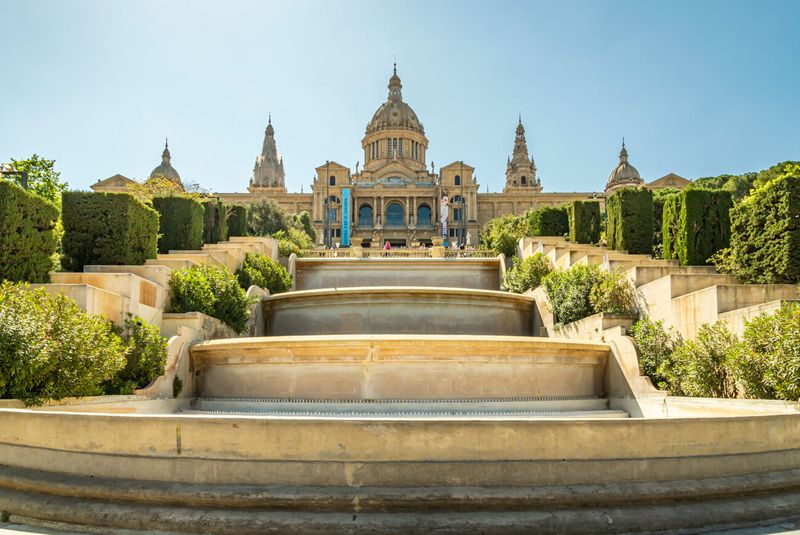
Few cities on earth let you eat breakfast under a Gaudi masterpiece and swim in the Mediterranean before lunch. Barcelona pulls off that combination every single summer day, and it never gets old.
The city sits right on the coast, which means the beach is not a bonus, it is part of the plan.
Music becomes just as central as the sand once the season heats up. Major festivals like Primavera Sound and Sonar push concerts and DJ sets into outdoor venues, and the nightlife stretches well past midnight on warm evenings.
Rooftop terraces fill with people watching the city glow long after sunset.
The Gothic Quarter, Gracia neighborhood, and beachfront promenade each develop their own summer personality. Barceloneta Beach gets busy, but the wider coastline offers more than 100 kilometers of options.
Arrive early, grab a spot, and let the afternoon take care of itself.
Barcelona can feel crowded at peak season, especially near the most famous landmarks. Book accommodation early and explore the neighborhoods away from the main tourist trail.
The city rewards curious travelers who wander a little further than the postcard spots.
Valencia
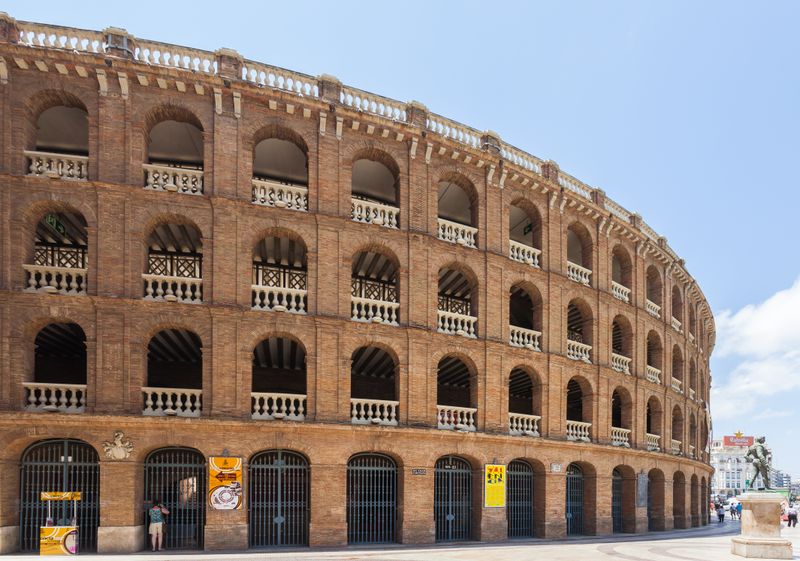
Valencia gets described as the Mediterranean as a city, and that phrase earns its place once you spend a summer afternoon there. More than 300 sunny days per year, large beaches, a massive green park running through the city center, and a food scene built around fresh rice and seafood all add up to something genuinely impressive.
Malvarrosa Beach is wide, long, and easy to reach from the historic center by bike or tram. The Turia Garden, a former riverbed converted into a 9-kilometer green corridor, provides shade, cycling paths, and open space that most cities would envy.
It connects the old town to the City of Arts and Sciences, which looks like a science fiction film set dropped into a Spanish city.
Paella beside the sea stops feeling like a special occasion and becomes a regular Tuesday lunch. The beach restaurants along Malvarrosa serve the real thing, cooked in wide flat pans over wood fires.
Eating it while looking at the Mediterranean is the kind of simple pleasure that makes summer travel worth the effort.
Valencia tends to be less crowded than Barcelona while offering a comparable range of experiences. For travelers who want the full Mediterranean summer package without fighting for space, it makes a compelling case.
Alicante
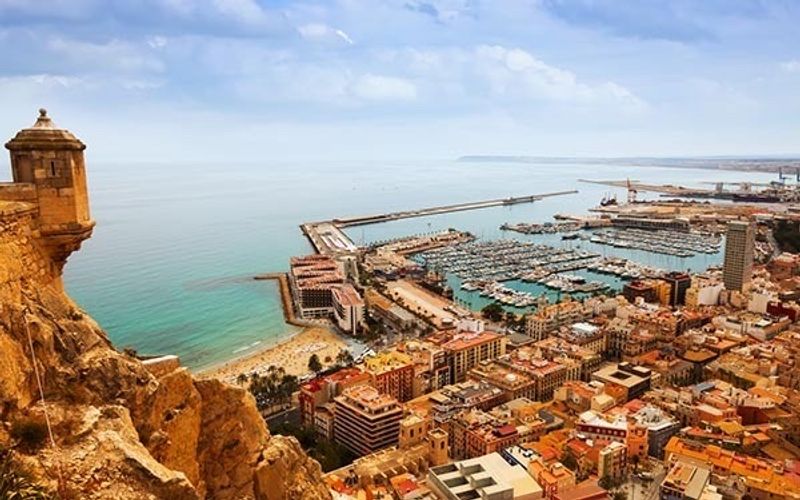
Alicante does not ease gently into summer. The city starts June by setting enormous artistic sculptures on fire, and things only get livelier from there.
The Bonfires of San Juan celebration fills the streets with parades, music, fireworks, and mascletàs before the grand burning on the night of June 24 lights up Postiguet Beach in spectacular fashion.
After the fires die down, the summer routine clicks into place. El Postiguet sits right beside the city center, close enough to walk from the old town in ten minutes.
San Juan Beach, a few kilometers north, offers a longer sandy stretch for those who want more space. Tabarca Island is a short boat ride away and worth the trip for its clear protected waters.
The Explanada de Espana promenade becomes the city’s living room after sunset. People gather there to walk, eat ice cream, and watch the light fade over the harbor.
It is one of those Spanish public spaces that seems designed specifically for warm evenings and slow conversations.
Alicante combines genuine beach credentials with a real city center, a dramatic hilltop castle, and a festival culture that knows how to make an entrance. Summer here has a clear, uncomplicated energy that is hard to resist.
Palma de Mallorca
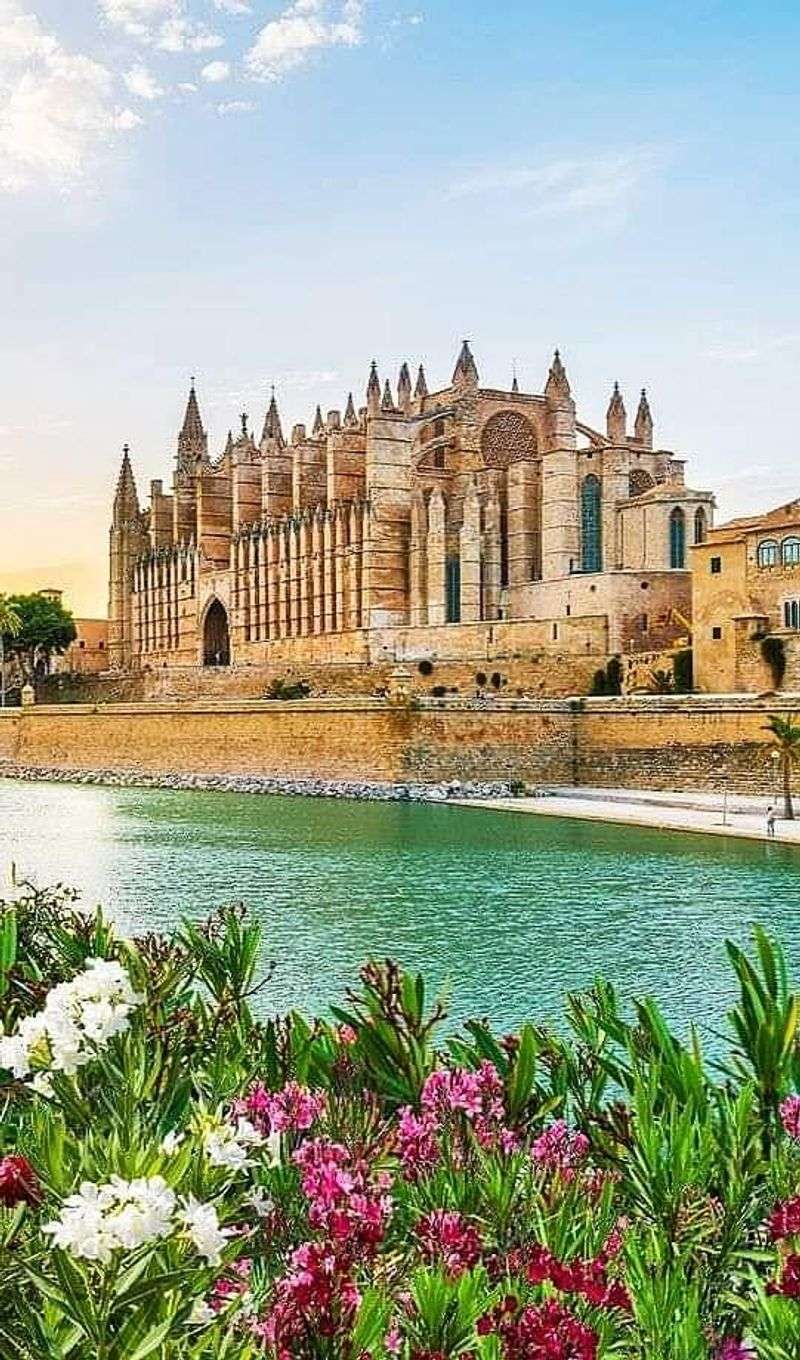
Palma sits in an interesting position that resort towns on the island simply cannot match: it is a serious historic city that happens to be surrounded by a beach destination. The cathedral alone, rising above the waterfront like something from a medieval fantasy, justifies the trip before you have even unpacked.
Playa de Palma stretches for roughly 4.6 kilometers along the southeastern edge of the city, with a seafront promenade, cycling infrastructure, restaurants, and calm water that stays warm from June through September. The beach is busy but well-organized, and reaching it from the old town takes about 20 minutes by bus or bike.
What makes Palma different from a beach resort is the depth behind the sand. Almudaina Palace, La Lonja, the Arab Baths, and the tangle of streets in the old quarter all reward slow exploration.
A morning in the cathedral followed by lunch in a shaded courtyard restaurant is a genuinely good way to spend a summer day.
The rest of Mallorca waits when city life needs a break. Mountain villages, hidden coves, and dramatic cliff roads are all within day-trip range.
Palma works as a base for the whole island while standing on its own as a destination.
Bilbao
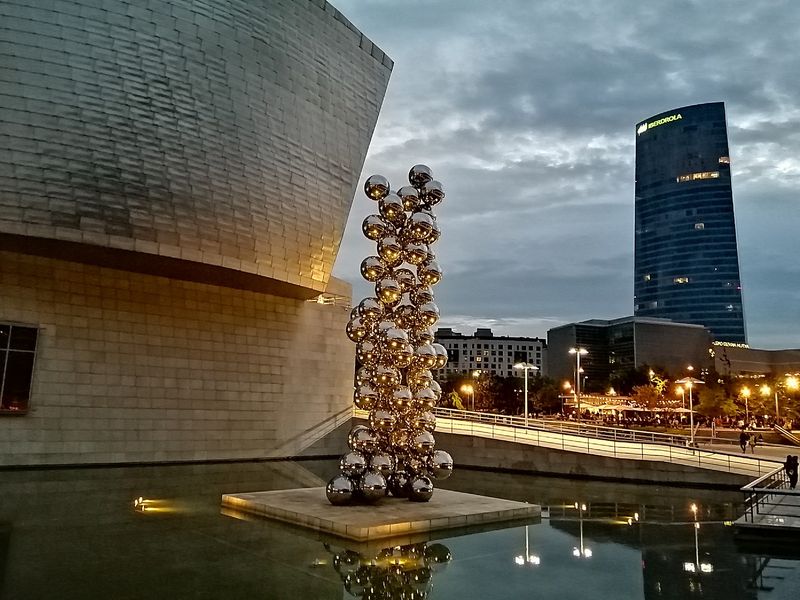
The Guggenheim Bilbao is one of those buildings that genuinely stops people in their tracks. Architect Frank Gehry finished it in 1997 and essentially put Bilbao on the global tourism map overnight.
But the city has grown well beyond its famous museum and now offers one of the most well-rounded urban summer experiences in northern Spain.
Casco Viejo, the old quarter, is the evening destination. Traditional bars called pintxos bars pack the narrow streets, each one competing for the title of best bite-sized snack in the Basque Country.
The competition is fierce and the quality is consistently high. Grab a glass of local wine, pick up a small plate, and repeat until satisfied.
Late August brings Aste Nagusia, the Great Week festival running August 22 through 30 in 2026. Concerts, theatre, fireworks, and celebrations spread across plazas and the waterfront, turning the whole city into a party that lasts over a week.
The atmosphere during that period is genuinely electric.
The Basque coast is also within easy reach. San Juan de Gaztelugatxe, a dramatic hermitage perched on a rocky island connected by a winding stone staircase, sits about 35 kilometers away.
Day trips from Bilbao offer scenery that feels almost theatrical in its beauty.
Santander
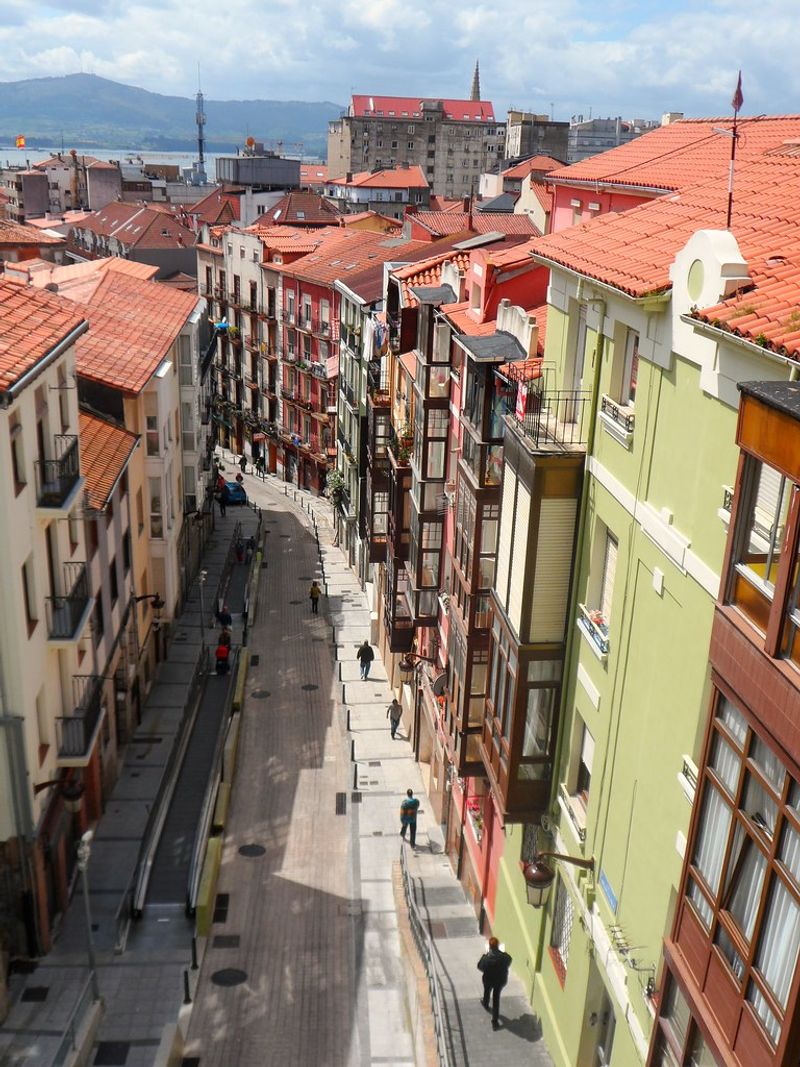
Santander makes a convincing case that the best Spanish summer is not always the hottest one. The city faces the Cantabrian Sea with a bay so large and calm it looks almost designed for sailing, and the surrounding green hills give the whole place a freshness that Andalusia simply cannot offer in July.
El Sardinero is the city’s showpiece beach, wide and clean with elegant early 20th century architecture lining the seafront. Magdalena Peninsula juts into the bay nearby, offering walking paths with views back toward the city that are worth the short climb.
The whole waterfront area encourages long, aimless walks rather than rushing between sights.
Temperatures in summer are genuinely pleasant rather than punishing. Highs tend to stay in the low to mid 20s Celsius through most of July and August, which makes afternoon sightseeing comfortable.
You can actually enjoy a midday walk without needing to find shade every five minutes.
The city also connects easily to Cantabria’s wider landscape of prehistoric caves, mountain villages, and meadows that stay remarkably green through summer. Altamira’s famous cave paintings are about 30 kilometers away.
Santander rewards travelers who want beach weather without the full Mediterranean intensity, and who appreciate a city that feels lived-in rather than tourist-oriented.
Gijon
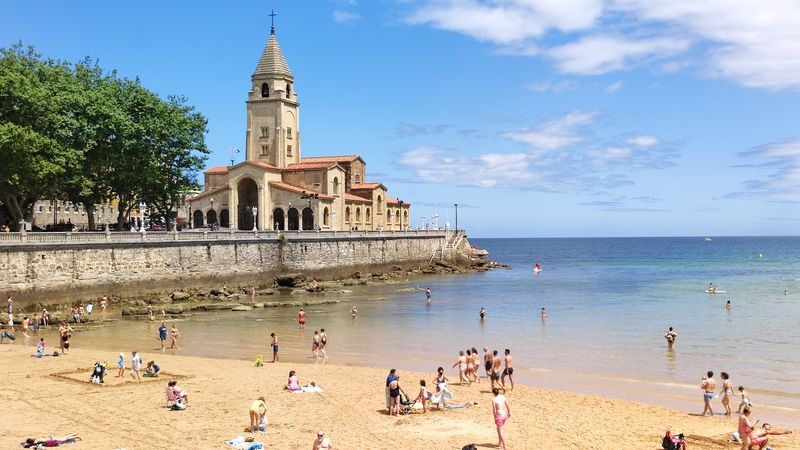
San Lorenzo Beach curves through the middle of Gijon like the city decided a proper urban waterfront was non-negotiable. The broad sandy arc stretches for about 1.5 kilometers directly along the seafront, with Cimadevilla, the ancient fishing district, rising on a headland at one end like a natural punctuation mark.
It is a genuinely striking piece of urban geography.
Late August delivers something that feels uniquely Asturian. The Natural Cider Festival runs from August 20 through 30 in 2026, celebrating the region’s signature drink with markets, escanciado competitions (that is the art of pouring cider from a great height to aerate it), and public gatherings.
The beach mass-pouring event, where thousands of people raise bottles at the same moment, is one of those festival moments that photographs cannot fully capture.
Asturian food culture runs deep here. Fabada, the region’s rich bean stew, and fresh seafood from the Cantabrian Sea appear on menus everywhere.
The cider houses, called sidrerias, operate with a casual confidence that suggests they have been doing this for centuries, because they largely have.
Gijon suits travelers who want Atlantic energy rather than Mediterranean heat. The crowds are smaller, the prices are generally lower, and the local character feels genuinely authentic rather than polished for tourists.
Cadiz
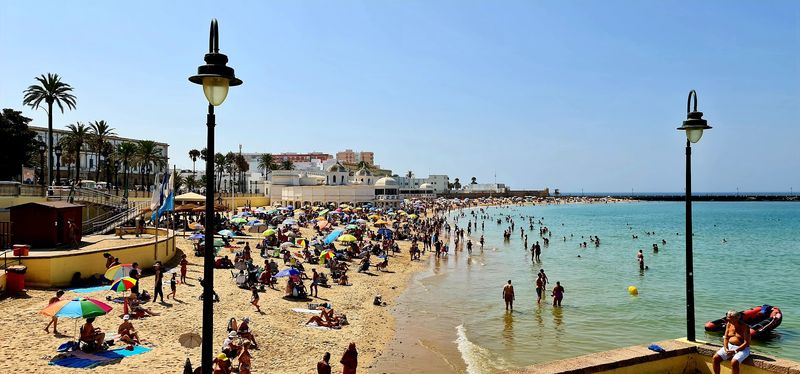
Cadiz is one of the oldest cities in Western Europe, and it sits on a narrow Atlantic peninsula as if the sea could not quite decide whether to let it exist. The ancient streets press right up against the water on multiple sides, creating a city where the beach is not a feature added to the edge of town but something woven into the fabric of the place itself.
La Caleta is the one that gets painted and photographed endlessly. The small cove sits between two castles in the old quarter, and swimming there while looking at centuries-old stone fortifications feels like a scene from a very comfortable history book.
For more space, La Victoria beach stretches nearly three kilometers along the eastern side of the peninsula.
Summer evenings in Cadiz have a particular quality. The Atlantic breeze keeps temperatures manageable even in August, and the sunsets seen from the sea walls or the Torre Tavira are the kind that make people stop talking mid-sentence.
Open-air concerts and summer cinema events appear along La Victoria through the season.
Fried fish is the correct dinner choice. The city’s tradition of frying seafood in light batter produces results that bear almost no resemblance to what most people think of as fried fish.
Order a mixed portion, eat it standing at a counter, and feel immediately at home.
Share this story