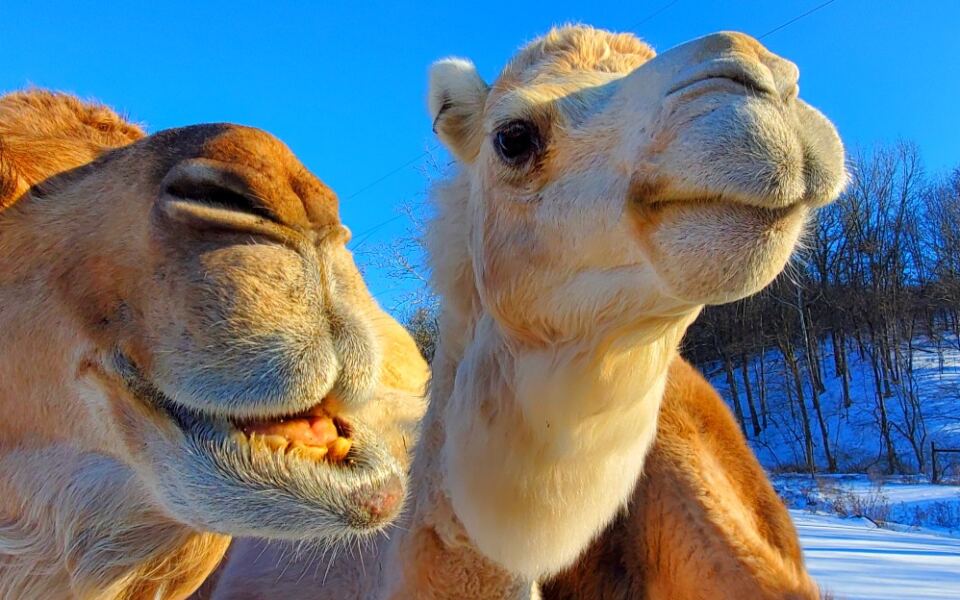
You don’t have to travel to the Middle East to meet a camel. Farms and wildlife attractions across America offer camel feeding, guided encounters, safari rides, and even tours of working camel dairies.
In California, visitors can meet camels at a dairy that makes its own camel-milk skincare products. Colorado has working camel farms, while Nevada offers desert safaris where visitors can see both one-humped and two-humped camels.
Some destinations welcome families for scheduled public tours, while others require private reservations. Here are 12 unusual places where you can get closer to these animals and discover what makes each stop worth considering for a road trip.
1. Oasis Camel Dairy, Ramona, California
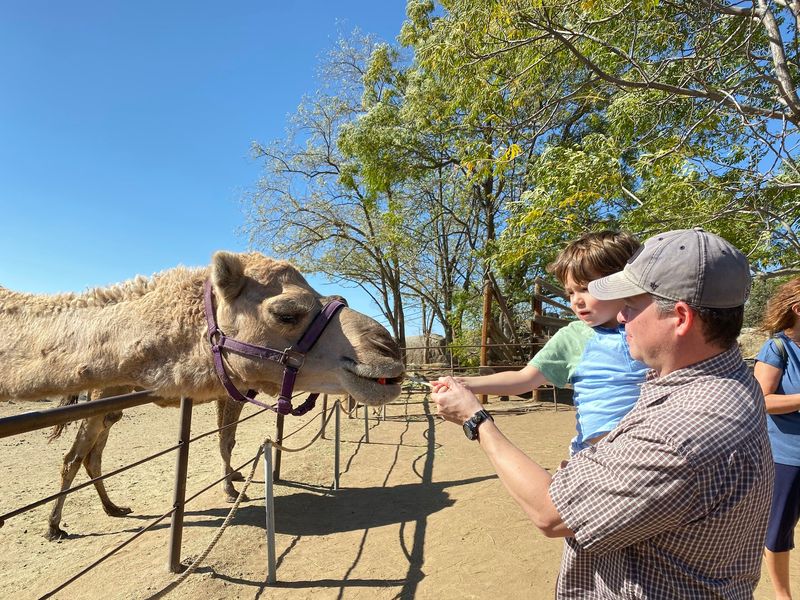
America got its first camel dairy in the hills east of San Diego, and it still runs a show worth the drive.
Public tours happen on select Saturdays from noon to 2:00 p.m., with a live camel show, feeding time, and a stop at the farm store. Tickets cost $15, kids 3 and under get in free, and online purchase is required.
Weekends bring more options. The farm opens Saturday and Sunday from 10:00 a.m. to 4:00 p.m., with Meet-Greet-and-Treat Tours at 11:00 a.m., 1:00 p.m., and 3:00 p.m.
Want a ride? A 10-minute camel ride costs an extra $15.
The camels share the spotlight with a cast of characters. Nancy Riegler’s Bird Show features exotic parrots, and the Wild West Turkey Stampede is exactly as silly as the name suggests.
Before leaving, browse the camel-milk soaps, lip balms, and lotions made on site. Imported camel milk chocolate is also on the shelf.
Private tours for 4 to 20 people can be booked ahead.
2. Camelot Camel Dairy, Wray, Colorado
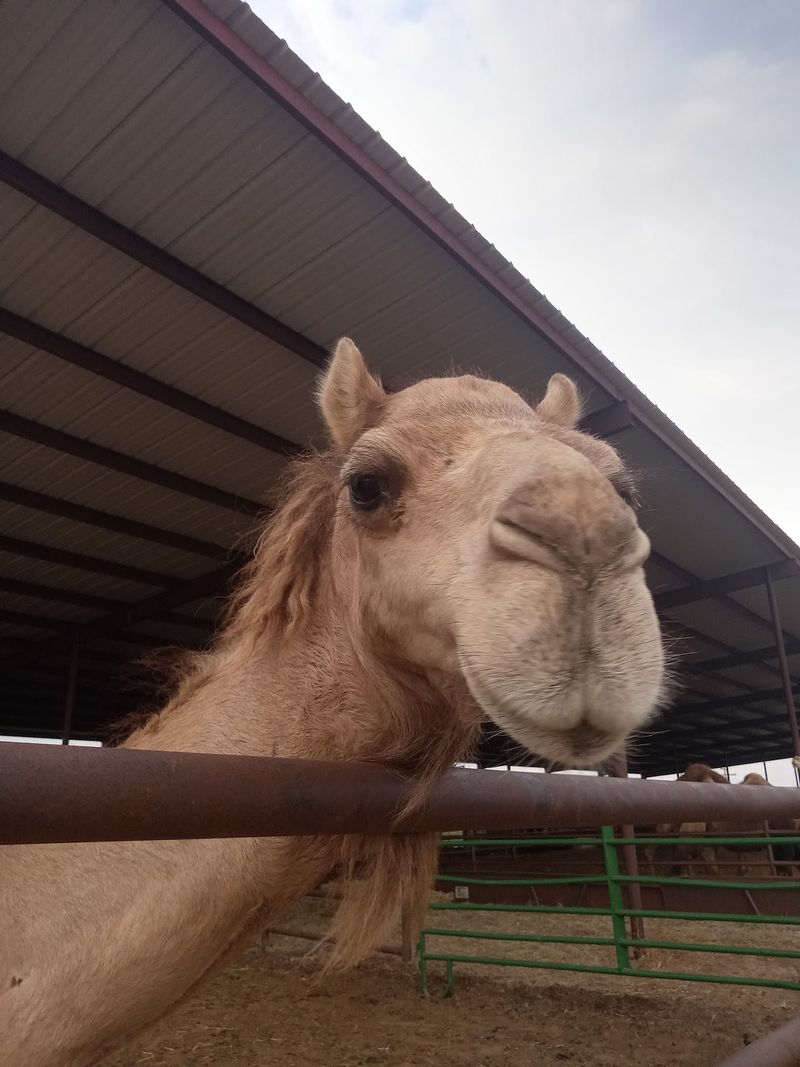
About 40 camels live on 35 acres near the Nebraska line, which is not a sentence most people expect to read about Colorado.
Kyle and Holly Hendrix run Camelot Camel Dairy as a family business. Their herd produces up to 16 pints of milk a day, a small amount compared to a cow dairy.
That difference is part of the lesson. Visitors learn why camel dairying takes patience, and how it compares to the cattle ranches common in this region.
Visits are by appointment only, so call or email before heading out. Showing up unannounced will not get you past the gate.
The owners like to point out that each camel has its own personality. Some are curious, some are bossy, and some simply want snacks.
The farm sells fresh, pasteurized camel milk. Locals can get delivery, and the dairy ships across the country except to Alaska and Hawaii.
Camelot is also one of only two licensed camel dairies of its kind in the United States. That makes it a rare stop with real bragging rights.
3. River Jordan Camel Dairy, Milford, Indiana
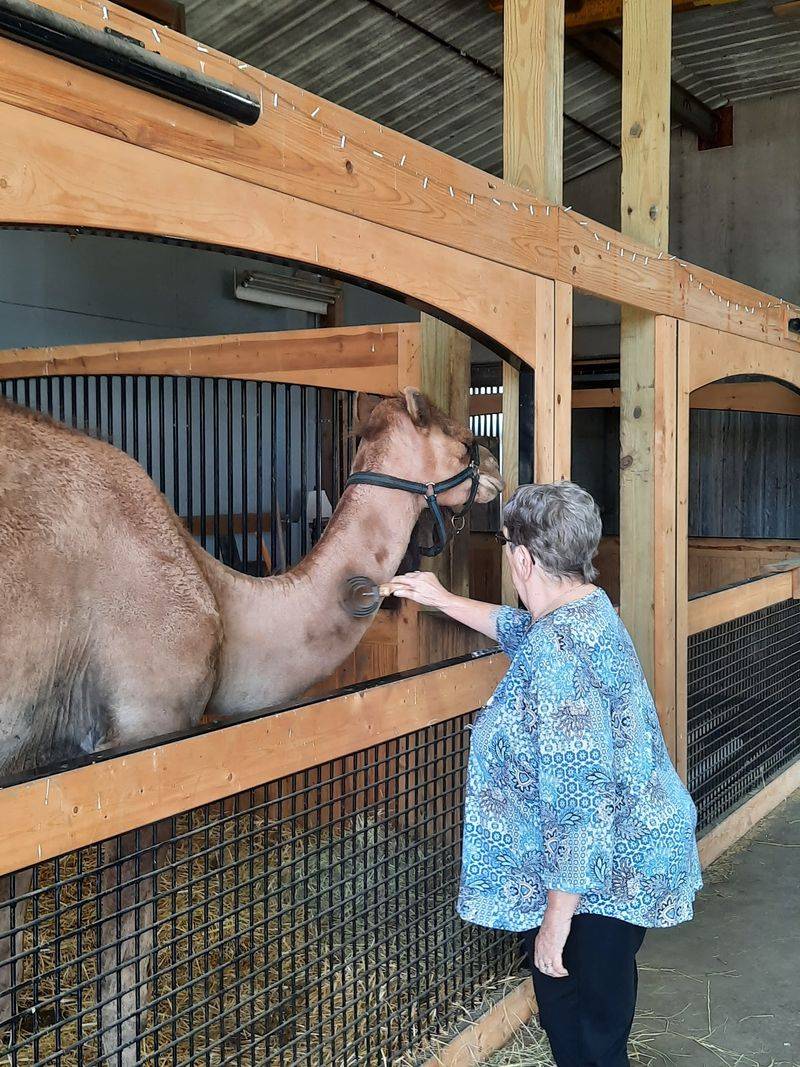
Tour bus drivers in Indiana have used this farm as a mystery stop, and passengers rarely guess the answer.
Horse-drawn buggies are normal in Northern Indiana’s Amish Country. Camels are not, which is what makes River Jordan Camel Dairy such a fun surprise.
The small, family-run farm offers group tours by appointment. Guests see the camels up close and learn how milking works.
Guides also clear up common camel myths. Spoiler alert: the hump does not hold water.
Skincare is the main product here. The handmade soaps contain about 25 percent camel milk, while the lotions use about 75 percent, mixed with natural oils and butters.
The shop carries a few more surprises. You can find all-natural yarn spun from camel hair, along with camel mugs and T-shirts.
Hoping to taste the milk? State rules currently block the sale of raw camel milk, so plan to take home soap instead.
Gather a group, book a time, and let the camels do the talking.
4. The Drome Dairy, Watsontown, Pennsylvania
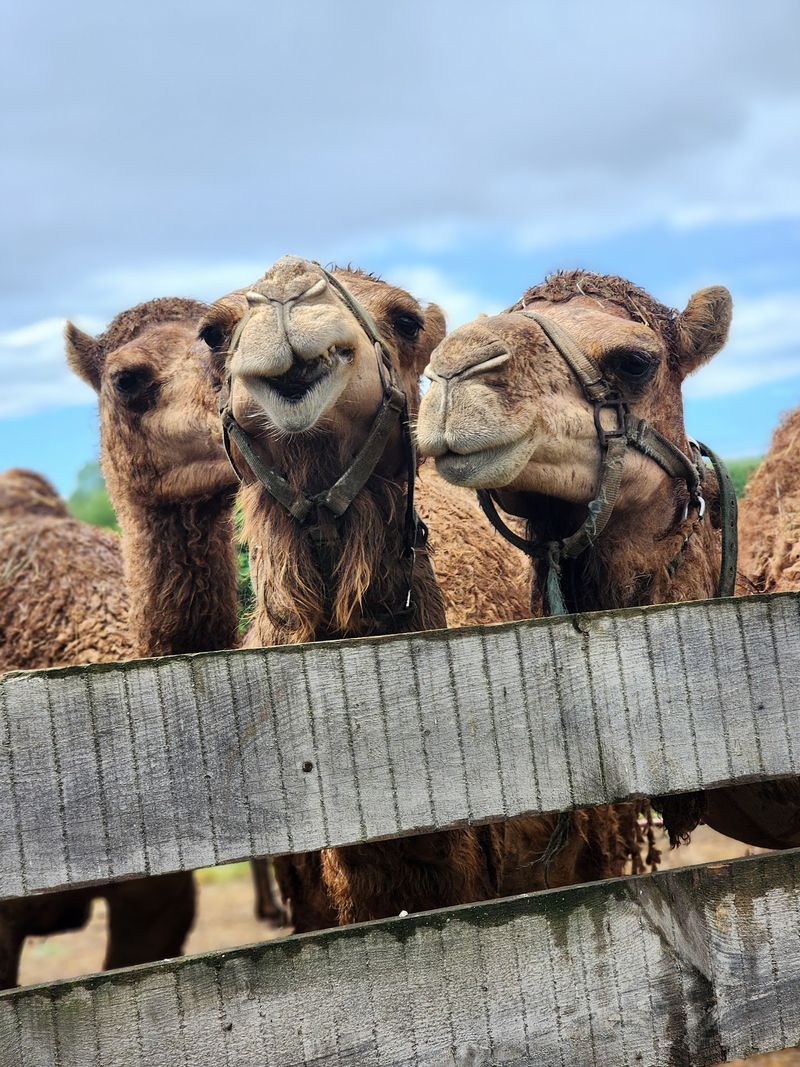
Holstein cows rule most of central Pennsylvania, but one farm near Watsontown decided to try a different kind of milker.
The Drome Dairy gets its name from the dromedary, the one-humped camel. It is a clever name, and it tells you exactly who runs the show.
The farm raises camels and produces specialty dairy items, including camel milk. Its farm-stand-style business gives shoppers a direct way to buy those products.
Details on formal tours are limited. Public information mostly points to the farm stand, so check with the dairy before planning a full visit.
Here is a tip worth remembering. Small farms often change hours with the seasons, and a quick call can save a wasted trip.
The area itself makes for a pleasant drive. Watsontown sits along the Susquehanna River in a region packed with traditional farms.
Spotting camels among all those dairy barns is part of the charm. It is a fresh look at Pennsylvania agriculture, and it makes a great story for friends back home.
Bring a cooler if you plan to buy milk.
5. Kamaroo Farms, Kampsville, Illinois
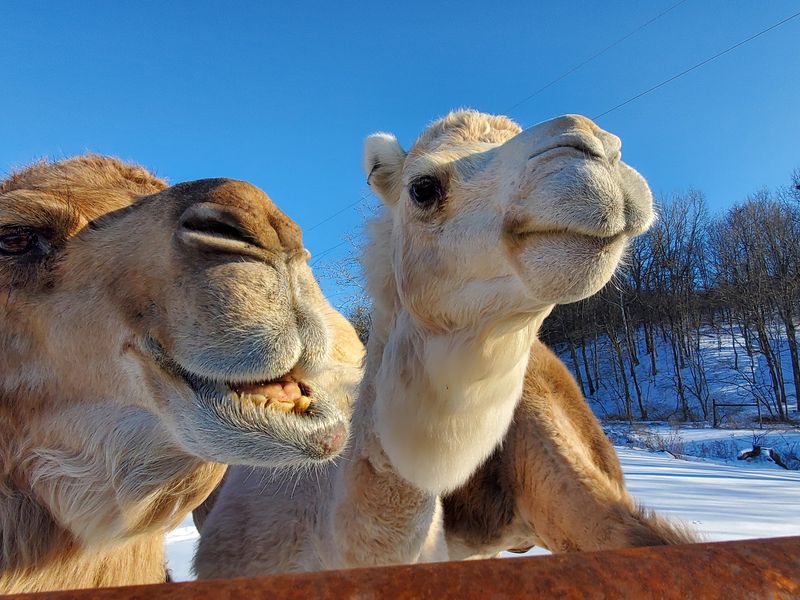
Pilots, take note: this camel farm has its own private airstrip, listed as LL77, plus a courtesy car for fly-in guests.
Kamaroo Farms sits on a peninsula between the Illinois and Mississippi Rivers. Limestone bluffs and wooded valleys surround the property.
The animal list reads like a geography quiz. Camels share the farm with kangaroos, ostriches, emus, rabbits, sheep, and goats.
Guided tours cost $15 per person, and children under 5 are free. Visits are by appointment only, and groups are welcome.
Food lovers get their own reasons to come. Seasonal events include crawfish boils, fish fries, lamb and pig roasts, and wild game feeds.
The farm also teaches. Seminars cover gardening, animal care, beekeeping, and using a gristmill for non-GMO products.
Need a place to sleep? A country cabin on the property can be rented, so you can wake up with kangaroos as neighbors.
Kampsville is a quiet corner of Illinois. A weekend here moves slowly, and that is the whole point.
6. Babby Farms, Caldwell, Idaho
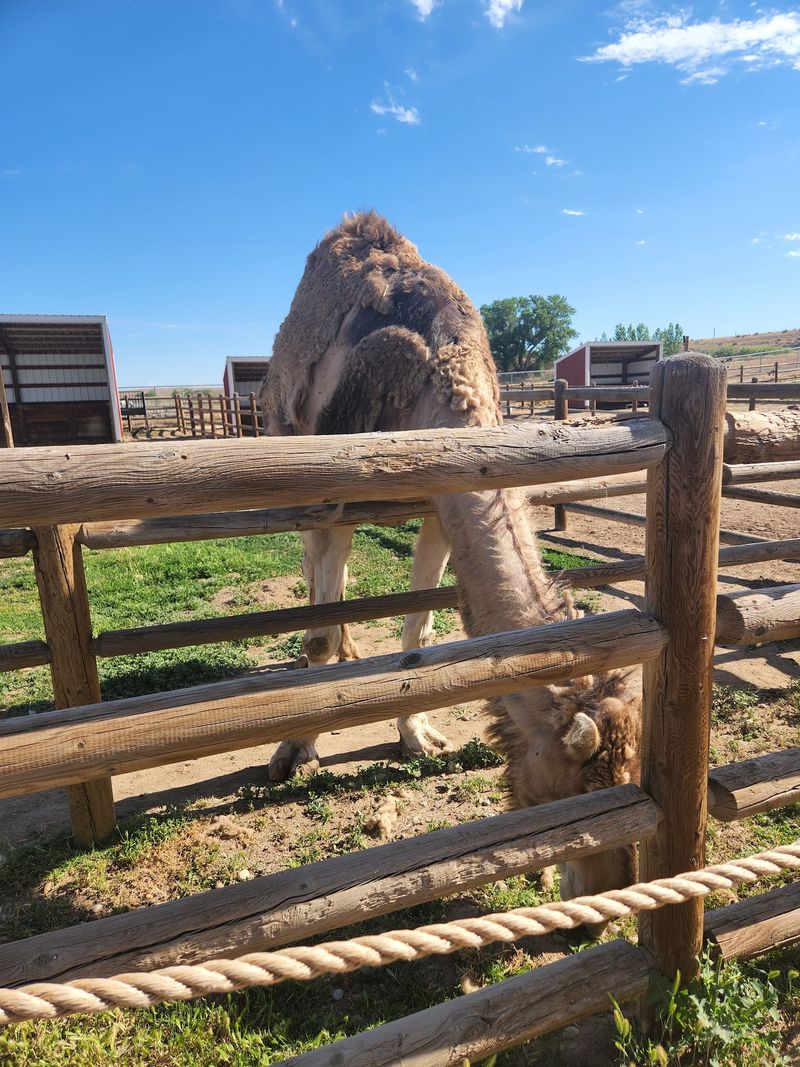
More than 130 hand-raised animals live at Babby Farms, and plenty of them are happy to accept a snack.
The nonprofit opens Tuesday through Sunday from 9:00 a.m. to 5:00 p.m., with last entry at 4:00 p.m. General admission is $9 for ages 12 to 54 and $6.50 for kids 4 to 11 and seniors 55 and up.
Children under 3 get in free.
The camel encounter is a separate ticket. It costs $50 per person, groups max out at six guests, and spots sell out, so book online early.
Age limits apply. Kids must be at least 10 for exotic encounters and 16 for primate visits.
Camels are only one option. Other encounters feature sloths, otters, lemurs, porcupines, and cavies, while kangaroos and zebras round out the collection.
The farm also has a bigger purpose. Its mission includes making animal experiences open to people with disabilities.
Families will appreciate the playground and picnic area. Seasonal events like the Carnival and Boo Bash add even more reasons to return.
7. Bunkerville Camel Safari, Bunkerville, Nevada
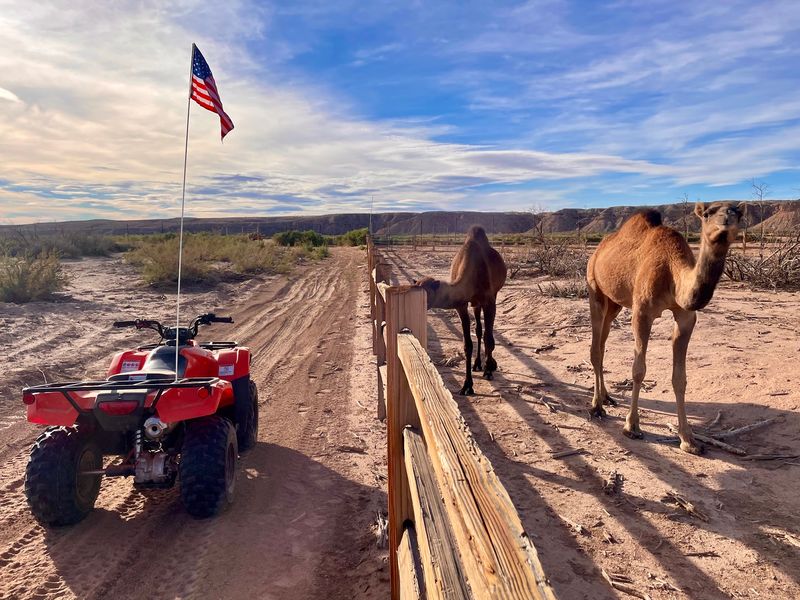
Thirty camels in one place is a lot of humps to count, and this Mojave Desert ranch has more than that.
Bunkerville Camel Safari spreads across 175 acres near Mesquite. Both dromedary and Bactrian camels live here, so you can compare one hump with two.
Guided tours last about two hours. Guests ride a safari tram or UTV and meet alpacas, sand cats, New Guinea singing dogs, sloths, llamas, and zebras.
An ambassador camel poses for photos and hands-on time. Early risers can even help with morning feeding duties.
Camel rides head out into the desert with views of the Virgin Mountains. It is about as close to a classic caravan as Nevada gets.
For something fancier, book the VIP sunset safari. It includes a campfire and s’mores.
Reservations are required, and walk-ins are not accepted. Contact the ranch for current pricing, and ask about rides from Las Vegas for an extra fee.
The facility is accredited by the Zoological Association of America and focuses on desert animal conservation.
8. Giraffe Ranch, Dade City, Florida
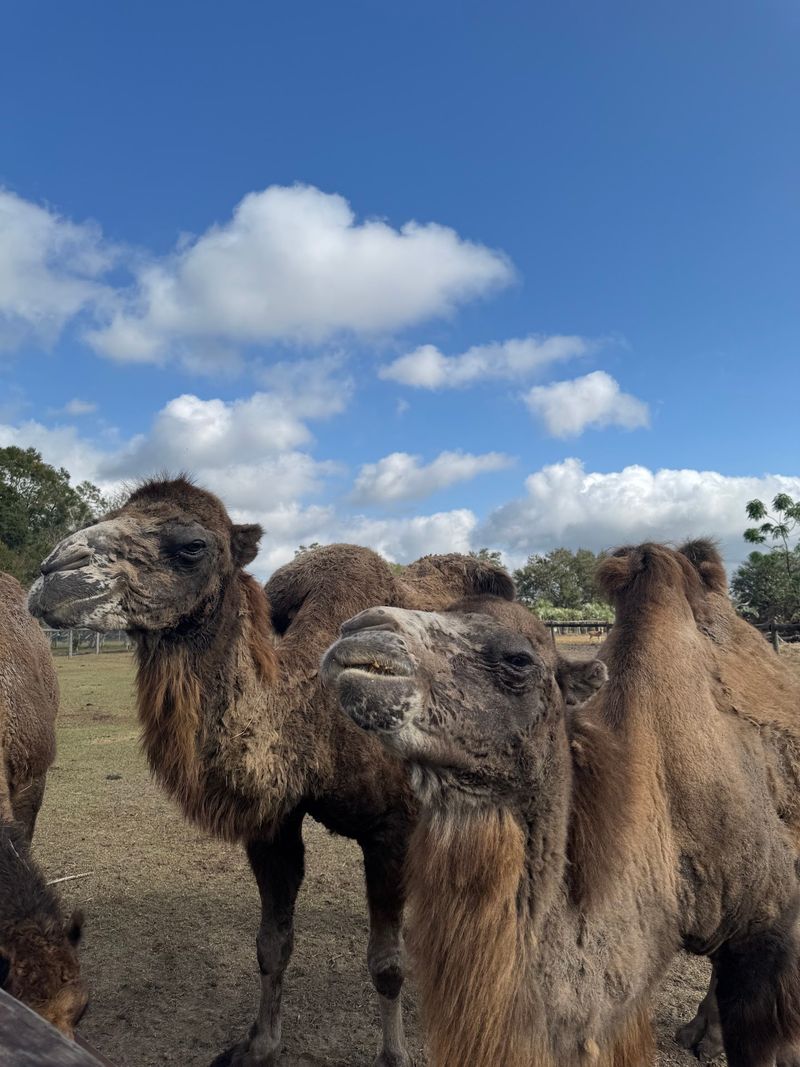
Riding a camel past a giraffe sounds like a dream from a strange nap, but in Dade City it is on the schedule.
Giraffe Ranch is a working wildlife preserve and licensed zoo spread across 47 acres. Animals live in large natural habitats, and guests get surprisingly close.
The Camel Safari lets you watch other animals from a camel’s back. Other tours use a custom safari vehicle or Segways.
There is also a Drive-Thru Safari in your own car. An expert guide talks to you through your FM radio.
Guided tours run daily at 11:00 a.m. and 2:00 p.m. Every visit needs a reservation, and bookings are final with no refunds.
The animal roster is long. Expect zebras, lemurs, capybaras, warthogs, tapirs, hippos, pygmy hippos, ostriches, and bongo antelope.
Giraffe feeding is a crowd favorite.
Rules are strict, so leave outside food, drinks, and pets at home. Double-check your date before booking, since plans cannot be changed later.
9. Pettit Creek Farms, Cartersville, Georgia
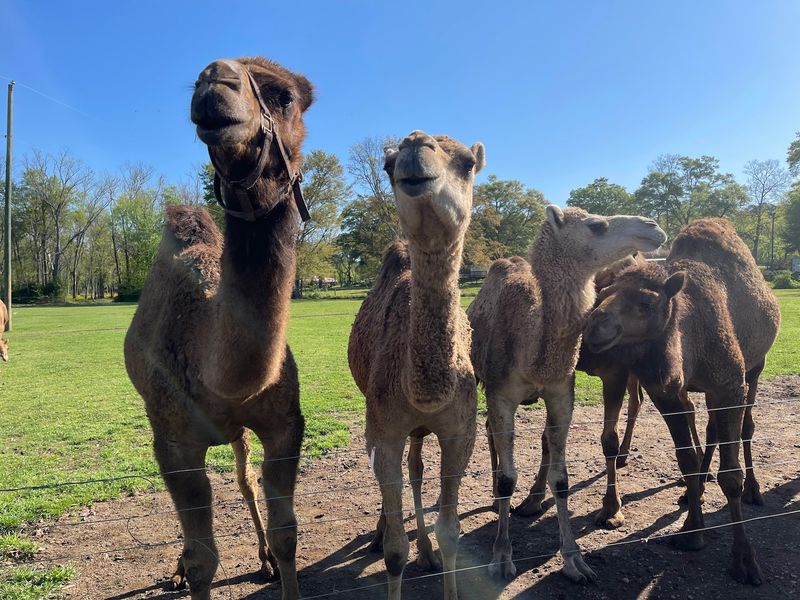
Since 1945, one Georgia family has kept this farm going, and somewhere along the way camels joined the crew.
Pettit Creek Farms covers 80 acres just north of Atlanta. Guided tours follow a 1-mile walk that takes 1 to 1.5 hours.
Tours usually run most Saturdays from February to August at 10:00 a.m., 11:00 a.m., 2:00 p.m., and 3:00 p.m. A guide is required.
Adults pay $16, and kids ages 2 to 12 pay $14. Buying online may save money.
Tired legs have options. A golf cart for two or three people rents for $25, and kids under 80 pounds can ride a pony for the same price.
Grab a $10 feed bag before you meet the animals. Camels share the farm with bison, zebras, llamas, ostriches, emus, and peacocks.
Capybara fans can add a $30 experience.
Hayrides, a petting zoo, and fishing keep kids busy. Fall brings Pumpkin Fest, and winter brings a Holiday Lights show.
10. HQ Encounters, Claremore, Oklahoma
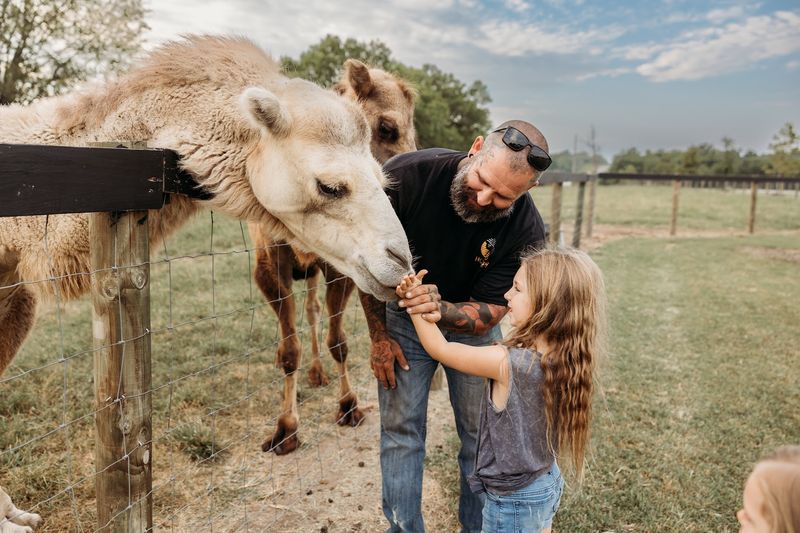
Oklahoma has a camel ranch where visitors can get close enough to these unusual animals for a memorable photo. HQ Encounters in Claremore offers guided experiences centered on meeting and interacting with camels.
The ranch describes itself as home to Oklahoma’s largest camel herd. Visitors can book hands-on encounters, learn about the animals from their guides, and enjoy close-up interactions that may include the ranch’s popular camel hugs.
Unlike a traditional zoo, visits focus on smaller, guided experiences rather than wandering through large exhibits. That gives guests a chance to ask questions and discover more about the camels’ personalities and daily care.
Reservations are recommended, and animal availability can vary. Check the ranch’s current booking options before making the trip.
11. Camel Safari at Rigden Ranch, Franksville, Wisconsin
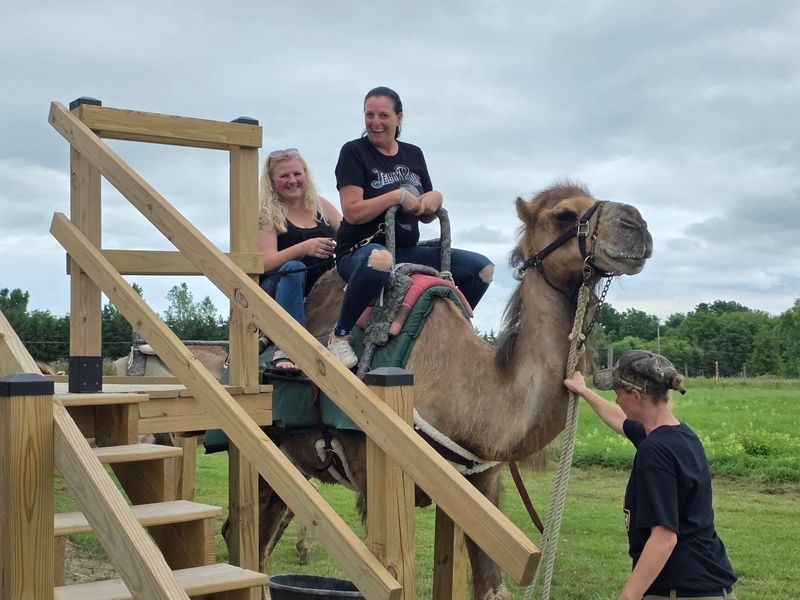
Wisconsin is famous for cheese, but Rigden Ranch claims a different first: the state’s first camel caravan.
The ranch sits near Racine in the town of Franksville. Its Camel Caravan lets guests explore part of the property from a camel’s back.
Tours stay small. Each one is private, guided, and limited to six people, so book your whole group together.
Timing matters here. Late arrivals do not get extra time, and rainy days mean the tour gets rescheduled.
More than 20 species live on the ranch. Camels share space with pigs, capybaras, lemurs, and kangaroos.
Feeding is part of the fun. Extra buckets of food are sold on site if your crew runs out.
One rule surprises some guests. Service animals are not allowed, for the safety of the ranch animals.
The ranch is privately funded and leans hard into education. Camels can even be rented for events, which could make your next party unforgettable.
Confirm ride availability when booking.
12. Fort Chiswell Animal Park, Max Meadows, Virginia
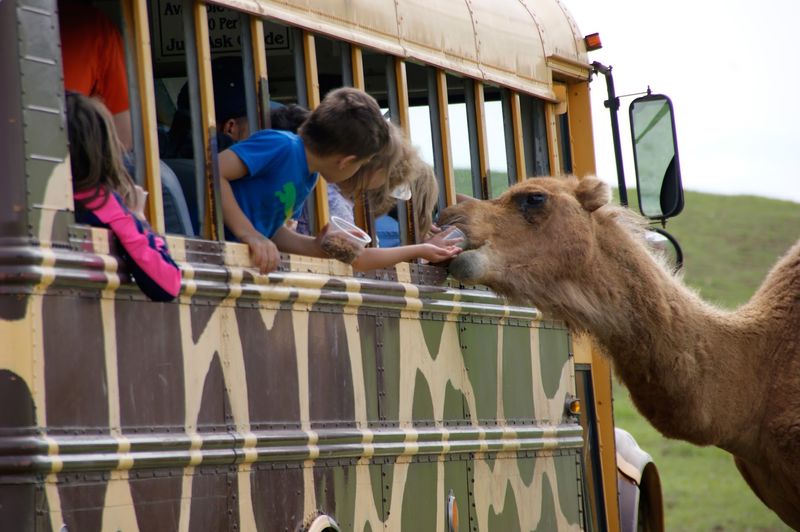
Meet Puff, a camel who has earned a fan club among guests in southwestern Virginia.
Fort Chiswell Animal Park calls itself the largest zoo in Southwest Virginia. Animals from six continents live here.
The star attraction is a guided safari bus. It rolls into The Outback, where camels, zebras, ostriches, antelope, and buffalo roam freely.
Guests are encouraged to touch, feed, and photograph the animals. Nose-to-nose meetings are part of the plan.
Admission covers both the bus tour and the petting zoo. Groups of 15 or more can get a discount.
Hours change with the seasons. From mid-March to Memorial Day, the park opens Friday through Sunday from 10:00 a.m. to 5:00 p.m.
Summer brings daily hours, with weekends running until 6:00 p.m. After Labor Day, the weekend-only schedule returns through November.
The last bus leaves one hour before closing, so arrive early. A gift shop and snack bar help fill the gaps.
It is a fine finale for any camel road trip.
Share this story