Delaware is the first state in the Union, but it is also one of the most overlooked when it comes to architectural history. Tucked between bigger neighbors, this small state quietly holds some of the oldest standing buildings in the entire country. A few of these structures predate the American Revolution by decades, and some even trace their roots back to the 1600s, when European settlers were still figuring out what this new land would become. Some buildings watched wars unfold from their windows, hosted Founding Fathers in their parlors, or absorbed actual cannonballs into their walls.
That last one is not a metaphor. From a colonial courthouse that helped birth a state to a tiny chapel that shaped an entire American religion, Delaware’s historic buildings punch well above their weight. Here are 12 remarkable survivors that have stood through centuries of change and are still worth a visit today.
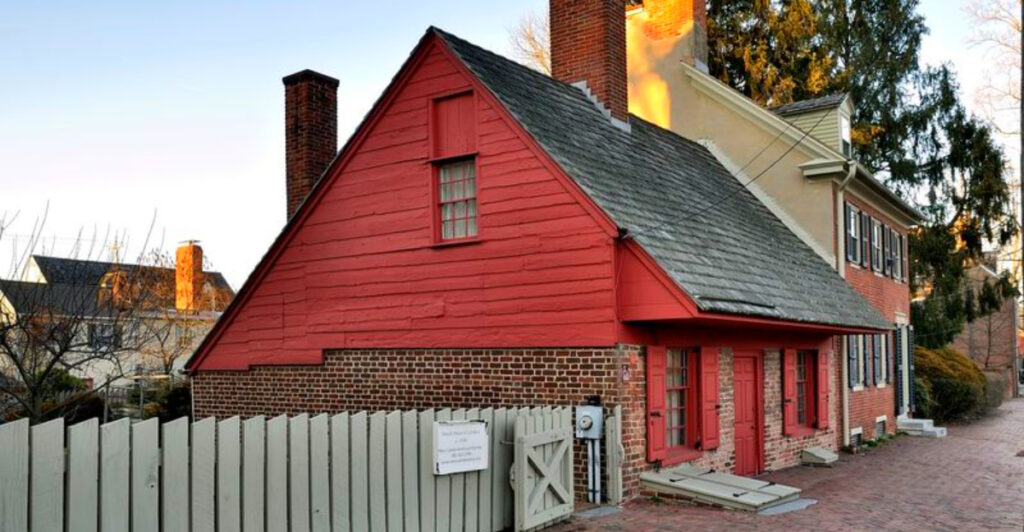
1. Ryves Holt House, Lewes, Delaware
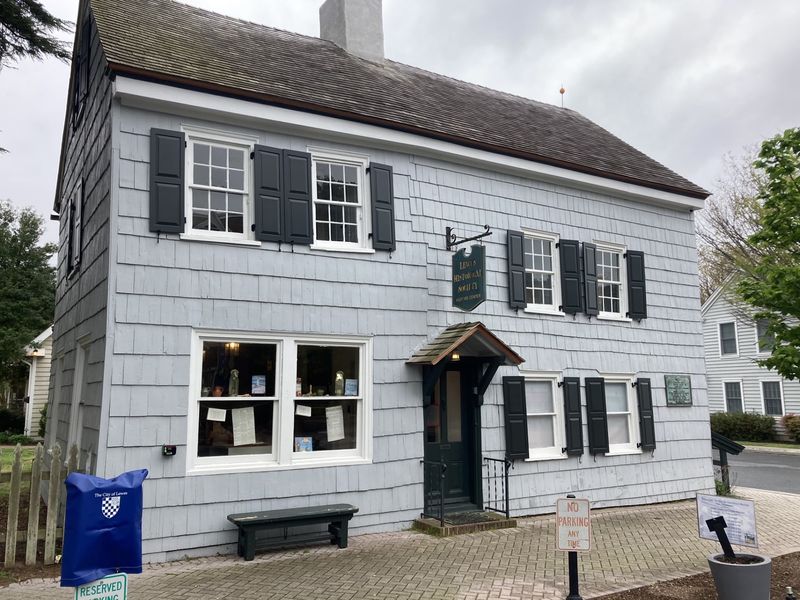
Delaware’s oldest building still standing on its original foundation was not built by a famous general or a wealthy merchant, but it has outlasted most of what they built. Dendrochronology, the science of dating wood by its rings, confirmed the Ryves Holt House was constructed around 1665, making it a genuine pre-colonial relic.
The house once operated as an inn, or “ordinary,” run by Philip Russell, who served as William Penn’s cupbearer. Ryves Holt himself, the first Chief Justice of Sussex County, purchased the property in 1723. The house later passed through the family line to Commodore Jacob Jones, a celebrated naval figure from the War of 1812.
Today, the Lewes Historical Society operates the building as a visitor center and museum gift shop. In 2014, it was added to the First State National Historical Park. Its architectural details reflect Dutch, Swedish, and English building traditions all blended into one compact, centuries-old structure.
2. Old Swedes Historic Site, Wilmington, Delaware
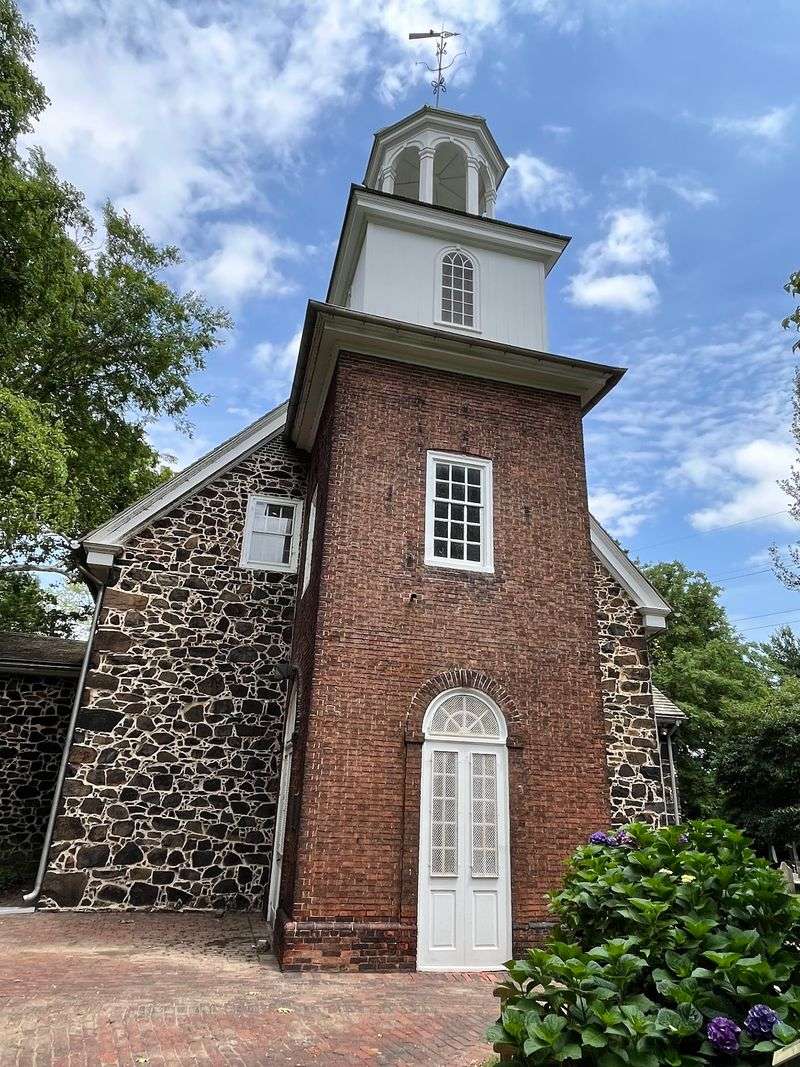
Holy Trinity Church, better known as Old Swedes Church, has been holding services since 1699, which means it was already a century old before Abraham Lincoln was born. Built for the Swedish community remaining in the Delaware Valley after the New Sweden era, the church was consecrated on June 4, 1699, with a predominantly Swedish congregation.
The site’s history goes back even further. Before the church existed, the land served as a burial ground for Fort Christina, established by Swedish and Finnish settlers in 1638. The Hendrickson House, an early 18th-century structure dating to around 1722, was relocated to the church grounds in 1960 and now functions as a museum and research space.
Old Swedes was designated a National Historic Landmark in 1961 and joined the First State National Historical Park in 2013. Remarkably, the church remains active today, welcoming both curious visitors and regular worshippers, which is an achievement very few 300-year-old buildings can claim.
3. Immanuel Episcopal Church on the Green, New Castle, Delaware
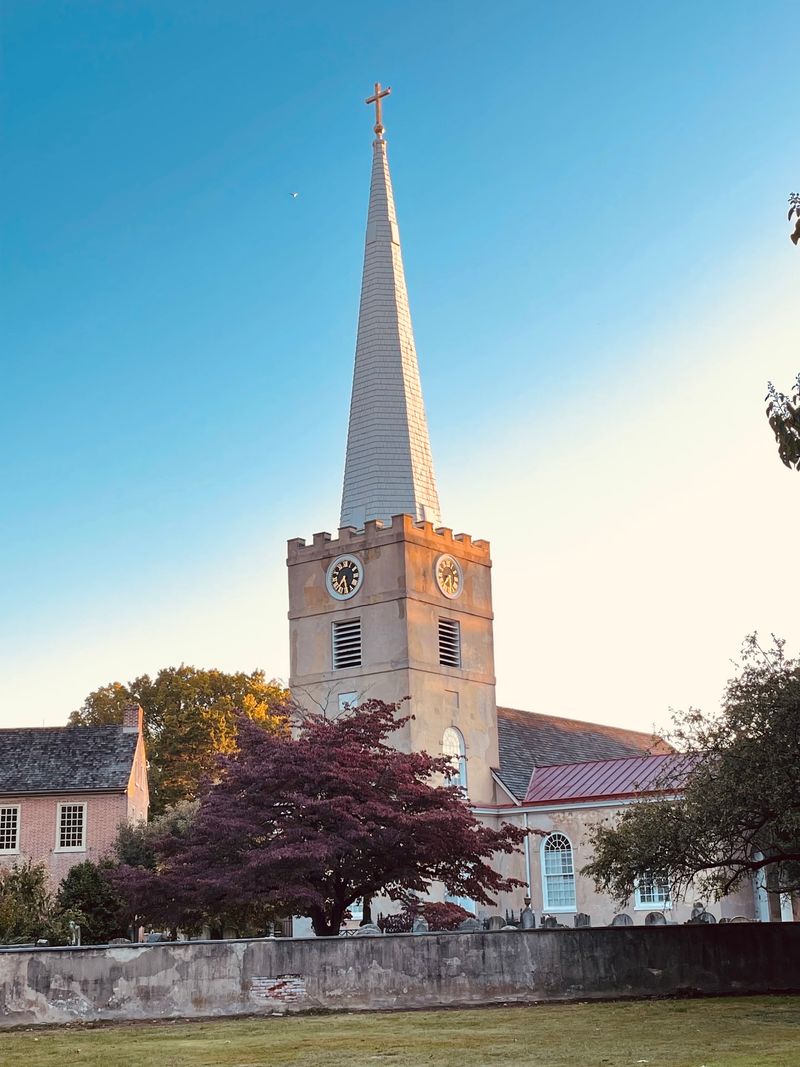
A church that has been serving its congregation since 1703 has inevitably seen some turbulent moments, and Immanuel Episcopal Church on the Green has one that is hard to forget. A devastating fire in 1980 tore through the building, destroying the roof, steeple, and interior. The historic exterior walls, however, survived.
Rather than walking away from the damage, the congregation committed to a careful rebuilding process that honored the original structure. The result is a building where genuine early fabric sits alongside meticulous restoration, and where the parish traces its roots all the way back to 1689. Burials in the adjacent graveyard date to 1707.
The church occupies one of New Castle’s most attractive settings, facing the historic Green and surrounded by colonial-era architecture. For a building that technically burned from the inside out four decades ago, it presents a remarkably composed and enduring face to the street today.
4. Robinson House, Claymont, Delaware
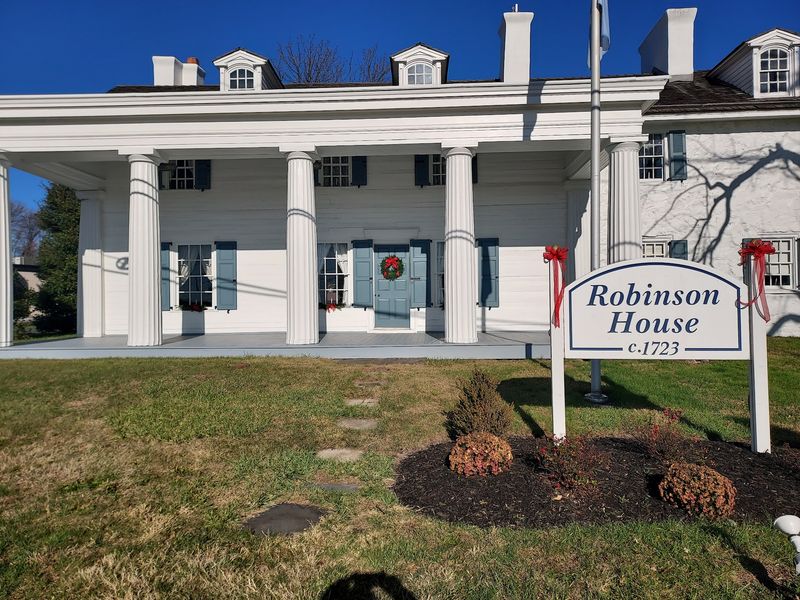
George Washington, the Marquis de Lafayette, General Anthony Wayne, and Henry ‘Light Horse Harry’ Lee all visited the same house in Claymont, Delaware. That is either a remarkable coincidence or a sign that the Robinson House was a genuinely important stop in early American history, and the evidence points firmly toward the latter.
Built in 1723 near Naamans Creek, the house sits on the site of one of the region’s earliest settlements. Philadelphia merchant Thomas Robinson acquired the property in the 1740s. The house was later listed in the National Register of Historic Places in 1971, formally recognizing its significance.
Between 1914 and 1964, the building had a different kind of fame, operating as a popular restaurant called Naaman’s Tea House. Today, it serves as headquarters for several local historical organizations, including the Claymont Historical Society and the Darley Society. The busy modern roads nearby make its survival feel all the more improbable.
5. Dutch House Museum, New Castle, Delaware
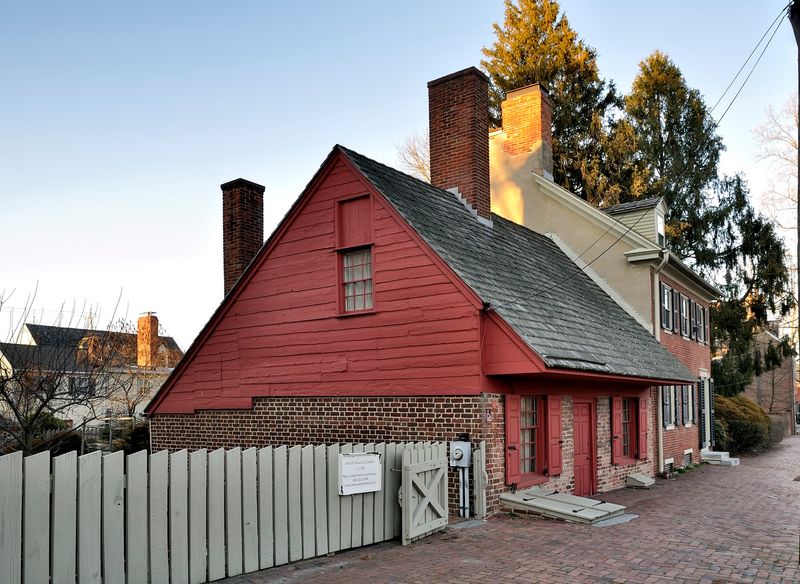
Most houses built before 1700 in America have either been rebuilt so many times they barely resemble their origins, or they simply no longer exist. The Dutch House Museum in New Castle is the rare exception, holding the distinction of being the only complete local survivor in the city that retains its original form from before 1700.
The small brick building sits on East Third Street, right in the heart of New Castle’s historic district. Inside, visitors encounter historical artifacts including a 1714 Bible, an old spoon rack, and period cupboards that connect directly to the era when this house was a lived-in home rather than a landmark.
Its modest scale is actually one of its most compelling qualities. Bigger estates can feel theatrical, but the Dutch House feels genuinely intimate, more like stepping into someone’s actual past than visiting a curated display. The surrounding streetscape only deepens that effect.
6. Amstel House Museum, New Castle, Delaware
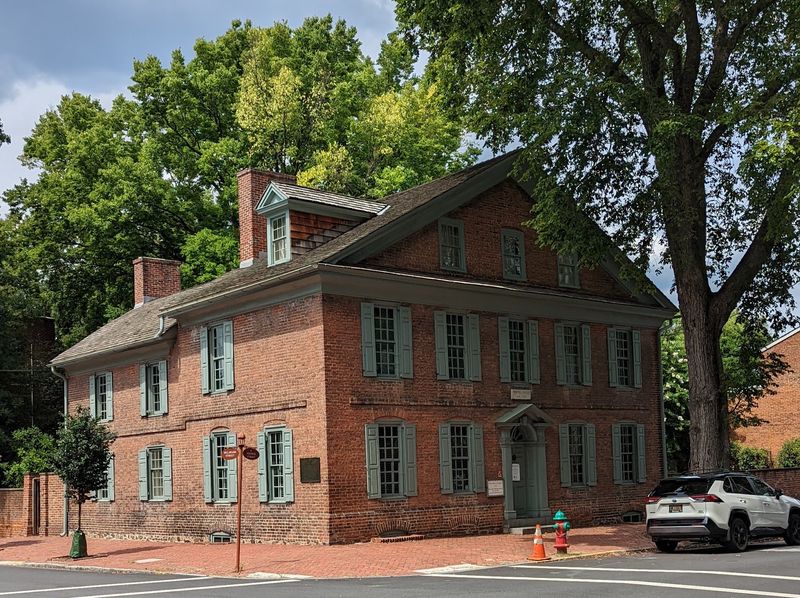
Colonial New Castle had serious ambitions, and the Amstel House built around 1730 makes that very clear. This early Georgian mansion was not the home of a struggling settler but of someone who had done well enough to want their house to say so, with balanced proportions, quality brickwork, and original architectural details that have held up for nearly three centuries.
The house now operates as a museum, giving visitors a window into 18th-century domestic life in one of Delaware’s most historically rich towns. Its position along New Castle’s walkable historic streets makes it a natural part of any afternoon spent exploring the area.
What sets the Amstel House apart from many colonial-era museums is that it does not feel isolated from its context. The surrounding neighborhood still looks the part, with period buildings, brick sidewalks, and a general sense that not everything here has been modernized beyond recognition. That continuity makes the house feel genuinely rooted rather than artificially preserved.
7. New Castle Court House Museum, New Castle, Delaware
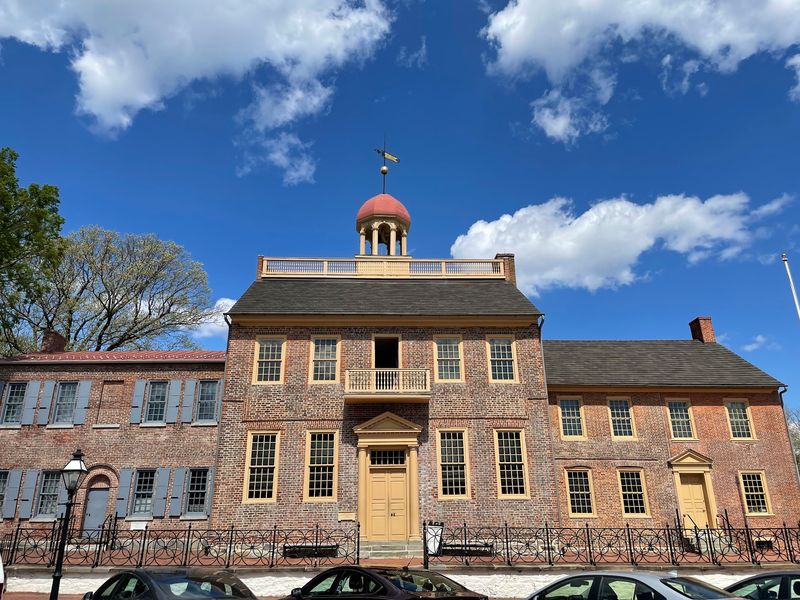
Not every old building can say it helped create a state, but the New Castle Court House has that on its resume. Built in 1732, this brick courthouse is where Delaware’s legislature gathered in 1776 to declare independence from both Pennsylvania and Great Britain, effectively establishing Delaware as its own political entity.
The courthouse also carries a connection to the Underground Railroad, adding yet another layer to a history that already spans multiple chapters of American life. Its preserved courtroom, period objects, and rotating exhibits give visitors several different entry points into that history, depending on what they find most interesting.
As the centerpiece of New Castle’s historic district, the building does more than house a museum. It anchors an entire neighborhood that still looks and feels like a colonial American town. Few courthouses anywhere in the country can claim this combination of architectural integrity, political significance, and continued public relevance after nearly 300 years of continuous presence.
8. John Dickinson Plantation, Dover, Delaware
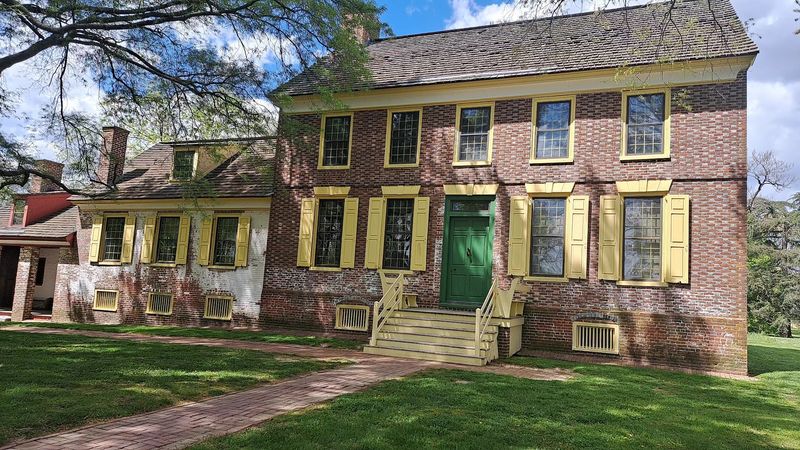
John Dickinson earned the nickname ‘Penman of the Revolution’ for his influential political writing, and the brick mansion where he spent much of his youth still stands outside Dover, looking much as it did when he left for Philadelphia to help shape a new nation. The Dickinson family’s original home dates to 1740 and remains the centerpiece of the plantation site.
What makes this site more than a monument to one famous man is its honest approach to a complicated history. The interpretation deliberately includes the stories of enslaved, indentured, free, and tenant laborers who also lived and worked on the property. That broader perspective gives the site a depth that purely celebratory historic homes often lack.
The surrounding open land is part of the experience too. Unlike many historic houses hemmed in by modern development, the plantation retains a sense of rural space that helps visitors actually picture what 18th-century life here would have looked like on an ordinary working day.
9. Hale-Byrnes House, Newark, Delaware
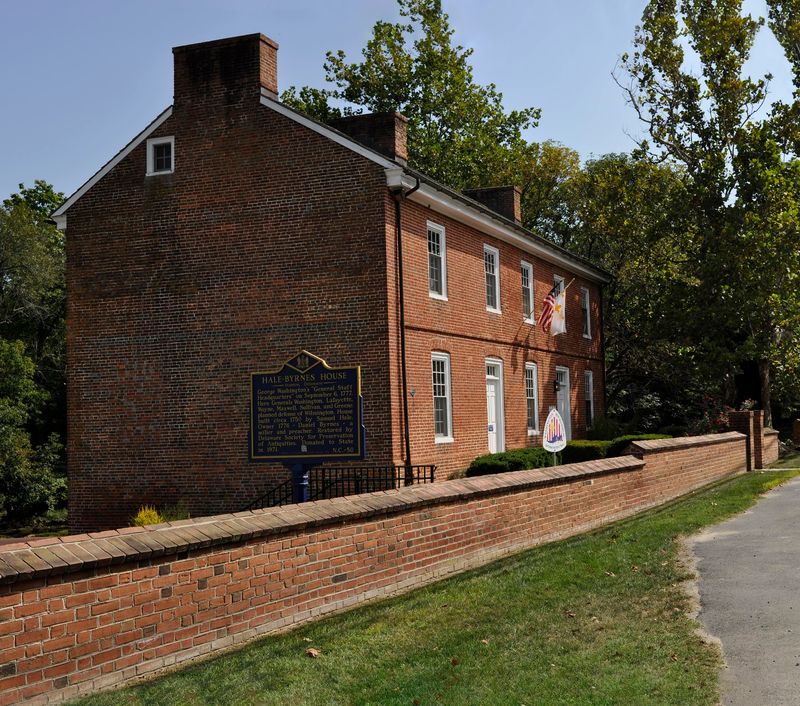
After the 1777 Battle of Cooch’s Bridge, George Washington needed a place to regroup and make decisions, and he chose a modest brick house in Newark, Delaware. That house is still standing. The Hale-Byrnes House, built around 1750, hosted a council of war that helped shape the Continental Army’s next moves during a critical stretch of the Revolution.
From the outside, nothing about the five-bay structure announces its historical weight. It looks like a well-built old country home, which is exactly what it is, except that the people making decisions inside it were trying to hold together a revolution against the most powerful military force of their era.
That gap between appearance and significance is part of what makes the Hale-Byrnes House so compelling as a historic site. Grand buildings can feel like they were always meant to be famous. This one feels like history arrived unexpectedly one autumn and simply never left.
10. Prince George’s Chapel, Dagsboro, Delaware
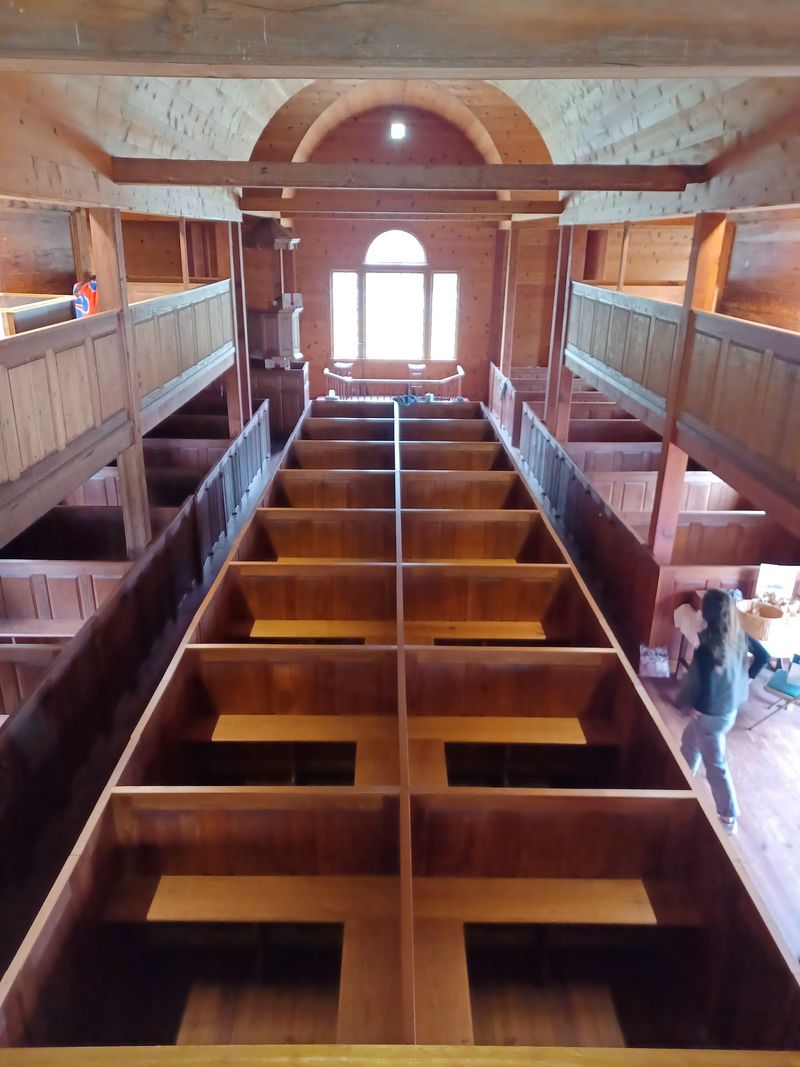
Prince George’s Chapel was dedicated to England’s Prince George, who later became King George III. That royal connection did not stop the surrounding community from eventually fighting against him in the Revolution, and the chapel itself went on to outlast the entire monarchy’s influence on American soil.
Construction began in 1755, and the completed chapel served as an Anglican chapel of ease for the outlying northern areas of Worcester Parish, Maryland. Its most distinctive interior feature is a barrel-vaulted ceiling made from unadorned heart-pine planks, a design choice that gives the compact sanctuary a quiet, understated character.
The State of Delaware acquired the building in 1967, and it was listed on the National Register of Historic Places in 1971. The cemetery on the grounds holds the grave of General John Dagworthy, a Revolutionary War officer whose name the town of Dagsboro carries to this day. The chapel’s rural setting keeps it feeling genuinely removed from the modern world.
11. Cannonball House Maritime Museum, Lewes, Delaware
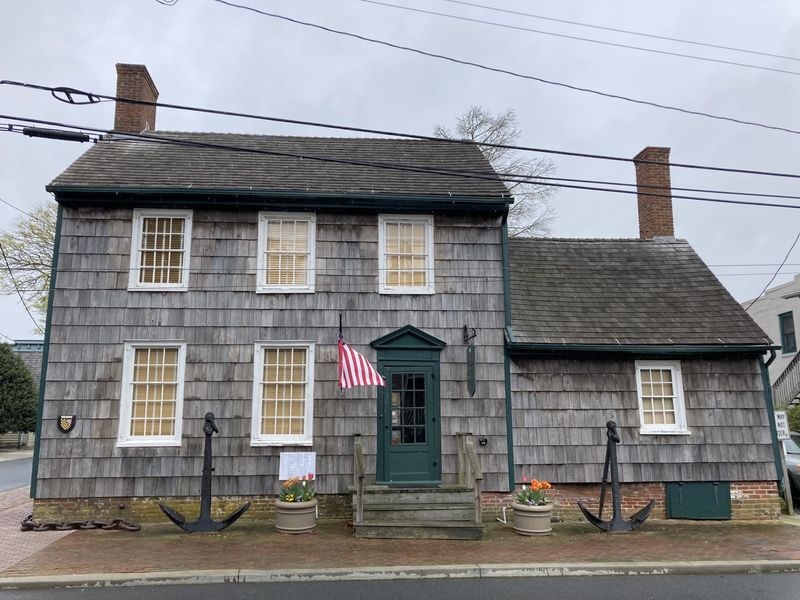
Most historic houses rely on documents and artifacts to prove their connection to major historical events. The Cannonball House in Lewes does it differently: there is an iron cannonball literally embedded in the foundation, a permanent reminder of the British bombardment of April 6 and 7, 1813, during the War of 1812.
The house itself dates to around 1760, with an enlargement in the 1790s. During the bombardment, it served as the residence of the McCracken family, prominent Delaware Bay and river pilots. The original cannonball that struck the building has since been moved to the second floor of the museum, where visitors can see it up close.
Today the shingled building operates as a maritime museum exploring Lewes’ long history with the Delaware Bay and the Atlantic coast. Among its exhibits is a Fresnel Lens from the Fourteen Foot Bank Lighthouse. Few historic buildings offer this combination of war history, maritime heritage, and very literal battle damage all in one compact package.
12. Corbit-Sharp House, Odessa, Delaware
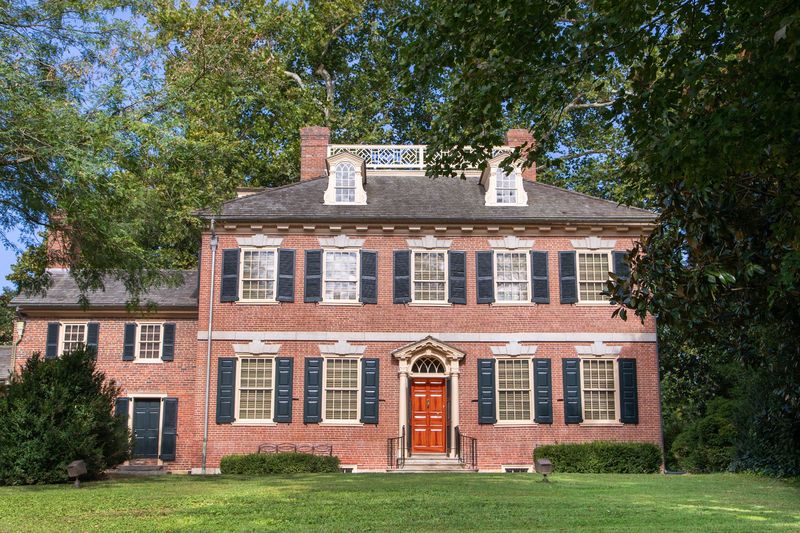
William Corbit was a tanner, not an aristocrat, but the house he built around 1774 in Odessa could easily fool you. The Corbit-Sharp House is a National Historic Landmark and a textbook example of Philadelphia-Georgian architecture, with a balanced facade and period details that have survived remarkably intact over 250 years.
What makes the interior especially compelling is an unusually detailed household inventory from 1818, which allowed historians to furnish and interpret the rooms with impressive specificity. Rather than guessing what early American domestic life looked like here, curators had a detailed written record to work from, and the result feels more grounded than most period house museums.
The house also carries a documented connection to the Underground Railroad. A freedom seeker named Sam found refuge here in 1845, a chapter of the home’s history that adds considerable moral weight to its architectural elegance. Odessa’s quiet setting makes the Corbit-Sharp House feel like a discovery rather than an obvious stop on a tourist route.
Share this story