
Europe has some of the best roads on the planet, but not every country shares the same level of safety behind the wheel. The European Commission’s preliminary 2025 figures put the EU average at about 43 road deaths per million people, yet several countries sit well above that number.
When you adjust for population size, the differences between countries become striking and sometimes shocking. These 12 nations stand out for fatality rates that remain higher than most people would expect from a continent known for modern infrastructure and strict traffic laws.
Bulgaria

Bulgaria holds the unwanted title of the EU’s most dangerous roads by population in 2025. Preliminary European Commission figures put the country at 71 road deaths per million inhabitants, well above the EU average of 43.
That number is jarring, even if it marks a slight improvement from 74 per million recorded the year before.
A large part of the problem comes down to road infrastructure quality and driver behavior. Many rural roads in Bulgaria lack proper lighting, guardrails, and lane markings.
Speeding and seatbelt non-compliance remain stubbornly common outside major cities.
There is a silver lining worth mentioning. Bulgaria has cut its overall road fatality count by roughly 27% since 2019, which shows that safety campaigns and enforcement efforts are slowly working.
The country still has a long road ahead, but the trend is moving in the right direction. Progress, even when slow, is still progress.
Romania

Romania has been a fixture near the top of Europe’s road-fatality rankings for years, and 2025 is no exception. Preliminary data place the country at approximately 68 deaths per million residents, which is about 58% higher than the EU-wide average.
The number did fall from 78 per million in 2024, so there is measurable movement in the right direction.
Much of Romania’s road safety challenge stems from its road network. A significant portion of the country still relies on narrow, undivided highways shared by cars, trucks, and agricultural vehicles.
Overtaking on blind corners is a common and deadly habit on these routes.
The European Commission estimates Romania has reduced fatalities by around 30% since 2019, which is a meaningful achievement. But when Sweden records just 20 deaths per million, the gap between Eastern and Northern Europe becomes impossible to ignore.
Closing that divide will require sustained investment in infrastructure, stricter enforcement, and long-term public education campaigns that change driving culture from the ground up.
Croatia

Croatia’s road safety numbers actually moved in the wrong direction in 2025, which makes it stand out even among the countries on this list. The country recorded an estimated 67 traffic deaths per million inhabitants, up from 62 per million in 2024.
That represents a roughly 9% increase in the total number of fatalities year over year.
Summer tourism plays a real role here. Croatia’s coastal roads attract millions of visitors each year, many of them unfamiliar with the tight curves and steep drops along Adriatic routes.
Rental cars, motorcycles, and distracted drivers create a dangerous seasonal mix that pushes crash numbers higher during peak months.
Croatia’s population is fewer than four million people, which means even a modest rise in fatal crashes has a big impact on its per-capita rate. Authorities have introduced speed cameras and stricter penalties on the most dangerous stretches, but enforcement remains inconsistent outside major tourist corridors.
The country has improved compared to 2019 overall, but recent backsliding shows how fragile road safety progress can be without sustained commitment.
Latvia

Latvia’s road safety story is one of dramatic transformation with unfinished business still on the table. The country recorded approximately 63 road deaths per million inhabitants in 2025, which is a jump from 60 per million in 2024 and puts it well above the EU average.
That recent uptick stings a little, given how far Latvia has come.
Back in 2014, Latvia’s rate was a staggering 106 deaths per million inhabitants. That figure placed it among the most dangerous places to drive in all of Europe.
The country has essentially cut that number in half over the past decade through targeted enforcement, infrastructure upgrades, and public awareness campaigns focused on drunk driving and speeding.
Winter conditions add a layer of difficulty that drivers in warmer EU countries never face. Icy roads, short daylight hours, and heavy snowfall create treacherous conditions across Latvia’s extensive rural road network.
Rural roads account for a disproportionate share of fatal crashes. The progress Latvia has made is genuinely impressive, but the latest figures are a reminder that complacency is one of road safety’s biggest enemies.
Portugal

Portugal sits in a curious middle ground on Europe’s road safety map. Its 2025 preliminary fatality rate of roughly 55 deaths per million residents is noticeably higher than the EU average of 43, yet it has been improving steadily over the years.
The country recorded about 58 per million in 2024 and 61 per million a decade ago, so the direction is clearly positive.
The challenge is that progress has been slow and uneven. Portugal’s motorway network is modern and generally well-maintained, but secondary roads tell a different story.
Narrow lanes, poor signage, and a culture of aggressive overtaking on rural routes contribute heavily to crash statistics outside the major cities.
The European Commission estimates fatalities fell around 14% between 2019 and 2025, which is positive but falls short of the EU’s ambitious goal of halving road deaths by 2030. Countries like Norway and Sweden have already achieved rates below 20 deaths per million, making Portugal’s 55 look especially high by comparison.
Greater investment in road safety enforcement and infrastructure upgrades on secondary roads could accelerate the pace of improvement significantly.
Greece

Greece pulled off one of the most impressive single-year improvements in European road safety in 2025. Its fatality rate dropped from 64 deaths per million inhabitants in 2024 to about 50 in 2025, with the European Commission estimating a 22% reduction in total deaths.
For a country that has long struggled with road safety, that is a headline-worthy turnaround.
Context matters, though. Even at 50 deaths per million, Greece still sits above the EU average of 43.
And looking back to 2014, when the rate was around 73 per million, the scale of improvement over the past decade becomes clear. Stricter enforcement of speed limits and alcohol laws, combined with EU-funded road upgrades, has helped push numbers down.
Greek driving culture has historically been assertive, to put it politely. Motorcycles weaving through traffic, late-night driving on unlit rural roads, and inconsistent helmet use have all contributed to the country’s fatality figures.
The 2025 improvement is encouraging, but sustaining that momentum will require more than one good year. Greece needs to keep the pressure on enforcement and infrastructure investment to close the gap with Europe’s safest countries.
France

France might be the most unexpected name on this list. With its extensive autoroute network, rigorous vehicle inspection system, and decades of road safety campaigns, France looks on paper like a country that should rank among Europe’s safest.
Yet preliminary 2025 figures put its fatality rate at approximately 49 deaths per million inhabitants, above the EU average of 43.
What makes France’s position more frustrating is the lack of recent progress. The European Commission estimates that the total number of road deaths in 2025 was roughly 1% higher than in 2019.
While countries like Romania and Poland have made dramatic reductions over the same period, France has essentially flatlined. That stagnation is a real concern for policymakers.
Rural roads account for the majority of France’s fatal crashes, a pattern shared with many European countries. Speed, alcohol, and distraction remain the top contributing factors.
France has introduced increasingly tough penalties in recent years, including lower speed limits on rural roads, but compliance has been inconsistent. The country has the tools to do better.
Closing the gap between its infrastructure quality and its actual safety outcomes is the central challenge French road authorities now face.
Italy

Scooters darting between lanes, ancient city streets never designed for modern traffic volumes, and a driving culture where honking is considered a form of communication. Italy’s roads are lively, to say the least.
Preliminary 2025 European Commission figures put the country at approximately 49 traffic deaths per million inhabitants, a modest drop from 51 per million the year before.
Italy’s large population means its absolute numbers carry real weight. The country recorded around 3,030 road deaths in 2024, one of the larger totals in Europe.
Progress has been slow: the Commission estimates fatalities fell only about 9% between 2019 and 2025, well short of the EU’s target of halving road deaths by 2030.
The divide between northern and southern Italy is part of the story. Northern regions with newer infrastructure and higher average incomes tend to have better safety outcomes.
Southern regions, where road quality is more variable and enforcement is less consistent, contribute disproportionately to national fatality figures. Italy has the engineering talent and the economic resources to improve significantly.
Translating that potential into sustained, measurable progress on road safety remains the country’s biggest challenge in this area.
Hungary

Hungary’s road safety record has quietly improved over the past decade, but the country still finds itself above the EU average in 2025. Preliminary figures put its fatality rate at about 48 deaths per million people, down from 52 per million in 2024 and a significant improvement from 64 per million back in 2014.
The long-term trend is genuinely encouraging.
The European Commission estimates Hungary cut its absolute number of road deaths by roughly 24% between 2019 and 2025. That is a meaningful achievement, reflecting stricter speed enforcement, expanded camera networks, and a national road safety strategy that has been implemented with more consistency than in some neighboring countries.
Even so, 48 deaths per million is more than twice Sweden’s rate of 20 per million. The comparison highlights how wide the road safety gap remains between Central and Northern Europe.
Hungary’s main challenges now include reducing fatalities on its rural road network, where speeds are high and emergency response times are long, and continuing to push down alcohol-related crashes, which remain a stubborn contributor to the national fatality count. The foundation is there.
Building on it is the next task.
Lithuania

Few countries in Europe have transformed their road safety record as dramatically as Lithuania. In 2014, the country recorded 91 road deaths per million inhabitants, one of the highest rates on the continent.
By 2025, that figure had fallen to approximately 48 per million. Cutting a fatality rate nearly in half over a decade is a genuine achievement that deserves recognition.
The recent news is less cheerful, though. Lithuania’s 2025 rate of 48 per million was actually up from 43 the year before, suggesting some backsliding after years of consistent improvement.
The country also reduced its absolute fatality count by around 25% since 2019, so the longer arc of progress remains intact, even if the latest year introduced a bump in the road.
Lithuania’s rural roads are particularly dangerous after dark. Poor lighting, high speeds, and a persistent problem with drunk driving on country routes contribute heavily to fatal crash counts.
The country has run high-profile enforcement campaigns targeting alcohol and speeding, with real results over the long term. Keeping those gains requires continuous effort rather than periodic crackdowns.
One strong year of enforcement followed by relaxed monitoring is a pattern Lithuania cannot afford to repeat.
Cyprus

Cyprus is a small island with a big road safety problem, at least when measured per capita. Preliminary 2025 figures put the country at 46 road deaths per million inhabitants, up from 42 per million the previous year.
The European Commission’s data suggest the total number of fatalities rose by around 10% in a single year, which is a concerning jump for any country.
The island’s small population is part of what makes its statistics so sensitive to change. Cyprus has fewer than one million residents in the population figures used for EU comparisons.
That means a shift of just 10 or 15 fatal crashes can move the per-capita rate by several points from one year to the next, creating statistical swings that look dramatic but reflect relatively small absolute changes.
Looking further back, Cyprus recorded about 52 deaths per million in 2014, so the longer-term trend is positive. The island has also reduced fatalities compared to 2019.
Road conditions in Cyprus are generally decent, but speeding on inter-urban roads and low seatbelt use among rear-seat passengers remain persistent problems. Targeted enforcement on the routes most associated with fatal crashes could help Cyprus stabilize its rate and push it back below the EU average.
Poland
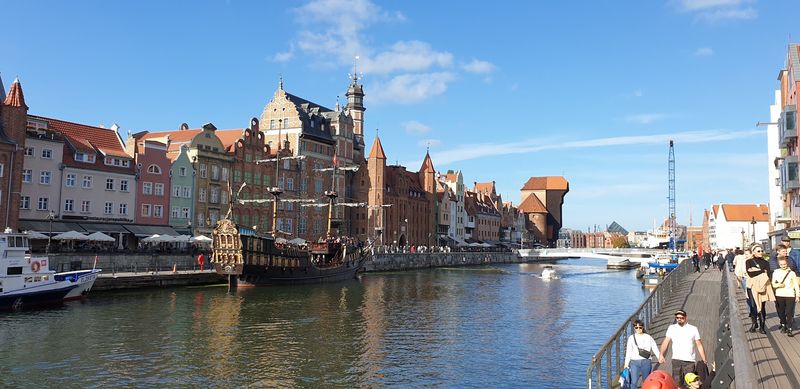
Poland’s road safety transformation over the past decade is one of the most remarkable stories in European transport policy. Back in 2014, the country recorded around 84 road deaths per million inhabitants and more than 3,200 total fatalities.
By 2025, preliminary figures put the rate at about 45 per million, just slightly above the EU average of 43.
The European Commission estimates that Poland cut its total road deaths by approximately 43% between 2019 and 2025, one of the strongest improvements among all EU member states during that period. Massive investment in new expressways and motorways, combined with lower speed limits in urban areas and aggressive drunk-driving enforcement, drove much of that decline.
Sitting just above the EU average might not sound alarming, but Poland’s position is significant given how far it has traveled to get there. The country went from being one of Europe’s most dangerous places to drive to hovering near the continental average in roughly a decade.
That kind of progress does not happen by accident. It takes political will, infrastructure spending, and consistent enforcement.
Poland still has work ahead to reach the levels of Scandinavia, but its trajectory is one of the most encouraging on this entire list.
Share this story