Some of America’s oldest surviving firehouses still contain brass sliding poles, former horse stalls, historic alarm systems, and equipment from the days before motorized fire trucks.
Many of these former stations now operate as museums, with several offering free admission. Visitors can see nineteenth-century hose carriages, horse-drawn steam engines, antique fire trucks, and exhibits showing how firefighters lived between emergency calls.
From an 1855 firehouse in Virginia to a former Hollywood fire station, these twelve buildings preserve a remarkable chapter of American history that you can still explore today.
1. Denver Firefighters Museum, Denver, Colorado
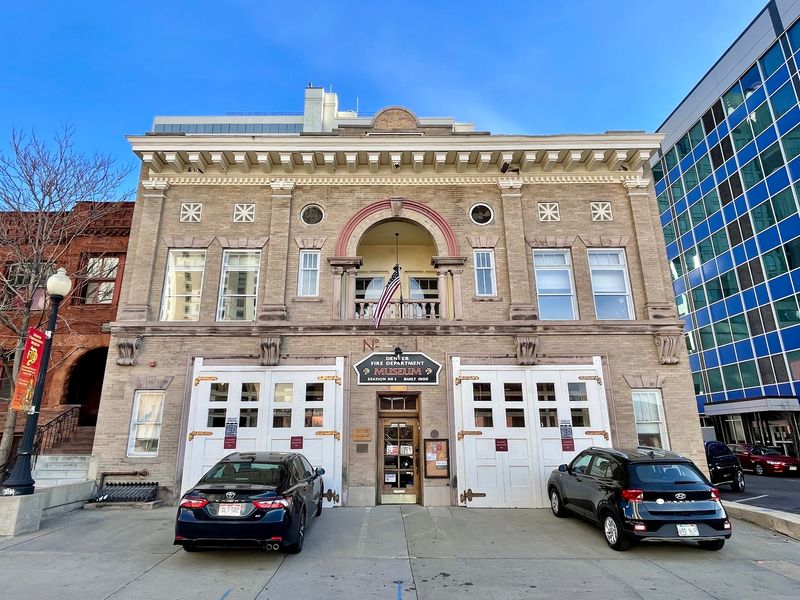
Architect Glen W. Huntington gave Denver a neoclassical firehouse in 1909, and the city has been glad ever since.
Fire Station No. 1 was built of grey brick and light sandstone with two big doors for horse-drawn wagons.
The original ground floor held fire wagons in front and horse stalls along the east and west walls. Upstairs, firefighters slept in a dormitory next to a hayloft that fed the horses.
Motor trucks arrived in the mid-1920s, and the station changed with the times. Crews swapped the wood floor for concrete so it could hold heavier engines.
Lockers and garage doors followed in the early 1930s.
The station closed in 1975 and reopened as a museum in 1978. Its historic fire pole is still in place.
A favorite stop is the row of lockers from different eras, filled with gear and personal items. The second floor shows the officer’s quarters, a locker room, and a family room.
Plan about two hours to see everything without rushing.
2. Fireman’s Hall Museum, Philadelphia, Pennsylvania
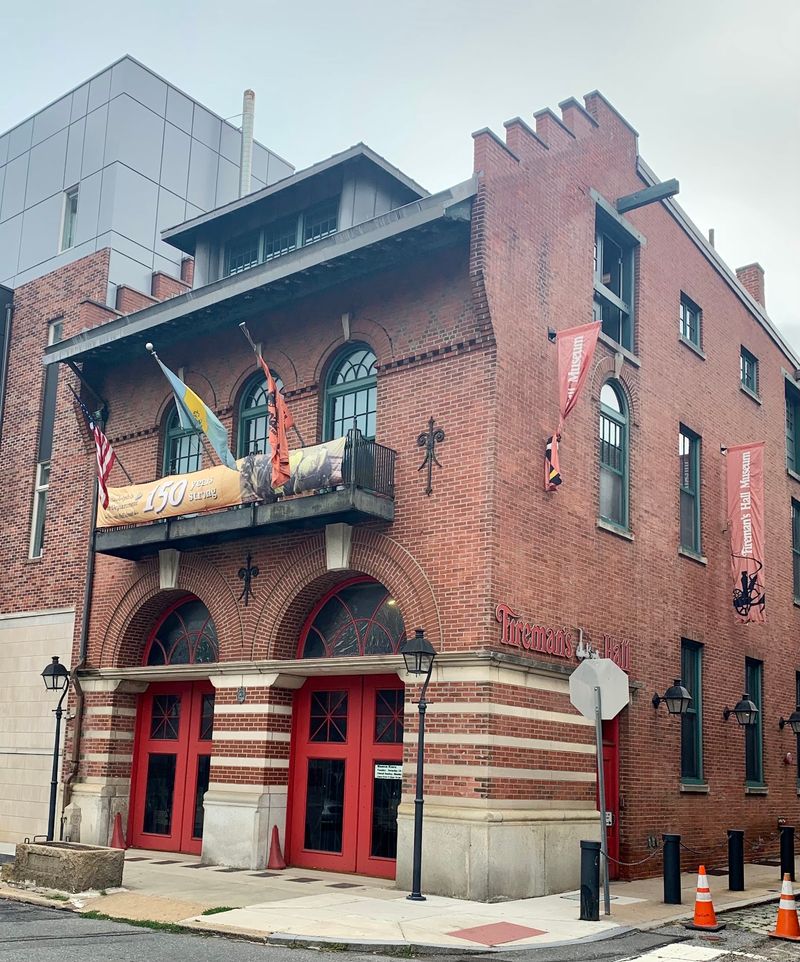
Free admission and a three-story brass pole make a pretty strong first impression. Fireman’s Hall Museum sits inside a restored 1902 firehouse in Philadelphia’s Old City neighborhood.
That pole runs from the third floor straight down to the first. It shows how fast crews had to move when an alarm came in.
Philadelphia has deep roots in American firefighting. Benjamin Franklin helped start one of the country’s first volunteer fire companies here in 1736, so the city takes this history seriously.
The exhibit floors are packed with antique engines, hose reels with fancy painted designs, and leather fire buckets. Those buckets were once passed hand to hand in long lines from wells to burning homes.
A large stained-glass window honors Philadelphia firefighters who served the city with great courage. Many visitors stop here for a quiet moment.
The museum is a short walk from Elfreth’s Alley and the Betsy Ross House. That makes it easy to add to a day of exploring the historic district on foot.
3. Michigan Firehouse Museum and Education Center, Ypsilanti, Michigan
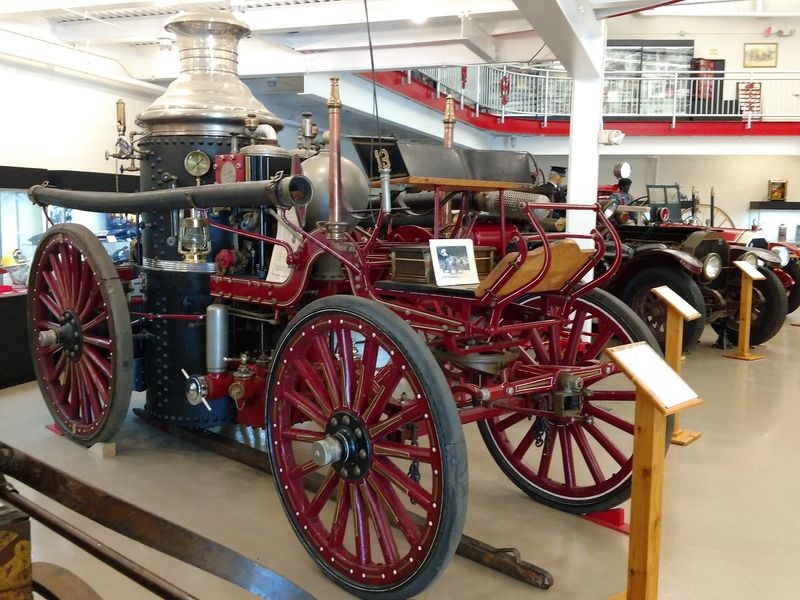
Model horses stand ready for duty in Ypsilanti, and they have never once complained about overtime. They help tell the story of the city’s original 1898 firehouse.
Upstairs, the bunk area shows where firefighters slept between calls. The brass sliding pole is still there too.
It reminds visitors that every second mattered back then.
Downstairs, restored steam-powered engines show the big leap from hand pumps to boilers. Before motor trucks, horses pulled these heavy machines, and the model horse displays explain how crews hitched them up quickly.
A newer wing connects to the old building and holds a large collection of antique fire trucks. Shelves also display helmets, extinguishers, bells, and plenty of other firefighting collectibles.
The museum also works as an education center, so school groups visit often. Families with curious kids will find plenty to look at in both buildings.
Ypsilanti sits just east of Ann Arbor. A visit here pairs nicely with a stroll through the city’s historic Depot Town area.
4. Tampa Firefighters Museum, Tampa, Florida
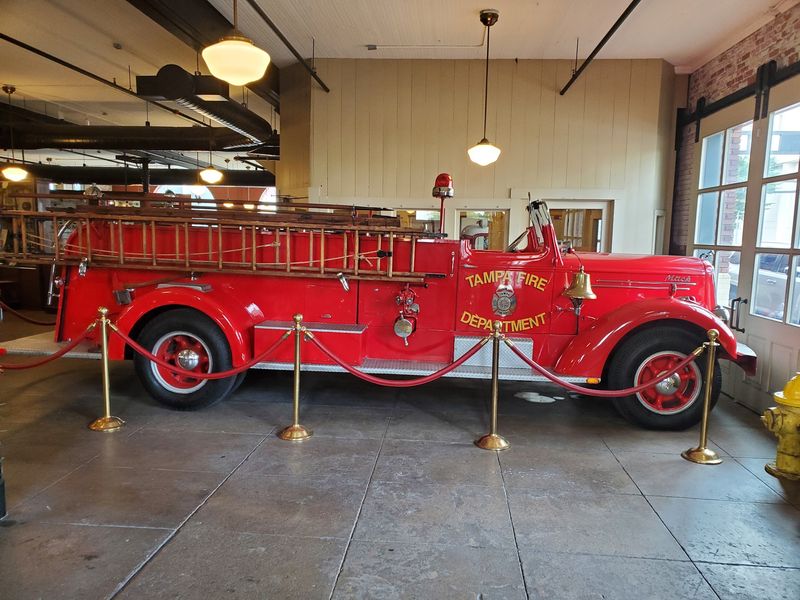
Look down when you visit Tampa’s old fire headquarters. The floor itself has a story to tell.
Marks worn into the flooring date back to the horse-drawn days. They show where heavy equipment and working horses once moved in and out.
Few firehouses in the country still have proof like that.
The building opened in 1911 as the headquarters of Tampa’s fire department. Its century-old brickwork is still in place, along with the original fire poles and window shutters.
One of the most interesting displays covers how people called for help before telephones were common. Vintage alarm boxes once stood on street corners around the city.
A resident would pull the lever, and a coded signal told the station exactly which box was used. Old communications gear in the museum shows how those signals were received.
The museum sits in downtown Tampa, close to the Riverwalk. It is a good indoor break on a hot Florida afternoon.
5. Boston Fire Museum, Boston, Massachusetts
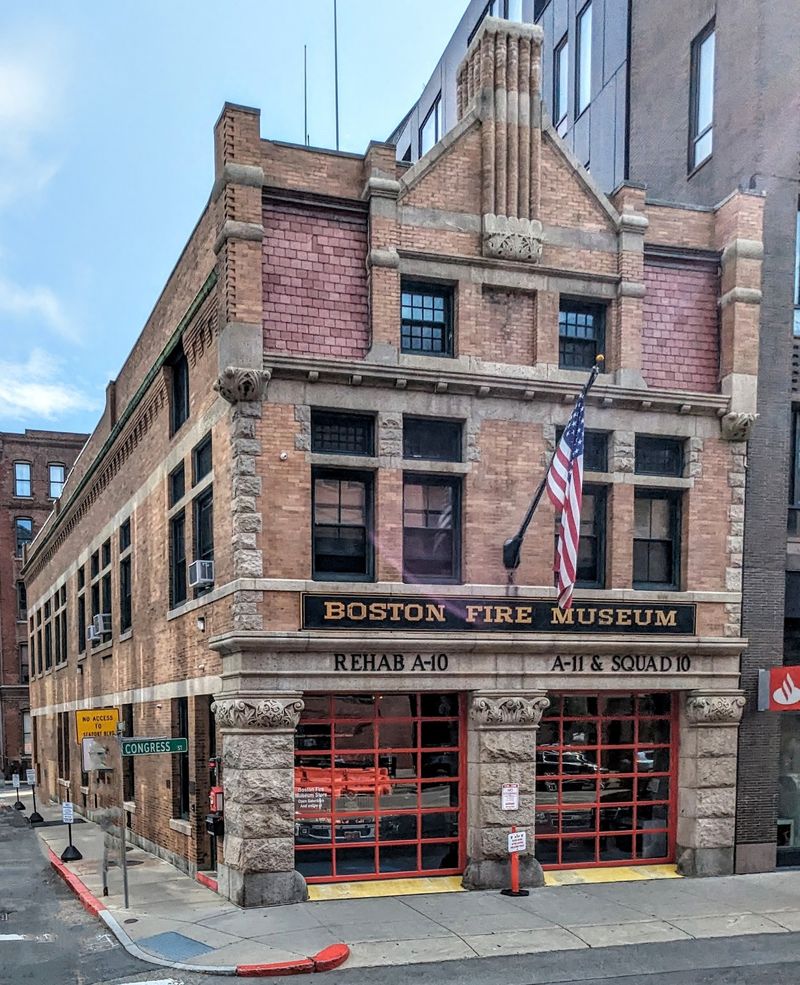
Two engine companies once shared this Congress Street firehouse. Engine Companies 38 and 39 moved in when it opened in 1891.
Today the old apparatus bay is a showroom for firefighting history. Antique hand pumpers sit near steam engines and early motorized fire trucks.
Put them side by side and you can see the whole story of change. Hand pumpers needed teams of strong volunteers working long wooden handles.
Steam engines did more work with fewer people, and motor trucks eventually replaced the horses that pulled them.
The museum is run by the Boston Sparks Association. The name has nothing to do with electricity. “Sparks” is an old nickname for fans who chase fire engines to watch crews at work.
Admission is free on Saturdays, which is a nice deal in a city where many attractions cost a lot. The museum sits in the Fort Point area, near the Boston Children’s Museum.
Families can easily visit both on the same morning.
6. Aurora Regional Fire Museum, Aurora, Illinois
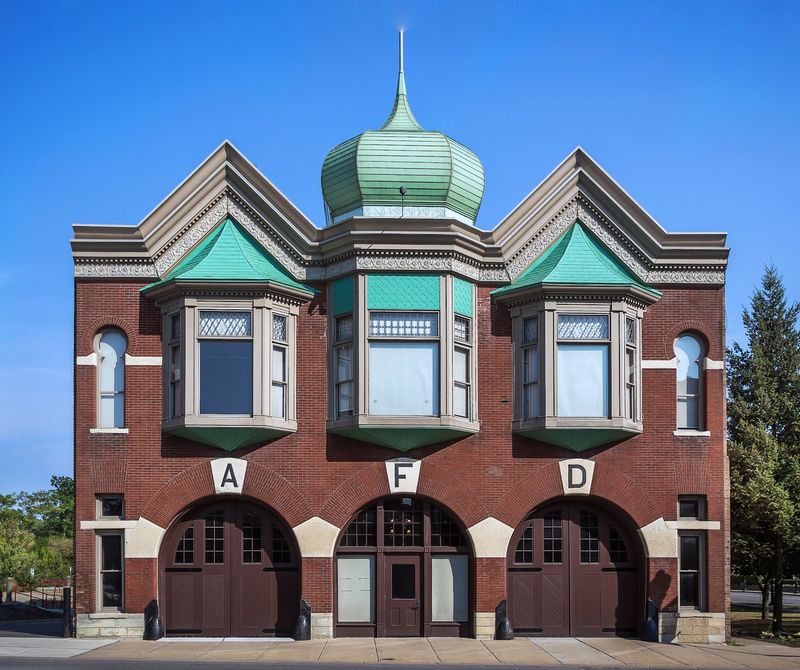
An onion dome on a firehouse is not something you see every day. Aurora’s former Central Fire Station wears one proudly on top of its 1894 Victorian building.
The station almost did not make it. It was set to be torn down until local residents stepped in and fought to save it.
Their work paid off, and the restored building now holds two floors of exhibits.
One highlight is the former hayloft. Hay for the station’s horses was once stored up there, and now that space is filled with displays.
Antique equipment shows how firefighters handled emergencies before radios and modern trucks. Interactive exhibits help explain how the tools worked, which makes the visit easier for younger guests to follow.
Aurora has another fun claim to fame. It was one of the first cities in the country to light its streets fully with electric lights in 1881.
A trip to the fire museum fits well with a walk around the historic downtown along the Fox River.
7. Los Angeles Fire Department Historical Society Museum, Los Angeles, California
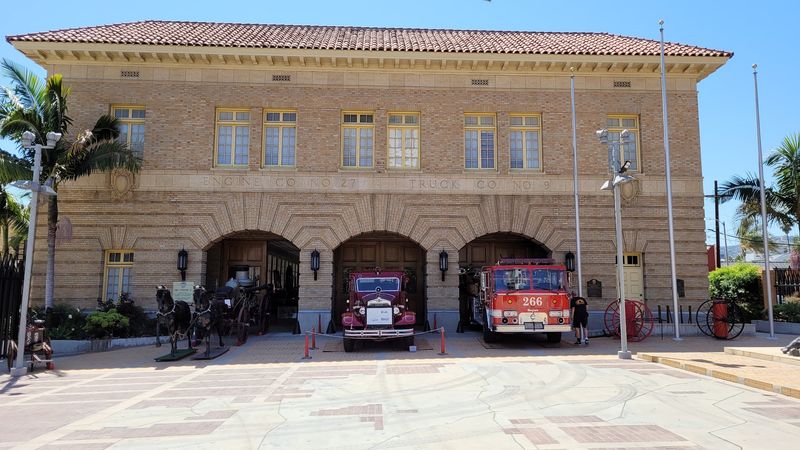
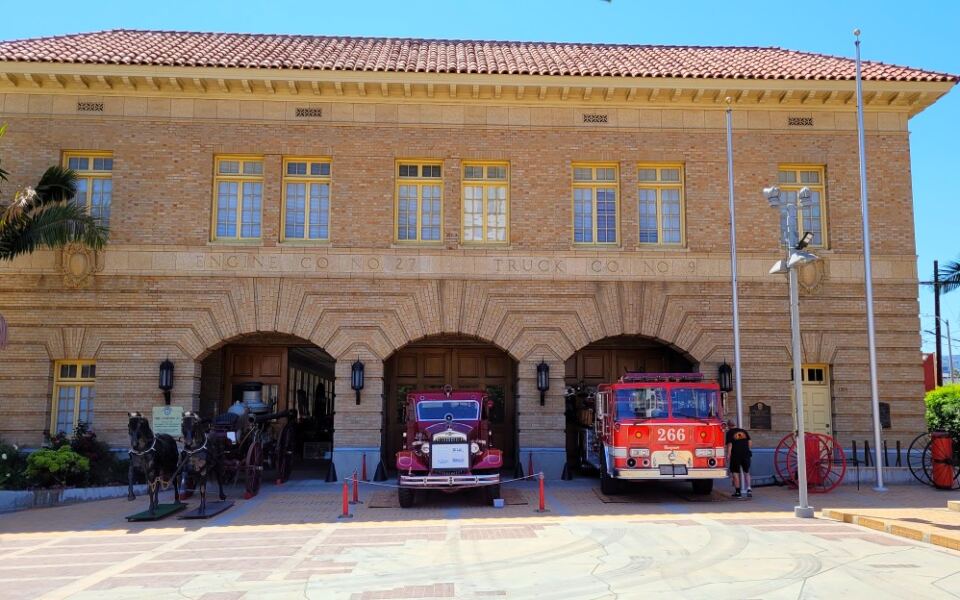
Movie stars had their own fire protection crew in Hollywood. Fire Station No. 27 opened in 1930 to guard film studios, homes, and famous landmarks nearby.
The building was designed in the Italian Renaissance Revival style. It has the kind of grand look you might expect from a Hollywood address.
Inside, three large apparatus bays have been restored. They are now filled with historic fire engines and equipment from across the city’s past.
You can trace how the Los Angeles Fire Department grew as the city spread across the region.
Station 27 was once one of the busiest in the city. Its crews served an area that changed fast as the movie business boomed.
Admission is free on Saturdays. That makes this museum a smart and budget-friendly stop between visits to the Walk of Fame and other Hollywood sights.
Fans of old fire trucks will find plenty to photograph here. It offers a different side of Hollywood that many tourists never see.
8. Central Ohio Fire Museum and Learning Center, Columbus, Ohio
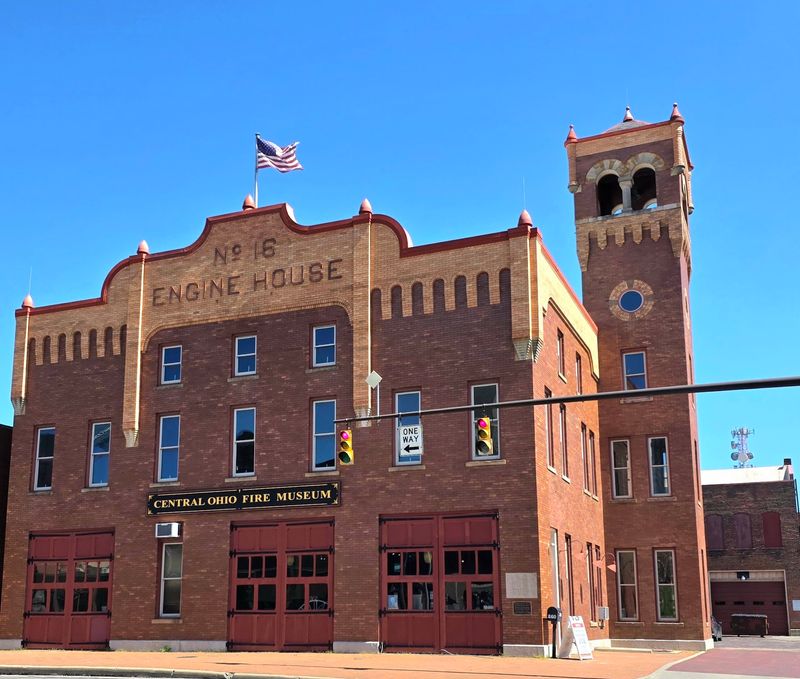
Ever wanted to ring a 500-pound bell without getting in trouble? Columbus has you covered.
The Central Ohio Fire Museum lives in Engine House No. 16, built in 1908. Visitors are welcome to ring the station’s massive bell, and kids usually line up for a turn.
The interior has kept much of its early look. The original ceiling is still overhead, and white subway tiles cover the walls.
Those tiles were popular in public buildings of that era because they were easy to clean. The wooden horse stall doors also survived.
They show where the station’s horses waited for the next alarm.
The collection follows firefighting from start to finish. Hand-drawn hose carts come first, then horse-drawn steam engines, and finally early motor trucks.
The museum also teaches fire safety. Its learning center helps kids practice what to do during a home emergency.
Parents often say it is one of the most useful stops in the city for young families.
9. Friendship Firehouse Museum, Alexandria, Virginia
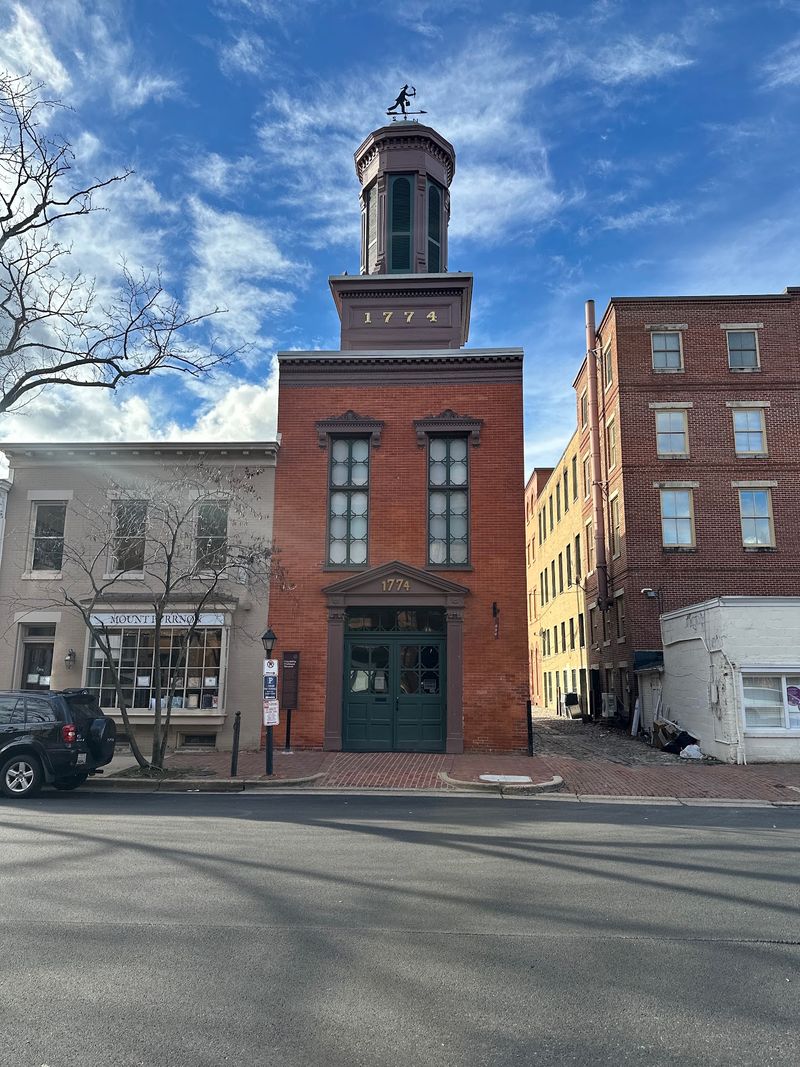
The Friendship Fire Company formed in 1774, two years before the Declaration of Independence. That makes it one of the oldest volunteer fire groups in the nation.
Its current firehouse dates to 1855 and sits in Old Town Alexandria. The building keeps the company’s long story in good shape.
Downstairs is the engine room, where antique firefighting gear is on display. The real treat is a beautifully restored 1858 hose carriage, painted and polished for show.
Upstairs, the meeting room still has original furniture used by company members. Volunteer fire companies were social clubs as much as safety groups, and members held meetings, votes, and events here.
Ceremonial helmets, colorful banners, and parade uniforms fill the cases. Fire companies loved marching in parades and showing off their gear.
The museum is small, so you can see it in under an hour. It is run by the City of Alexandria, and hours can be limited, so check the schedule before you go.
10. The Historic Belmont Firehouse, Portland, Oregon
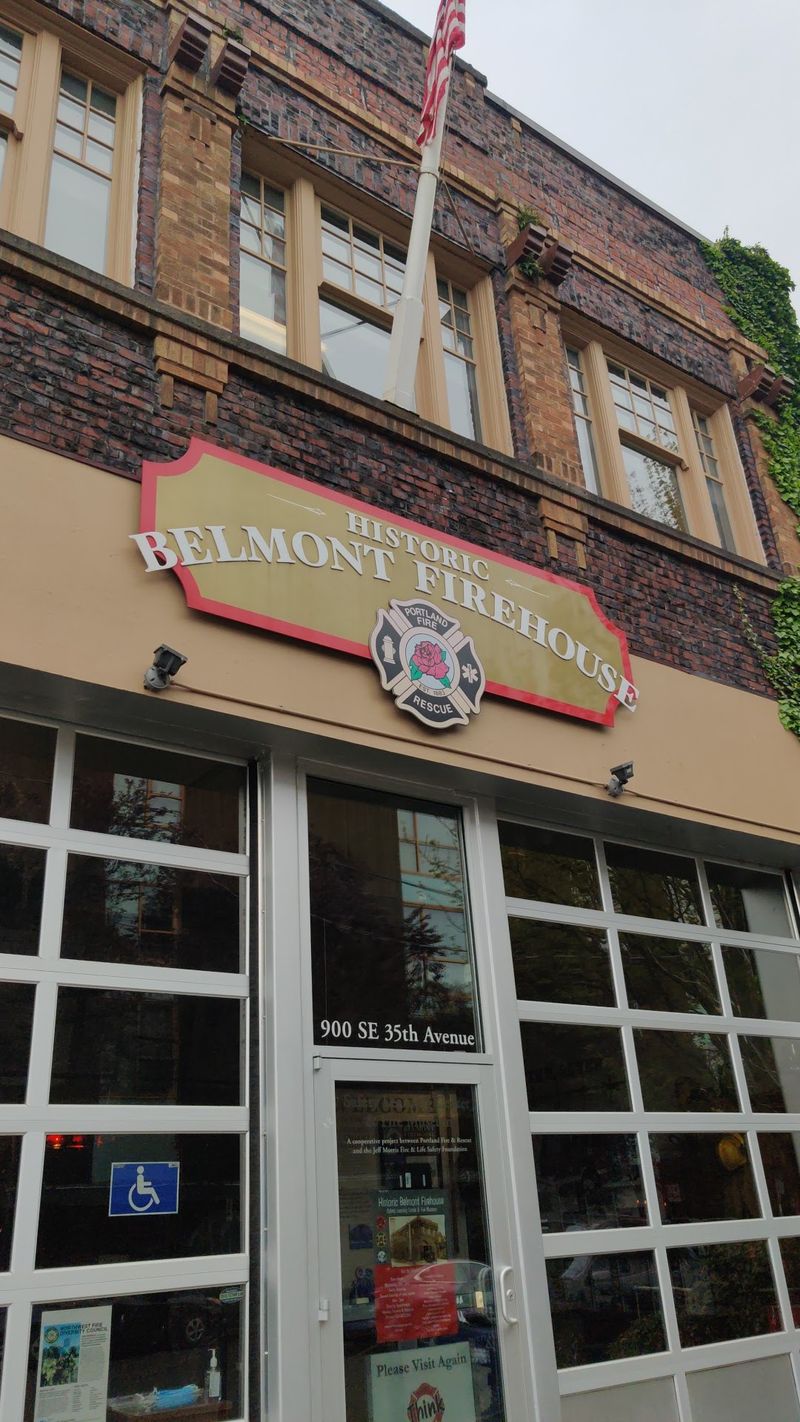
Kids get their own fire pole at this Portland stop, sized just right for small hands. It is one of the most popular features in the building.
The Historic Belmont Firehouse was once Station No. 9. Firefighters worked out of this 1912 building for over 90 years, until they moved to a new station in 2003.
The old structure kept many features from its working years. Inside, you can see an 1860 hose cart and an 1879 steam pumper.
The hose cart was pulled by hand, while the steam pumper could push water much farther and faster. Seeing them close together shows how quickly firefighting tools improved in just two decades.
Most of the space is set up to teach fire safety. Young visitors can take part in a simulated emergency response and learn what firefighters do when a call comes in.
Families with small children will get the most out of a visit here. Many parents say their kids remember the safety lessons long after the trip.
11. San Antonio Fire Museum, San Antonio, Texas
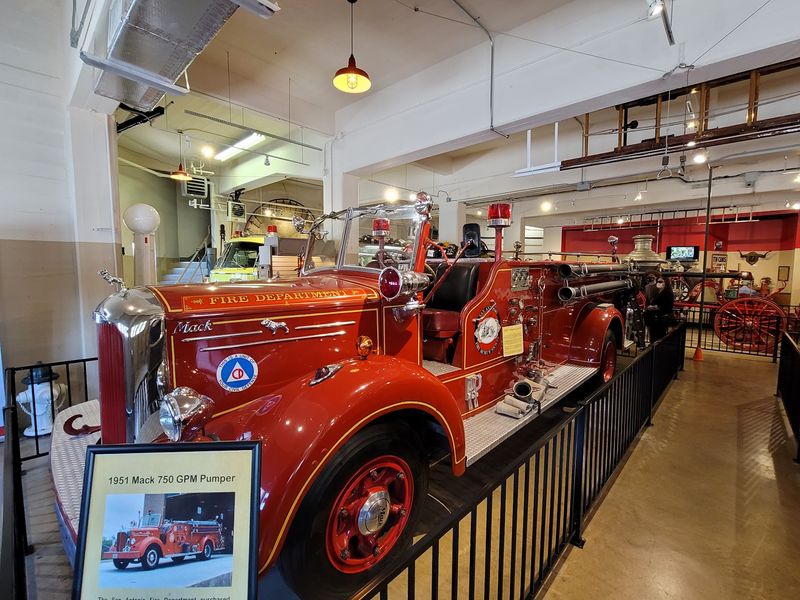
Most people come to downtown San Antonio for the Alamo. A short walk away, another piece of local history waits for anyone curious about the city’s firefighters.
The San Antonio Fire Museum is inside the former Central Fire Headquarters, built in 1938. By that time, horses were gone and motor trucks ruled the streets.
Historic sliding poles still stand inside the building. They connect the upstairs living area to the apparatus floor below, just as they did for working crews.
Retired fire trucks are parked on the main floor. Nearby displays show protective clothing and tools from earlier decades.
Comparing older coats and helmets to modern gear is eye-opening. Early firefighters had much less protection than crews do today.
The preserved station setting gives a clear picture of daily life for San Antonio’s firefighters. Visitors can see where crews ate, rested, and waited for calls.
Pair this museum with the Alamo and the River Walk for an easy, history-packed afternoon downtown.
12. Pennsylvania National Fire Museum, Harrisburg, Pennsylvania
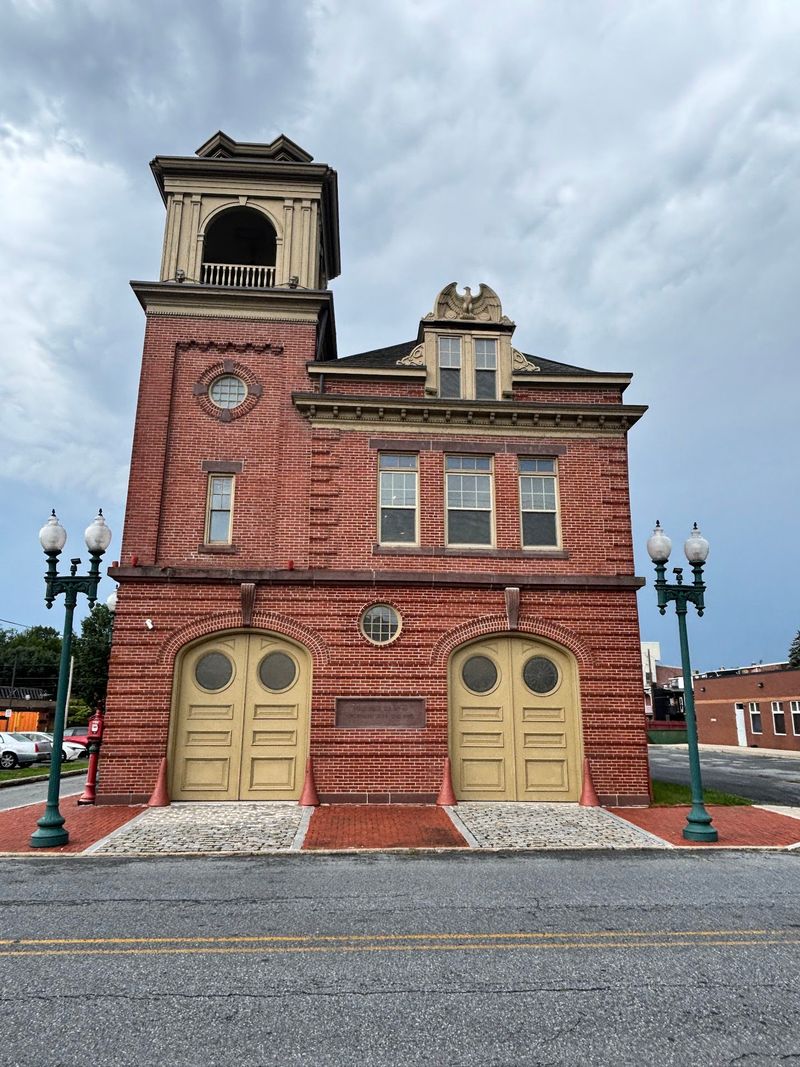
Souvenir shopping in a horse stable sounds odd, but in Harrisburg it makes perfect sense. The gift shop at the Pennsylvania National Fire Museum sits right where the station’s horses once lived.
The building was home to Reily Hose Company No. 10. It is an impressive Victorian firehouse built in 1899.
The company’s historic sliding pole is still inside. Upstairs, the former hayloft now holds exhibits instead of feed for the horses.
The standout piece is a working Gamewell fire alarm system from the 1920s. Gamewell systems used telegraph lines to send alarm signals between street boxes and fire stations.
Watching it in action helps explain how cities coordinated emergency calls long before computers. Staff can show how each coded signal pointed crews to the right location.
The museum covers firefighting history from across Pennsylvania, not just Harrisburg. It is a fine final stop for anyone traveling through the state capital, and a great way to wrap up a firehouse road trip.
Share this story