Montana has a ranching history so big it practically needs its own zip code. Across the state, century-old homesteads, early dude ranches, working cattle properties, and weathered log lodges still open their gates to travelers every year.
Some of these places let you explore preserved buildings and artifacts at your own pace, while others invite you to stay overnight, ride horses, fish mountain streams, or actually pitch in with ranch work. What makes these 13 ranches worth your time is not just their age, but the stories baked into every plank, corral post, and hand-stitched saddle.
A few have ties to famous artists, pioneering physicians, and even hit television shows. Whether you are a history enthusiast, an outdoor adventurer, or just someone who has always wanted to know what life on a real Montana ranch actually looked like, this list has something that will make you want to pack your boots and hit the road.
1. Grant-Kohrs Ranch National Historic Site, Deer Lodge, Montana
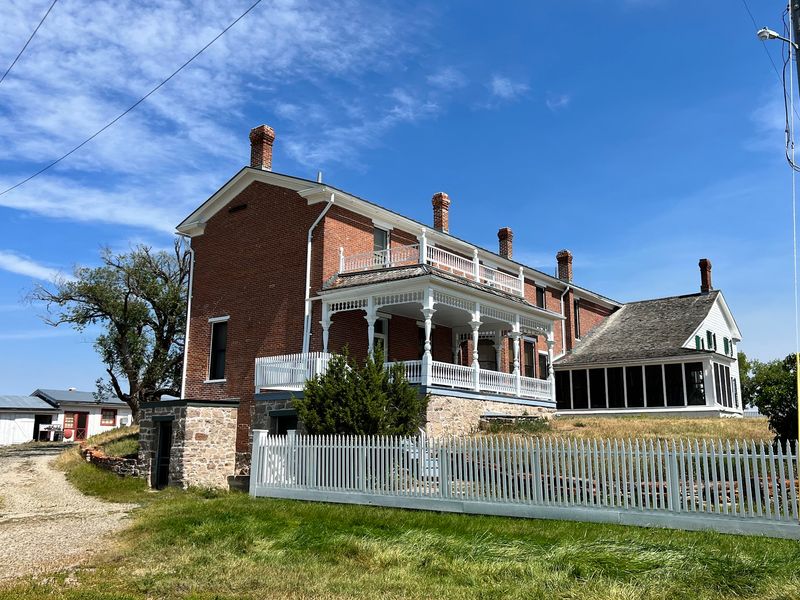
At its peak, this cattle empire stretched across roughly 10 million acres, making Grant-Kohrs one of the most powerful ranching operations the American West ever produced. Today it stands as a National Historic Site and one of Montana’s most complete windows into the open-range era.
Visitors can wander among 88 preserved historic structures, including the elegant 1862 ranch house, a fully equipped bunkhouse, a blacksmith shop, and a collection of barns dating back to the 1860s. Free guided ranch house tours are available when rangers are on duty.
Seasonal programs add extra depth to any visit, with chuckwagon demonstrations, cowboy talks, and hands-on blacksmithing displays offered throughout the year. Kids can work through Junior Ranger booklets and practice roping on cattle dummies.
Over seven miles of walking trails give everyone plenty of room to explore the grounds at their own pace.
2. OTO Dude Ranch, Gardiner, Montana
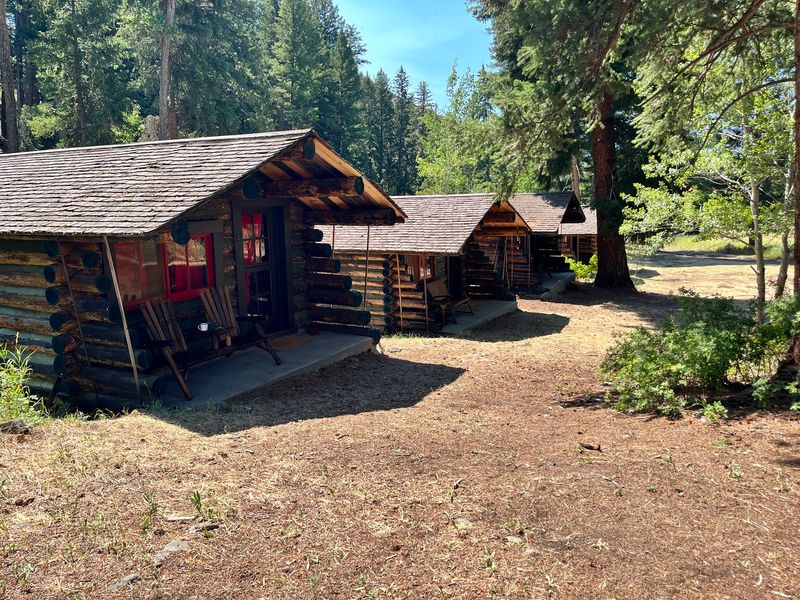
Before the phrase “dude ranch” became a recognizable part of American travel vocabulary, Dick and Dora Randall were already turning their mountain property north of Gardiner into something remarkable. The OTO became one of the founding members of the Dude Ranchers Association in 1926, helping define what a Western guest ranch experience could look like.
The property now belongs to the Custer Gallatin National Forest, which means overnight stays are no longer on the table, but the historic buildings remain accessible to anyone willing to earn the view. The Cedar Creek Trailhead serves as the starting point for a hike that leads directly to the preserved ranch structures.
Combining mountain scenery with a tangible link to the origins of Montana’s dude ranch tradition, this trek rewards hikers with more than just fresh air. It is a chance to stand where Western tourism took some of its earliest and most influential steps.
3. Historic Crail Ranch, Big Sky, Montana
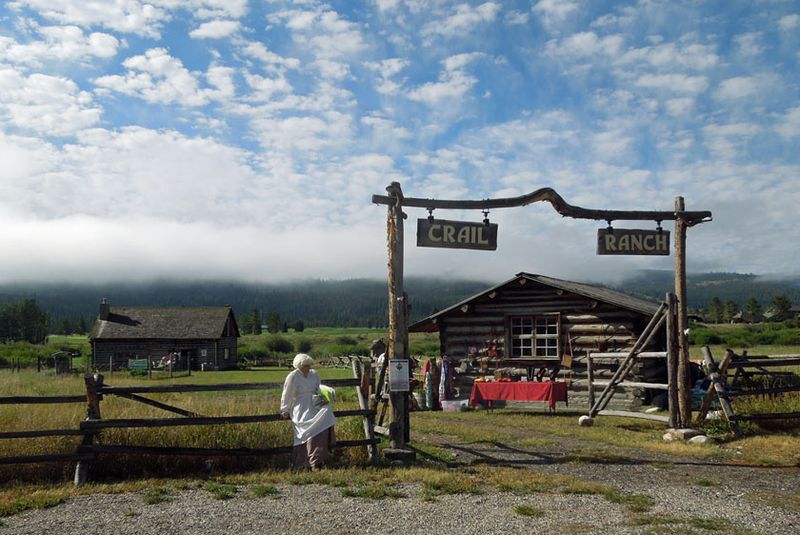
Long before ski lifts and luxury lodges defined Big Sky, Augustus Franklin Crail paid roughly a dollar an acre for 160 acres of high Gallatin Valley meadow in 1901 and got to work building a life from scratch. That original homestead eventually grew to 960 acres and supported cattle, horses, and sheep for more than five decades.
One of the surviving cabins on the property dates to 1895, predating even the Crail family’s arrival, which gives the site an extra layer of historical depth. Visitors can explore the grounds year-round on a self-guided tour, making it a flexible stop in any season.
Seasonal guided tours offer a closer look inside the cabins, where period furnishings and historical context bring everyday homestead life into focus. The Big Sky Community Organization maintains the site, which holds a place on the National Register of Historic Places.
Admission is free, which makes it an easy addition to any Big Sky itinerary.
4. Charles M. Bair Family Museum, Martinsdale, Montana
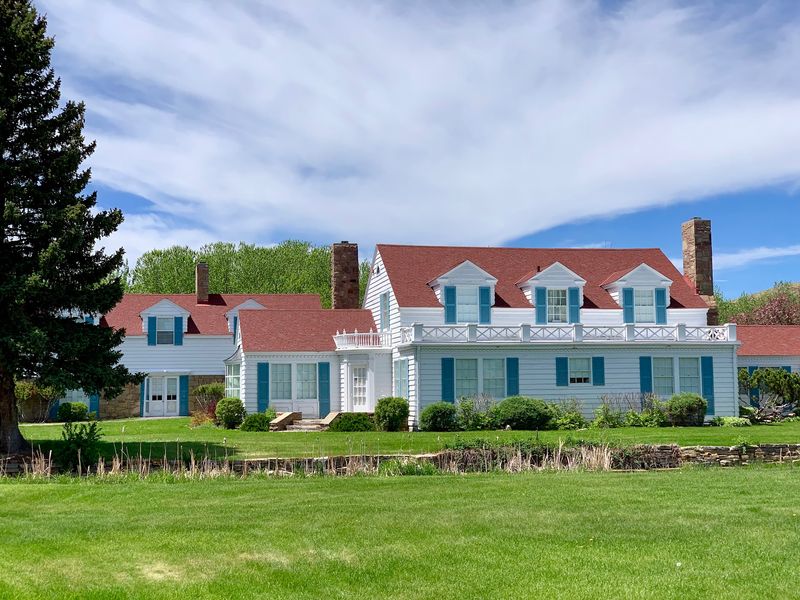
Charles M. Bair arrived in Montana in 1883 as a railroad conductor, struck gold in the Yukon, and eventually became one of the world’s largest sheep ranchers.
The 26-room, 11,000-square-foot mansion he built near the Crazy Mountains is one of Montana’s most surprising historic properties.
What sets the Bair Family Museum apart from a typical ranch house tour is the art collection assembled by Bair’s daughters, Marguerite and Alberta, during decades of travel. Original paintings by Charles M.
Russell and Joseph Henry Sharp hang alongside fragile photogravures by Edward S. Curtis and a wide range of European works.
The adjacent Bair Barn rounds out the visit with historical photographs and ranching memorabilia, bridging the gap between frontier practicality and the family’s sophisticated cultural pursuits. The contrast between cattle operations and gallery-quality artwork makes this one of the most genuinely unusual stops on any Montana road trip.
Tours run seasonally, so checking ahead is a smart move.
5. Chief Joseph Ranch, Darby, Montana
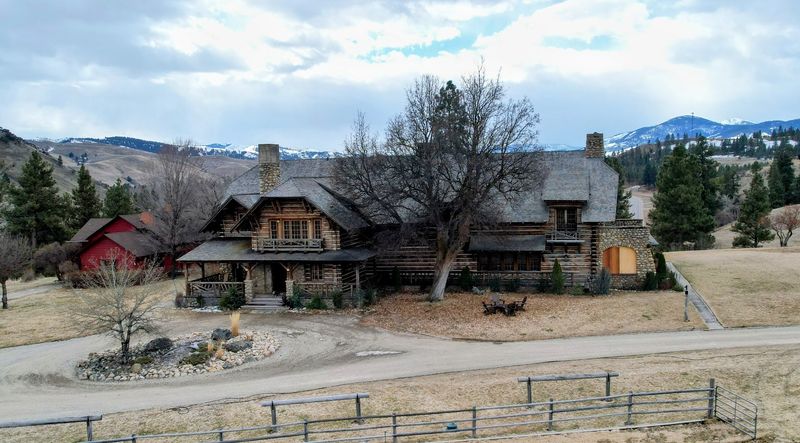
Fans of the television series Yellowstone will recognize the sweeping Bitterroot Valley property instantly, but Chief Joseph Ranch was writing its own story long before any camera crew showed up. The land was first homesteaded in 1880, and the imposing log lodge was constructed between 1914 and 1917 by William S.
Ford and Howard Clark Hollister.
Built in a style that echoes the grand lodges of Yellowstone and Glacier National Parks, the 5,000-square-foot structure features original Tiffany lighting and period furnishings that have remained largely intact. The ranch continues to operate as a working cattle and hay property year-round.
Guest cabins are available for overnight stays when filming is not underway, and registered guests receive ranch and filming-set tours as part of their stay. The combination of genuine ranching history and pop culture fame makes Chief Joseph a genuinely layered destination.
Checking the ranch’s calendar before booking is strongly recommended given the unpredictable filming schedule.
6. Elkhorn Ranch, Gallatin Gateway, Montana
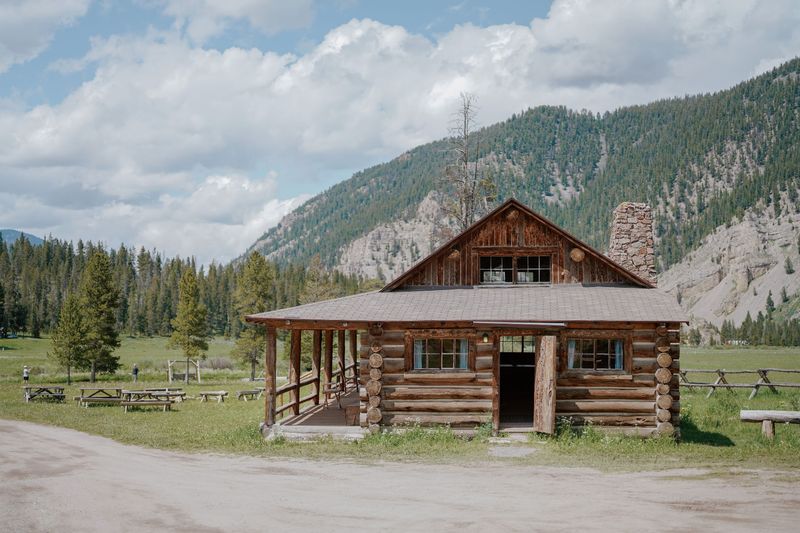
Ernest and Grace Miller founded Elkhorn Ranch in 1922 with a straightforward idea: build a guest ranch from the landscape itself, using logs and stone gathered directly from the surrounding terrain. That commitment to authenticity earned the property a spot on the National Register of Historic Places as a standout example of an intact, purpose-built dude ranch.
Horseback riding through rugged mountain terrain anchors the guest experience, supported by fly fishing on nearby blue-ribbon waters like the Gallatin and Madison Rivers. Hiking trails and whitewater rafting options give guests additional ways to fill their days without straying far from the ranch.
The family-oriented atmosphere is a defining feature, with kids’ programs led by experienced staff, including descendants of the original founders. Meals are served in the original dining room, which encourages the kind of easy conversation that develops naturally when a group shares a table after a long day outdoors.
The ranch sits just one mile from Yellowstone National Park’s boundary.
7. 320 Guest Ranch, Gallatin Gateway, Montana
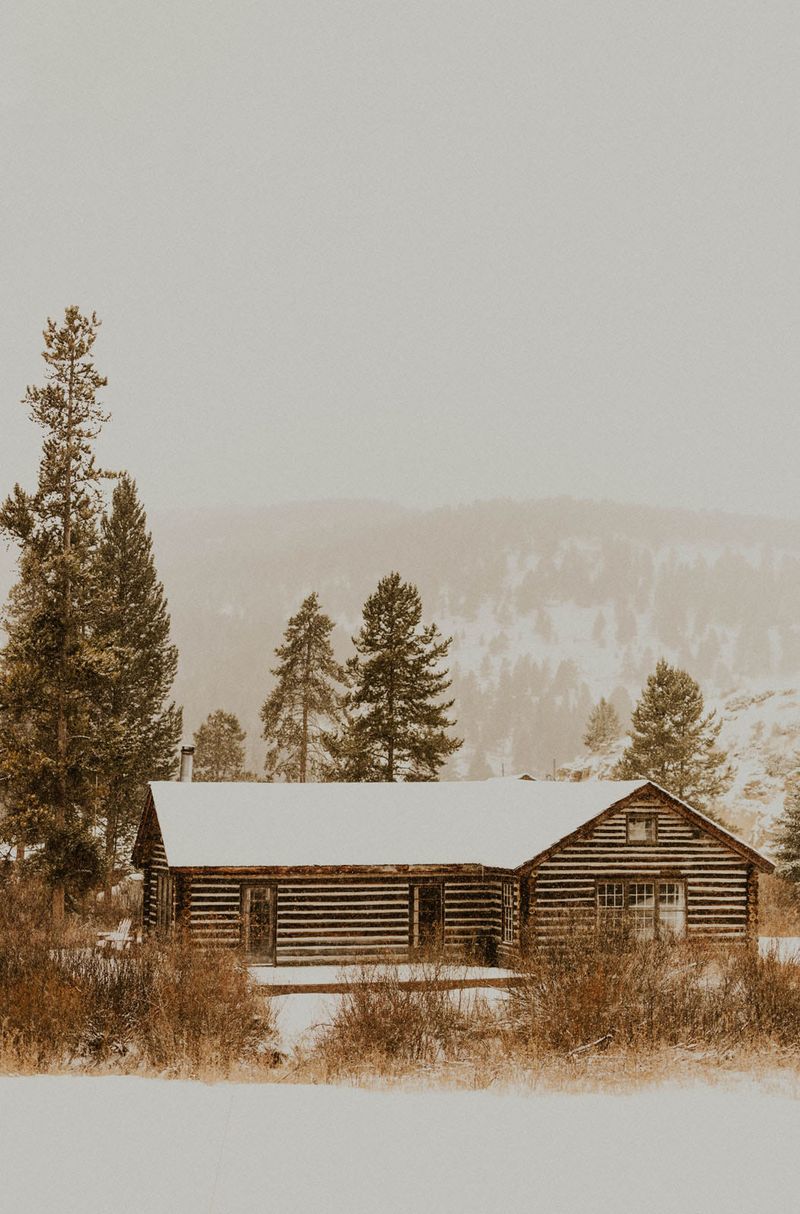
Sam Wilson homesteaded 160 acres along the Gallatin River in 1898, and his father Clinton soon claimed an adjoining plot, together forming what they called the Buffalo Horn Resort. That early operation eventually became the 320 Guest Ranch, now recognized as Big Sky’s original guest ranch.
The property took an unexpected turn in 1936 when Dr. Caroline McGill, a pioneering Montana physician and pathologist, purchased it as a restorative retreat for friends and patients. She believed in the therapeutic value of outdoor life, and her original homestead cabin still stands on the property, converted into the lively centerpiece of McGill’s Restaurant.
Guests today can ride horses through the Gallatin Canyon, cast a line into the two miles of blue-ribbon Gallatin River that flow directly through the property, or take a horse-drawn sleigh ride in winter. The ranch covers more than 320 acres and keeps its historical roots visible throughout, making it a place where the past and present genuinely overlap.
8. Nine Quarter Circle Ranch, Gallatin Gateway, Montana
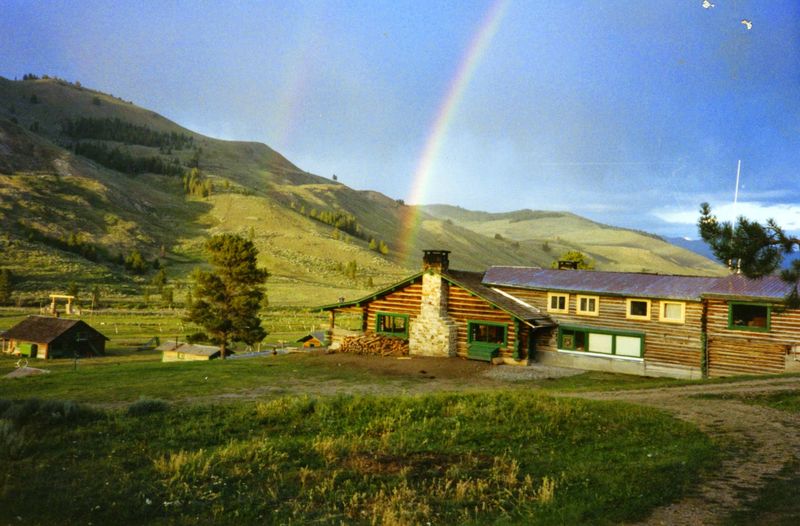
Early homesteads were consolidated into the Nine Quarter Circle in 1912, and the Kelsey family has owned the property since 1946, preserving ranch customs across several generations with quiet determination. Rustic buildings from the 1920s remain in active use, which gives the ranch an unhurried, time-tested character that is hard to manufacture.
One of the most distinctive features of the Nine Quarter Circle is its long-running Appaloosa breeding program, established in 1950 and historically connected to the horse-breeding traditions of the Nez Perce people. Each guest is carefully matched with a horse from the ranch’s substantial herd for daily rides across varied terrain.
The Taylor Fork River runs through the property and provides solid fly fishing opportunities, while the surrounding area supports moose, elk, and grizzly bears for wildlife enthusiasts. Situated near Yellowstone National Park in a small mountain valley, the ranch draws multi-generational families who return year after year, treating it less like a destination and more like a standing appointment.
9. Mountain Sky Guest Ranch, Emigrant, Montana
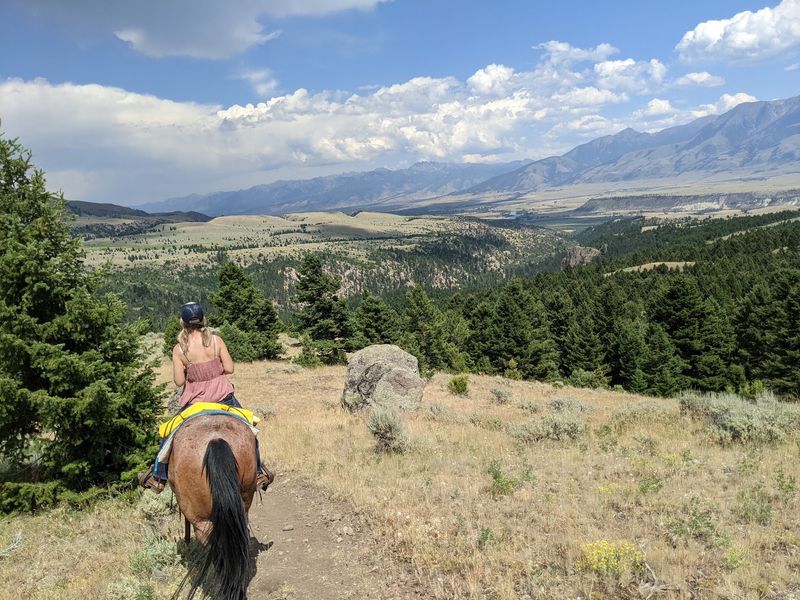
Paradise Valley earned its name honestly, and Mountain Sky Guest Ranch has been taking advantage of the scenery since 1929, when the property operated as the Ox Yoke dude ranch. Its roots reach back even further through the land’s connection to legendary Montana cattleman Nelson Story, one of the state’s earliest and most ambitious ranching figures.
The Ox Yoke offered amenities considered unusually modern for ranch accommodations of the period, setting a tone of comfortable hospitality that has carried forward through every subsequent chapter of the property’s history. Today’s version of Mountain Sky presents a more polished retreat, but the core activities remain rooted in the ranch’s Western origins.
Horseback riding across the broad Paradise Valley landscape anchors the guest experience, complemented by historic cabins that blend period character with contemporary comfort. Western hospitality remains a consistent thread throughout, connecting the current operation to the early dude ranch tradition that first put this valley on the visitor map.
Advance reservations are strongly recommended.
10. Blacktail Ranch, Wolf Creek, Montana
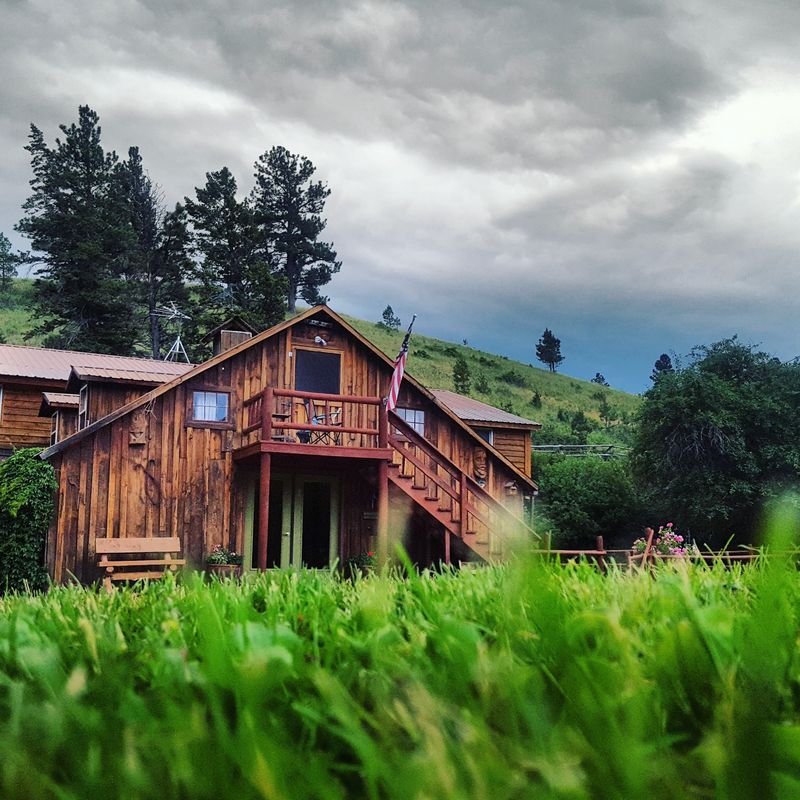
Gustav Rittel established his homestead on this stretch of Montana land in the 1880s, and his family has worked the same ground ever since, eventually opening the 8,000-acre property to vacation guests in the mid-20th century. That unbroken family connection gives the Blacktail Ranch a sense of continuity that is genuinely rare.
The original homestead cabin now serves as a small ranch museum, housing family artifacts alongside archaeological finds from nearby Blacktail Cave, an extensive cave system where evidence of 28 different Ice Age animals, including elephant bones, has been recovered. Sun Wheel formations and tipi rings on the property add a deeper layer of human history stretching back centuries before European settlement.
Horseback riding operates on a flexible schedule that accommodates all skill levels, and fishing in mountain streams and nearby blue-ribbon rivers provides a quieter alternative. For guests seeking a bigger challenge, a three-day horseback ride to the Continental Divide, with an overnight stay at the Hideout Cabin, offers some of the most expansive views the state has to offer.
11. Circle Bar Guest Ranch, Hobson, Montana
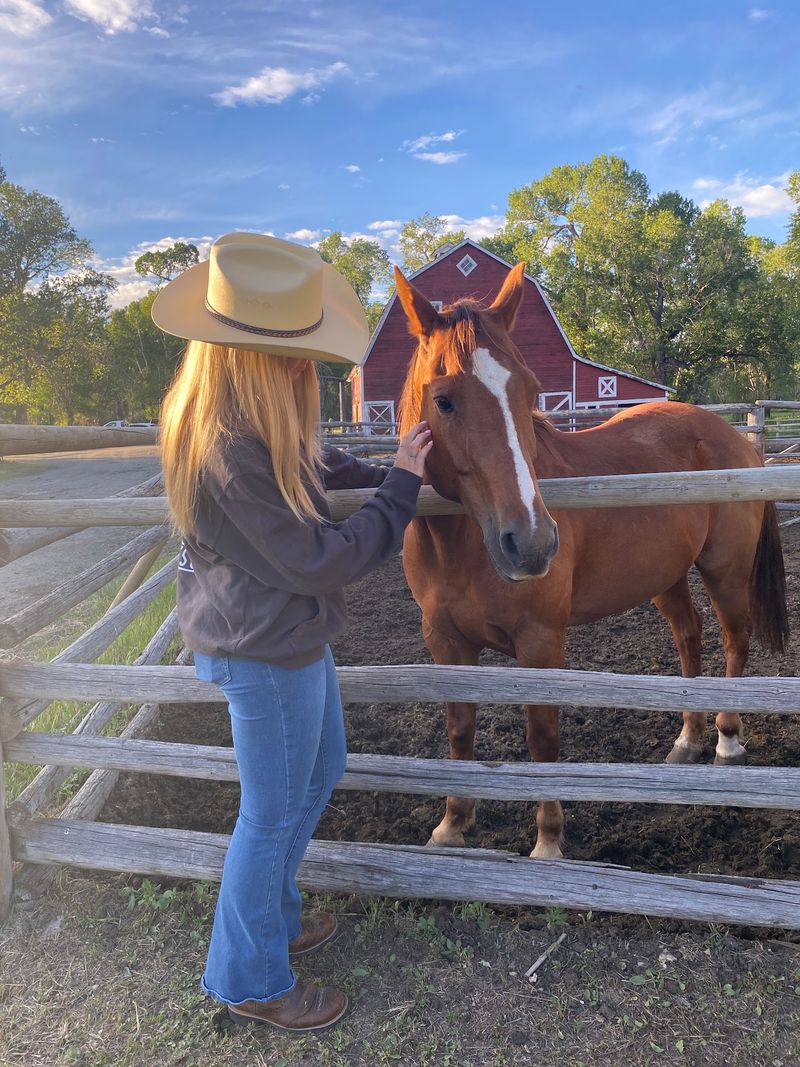
A teenage Charles M. Russell arrived in this stretch of Judith River country in 1880, working alongside hunter and trapper Jake Hoover and absorbing the cowboy life that would later define his iconic Western paintings.
The Circle Bar Guest Ranch sits directly within that landscape, its roots tracing back to the 1800s at the base of the Helena-Lewis and Clark National Forest.
The main barn, built in 1902, is among the original ranch structures still in active use, and historic cabins provide overnight accommodations that keep the property’s long story alive. After sitting closed to guests for over a decade, the ranch reopened in 2021 with a renewed commitment to sharing its heritage.
Guided horseback rides through the Little Belt Mountain country follow terrain that inspired some of Russell’s earliest artwork. Guests can also try hiking, shooting, archery, and fishing in the ranch’s streams, making this a well-rounded destination for travelers who appreciate history and outdoor activity in equal measure.
12. Hawley Mountain Guest Ranch, McLeod, Montana
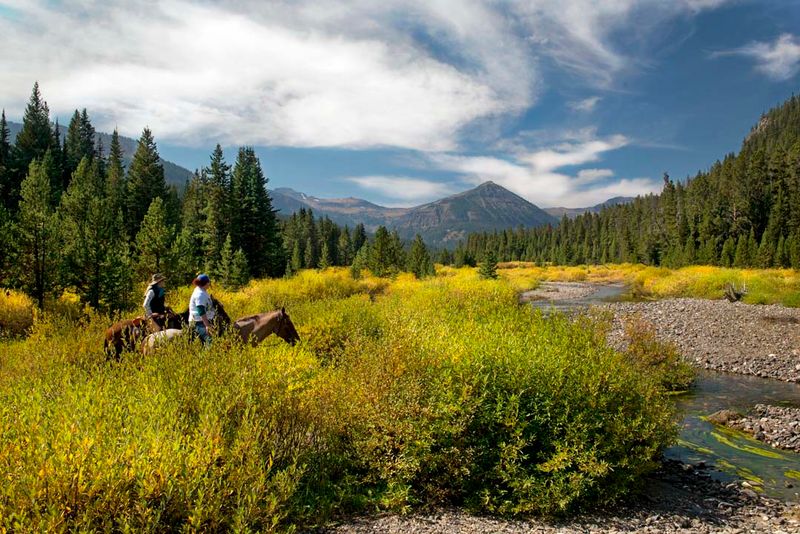
Tom Hawley staked his claim along the Boulder River in the late 19th century, and the property he established eventually passed to the Jarrett family in 1917, who held the land for decades before opening it to guests in 1973. That long, unbroken chain of family stewardship gives Hawley Mountain a grounded, unhurried character that sets it apart from purpose-built resorts.
The remote mountain setting is a major part of the appeal, with the Absaroka-Beartooth Wilderness providing a dramatic backdrop that keeps the experience firmly rooted in Montana’s wild landscape. Horseback riding through rugged terrain is the central activity, covering expanses of unspoiled wilderness that few travelers reach by any other means.
Fishing in the pristine Boulder River and surrounding streams offers a quieter way to spend time on the property, and the intimate, family-run operation ensures guests receive personal attention rather than a packaged experience. For travelers seeking an authentic ranch retreat without the trappings of a polished resort, Hawley Mountain delivers consistently.
Share this story