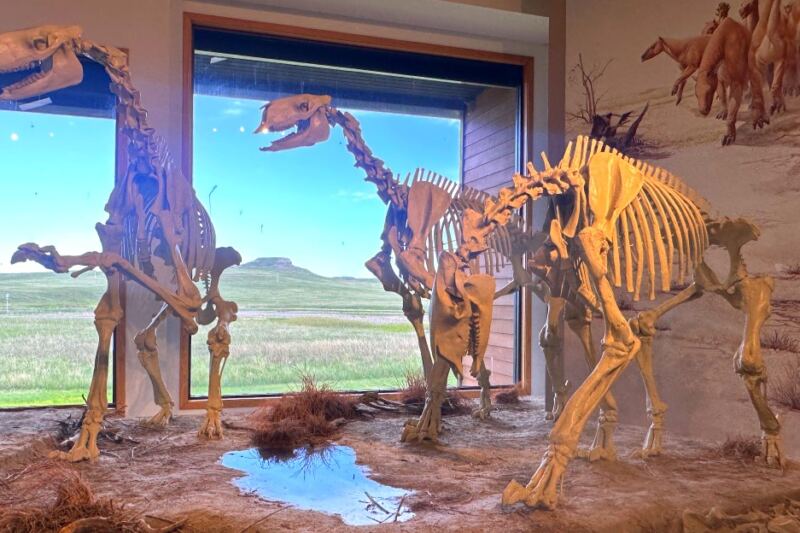
Nebraska is not a state you walk through passively. Its landscapes shift from river bluffs and forested canyons to moonscape badlands and restored tallgrass prairie, often within a single road trip.
The good news is that you do not need to log ten miles to see the best of it. Every walk on this list comes in under three miles, which means you can finish the trail, grab a snack from your cooler, and still have time to explore the surrounding park before the afternoon is over.
These 12 routes cover the full range of what Nebraska has to offer outdoors, from a boardwalk above the Missouri River and a geological time capsule in the Panhandle to a waterfall tucked into a Sandhills canyon and a prairie blooming with 125 native plant species. Some are barely half a mile.
None of them will disappoint.
1. Heron Haven Nature Center Trail, Omaha, Nebraska
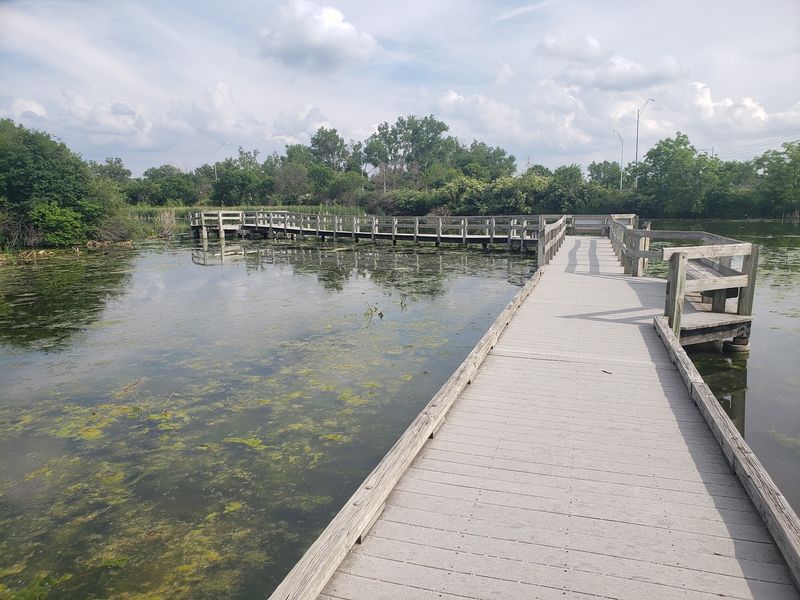
Right in the middle of Omaha, tucked between neighborhoods and traffic, there is a spring-fed oxbow wetland that most residents drive past without realizing it exists. Heron Haven Nature Center protects one of the last remaining riparian oxbow wetlands of Big Papio Creek within city limits, and its 0.6-mile out-and-back trail network is one of the more quietly rewarding walks in eastern Nebraska.
The Main Trail, Boardwalk Trail, and Photo Blind Trail combine to create a compact route through woodland and wetland habitat where herons, ducks, and dragonflies are regular visitors. A prairie grass garden and a butterfly garden add to the ecological variety along the way.
Almost all of the trails are wheelchair and stroller accessible, making this one of the most inclusive urban nature sites in the state. Admission is free, which makes the decision to visit a very easy one to make on a free afternoon.
2. Harrington Trail Loop at Pioneers Park Nature Center, Lincoln, Nebraska
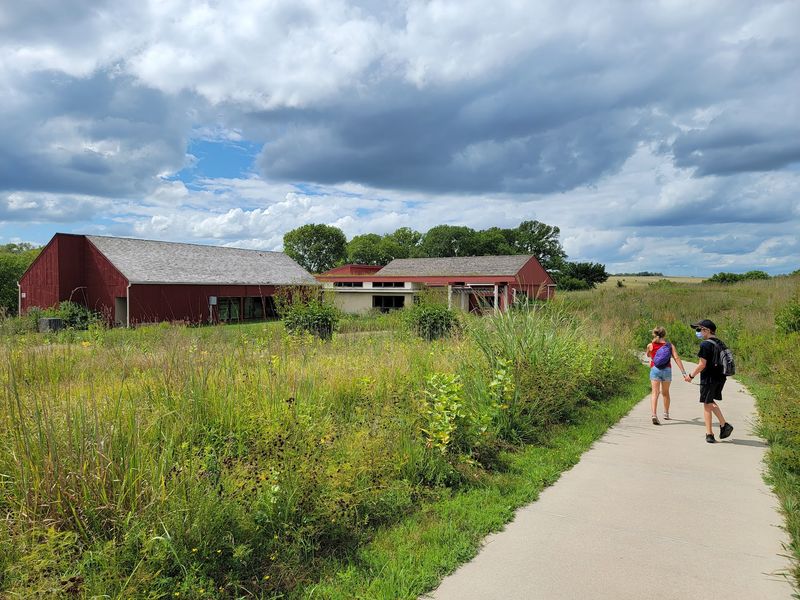
A bison herd, a raptor exhibit, and eight miles of trails spread across 668 acres might sound like a full day commitment, but the 0.9-mile Harrington Trail Loop at Pioneers Park Nature Center gives you a genuine sample of all of it in under an hour. The loop crosses tallgrass prairie, woodland, wetland, and a tributary stream of Salt Creek, covering more habitat variety per step than most short trails manage.
The Nature Center is operated by the City of Lincoln Parks and Recreation Department and is open year-round with free admission. Suggested donations help keep things running, which seems like a fair deal given what the preserve offers.
Beyond the trail itself, the grounds include herb, prairie, bird, and children’s themed gardens, along with interpretive buildings featuring educational exhibits. Visitors hoping to spot elk or white-tailed deer alongside the bison should plan to arrive earlier in the morning when animal activity tends to be higher.
3. Schramm Park 1.5-Mile Loop, Gretna, Nebraska
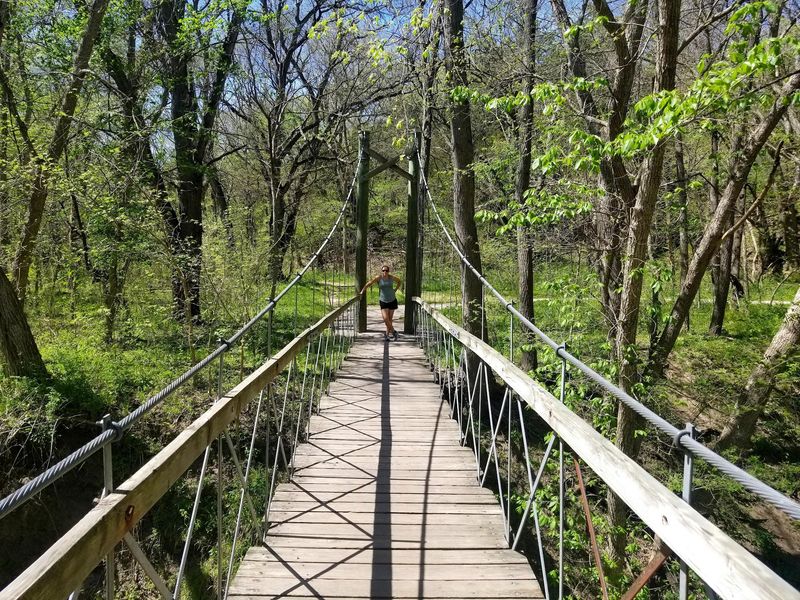
A suspension bridge on a 1.5-mile family trail is the kind of detail that makes a walk memorable even before you factor in the Platte River overlooks and the interpretive signs explaining what is growing around you. Schramm Park’s shorter loop winds through shaded hardwood forest with enough rocky outcroppings and elevation change to feel genuinely interesting rather than purely flat and easy.
Nebraska Game and Parks specifically describes this route as suited to families and casual hikers, which is accurate, though some sections do include steeper inclines that add a bit of effort to the outing. The park sits about 30 miles from Omaha, making it a realistic option for a half-day trip from the city.
Schramm Park also holds historical significance as the site of Nebraska’s first fishing hatchery, now operating as a museum on the grounds. A geological display near the park adds one more reason to poke around after the main loop is done.
4. Tri-State Overlook Trail at Ponca State Park, Ponca, Nebraska
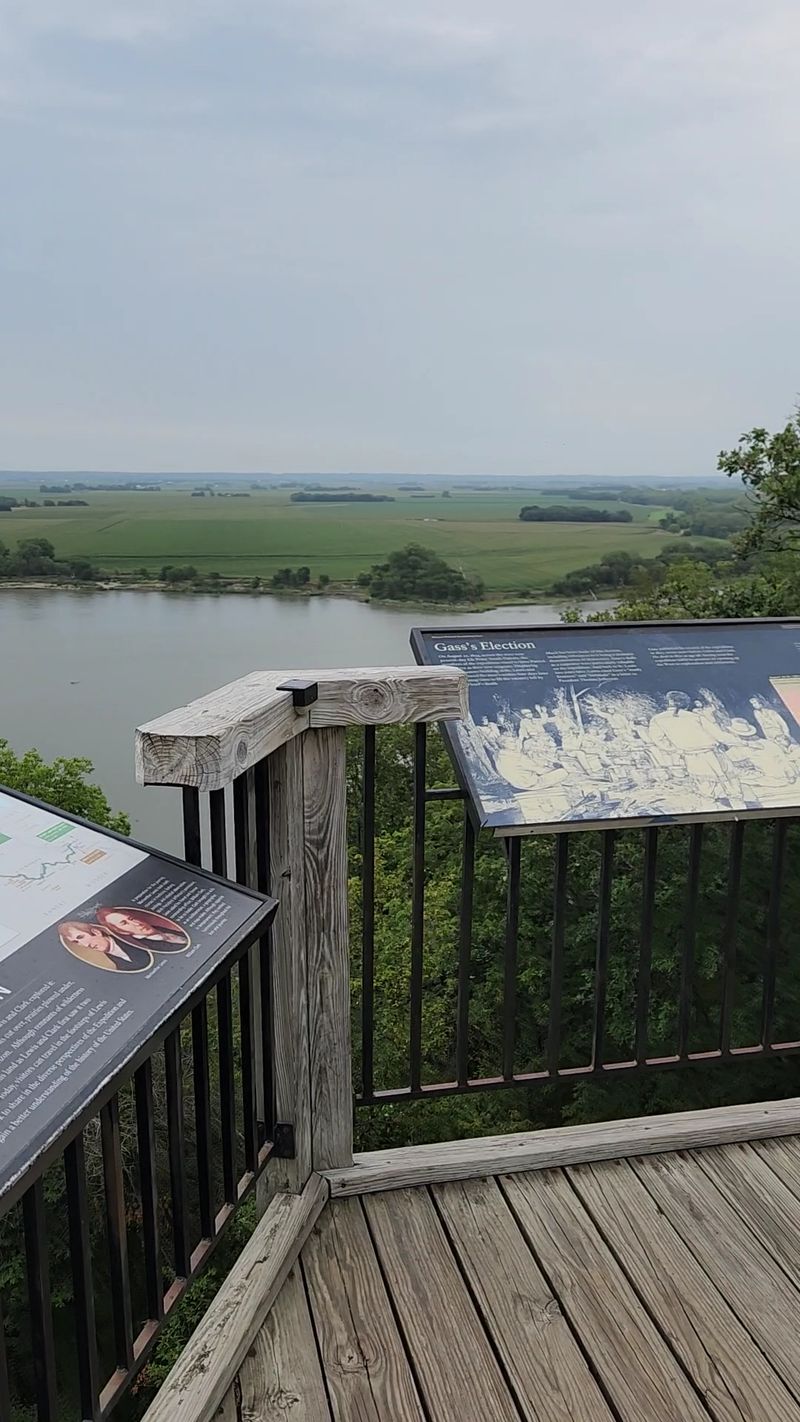
Three states visible from a single spot on a 1.28-mile trail is a geographic payoff that few short walks anywhere can match. The Tri-State Overlook Trail climbs through eastern deciduous forest before the trees open up at the overlook, where the Missouri River valley stretches toward Nebraska, Iowa, and South Dakota all at once.
The sense of scale at the top is genuinely surprising given how modest the mileage is. The forested sections leading up to the overlook are pleasant walking in their own right, with the trail rated as a manageable loop for most fitness levels.
Ponca State Park rounds out the experience with several other short routes nearby, including the one-mile Old Oak Trail and the one-mile Prairie Loop, which is also featured in this list. Visitors who complete the Tri-State Overlook Trail and still have energy to burn can easily tack on one of those additional routes without turning the day into an endurance event.
5. Nature Trail at Wildcat Hills State Recreation Area, Gering, Nebraska
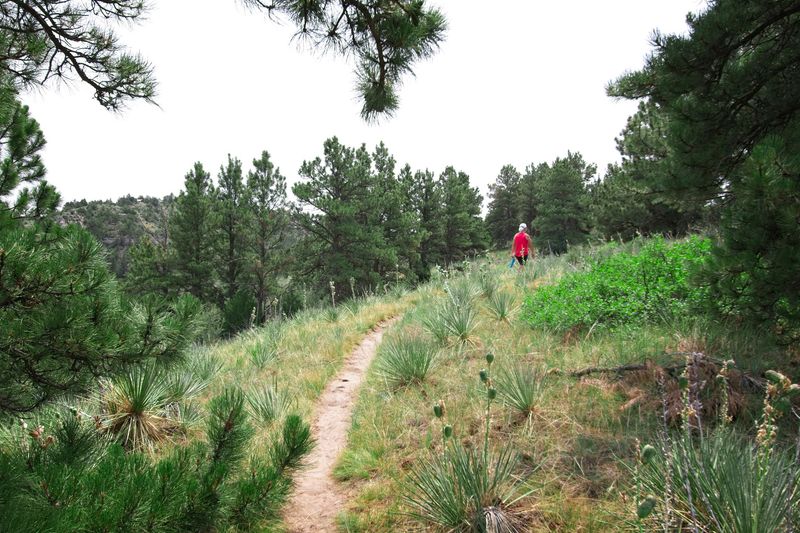
Most people driving through western Nebraska expect open prairie, and Wildcat Hills corrects that assumption quickly. The two-mile Nature Trail at Wildcat Hills State Recreation Area moves through Pine Ridge terrain where ponderosa pines cover rolling hills and the ground becomes noticeably uneven underfoot, giving this walk more physical character than its mileage implies.
The route stays close to the nature center and winds through hilly country where birdwatchers can look for nuthatches and crossbills working through the pines. These species are not commonly encountered on Nebraska’s eastern trails, which makes this western habitat feel like a different state entirely.
Wildcat Hills pairs naturally with a broader Scottsbluff and Gering area road trip, where Scotts Bluff National Monument and Chimney Rock are both within reasonable driving distance. Completing this trail before or after those bigger landmarks makes for a well-rounded day in one of Nebraska’s most geologically distinctive corners.
6. Toadstool Geologic Park Interpretive Loop, Harrison, Nebraska
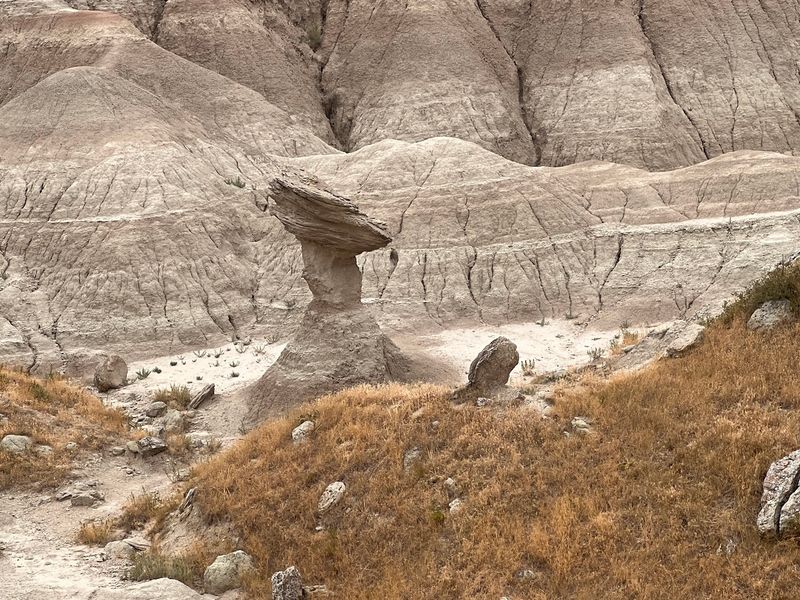
Nothing in Nebraska looks quite like Toadstool, and that is not an exaggeration. The one-mile interpretive loop at Toadstool Geologic Park passes formations that were carved from clay and sandstone over millions of years into mushroom-shaped hoodoos that visitors routinely describe as looking like the surface of another planet entirely.
The geology here dates back between 24 and 38 million years, to a time when Nebraska was covered by a shallow sea. Fossil evidence of ancient camels, rhinoceroses, saber-toothed cats, horses, and tortoises has been documented within the park, turning a short walk into a tour of deep prehistoric time.
An interpretive kiosk at the trailhead provides geological context, and a self-guided brochure is available for the loop. Fossil collection is strictly prohibited, which keeps the site intact for future visitors.
A modest day-use parking fee applies, and the remote location near Harrison makes the drive out part of the adventure.
7. Jim MacAllister Nature Trail at Smith Falls State Park, Valentine, Nebraska
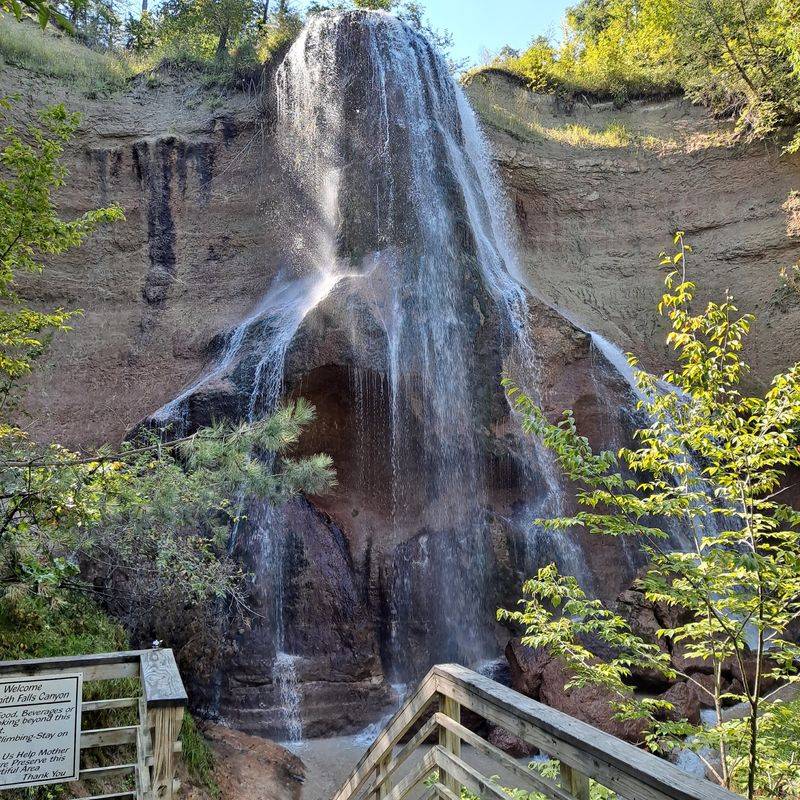
Nebraska’s tallest waterfall is reason enough to visit Smith Falls State Park, but the Jim MacAllister Nature Trail offers its own compelling argument for the trip. The self-guided route runs just over a mile through the Niobrara River Valley, which scientists have identified as a biological crossroads of the Great Plains where multiple distinct ecosystems overlap in a relatively small area.
The cool, moist canyon walls support plant communities that feel unexpected this far from the coasts, including paper birch, white spruce, and the Smith Aspen hybrid found nowhere else. These Ice Age plant remnants survived in the protected canyon environment long after the surrounding landscape changed around them.
Access to Smith Falls involves crossing the Niobrara on a historic truss footbridge, then following an established walkway to the base of the falls, which drops nearly 70 feet into the canyon below. The park covers between 250 and 265 acres and draws visitors from across the region specifically for this combination of waterfall and rare ecology.
8. Chain-of-Lakes Trail at Mormon Island State Recreation Area, Doniphan, Nebraska
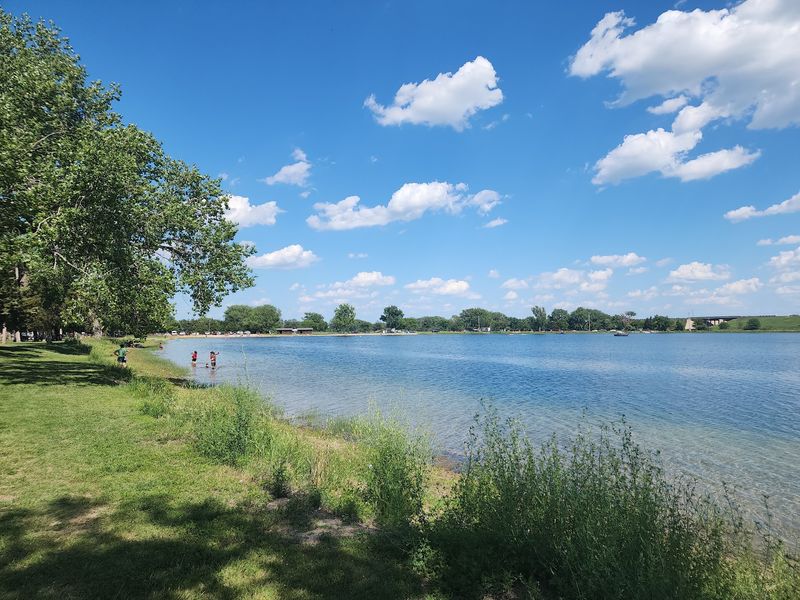
The Platte River environment is easy to underestimate until you slow down and actually walk through it. The roughly one-mile Chain-of-Lakes Trail at Mormon Island State Recreation Area loops near Bullhead Pond through a wooded river corridor that Nebraska Game and Parks has used as a guided hike location, a detail that speaks to how much there is to observe along this relatively flat and easy route.
White-tailed deer move through the trees with regularity, and great horned owls are among the wildlife that visitors may encounter, particularly during quieter parts of the day. Bringing binoculars significantly improves the experience and costs nothing extra.
The setting is calm and unhurried, which makes this trail a good choice for walkers who want to pay attention to their surroundings rather than cover distance quickly. The Platte River corridor is ecologically significant for migratory birds, and this stretch of it offers a front-row seat to that seasonal wildlife movement.
9. Timber Trail at Rock Creek Station, Fairbury, Nebraska
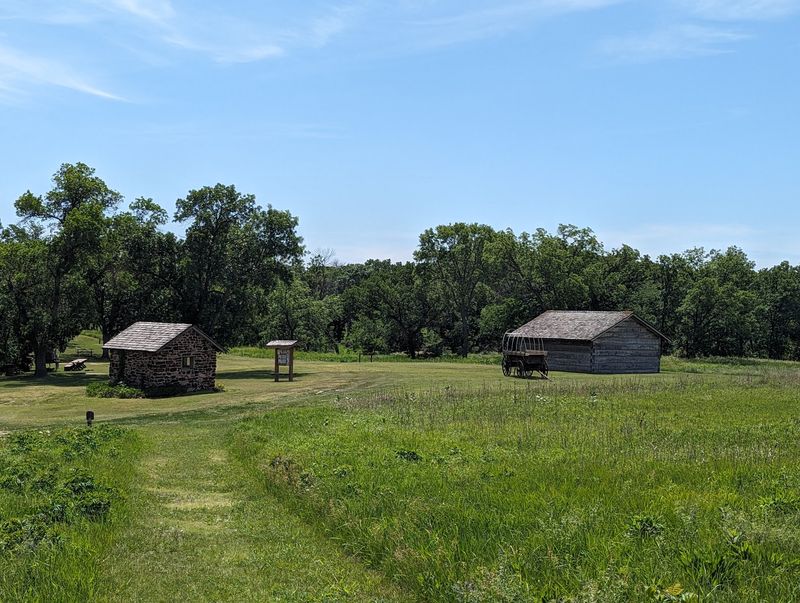
Very few half-mile walks in any state let you cross visible wagon ruts left by thousands of westward emigrants on the Oregon and California trails. The 0.6-mile Timber Trail loop at Rock Creek Station State Historical Park does exactly that, passing through native grassland, wooded creek bottoms, and ravines while 1,600 feet of original wagon ruts remain plainly visible across the hillside.
Rock Creek Station operated as a vital resupply stop for overland travelers and later became a Pony Express and stage station. The site also holds a specific place in frontier history as the location where James Butler Hickok, later known as Wild Bill, began his career as a gunfighter in 1861.
The 350-acre park includes an interpretive center and reconstructed frontier buildings that flesh out the historical context of the walk. The combination of natural scenery and tangible frontier history makes this short loop one of the more layered walking experiences in southeastern Nebraska.
10. Conservation Trail at Arbor Day Farm, Nebraska City, Nebraska

Arbor Day Farm covers 260 acres in Nebraska City, and the 2.4-mile Conservation Trail is the best way to understand how much variety that acreage holds. The loop passes Harris Prairie, an heirloom apple orchard, historic barns, and woodland sections before connecting with Doug’s Trail, cycling through enough different environments to keep the walk consistently interesting from start to finish.
The trail is open to walkers, cyclists, and golf carts, giving it a relaxed, multi-use character that suits families with different mobility needs or energy levels. Mature tree cover along parts of the route provides welcome shade during warmer months.
Nebraska City is deeply connected to America’s tree-planting tradition through its association with J. Sterling Morton, the founder of Arbor Day, and the Conservation Trail reflects that heritage in a practical way.
The Lied Greenhouse and Tree Adventure area are also on the farm property, making this a reasonable full morning or afternoon destination rather than a quick stop.
11. Trail #1 at Indian Cave State Park, Shubert, Nebraska
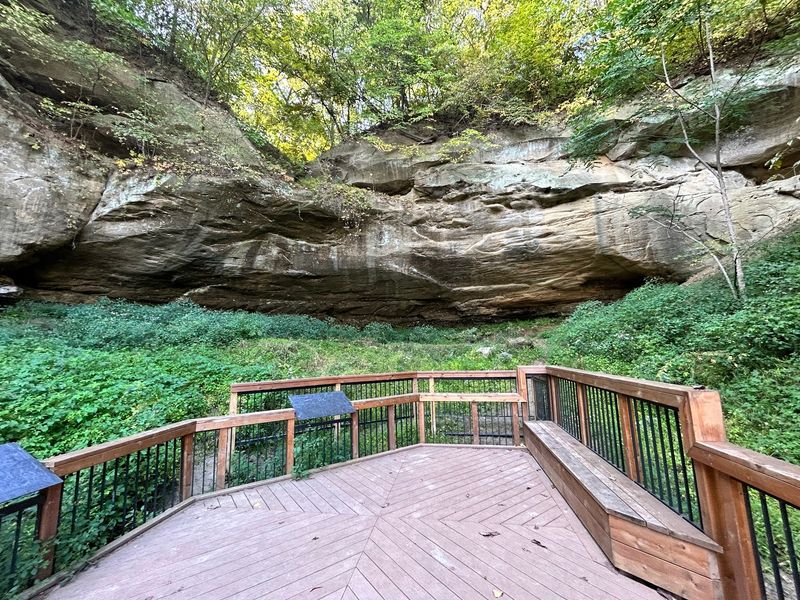
Indian Cave State Park covers between 3,000 and 3,400 rugged acres along the Missouri River bluffs, and Trail 1 offers a 1.7-mile loop that captures the wooded, rolling character of the park without requiring a major time commitment. The trail starts in the day-use area and is open to hikers as well as cyclists, strollers, and leashed pets, making it one of the more inclusive trail options in the state park system.
The park is named for a large sandstone overhang bearing prehistoric petroglyphs, which is one of the more unusual historical features found in any Nebraska state park. The Loess Hills terrain gives the bluffs here a distinctly different profile from the flat river corridors found elsewhere in eastern Nebraska.
A riverfront marsh area within the park provides strong waterfowl viewing opportunities for visitors who extend their time beyond the main trail. With more than 20 miles of trails total, Trail 1 is a practical starting point rather than the final word on what Indian Cave has to offer.
12. Prairie Loop Trail at Ponca State Park, Ponca, Nebraska
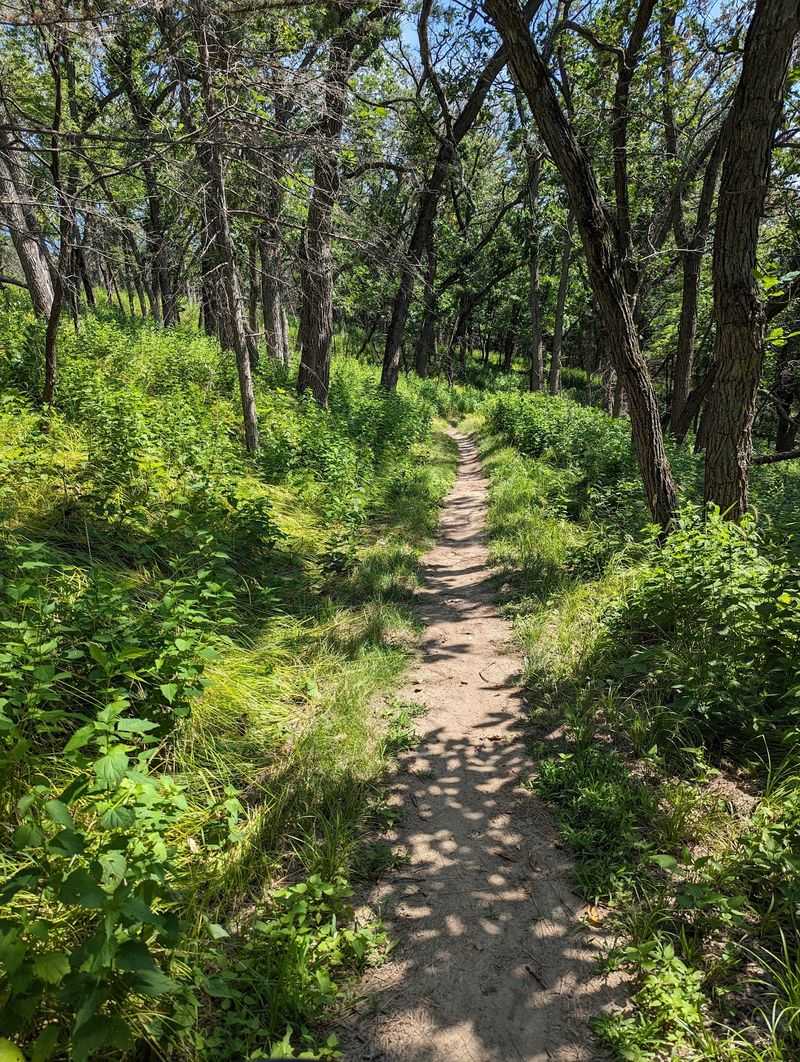
While most visitors at Ponca State Park head straight for the wooded bluff trails and the Tri-State Overlook, the Prairie Loop Trail makes a quiet but compelling case for slowing down at ground level. This one-mile loop near the riverfront campground focuses entirely on a restored prairie where more than 125 native grasses, sedges, and wildflowers have been established using seed collected from local sources.
That locally sourced seed detail matters more than it might initially seem. It means the restoration reflects the specific plant communities that historically covered this part of the Missouri River valley, rather than a generic prairie mix selected for easy establishment.
The loop is easy enough for all ages and fitness levels, and its flat, open character makes it a natural complement to the park’s more demanding wooded routes. Visitors who complete both the Prairie Loop and the Tri-State Overlook Trail in the same visit get a well-rounded picture of the full ecological range Ponca State Park contains.
Share this story