You can still walk beside wagon ruts left by Oregon Trail pioneers more than 160 years ago at a historic park in southeastern Nebraska. The site also preserves a former Pony Express station, reconstructed frontier buildings, and a toll bridge that once helped travelers cross Rock Creek.
But this wasn’t just another stop on the journey west. In July 1861, a dispute over unpaid money ended with three men dead, including the station’s former owner, David McCanles.
One of the men involved was a young James Butler Hickok, who would later become famous as Wild Bill.
Today, visitors can explore the original wagon routes, walk through reconstructed ranch buildings, and discover how an ordinary frontier station became part of one of the Wild West’s most famous legends.
A Frontier Stop Hiding in Rural Jefferson County
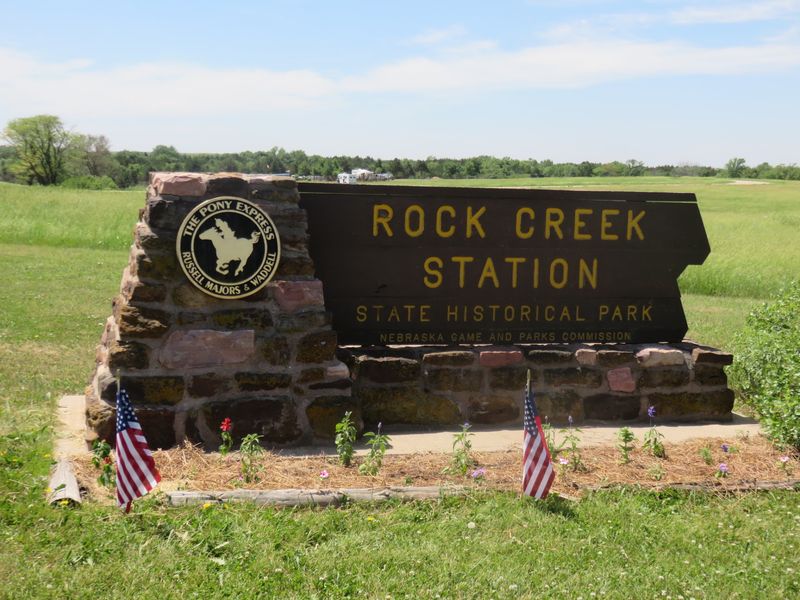
Out among quiet farm roads sits a place where thousands of westbound travelers once stopped to rest. Its official name is Rock Creek Station State Historical Park, and it sits at 57426 710th Rd, Fairbury, NE 68352, in the United States.
The park is northeast of the small town of Endicott, a short drive from Fairbury. Map apps handle the route well, which helps since the roads out here are mostly rural and lightly signed.
So why does this spot matter? Rock Creek Station began in the late 1850s as a supply stop for emigrants on the Oregon and California Trails.
Over the next few years, it also served the Pony Express and the Overland stagecoach line.
That is a lot of history packed into one small valley. Few places let you see trail ruts, rebuilt frontier buildings, and open prairie all in a single afternoon.
The Nebraska Game and Parks Commission runs the site today. As a state park, it requires a Nebraska park entry permit, so plan for that before you arrive.
Once you are parked, the first real stop should be the visitor center, where the whole story starts to make sense.
Wagon Ruts You Can Still Walk Beside
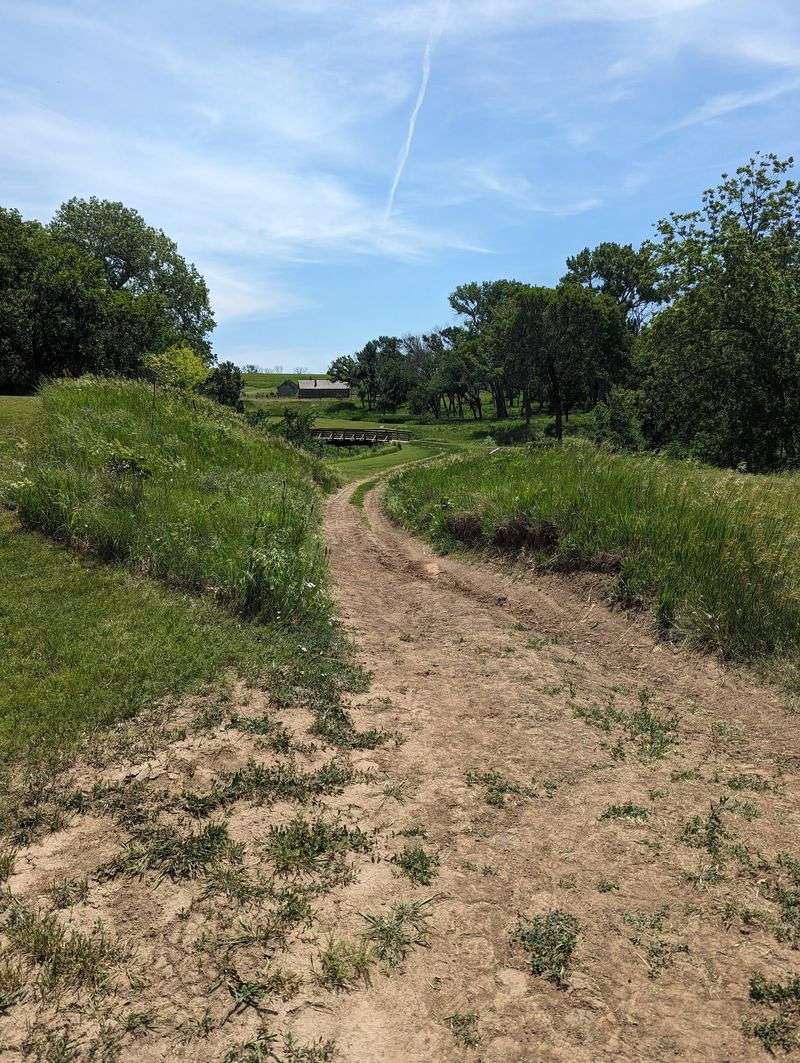
Thousands of heavy wagons rolling over the same hillside left scars that the prairie never fully healed. At Rock Creek Station, those grooves are still there, and they are the reason many people make the trip.
Historians call these worn paths swales. Over time, grass filled them in, but the deep curving dips remain easy to spot once you know where to look.
The ruts sit a short walk from the main buildings. Signs help point the way, and the path is simple enough for most families.
I find this part of the park the most moving. Wagons here were loaded with everything a family owned, pulled by oxen or mules across hundreds of miles of open land.
Standing beside the swales gives you a sense of scale that a textbook cannot. Each groove represents countless trips, not just one wagon passing through.
Bring water and sunscreen, especially in summer, because there is little shade on the hillside. Good shoes help too, since the ground can be uneven.
Those travelers were not out here alone, though. Someone had figured out how to make a living off the steady stream of wagons rolling past.
Paying a Fee to Cross Rock Creek
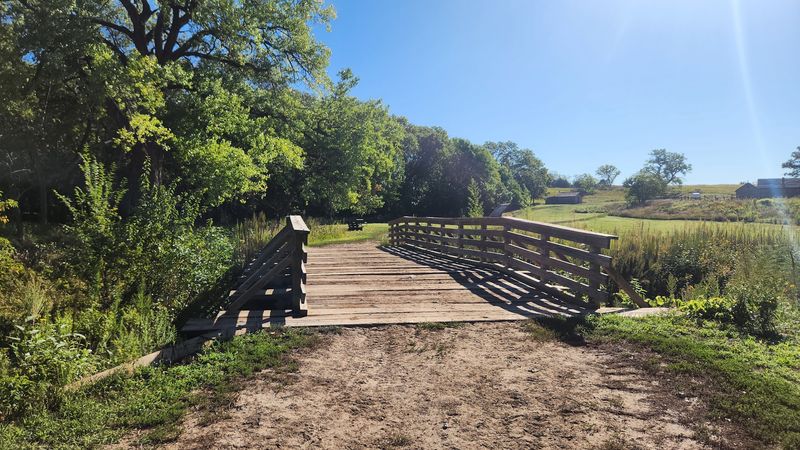
Rock Creek had steep banks that made crossing tricky for loaded wagons. A clever businessman saw an opportunity in that problem.
Around the late 1850s, a toll bridge went up over the creek. Travelers could pay to roll across safely instead of wrestling their wagons down one muddy bank and up the other.
The station’s owners also ran a supply business. Emigrants could buy goods, rest their animals, and pick up anything they had run short on during the long haul west.
Today, a reconstructed toll bridge stands near the original crossing. It gives visitors a clear look at how this simple structure shaped the station’s early success.
Think of it as one of the first roadside businesses on the Nebraska prairie. The idea was practical, and it worked because so many people passed by.
I like that the bridge tells a story about money and convenience, not just hardship. Pioneers made choices about cost and risk, much like modern road trippers do.
The man behind that toll bridge, David McCanles, would later become part of a much more famous chapter in the station’s story.
Where Wild Bill Hickok’s Legend Got Rolling
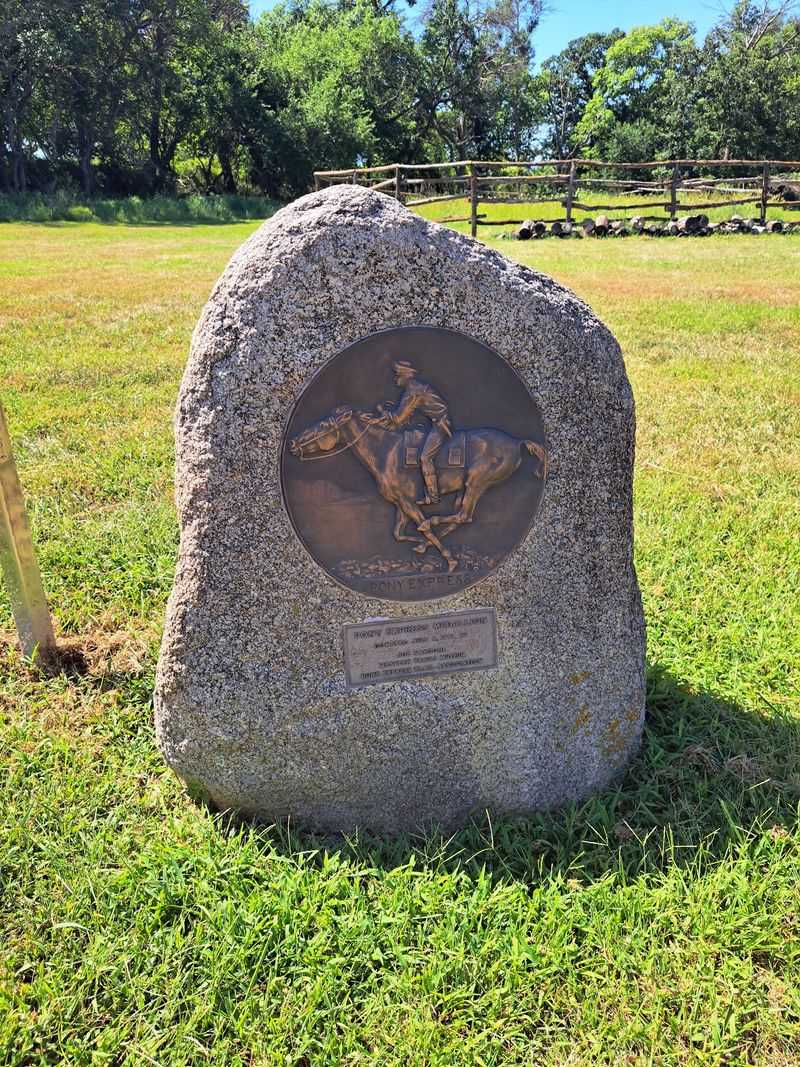
Long before dime novels made him famous, James Butler Hickok was a young stock tender working at Rock Creek Station. He was in his early twenties at the time.
In July 1861, a dispute broke out between station owner David McCanles and the people running the stop for the stage company. The disagreement centered largely on unpaid money for the property.
The confrontation turned violent, and it ended with McCanles and two other men losing their lives. Hickok’s role became one of the earliest stories attached to his name.
Accounts of that day changed wildly over the years. Magazine writers later exaggerated the event, turning it into a dramatic tale that helped build the Wild Bill legend.
The park presents the history in a more grounded way. Exhibits help separate what likely happened from what storytellers added later.
I appreciate that approach, because the real story is interesting enough without the embellishments. It shows how frontier legends often grew from messy, local disputes.
Hickok was not the only notable figure connected to this spot. Lightweight riders on fast horses were also racing through the station during the same years.
Pony Express Riders Swapped Horses Here
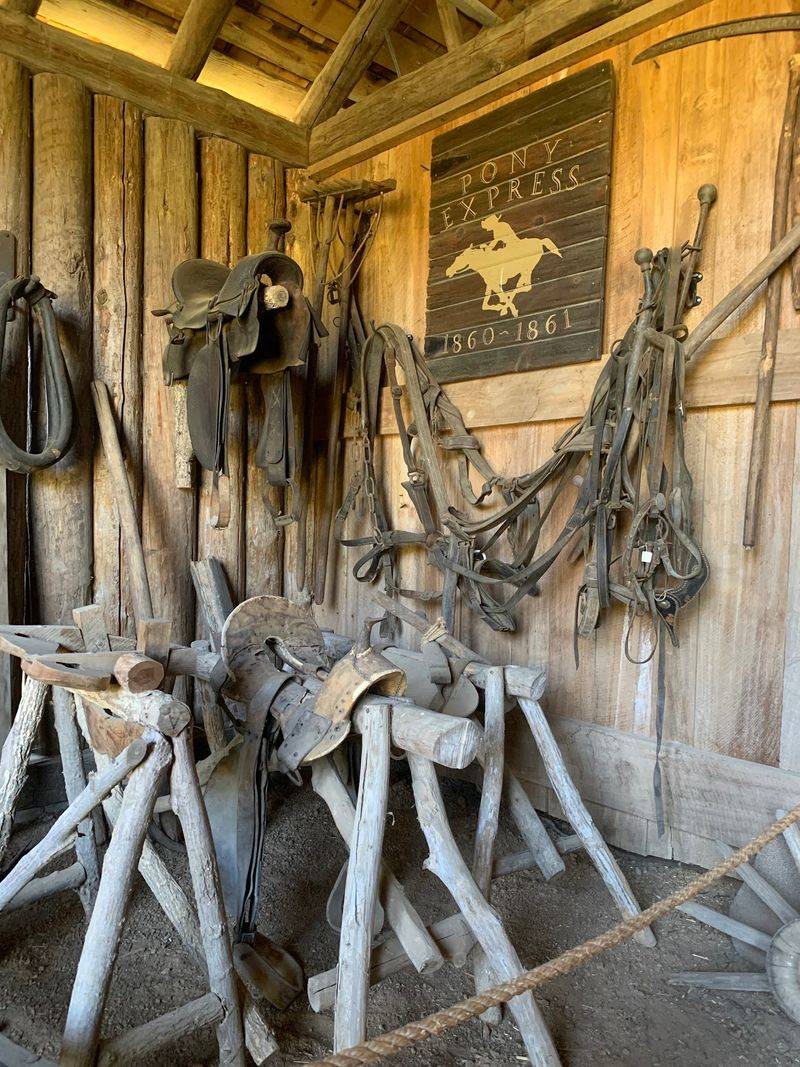
Speed was everything for the Pony Express, and Rock Creek Station helped keep the mail moving. Riders stopped here to trade a tired horse for a fresh one.
The Pony Express ran from 1860 to 1861. It carried mail between Missouri and California in about ten days, which was remarkably fast for the time.
Relay stations like this one sat at regular intervals along the route. Stock tenders kept horses fed, rested, and ready so riders could switch and keep going within minutes.
The service did not last long. Once the transcontinental telegraph was completed in 1861, the need for horseback mail faded quickly.
Still, the Pony Express became one of the best-known chapters of the American West. Rock Creek Station offers a real place where you can connect with that brief, busy era.
Kids especially tend to enjoy this part of the story. Riders were young and light, and the idea of racing across the prairie with a mail pouch is easy to picture.
After the riders moved on, the station did not go quiet. Stagecoaches kept bringing passengers through for years afterward.
Rebuilt Cabins Furnished Like the 1860s
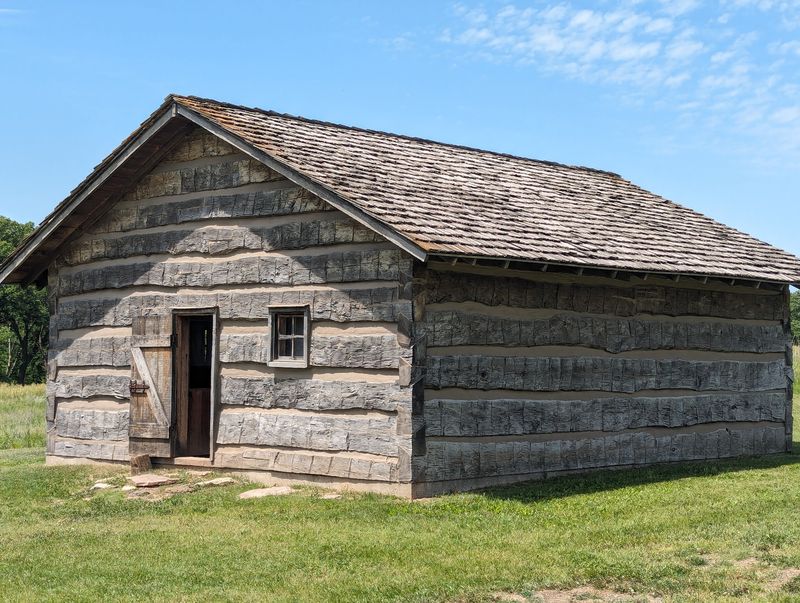
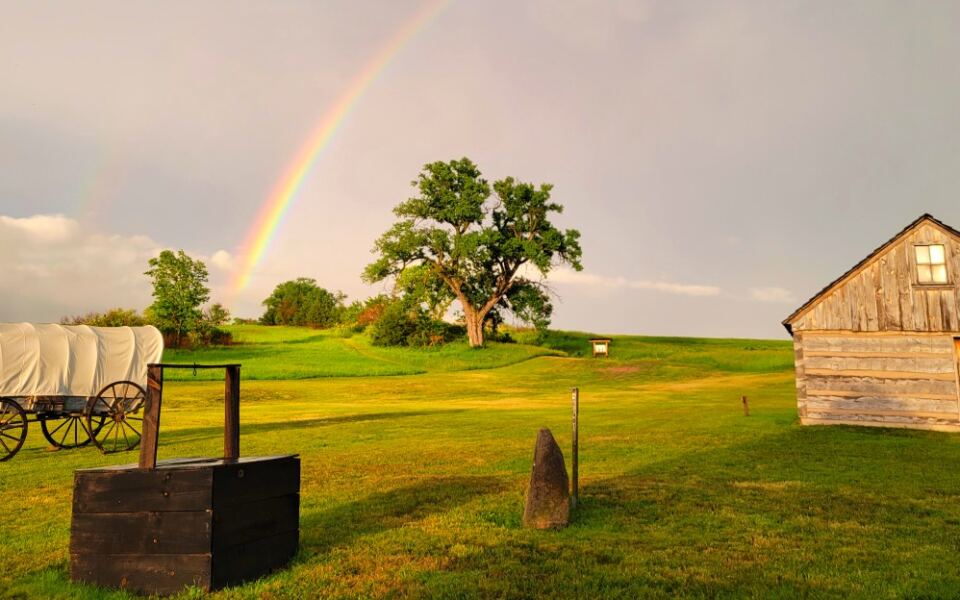
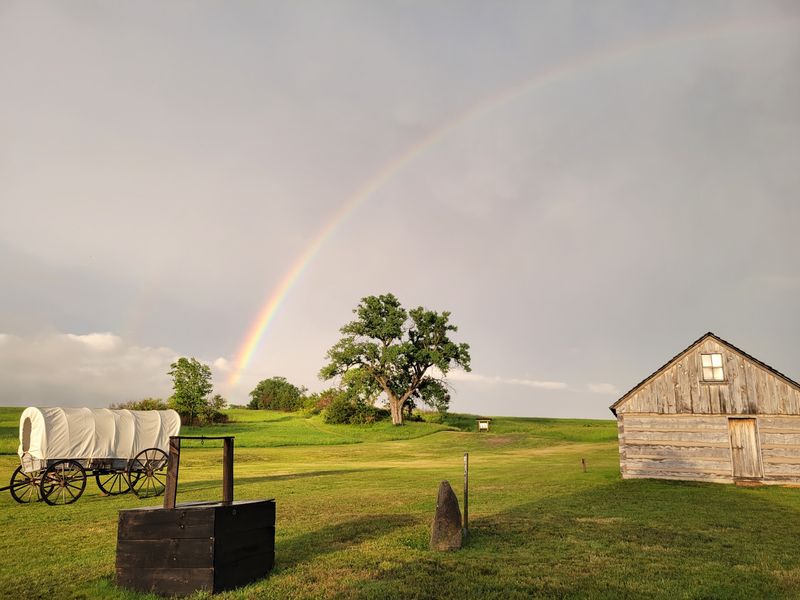
Peeking through a cabin doorway gives you a quick lesson in how little space frontier families had. The park’s reconstructed log buildings make that point clearly.
Several structures have been rebuilt on the grounds, including ranch buildings that represent the station’s busiest years. They stand close to where the originals once stood.
Inside, period furniture helps fill in the picture. You can see the kind of simple setup people used for cooking, sleeping, and storing supplies.
I like how the buildings feel spread out across the landscape. Walking between them helps you understand how the station worked as a small hub of activity.
There is also a replica covered wagon with model oxen near the visitor center. It is a popular photo spot and a helpful reminder of how emigrants actually traveled.
A quick tip: check corners and doorways in warm months. Insects like wasps sometimes settle into old-style buildings, so stay alert when stepping inside.
These rebuilt structures show daily life, but the visitor center is where the artifacts and timelines tie everything together.
Artifacts and Stories at the Visitor Center
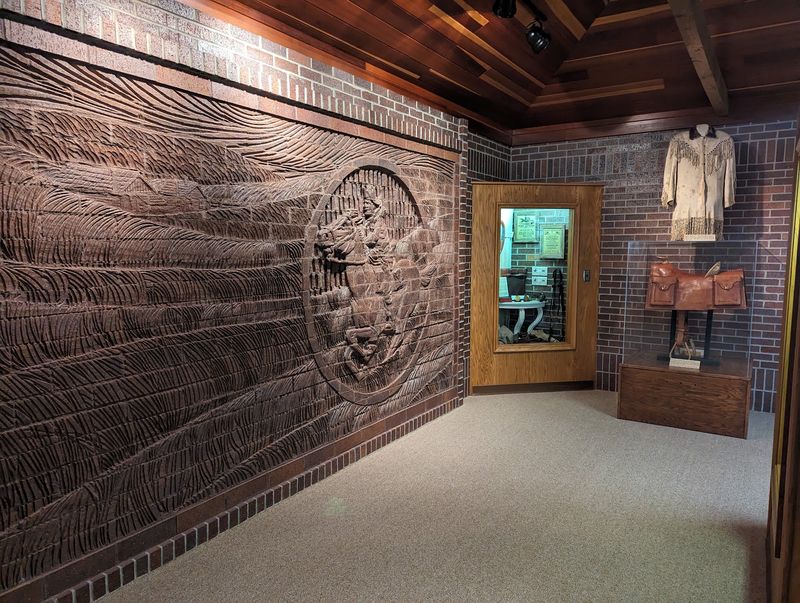
Starting your visit indoors might sound backward at a prairie park, but it makes a big difference here. The visitor center gives context to everything you will see outside.
Exhibits cover the Oregon and California Trails, the Pony Express, the stagecoach era, and the famous 1861 conflict. Artifacts help show what everyday frontier life involved.
Staff members can be a great resource. They often answer questions about the history, the trails, and even the plants blooming across the prairie that season.
I would spend some time with the timeline displays first. Knowing the order of events helps the ruts, cabins, and toll bridge click into place later.
The building is also a practical stop. It is a good spot to confirm trail conditions, grab information, and ask about anything happening at the park that day.
Hours can be limited and may change by season. Checking the official Nebraska Game and Parks information before driving out is a smart move.
Once you know the story, the next step is getting out on the trails, where the prairie itself becomes part of the lesson.
Hiking Through Restored Tallgrass Prairie
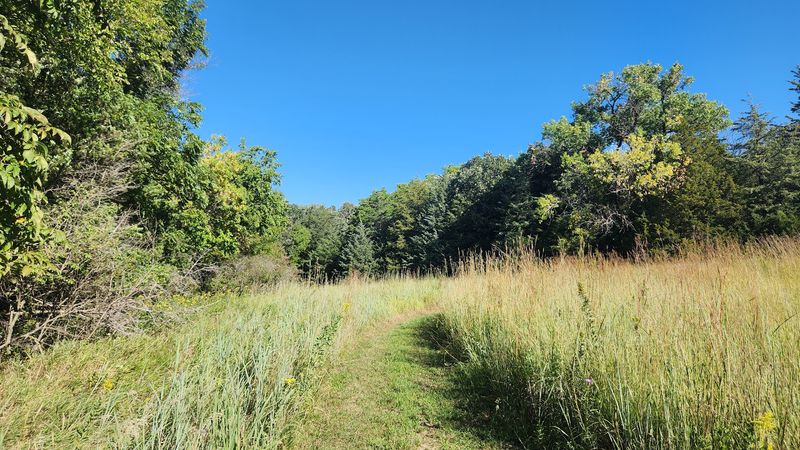
Prairie grass that sways at waist height lines many of the walking paths here. The park’s trail system gives you a feel for the land pioneers actually crossed.
Several miles of trails loop through the grounds. Most are mowed grass paths, which keeps the walking comfortable while letting the prairie stay wild on either side.
Interpretive signs along the way explain the prairie ecosystem. You can learn about native grasses, wildflowers, and the role this habitat played in the region.
Some trail sections near the creek include small stones and rougher ground. If you want an easier walk, the prairie routes tend to be smoother.
Summer brings colorful wildflowers, which adds a lot to the scenery. Spring and fall can be pleasant too, with cooler temperatures for longer hikes.
Pack water, sunscreen, and a hat, since shade is limited. Ticks can also be active in tall grass, so a quick check after your walk is a good habit.
Plenty of people enjoy the trails so much that they decide to stay overnight, and the park makes that easy.
Camping Under Wide Nebraska Skies
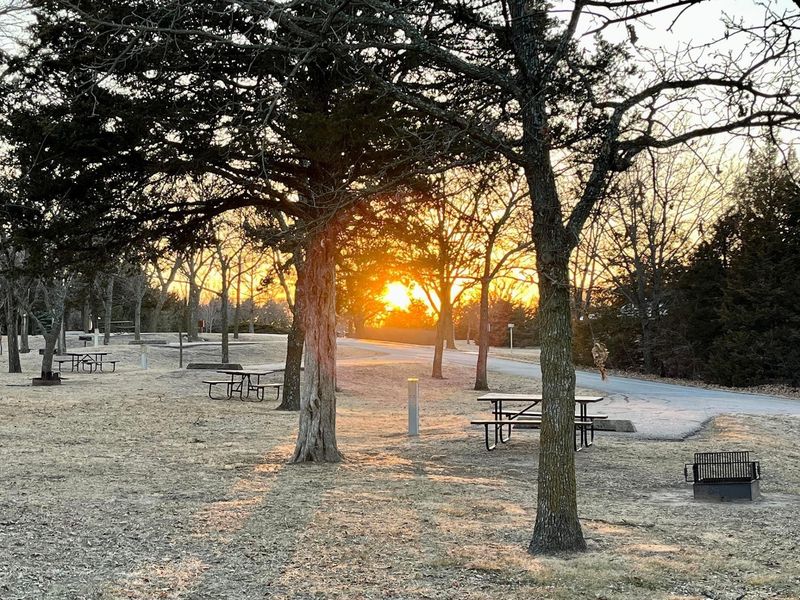
Spending the night near an old trail stop adds a nice layer to the experience. Rock Creek Station has a campground that makes that possible.
The campground offers sites with electric hookups, along with potable water and a dump station for RV travelers. Modern restrooms and showers are available too.
Covered picnic areas give campers a shady place to eat or relax. That shelter comes in handy on hot afternoons or during a passing rain.
Horse camping is another option, which fits the park’s Pony Express history nicely. Riders can bring their own horses and explore the area on horseback.
The setting tends to be quiet, since the park sits well away from busy towns. Evenings out here can feel peaceful, with open sky stretching in every direction.
I like the idea of exploring the ruts in the early morning before the day warms up. Camping on site puts you right there when the light is soft.
Reservations and walk-up availability can vary, so check ahead. Knowing a few more practical details will help the whole trip go smoothly.
Smart Tips Before Heading Out
A little planning goes a long way at a rural historic park. Rock Creek Station rewards visitors who show up prepared.
First, remember the park entry permit. Nebraska state parks require one, and you can buy a daily pass or an annual permit depending on how often you visit.
Visitor center hours are limited, and the building has been closed on some weekdays. Checking current details before you go helps you avoid missing the exhibits.
Dress for the prairie. Comfortable shoes, sun protection, and plenty of water make the trails far more enjoyable, especially in July and August.
Bug spray is worth packing too. Ticks can show up in grassy areas, and a quick check afterward can save you trouble later.
This site also works well as part of a bigger road trip. Many people follow the Oregon Trail through Kansas, Nebraska, and Wyoming, and this stop fits neatly into that route.
Give yourself time to wander rather than rushing. The ruts, cabins, and quiet grasslands tell their story best when you slow down and let the details sink in.
Share this story